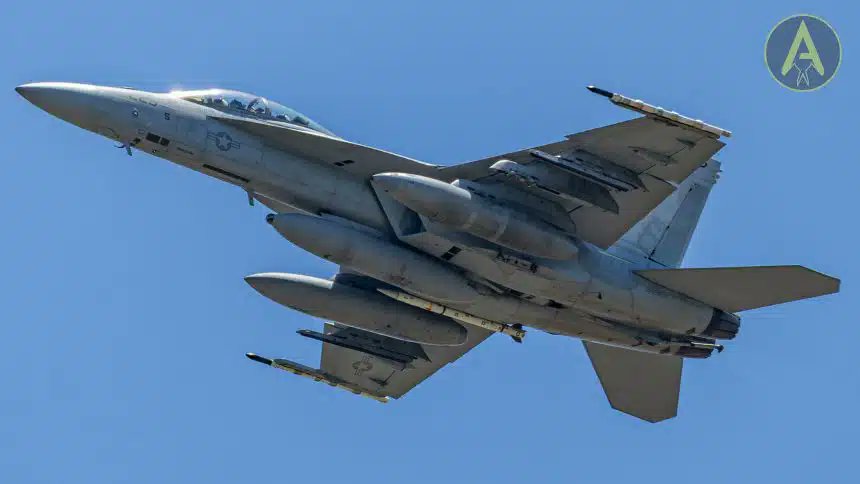
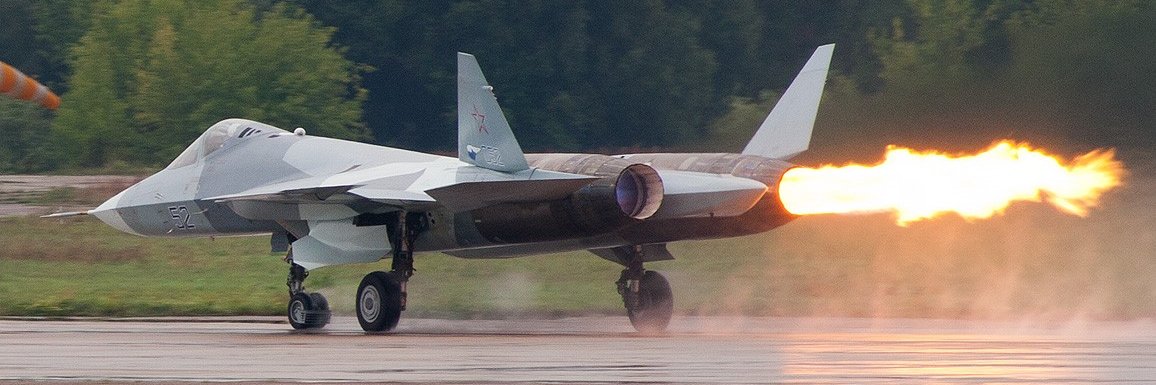
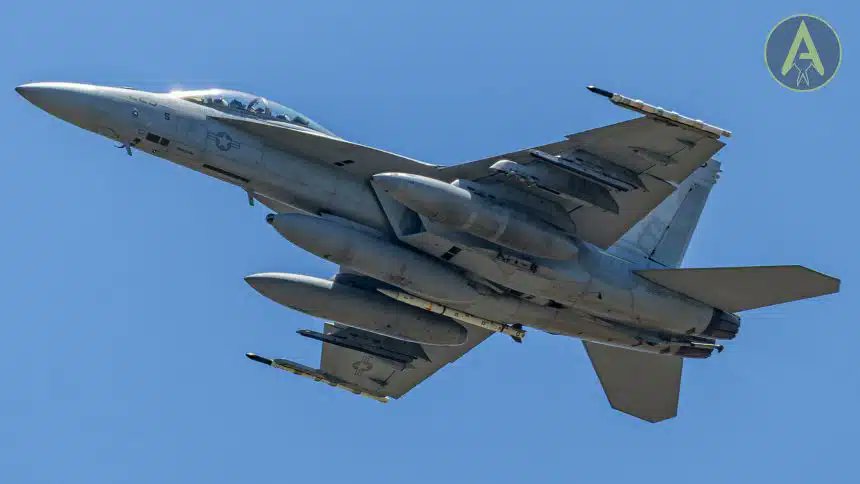
@Defencematrix1 @TheAviationist AIM260's range will exceed 250KM as Aim120D3 has 190km max range with just 1 pulse, AIM260 is dual pulsed. It will rival PL16 (~270km), Our Astra Mk2 will also be simmilar
English
Defence By IITian
696 posts
@raptor1991007
IITian | Air to Air Combat Analyst | Defense Enthusiast | 17 Years of Research into Air Combat


आज यहाँ Aeronautical Development Agency, यानी ADA के, Fifth Generation, Advanced Medium Combat Aircraft के लिए, Core Integration और Flight Testing Centre की नींव रखी जा रही है। ADA, सरकार के Defence Research and Development Organization यानी DRDO का सहयोगी संगठन है। यह भारत के लिए, स्वदेशी fighter aircraft के R&D में अपनी भूमिका निभाती है। इसी ADA ने हमें LCA Tejas Mark-1 दिया और अभी Mark-2 पर काम चल रहा है। और अब यही ADA, Fifth generation AMCA पर काम कर रही है। यह एक Full-fledged, Fifth Generation Stealth Fighter होगा, जो दुनिया के कुछ ही देशों के पास है: रक्षा मंत्री श्री @rajnathsingh


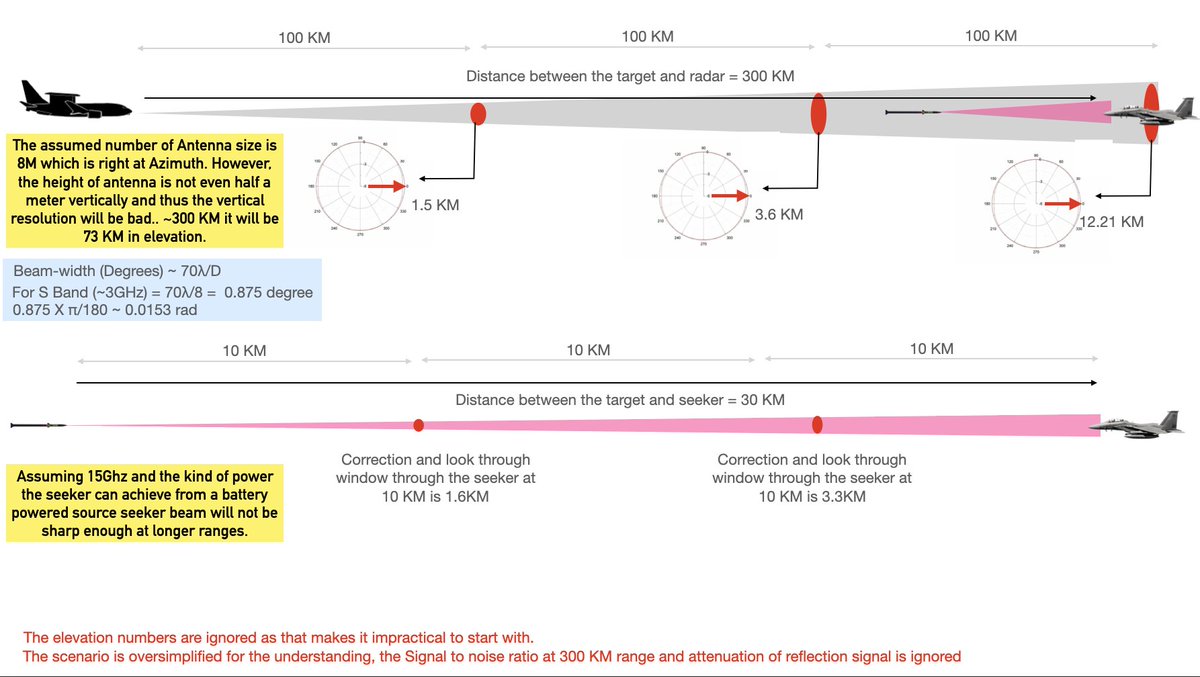
@KaliputraX @raptor1991007 But question is error generated due to beam width in mid course with INS can ku band with 7 degree beam width compensate for it
@alpha_defense Modern AESA seekers are able to scan upto plus minus 60 degree, so locating the aircraft in the uncertainty sector isnot an issue, in addition longer the ranged seeker easier it is, i have assumed only 15km as seeker range

Screenshot from upcoming video. What many people overlook is that Americans are no longer thinking in terms of standalone platforms (Rafale with Radar off etc). They are building a multi-sensor collaborative combat ecosystem. CCA aircrafts, AWACS, SATCOM networks, naval assets, ground-based sensors and fighters are all becoming nodes in one giant distributed kill web. The missile is only the final layer.

@sakthivel_cit93 @therealp0litik This is good enough for prodiving mid-course guidance via datalink, in the terminal phase missile's own seeker will work. It is not new it is being done by Major forces, like Russia uses A50 Awacs to guide S400 SAM especially below the horizon shots

People often compare airborne S-band AESAs with naval systems without understanding aperture physics. An AWACS may be a massive aircraft, but its radar usually has large length and limited height. That means the effective 2D aperture is still far smaller than naval multifunction radars like EL/M-2248 MF-STAR or AN/SPY-6. In radar engineering, beam precision depends on aperture geometry, not platform size. Warships also bring advantages aircraft simply cannot: Far higher continuous power generation Massive cooling capacity Larger planar arrays Denser T/R module packing without worrying about weight That is why naval S-band AESAs can achieve true engagement-quality fire control at long ranges, while airborne S-band radars are optimized more for surveillance, battle management, and missile support rather than ultra-fine terminal precision. I hope people stop getting carried away by pakistani claims of guiding PL15 through AWACS.


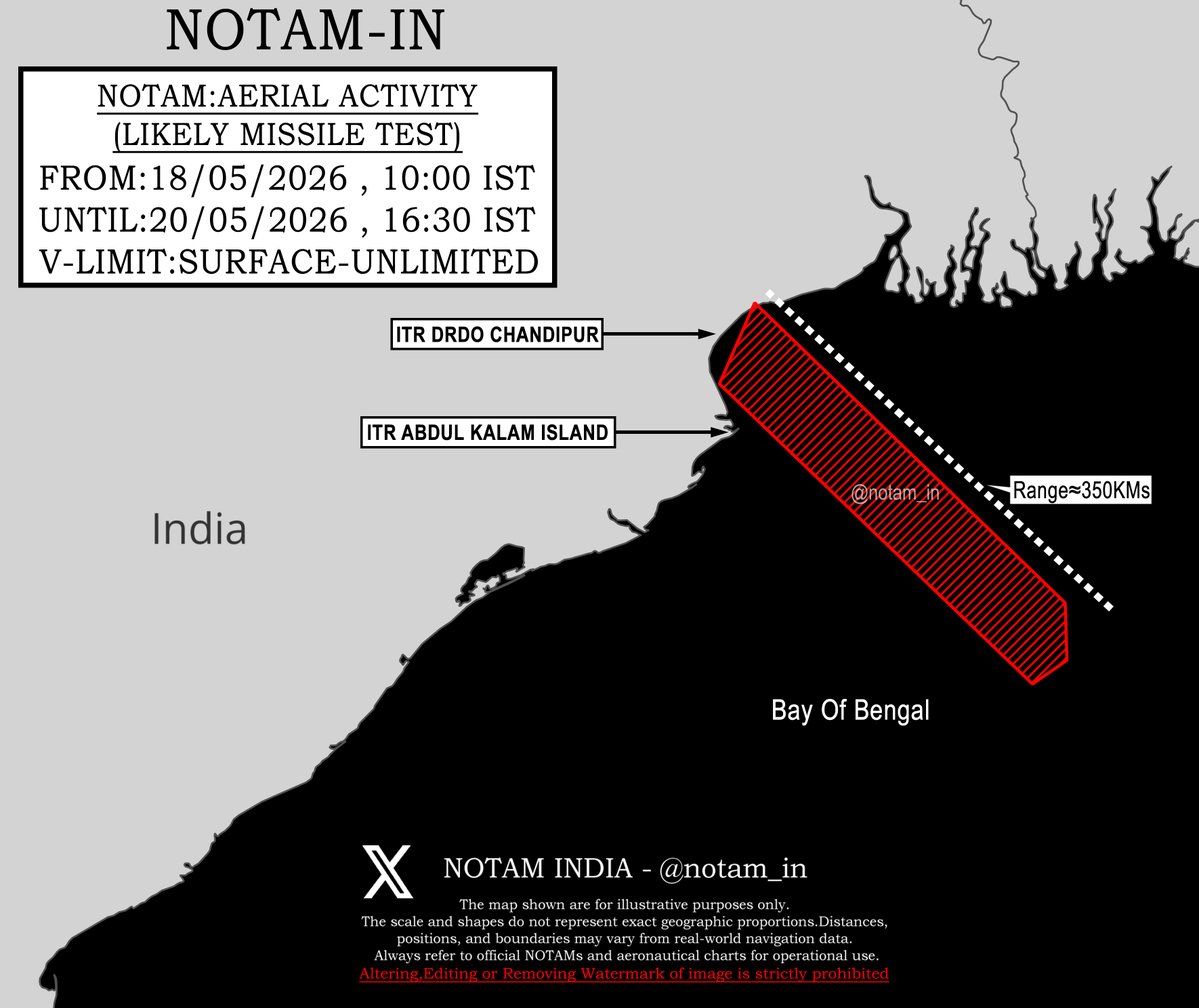
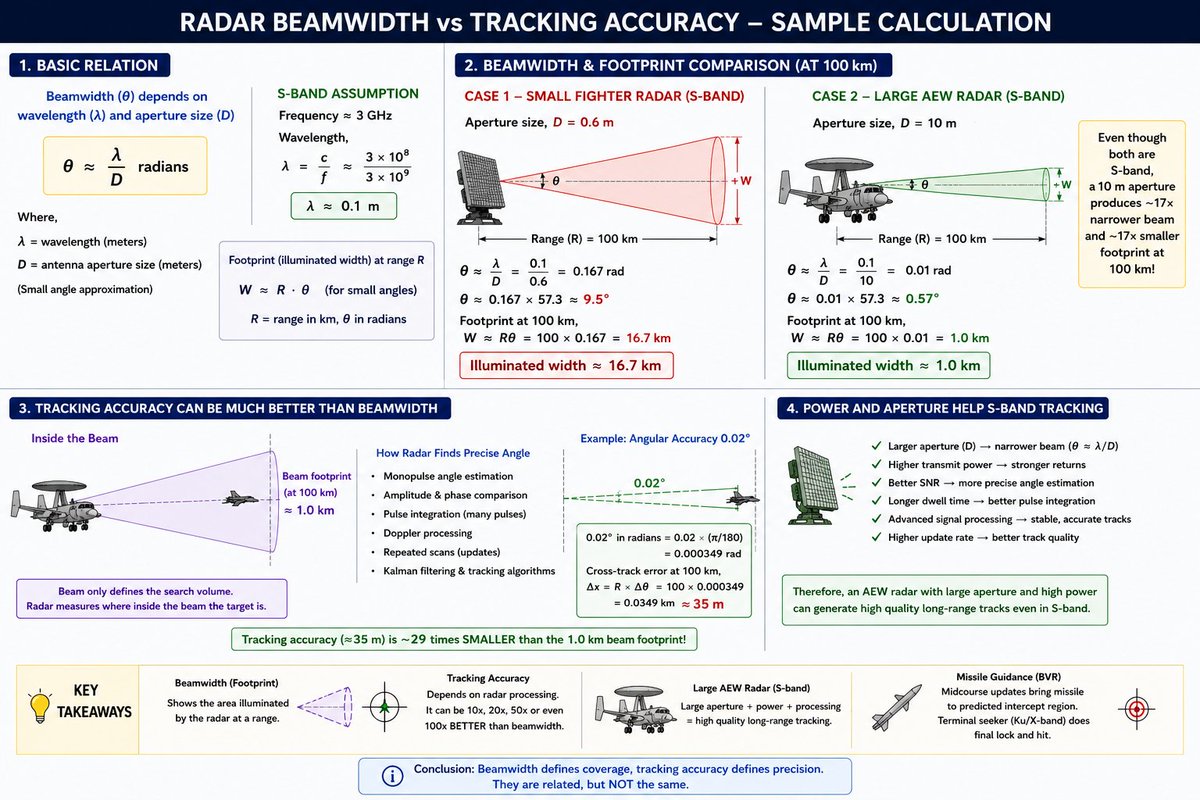
Imagine R = range (100 km here) - Midcourse range (Where as you were initially shooting at 300 KM θ = beamwidth in radians Assume 1° beamwidth at 100 km that ~1.75 km beam diameter 2° beam width at 100 km → ~3.5 km So practically your missile will be 3.5 KM away from targeted cone and you don't know if you have to positively compensate or negatively.. For layman missile is landing 3.5KM away from the target
@alpha_defense @sahilsinghop @highmach_yara @Defencematrix1 MF-STAR guides Barak-8 to take down ships?? 🤣🤣

@therealp0litik @Defencematrix1 Firing with S Band ? Are we shooting ships 😢