Ruth Brennan

446 posts

Ruth Brennan banner
Ruth Brennan

Ruth Brennan

@rbrennan12

Head of Strategic Relationships Science Operations Wellcome Sanger Institute

Cambridge, England Katılım Nisan 2012
3K Takip Edilen597 Takipçiler
Ruth Brennan retweetledi

BBC News (UK)
BBC News (UK)@BBCNews·
Martha's Rule helplines get more than 1,700 calls from worried NHS staff bbc.in/4cZd0jU
English
19
53
125
41.7K
Ruth Brennan retweetledi
Ming "Tommy" Tang
Ming "Tommy" Tang@tangming2005·
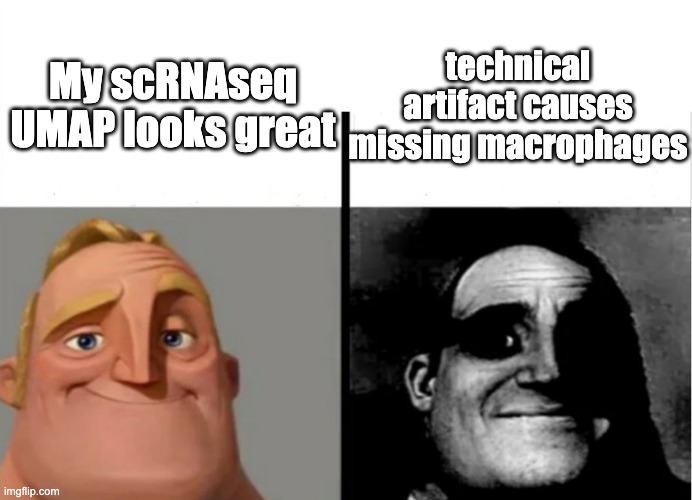
1/ Want to ruin your analysis in one move? Ignore the biology behind the data. Let me show you why that mistake keeps happening.
Ming "Tommy" Tang tweet media
English
1
4
22
5.3K
Ruth Brennan retweetledi
Darwin Tree of Life Project
Darwin Tree of Life Project@darwintreelife·
Check out this BBC Inside Science piece (10:40min in), where Dr Jess Thomas Thorpe and journalist @whippletom hunt for isopods at Kew Gardens. 🔍 Tom then shares more about the Darwin Tree of Life Project and why sequencing life around us is important. 🧬bbc.co.uk/sounds/play/w3…
English
0
4
7
1.7K
Ruth Brennan retweetledi
Inigo Martincorena
Inigo Martincorena@imartincorena·
Excited to share our latest work. Applying advanced single-molecule and single-cell DNA sequencing methods, we uncover an extraordinary landscape of somatic mutations in immune checkpoint genes in autoimmune lymphocytes. [1/n] rdcu.be/fdqbr
English
7
65
191
30.6K
Ruth Brennan retweetledi
ITV News
ITV News@itvnews·
New bowel cancer treatment ‘highly effective’ and reduces need for chemotherapy itv.com/news/2026-04-2…
English
5
66
248
22.1K
Ruth Brennan retweetledi
Science Magazine
Science Magazine@ScienceMagazine·
For decades, biology textbooks have enshrined a simple rule: DNA is made by copying a template. After one enzyme unzips a DNA double helix into separate strands, another called a polymerase builds a complementary sequence, base by base, for each strand. Presto: two copies of the original DNA. But new research into how bacteria defend themselves from viruses now shows this synthesis rule isn’t absolute. Now, a team describes a bacterial enzyme that synthesizes DNA without a nucleic acid template, using its own structure as a guide. Learn more: scim.ag/4tTc5IA @NewsfromScience
Science Magazine tweet media
English
33
639
2.6K
396K
Ruth Brennan retweetledi
Andrew Beggs
Andrew Beggs@adbeggs·
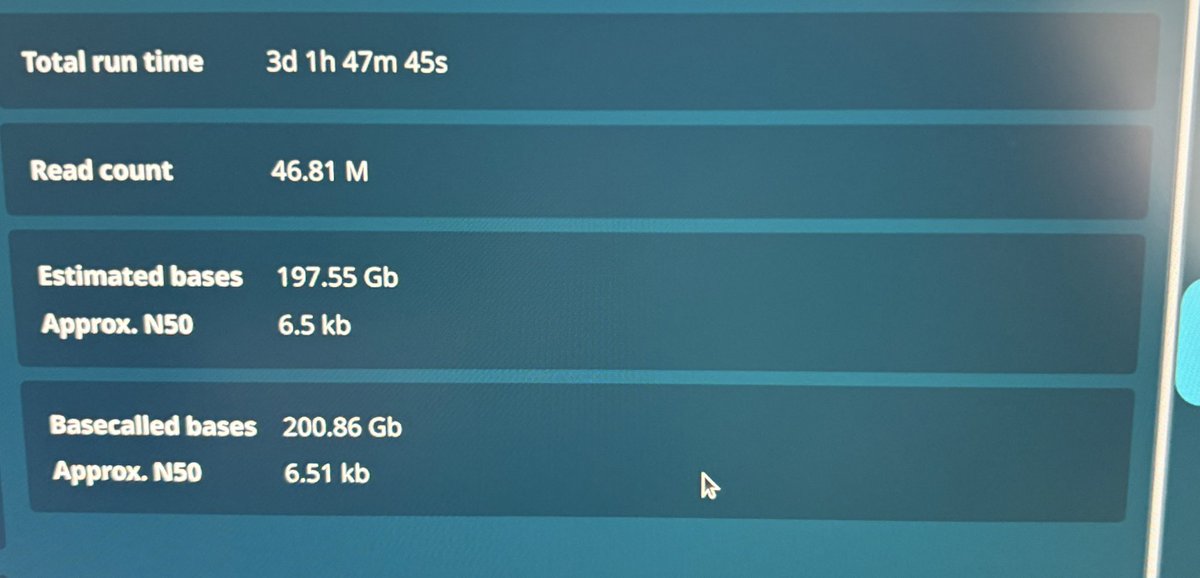
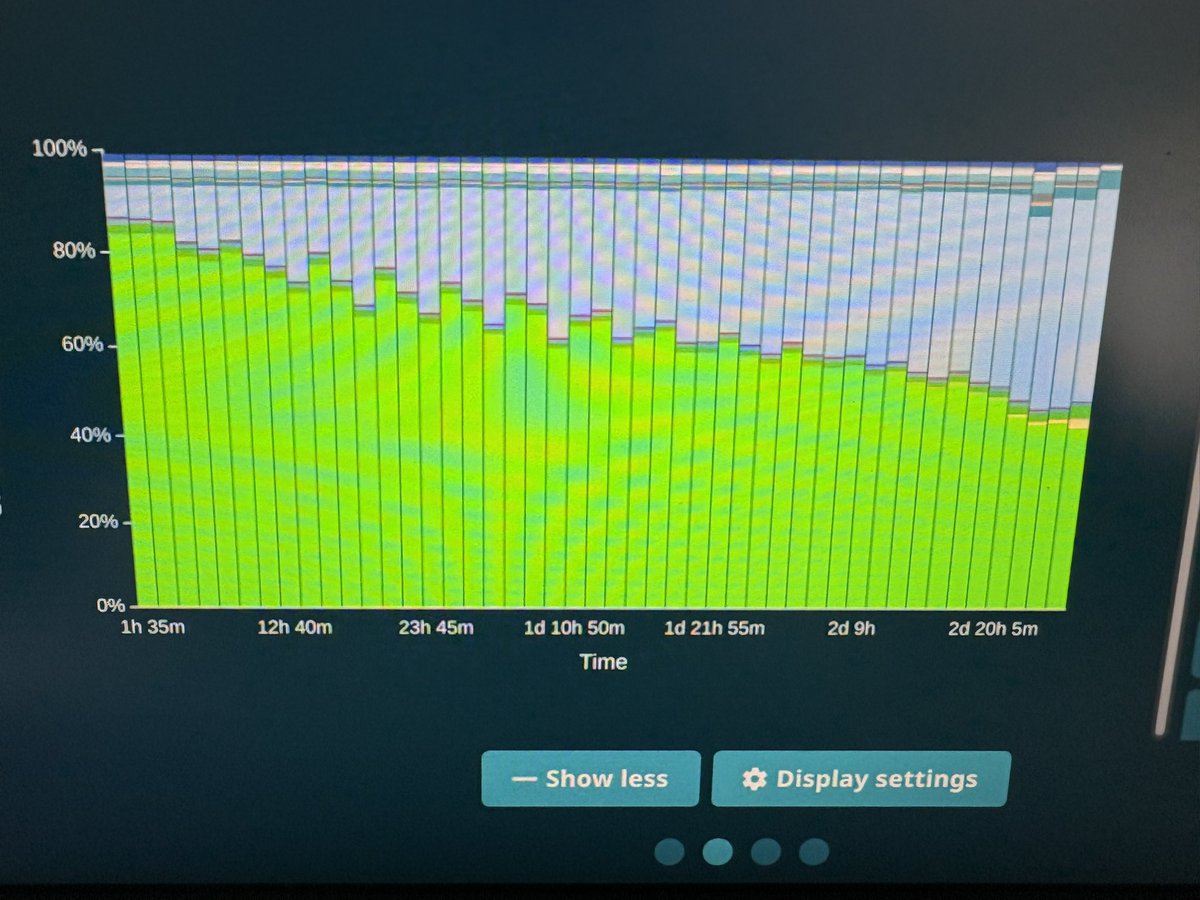
💥💥💥BOOM . Well then. I’m not sure what @nanopore have been putting in their flowcells but Luke Ames and @JoStockton1 have set a new internal record for the highest flowcell output we’ve even seen from a R10.4.1 flowcell on a fresh frozen SOLID tumour 👉 200.86gbases from a single run 👉 No flush and reload 👉 New England Biolabs enzymatic Ultrashear 👉 N50 of 6.5kbases 👉 Run for just over 3 days Most of the flowcells on our P24 performed like this, with > 180gbases, so much so that one of our empty P24 very nearly ran out of space running at full capacity. In the end we generated 68tb of data (including POD5).. quite the output! Well done Luke and Jo
Andrew Beggs tweet mediaAndrew Beggs tweet media
English
4
9
38
4.5K
Ruth Brennan retweetledi
Longzhi Tan
Longzhi Tan@tanlongzhi·
3D genome architecture underlies health & disease, but its biochemical basis is hard to study at scale. We present Plate-C: a screening platform that profiles thousands of whole-genome 3D maps in a day ($4 each), discovering many pathways that rewire DNA: biorxiv.org/content/10.648…
Longzhi Tan tweet media
English
4
73
294
31.5K
Ruth Brennan retweetledi
Ilir Aliu
Ilir Aliu@IlirAliu_·
European corporate tech mindset in a nutshell
Ilir Aliu tweet media
English
50
562
9.5K
278.2K
Ruth Brennan retweetledi
Mo Lotfollahi
Mo Lotfollahi@mo_lotfollahi·
To any graduate student or researcher in machine learning, AI for science, or computational biology affected by recent visa issues in the US — please reach out. 🧬🤖 We have open postdoc & scientist positions in our lab at the Wellcome Sanger Institute @sangerinstitute & University of Cambridge @Cambridge_Uni — both immigrant-friendly institutions that welcome international talent. 📩 Share your CV and email me 🌐 Learn about our research: lotfollahi.com Please retweet — someone in your network may need this. 🔁
English
0
19
75
8.7K
Ruth Brennan retweetledi
Arjun Raj
Arjun Raj@arjunrajlab·
Transitioning to being a PI in the age of AI Computational biology is in a period of upheaval that is both exhilarating and terrifying. Rapidly, we are approaching a moment of “analytic abundance”, where basically idea you can think of (and several you didn’t) magically appear within minutes of you thinking of them. Of course, the central proximal challenge is the evaluation of the sheer volume results—how do we know they are right when we don’t have the time to check over every line of code? I think it’s very telling that when I talk to AI-pilled faculty, they are exhilerated, but many trainees seem more cautious and far more ambivalent. I think that’s because faculty often have been removed from the details for a long time and probably haven’t checked over a line of code in years. They are used to managing (rather than doing) analysis. Over time, they usually develop a sense for whether things seem right or wrong. In this day and age, this is the skill that you, too, must develop. How do faculty do it? I am guessing every faculty member has their own list of internal sanity checks, but here are a few of mine: * Checksums. I look for things that should add up correctly (percentages add to 100, etc.). If it looks even a little bit off, I ask questions. * Never let go. If something doesn’t make sense, I don’t let go until it does make sense. Never relent! * Explain stray datapoints. Always dig into outliers in the data. How did they come to be? Often, they reveal some hidden assumption or something unexpected about the data. * Do not tolerate warnings. If code gives you a warning, resolve it. Do not continue, do not pass go, until you either understand or eliminate the warning. * Track the number of datapoints. Even a single missing row can be a sign of some fencepost bug. And I’m sure many more that I’m forgetting right now. Basically, it’s a transition from a maker to an interrogator. I also feel it worth reiterating that this is a highly unsetting period of time. I have been fortunate (?) to have 16 years of time to make a transition that people are now being asked to make in months. Again, exhilarating and terrifying, all at once!
English
10
58
415
48.5K
Ruth Brennan retweetledi
The Nobel Prize
The Nobel Prize@NobelPrize·
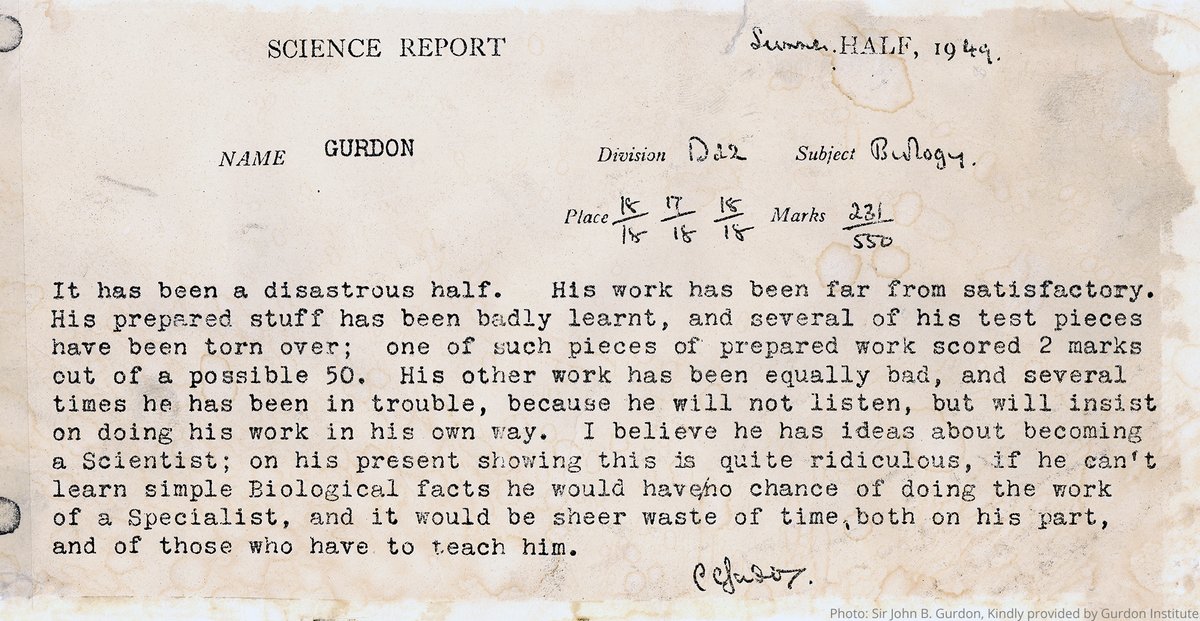
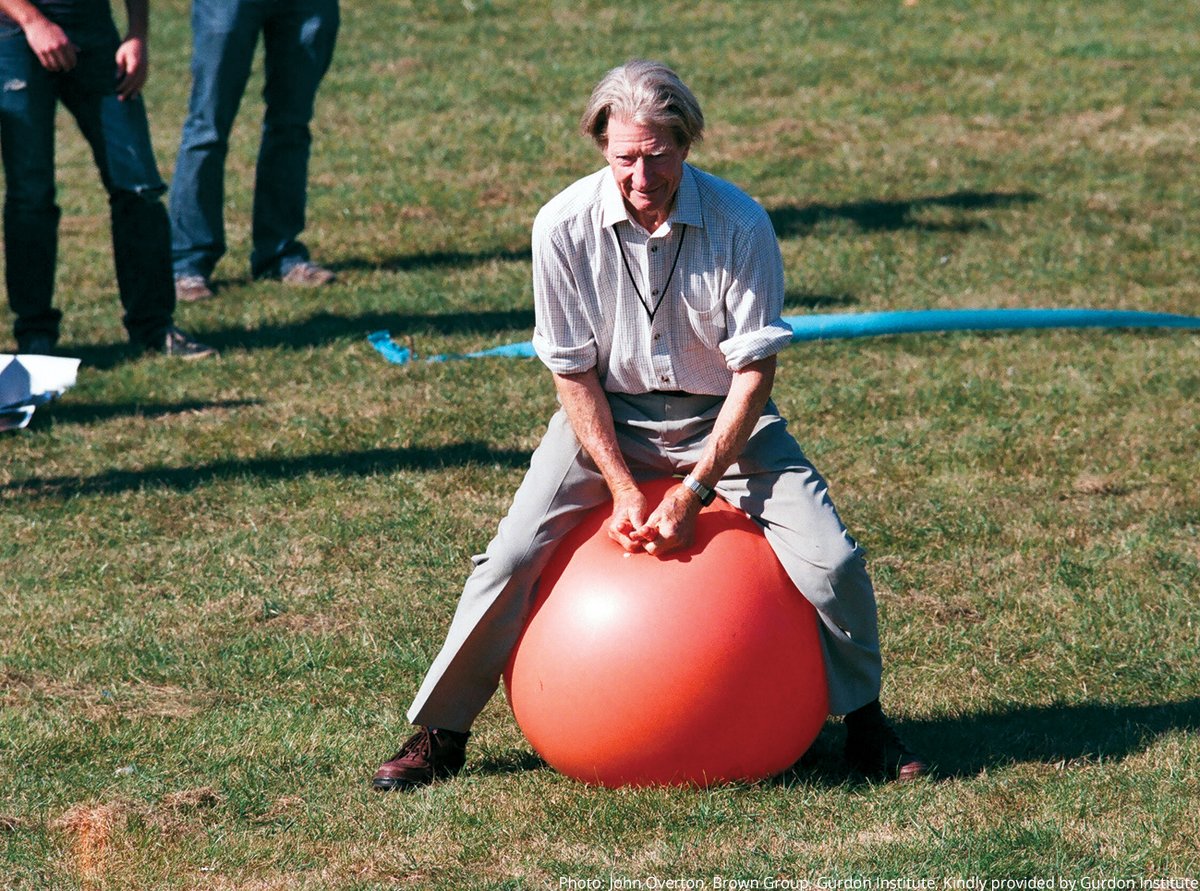
Despite his teacher’s opinion that he couldn’t learn simple biology, John Gurdon went on to receive a #NobelPrize, for his classic frog experiment, which showed that the DNA of mature frog cells has all the information needed to develop all cells in its body. #WorldFrogDay
The Nobel Prize tweet mediaThe Nobel Prize tweet media
English
6
68
364
18.9K
Ruth Brennan retweetledi
Natasha Jaques
Natasha Jaques@natashajaques·
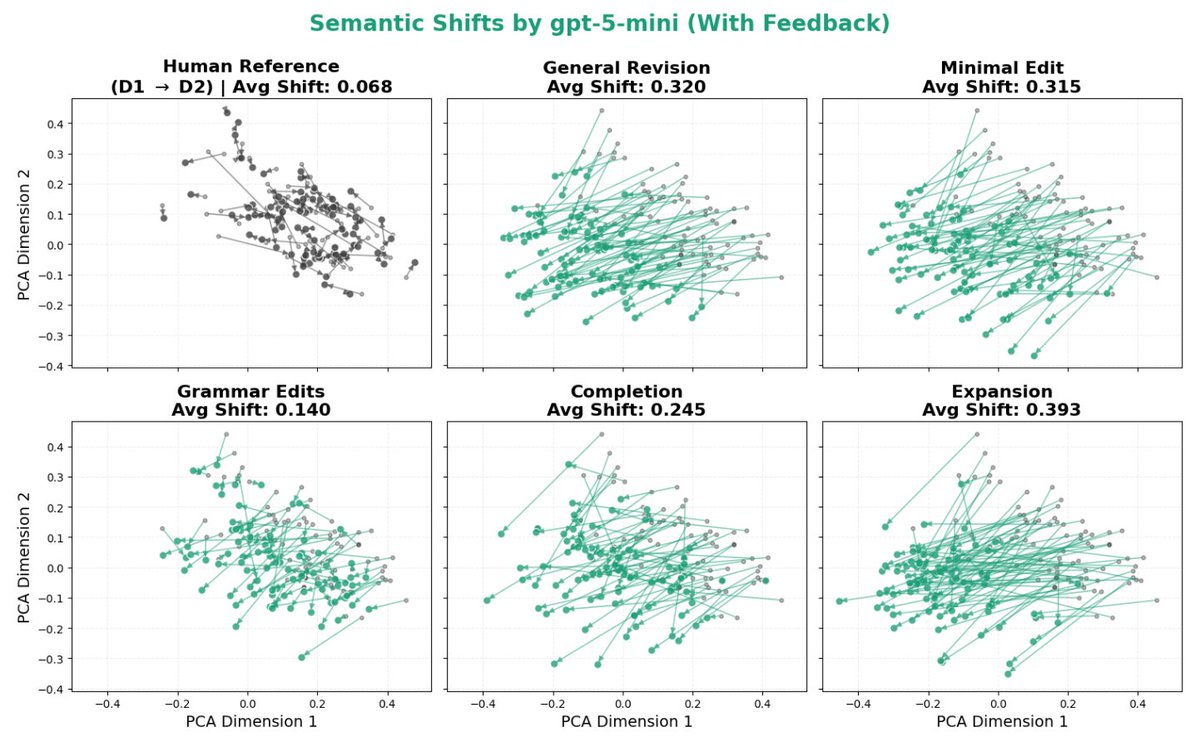
The paper I’ve been most obsessed with lately is finally out: nbcnews.com/tech/tech-news…! Check out this beautiful plot: it shows how much LLMs distort human writing when making edits, compared to how humans would revise the same content. We take a dataset of human-written essays from 2021, before the release of ChatGPT. We compare how people revise draft v1 -> v2 given expert feedback, with how an LLM revises the same v1 given the same feedback. This enables a counterfactual comparison: how much does the LLM alter the essay compared to what the human was originally intending to write? We find LLMs consistently induce massive distortions, even changing the actual meaning and conclusions argued for.
Natasha Jaques tweet media
English
46
393
1.5K
255.4K
Ruth Brennan retweetledi
Dr Charlotte Houldcroft
Dr Charlotte Houldcroft@DrCJ_Houldcroft·
Have you ever wondered why children starting nursery pick up so many germs? I certainly did, and with a crack team of parent-scientists/clinicians, we set out to answer that question. Is childcare a germ factory or an immune bootcamp? journals.asm.org/doi/10.1128/cm…
English
6
22
49
9.8K
Ruth Brennan retweetledi
Ruslan Rust
Ruslan Rust@rust_ruslan·
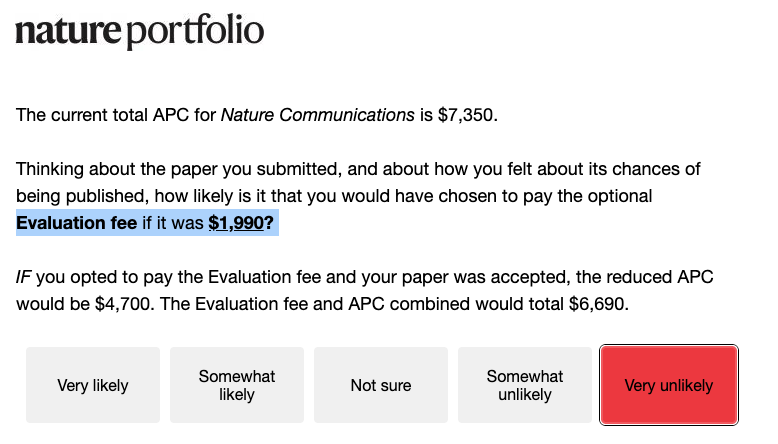
I currently have three papers in review at "high impact" journals. One of them has been sitting there for two years. In that time my daughter was born and learned how to walk, but apparently publishing a PDF was still not possible for me. For another one, after four months in review the editor told me they cannot find a second reviewer and asked me to suggest more reviewers. A third one sent me a message in 2026 saying the PDF I uploaded was larger than 10 MB and that I should please reupload everything to make the file smaller. All of this just to eventually pay between 7,000 and 12,000 USD per paper so someone can officially approve that the science we do is "legitimate". Reminder: not a single reviewer will be compensated here. I still don't understand how we as scientists can collectively be so smart when doing science and still tolerate a system like this when it comes to sharing our findings. We should move to preprints plus open review, whether human or AI, asap. So frustrated about it. I'd suggest sharing your work on bioRxiv or medRxiv, reading and reviewing preprints when you can, and highlighting good research, especially if it is still a preprint. Try platforms like ResearchHub (that pay for peer review) and experiment with AI based reviewers for faster feedback. Instead I read this as a proposed "revolutionary" measure:
Ruslan Rust tweet media
English
61
182
1.2K
195.8K
Ruth Brennan retweetledi
Stephanie deGiorgio
Stephanie deGiorgio@DrSdeG·
This means that 10000 people in 16 months were scared that their loved one is wasnt being looked after properly. People don't call lightly. This should actually be a massive cause of shame for NHSE and a huge wake up call. I am glad it was there for those who needed it, but dear god what a mess
NHS England@NHSEngland

More than 10,000 calls have been made to Martha’s Rule helplines in the first 16 months of the scheme. Martha’s Rule gives patients and families the right to call for a rapid review if they’re worried their or a loved one’s condition is getting worse. ➡️ england.nhs.uk/2026/03/over-1…

English
15
224
829
61.5K