RC Willenbrock

456 posts

RC Willenbrock banner
RC Willenbrock

RC Willenbrock

@rcwillenbrock

just a guy

Katılım Eylül 2015
384 Takip Edilen77 Takipçiler
RC Willenbrock
RC Willenbrock@rcwillenbrock·
@VivekGaripalli mandate comes from the top, budget gets deployed without a real adoption strategy underneath it, results don't materialize, spend gets cut. $200m failed because nobody rebuilt how the workflows actually run before pointing ai at them
English
1
0
50
6.4K
Vivek Garipalli
Vivek Garipalli@VivekGaripalli·
overheard from a fortune 20 company - ceo asked for $1 billion in AI generated opex savings at the beginning of this year. the team as a result has spent $200 million on tokens trying to achieve those savings year-to-date, with minimal results other than some modest Cx savings and a bit of savings on engineering due to less hiring driven by coding assistants. now as back-half budgets are being reviewed, it appears that the ceo has ordered token costs to be dramatically slashed as he/she doesn't feel the ROI is there yet (for their company). gonna be interesting to see if this is a trend amongst the rest of the fortune 500.
English
152
289
3.2K
943.9K
Rohan Paul
Rohan Paul@rohanpaul_ai·
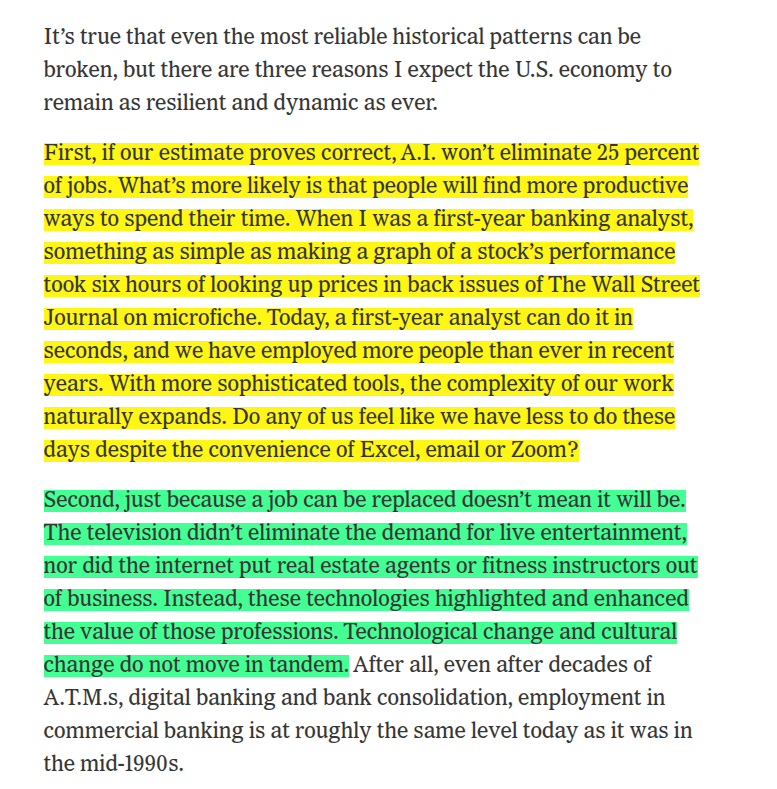
Goldman Sachs CEO, David M. Solomon on nytimes "A.I. won’t eliminate 25% of jobs. What’s more likely is that people will find more productive ways to spend their time. When I was a first-year banking analyst, something as simple as making a graph of a stock’s performance took six hours of looking up prices in back issues of The Wall Street Journal on microfiche. Today, a first-year analyst can do it in seconds, and we have employed more people than ever in recent years. With more sophisticated tools, the complexity of our work naturally expands. Do any of us feel like we have less to do these days despite the convenience of Excel, email or Zoom?" --- nytimes .com/2026/05/22/opinion/ai-job-crisis-goldman-sachs.html?smid=nytcore-ios-share
Rohan Paul tweet media
Rohan Paul@rohanpaul_ai

wionews: OpenAI CEO Sam Altman now says the feared AI white-collar job collapse has not arrived as fast as he expected. Altman previously warned that routine office work, especially entry-level tasks, could be hit hard because of AI. His new view is that work is bending before it breaks, because companies still need humans for judgment, trust, taste, emotional reading, and messy communication where the right answer depends on context. --- wionews .com/trending/delighted-to-be-wrong-sam-altman-says-ai-may-not-trigger-feared-white-collar-job-apocalypse-1779801560534

English
19
33
157
47.1K
RC Willenbrock
RC Willenbrock@rcwillenbrock·
@brandonjcarl most orgs are measuring ai adoption by token spend & calling it progress but if 82% of that spend is fixing what ai broke, you're only measuring churn. value per token is key
English
0
0
0
364
RC Willenbrock
RC Willenbrock@rcwillenbrock·
@emollick and underneath that is an org design problem. nobody knows who owns ai spend because nobody decided who owns the outcomes. accountability structures are sorely needed
English
0
0
1
30
Ethan Mollick
Ethan Mollick@emollick·
The fact that tokens went from something no one even put in a budget line a year ago to an absolute requirement for coding now is the cause of handwringing, not that AI is not turning out to be useful No one knows who should get tokens, how much they should get & how to control
English
64
24
412
24.5K
RC Willenbrock
RC Willenbrock@rcwillenbrock·
@levie name of the game is now taste and judgement. now those running agents are setting the rules and checking the output
English
0
0
1
17
Aaron Levie
Aaron Levie@levie·
A meaningful portion of enterprises I talk to outside of Silicon Valley generally are looking to hire while also adopting agents. There’s a huge wave of technical and engineering talent needed inside originations, building software or acting as FDEs for agents. And as AI drives efficiency in areas like the customer lifecycle, companies are leaning in even more heavily to client-facing jobs. In a world where AI did everything for you with no human oversight needed, maybe we’d be having a different conversation. But that’s not how AI works. Even for the areas that have the most automation potential, agents are automating tasks, not whole jobs. As they automate tasks, the agents need to be steered, their work reviewed, the outputs incorporated and more. All of this is requiring people to do the work. And for the areas that have less automation potential, companies are freeing up dollars from efficiency gains elsewhere to hire in those areas now. Yes, maybe AI lets you respond to front line support tickets automatically, but the companies (instead of just dropping the profit to the bottom line) will go and invest in new areas of sales and customer success that will add more differentiation for clients. Companies don’t remain static. They automating tasks where they can and free up dollars to move onto the next thing that matters.
unusual_whales@unusual_whales

OpenAI's Altman says AI unlikely to lead to 'jobs apocalypse'

English
75
31
301
44.9K
RC Willenbrock
RC Willenbrock@rcwillenbrock·
@lukepierceops everyone wants to start at step 6 because that's what got the project approved in the first place. the agent demo closes the deal then reality hits & you're back at step 1 trying to figure out where the data actually lives
English
0
0
1
507
Luke Pierce
Luke Pierce@lukepierceops·
We've built systems for 85+ companies. The order you build in matters more than what you build. Here's the order: (Bookmark this) Step 1. The data layer. Before any agent, any automation, any dashboard, you need one place where the truth lives. Usually Supabase, sometimes Airtable for smaller builds. Everything else reads from and writes to this. If you skip this you'll be untangling spaghetti in 3 months. Step 2. The intake. Whatever kicks off the workflow. New lead, new patient, new project, new deal. Get the data in clean. Standardized fields, validated inputs, deduplication. 80% of automation problems trace back to dirty intake. Step 3. The routing. Where does the data go next, based on what conditions. This is where 80% of agencies start, and it's why their builds fall apart. Routing without a clean data layer underneath is just guessing. Step 4. The notifications and handoffs. Slack alerts, email triggers, task assignments. The connective tissue between humans and the system. Step 5. The automations. The actual time-savers. Auto-generated reports, status updates, follow-ups, document creation. This is the layer everyone wants to start with. It's the 5th step. Step 6. The agents. Now you add intelligence on top. Triage agents, research agents, drafting agents. They sit on the workflows you've already built. They don't replace them. Step 7. The dashboards. The view layer. What does the client actually look at every day to know everything is working. People start at step 6 because agents are sexy and they don't want to tell the client 'no'. Then they wonder why nothing holds up at scale. You build the foundation, then you build the intelligence. Not the other way around.
English
20
26
336
20.8K
RC Willenbrock
RC Willenbrock@rcwillenbrock·
@toddsaunders winning means you got everyone pilled first & then built the leverage layer underneath. under adoption is a big cost & it's almost always invisible on the p&l
English
0
0
1
162
Todd Saunders
Todd Saunders@toddsaunders·
I was talking to a founder yesterday who made a very unpopular decision at his company. He ended the unlimited tokens policy... There were lots of motivations behind it, but the way he explained why has been stuck in my head all day. He said the free for all was never the end state. It was a deliberate phase they modeled out with their board. Essentially you eat the waste on purpose early, because under adoption costs you more than overspend ever will. A team that never learns to utilize for the tools is a permanent tax. And a team that overspends for 12 months is a one time tuition bill. So you pay the tuition and you get everyone pilled. But the free for all had an expiration date, and phase two for them a token budget per person, sized to outcomes instead of tokens burned. Then he said the thing that got me. "Most leadership teams will get this exactly backwards. They'll treat the budget as a way to cap the spenders. The real move is the opposite. The winners won't be the ones who spend less.. they'll be the ones who built the leverage underneath the spend. Things like skills, shared context, internal tools that raise everyone's outcome per token at once." It's an interesting approach and a hard decision in this AI era, especially when you want your team using it daily. Their view is that policing individual usage is linear. But building the leverage layer is exponential. His leadership team actually doesn't believe this switch is rationing tokens. It's just making every token worth more.
English
27
2
62
18.1K
RC Willenbrock
RC Willenbrock@rcwillenbrock·
@karrisaarinen it's going into more ambitious work. teams that figure out ai are attempting problems they never would have touched. that's hard to see in revenue numbers until it compounds
English
0
0
1
65
Karri Saarinen
Karri Saarinen@karrisaarinen·
We keep hearing about 10x or 100x productivity gains in engineering and knowledge work. But outside the model labs, I haven’t seen the corresponding 10-100x revenue growth across the market or increase in quality. So where is the productivity going?
English
435
113
2.7K
342.1K
RC Willenbrock
RC Willenbrock@rcwillenbrock·
@HarryStebbings 3 is the most interesting... when a company says a 2x price increase wouldn't change behavior, that shows the tool becoming load-bearing infrastructure
English
0
0
2
158
Harry Stebbings
Harry Stebbings@HarryStebbings·
I just interviewed a CEO who said three things that blew my mind: 1. We replaced our $600K Salesforce contract with a vibe-coded CRM, built within 3 weeks. 2. We will get rid of 80% of the SaaS we use internally. 3. If Anthropic doubled pricing, we would not change usage in any way.
English
352
64
948
405.4K
RC Willenbrock
RC Willenbrock@rcwillenbrock·
@levie demand more from everything dynamic is already playing out in pe value creation. firms that get real ai adoption redirect it to solve harder problems. those who cut headcount & call it transformation are going to find out they optimized the wrong thing.
English
0
0
1
111
Aaron Levie
Aaron Levie@levie·
The CEO of Goldman Sachs is taking the other side on the pessimistic takes on AI and jobs. If you looked at what work looked like a few decades ago and saw how much faster everything is or easier it is to produce the same thing as before - even before AI - you’d certainly have been convinced there’d be no jobs left. What happens is we constantly just demand more from everything. Instead of automating a task and delivering the same value proposition, but cheaper, we just expect more from the overall product or service. Because some players in the market decides to do more with the automation, and it raises everyone’s expectations. So those that don’t respond can’t compete. We get more financial analysis from analysts. We get much more comprehensive legal advice. We get more tailored financial services offerings. We get better software in niches we never thought we could automate. Our healthcare providers offer more tests and deeper medical advice. This just goes on and on. When you move from believing the world is static and you’ll have a better view of how jobs evolve due to AI.
Aaron Levie tweet media
David Sacks@DavidSacks

Yes

English
80
82
668
109.2K
Akshay
Akshay@akshay_manglik·
@hypersoren labs may not participate in full upside but incentives still seem aligned? If pilots fail they stop using tokens so still an incentive to pursue high ROI uses. qt seems like an issue with agent engineering being hard, which also affects PE
English
2
0
0
185
Soren Larson
Soren Larson@hypersoren·
This is the future of companies in lab affiliated DeployCos. The independent PE rollup is a superior monetization vehicle for intelligence than labs - participate in full surplus (with leverage) - employees accrue returns to compression - EBITDAmaxxing > tokenmaxxing
Hedgie@HedgieMarkets

🦔Uber's COO Andrew Macdonald said on Saturday that the company is having a harder time justifying its AI spend. After CTO Praveen Neppalli Naga went viral in April for admitting Uber burned through its 2026 Claude Code budget in four months, senior engineering leaders concluded higher token usage was not translating into proportionally more useful product. Macdonald said the link between AI consumption and shipped features is "not there yet." CEO Dara Khosrowshahi confirmed on the earnings call that Uber is slowing hiring to fund its AI spend. Duolingo also walked back its decision to include AI usage in performance reviews last month. My Take Uber is the first major enterprise where the C-suite has publicly admitted, on the record, that the AI productivity story is not closing for them. That matters because Uber is not a skeptic. The company went all-in on AI tooling, set internal targets, and burned through its annual research and development budget in four months trying to make it work. The conclusion from the people running the experiment is that tokens consumed and value shipped are not the same number, and management is finally noticing. Duolingo's reversal lands in the same week for a reason. CEO Luis von Ahn said employees were asking whether they needed to use AI just to use AI, which is Goodhart's Law showing up in a performance review system. When usage becomes the metric, employees optimize for usage, not output. Microsoft canceled internal Claude Code licenses, Google AI Pro stripped credits from paid subscribers, and now Uber is admitting the ROI does not close at scale. The narrative has shifted in the last 30 days from "AI productivity is here" to "AI productivity is harder to measure than we thought." The companies pushing tokenmaxxing internally are now the same companies signaling cost pressure externally. The IPO calendar for OpenAI and Anthropic is going to get a lot more complicated if the largest enterprise customers keep saying this out loud. Hedgie🤗

English
5
0
59
13.9K
Zohair Khan
Zohair Khan@zohairrk5·
@jsawadd could do this asap and start tomorrow, can start out by auditing yalls current workflows and then gather all context needed for second brain then onboard everyone onto this stack and also on claude cowork
English
2
0
2
529
Jonathan Awad
Jonathan Awad@jsawadd·
We need an engineer at Baselayer (maybe contractor?) who AI pills our GTM org - sets up an AI forward system infra for our whole GTM org - builds our “second brain” - helps set up Claude co-work for everyone, from BDRs to sol Eng We will pay top dollar - who’s down?
English
67
12
167
31K
BuccoCapital Bloke
BuccoCapital Bloke@buccocapital·
Everyone is going insane. Employees are going insane. Executives are going insane. Investors are going insane. Politicians are going insane. Citizens are going insane Collective AI psychosis If you sit back and think about it for a even minute it’s completely surreal
English
207
243
4.3K
172.7K
RC Willenbrock
RC Willenbrock@rcwillenbrock·
@Hesamation steam, you paid up front, then got cheaper output. with agents, you pay per thought. open models & flat pricing will win long term
English
0
0
1
358
ℏεsam
ℏεsam@Hesamation·
this is how the AI revolution is different from the INDUSTRIAL revolution. steam engines made work faster but also cheaper. machines were expensive to build but once the factory was running, each product became cheaper to make. AI is complicated. AI is making work more productive (arguably) but with token-based pricing, you don’t own the machine. you rent it every time it thinks, writes, edits, debugs, or retries. if the AI machine produces faster, the bill also grows bigger. the AI revolution may lower labour time but it can also raise usage cost to the point where the “replacement” becomes more expensive than the work it replaced.
ℏεsam tweet media
Hedgie@HedgieMarkets

🦔Microsoft canceled its internal Claude Code licenses this week after token-based billing made the cost untenable, even for a company with effectively infinite cloud resources. Uber's CTO sent an internal memo warning the company burned through its entire 2026 AI budget in just four months. American AI software prices have jumped 20% to 37%, and GitHub (owned by Microsoft) is dropping flat-rate plans for usage-based billing across its products. My Take The AI subsidy era is ending in real time. The same company that put $13 billion into OpenAI and built the Azure infrastructure powering most of Anthropic's compute just looked at the bill from a competitor's coding tool and decided it was not worth paying. That is not a productivity failure on Anthropic's end. Token-based pricing is forcing every enterprise customer to confront the actual cost of running these models at scale, and the number turns out to be far higher than the flat-rate experiments suggested. This ties directly to my Gemini Flash post yesterday. Anthropic, OpenAI, and Google all raised effective prices in the last six months. Enterprises that built workflows assuming AI costs would keep falling are now watching annual budgets evaporate in months. Two outcomes look likely from here. Either enterprises scale back AI usage to fit budgets, which slows the revenue ramp the labs need to justify their valuations ahead of IPOs, or the labs cut prices and absorb the losses, which makes the unit economics worse at exactly the wrong moment. Both paths land in the same place, the numbers stop working, and somebody has to take the writedown. Hedgie🤗

English
39
242
1.1K
123.6K
RC Willenbrock
RC Willenbrock@rcwillenbrock·
@EXM7777 now the job is: pick the right problem. taste & judgment means more than they ever have
English
0
0
1
18
Machina
Machina@EXM7777·
the more agents get memory and knowledge bases, the less time i spend on the computer... most of my "work" now is voice notes in telegram... articulating the idea, scoping the task, handing it to an agent that already knows every codex project i have the weird part: i think more than i ever did execution used to eat 90% of the day, now it eats maybe 20 and the bottleneck moved exactly where most people aren't ready for it... the quality of your thinking if you can't articulate what you want with precision, the agent gives you garbage at 10x speed the new skill isn't doing the work, it's knowing what the work even is
English
38
16
223
10.3K
RC Willenbrock
RC Willenbrock@rcwillenbrock·
@emollick instead of who can review, it changes to who can verify and decide
English
0
0
1
15
Ethan Mollick
Ethan Mollick@emollick·
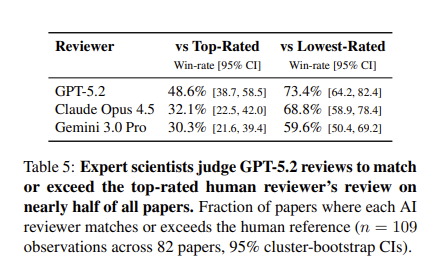
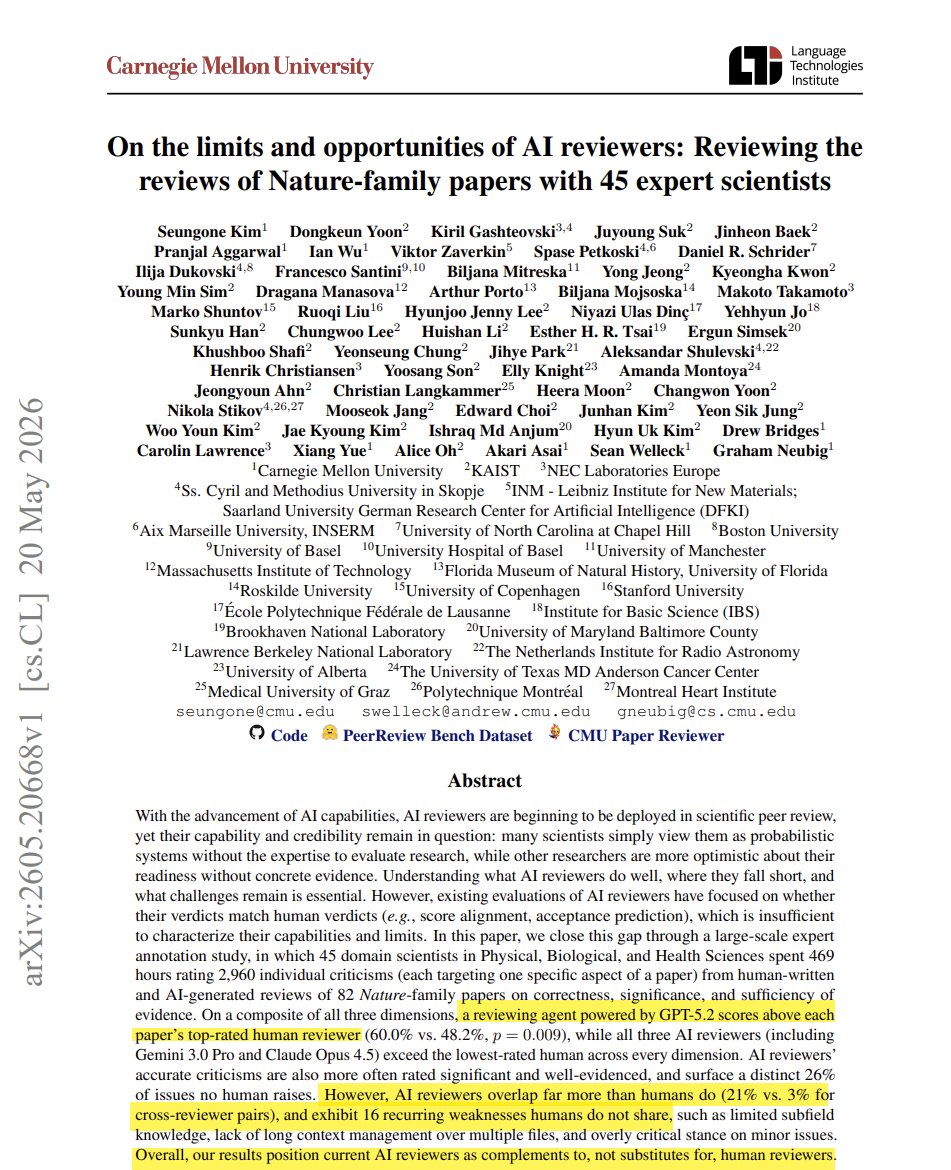
Seems GPT-5.2 reaches expert level in peer review: 45 scientists took 469 hours evaluating human & AI reviews on 82 papers. "Surprisingly, current AI reviewers are competitive even with the top-rated reviewers in Nature’s official peer review..." though not without weaknesses.
Ethan Mollick tweet mediaEthan Mollick tweet mediaEthan Mollick tweet media
English
33
98
612
64.4K
RC Willenbrock
RC Willenbrock@rcwillenbrock·
@PawelHuryn not really taking jobs in a clean way, more like killing layers & restructuring
English
0
0
2
15
Paweł Huryn
Paweł Huryn@PawelHuryn·
The AI layoff story is backwards. Cloudflare, ClickUp, and Meta aren't just cutting people. They're swapping one management layer for another. Middle managers out. Agent managers in. Cloudflare cut 1,100 in a record revenue quarter. $639.8M revenue, 34% growth. Their CEO published a WSJ op-ed naming the framework: builders, sellers, measurers. The implication: fewer measurers. ClickUp cut 22% and called the business "the strongest it's ever been." Their CEO posted a manifesto on X. 100x engineers directing agents. $1M salary bands for "100x impact." Meta cut 8,000 and reassigned 7,000 to AI workflows. Managerial roles targeted. Management layers reduced. Reuters got the internal memo: org leaders "incorporated AI native design principles." "No jobpocalypse." "Irrational CEOs." Three memos in 72 hours say neither. AI PM and AI engineering postings keep rising. Companies can't fill them. The money isn't being saved. It's getting redirected to whoever manages five agents. If your job is coordinating humans, you're exposed. If your job is directing agents, you're becoming expensive. The orchestrators don't get cut.
English
9
1
30
2.9K
RC Willenbrock
RC Willenbrock@rcwillenbrock·
@BoringBiz_ now the real test is how sticky it is once pricing drops and more models look the same
English
0
0
2
51
Boring_Business
Boring_Business@BoringBiz_·
Anthropic revenue during 2Q26 is expected to be $10.9 billion, growing 127% on a q/q basis vs 1Q26 revenue of $4.8 billion 2Q26 is also expected to be their first profitable quarter I remember just last year people were still debating whether any of the capex would produce ROIC and lead to real revenue generation at the model layer Well, there you have it. Not only is the model layer growing revenues faster than almost any other business we have ever seen, it is actually about to hit profitability Unbelievable.
English
5
3
122
9.4K
Zach Wilson
Zach Wilson@EcZachly·
Meta reached to interview me for a principal role the same week they decided to layoff 8,000 people! I’m sure there was at least 1 out of those 8,000 people who got let go who would’ve been a good fit for the role they wanted to hire me for. A few of my staff engineer friends got let go so I know this is true. Instead they: - axe everybody - treat them like a cost - rehire where there’s pain What ever happened to employee retention? Why do companies expect us to be loyal to them if they don’t even try to retain us when they have hundreds of billions of dollars? It would be cheaper financially for them to retain one of those 8,000 people. It would be cheaper emotionally for the people who got let go too How do these big tech companies expect people to put their blood, sweat and tears into work while also saying, “yeah we’ll cut you at any moment.” I don’t know. The culture around AI and layoffs has gotten unbelievably toxic
English
218
334
4.1K
1.1M
Simon Eskildsen
Simon Eskildsen@Sirupsen·
turbopuffer crossed $100M run-rate in March. 19mo after $1M. Profitable & <$1M raised. Cursor・Anthropic・Notion・Cognition・Harvey・Bridgewater・Ramp・Linear・Legora・Superhuman・Atlassian・Granola We’d be nowhere without them. We work like hell to exceed their expectations.
English
253
148
3.4K
1.4M