

Rob Love
3.3K posts

today I read about one of the top peers of mine from AWS getting let go in this most recent round. known globally inside the company. incredible impact on the business. 10+ years. widely looked up to. delivered a lot of results.
I just don't know how you drop all these great top L7s and expect it to be ok
English

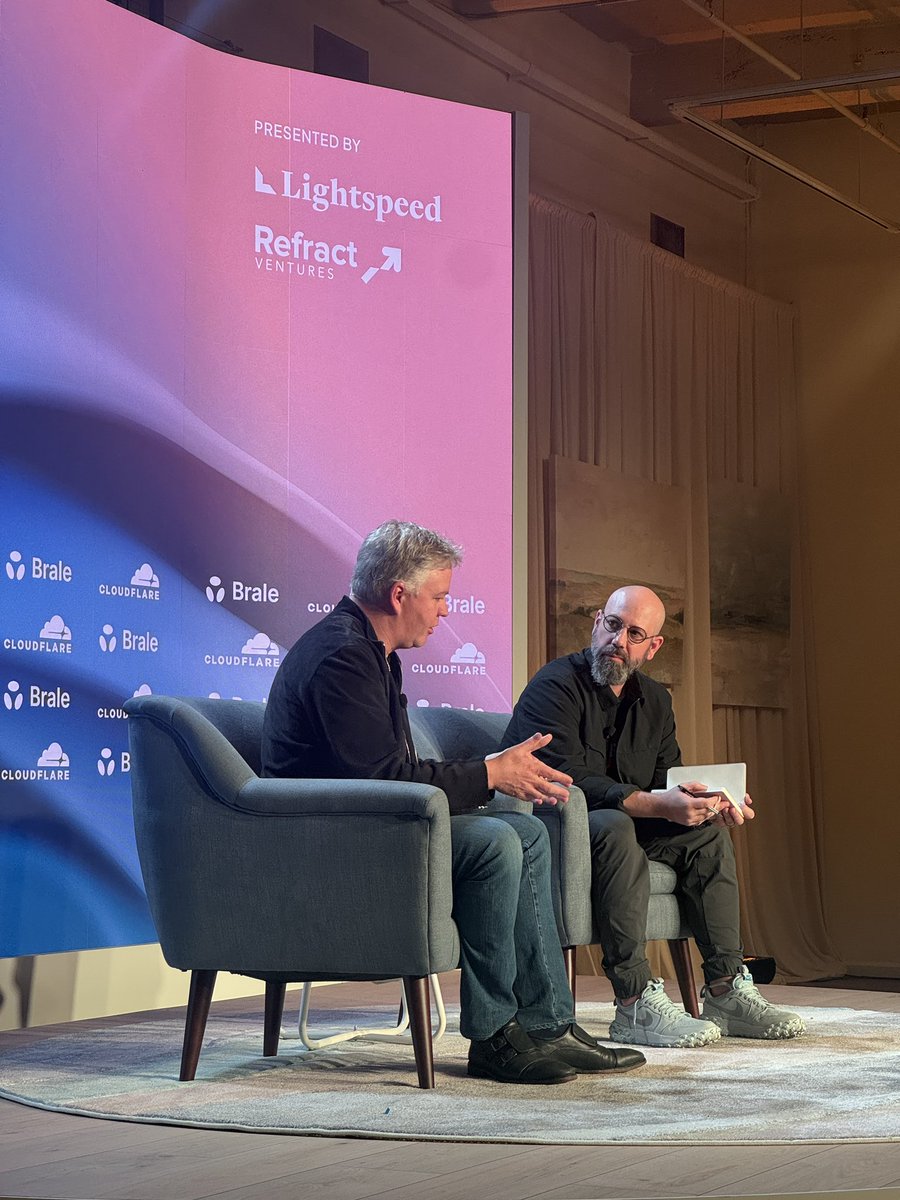
Cloudflare CEO @eastdakota said they're contemplating if they need to build an L1 because they need more throughput. They're expecting to need to do a billion micro-transactions per second in the next 5-10 years 👀
English
@tedcruz /@JohnCornyn
Does $1.7T in medical fraud reach the level to open a formal investigation?
Kyle Mack@KyleTMack
$563M in payouts went to 1,175 providers blacklisted from federal healthcare programs for criminal activity or misconduct. They shouldn't be receiving a single dollar. They received half a billion. $155M was paid to providers with suspended, inactive, or revoked licenses.
English
Rob Love retweetledi

Rob Love retweetledi

There is nothing patriotic about dismantling American tech industry with a mass post-tax asset seizure and an unrealized gains tax that will destroy startups and set American innovation back by decades
Chief Nerd@TheChiefNerd
KHANNA: “You're saying to me … with a 1% tax on wealth that people are going to leave? Come on, have some more patriotism.” RYAN: “Scott Bessent said yesterday there's ~$600 BILLION in fraud … Don't you think we might want to get a handle on that before we tax everybody more?”
English

Billionaire Anduril Founder @PalmerLuckey on Why He Only Flies Coach:
“I don’t fly private and I do fly coach.”
“[Anduril] only covers coach travel for employees… because we have so much travel at the company.”
“If I’m going to ask my employees to do it, I need to do it too. Even when it’s my own money… otherwise I would literally be out of touch.”
“I love the back of the plane, on the window. Nobody bothers you… you can let everybody get off the plane before you do.”
“My grandpa was a pilot for United Airlines for over 40 years… I grew up around commercial airlines. To me there is a certain romanticism to mass-market air travel.”
“And America did it. We figured out how to make it economically viable, and we build everyone else’s airplanes.”
Palmer Luckey@PalmerLuckey
@thesamparr I only fly coach.
English
@iAnonPatriot I hope the same burglar doesn’t target all the other daycare centers in Minneapolis
English

A manager at the Nokomis Daycare Center in Minneapolis says that someone BROKE INTO the facility and stole all their documents..
Give me a break. lol
English
What's happening in Minnesota is a microcosm of the immigriation fraud in our system. Politicans like it because they get power. Welfare cheats like it because they get rich.
But it's a zero sum game, and they're stealing both money and political power from Minnesotans.
Dustin Grage@GrageDustin
Listen, the Somali Medicaid fraud is bad, but people also need to understand that voter fraud is happening in Minnesota too. Last week we uncovered a Somali voter-fraud operation. And sadly, it probably will not be the last. This is just the tip of the iceberg. Fraud thrives when accountability disappears. We are going to keep digging until every rock is turned over.
English


English
@mansourtarek_ Are prediction markets, just a new way for insiders to trade on information?
Is this a first step in using block chains for settlement versus traditional markets?
How should an investor look at leveraging prediction markets in their portfolio
English

We are hosting our first Prediction Market Conference in March 2026.
Researchers, economists, policymakers, traders will discuss big questions around prediction markets and knowledge aggregation.
Spots will be limited. Reply here with a topic if interested in joining.
Tarek Mansour@mansourtarek_
In 1945, Friedrich Hayek outlined the Knowledge Problem that any society faces: The central economic problem is not resource allocation - it is how to use knowledge that is dispersed among millions of individuals. He argues that information is fragmented, local, dynamic, and often hidden. He explains that no government or central planner can ever fully possess it, which makes them inefficient resource allocators. He proposes markets as the solution: knowledge is decentralized and prices are how society aggregates it. This idea is the intellectual foundation of modern prediction markets. Decades later, in 1988, the University of Iowa launched the Iowa Electronic Markets (IEM), which allowed small size trades on US elections and macro events. The results: even thin, low-capital markets outperformed polls. This was the first credible empirical proof that market prices are effective aggregators of public beliefs. A variety of corporate and policy experiments followed in the 2000s. Google, HP, and Microsoft all tried their own internal versions of prediction markets to forecast product launches and sales targets. DARPA built its own to forecast geopolitical events. The results were consistent: broad participation with monetary incentives led to accurate forecasts. Then, in 2015, Philip Tetlock published Superforecasting. The book, which is the culmination of decades of research into human judgment, shows that groups of curious and humble “forecasters” dramatically outperformed intelligence analysts and domain experts at forecasting. By showing that smart amateurs can outperform experts, Tetlock put into question authority figures and whether we should trust them for predictions about the future. Today, Kalshi is sitting on one of the largest repositories of high quality market data in the world. For the first time, public beliefs across a variety of domains - from economics, to politics and culture - are aggregated at scale through market prices and updated in real-time as new information arrives. Our data contains answers to open questions held about prediction markets - why they outperform traditional belief aggregation methods, how to detect shifts in collective sentiment, and which players drive market accuracy. This proprietary data has been closed to the public. We are launching @KalshiResearch to change that. We invite academics, researchers, economists, philosophers, and interested parties to work with us to study and uncover the fundamentals underpinning belief formation and prediction markets. Like Hayek proposed 80 years ago, prediction markets have the potential to improve society's collective decision making and resource allocation. The goal for Kalshi Research is to fulfill his vision.
English

building the infrastructure of the future
Simon Taylor@sytaylor
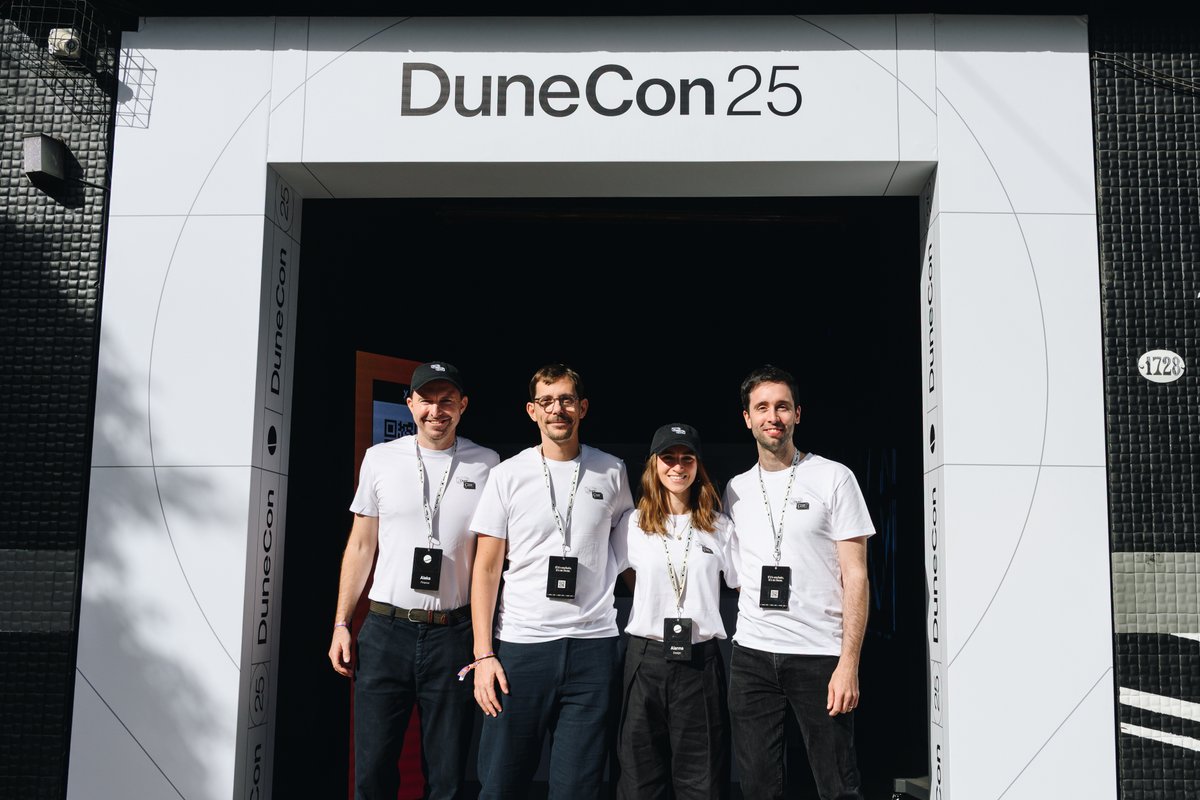
Super excited to share that the @tempo public testnet is now live. And you can start building. Since announcing in September, we've added 14 design partners: - Brex. - Coastal. - Cross River. - Deel. - Faire. - Figure. - Gusto. - Kalshi. - Klarna. - Mastercard. - Payoneer. - Persona. - Ramp. - UBS. Plus 40 infrastructure partners across dev tools, on/off-ramps, and DeFi. What's live: - Dedicated payment lanes (guaranteed blockspace for payments.) - Stablecoin-native gas Pay fees in USD stablecoins. - Built-in stablecoin DEX Pay fees in any USD stable. ly. - Native memos (e.g. Invoice numbers, cost centers, identifiers - attached to every transfer.) - 0.5 second finality Deterministic. - Passkey auth Face ID. Fingerprint. The client is open source under Apache license. Anyone can run a node. Design partners are already testing remittances, global payouts, embedded finance, tokenized deposits, and agentic commerce. Payments infrastructure. Open to everyone. Testnet available now.
English

Life update! I’ve joined @stripe to accelerate the adoption of stablecoins 🤠
We’re just beginning to unlock the benefits of stablecoins for users, and I'm so excited for the next chapter.
I went all in on crypto seven years ago because I believed it would make global payments faster, cheaper, and more accessible. Over time, the clearest path forward has become stablecoins.
But to reach their full potential, stablecoins need better infrastructure, tools that are easy to integrate and the right guardrails for users across the risk spectrum.
That’s exactly what Stripe is building with Bridge (@Stablecoin), @privy_io and @tempo: foundational infrastructure built from first principles, with the same craft and rigor Stripe is known for.
I’ve always admired Stripe’s ability to deliver exceptional products that solve user needs, and in my short time here, I can attest the obsession is real.
If you're interested in learning about our growing suite of stablecoin products, I'd love to connect. Stripe is also actively hiring, so check out our open roles and reach out!
English

First day @stripe today, helping grow the GDP of the Internet 🥳
English
Rob Love retweetledi


@RightPulseNewss Yes, I support this. We should also eliminate the pension legislators. No benefits after public service are completed.
English

🚨BREAKING: PRESIDENT TRUMP'S TERM LIMITS PLAN- Trump's plan limits House members to 6 years and senators to 12 years, which would remove 73% of the 115th Congress, including 318 House reps and 46 senators, to "Drain The Swamp."
Do you support this Plan?
A. YES
B. NO


English

After nearly 11 years at @Adyen, I’ve decided it’s time to move on.
Adyen has been an incredible journey:
~200 → 4,500+ people
~$30B → $1.3T+ in annual processed volume
~$100M → $2B+ in annual net revenue
Proud to have helped build one of the strongest infrastructures in global fintech. And grateful to everyone who made these years so meaningful. As I said at our last North America event, great companies come down to a great product, a great culture, and a great team. Adyen has all three.
Taking some time with family before starting a new and very exciting next chapter. More details soon.
Fintech is still 1% built. Onwards!

English