Rob Wüst

2.9K posts

Rob Wüst banner
Rob Wüst

Rob Wüst

@RobWust

Associate Professor Muscle Metabolism at Vrije University Amsterdam, Netherlands. Interested in skeletal muscle function in health and disease

Nederland Katılım March 2013
739 Takip Edilen7.5K Takipçiler

2026 Yıllık Özeti

@RobWust hesabının Twitter yılını gör
Rob Wüst
Rob Wüst@RobWust·
@DDEbert @chydorina This is exactly the next step that is needed. Which window is safe? We also know that pure inactivity comes with problems, such as a higher risk of obesity, diabetes and heart disease. The main parameters to study are its duration and intensity. Likely super personalized
English
0
0
1
29
🕸️Dr.T, PhD
🕸️Dr.T, PhD@chydorina·
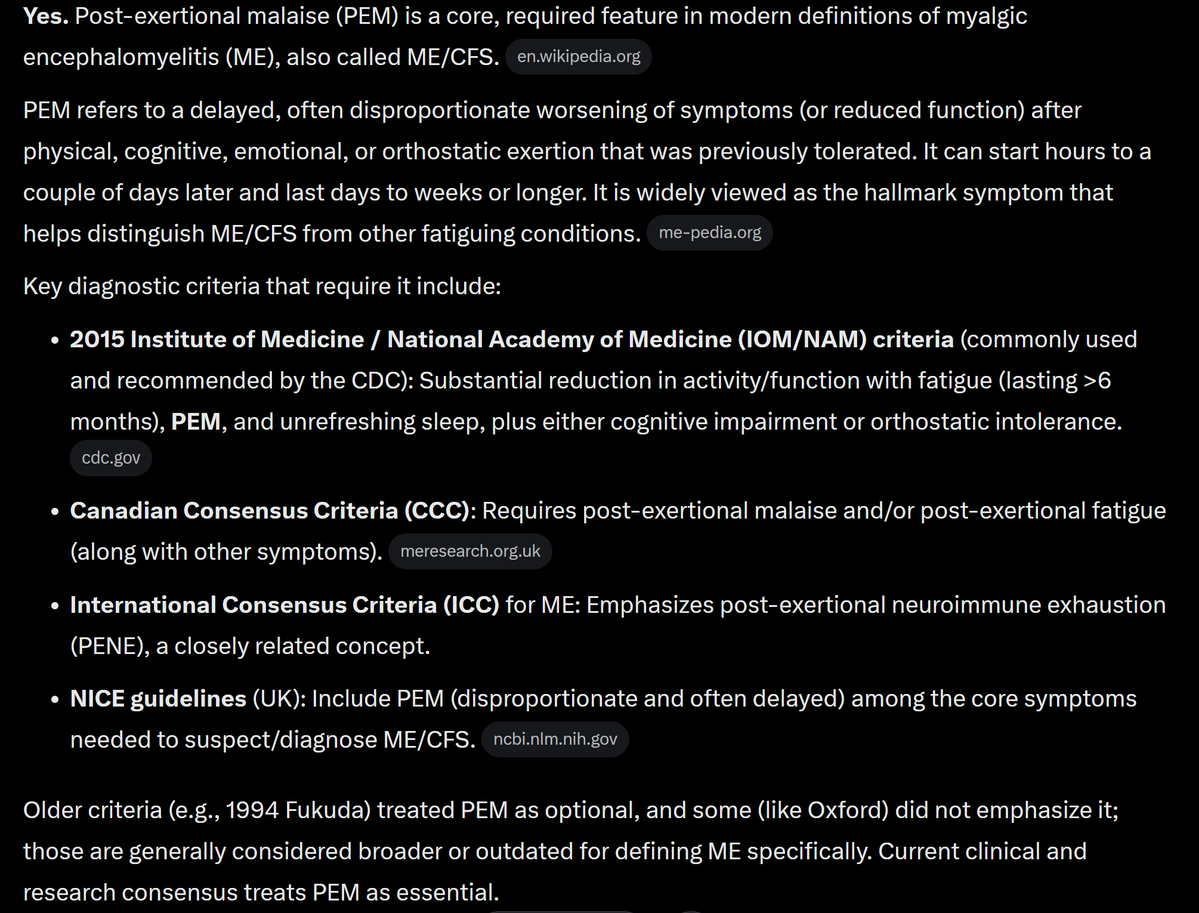
"Some people with ME improve with exercise, and some worsen." No. This is not correct. If you get better/improve with excercise it was not ME. I am not saying you were not sick - but you did not have ME. Part of the actual clinical diagnosis of ME is PEM (post-exertional malaise) a delayed negative response to activity. Please read the following.
🕸️Dr.T, PhD tweet media
lei 🪐✨🇵🇸@bff_koo

@HealMEICC @chydorina @DafoeWhitney Not everyone reacts the same way. Some people with ME improve with exercise, and some worsen. You don't get to just decide that everyone who recovers must have been faking or misdiagnosed.

English
18
32
283
8.7K
Rob Wüst
Rob Wüst@RobWust·
Please submit your best work to this conference! @ISLCPAIS. Register at islc-pais.org, where you can also find the most recent version of the complete program with lots of well known names in the field.
ISLC-PAIS Conference@ISLCPAIS

🚨 Late Breaking Abstracts are now OPEN! New data. New discoveries. New opportunity. Submit your latest research on #LongCOVID, #MECFS and #PAIS before 30 July 2026. Join leading international experts at the 2026 Amsterdam ISLC-PAIS Conference (26–29 August, Amsterdam). Deadline 30 July! 🔗 islc-pais.org/late-breaking-… #Research #Science #Conference

English
3
15
63
2.9K
Zachary Grin
Zachary Grin@ZacharyGrinDPT·
@RichieGoulding1 @RobWust I did not do that. It’s offensive & unprofessional to claim that I did in a condescending way. I read it line by line & it’s basic/obvious criticisms. A serious researcher would welcome constructive criticism as it is a necessary part of scientific inquiry. Not a good look! 👎
English
2
0
3
62
Zachary Grin
Zachary Grin@ZacharyGrinDPT·
🚨 Some researchers & clinicians are praising this new Long Covid/ME/CFS paper as definitive evidence that patients are “not just deconditioned.” I think the authors (again) over-interpret what their data show & major methodological limitations are being overlooked as usual 🧵
Putrino Lab@PutrinoLab

Incredible work published by @RobWust and team showing us, once again, that when people experience post-exertional symptoms as part of a #LongCOVID or #MECFS diagnosis, they are experiencing biological changes that are PHYSIOLOGICALLY DISTINCT from deconditioning. Wust has 1/

English
5
2
12
6.9K
Rob Wüst
Rob Wüst@RobWust·
@TeamPostX @Molbaas @NatureComms Deconditioning can still contribute to the changes we see in patients, but it’s not the only explanation of the changes we see. Patients are not as active as well trained athletes and diabetes and cardiovascular diseases can still develop in patients. These are treatable btw
English
1
0
7
115
PostX #UniteToFight2024
@Molbaas @RobWust @NatureComms Maybe the initial question of the study was simply: do we find a distinct disease pattern in the muscle tissue of ME/LC, beyond the changes expected from sedentary behaviour, when compared with a bed rest group?
English
1
0
0
84
Rob Wüst
Rob Wüst@RobWust·
@ZacharyGrinDPT the study was performed in response to 2 letters we received after our Appelman 2024 Nature comms paper stating that our data were just explained by inactivity. That’s the reason for the non-predefined cohort analysis performed by 2 PhDs sitting next to each other
English
0
0
4
69
Rob Wüst
Rob Wüst@RobWust·
@ZacharyGrinDPT Yes, it’s an exploratory study that generates hypotheses on what explains these adaptations. We did a literature study (Charlton TEM 2025), and highlighted some other factors that should be studied next: autoimmunity, some factors in endothelial or central nervous system
English
2
1
4
276
Zachary Grin
Zachary Grin@ZacharyGrinDPT·
Another concern is image assessment. The paper describes manual exclusion of biopsy images with artifacts, poor focus, etc but doesn’t report whether assessors were blinded. It’s possible they were blinded but they forgot to state this in the paper. If not, there’s potential bias
English
2
0
0
378
Rob Wüst
Rob Wüst@RobWust·
@ZacharyGrinDPT This is true, but how would you study this then in an ideal world? Is your approach also practically feasible?
English
0
0
3
34
Zachary Grin
Zachary Grin@ZacharyGrinDPT·
Activity exposure also wasn’t fully characterized. Step counts tell us very little about exercise intensity, years of altered activity, time upright, resistance training, or pre-illness fitness. Those factors could easily influence muscle adaptation.
English
3
0
1
382
Rob Wüst
Rob Wüst@RobWust·
@ZacharyGrinDPT Hi, I am reading along here. We have unpublished data that supports the notion that it’s not the pre-disease condition that explains this. Hopefully some of this will be published soon.
English
2
0
5
67
Zachary Grin
Zachary Grin@ZacharyGrinDPT·
Also, the patient data are cross-sectional. There are no pre-illness muscle biopsies. We don’t know whether fiber types, mitochondrial function, or capillary changes developed after illness or whether some differences already existed beforehand.
English
2
0
5
471
PwME 4 bioMEdical research
@RobWust @siribjl @NatureComms Ideally and since you have the post-mortem brain biobank doing specific ME research in the 🇳🇱, do you think that one day you can also study other tissues/organs? Although I would assume that it would not be the same as ex-vivo muscle biopsies.
English
1
0
8
161
Rob Wüst
Rob Wüst@RobWust·
@siribjl @ValeBodi @NatureComms Yes thigh muscles indeed. Skeletal muscle pump are roughly the same muscles. Not sure about diaphragm or heart. We wished we could study this, but it’s very hard to get biopsies from these muscles
English
1
1
22
637
S.B Larsen
S.B Larsen@siribjl·
@RobWust @ValeBodi @NatureComms Thank you @RobWust and all cobtributors. Did you investigate this in thigh muscles? Does this then apply to every mucle in the body, incl heart, diaphragm and skeletal muscle pump?
English
1
1
8
732
Rob Wüst
Rob Wüst@RobWust·
@canonicalmodel @NatureComms Hi, where you there with us during the experiments? Yes we published a literature study about long covid and two about bed rest. What about you?
English
5
0
9
487
Name
Name@canonicalmodel·
@RobWust @NatureComms I don't get it; this has been proven a long time ago, but instead of ESA, it was NASA, but you don't even mention that. Did you even do a literature study?
English
1
0
0
536
Rob Wüst
Rob Wüst@RobWust·
@scott_scientist @NatureComms Patients were indeed mild to moderate. They were able to come to the hospital and perform a maximal cycle exercise. We won’t do this with severe patients.
English
2
0
48
856
Scott Daniska
Scott Daniska@scott_scientist·
Curious in how you selected patient population here… “Only after bed rest is oxidative phosphorylation capacity associated with maximal oxygen uptake.” Since I’ve become more severe, no amount of bed rest helps my symptoms. Makes me think this population is more mild in disease pathology.
English
2
0
14
1.2K
Rob Wüst
Rob Wüst@RobWust·
@ValeBodi @HalfThePerson @domsalisbury @stlle_vik @NatureComms Yes. All LC and ME patients fulfilled CCC. Our ME patients were diagnosed before 2020. We don’t know if the time since disease onset or the disease pathology itself is the cause of any difference between LC and ME. The bedrest study was conducted in 2019
English
7
0
3
148
Rob Wüst
Rob Wüst@RobWust·
@IBonnx Niet op basis van deze studie. We weten niet of LC en ME hetzelfde is, maar we vermoeden wel een zekere overlap. Onze ME patienten waren langer ziek, dus mogelijke verschillen kunnen verklaard worden door een verschil in ziekte, of een verschil in de tijd waarin men ziek zijn
Nederlands
5
0
23
657
Rob Wüst
Rob Wüst@RobWust·
@TeamPostX @NatureComms Because it can still contribute. People with Long covid and ME/CFS are still much more sedentary than non-patients. If an elite athlete gets ill, it will still become less active and therefore the muscles still adjust to the new level of physical activity
English
3
0
43
1.7K
PostX #UniteToFight2024
@RobWust @NatureComms „physical inactivity cannot solely explain the lower exercise capacity and skeletal muscle adaptations in long COVID and ME/CFS patients.“ Why solely?
English
1
0
15
1.4K
Rob Wüst
Rob Wüst@RobWust·
@TeamPostX @esa @DLR_en Inactivity itself is also not good for muscle structure and function, and can also cause obesity, signs of diabetes and cardiovascular diseases
English
2
0
3
141
PostX #UniteToFight2024
@RobWust @esa @DLR_en Why alone? Why should „inactivity“ at all explain any symptoms in a subtype of LC? „Exercise less“ might prevent further damage.
English
1
0
3
114