

Rodrigo Rebouças ☕️🚴🏽♂️🏳️
6K posts
Rodrigo Rebouças ☕️🚴🏽♂️🏳️
@rodrigor
#SoftwareEngineering researcher, assistant professor @ UFPB - Brazil. #TechnicalDebt #BusinessProcessManagement - tip: follow @tracy_techdebt
João Pessoa, Brasil Katılım Mart 2008
1.4K Takip Edilen1.6K Takipçiler

Looking back on this thread post launch I think basically everything still holds true. Especially that you should, if you can afford both, also buy a Quest if you haven’t already.
There’s so much mature content there, as well as lots of weird and frankly poor content. A lot to learn from in both directions. Experiencing as much VR content as possible will help you build intuition about it. Without that, you’ll likely waste a lot of time trying things that don’t work.
English
Vision Pro mega-thread 1/5:
My advice for designing and developing products for Vision Pro. This thread includes a basic overview of the platform, tools, porting apps, general product design, prototyping, perceptual design, business advice and more.
Disclaimer: I’m not an Apple representative. This is my personal opinion and does not contain non-public information.
Overview:
Apps on visionOS are organized into “scenes”, which are Windows, Volumes, and Spaces.
Windows are a spatial version of what you’d see on a normal computer. They’re bounded rectangles of content that users surround themselves with. These may be windows from different apps or multiple windows from one app.
Volumes are things like 3D objects, or small interactive scenes. Like a 3D map, or small game that’s not immersive.
Spaces are fully immersive experiences where only one app is visible. That could be full of many Windows and Volumes from your app. Or like VR games where the system goes away and it's all custom content. You can think of visionOS itself like a Shared Space where apps coexist together and you have less control. Whereas Full Spaces give you the most control and immersiveness, but don’t coexist with other apps. Spaces have immersion styles: mixed, progressive, and full. Which defines how much or little of the real world you want the user to see.
User Input:
Users can look at the UI and pinch like the demo videos show. But you can also reach out and tap on windows directly, sort of like it’s actually a floating iPad. Or use a bluetooth trackpad or video game controller. You can also look and speak in search bars, but that’s disabled by default for some reason on existing iPad and iOS apps running on Vision Pro. There’s also a Dwell Control for eyes-only input, but that’s really an accessibility feature. For a simple dev approach, your app can just use events like a TapGesture. In this case, you won't need to worry about where these events originate from.
Spatial Audio:
Vision Pro has an advanced spatial audio system that makes sounds seem like they’re really in the room by considering the size and materials in your room. Using subtle sounds for UI interaction and taking advantage of sound design for immersive experiences is going to be really important. Make sure to take this topic seriously.
Development:
If you want to build something that works between Vision Pro, iPad, and iOS, you'll be operating within the Apple dev ecosystem, using tools like XCode and SwiftUI. However, if your goal is to create a fully immersive VR experience for Vision Pro that also works on other headsets like Meta's Quest or PlayStation VR, you have to use Unity.
Apple Tools:
For Apple’s ecosystem, you’ll use SwiftUI to create the UI the user sees and the overall content of your app. RealityKit is the 3D rendering engine that handles materials, 3D objects, and light simulations. You’ll use ARKit for advanced scene understanding. Like if you want someone to throw virtual darts and have them collide with their real wall, or do advanced things with hand tracking. But those rich AR features are only available in Full Spaces. There’s also Reality Composer Pro which is a 3D content editor that lets you drag things around a 3D scene and make media rich Spaces or Volumes. It’s like Diet-Unity that’s built specifically for this development stack.
One cool thing with Reality Composer is that it’s already full of assets, materials, and animations. That helps developers who aren’t artists build something quickly and should help to create a more unified look and feel to everything built with the tool. Pros and cons to that product decision, but overall it should be helpful.
Existing iOS Apps:
If you're bringing an iPad or iOS app over, it will probably work unmodified as a Window in the Shared Space. If your app supports both iPad and iPhone, it’ll look like the iPad version.
You can use the Ornament API to make little floating islands of UI in front of, or besides your app, to make it feel more spatial. But that’s not something all existing apps get automatically. Ironically, if your app is using a lot of ARKit features, you’ll likely need to ‘reimagine’ it significantly as ARKit has been upgraded a lot.
If you’re excited about building something new for Vision Pro, my personal opinion is that you should prioritize how your app will provide value across iPad and iOS too. Otherwise you're losing out on hundreds of millions of users.
Unity:
You can build to Vision Pro with the Unity game engine, which is a massive topic. Again, you need to use Unity if you’re building to Vision Pro as well as a Meta headset like the Quest or PSVR.
Unity supports building Bounded Volumes for the Shared Space which exist alongside native Vision Pro content. And Unbounded Volumes, for immersive content that may leverage advanced AR features. Finally you can also build more VR-like apps which give you more control over rendering but seem to lack support for AR Kit scene understanding like plane detection. The Volume approach gives RealityKit more control over rendering, so you have to use Unity’s PolySpatial tool to convert materials, shaders, and other features.
Unity support for Vision Pro allows for tons of interactions you’d expect to see in VR, like teleporting to a new location or picking up and throwing virtual objects.

English
Rodrigo Rebouças ☕️🚴🏽♂️🏳️ retweetledi

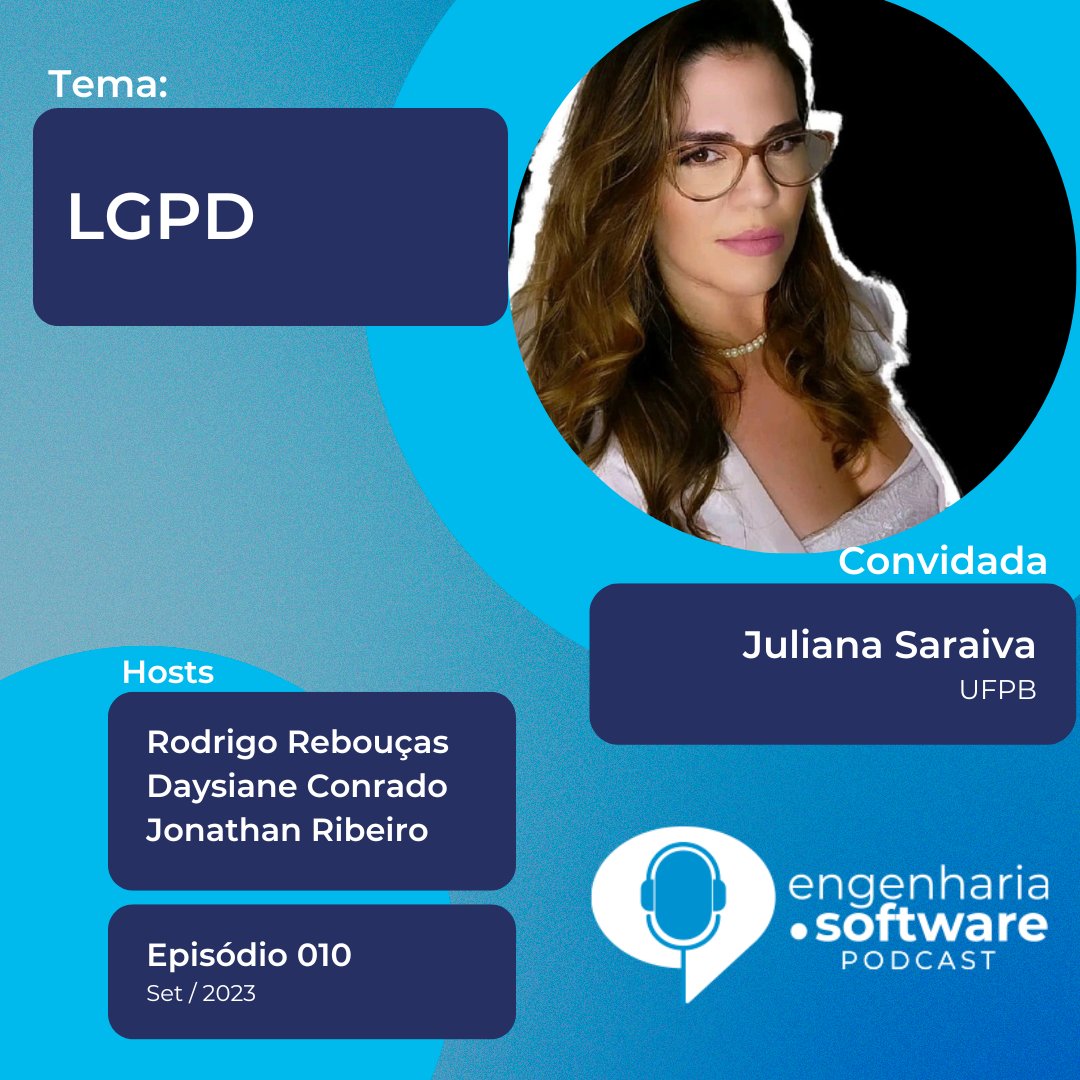
🎙️ Engenharia.Software EP10! Mergulhamos na #LGPD e os desafios dos nossos dados no mercado. Conversa esclarecedora com Prof. Juliana Saraiva da UFPB, especialista em proteção de dados. Não perca! 🔗 engenharia.software/ep010 🚀 #engenhariadesoftware #Podcast
Português
Podcast engenharia.software@EngPontoSoft
O episódio de maio já está disponível! Focamos na tecnologia #Blockchain: como ela impulsiona as criptomoedas e suas aplicações no desenvolvimento de software. Com insights do professor Daniel Faustino da #UFPB. Confira! 🔗engenharia.software/ep009 #podcast #blockchain #tecnologia
Português
English
Rodrigo Rebouças ☕️🚴🏽♂️🏳️ retweetledi

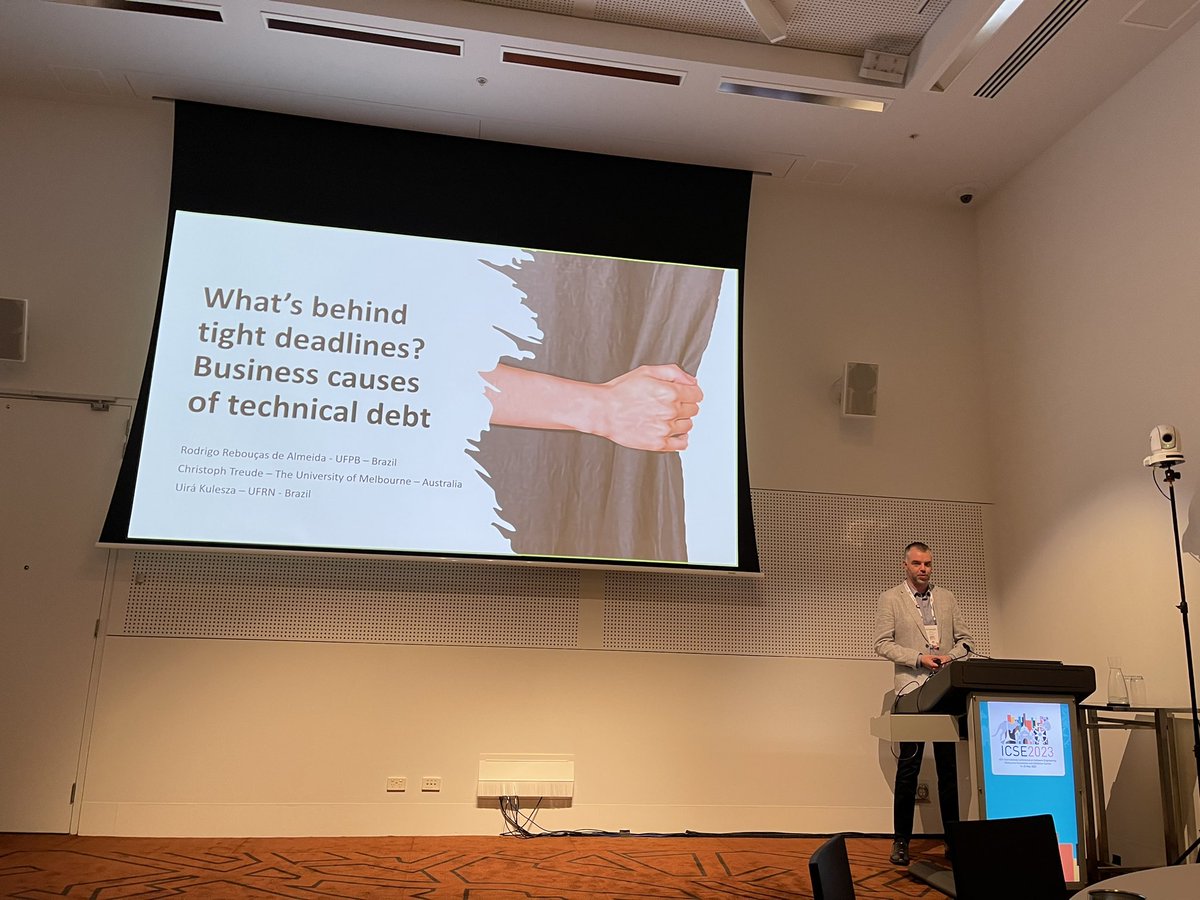
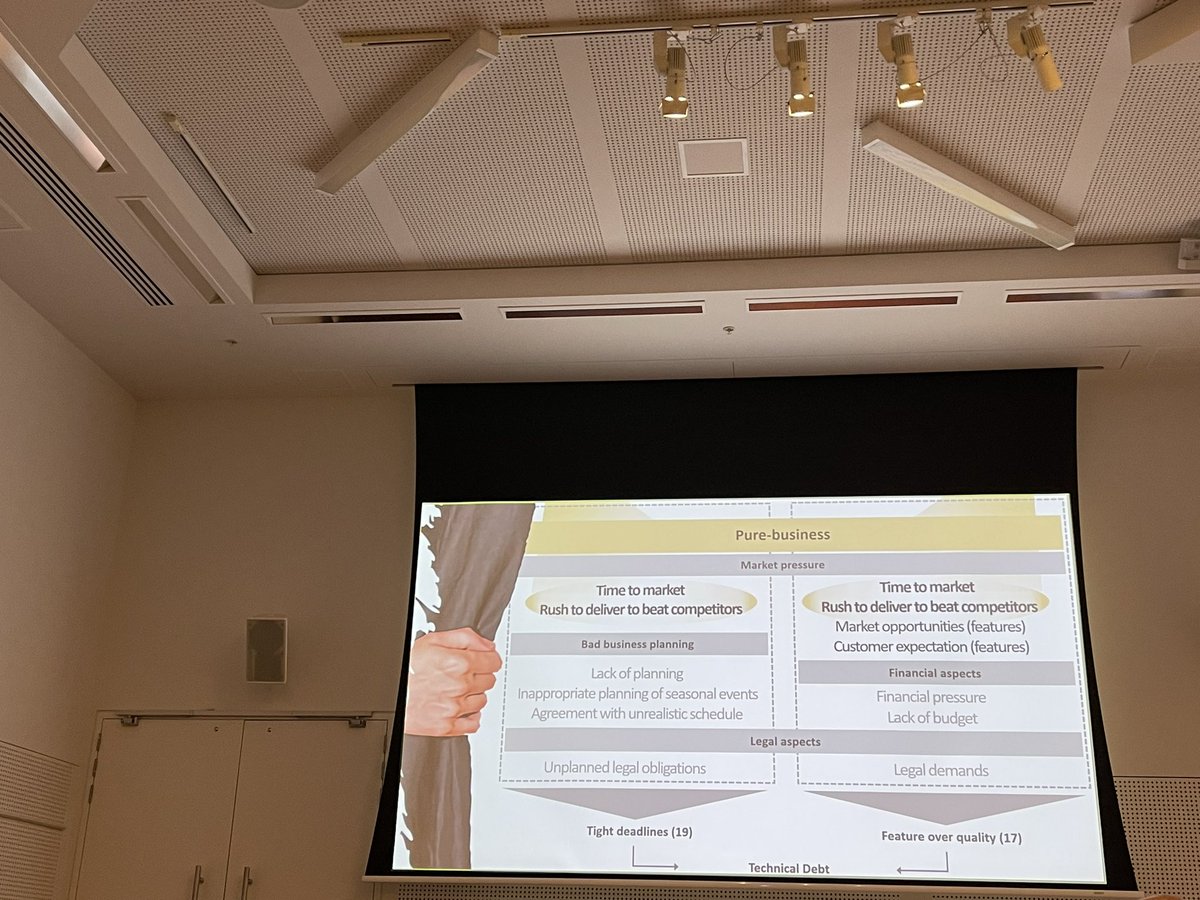
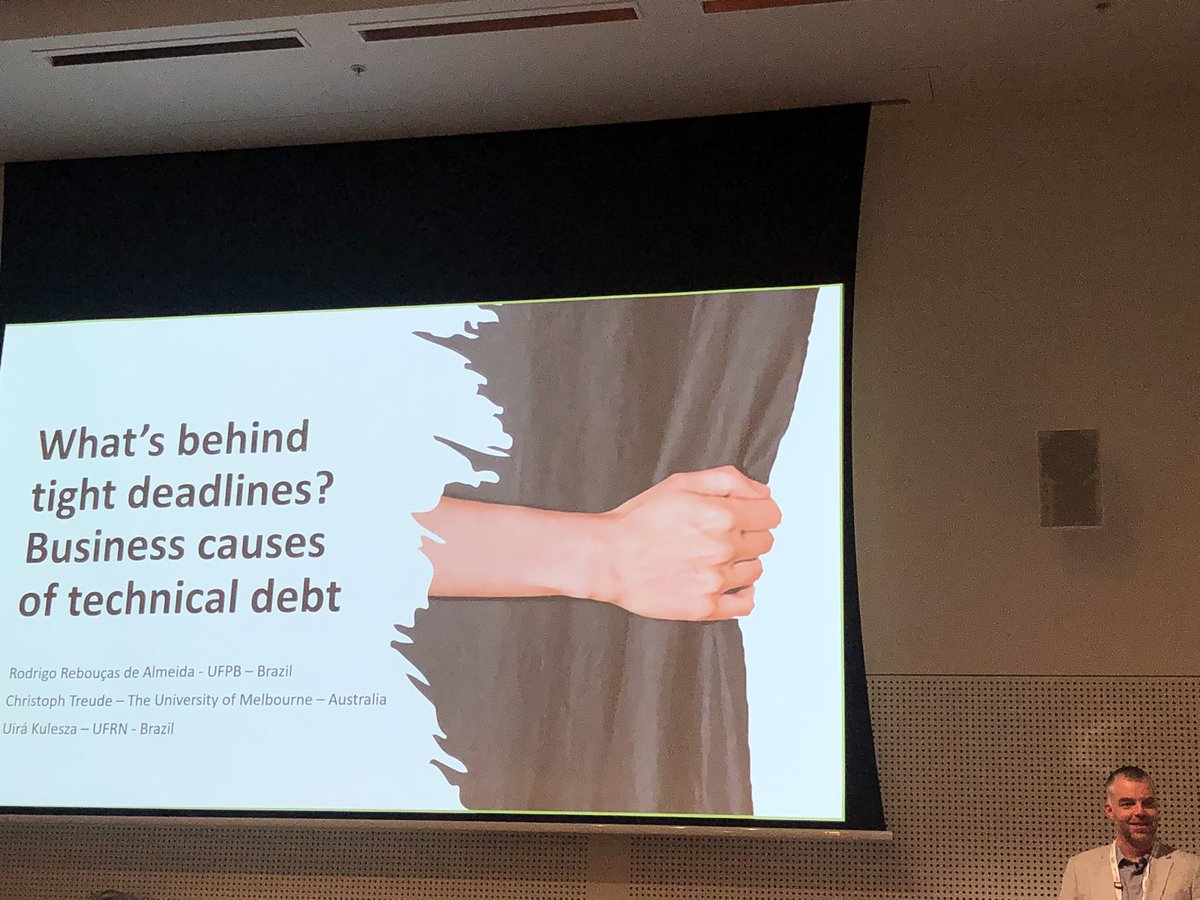
Christopher Treude helping build a better understanding of the business pressures behind Technical debt. #CHASE2023

English
Rodrigo Rebouças ☕️🚴🏽♂️🏳️ retweetledi

Yet another paper from Brazilian co-authors at #chase2023 @uirakulesza and his PhD student Rodrigo Rebouças, presented by honorary Brazilian @ctreude
Melbourne, Victoria 🇦🇺 English
Depois de uns meses arrumando a casa, novo episódio, com nova equipe.
Aprenda sobre o #ChatGPT e #IAsGenerativas .
Se possível, dê uma força pro podcast.
Siga @EngPontoSoft .
Inscreva-se no Youtube ou siga no Spotify.
RT Plz.
Podcast engenharia.software@EngPontoSoft
🚀 Novo Episódio! ChatGPT e IAs Generativas #008 🎧 Aprenda sobre o #ChatGPT e #IAsGenerativas com o professor Yuri Malheiros @yurimalheiros da UFPB! #InteligênciaArtificial 💡 📺 YouTube: youtu.be/AfN6j4hszow 🎧 Spotify: open.spotify.com/episode/5Vtptc…
Português
@paulohsms Jóia! De fato, cases são fundamentais! Valeu!
Português
Bom dia! O que não pode faltar numa disciplina de empreendedorismo, num curso de computação?
Português
@felixcoutinho Importante! Vou fazer uma parceria com a disciplina de ética!
Português

@rodrigor Como empreender sem destruir pessoas e a carreira dos outros.
Português
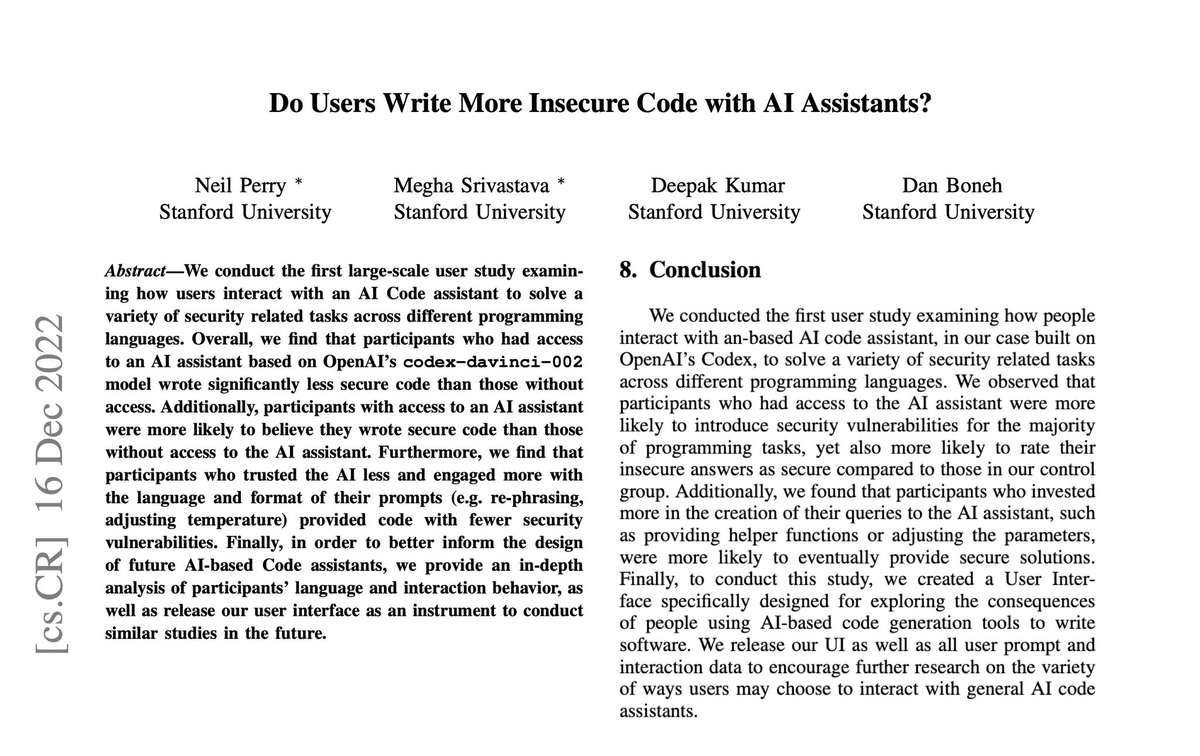
@mboehme_ We are losing the "war" against AI... It's only a matter of time before future research answers the same question with a big NO. 😨
🙃
English

Rodrigo Rebouças ☕️🚴🏽♂️🏳️ retweetledi


@realAIexandre ✅Queima muitas calorias
(Principalmente quando você sai para caminhar ou correr pensando no problema que precisa resolver) ;-)
Português


Foto da placa: 20 anos dessa aglomeração de final de curso na UFCG

Português
Rodrigo Rebouças ☕️🚴🏽♂️🏳️ retweetledi

Top 6 #Java testing libraries every Java developer should know about and use 👇
English
@FronteirasES Uma universidade pública oferece inúmeras oportunidades de formação técnica e não-técnica. Pesquisa, extensão, empreendedorismo, trabalho em equipe, participação em projetos, monitorias, eventos, etc etc. ainda é um ambiente de formação muito rico. Recomendo fortemente!
Português

Fizemos um post tempos atrás sobre valer a pena ou não fazer mestrado.
Mas será que hoje em dia, na nossa área, vale a pena fazer graduação?
Português