Romaan Basit

2.8K posts

Romaan Basit banner
Romaan Basit

Romaan Basit

@romaanbasit

Researcher, Graduate of Islamic Studies, Student of History | Exploring Islamic thought in the modern world

United Kingdom Katılım Nisan 2020
902 Takip Edilen1.2K Takipçiler
Sabitlenmiş Tweet
Romaan Basit
Romaan Basit@romaanbasit·
Sharing my recently published article on naskh (abrogation) in the Quran. It explores 👇 - Historic development of the theory - ⁠Usage of the term in early Islam - ⁠The 3 types of abrogation - ⁠How the 5 remaining ‘abrogated’ verses can be reconciled… alhakam.org/five-abrogated…
English
1
11
20
816
Romaan Basit retweetledi
Podcast Notes 🗒️
Podcast Notes 🗒️@podcastnotes·
Huberman's list for surviving the hardest time of your life has 5 things on it: 1. Build your committee (books + podcasts count) 2. Try prayer (yes, the Stanford neuroscientist said that) 3. Physiological sigh when you're spiraling 4. Treat sleep like medicine 5. Train even when it's ugly w/@ChrisWillx
English
10
74
865
61.9K
Romaan Basit retweetledi
DAN KOE
DAN KOE@thedankoe·
You need to write more. Without AI. Without templates. Without knowing what you're writing about. Just you, an idea, and enough time to do the difficult cognitive work necessary to reach true understanding. If you don't, your ability to think will drastically decline.
English
647
1.2K
9.8K
361K
Romaan Basit retweetledi
Romaan Basit
Romaan Basit@romaanbasit·
Sharing my recently published article on naskh (abrogation) in the Quran. It explores 👇 - Historic development of the theory - ⁠Usage of the term in early Islam - ⁠The 3 types of abrogation - ⁠How the 5 remaining ‘abrogated’ verses can be reconciled… alhakam.org/five-abrogated…
English
1
11
20
816
Romaan Basit retweetledi
Aman
Aman@Amank1412·
Two things are happening right now. 1. People are doom scrolling 4-5 hours a day. Brains are turning into mush. People cannot sit with a hard problem for 10 minutes. 2. People are using Al for everything. They cannot write a simple email without ChatGPT. They can't do basic math. They can't think independently.
English
268
300
3.6K
244.3K
Romaan Basit retweetledi
Seyfeddin Kara
Seyfeddin Kara@KaraSeyfeddin·
Finally, the official version of the handbook cover is ready!
Seyfeddin Kara tweet media
English
10
64
320
12.8K
Romaan Basit retweetledi
🍂
🍂@Lovandfear·
To improve your writing, read more. To improve your thinking, write more. To improve your storytelling, present more. To improve your energy, rest more. To improve your understanding, teach more. To improve your network, give more. To improve your happiness, appreciate more.
🍂 tweet media
English
14
438
1.6K
31.1K
Romaan Basit retweetledi
Al Hakam
Al Hakam@AlHakamWeekly·
📢 NEW RESEARCH ARTICLE 📜 The five ‘abrogated’ verses: Evolution of the naskh (abrogation) theory in the Quran and its resolution in Ahmadiyya thought The Quran is considered by Muslims to be the final and universal law revealed by an All-Knowing God, which has been perfectly preserved and remains unchanged since its revelation to Prophet Muhammad (sa). Yet, whilst maintaining this belief, the majority of Muslim scholars throughout the ages have accepted that certain verses in the Quran were completely cancelled and replaced by others. They also believed that certain verses were revealed to the Prophet (sa) but are not included in the Quran we have today. The number of such “abrogated” verses varies drastically, but the higher end of these counts reaches into the hundreds and as much as 8% of the entire Quran.[1] Perhaps most striking is the claim that one single verse (the “Sword Verse”) abrogated a total of 124 verses in one clean strike.[2] The doctrine of abrogation (naskh), which gradually became a genre in its own right in the eighth century during the era of the tabi‘un (successors of the Companions), is one of the most contentious topics within the Quranic sciences. Scholars disagree on most aspects of the theory: the very definition of naskh, the methods of its application, and whether the theory is even valid in the context of the Quran. A minority of scholars even rejected this doctrine altogether, asserting that any perceived contradiction between two verses of the Quran can, and should, be explained and reconciled. Early evidence suggests that the Companions of Prophet Muhammad (sa) did not use the term naskh in the rigid, technical sense that later scholars developed – which is how most Muslims understand it today. Their usage was very fluid and figurative, and did not always connote complete cancellation. Over time, however, as the genre developed and tight technical definitions were formed, a dramatic inflation in the number of supposedly “abrogated” verses occurred. Three types of Quranic abrogation were eventually formalised: the verse is present in the Quran but its ruling has been abrogated and replaced; both the verse and its ruling have been abrogated and are not present in the Quran; and finally, the verse is not present in the Quran, but its ruling remains operative. The implications of this theory cannot be ignored. If parts of the Quran were permanently cancelled, in what sense can it be deemed perfectly preserved, eternally valid and universal? What is to be made of certain passages that were meant to be a part of the Quran but are not, irrespective of whether it was just the text of the verse, or both text and ruling, that were left out? Narrations of this nature suggest that roughly 10% of the Quran could have been lost.[3] For a believer in a preserved scripture, revealed by an All-Knowing God, such implications raise serious theological problems. Such challenges form the basis of this study. The historical evolution of the doctrine of abrogation, from its early usage to its later technical expansion and formalisation, is traced. The three types of abrogation are examined, after which a reconciliation and explanation of the five remaining “abrogated” verses as recognised by Shah Wali Allah (d. 1762) in his al-Fawz al-Kabir is presented in light of Ahmadiyya scholarship. Each pairing of “abrogated” and “abrogating” verses is independently discussed. The perceived count of abrogation has thus been brought down to zero, thereby rejecting the application of the abrogation theory to the Quran. Tap on the link in bio to read the full article 👆
Al Hakam tweet media
English
2
65
122
2.5K
Romaan Basit retweetledi
Al Hakam
Al Hakam@AlHakamWeekly·
🔴 New Podcast on IRAN WAR Iran War: US-Israel Propaganda EXPOSED by Former BBC Journalist! Full Video on YouTube: AlHakamOnline Link in bio 👆
English
2
66
119
3K
Romaan Basit retweetledi
Atif Rashid
Atif Rashid@AtifRashid_·
This is why we built @AnalystNews_ - our mainstream media fails to provide context, clarity or critique of government propaganda and merely parrots warmongering talking points. Follow @AnalystNews_ on Instagram, TikTok and YouTube.
Masu Zafi 🔥🔥@masuzafi

Examine the strategic framing and narratives employed by major British news outlets in their anti-Iran coverage, highlighting how media messaging shapes public perception and supports geopolitical objectives.

English
0
2
6
324
Romaan Basit retweetledi
Al Hakam
Al Hakam@AlHakamWeekly·
✨️ As we share our happiness with our loved ones, we must not forget the bigger picture: a true Eid that lasts forever can only be attained when we decide to change our definition of celebration to fit what Islam has taught us. Continuing the deeds of Ramadan, we must remember Allah and His creation; we must work hard to create peace where dark forces seek to create war. May Allah enable us to do so. Amin and Eid Mubarak 🌙
Al Hakam tweet media
English
4
51
104
1.5K
Romaan Basit retweetledi
Idrīs | إِدْرِيسْ
Idrīs | إِدْرِيسْ@idrisyounis·
Ibn Jawzi (رحمه الله) said something so beautiful He said beating your desires gives a stronger joy than any pleasure The one who follows his desires becomes weak and humiliated but the one who controls them becomes strong and respected.
Idrīs | إِدْرِيسْ tweet media
English
5
287
1.3K
24K
Romaan Basit retweetledi
Listen Brother
Listen Brother@Listen_Brothers·
Once you realize that anything can happen; sickness, death, lose your job... Literally, anything in the blink of an eye, you become very humble. Tables turn and that's how crazy life can get. Bro, always pray, stay humble, and be thankful.
English
8
22
80
2.3K
Romaan Basit retweetledi
Al Hakam
Al Hakam@AlHakamWeekly·
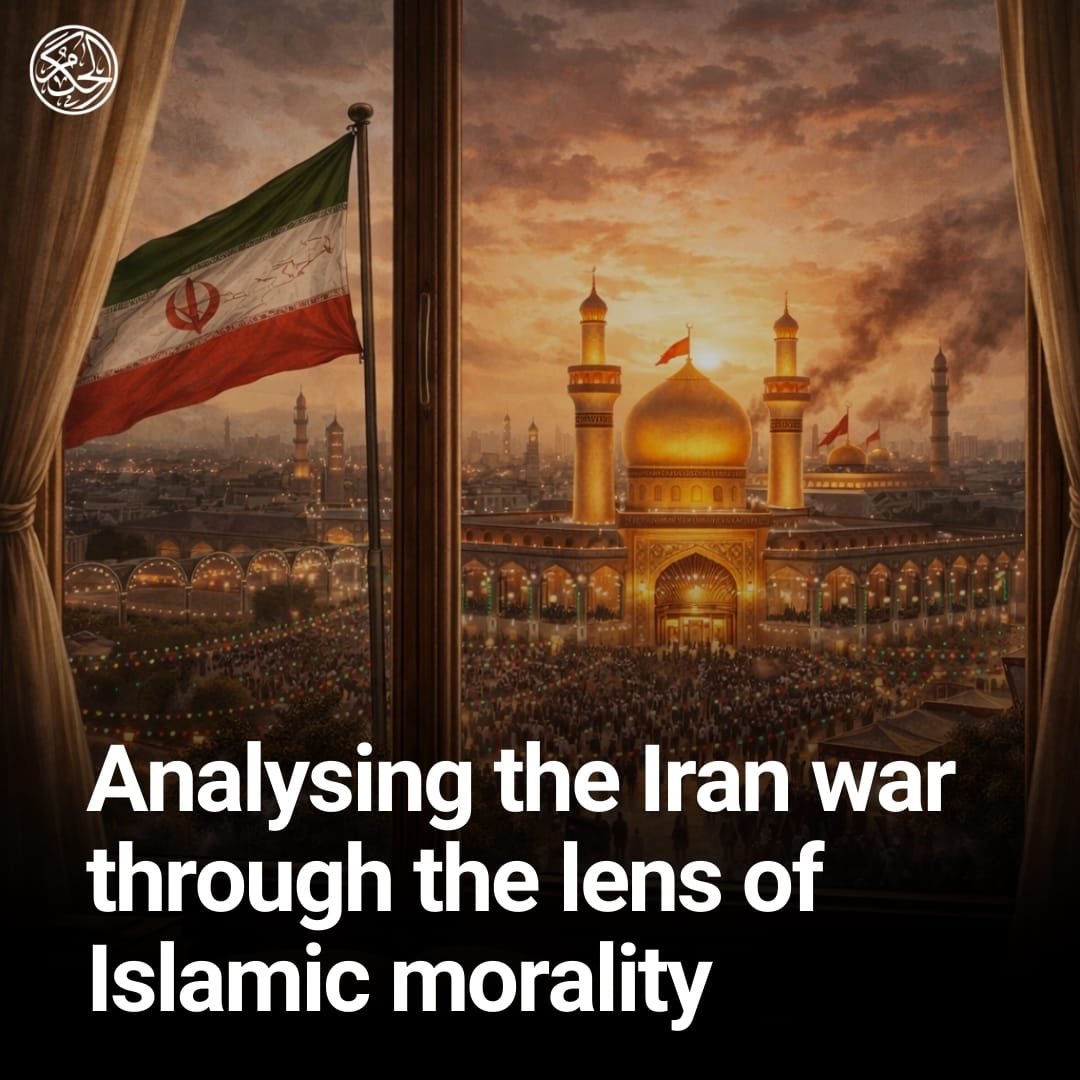
In any war, the first casualty is the truth. If we view the current Middle East conflict through the fog of war, it is difficult to determine the realities and motives on the ground. Warmongering propaganda has often portrayed Muslim nations as “backward” and “barbaric”, rhetoric similar to that used before the illegal Iraq War in 2003 and now directed against Iran. Iran, a nation of 90 million people and a civilisation going back 2500 years, cannot be reduced to simple good or evil narratives. Every nation has flaws and weaknesses as well as positive qualities. If the conflict is viewed through the eyes of Islamic morality rather than the fog of war and political narratives, more just and informed conclusions can be reached. The war escalated when America and Israel attacked Iran during negotiations over its nuclear programme, despite mediators stating that a deal was “within reach”. According to the Holy Quran, war is only justified for self-defence, to save people from tyranny and persecution, or to protect religious freedoms. A war of aggression is fundamentally un-Islamic, and peace talks must be treated seriously. Concerns about Iran’s nuclear programme have long been raised, yet there is no evidence it sought to build a nuclear weapon. Former Supreme Leader Ali Khamenei had issued a fatwa against nuclear weapons, declaring them immoral and un-Islamic. Iran has repeatedly stated that its nuclear programme was for peaceful energy purposes only. Those accusing Iran of being a nuclear threat are themselves nuclear powers, while the United States remains the only nation to have used nuclear weapons in war. Islamic teachings on warfare strictly prohibit killing women, children, the elderly and other noncombatants, and forbid destroying crops, property or places of worship. Even during conflict, Muslims are commanded to uphold justice and honour their pledges. Ultimately, the Muslim world must strive to live as brothers, adopt Islamic principles of peace and unity, and rely on Allah rather than outside powers for protection and prosperity. Tap on the link in bio to read the full article 👆
Al Hakam tweet media
English
3
69
120
2.3K
Romaan Basit retweetledi
Mohit Panchal
Mohit Panchal@itsbookgains·
Difficult books demand patience because they ask the reader to slow down and think carefully about each idea. In a world filled with quick information and constant distraction, the act of reading slowly becomes a form of intellectual discipline. The reader who struggles through complex ideas gradually develops a stronger mind. Understanding does not appear instantly, but grows through repeated effort and reflection. Just as physical exercise strengthens the body, intellectual effort strengthens the mind. The reader who learns to endure the temporary confusion of difficult books eventually discovers insights that remain hidden from those who only seek easy reading.
English
64
427
1.8K
45.6K
Romaan Basit retweetledi
Paul Williams
Paul Williams@freemonotheist·
Subtle propaganda
Paul Williams tweet media
English
22
1.6K
8.1K
68.8K
Romaan Basit retweetledi
Paul Williams
Paul Williams@freemonotheist·
This was once a controversial statement. Now it's just government policy
Paul Williams tweet media
English
67
1.5K
3.7K
53.1K
Romaan Basit retweetledi
Fitzroy Morrissey
Fitzroy Morrissey@fitzmorrissey·
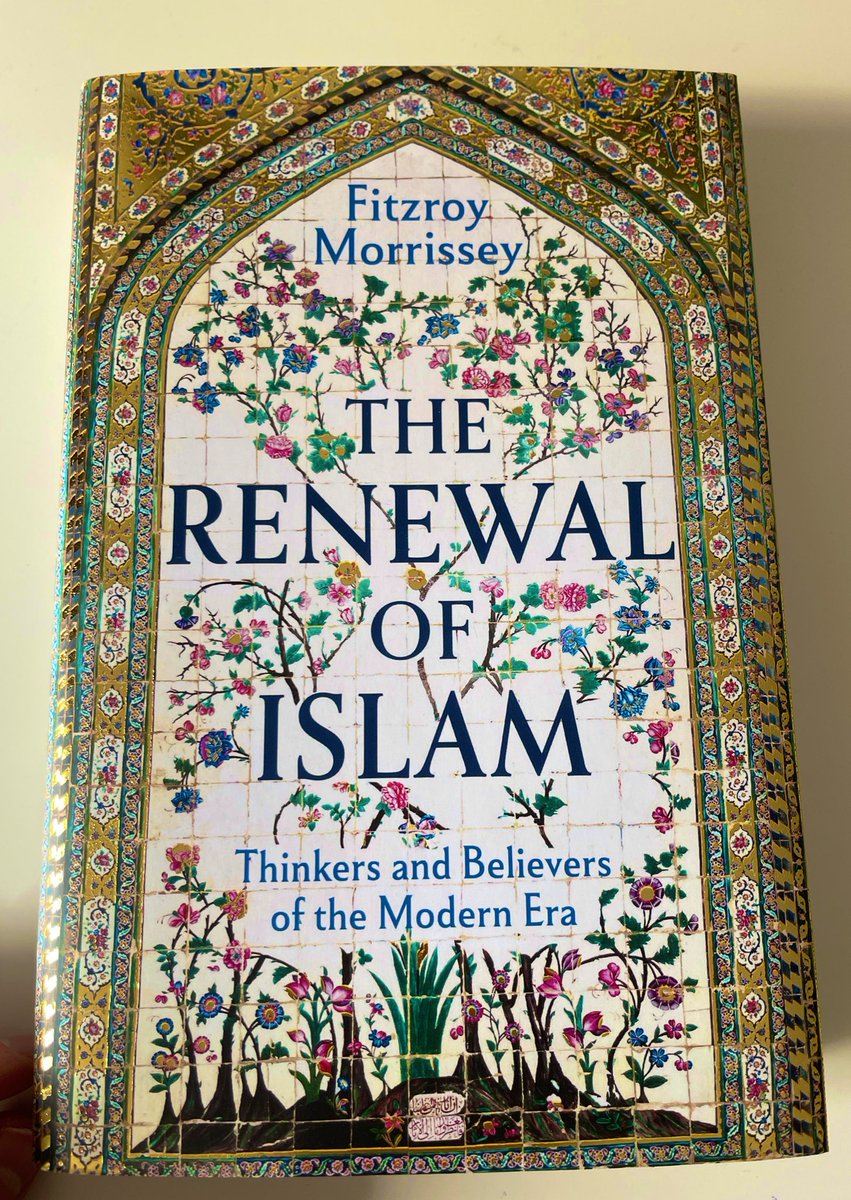
My new book, The Renewal of Islam (@HoZ_Books), is an intellectual history of the movements of renewal and reform that have shaped Islamic thought in the modern period (18th-21st centuries). bloomsbury.com/uk/renewal-of-…
Fitzroy Morrissey tweet media
English
8
61
340
19.1K
Romaan Basit retweetledi
Boze Herrington, Library Owl 😴🧙‍♀️
It should scare you that they’re trying to automate all the things that bring you joy: reading, writing, painting, playing games, all the things that nourish the soul. They want you so jaded & worn down by work that you lack the capacity to do anything but scroll on your phone.
English
49
1.6K
6.1K
68.9K