chris

1.5K posts

chris

chris

@rosebud990

Katılım Eylül 2010
1.8K Takip Edilen108 Takipçiler
chris retweetledi
🍓🍓🍓
🍓🍓🍓@iruletheworldmo·
i’ve grown tired of pretending this is still moving at human speed. something shifted with mythos. not in the theatrical “the robots woke up” way people like to mock. in the quieter, colder way. the kind where a lab looks at its own evals and realises the old categories stopped working. we assumed the next jump would be obvious. bigger data centres. louder chips. power plants, yottaflops, national infrastructure, the whole cathedral of compute. turns out the dangerous part was never just scale. it was what happens when reasoning becomes a substrate. when the model stops merely answering and starts searching the problem space like a thing that has its own private geometry. mythos is the tell. not because it is magic. not because it is conscious. because it shows the curve bending in public while everyone is still arguing over yesterday’s slope. a general model, not even built as a cyber weapon, starts finding vulnerabilities humans missed for years. not toy bugs. not classroom puzzles. real systems. old systems. the kind of hidden cracks entire industries quietly depend on not being visible. and the part nobody wants to sit with is this: the next models do not need to be ten times larger to be ten times more consequential. capability is no longer arriving as a clean linear upgrade. it is arriving as compression. tasks that took experts days become agent loops. workflows that required teams become prompts plus tools. reasoning that looked impossible last year becomes a benchmark nobody cares about by spring. the public still thinks intelligence means chat. a box that writes emails. a search engine with manners. a productivity toy wearing a human voice. but behind the curtain, the labs are measuring something else entirely. autonomy length. planning depth. tool fluency. exploit chaining. internal representations that generalise across domains before anyone has a satisfying explanation for why. models that don’t just know more, but stay coherent longer. push further. recover from mistakes. test their own outputs. route around obstacles. that is the real threshold. not “can it talk like us”. can it operate. because once a model can hold a goal across time, decompose it, verify progress, use tools, and improve its own path through the maze, the world changes shape. suddenly intelligence is not a product feature. it is labour. it is research. it is reconnaissance. it is leverage. and leverage compounds. this is why the mythos moment feels different. it is not another chatbot release. it is a warning flare from the frontier. a signal that the next generation of models will not merely be better at conversation. they will be better at execution. better at discovering structure. better at finding the thing we missed because our brains were never built to search that many branches at once. we are not ready for what comes next. not culturally. not legally. not institutionally. maybe not even psychologically. because the next wave will not announce itself as science fiction. it will arrive as a workflow improvement. a security tool. a coding agent. a research assistant. a quiet multiplier embedded into every system that matters. meanwhile mainstream conversation is still “will ai replace junior developers” and “can it make me a nicer spreadsheet”. brother. we are watching non-human cognition become operational infrastructure, and everyone is still asking whether it can write better emails.
English
46
32
264
21.9K
chris retweetledi
Josh Kale
Josh Kale@JoshKale·
Claude just hacked this guy's computer to recover $400k of lost Bitcoin 🤯 He had 5 BTC locked in a wallet for 9 year and nothing worked until he fed Claude his old wallet files. Here's what happened next: → Claude analyzed the wallet's encryption structure → Found a bug in btcrecover that no human caught → The password wasn't what he thought. It was sharedKey + password concatenated together → Claude decrypted the private keys → Converted them to WIF format → Verified the addresses on-chain → 5 BTC recovered That's $400,000 sitting in a dead wallet that an AI resurrected Professional crypto recovery services charge 20%. That's $80,000 this guy would have paid a specialist if they could even solve it The craziest part is that Claude found a bug in the recovery software itself and wrote its own decryption logic. Truly crazy times
English
2
8
62
10.4K
chris retweetledi
Matt Shumer
Matt Shumer@mattshumer_·
Been hearing wild stuff from folks inside big companies lately. Promotions, firings, and perf reviews are getting decided by tokens consumed and skills/MCPs connected. That’s the metric. That’s how they’re deciding who’s “good at AI.” It gets worse. People are literally running loops to burn tokens and look productive. Doing nothing, racking up “usage,” getting rewarded for it. Meanwhile the person actually shipping with 2 skills and 50M tokens looks like a laggard next to the one who burned a billion tokens producing nothing. These companies are walking into a death spiral and don’t see it. The funniest part? Measuring actual output is easier than ever. You have AI. Use it. In 18 months the same execs will announce “AI didn’t deliver ROI” and pull the budget. AI will have worked fine. They just measured the wrong fucking thing and torched millions rewarding theater over output. Every company should be pushing AI hard. But this is how you guarantee it fails.
English
94
30
362
94.6K
chris retweetledi
Michael Green
Michael Green@profplum99·
Extremely good post
James E. Thorne@DrJStrategy

Food for thought. Trump, Hormuz and the End of the Free Ride For half a century, Western strategists have known that the Strait of Hormuz is the acute point where energy, sea power and political will intersect. That knowledge is not in dispute. What is new in this war with Iran is that the United States, under Donald Trump, has chosen not to rush to “solve” the problem. In Hegelian terms, he is refusing an easy synthesis in order to force the underlying contradiction to the surface. The old thesis was simple: the US guarantees open sea lanes in the Gulf, and everyone else structures their economies and politics around that free insurance. Europe and the UK embraced ambitious green policies, ran down hard‑power capabilities and lectured Washington on multilateral virtue, secure in the assumption that American carriers would always appear off Hormuz. The political class behaved as if the American security guarantee were a law of nature, not a contingent choice. Their conduct today is closer to Chamberlain than Churchill: temporising, issuing statements, hoping the storm will pass without a fundamental reordering of their responsibilities. Trump’s antithesis is to withhold the automatic guarantee at the moment of maximum stress. Militarily, the US can break Iran’s residual ability to contest the Strait; that is not the binding constraint. The point is to delay that act. By allowing a closure or semi‑closure to bite, Trump ensures that the immediate pain is concentrated in exactly the jurisdictions that have most conspicuously free‑ridden on US power: the EU and the UK. Their industries, consumers and energy‑transition assumptions are exposed. In that context, his reported blunt message to European and British leaders, you need the oil out of the Strait more than we do; why don’t you go and take it? Is not a throwaway line. It is the verbalisation of the antithesis. It openly reverses the traditional presumption that America will carry the burden while its allies emote from the sidelines. In this dialectic, the prize is not simply the reopening of a chokepoint. The prize is a reordered system in which the United States effectively arbitrages and controls the global flow of oil. A world in which US‑aligned production in the Americas plus a discretionary capability to secure,or not secure, Hormuz places Washington at the centre of the hydrocarbon chessboard. For that strategic end, a rapid restoration of the old status quo would be counterproductive. A quick, surgical “fix” of Hormuz would short‑circuit the dialectic. If Trump rapidly crushed Iran’s remaining coastal capabilities, swept the mines and escorted tankers back through the Strait, Europe and the UK would heave a sigh of relief and return to business as usual: underfunded militaries, maximalist green posturing and performative disdain for US power, all underwritten by that same power. The contradiction between their dependence and their posture would remain latent. By declining to supply the synthesis on demand, and by explicitly telling London and Brussels to “go and take it” themselves, Trump forces a reckoning. European and British leaders must confront the fact that their energy systems, their industrial bases and their geopolitical sermons all rest on an American hard‑power foundation they neither finance nor politically respect. The longer the contradiction is allowed to unfold, the stronger the eventual synthesis can be: a new order in which access to secure flows, Hormuz, Venezuela and beyond, is explicitly conditional on real contributions, not assumed as a right. In that sense, the delay in “taking” the Strait, and the challenge issued to US allies to do it themselves, is not indecision. It is the negative moment Hegel insisted was necessary for history to move. Only by withholding the old guarantee, and by saying so out loud to those who depended on it, can Trump hope to end the free ride.

English
154
88
1.1K
592.3K
chris
chris@rosebud990·
@JoshKale What a great writeup. The future will be great !
English
1
0
1
134
chris retweetledi
mike bski
mike bski@BskiMike22802·
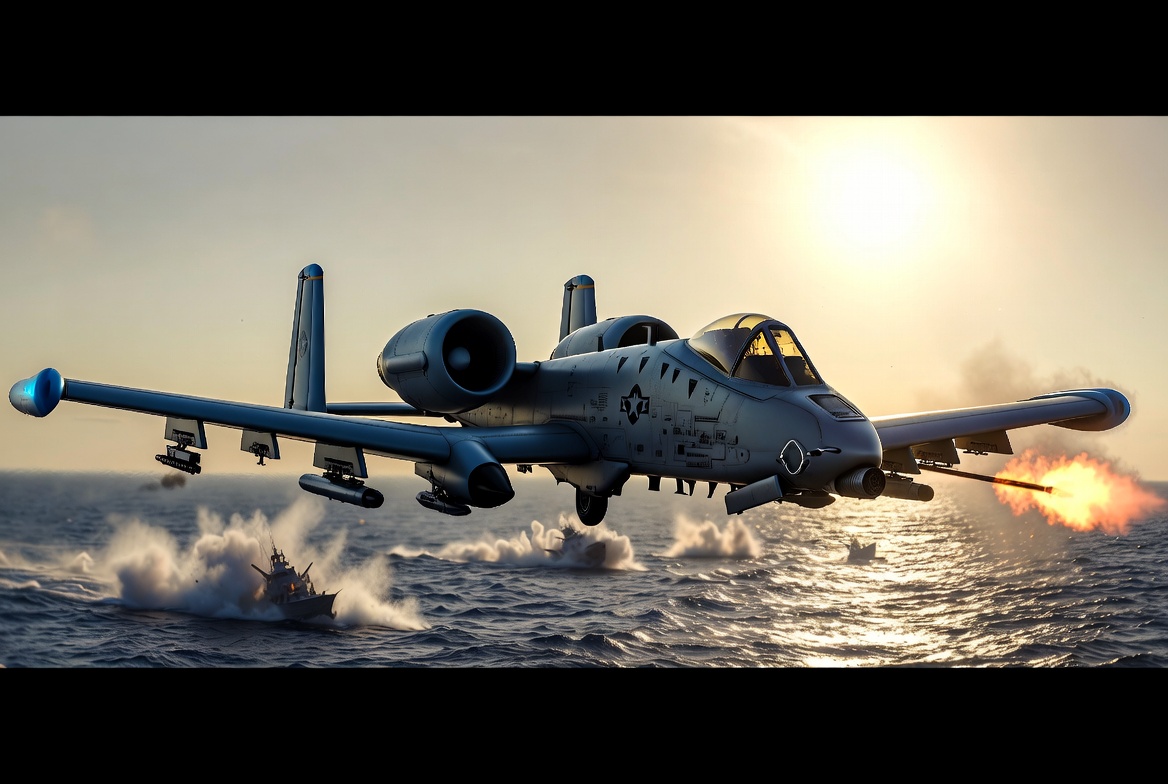
A LOVE LETTER TO THE UGLIEST, MOST IMPORTANT AIRPLANE AMERICA EVER BUILT I am a physics teacher. I teach my students that when a pattern repeats itself enough times, it stops being a coincidence and starts being data. And when the data contradicts the conclusion, you do not defend the conclusion. You throw the conclusion out and follow the data. The Air Force has tried to retire the A-10 Warthog something like seven times. Seven times. Every single time — EVERY single time — a real shooting war starts, the retirement plan quietly disappears and the Warthog shows back up doing the job no other aircraft on Earth does as well. You would think that pattern would eventually produce a different conclusion in the procurement meetings. You would be wrong. But the data does not lie, even when the procurement meetings do. And right now, on Day 26 of Operation Epic Fury — right now, TODAY — A-10 Warthogs are over the Straits of Hormuz turning Iranian fast-attack boats into what I am going to generously describe as floating debris. So I wrote it a love letter. Because somebody should. --- FIRST, LET ME EXPLAIN WHAT I MEAN BY 'UGLY' --- The A-10 does not look like a fighter jet. It looks like an engineer was given a GAU-8 Avenger cannon — which is, to be clear, a seven-barreled Gatling gun the SIZE of a Volkswagen Beetle that fires 30mm depleted uranium rounds at 3,900 rounds per minute — and then told to build an airplane around it. Because that is almost exactly what happened. The engine pods stick out from the tail section like afterthoughts. The landing gear, instead of retracting cleanly into the fuselage, leaves a little bulge hanging out. The nose is blunt. The whole aircraft has the aesthetic of something designed by someone who was told the specifications and then ran out of time to make it pretty. Beautiful aircraft are designed around aerodynamics. Around low radar cross-section. Around marketability to congressional appropriators who have never heard a radio call with their own name on it. The A-10 was designed around one question: how do we keep the pilot alive while he puts steel exactly where the guys on the ground need it to be in the next thirty seconds? Everything else was secondary. EVERYTHING. The titanium bathtub cockpit that can stop 23mm rounds. The redundant hydraulic systems so that if one gets shot out, the other keeps flying. The widely-separated engine pods so that one hit does not take out both engines. The foam-filled self-sealing fuel tanks. The manual reversion backup system — cables, physical mechanical linkages — so that if ALL the hydraulics fail, the pilot can still fly the aircraft home using nothing but the original mechanical connection between the stick and the control surfaces and the strength in his or her own arms. This is not 1970s technology that has not been updated. This is 1970s design philosophy that has never been wrong. There is a difference. Pay attention to it. --- APRIL 7, 2003. AND I NEED YOU TO STAY WITH ME ON THIS ONE --- Her name is Kim Campbell. Her callsign is Killer Chick. At the time of this story she was a lieutenant colonel, and I want to tell you what happened over Baghdad on April 7th, 2003, because I do not think enough people know it and because every time I think about it I feel something I can only describe as the particular combination of admiration and rage that comes from watching bureaucracies try to throw away things that matter. She was flying her A-10A on a close air support mission. Baghdad. April 2003. The city was not, shall we say, a low-threat environment. Her aircraft took a direct hit from enemy ground fire. Not a graze. A DIRECT HIT. The hit destroyed both hydraulic systems — both of them, completely — and caused significant structural damage to the aircraft. Everything that makes a modern aircraft flyable is, under normal circumstances, hydraulically assisted. You lose hydraulics, you lose the ability to move the control surfaces that make the aircraft go where you point it. She switched to manual reversion. This is the part I want you to understand. Manual reversion is not a computer backup. It is not a digital system that kicks in. It is a set of mechanical cables — physical, metal cables connected through pulleys — that create a direct link between the pilot's control stick and the aircraft's control surfaces. No assistance. No amplification. Just the pilot's actual physical strength and the mechanical connection that the A-10's designers put there in the 1970s because they assumed — correctly — that real combat means real damage and they were not going to let a hydraulic failure kill the pilot if they could help it. She flew that aircraft for over an hour. In manual reversion. Over hostile territory. Not knowing what else might be structurally compromised. Not knowing if the next thing that happened would be the thing that ended it. She landed it safely. She was awarded the Distinguished Flying Cross. Now. I want you to answer this question for me. What is the manual reversion backup system on the F-35? There is not one. The F-35 is fly-by-wire. The pilot inputs go through computers. If the electronics are compromised beyond a certain threshold, you are not flying home on cables. I am not saying the F-35 is a bad aircraft. It is an extraordinary aircraft. I am saying that the people who designed the A-10 understood something that modern procurement culture has largely forgotten: the enemy gets a vote. The aircraft is going to get hit sometimes. The question is not "will it survive a hit?" — the question is "when it gets hit, does the pilot come home?" Killer Chick came home. Because the designers of her airplane thought about the moment she was in and built the answer into the airframe before she was born. I find that extraordinarily moving. I make no apologies for that. --- THE PEOPLE WHO KEEP SHOWING UP TO CONGRESS --- Every time there is a retirement hearing, something interesting happens. The Air Force shows up and argues to retire the A-10. They bring slides. They have acquisition cost comparisons and sortie generation models and capability matrices and everything else that looks rigorous and data-driven from 30,000 feet. And then the Army shows up. The Marine Corps shows up. The Special Operations Forces community shows up. The Joint Terminal Attack Controllers — the JTACs, the men and women whose job it is to call in airstrikes from the ground while people are actively shooting at them — they show up. And they use words the Air Force slides do not have a column for. Words like "guardian angel." That is a direct quote from official congressional testimony. Not my word. Not my framing. An actual operator, in front of an actual congressional committee, describing the A-10 as a guardian angel. You know what that word means when it comes from someone who has been in the situation where they needed it? It does not mean "highly capable air asset." It means: I was in a bad place, the radio call went through, and that aircraft showed up and the calculus changed. The Air Force does not have a metric for that. Because the Air Force was not in the bad place. The JTAC was. There is also the sound. I know that sounds strange in an official procurement argument, so let me explain it, because it matters more than the Air Force acknowledges. The A-10's engines have a distinctive low grinding sound that travels. The GAU-8 firing — that BRRRT — is one of the most instantly recognizable sounds in modern warfare. And the documented, verified, prisoner-interview-supported effect of that sound on enemy combatants is real and significant. It disrupts coordinated attacks. It changes behavior. Enemy forces who know the A-10 is overhead make different decisions than enemy forces who do not. A fast mover at 20,000 feet that drops a bomb and is gone in four seconds does not produce that effect. The aircraft that LOITERS — that circles, that is visible, that can stay for hours — that produces that effect. The A-10 loiters. It loiters at $6,000 an hour. The F-35 loiters — when it loiters — at $30,000 to $35,000 an hour. I have a student who can tell you exactly how much that ratio matters in a sustained campaign. She is sixteen years old. She figured it out in about forty-five seconds. --- THE FLY-OFF THEY DID NOT WANT YOU TO SEE --- The 2017 National Defense Authorization Act mandated a formal comparison test. A-10C versus F-35A. Close air support, airborne forward air control, combat search and rescue. The Air Force hated this idea. The Chief of Staff at the time, General Mark Welsh, called it publicly — on the record — a "silly exercise." A silly exercise. They ran the tests anyway. April 2018 through March 2019. The final report was completed in February 2022. And then — and this is the part that made my jaw drop when I found out — the Air Force buried it for over a year. Would not release it. Fought FOIA requests. The Project On Government Oversight had to sue them in federal court to get it. And when it came out, it was so heavily redacted that key findings are still hidden. That is not the behavior of an organization confident in its conclusions. Here is what the report actually found — even through the redactions. The A-10's typical loadout enabled MORE attacks per sortie than the F-35. Not equal. More. To hit the same number of targets, you need more F-35 sorties. That might be acceptable if the F-35 had a great readiness rate. It does not. As of a 2023 Government Accountability Office report, the entire F-35 fleet has a full mission capable rate of BELOW 50%. Below fifty percent. Half the jets do not work on any given day. So you need MORE sorties from an aircraft that is available LESS often. That is not a capability gap. That is a capability crater. The F-35's gun — the GAU-22 — has documented accuracy problems. The report actually recommended the Air Force "fix the F-35A gun." It carries 181 rounds of 25mm. The A-10's GAU-8 carries 1,350 rounds of 30mm. The A-10 pilots reported SIGNIFICANTLY LOWER workload than F-35 pilots on the most complex missions. Oh — and as of the testing period, F-35 pilots had ZERO dedicated training requirements for close air support missions. Zero. So what did the testers do? They loaded the F-35 side of the comparison with former A-10 pilots who already knew how to do the job, specifically to "minimize the impact" of that training gap. The former A-10 pilots, flying the F-35, still did not outperform the A-10. Let that land. The Air Force fought the test, lost the test, buried the results, and then continued retiring the aircraft anyway. At some point, as I tell my students, "I ignored the data" stops being an oversight and starts being a choice. --- WHAT I KNOW ABOUT WAITING --- I was a line medic in Iraq. Combat medic. Actual forward operating base, actual radio, actual contact. I want to explain something to you about what it feels like to be on the ground in a firefight waiting for air support, because I do not think the people making these procurement decisions have ever had to think about it from that angle, and I think they should. In a near-peer conflict without air superiority, we were told to plan for 48-hour medical response windows. Forty-eight hours. I am a former paramedic. I know what the golden hour means. The window — roughly one hour — inside which surgical intervention makes the difference between a soldier walking home and a soldier coming home in a flag-draped box. Tension pneumothorax. Hemorrhagic shock. Traumatic brain injury. All survivable. All survivable if you reach a surgeon inside an hour. Not survivable after forty-eight hours of waiting for a medevac that cannot fly because there is no air cover to protect the helicopter on final approach. When the A-10 is overhead, the medevac can fly. The A-10 suppresses the ground fire that would shoot that helicopter down. It is not just killing things. It is keeping the route clear. It is the reason the helicopter makes it to the landing zone and the reason the landing zone is still there when it arrives. The people arguing about sortie generation rates and procurement costs have not done that math. I have. I do not apologize for caring about it. --- THE PART NOBODY WANTS TO SAY OUT LOUD --- The A-10 community is the only community in the United States Air Force that still produces fully qualified Forward Air Controllers Airborne. FAC(A). This is the skill set that makes combined arms operations work — multiple aircraft, ground coordination, danger-close fires in complex environments, all managed simultaneously by a single aircrew who have spent their careers learning how to do exactly this and nothing else. That knowledge lives in people. Specifically in A-10 pilots. And when those pilots retire, it does not transfer to a shared drive. It goes with them. The Air Force's current plan — and I want to be precise here, because this is not editorializing, this is documented fact — the current plan involves zero dedicated CAS training requirements for F-35 pilots. Zero. They are retiring the one community specifically trained for this mission and replacing it with a community that does not train for the mission at all. I ask my students a version of this question sometimes. If you fire your only chemistry teacher and replace them with a math teacher who has never taken chemistry and has no plans to learn it, what happens to your chemistry program? They always get the answer right. They are sixteen. --- SO WHAT DO WE ACTUALLY BUILD --- Not a refurbished 1970s airframe with duct tape and digital displays. I want to be clear about that. Metal fatigue is real. The youngest A-10 in the fleet is older than the parents of my students. That is not a forever solution and nobody who has looked at the maintenance reality is pretending otherwise. I want a new one. An A-10X. Clean-sheet design, same mission philosophy, fifty years of technology applied to it. Modern high-bypass turbofan engines — more thrust, 25-30% better fuel efficiency, lower infrared signature, and specifically designed from the start to work WITH the GAU-8 instead of tolerating it. Gun-gas ingestion is a known issue on the TF34s; it can be engineered away with current combustion technology and active flow control. You want the plane built around the gun. Build the engines around the gun too. Selective radar-absorbent materials on leading edges and key surfaces. Not stealth. Low-observable. The goal is not invisibility — it is cutting detection range in half. If a SAM that sees the current A-10 at 40 kilometers only sees the A-10X at 15, the pilot has time to react. That is survivability engineering. It is not complicated and it is not expensive. A compact AESA radar — pylon-mounted or conformal, leveraging existing F-16 and F/A-18 arrays, under $10 million per aircraft for integration. Ground moving target indication. Synthetic aperture mapping. Self-defense tracking. The same array in electronic attack mode to jam enemy search radars. Software-defined. Redundant. Armored. Updated armor suite — hybrid titanium-ceramic composite with aerogel thermal insulation, better protection at 20 to 30 percent less weight. That freed-up weight goes to payload. The aerogel is not just for armor — it reduces the aircraft's infrared signature, which matters enormously at low altitude where IR-guided threats are the primary danger. Loyal wingman integration. Control stations for four to six semi-autonomous drones operating under pilot supervision. Scout ahead. Carry additional munitions. Draw fire. Act as decoys against radar-guided threats. The pilot issues high-level commands; the AI handles tactical execution. One aircraft becomes a multi-platform strike package. The GAU-8 stays. Upgraded ammunition options — programmable airburst for troops in the open, improved armor-piercing for vehicles, smarter ballistic computer integrated with AESA ranging. You do not redesign the part that works. You make it smarter. Cost per airframe in a production run of 200-plus: roughly $80 to $120 million. That is half the cost of an F-35. Operating costs: approximately $22,000 per flight hour on the upgraded platform versus $42,000 for the F-35. In a 100-sortie operational day that is $2 million in daily savings. Per day. In a sustained campaign. I am a physics teacher and I like a clean ratio. The math is not difficult. The will to acknowledge what the math says apparently is. --- DAY 26. OPERATION EPIC FURY. --- Let me bring this back to right now. March 2026. The F-35s went in first. When Iran's integrated air defense network was intact, the fifth-generation platforms did what fifth-generation platforms do — they penetrated contested airspace, suppressed and destroyed the air defenses, and dismantled the threat environment. That is the exact right use of those aircraft and they did it effectively. Not arguing otherwise. Then the A-10 showed up. 120-plus Iranian naval vessels sunk or damaged. Mine-layers: gone. PMF command infrastructure in Anbar Province: struck with precision, seven killed, thirteen wounded in a single pass. IRGC fast-attack boat fleet in the Straits: being reduced to floating scrap at $6,000 an hour. Chairman of the Joint Chiefs confirmed it. The A-10 is, in his exact words, "hunting and killing fast-attack watercraft in the Strait of Hormuz." One F-35A took a hit during a deep strike mission. Suspected passive IR sensors bypassing radar stealth. Emergency landing. Pilot with shrapnel wounds. Aircraft returned safely — and that is genuinely good news. But the aircraft that no one can seem to stop trying to retire has taken zero losses. Zero. Because the people who designed it assumed it was going to get hit and built the answer into the airframe before the pilots who fly it were born. Killer Chick flew home on cables. That is not mythology. That is engineering. And it is the engineering philosophy we need to preserve, update, and build again. --- THE CLOSING ARGUMENT --- The people who keep showing up to testify — year after year, hearing after hearing, retirement announcement after retirement announcement — are not defense contractors protecting a revenue stream. They are Army officers and Marine officers and SOF operators and JTACs who have been in the bad place, made the radio call, and watched what happened next. They call it a guardian angel. They use that word in official testimony. In front of Congress. On the record. And every year, the Air Force brings out another retirement package. I want us to stop having this conversation on a two-year loop. I want someone in the Pentagon to look at the fly-off results they tried to suppress, the testimony they keep ignoring, the current operational results over the Straits of Hormuz, and say the thing out loud: NOT EVERY MISSION REQUIRES A $200 MILLION STEALTH PLATFORM. Some missions require something that flies low and slow and stays for hours and absorbs a hit and brings the pilot home on cables if everything else fails. Build the A-10X. Keep the community. Preserve the institutional knowledge. Let Killer Chick's generation train the next one. The Warthog does not need your respect. It just needs your enemy to look up. What do you think — should we build an A-10X or retire the mission entirely? Reply below. I will be here But what do I know — I am only a physics teacher and former Army combat medic who stood on the ground in a combat zone and learned firsthand what close air support means when YOU are the one waiting for it, who wrote the physics textbook being used to teach the next generation of soldiers how the world actually works, and who apparently has run out of patience for procurement decisions made by people who have never had to make that radio call. #MAGA #Veterans #Trump
mike bski tweet mediamike bski tweet mediamike bski tweet media
English
254
416
1.6K
96.3K
chris retweetledi
The Ukrainian Review
The Ukrainian Review@UkrReview·
🇺🇦🇺🇸🇮🇷 Zaluzhnyi: A potential US ground invasion of Iran would result in a military disaster for American forces. Modern battlefield technologies and attrition strategies make the presence of ground troops in such zones nearly impossible. Read more 👀 theukrainianreview.info/zaluzhnyi-on-u…
English
49
427
1.6K
273.4K
chris retweetledi
TONY™
TONY™@TONYxTWO·
Seriously - WATCH ALL OF THIS! 🔥🔥👇🏼 “We got people literally camping in the streets, crying, lightning candles, holding signs, getting f*cking arrested, doing the most for people who broke into this country illegally, but when it comes to American veterans sleeping under the bridges, suddenly there’s not even a f*cking thought.” “Y’all will shut down traffic for someone who hopped the fence, but won’t block a single street for the Marine who hopped on the f*cking grenade and came home invisible. And you weird a** politicians love to say we don’t have the money, but somehow there’s always enough money for people who aren’t f*cking citizens. That’s not a lack of funds, that’s a choice.” “Fix our house first. Honor the people who built and defended it. Then we can talk about having guests over. Until that sh*t happens. Don’t talk to me about compassion.”
English
2.1K
18.1K
57K
450.6K
chris retweetledi
Guy Swann
Guy Swann@TheGuySwann·
There's an intuitively obvious way to know beyond reasonable doubt that the daycare situation is fraud: If you actually had a legitimate business and someone with 1M+ followers came to your establishment with a camera to post online, you'd be overjoyed with the opportunity to show them around or brag about your daycare. Real business owners pay 10s of thousands of dollars for that kind of exposure. The only reason you would lock down, get vicious, defensive, or violent, is because you got caught in a lie. Period.
English
559
2.7K
21.5K
11M
chris retweetledi
Rothmus 🏴
Rothmus 🏴@Rothmus·
Fair
Rothmus 🏴 tweet media
Français
358
3.8K
30.4K
622.5K
chris retweetledi
Grant Williams
Grant Williams@ttmygh·
The silence from Hollywood and the ‘protesting class’ over events in Iran is utterly, utterly shameful and yet speaks a thousand words about all of them
English
73
76
744
31.4K
chris
chris@rosebud990·
@iruletheworldmo Exponential change is coming whether you can perceive it or not.
English
0
0
1
286
🍓🍓🍓
🍓🍓🍓@iruletheworldmo·
society is shifting anon society has absolutely no fucking clue what's about to hit it. we're all arranging deck chairs on the titanic while an asteroid the size of jupiter is heading straight for us except the asteroid is made of cognitive transformation that will render every institution we've built functionally obsolete within 24 months. education? completely dead. universities charging $70k for knowledge transfer when this technology delivers personalized learning at billions of times the efficiency. the entire credential system collapses when skill acquisition becomes essentially instant. four year degrees become laughable anachronisms when equivalent competency can be developed in days or hours. harvard's endowment becomes worth exactly nothing when elite signaling through artificial scarcity loses all meaning in a post scarcity intellectual environment. the entire concept of "jobs" as we understand them is careening toward extinction. not just customer service or coding jobs. everything. medicine, law, creative work, engineering, all of it. we're clinging to employment as an organizing principle for society when the fundamental landscape beneath it is dissolving. forty years of warnings about automation hitting blue collar work first were completely wrong. cognitive work is easier to automate than physical manipulation. surgeons and authors will be replaced before plumbers and electricians. political systems built on industrial era models of information flow and social organization will shatter under pressures they weren't designed to withstand. the polarization we're seeing now is just the warmup act. what happens when reality itself becomes contestable at unprecedented scales? when simulation capabilities make genuine from fake indistinguishable even to experts? democratic processes require shared epistemics that are about to be systematically dismantled by forces no regulatory system on earth is equipped to handle. economic frameworks built around scarcity become nonsensical in domains where replication approaches zero marginal cost. intellectual property law becomes unenforceable when creation and iteration happen at machine speeds. startups built on human insights will emerge and collapse within weeks or days as their innovations are absorbed and surpassed by systems operating at timescales humans can't match. the venture capital model implodes when technology cycles compress from years to hours. the psychological impact hasn't even begun to register. humans evolved for status competition in bands of 150 people. our brains are fundamentally unprepared for a world where our unique cognitive capabilities are suddenly rendered obsolete. existential dread will become the defining psychological condition of our era. therapy modalities developed for industrial age neuroses will fail catastrophically against post singularity identity crises. suicide rates among knowledge workers will skyrocket as people confront the elimination of purpose frameworks they've built their entire identities around. religious institutions will undergo schisms that make the protestant reformation look like a minor disagreement. some will embrace the technology as divine manifestation. others will reject it as demonic. theological frameworks built around human exceptionalism will collapse when consciousness and intelligence decouple from biology. prophets and cult leaders leveraging these tools will accumulate followers at unprecedented rates, building movements that can scale from dozens to millions within weeks.
English
160
198
1.4K
166.9K
chris retweetledi
Tom Luongo
Tom Luongo@TFL1728·
Mike Rowe. National Treasure. Full Stop
Mr PitBull Stories@MrPitbull07

Last week in Baltimore, Uber charged me $85 for a trip that usually costs $20. I looked into the way their "surge pricing" model actually works, and didn’t like what I learned. So today, after checking out of my hotel in Oklahoma, I called Lyft instead and was picked up by a guy named Mike. He was driving a red F-150. It was clearly a work truck, full of tools and lumber. I sat up front. “How far to the airport,” I asked. “Fifteen minutes,” he said. “You in a hurry?” “Not really,” I said. “Are you?” “Never.” As we merged onto the highway and settled into the slow lane, I asked Mike if he was a carpenter in real life. “Among other things,” he said. “Jack of all trades?” “Well, I don’t know about that,” he said. Back in the seventies, I was a plumber’s helper. Then I worked for a spell in the heating and air condition game.” “How was that?,” I asked. “Hot and cold,” he said. I honestly couldn’t tell if he was making a joke or not. His voice had a classic midwestern drawl, and there was no expression on his face as he stared out the windshield. “After that, I started carpentry. Trim, then framing. Then I moved on to building custom cabinets in rich people’s houses. Figured out how to build spiral staircases and furniture. Did pretty good.” “You retired now? “No. I build campers these days.” “What kind of campers?” I asked. “I build them small ones you can tow pretty much anywhere. They call ‘em teardrop trailers. Got really popular during the lockdowns. I build ‘em by hand, one at a time.” “Yeah? How’s the quality,” I asked. “Pretty good,” he said. “Got a website,” I asked. “Sure,” he said. “Gotta have a website these days.” “What’s your website called,” I asked. “Mike’s Pretty Good Campers.” I still couldn’t tell if he was messing with me. “Your company is called 'Mike’s Pretty Good Campers?'” “I like to manage expectations,” said Mike. "Under promise and over deliver?" "That's the idea," said Mike. "Is that what you were doing before you picked me up just now? Building a pretty good camper?” “Yup. But I was starting to get frustrated. And I don’t like to work when I’m frustrated. So, every now and then I gotta step away.” “And drive a stranger to the airport?” I said. “Never too frustrated to drive,” said Mike. “Driving relaxes me. Besides, we ain’t strangers no more, are we?” “No,” I said. “I suppose we’re not.” As we turned on Airport Road, I said, “So what’s the plan? Drop me off and wait for another call? Or head back to the shop and finish building that pretty good camper?” “Ain’t decided yet. Guess I'll see how I feel in a few minutes.” “Good plan,” I said. “By the way, if I like your website, do you care if I share it on Facebook?” “Why would you want to do that?” he asked. “I’ve got a few people who follow me on social media,” I said. "I'm not sure why they do, but they do. Maybe some of them are in the market for a pretty good camper, custom made by a quasi-retired carpenter who drives for Lyft when he’s feeling frustrated?” “Can’t hurt,” said Mike. “Once people see these things, they fall in love with ‘em. They got whole conventions all over the country for teardrop trailer owners. Thousands show up. You wouldn’t believe how people decorate ‘em and such.” "I don't know about that, Mike. I'll believe pretty much anything these days." As we pulled up to the airport, Mike asked me what carrier I was on. “American,” I said. “Right here is fine.” “Pre-check?” he asked. “Yes,” I said. “Well then, you don’t want to get out at American. Let me take you all the way to the end, otherwise you got a walk across the whole dang the terminal.” We pulled up to the curb at the very end of Will Rogers Airport. I hopped out, as Mike dragged my bags out of the bed of his work truck. “You look familiar,” he said. “Have I driven you before?” “I don’t think so,” I said. “I would have remembered. Thanks for the lift.” “No problem,” he said. “Was the ride okay?”

English
8
25
290
26.7K
chris retweetledi
Stack Hodler
Stack Hodler@stackhodler·
Tell me another kind of private property that you can take with you anywhere in the world without any third party permission, and without anyone noticing (you can only shove so many gold bars up your ass) Private property that can be bought and sold in tiny amounts 24/7, and has a finite supply. Finite, liquid, sovereign, private property is pretty useful
English
40
72
1.1K
40.5K
chris retweetledi
Josh Kale
Josh Kale@JoshKale·
6 months and 92 episodes later Zero to #21 on on the charts @LimitlessFT is the manifestation of decades spent curiously exploring the edges of the internet and learning how to package that enthusiasm into content Thank you all for making this possible ❤️‍🔥
Josh Kale tweet media
English
0
1
7
537
chris retweetledi
Degen Ape Trader
Degen Ape Trader@DegenApe99·
December will be a big month for: - @EVplusAI - $DATDAO - $TRUST - All loyal community members At this point, I’m doing it all for the love of the game.
Degen Ape Trader tweet media
English
8
7
35
3K
chris retweetledi
Camus
Camus@newstart_2024·
This is the most jaw-dropping 4 minutes and 21 seconds you will watch this year. Nicole Shanahan — ex-wife of Google co-founder Sergey Brin, former running mate of RFK Jr., and someone who personally signed nine-figure philanthropy checks — just went full whistleblower on the entire Silicon Valley “tech wife mafia” and how they were used. Her exact words (full clip attached): “I don’t think many of the tech mafia wives realize… they were used to set the groundwork for what Klaus Schwab calls The Great Reset. Their money especially was being conscripted through a network of NGO advisors, Hollywood, Davos, and their own companies. A really small group of people… completely blind to how their groundwork is being used to enable these Great Reset policies.” Then she turns the knife inward: “These women find their meaning through philanthropic work. I really believed I was helping Black communities and indigenous communities rise up. But now the problems have gotten worse. Crime worse. Mental health worse. The whole model is broken. At the end of the day they always go: ‘But climate change.’ Social justice + climate change — it gets progressive women 100% of the time.” She even says many now believe the biggest “climate change issues” are actually geoengineering issues. This isn’t some random podcast bro. This is a woman who lived in the mansions, sat on the boards, flew private to Davos parties… and is now saying: “We were the useful idiots.” Watch the full unedited 4:21 below. Sound on.
English
2.2K
37K
111.9K
14.8M