Mike Schofield

383 posts

Mike Schofield banner
Mike Schofield

Mike Schofield

@rotationalperf

T&F throws biomechanics and S&C. MPhil - power training for golf, PhD - biomechanics and physiology of track and field throwing

Katılım Mart 2016
395 Takip Edilen433 Takipçiler
Sabitlenmiş Tweet
Mike Schofield
Mike Schofield@rotationalperf·
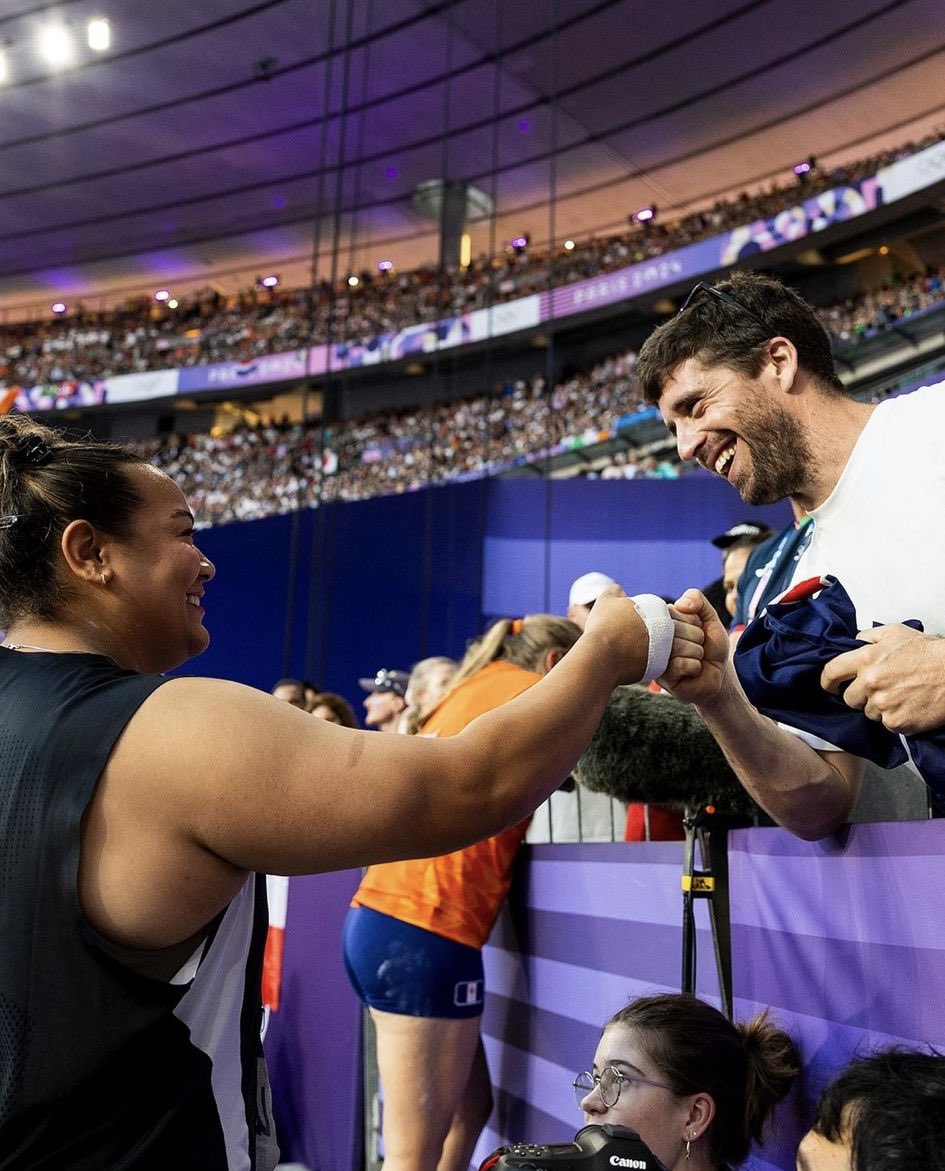
The journey to here has been a privilege to be apart of. A very cool moment.
Mike Schofield tweet mediaMike Schofield tweet media
English
1
1
8
10.5K
Mike Schofield
Mike Schofield@rotationalperf·
I shared this on LinkedIn. Some of my thoughts around my approach to coaching in competition……the take home…….I don’t coach in competition…..I try to get out of the way linkedin.com/posts/michael-…
English
0
0
0
117
Mike Schofield
Mike Schofield@rotationalperf·
Jordans journey. Jordan (a former long jumper) started Discus in December we’ve been chipping away with the technical elements of discus over the last 5-6 months. Check out his progression
English
0
0
4
481
Mike Schofield
Mike Schofield@rotationalperf·
@chrislongphd @spikesonly @Scott_Damman Late eccentric and early concentric RFD across countermovement jump, bench throw and bench pull (across loads of 0-60kg) tracks poorly with elite throwing (shot, hammer, disc) performance and correlates poorly too
English
0
0
1
126
Chris Long PhD
Chris Long PhD@chrislongphd·
@spikesonly @Scott_Damman Agree, ultimately the best training will always be the action itself. The skill/challenge in coaching is varying and manipulating the task and constraints to optimally challenge and develop the action
English
1
0
1
247
Scott Damman
Scott Damman@Scott_Damman·
RFD, conclusion on page 62 + 👍info! "...coaches must be aware of the importance of RFD at early time intervals...this parameter should be measured during functional tests...because of its relationship with several sports movements." ref:eurjhm.com/index.php/eurj… #ForceSequence
English
1
0
3
665
Vern Gambetta
Vern Gambetta@coachgambetta·
Having a large number of followers DOES NOT MAKE YOU AN EXPERT - it makes you an influencer. To be an expert it is necessary to have accomplished something of substance, to have proven results in the competitive arena. I follow experts and learn from them.
English
2
9
57
5K
Mike Schofield
Mike Schofield@rotationalperf·
Find challenge and difference To grow involves people that challenge your knowledge, perception and skills. They don’t impose their skills but help you evolve yours. Sometimes you won’t like or agree with what they think/do, that’s good, it sparks thought.
English
1
0
1
269
Mike Schofield
Mike Schofield@rotationalperf·
Find honesty Mentors provide honesty. If it’s good they tell you, if it’s bad they tell you. If you think it’s good but it’s not they help calibrate your perspective.
English
1
0
1
326
Mike Schofield
Mike Schofield@rotationalperf·
Finding mentors and educators. Mentors are critical for young coaches, s&c’s and sports scientists as they help guide decision making and stimulate thought. But finding helpful mentors is hard. Here’s some things I think are important:
English
1
0
1
485
the strength report
the strength report@ActivateGlutes·
Question for strength & throws coaches... why do we emphasize the vertical (squats, hang snatches) so much?
English
3
0
10
2.3K
Mike Schofield
Mike Schofield@rotationalperf·
@lahti_johan Have a search of motion dependent torques. Should help with understanding some of this
English
1
0
2
126
Johan Lahti, PhD
Johan Lahti, PhD@lahti_johan·
The energy flow in a sprint start, also likely one reason why the RDL is a favorite of many sprint coaches. It strengthens the lumbosacral extensors at the same time as the hip extensors, thus providing force closure strength at the pelvis so that the thigh can rotate in peace without pulling into posterior pelvic tilt. The figure below if from the discussion of Sado et al @ns19910626 sprint start energy flow paper, very interesting.. Still trying to rap my head on energy flow in biomechanics as we didnt really learn this in school. Any good educational videos on this? onlinelibrary.wiley.com/doi/10.1080/17…
Johan Lahti, PhD tweet media
English
3
4
36
3.8K
Mike Schofield
Mike Schofield@rotationalperf·
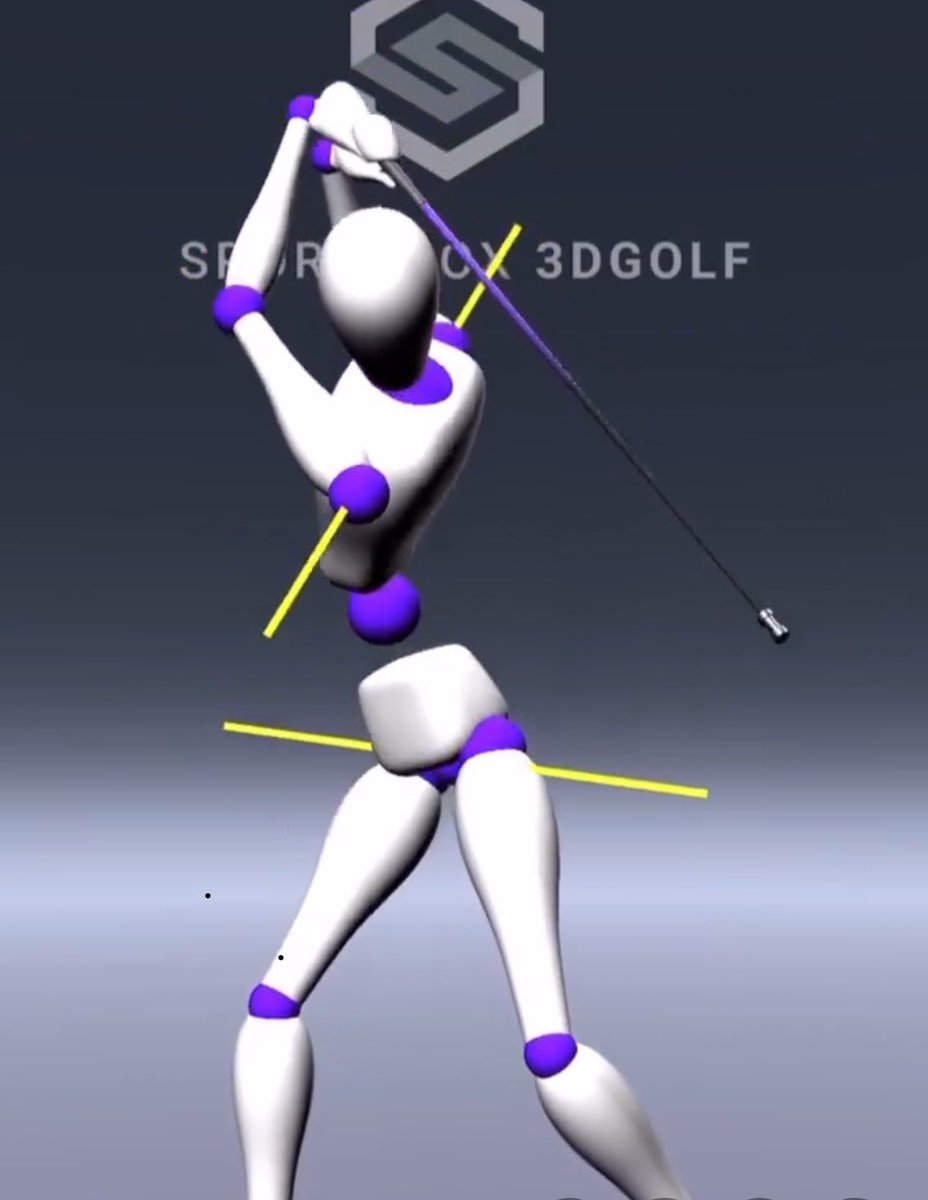
@WSWayland Is this taken from a single camera? If so it’s a nice graphic but as the graphic shows it suggests the error in these modalities is significant as the model dislocates
Mike Schofield tweet media
English
1
0
1
155
Mike Schofield
Mike Schofield@rotationalperf·
@TheDavidWeck @EatSleepTrain_ The long jump example and this are slightly seperate in the fact the force during sprinting g acts largely back through the COM and not at a radii so rotation is unlikely to occur. My former comment was a bit more hypothetical in nature around applying the same concept.
English
0
0
1
45
David Weck
David Weck@TheDavidWeck·
@rotationalperf @EatSleepTrain_ Everyone is slowing down after 80 meters from an energy standpoint. So the forces are diminishing past that point - but the braking force on the feet still “induces acceleration” of the CoM forward and down. I think.
English
1
0
0
61
David Weck
David Weck@TheDavidWeck·
Looks to me like “the braking force acting upon his feet” ACCELERATES his Center of Mass Up. Doesn’t look to me like his CoM is slowing down at/after the feet “brake” on the ground. What do you see? Now… Thought experiment. Do you THINK “the braking force acting upon the foot” of a sprinter ACCELERATES their CoM OR slows the CoM down. Don’t forget the only thing your CoM is doing in the air is SLOWING DOWN. Does anyone think it might be a good idea to ask questions like this (rather than let the word “braking” automatically be “bad”). Based upon unequivocal evidence, I have zero faith in “Exercise scientists” to lead the way forward. They’re to STIFF to teach balance, and too stubborn to accept what’s actually true. I’m not afraid to be wrong… which is why I’m so fundamentally right. Science is not religion.
English
2
0
4
573
Mike Schofield
Mike Schofield@rotationalperf·
@TheDavidWeck @EatSleepTrain_ Jumpers then have to manage this in the air. In sprinting however, forward rotation would need to be offset to stay upright. I’m not sure the propulsive forces are orientated to manage forward rotation over many steps while continuing to apply high forces?
English
1
0
1
61
David Weck
David Weck@TheDavidWeck·
Thinking about the polevault as well. The breaking force acting upon the pole which acting upon the hands up top, accelerates the lower body forward, and up. If the pole didn’t bend, the body would go from vertical to horizontal feet first extremely quickly. Perhaps when a longitudinal structure is moving upright horizontally, a breaking force at the distal end will accelerate the rest of the structure forward and down or forward and up, depending upon where the breaking force is applied. Just thinking out loud.
English
2
0
0
101
Mike Schofield
Mike Schofield@rotationalperf·
@TheDavidWeck @EatSleepTrain_ I think what you’re referring to here is what in biomechanics is called “induced acceleration” aka acceleration that is the result of system versus the segment. This occurs in long jump, the result of planting infront of the COM is rotation (catapulting action)
English
0
0
1
49