Ruben van Eijk

482 posts

Ruben van Eijk banner
Ruben van Eijk

Ruben van Eijk

@rpavaneijk

MND researcher interested in clinical trial methodology | MD | PhD | MSc | Parttime cyclist

Utrecht, The Netherlands Katılım Ocak 2018
106 Takip Edilen466 Takipçiler
Ruben van Eijk retweetledi
@BrainComms
@BrainComms@braincomms·
P A van Eijk et al. report that a trimetazidine trial for ALS showed it was safe and well-tolerated. It reduced oxidative stress markers and resting energy expenditure, suggesting potential for further study. Read at:buff.ly/HNd3No6 @rpavaneijk @Fred_Steyn @AmmarAlChalab
@BrainComms tweet media
English
0
3
8
475
Ruben van Eijk retweetledi
Jeremy Slayter
Jeremy Slayter@SlayterJeremy·
POTW 5: Patient Ranked Order of Function (PROOF) as a modified interpretation of the ALSFRS-R. An emerging alternative approach to optimize the detection of individualized function to predict survival and other outcomes in ALS. @UMCUtrecht @rpavaneijk doi.org/10.1212/WNL.00…
English
0
1
2
145
Ruben van Eijk
Ruben van Eijk@rpavaneijk·
@Jeanc9orf72 I think for early stage trials/phase 2 it is indeed not the best strategy to use a crude thing as the FRS, but at some point we need to show a drug also has clinical meaning, then # of motor unit is not sufficient and we need clinical outcomes including the FRS, QoL, survival
English
1
0
1
133
Jean C9orf72
Jean C9orf72@Jeanc9orf72·
@rpavaneijk Why would we ever use such a crude thing as alsfrs (which provides only suspect approvals in America and Canada) when this knowledge of motor loss prior to functional impairment was documented in the 70s?
English
1
0
1
132
Ruben van Eijk
Ruben van Eijk@rpavaneijk·
@Jeanc9orf72 There are some papers that provide some insight, for example that about half of the motor neurons are lost before you even notice functional limitations. Quite interesting area to develop novel noninvasive outcomes for trials. Here is one example paper nature.com/articles/s4159…
English
1
0
2
190
Jean C9orf72
Jean C9orf72@Jeanc9orf72·
@rpavaneijk I think when considering weakness, the latter three are nearly instant, whereas we are ignorant of the timing of the first. I guess with the exception of sod1 a5v als where it appears to be about a 6-12 month process.
English
1
0
3
133
Ruben van Eijk
Ruben van Eijk@rpavaneijk·
@Jeanc9orf72 So yes, I agree with you that disease progression is not 1:1 related to functional decline. There are many steps leading up to ALSFRS-R loss, which maybe captured earlier by other endpoints (muscle streng, motor unit estimates, wet biomarkers?)
English
1
0
2
77
Ruben van Eijk
Ruben van Eijk@rpavaneijk·
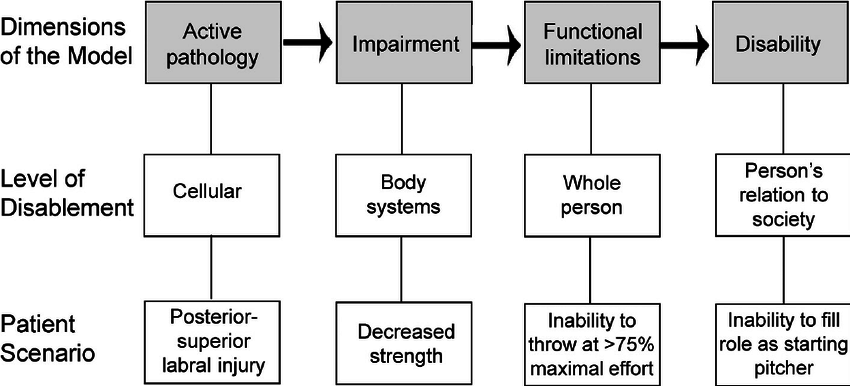
@Jeanc9orf72 I like the Nagi model to outline the concept (example below). There will be motor neuron loss (e.g., CMAP scan) before it leads to muscle strength loss (e.g., HHD), which will lead eventually to loss in function (e.g., ALSFRS-R), finally followed by reduction in QoL.
Ruben van Eijk tweet media
English
2
1
3
273
Ruben van Eijk retweetledi
Neurology Journal
Neurology Journal@GreenJournal·
In the latest DEI blog, authors Weemering and @rpavaneijk discuss barriers to inclusive clinical trial participation for neurodegenerative diseases and potentially modifiable factors to increase underrepresented patient populations. bit.ly/4d5msB1 #NeuroTwitter
Neurology Journal tweet media
English
0
4
5
2.9K
Ruben van Eijk
Ruben van Eijk@rpavaneijk·
@Jeanc9orf72 Just to provide an opposing view - not necessarily mine - is that HIV was effectively treated by combining treatments that on their own have modest effects. By combining them together one may have a synergistic effect. In that view, it could make sense to go for modest effects.
English
1
0
0
143
Ruben van Eijk
Ruben van Eijk@rpavaneijk·
@BlockAntonious @alsadvocacy My main worry with suboptimal control arms in trials is that we comprise our own decision making, for example initiating more futile phase 3 trials or end up with debatable market applications with global disagreement … this may only delay a treatment further
English
2
0
4
125
Ruben van Eijk
Ruben van Eijk@rpavaneijk·
@BlockAntonious @alsadvocacy I get your reasoning and completely agree on the urgency. I am not saying old data is useless, I only don’t think we are there yet to get fully rid of current placebo arms for the reasons above. Likely a hybrid solution - mixing placebo data - is most promising and efficient
English
1
0
4
81
ALS Advocacy
ALS Advocacy@alsadvocacy·
The pendulum swings in ALS Land. There is always a big Q: How do you get inclusion criteria that give you healthy enough people on the therapy & at the same time give a placebo group that drops off. Criteria are as much about selecting the control group as the treatment group.
English
3
0
5
876
Ruben van Eijk
Ruben van Eijk@rpavaneijk·
@BlockAntonious @alsadvocacy So some placebo treatment is needed as long as we don’t have hugely effective treatments. We can think about strategies, however, how to re-use some old placebo data and mix that with current placebo data, so current patients have a higher change on active treatments. 3/3
English
2
0
3
86
Ruben van Eijk
Ruben van Eijk@rpavaneijk·
@BlockAntonious @alsadvocacy These small differences influence the disease trajectory. This would be a small problem if we expect huge treatment effects, but for ALS we expect relatively small gains (e.g. 20 – 25% slowing). These small effects can become quickly twisted if we use imprecise control data 2/3
English
1
0
3
77
Ruben van Eijk
Ruben van Eijk@rpavaneijk·
@alsadvocacy Good points! An additional thought for registration trials may be to consider how representative the included population is for all people living with ALS/MND. If we are too selective, how sure are we that the drug benefits the 'average' patient (and is safe) outside the trial?
English
0
1
5
253
Ruben van Eijk
Ruben van Eijk@rpavaneijk·
Finally, we extended our online calculator to illustrate the comparisons used by PROOF with various sets of preferences and integration with the Combined Assessment of Function and Survival (CAFS). The calculator is open-source and can be found here: tricals.shinyapps.io/PROOF/ 5/5
Ruben van Eijk tweet media
English
0
0
0
69
Ruben van Eijk
Ruben van Eijk@rpavaneijk·
We also evaluated the prognostic impact of incorporating patient preferences, showing that patient-reported preferences can be safely incorporated and does not weaken the association between function and overall survival. 4/5
Ruben van Eijk tweet media
English
1
0
0
92