Ryan Greenblatt

1.9K posts

Ryan Greenblatt

Ryan Greenblatt

@RyanGreenblatt

Chief scientist at Redwood Research (@redwood_ai), focused on technical AI safety research to reduce risks from rogue AIs

Katılım Eylül 2023
10 Takip Edilen9.2K Takipçiler
Sabitlenmiş Tweet
Ryan Greenblatt
Ryan Greenblatt@RyanGreenblatt·
Plan A seems like a good plan for handling powerful AI, or at least the best plan anyone's written up. Many choices initially seem crazy, but are actually pretty carefully considered. Plan A isn't likely to happen, but pushing for something like this seems worthwhile.
Daniel Kokotajlo@DKokotajlo

In AI 2027, we predicted that AI would take over the world or irreversibly concentrate power. In AI 2040: Plan A, we've laid out our positive vision for what should happen instead.

English
7
9
222
37.6K
Ryan Greenblatt
Ryan Greenblatt@RyanGreenblatt·
Romeo Dean@romeovdean

Overall, it seems like our most important disagreement is probably about the AI/robots dominating humans and growing massively in population. Our views on economic growth from AI come from these arguments, not the modelling. On the specifics of the econ model, we aren't confident in our modelling choices, but i'll explain them below: > On sigma 1.1: This is only on the top K / L_eff CES layer, its not a huge crux, e.g., at 0.6 the model has 180x GWP by 2040 instead of 200x, but 1.1 seems more reasonable to me because AI/robots enter through L_eff, and don't seem like they should be bounded hard by K. > On human-inherent tasks = 0: This is wrong in the plan A world with slowdown + regulation, in 2040 we have 1% of tasks for humans (even then i think they will have large AI uplift, and it'll be more from regulation than human-preference). We do think its true about a default world though because we believe either in AI takeover, or just human-preference demand becoming a very niche/negligible part of the new economy (e.g., analogous to counting bartering tribes in today's GWP). > on frozen task space: sorry about this, it was a remnant of an earlier version. I actually intend for the exogenous automation curves to be representing % of current-year tasks, so including new tasks/goods. I will rename the cases of "% 2024 tasks". The model/numbers don't change from this, because the autoamtion curve is exogenous. > on segmented thing / nothing is scarce point: There are scarce inputs. It is all consistently in real 2025 $ to anchor the 'real' growth level on average but relative prices will move a lot, and we discuss this in the supplement. We imagine e.g., land, positional goods, etc. going up in price but goods/services going down a lot. It's pretty unclear how 'real' would get measured in practice though, but at the end of the day the growth is driven by the explosion in highly capable AI/robot labor.

QME
0
0
3
251
Ryan Greenblatt
Ryan Greenblatt@RyanGreenblatt·
Romeo Dean@romeovdean

Overall, it seems like our most important disagreement is probably about the AI/robots dominating humans and growing massively in population. Our views on economic growth from AI come from these arguments, not the modelling. On the specifics of the econ model, we aren't confident in our modelling choices, but i'll explain them below: > On sigma 1.1: This is only on the top K / L_eff CES layer, its not a huge crux, e.g., at 0.6 the model has 180x GWP by 2040 instead of 200x, but 1.1 seems more reasonable to me because AI/robots enter through L_eff, and don't seem like they should be bounded hard by K. > On human-inherent tasks = 0: This is wrong in the plan A world with slowdown + regulation, in 2040 we have 1% of tasks for humans (even then i think they will have large AI uplift, and it'll be more from regulation than human-preference). We do think its true about a default world though because we believe either in AI takeover, or just human-preference demand becoming a very niche/negligible part of the new economy (e.g., analogous to counting bartering tribes in today's GWP). > on frozen task space: sorry about this, it was a remnant of an earlier version. I actually intend for the exogenous automation curves to be representing % of current-year tasks, so including new tasks/goods. I will rename the cases of "% 2024 tasks". The model/numbers don't change from this, because the autoamtion curve is exogenous. > on segmented thing / nothing is scarce point: There are scarce inputs. It is all consistently in real 2025 $ to anchor the 'real' growth level on average but relative prices will move a lot, and we discuss this in the supplement. We imagine e.g., land, positional goods, etc. going up in price but goods/services going down a lot. It's pretty unclear how 'real' would get measured in practice though, but at the end of the day the growth is driven by the explosion in highly capable AI/robot labor.

QME
0
0
2
68
Ryan Greenblatt
Ryan Greenblatt@RyanGreenblatt·
@HumanHarlan Seems unlikely to me that timing is directly related to AI 2040. It might have same underlying cause though (response to recent actions from USG).
English
2
0
19
326
Harlan Stewart
Harlan Stewart@HumanHarlan·
The timing of this is a little suspicious. Six weeks ago, it would have been helpful to post a better-than-nothing plan for pre-deployment testing, because six weeks ago is when the White House was having an internal fight over that exact topic. But posting it now, just five days after the release of AI 2040? With no mention of AI 2040, or the stronger and much more detailed plans it contains? I don't know what the intention behind that was, but I do know what the outcome has been: in less than 24 hours, Demis' post has already received more than 3x as much attention as AI 2040, both on social media and in the press. AI CEOs have way too much power over the narrative when it comes to the danger posed by their R&D, and they very rarely use that power to meaningfully disrupt the (incredibly dangerous) status quo.
Demis Hassabis@demishassabis

x.com/i/article/2076…

English
9
5
58
4.4K
Ryan Greenblatt
Ryan Greenblatt@RyanGreenblatt·
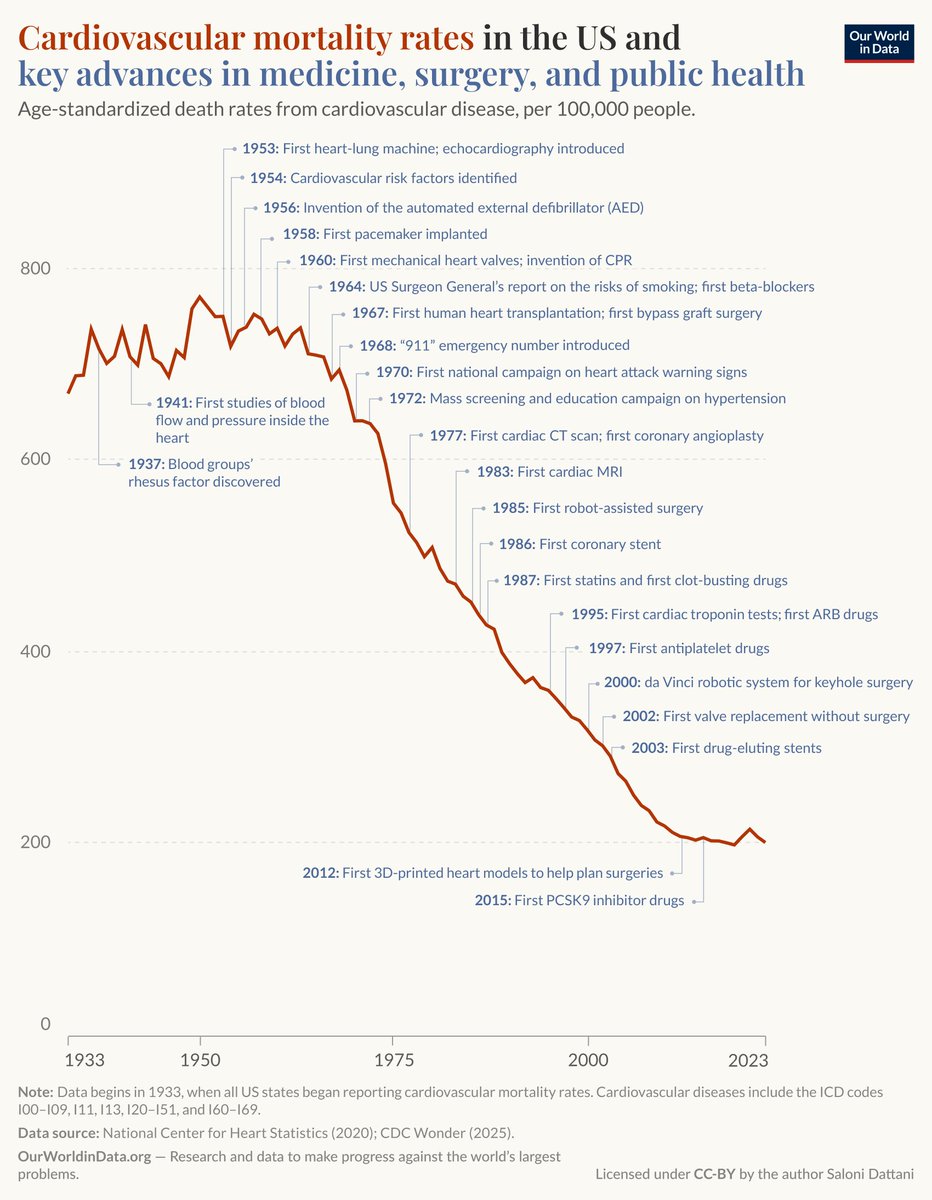
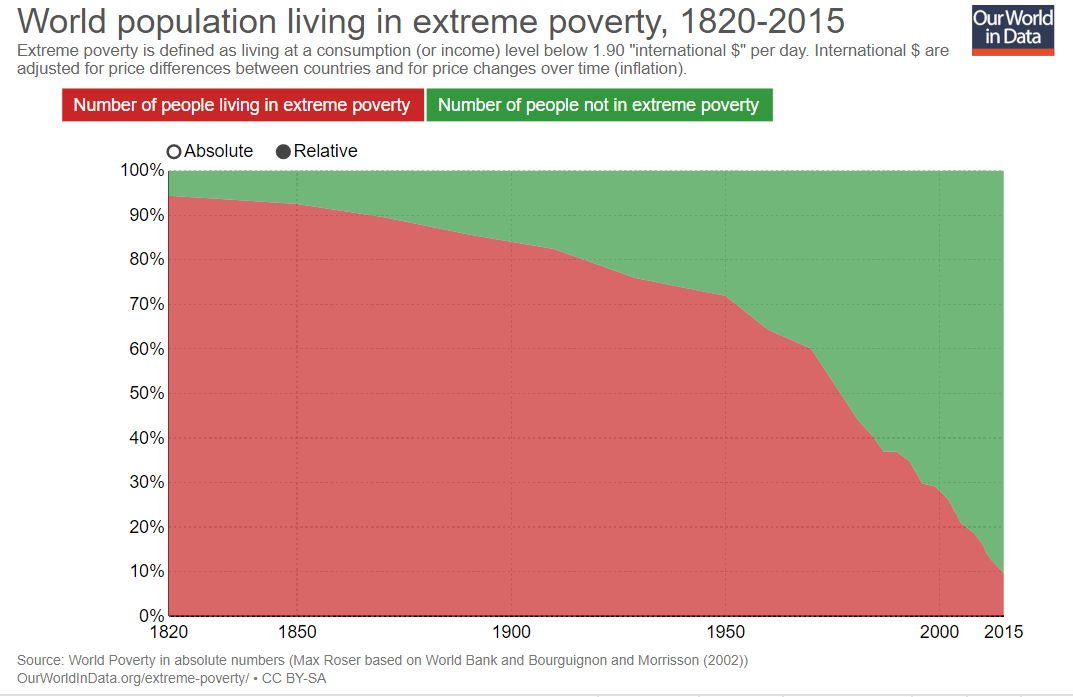
@krishnanrohit The text bubble? Neither really, I just though this was the most relevant/plausible chart and the meme version has funny/relevant text. (Like the hyperexponential growth trend continues, but now in a much smaller period of time.)
English
1
0
5
105
rohit
rohit@krishnanrohit·
If we think of AI as the next industrial revolution we should ask which chart like these we're likely to get.
rohit tweet mediarohit tweet mediarohit tweet mediarohit tweet media
English
9
6
59
5.1K
Ryan Greenblatt
Ryan Greenblatt@RyanGreenblatt·
@davidiach As in, people will be consuming >>80% of wealth every year rather than reinvesting? Seems intuitively surprising, see #consumption-growth-does-not-prevent-a-rapid-transition" target="_blank" rel="nofollow noopener">defensesindepth.bio/the-ai-industr…
English
2
0
1
176
Ryan Greenblatt
Ryan Greenblatt@RyanGreenblatt·
If AIs were significantly better than all humans at all cognitive tasks, that would have extreme effects including much faster economic growth.
Ryan Greenblatt tweet media
English
5
2
127
3.3K
Ryan Greenblatt
Ryan Greenblatt@RyanGreenblatt·
@joshua_saxe > because a greedy stepwise algorithm will prepare us for those -- ironically -- more efficiently Seems possible but unlikely, I'd guess we should diversify and do like 1/3 very greedy, 1/3 not that greedy but pretty prosaic, 1/3 just trying to do what seems directly helpful.
English
0
0
1
30
Ryan Greenblatt
Ryan Greenblatt@RyanGreenblatt·
@davidiach FWIW 10-20% yearly growth counts as "much faster". (Though I do expect higher.)
English
1
0
5
141
David Iach
David Iach@davidiach·
@RyanGreenblatt I have started to update in the opposite direction recently. We will probably get 10-20% yearly growth rather than multi triple digit growth that many fellow agi-pilled folks assume is coming.
English
1
0
0
198
Ryan Greenblatt
Ryan Greenblatt@RyanGreenblatt·
A 10x R&D acceleration will yield less than a 10x overall AI software acceleration due to diminishing returns; I'm referring to the notion of "AI Software R&D Uplift" from aifuturesmodel.com.
English
0
0
8
614
Ryan Greenblatt
Ryan Greenblatt@RyanGreenblatt·
@joshua_saxe I think there is a distinction between (1) empirical work on current day problems will transfer (2) focusing on harms that exist right now will overall be the best strategy including for policy etc. I think (1) is somewhat true (a bunch of the work will transfer) and (2) is wrong
English
1
0
1
44
Joshua Saxe
Joshua Saxe@joshua_saxe·
Hmm. I'm maybe being annoying and dense here (and I apologize if I am), but I feel this misalignment / prompt injection damages plot, and others like it, would already do a ton of work in grounding alignment research to a greater degree than I perceive it to be currently (for example, it would induce us to be far more interdisciplinary in thinking through how observed harms happen and can be mitigated, but also could yield real-world research datasets with which we could experiment). I think you may object that this is dogmatically empiricist and precludes engaging longer range questions. But what alignment research would be filtered out by addressing and extrapolating from these observed harms? I think the harms you're suggesting are, more or less, scaled up versions of the harms on my plot.
Joshua Saxe tweet media
English
1
0
0
51
Joshua Saxe
Joshua Saxe@joshua_saxe·
Gradient descent is a super successful optimization algorithm and I think it's also the right algorithm for AI safety. Taking the next right step based on the observed risk and harm data. Bigger step sizes ok with bigger batch sizes / more data points. Pseudo second order methods sometimes appropriate especially methods like Adam that make us go faster on some dimensions than others. In general, not fancier theories and methods, but rather scaling up the set of stakeholders and making us go faster together. I think the metaphor works really well. Some folks are claiming to know far too much about the loss landscape; the lesson of deep learning is to keep it simple
English
2
0
5
623
Ryan Greenblatt
Ryan Greenblatt@RyanGreenblatt·
I don't think this claim should be controversial. --- Some caveats: - Very strong (and ~universally imposed) regulation could prevent growth in this situation for some time, but I expect this won't happen. - I'm assuming a large population (e.g. >>millions) of decently fast AIs
English
2
0
10
639
Ryan Greenblatt
Ryan Greenblatt@RyanGreenblatt·
@ericneyman (Agree with "unacceptable", not sure if organizers can stop this.)
English
0
0
19
422
Ryan Greenblatt
Ryan Greenblatt@RyanGreenblatt·
@joshua_saxe I agree they won't be special snowflakes in their own reference class and that the (very) general root cause will be visible in advance, but gradient descent on harms seems very far from workable.
English
1
0
0
33
Joshua Saxe
Joshua Saxe@joshua_saxe·
Thanks Ryan. I think I really disagree with what you're saying but I can see why you'd object. What I would say, hopefully to clarify, is this: * I see no reason to see each particular type of misalignment event (political takeover, breaking out of a sandbox in a datacenter, misspending a business' finances) as a special snowflake in its own reference class * They'll tend to share a more general technical root cause (e.g. the model is not generalizing from its training data or is not sufficiently robust to prompt injection, hallucination, etc, was not appropriately sandboxed, etc) * I think the chart I posted above already gives some texture here; and we'll only accumulate more data points. Probably exponentially more. So I see the safety trajectory will be smoother and more modelable (in the time series regression sense) based on observations, and less discontinuous than you, I think
English
1
0
0
31
Ryan Greenblatt
Ryan Greenblatt@RyanGreenblatt·
@1a3orn I think I expect (assuming AI 2040 scenario): - Interp via model internals is a bit useful now - It will be modestly useful in 2029 - It will be very useful in 2035 I don't think this interp will that much be "mech interp". Your critique seems reasonable overall.
English
0
0
10
422
1a3orn
1a3orn@1a3orn·
One area I think AI 2040 will turn out wrong is that it takes till 2035 in the scenario for Mech Int to start really helping understanding AIs. (image in 2035 in scenario) Which is 9 years from now. 9 years ago, Mech Int literally didn't exist as a term, barely existed as field.
1a3orn tweet media
English
4
3
59
2.3K
Ryan Greenblatt
Ryan Greenblatt@RyanGreenblatt·
@tszzl It's dragged down a bunch by GPT 5.6 , otherwise would be more. 5.6 seems like a big jump in misalignment.
English
4
0
23
1.1K
Ryan Greenblatt
Ryan Greenblatt@RyanGreenblatt·
@joshua_saxe Presumably we'll have some evidence of misalignment, but I don't we'll catch AIs taking over a small datacenter, then a large datacenter, then later the world (though threat models with some of this seem kinda plausible).
English
1
0
0
42
Ryan Greenblatt
Ryan Greenblatt@RyanGreenblatt·
@joshua_saxe As in, you expect to see small human powergrabs enabled by secret loyalties (e.g., of a small country) prior to large human powergrabs? I say this a bit facetious, but I don't think this makes much sense given a realistic version of the most concerning threat models.
English
1
0
3
48