Dear @prabowo
Bayangin kalo IHSG yg 17.600
Dollar yg 6.723
Orang miskin menyusut, orang menengah ke atas bisa aja makin ngebut.
Pajak yang lu terima makin kenceng, MBG ga ada yg berani nyecer.
Orang miskin dah ga minat judol, karena judi di saham pun pasti gacor.
Tapi apalah elu.
Omong doang gede, langkahnya kek tempe
At the end
Bekecot nganggo katok
Cocotan tok
He has threatened to blockade Iran. Just so you know, Iran has enough oil stored on tankers at sea to sell for three months. Are you sure that you and your allies can endure that period?.
Ray Dalio's World War III thesis explained in under 4 mins.
Save this. You'll absolutely want to come back to it:
Ray's latest article is the kind of thing you read, close your laptop, and then stare at the wall for 10 minutes.
His thesis - in short?
We're already in a world war. Not "heading toward" one. In one. Right now.
Lemme break it down:
Everyone's focused on the headlines - Iran tensions, oil prices, elections...
Dalio says that's like watching individual raindrops and missing the hurricane.
Here's what's actually happening, in his opinion:
Multiple hot wars are running at the same time. Russia-Ukraine. Israel-Gaza-Lebanon-Syria. Yemen-Sudan. US-Israel-Iran.
Most of them involve nuclear powers. And that's just the bullets-flying stuff.
You've also got trade wars, tech wars, capital wars, and economic wars all cooking at the same time.
Dalio says this is EXACTLY how past world wars started. No big declaration. No single start date. Just a slow slide into interconnected conflicts that eventually merge into one giant mess.
Now here's the part that will make you put down your coffee...
Dalio has a 13-step playbook for how major wars unfold.
He thinks we're at Step 9.
The CliffsNotes version:
Steps 1-4: The dominant power weakens, sanctions fly, alliances form, proxy wars pop up.
Steps 5-8: Debts pile up, governments grab control of supply chains, trade routes get weaponized, scary new war tech gets built.
Step 9 (where we are now): Multiple conflicts happening at the same time across different regions.
Steps 10-13: Loyalty demands, direct combat between major powers, money printer goes brrr to fund the wars, and eventually someone wins and redesigns the world order.
(Yikes!)
Now let's talk teams.
Side A: China, Russia, Iran, North Korea, Cuba.
Side B: US, Ukraine, most of Europe, Israel, Japan, Australia.
These aren't secret alliances either. You can see them in UN votes, trade deals, and who's showing up at whose summits.
"But China gets crushed if the Strait of Hormuz shuts down!"
Dalio says nope.
China buys 80-90% of Iran's oil. Russia backs them up with more. They've got massive coal and solar capacity. Plus 90-120 days of oil reserves sitting in storage.
China might actually WIN from all this chaos. Wild.
That said, the US has 750-800 military bases across 70-80 countries.
While China has one.
But that's a double-edged sword according to Ray.
Those bases are a power projection - yes. But he also sees them as expensive vulnerabilities. Every single one is a potential target.
History shows that overextended empires can't fight on multiple fronts. So what happens when the US is knee-deep in the Middle East and something kicks off near Taiwan?
Dalio says foreign leaders are already doing this math.
This is the same pattern from before 1914. And before 1939.
Here's his most uncomfortable point:
Wars aren't won by the most powerful country. They're won by whoever can take the most pain for the longest.
The US is telling everyone this Iran thing wraps up in weeks. Gas prices drop. Everything goes back to normal.
But winning a war means the other side surrenders. You can't just bomb your way to victory.
Vietnam taught us that. Iraq taught us that. Afghanistan taught us that.
The US might be the strongest country on earth. But it might also be the worst at absorbing long-term pain.
Alright - let's get to the probability stuff...
This is where Dalio puts numbers on it.
Iran-US-Israel: Already happening. Getting worse. Watch the Strait of Hormuz and Iran's nukes.
Ukraine-Russia: Been going 3 years. 30-40% chance it spills past Ukraine's borders in the next 5 years.
Taiwan/US-China: Not a hot war yet, but both sides are openly prepping. 30-40% chance, highest risk around 2028.
North Korea: Nukes that can reach the US mainland. 40-50% chance of military conflict in 5 years.
South China Sea: Coast guard standoffs that could drag the US in through treaty obligations. About 30% chance.
Stack all of those together and Dalio says there's a greater than 50% chance at least one of them escalates in the next 5 years.
His big picture take?
The post-1945 world order (the one with rules, institutions, and the US running the show) is done.
We're moving to a "might makes right" world. Which is actually how things worked for most of human history before 1945.
We're just not used to it. And we really don't understand what it means for our money.
Dalio's warning for your wallet:
Think big tax increases, money printing on steroids, capital controls, and markets that sometimes just... shut down entirely.
(He literally calls these "unimaginable-in-peacetime developments.")
Dalio says he genuinely hopes for peace. He's spent 42 years building relationships with leaders in both the US and China.
But hope doesn't change the data.
And the data is flashing red.
Countries are already talking about getting nukes. Building stockpiles. Missile systems on missile systems.
This is 50 years of pattern recognition from the guy who built the world's biggest hedge fund telling you one thing:
We're not heading toward a world war. We're in one.
The only question is whether it stays at a simmer or boils over into direct conflict between the big boys.
As we said at the top:
Bookmark this one.
You're gonna want to come back to it.
BREAKING: Iran says it has "forced" the US to accept its "10-point plan" which includes the following terms:
1. Commitment to non-aggression
2. Iran’s control over the Strait of Hormuz
3. Acceptance of Iran's uranium enrichment
4. Lifting of all primary sanctions
5. Lifting of all secondary sanctions
6. Termination of all UN Security Council resolutions
7. Termination of all Board of Governors resolutions
8. Paying compensation to Iran
9. Withdrawal of US combat forces from the region
10. Cessation of war on all fronts, including in Lebanon
Trump says this plan is "a workable basis."
Kenapa Trump sering tiba2 keluarkan GOOD NEWS ketika UST 10Y yield naik/ada di area 4.3%–4.5%? COINCIDENCE? Saya rasa tidak.
Saya coba backtest 17 event tariff pivot Trump sejak Jan 2025.
Dari 17 kali Trump bikin "good news" (tariff pause, trade deal, soften stance):
• 12 dari 17 event (71%) terjadi saat yield ≥ 4.3%.
• Saat yield di atas 4.5%: 3/3 kali Trump langsung lunak, yield turun semua.
• Saat yield di bawah 4.3%: Trump santai, jarang ada konsesi.
Bukti paling jelas: 9 April 2025.
• Seminggu sebelumnya yield spike dari 4.0% ke 4.4%.
• Bond market mulai jual US Treasury besar-besaran.
• Hari itu juga Trump umumkan 90-day tariff pause untuk 75+ negara.
Utang US = $36 triliun.
Setiap yield naik 1% = tambahan $360 miliar/tahun bunga.
US harus refinance $9–10T utang tiap tahun.
Setiap 10bps lebih tinggi = +$9B biaya permanen selamanya.
BOND MARKET IS THE REAL BOSS.
Trump boleh bikin kebijakan apapun.
Tapi kalau bond vigilantes mulai jual, dia balik badan.
Yield 4.3%–4.5% bukan sekadar angka teknikal.
Itu batas toleransi fiskal US.
Manage your portfolio accordingly.
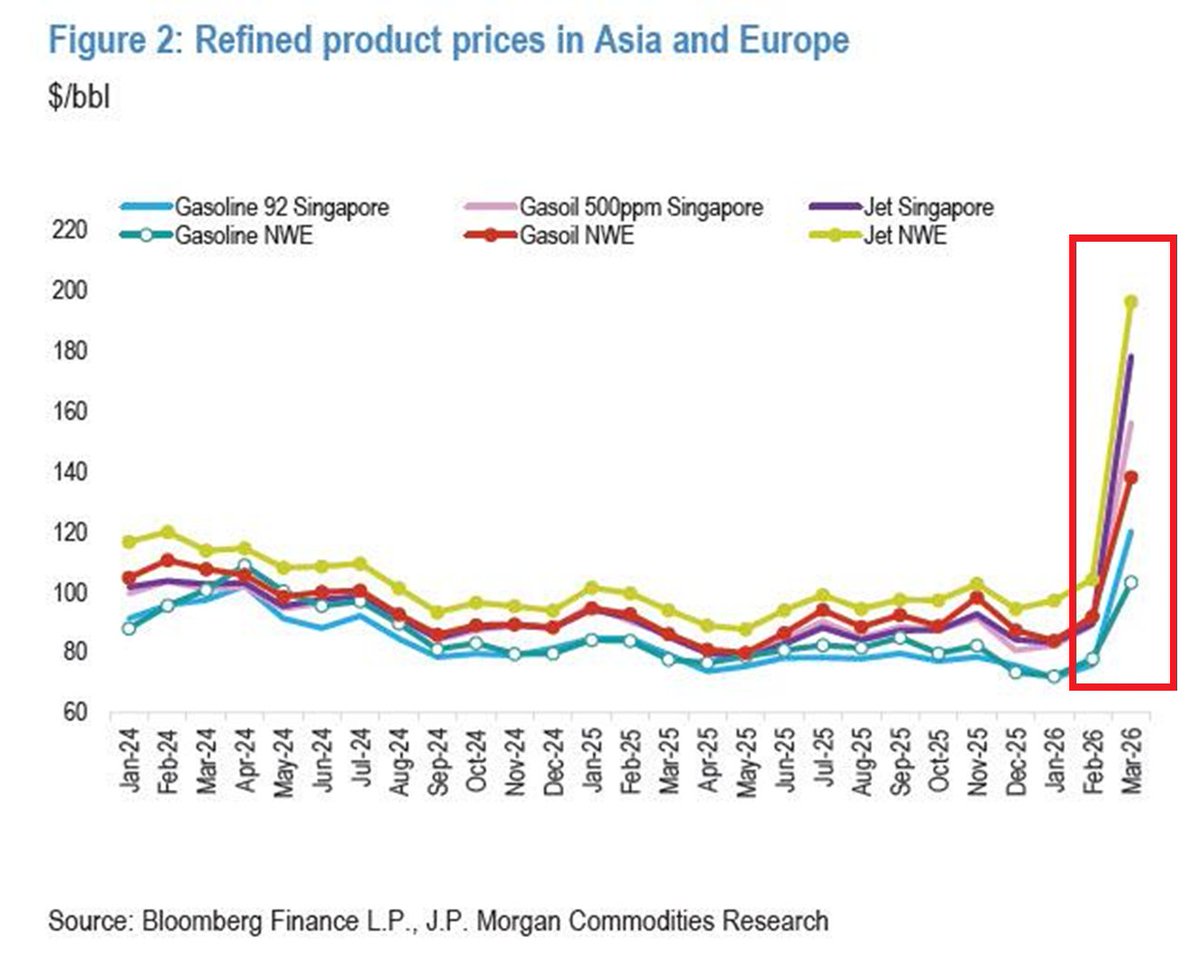
⚠️Gasoline and Jet fuel prices in Asia and Europe are SKYROCKETING:
Jet fuel prices have more than DOUBLED since the Iran War Started, reaching ~$200 per barrel in both Singapore and Northwest Europe.
Gasoline and diesel prices have also spiked, with gasoil in Singapore and Europe jumping to ~$150 per barrel, nearly DOUBLING.
As a result, Airlines are canceling routes and adding $125-$200 surcharges per passenger as jet fuel costs make many flights uneconomic, with SAS and Air New Zealand already cutting services.
Furthermore, Governments across Asia are responding with emergency measures, including 4-day workweeks in the Philippines and Sri Lanka, school closures in Pakistan, and alternating driving days in Myanmar.
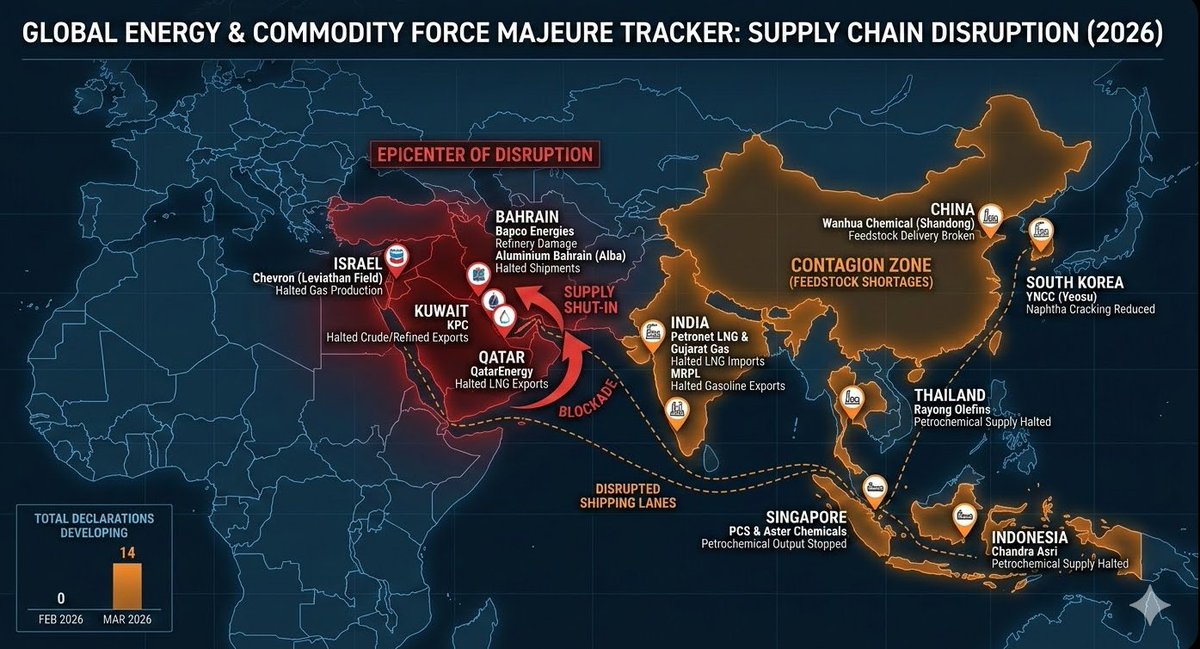
Meanwhile, petrochemical producers across Japan, South Korea, China, Indonesia, and Taiwan have declared force majeure as critical raw materials from the Middle East dry up.
This is no longer just an oil disruption, it is an industrial SHOCK spreading across Asia and Europe in real time.
A Palestinian man calls out Zohran Mamdani:
“It’s not your land to decide whether Israel has the right to exist.”
Excellent response to his claims. The Palestinian man put him in his place.
⚠️The Strait of Hormuz is effectively shut for a 7th day:
Only Iran-linked vessels are making the crossing. No other commercial ships have transited in the last 24 hours.
As a result, Iraq, Kuwait, and the UAE have all been forced to cut production as Gulf storage tanks fill up.
Only 9 empty supertankers remain in the Persian Gulf, and with Hormuz shut, no new ones can enter. Once those fill up, producers will have no way to move oil out.
🚨In response, Saudi Arabia is rerouting crude through its Red Sea terminals at a record pace.
8 supertankers, each carrying ~2 million barrels, have been loaded and shipped from Red Sea ports in the first 7 days of March.
If sustained, this puts shipments on pace for ~2.3 million barrels per day, +50% above any month since 2016.
The East-West pipeline has ~5 million barrels per day of unused capacity available to support this rerouting.
Despite ~5 million barrels per day of spare pipeline capacity, Goldman estimates only 0.9 million barrels per day has actually been redirected so far.
Two key risks threaten this Red Sea rerouting: the terminals have never operated at full capacity, and Houthi rebels have threatened to resume attacks on Red Sea shipping.
This is a lifeline for oil, but likely not enough to keep prices below $100.
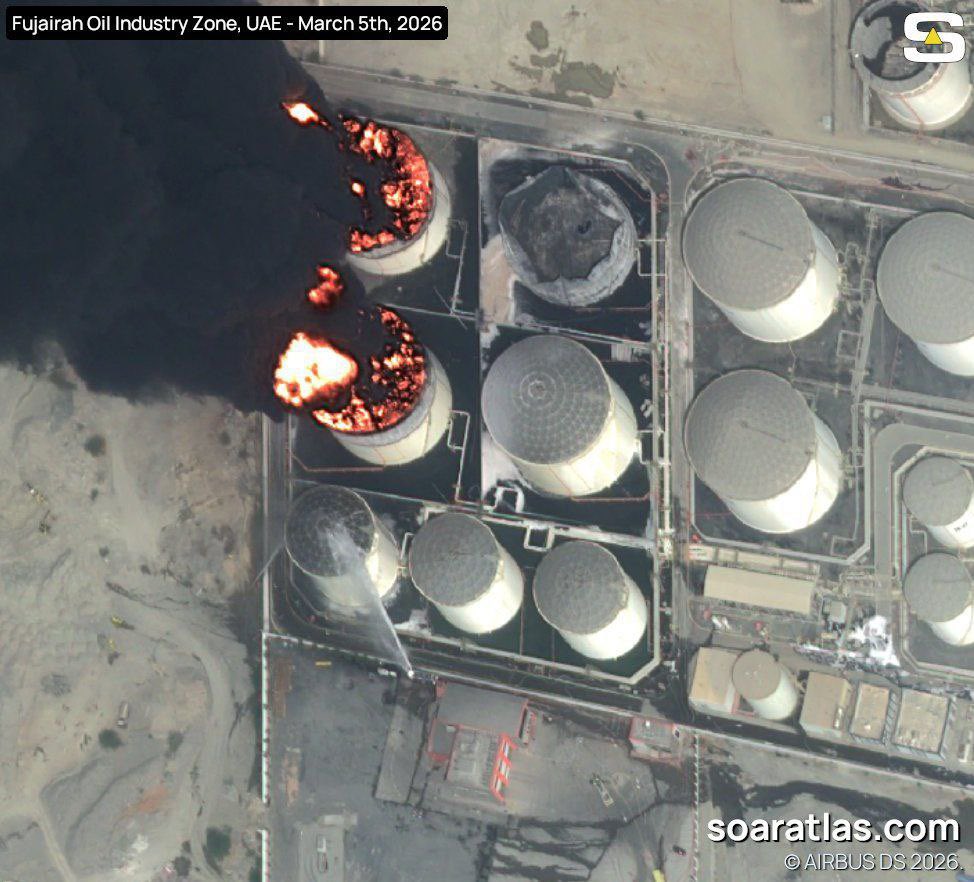
Iran did not attack Fujairah by accident. It attacked Fujairah because Fujairah is the answer to Iran.
To understand why this strike is the most strategically precise action Iran has taken in this entire war, you need to understand what Fujairah is and why it exists. The Strait of Hormuz is the chokepoint that gives Iran its most powerful economic leverage over the world: twenty million barrels of oil per day transit through a corridor that Iranian mines, missiles, and fast-attack boats can threaten to close. The global economy’s response to forty years of that leverage was to build Fujairah. The UAE constructed the Fujairah Oil Industry Zone on the eastern Gulf of Oman coast so that oil could flow from Abu Dhabi’s fields through a 380-kilometer pipeline to Fujairah’s terminals and onto tankers without ever transiting Hormuz. Fujairah is the world’s third-largest bunkering port. It hosts terminal operators including Vopak, VTTI, MENA, and GPS. It holds tens of millions of barrels of refined products and crude storage capacity. It is the physical infrastructure the global maritime economy built to make Hormuz less relevant. Iran just told the world that Fujairah is also within range.
The attack occurred on March 3. An Iranian drone crossed into UAE airspace. Air defense intercepted it. Debris landed in the Fujairah Oil Industry Zone and ignited a fire in storage tank infrastructure. The UAE confirmed the fire was contained, no casualties, operations resuming. Argus Media reported direct hits on storage tanks and thick smoke over one terminal. Satellite imagery released March 6 confirms visible fire and impact at the storage zone.
The official narrative: a near miss. Debris from an intercepted drone. Contained fire. Resuming operations.
The strategic narrative: Iran demonstrated that it can reach Fujairah.
Those two statements can both be true simultaneously and the second one is the one that matters for the global energy market. The entire investment thesis of Fujairah as a Hormuz bypass depends on Fujairah being physically safe. An intercepted drone whose debris sets storage tanks on fire is not physically safe in any insurance underwriter’s actuarial framework. The verification cost inversion mechanism, demonstrated five times in this war across maritime insurance, oil refinery insurance, corporate presence, financial architecture, and digital infrastructure, has now been applied to the bypass route itself.
Iran’s targeting logic is architecturally coherent. Ras Tanura and Ras Laffan disrupted primary Gulf production. Ahmadi disrupted the Kuwait-Saudi pipeline corridor. Fujairah completes the circuit: the one infrastructure node the world built specifically to avoid Iranian leverage. There is no safe corridor for the global energy system that is outside Iranian reach. That is the message. It has now been sent to three simultaneous coordinates.
The jet fuel at $225.44 per barrel already includes a Hormuz closure premium. It now also includes a Fujairah vulnerability premium. These are not the same premium. They stack. Global shipping operators who rerouted through Fujairah to avoid Hormuz now face the same question: does rerouting solve the problem when Iran can reach the bypass route itself?
The Fujairah strike is Iran’s answer to the world’s answer to Iran. It did not need to destroy the facilities to accomplish its objective. It needed to prove it could reach them. Satellite imagery published March 6 provides that proof at global scale.
The bypass route that took decades and billions of dollars to build was neutered as a strategic hedge in the time it takes a drone to fly from an Iranian launch point to the Gulf of Oman coast.
open.substack.com/pub/shanakaans…
Everyone talks about Iranian oil in barrels. Nobody talks about what is inside them. That difference is why Western refineries have been running shadow networks through Dubai for twenty years to get it despite the sanctions.
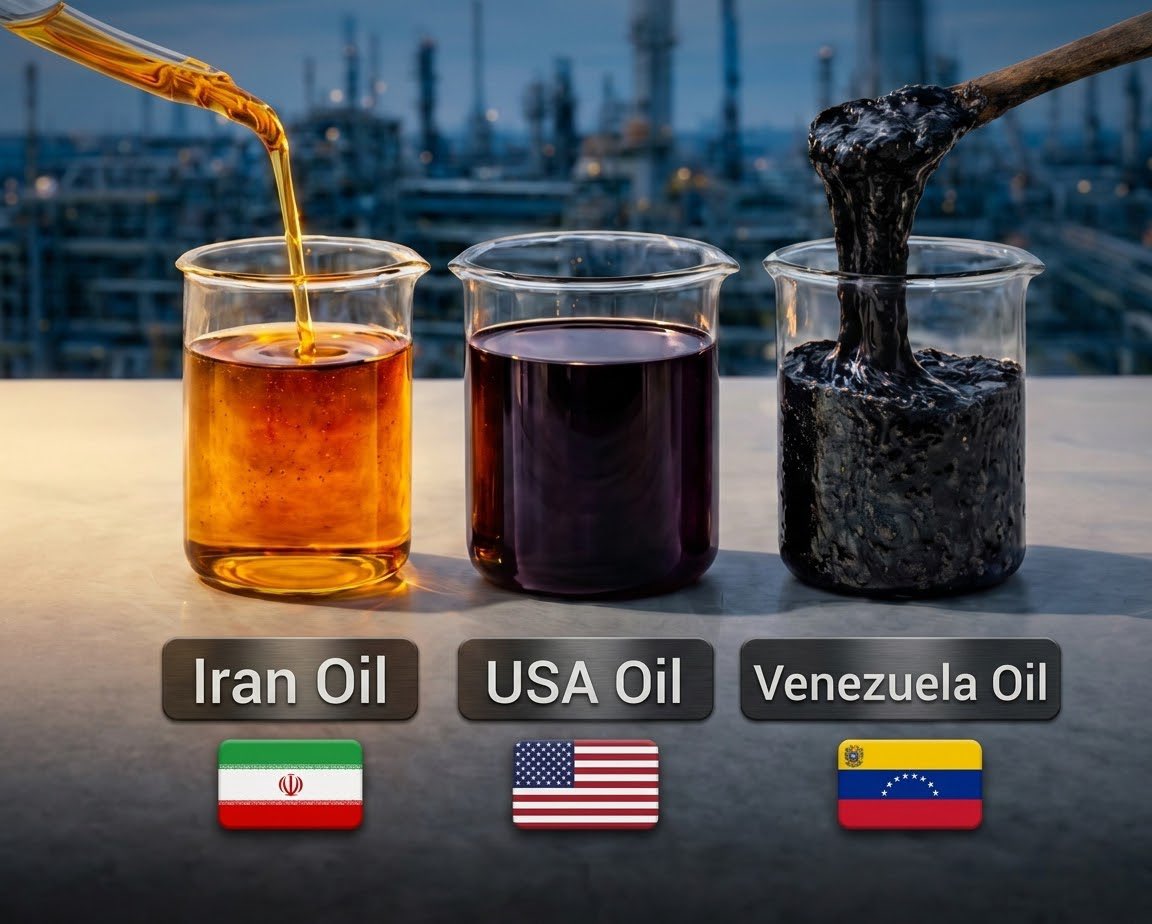
Crude oil is not a uniform commodity. It is a spectrum of hydrocarbons with different molecular weights, and the composition of a given crude determines how easily it converts into the products refineries actually want to sell: gasoline, diesel, jet fuel, heating oil. The measurement that captures this is API gravity. Higher API gravity means lighter crude with shorter carbon chains, which means lower energy cost to crack, lower processing cost to refine, and higher yield of the light distillates that carry premium pricing. Lower API gravity means heavier crude requiring more energy, more processing steps, more capital equipment, and producing a higher share of lower-value residuals.
Iranian Light crude runs at 33 to 36 degrees API gravity with sulfur content between 1.36 and 1.5 percent. That is the refinery sweet spot. It is light enough to yield high fractions of gasoline and middle distillates without excessive processing costs, but heavy enough to produce the full range of products that complex refineries are designed to process. It is what petroleum engineers call an optimal blend crude.
Now compare the alternatives.
Venezuelan Merey heavy crude runs at approximately 16 degrees API gravity with sulfur between 3 and 5 percent. Refining it profitably requires a coking unit, a hydrocracker, and an extensive desulfurization train. The equipment exists. The economics work for refineries purpose-built around Venezuelan feedstock. It is not a substitute for Iranian crude. It is a different product requiring different industrial infrastructure.
US West Texas Intermediate runs at 39 to 40 degrees API with sulfur below 0.25 percent. In theory, the cleanest and easiest crude to process. In practice, it is so light that it does not yield the heavier middle distillates a complex refinery needs to run at full capacity. European and Asian refineries built around medium crudes cannot switch to WTI without blending it with heavier crudes to achieve the molecular weight distribution their process units require. WTI is not a drop-in replacement for Iranian medium.
Iranian oil fits where both US shale and Venezuelan heavy do not. It is the liquid that flows through the middle of the global refining system without requiring either the coking infrastructure for heavy crudes or the blending operations for ultra-light shale. That molecular fit is why it commands a persistent premium above comparable grades. It is why Indian refineries maintained Iranian crude purchases through every round of sanctions and negotiated the logistics to keep that flow moving. It is why the Dubai shadow banking and trading network that the UAE is now considering dismantling existed in the first place.
The Strait of Hormuz does not just carry oil. It carries the specific category of oil that the global refining system was built to process most efficiently. Closing it does not just reduce supply. It removes the grade of crude that the system runs best on and forces every refinery in the world to run less efficiently on whatever it can find as a substitute.
That is the premium embedded in the $82 oil price. Not just volume. Molecular weight.
open.substack.com/pub/shanakaans…