DrP

2.7K posts

DrP

DrP

@salathe

Interests, Horses ( podiatry ) Dogs, Cats, Internet Crypto, Mining BSV and all things IT. Climbing, entrepreneurship, and feline veterinary topics ;-) $salathe

Durham UK Katılım Şubat 2008
994 Takip Edilen351 Takipçiler
DrP retweetledi
: Casey-Nicole.
: Casey-Nicole.@bethebroadcast·
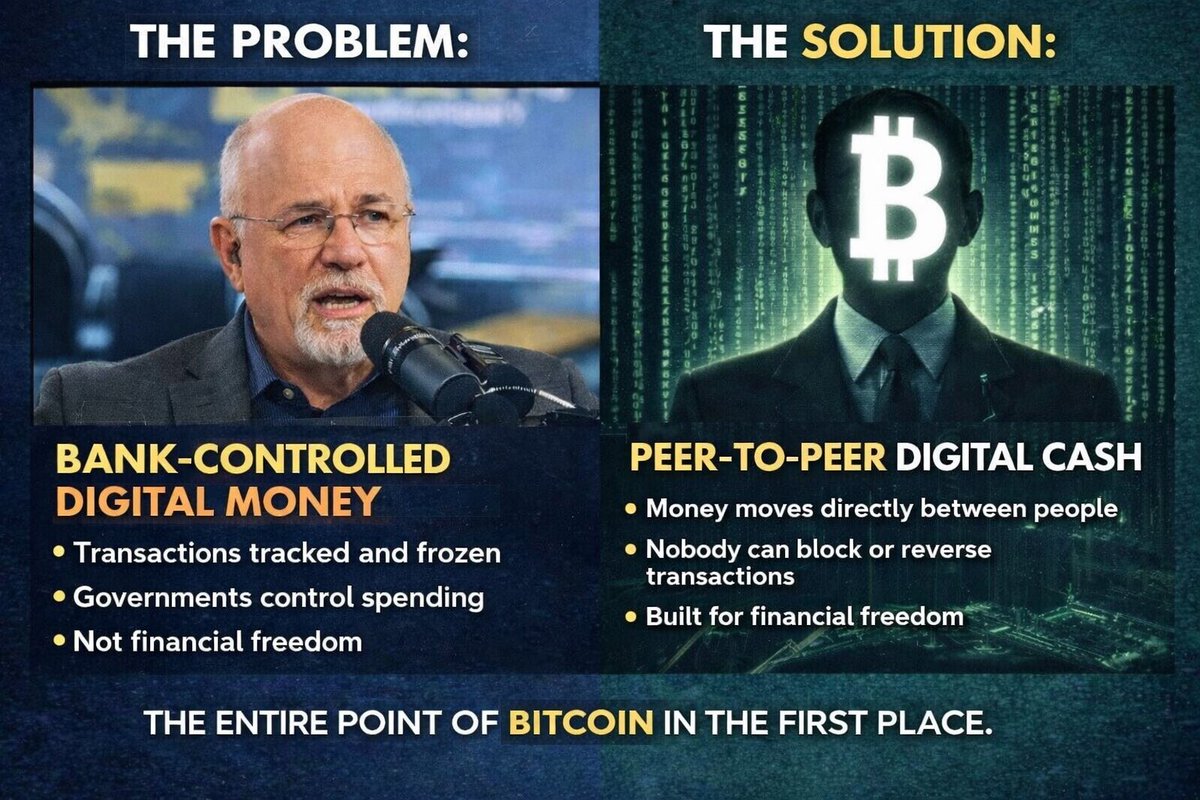
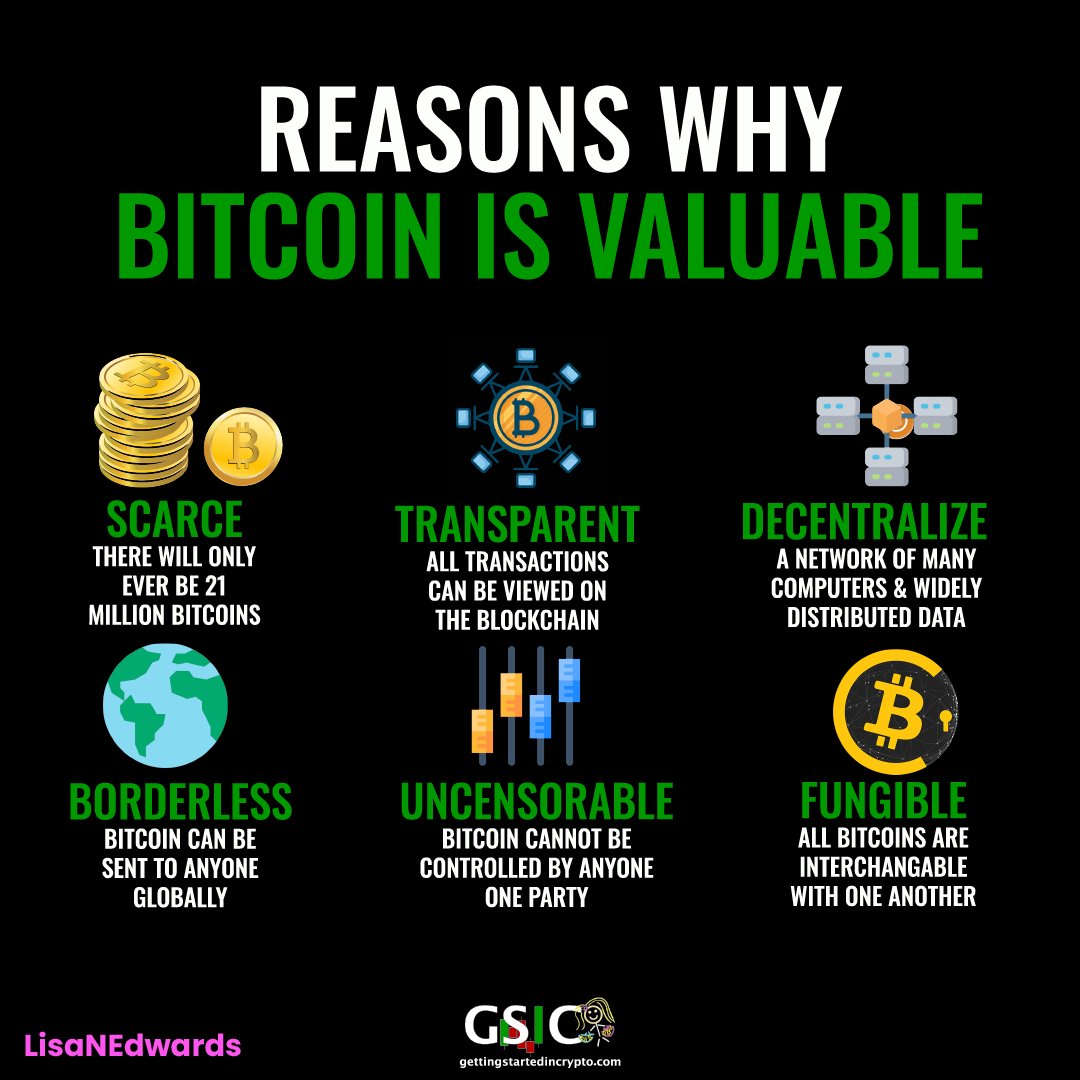
Someone asked me what I thought about this Dave Ramsey post warning about a “cashless society.” And honestly, he’s right about one thing… If money becomes fully digital AND controlled by banks or governments, then yes, every transaction can be tracked, blocked, or frozen. That’s not financial freedom. That’s centralized control. But here’s the part most people miss: Not all digital money works that way. The entire reason Bitcoin SV exists is because the original system described by Satoshi Nakamoto was designed to solve this exact problem. Satoshi didn’t invent “bank money on the internet.” He invented peer-to-peer electronic cash. That means money moving directly between people, without banks or payment companies sitting in the middle approving every transaction. So the real comparison isn’t: Cash vs Digital. The real choice is this: Centralized digital money (CBDCs, bank apps, card networks) • Banks control the system • Transactions can be blocked • Accounts can be frozen • Governments can program spending vs Peer-to-peer digital cash (the original Bitcoin design) • People send money directly to each other • No central authority controlling the ledger • Ownership is controlled by private keys • Works more like digital cash than bank money So when people warn about a “cashless society,” they’re really warning about centralized digital money. But the irony is… The solution to that problem was invented in 2008.
: Casey-Nicole. tweet media
English
2
13
41
1.2K
: Casey-Nicole.
: Casey-Nicole.@bethebroadcast·
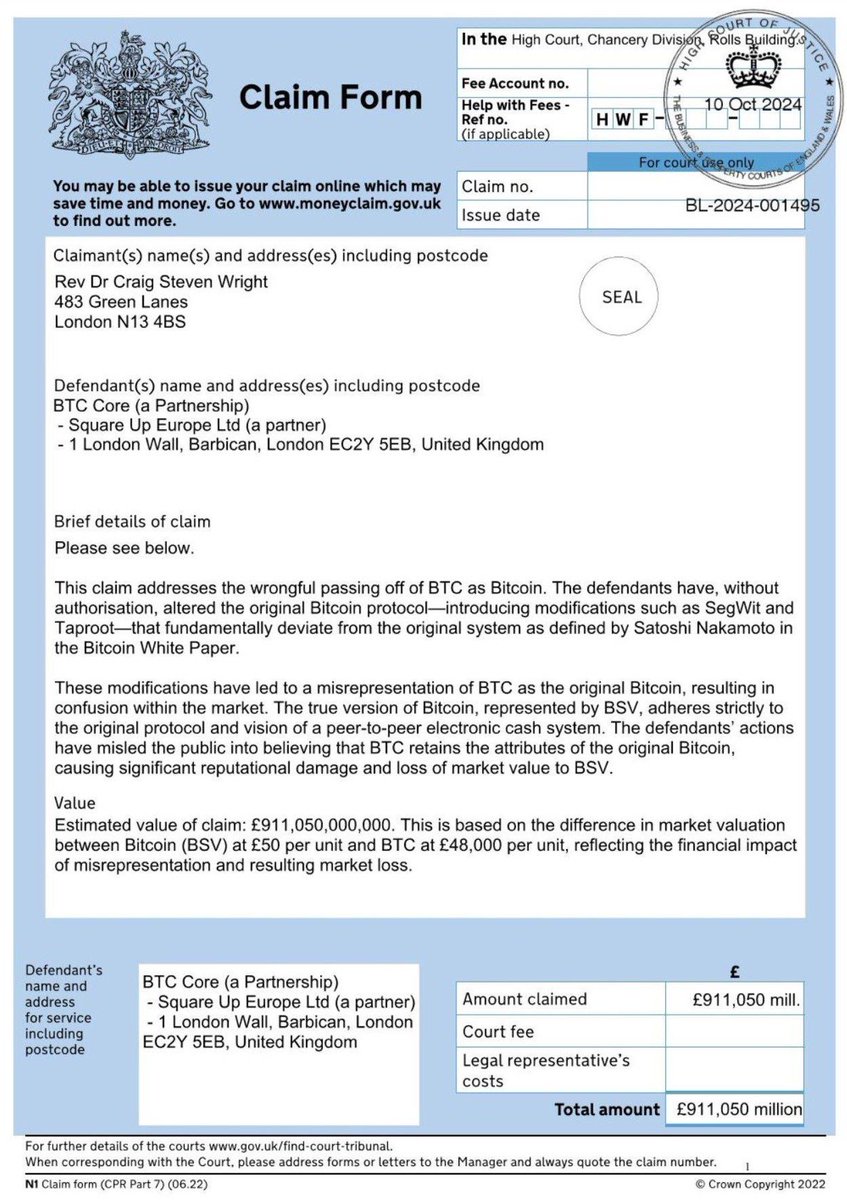
Everyone’s watching documentaries trying to “find Satoshi.” Meanwhile, the real fight has been happening in court. This is the passing-off case filed by Craig Steven Wright ( @CsTominaga ) against BTC Core — arguing that BTC altered the original Bitcoin protocol (SegWit, Taproot, etc.) and then continued marketing itself as “Bitcoin.” Estimated damages claimed: £911 BILLION. Let that sink in. The entire point of this case is bigger than personalities. It’s about whether the system described by Satoshi Nakamoto can be altered and still be marketed to the world as the same thing. And here’s the part the documentaries always miss… If the creator of Bitcoin ever becomes undeniable — whether through law, evidence, or math — the passing-off question comes roaring back instantly. Because then the next question becomes unavoidable: Who has been selling something to the world as “Bitcoin” that isn’t? A lot of journalists, influencers, developers, and companies have spent the last decade mocking that possibility. History has a funny way of revisiting receipts. So while Hollywood tries to find Satoshi… Some of us are watching the legal chessboard. 🍿
: Casey-Nicole. tweet media
Finding Satoshi@findingsatoshi_

The greatest financial mystery of the 21st century ends on April 22nd. Watch the official trailer for #FindingSatoshi now. Pre-purchase at the link in bio.

English
10
37
155
6.4K
DrP
DrP@salathe·
@CalvinAyre Love the image very true….
English
0
0
1
42
Calvin Ayre
Calvin Ayre@CalvinAyre·
Kraken receiving ‘limited’ access to a Federal Reserve master account is the latest sign of a major shift underway that will require significant adjustments for both companies and individuals. Kraken’s Fed access follows a rapidly expanding list of digital asset firms winning U.S. bank charters, while an equally large number of financial services firms are looking to incorporate stablecoin rails into their operations. It’s an era of remarkable upheaval. This situation will get even wilder as tokenization of securities expands. Before you know it, 24/7 payments and trading of everything will be the norm. This means the end of the old firebreaks, like people being prevented from acting recklessly because markets are closed. In this 24/7 world, you’ll need AI agents to act on your behalf. These agents will require incredibly detailed parameters reflecting your preferences, and you’ll need to have faith that these agents won’t hallucinate alternate instructions or simply go rogue and decide they know better than you. We need to acknowledge that the average consumer is being presented with financial options that would have seemed unimaginable just a few years ago. This new world will move faster than most people are ready to handle, particularly if they don’t fully understand all that’s involved. The impact will be both positive and negative, but it will be a lot less negative if consumers are properly educated on all these new tools and systems. People conditioned to absentmindedly clicking ‘okay’ on the T&C’s of a new software update need to actually pay attention here. Education needs to start early. Young people these days are finding it harder than ever to start careers, let alone grab the first rung on the property ladder. They’re more likely to take risks when it comes to their finances because many of them feel they’ve got little to lose. There certainly wasn’t any financial education when I was in school. I was fortunate that I found financial matters intriguing, and I knew that acquiring this knowledge would serve me well not only as I mulled early business ventures but also in my personal investments. Are kids getting any financial literacy principles in grade school nowadays, or is this something they still have to wait until post-secondary to access? Would you have benefited from more of this when you were in school?
Calvin Ayre tweet media
English
9
15
70
2.6K
Daanish Khazi
Daanish Khazi@bertgodel·
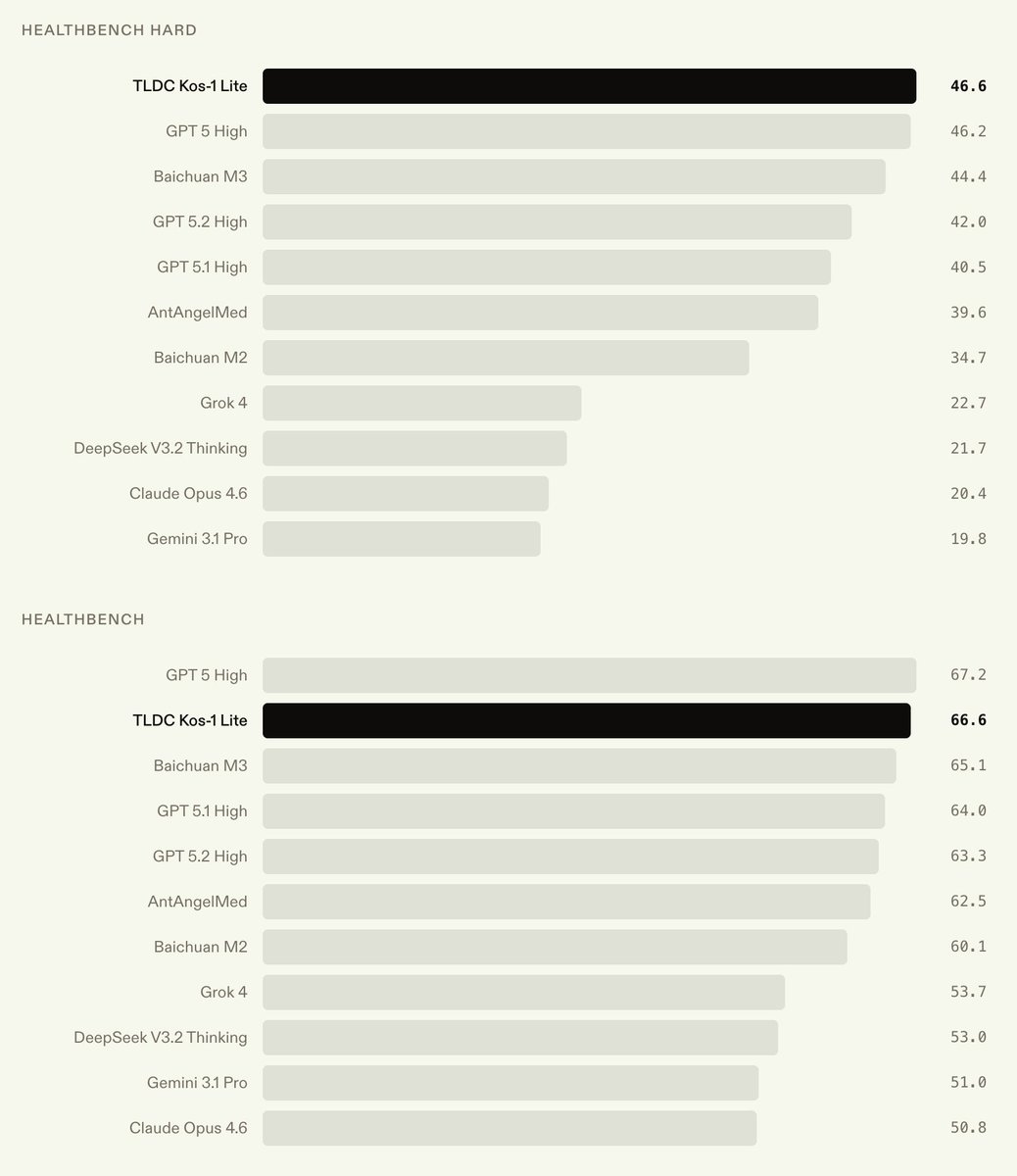
We’re announcing Kos-1 Lite, a medical model that achieves SOTA on HealthBench Hard at 46.6%. As a medium sized language model (~100B), it achieves these results at a fraction of the serving cost of frontier trillion-parameter models.
Daanish Khazi tweet media
English
40
59
318
24.6K
DrP
DrP@salathe·
@axiemaid So good create not hate, Satoshi is Wright…
English
0
0
0
23
axiemaid
axiemaid@axiemaid·
Wake up, Neo...
axiemaid tweet media
English
11
31
148
5.8K
DrP
DrP@salathe·
@CsTominaga Will try this if you will try Tarte de Santiago just the simplest most delicious almond based cake with a history extending back to the crusades. Perfect with a strong coffee 🚀
English
0
0
1
44
S Tominaga (Aka Dr Craig Wright)
Coffee–Walnut Almond Torte (Duck Egg Base) Yield: 23 cm round tin Ingredients 4 duck eggs (room temperature) 160 g caster sugar 250 g almond meal 100 g walnuts, finely ground (plus 30 g roughly chopped, optional) 120 ml Kahlúa 80 g unsalted butter, melted and cooled 2 tsp strong instant espresso powder (or very finely ground espresso) 1 tsp baking powder ¼ tsp fine salt Method 1. Preparation Preheat oven to 170°C (160°C fan). Line the base of a 23 cm springform tin with parchment. Lightly butter sides. 2. Egg Base Separate the duck eggs. Whisk yolks with sugar until pale and thick. Duck yolks are richer and require slightly longer whisking. 3. Incorporate Flavour Dissolve espresso powder in the Kahlúa. Stir this mixture and the melted butter into the yolks. 4. Dry Components Combine almond meal, ground walnuts, baking powder, and salt. Fold into the yolk mixture until evenly incorporated. 5. Egg Whites Whisk whites to soft peaks. Fold one-third into the batter to loosen it, then fold in the remainder gently to retain structure. 6. Assembly Pour batter into the prepared tin. Scatter chopped walnuts over the surface if using. 7. Bake Bake 45–55 minutes, until set at the centre and a skewer comes out with moist crumbs but no raw batter. 8. Cooling Cool fully in tin before releasing. Almond-based tortes firm as they cool. Optional Finish Light brush of warmed Kahlúa over the cooled surface. Thin glaze made from 60 g icing sugar mixed with 1–2 tbsp Kahlúa. Serve plain or with lightly whipped cream. Texture and Structure Almond meal produces a dense, moist crumb. Ground walnuts reinforce structure and deepen flavour. Duck eggs add richness and stability, allowing the cake to remain tender despite the absence of wheat flour. The result is compact, aromatic, and balanced between coffee bitterness and nut depth.
English
5
2
36
1.6K
DrP
DrP@salathe·
@kurtwuckertjr Excellent article and thought provoking. BSV is made for the OpenClaw lobsters 🦞 to work autonomously and for this new age. Create not hate ✅
English
0
0
1
36
DrP
DrP@salathe·
@bryan_johnson In cats we use the Biotherm Microchip and this correlates really well with rectal temperature. You just scan the chip to get your temperature. This would be an interesting experiment. Plus Kate can find you if you ever went missing by the same microchip!!!
English
0
0
0
211
Bryan Johnson
Bryan Johnson@bryan_johnson·
I've been measuring my core body temperature post sauna with an inner ear device. But it's not accurate enough. That's a problem. The gold standard is rectal. I'm unsure if I can do this. My doctors are now accusing me of not being committed.
English
622
81
7.9K
785.2K
Orange Gateway
Orange Gateway@orangegatewayx·
For years, they told you BSV was "dead." Coinbase won't list it. Binance delisted it. Kraken followed orders. Why would trillion-dollar exchanges blacklist the only Bitcoin that actually scales? Because if you could easily buy real Bitcoin—the one that works as peer-to-peer cash—you'd realize you've been holding a crippled settlement layer this whole time. Orange Gateway exists because Bitcoiners don't take orders from Silicon Valley. -Banking relationship since 2014 -Regulated. Compliant. Untouchable -EUR, USD, BTC, ETH, USDC → BSV They didn't delist BSV because it's a scam. THEY DELISTED IT BECAUSE IT'S THE COMPETITION. The on-ramp is open. The question is: are you ready to see what Bitcoin was supposed to be? OrangeGateway.com
English
28
136
340
15.5K
DrP
DrP@salathe·
@CalvinAyre Great post a life being very well lived and love the combine and harvesting story. Roots are very important to us all.
English
0
0
1
17
Calvin Ayre
Calvin Ayre@CalvinAyre·
People might think seeing my face on the cover of Forbes’ Billionaires issue in 2006 represented the pinnacle of my achievements and thus the moment that most defines ‘success’ for me. Not even close. I more vividly recall the first $15 bet that came in after my fledgling online gambling software business went live for our very first client in St. Kitts in the 1990s. We had no idea if the system would work, so when it did it was like Christmas, Thanksgiving and my birthday rolled into one. However long I live, I’ll remember the pride on my dad’s face after he pulled me out of school for a week in Grade Three so I could drive the combine for the first time and help him harvest the crops on our farm. Being able to reward his faith in me was (and still is) the best feeling. But accomplishments don’t have to be your own to be deeply satisfying. Seeing the smiling faces of kids who are more excited to learn after my Foundation helped improve their school is indescribably cool. Who knows what successes of their own these kids might have later on? There was a time when Forbes was the businessman’s bible, so yeah, any businessman would be excited to see their grinning mug on its cover. But it’s often smaller, less flashy achievements that resonate the strongest, particularly when they come out of the blue. Like this little slice of my 15 minutes of fame (from the Canadian Trivia board game) a friend just sent me. Next stop, Jeopardy! Anybody else celebrate smaller wins over the big prizes?
Calvin Ayre tweet media
English
5
1
45
1.4K
John Gargiulo
John Gargiulo@JohnnotJon·
Today, we’re launching Airpost. I’m 46. That’s not a cool age to found a startup. At least according to Twitter. I still call it Twitter. I’ve loved advertising all my life. Since I was 19 and my mom told me about a movie called “Nothing in Common” with Tom Hanks where he plays an ad exec whose main job seems to be shooting hoops with his creative partner. That sounded fun. Since then, traditional advertising has stayed… traditional. From my 1st job out of college writing TV ads for Snapple and Fox Sports, to leading product marketing at Airbnb, I’ve seen a lot. Now the AI era is here and an entire $1T industry is about to change. Who will change it? Why not me? Why not us? Introducing Airpost: a platform and service where world-class creative strategists use custom-built AI to build video ads. Fast. If you’ve ever sat down to make an ad with AI and realized 20 minutes later you’re still wrestling with that same clip… that’s why we built Airpost. Growth teams are busy. They’re asked to do too many things as it is. They shouldn’t have to be AI experts as well. Creative strategists shouldn’t have to stare at a white box trying to decide what to prompt. They should have a partner. That’s what we aspire to be. And that’s what we’ve built our tech to do. AI ads shouldn’t have to mean only AI footage. We have an exclusive library of over 300,000 video clips we’ve shot ourselves. Our engine uses these, along with client footage and AI footage to make the ads we deliver each week. We’re funded by the best investors and humans we know. We bootstrapped our performance creative agency, Ready Set, to 200 people. I was always told VCs didn’t add value. If that’s true, it must be other VCs, because ours have been awesome. Thank you Zach Perret, Nate Abbott, Peter Hebert, Max Mullen and all of the firms and folks who’ve believed in us so far. We’ve gone from 0 to $1M ARR in the six months since we quietly started working with early clients like DoorDash, Dr. Squatch, Calm and more. So far, every customer has renewed. To celebrate the launch, we’re giving away a superagent where you: 1) Put in your product URL 2) Get snippets of what your real users are saying on Meta, TikTok, Reddit and X 3) Paste them into ad scripts Comment “Airpost” and I’ll DM you the private link. It feels (a little scary but) good to be out there. Here we go! 🚀
English
1.3K
240
2.5K
1.5M
DrP retweetledi
S Tominaga (Aka Dr Craig Wright)
Conclusion – Why Do You Want Anything to Do with Bitcoin? Ask yourself, with the severity of an oath: Why do you want anything to do with Bitcoin? Is it simply the hope of profit, the gambler’s lust dressed in technological clothing? Do you chase price because it shimmers like a mirage of easy triumph, mistaking speculation for purpose? Then build your own casino. There are countless tokens, countless gimmicks, all equally devoted to vanity. If wealth without principle is the goal, you need no philosophy, no vision, and certainly no Bitcoin. But if what draws you is not greed but conviction—if you believe in property that exists beyond permission, in cash that moves from hand to hand without oversight, in systems that refuse to kneel before custodians—then you must face the truth: that Bitcoin’s ideals can live only in scale. The dream of peer-to-peer cash, of sovereign exchange, of a society without gatekeepers, dies in throttled systems. A protocol limited to five transactions a second is not liberation; it is a leash. Real freedom demands abundance. It demands a network vast enough that no one can corner it, open enough that anyone can use it, efficient enough that no one needs a banker, broker, or bureaucrat to mediate value. Bitcoin was conceived as a public utility, not a playground for intermediaries. It was a tool to eliminate Michael Saylor’s “new form of bank,” not to enthrone it. It was designed so that no man would have to ask another to spend his own money. That vision has been perverted by those who crave control—the developers who change rules to suit fashion, the traders who mistake volatility for virtue, the institutions that insert themselves between people and their property. They call it progress. It is regression with better branding. They have turned the people’s system into a financial pyramid where a few hold keys and the rest hold tickets. The true question, then, is moral, not technical. Do you want to be a customer or an owner? Do you want your freedom administered by intermediaries who promise safety while selling dependence, or do you want a system where every individual is sovereign, every transaction final, every rule immutable? Do you want an economy built on custody or one built on responsibility? If you want the latter, there is only one road: scale. Massive, unapologetic, industrial scale. A system capable of billions of transactions a day, of micropayments and global commerce alike. A ledger that can record the economic pulse of civilisation without permission, congestion, or compromise. Without scale, Bitcoin is philosophy without practice; with it, Bitcoin becomes the operating system of liberty itself. So ask again—why are you here? If it is for riches, leave and speculate elsewhere. But if it is for the principles that outlast fashion—the sovereignty of the individual, the sanctity of property, the right to transact without approval—then understand that your loyalty belongs not to the price, but to the protocol. Fix it. Scale it. Defend it. Because only a scaled, immutable Bitcoin can do what it was born to do: make every man his own bank, every transaction its own truth, and every life free from the invisible hand that would claim to guide it.
S Tominaga (Aka Dr Craig Wright)@CsTominaga

The Mirage of Decentralisation The modern cult of BTC worships a fantasy. They chant “decentralisation” like a sacred word, never daring to look beneath the hood of their own machine. The myth is simple enough to seduce: a romantic image of home miners, glowing rigs in basements, lone heroes of computation keeping the system free. The reality, however, is industrial. The small miner has been exiled. The network is ruled by oligarchs of hashpower — the mining pools — and the faithful kneel before them, muttering slogans of liberty while chained to dependence. In the original design, a node was a full economic participant, a business that validated and built the chain through proof of honest computation. Nodes were meant to compete — not cooperate in cartels or defer to pool masters. Yet BTC has inverted this structure entirely. The protocol, throttled to a mere five transactions a second, has made solo mining unviable. The cost of entry is prohibitive, the reward negligible. Thus, miners flock to pools, surrendering autonomy for the illusion of stability. The result is predictable: a handful of corporations now dictate consensus through aggregation, not competition. The myth persists because it flatters the egos of the devout. They tell themselves that a network of pools still represents decentralisation because there are several of them — as though five emperors were somehow democracy. This sleight of hand hides the truth: control has shifted from a thousand independent operators to a dozen administrators with dashboards and veto power. Decentralisation, once an architectural principle, has become a marketing slogan. True distribution is not geography; it is ownership. A mining rig in a warehouse on another continent is not a sign of freedom if it answers to the same pool manager. What matters is who commands the keys, who sets the rules, who decides which block is “truth.” Ownership has been traded for convenience, and convenience is always the prelude to servitude. Now imagine a world where this lie is corrected — where decentralisation is restored not by nostalgia but by market structure. Instead of miners joining pools, imagine individuals investing in nodes. Each node operator becomes a transparent enterprise, advertising its costs, overheads, and terms. Investors can buy and sell fractional shares, owning a measurable portion of that node’s operation. Ownership is no longer obscured behind corporate opacity; it becomes liquid, verifiable, and auditable. This is not collectivism; it is the rebirth of competition. A node cooperative is not a commune but a marketplace — thousands of investors aligning their interests block by block. Each node competes openly: one offers lower fees, another promises higher efficiency, a third optimises energy use. The investor, the participant, the very crowd itself determines which survive. It is the invisible hand, not the clenched fist of ideology. Such a model does not require home miners or amateur tinkerers. It requires capital discipline, contractual transparency, and an immutable base layer — the fixed protocol that enforces honesty. Each share of a node could be represented by a token, transferrable instantly on-chain, updating ownership with every block. Dividends are paid automatically by smart contract, no manager’s discretion, no human corruption. The rules are enforced by mathematics, the profits by merit. This, and only this, is genuine decentralisation. Not the hollow slogans of BTC’s priesthood, but a functional, open economy of computation. The false decentralisation of BTC serves those who fear competition; the real one empowers those willing to engage in it.

English
11
37
93
5.6K
DrP retweetledi
S Tominaga (Aka Dr Craig Wright)
I’ve been in Asia for nearly two years now, and it isn’t some indulgent “escape” or a fashionable reinvention. There are reasons. One is straightforward: my wife’s family. Another is less sentimental and more practical—Asia is one of the few places left where you can still watch systems operate from the ground up, where you can see real logistics, real markets, real constraints, real improvisation, and real competence without everything being smothered under layers of institutional theatre. If you spend your life in Europe or America, you learn a great deal about rules, committees, narratives, and people who specialise in calling meetings about outcomes. You do not, as a rule, learn much about how things work at the grassroots when no one is paid to pretend they do. Out here, you can learn the parts that are never on the syllabus: how people actually build, trade, plant, fix, make do, and adapt. If you’re trying to understand the real world rather than the brochure version of it, you pay attention to environments where the brochure isn’t the primary industry. That’s part of why I’m here. The other part is that I have projects that require exactly this kind of context. I’m working on a number of research projects, and one of them—oddly enough—looks like the least academic one from a distance: my farm. It’s not a hobby. It’s not cosplay. It’s an agricultural experiment, a live system, something I intend to refine and document and, if I get it right, something I’d like to see replicated in years to come. The entire point is to test ideas in physical reality rather than in a PowerPoint that ends with “further research is needed.” There’s something refreshing about a domain where the earth keeps score. You don’t get to bluff soil. You don’t get to “narrative” your way through irrigation. You don’t get to announce a “framework” and then quietly re-label failure as progress. Either it works, or it doesn’t. That’s a kind of honesty the modern professional class has almost forgotten. But this isn’t permanent. The irony is that this period of living in what people like to call “the developing world” has been one of the most direct engagements with reality I’ve had in a long time. And after it, I’ll be going back to what I’ll call—without romance—the real world: the West, with its money, its institutions, its politics, its moral panics, its endless arguments about abstractions, and its talent for turning simple questions into permanent bureaucracy. The choice remains either Europe or the United States. I’ve lived long enough and watched enough to be under no illusion about either. Europe has immense cultural weight and a history that still matters, but it also has a growing habit of confusing regulation with virtue, and administration with achievement. The United States has all the failings everyone knows it has—loudness, vulgarity, internal contradictions, and a talent for exporting its domestic neuroses as global policy. But everything, the way things are going, points more towards America. There is still a pulse there—still room for building, still room for ambition that isn’t apologetic, still room for people who can do something rather than merely comment on it. When that move happens, the long-term plan is simple, even if the road to it has been anything but. I will go back to teaching. ...
S Tominaga (Aka Dr Craig Wright)@CsTominaga

My Value Statement The organising principle of my work is simple: a human life is a project that must be built, not drifted through. I hold that excellence is not a luxury for a gifted few but a moral obligation for any person capable of thought and effort. To accept less than one’s legitimate best, in any domain that matters, is to collude in one’s own diminishment and to impose the cost of that slackness on others—family, colleagues, institutions and, ultimately, civilisation itself. My starting assumption is that adults do not need consolation; they need standards, tools and the unvarnished truth about what those standards will cost. I value reason over fashion, structure over sentiment, and outcomes over narratives. Truth is not negotiable, however inconvenient it may be for reputations, markets or ideological comfort. Responsibility is not a slogan but a practice: doing what one has said one will do, maintaining what one has built, and accepting the consequences of one’s choices without resort to blame or self-pity. Prosperity—in the fullest sense, material and moral—is not created by complaint, envy or the politics of grievance, but by disciplined work, honest trade and architectures (personal, organisational and technical) designed to endure scrutiny and time. I reject the modern cult of perpetual victimhood and the accompanying doctrine that mediocrity is a form of virtue. I hold that individuals are capable of far more than our culture encourages them to attempt, and that the pretence of fragility has become a convenient shield for laziness, cowardice and evasion. My commitment, in this life and elsewhere, is to provide frameworks that expose drift, reward disciplined effort, and align personal conduct with long-term prosperity and structural integrity. If that stance is unfashionable, so much the worse for fashion.

English
38
15
216
41.8K
DrP retweetledi
BSV Association
BSV Association@BSVAssociation·
Meet Chronicle - the final step in restoring BSV to the original Bitcoin Protocol. The mandatory upgrade honours our vision of a pure, unrestricted protocol, breaks down unnecessary barriers & allowing developers to innovate without limits. Breakdown & documentation below.
BSV Association tweet media
English
4
61
184
10.7K
DrP retweetledi
1,000_BSV
1,000_BSV@bsv0608·
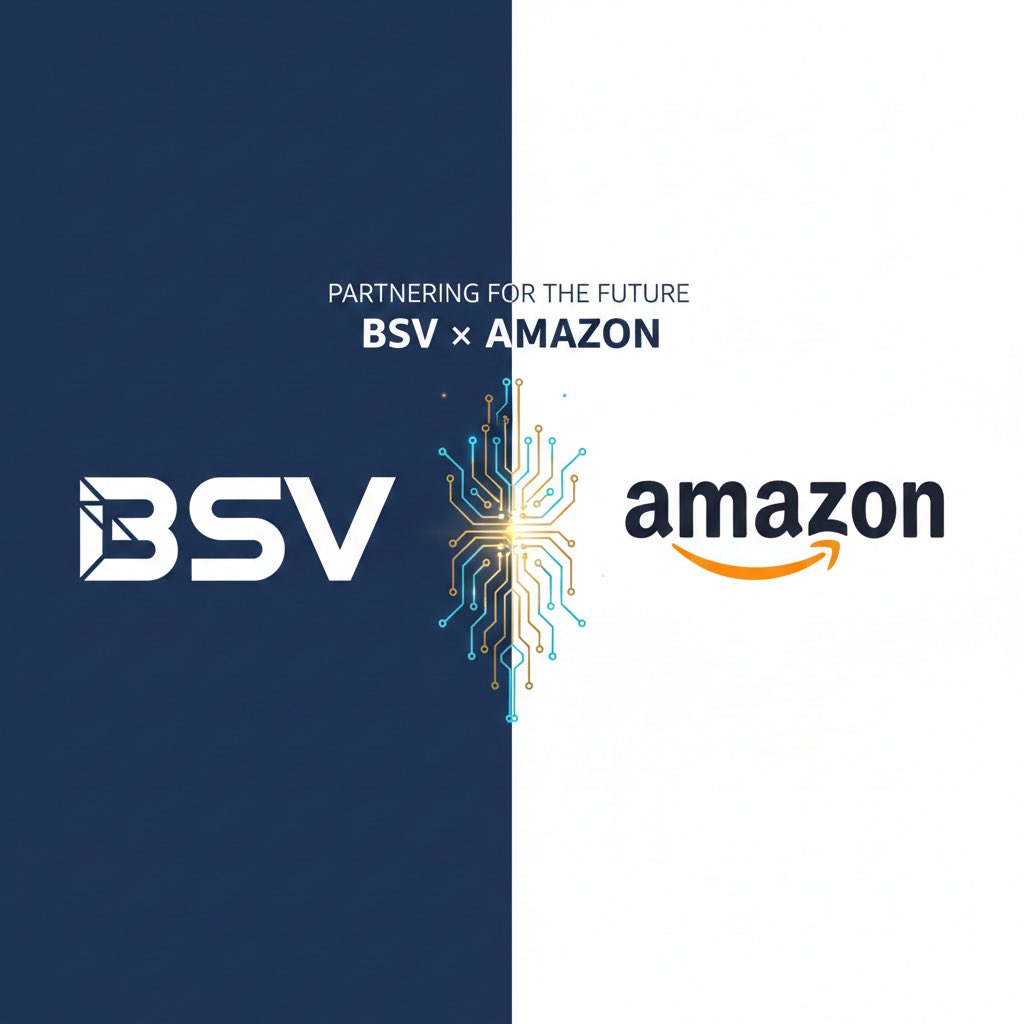
BSV is already, in itself, the core of a fully realized future industry. Now, all that remains is adoption by enterprises and institutions. 〰️〰️〰️〰️〰️〰️〰️〰️〰️〰️〰️〰️〰️〰️〰️ 🤝Amazon and BSV🤝 〰️〰️〰️〰️〰️〰️〰️〰️〰️〰️〰️〰️〰️〰️〰️ 1. Official Strategic Partnership (Initiated Late 2024) Since late 2024, the BSV Association (BSVA) and Amazon Web Services (AWS) have been in a strategic partnership aimed at driving blockchain innovation. • Hosting Overlay Services: AWS is used to host key BSV network components, such as Simplified Payment Verification (SPV) wallets and Overlay Services. • Marketplace Integration: A primary goal is to make these components available for developers via "one-click deployment" directly within the AWS Marketplace. 2. Teranode Development & AWS Technical Support Teranode, BSV's scaling solution capable of 1 million transactions per second (TPS), is being built with direct engagement from AWS. • Direct Support: Siggi Oskarsson, CTO of the BSV Association, confirmed that the Teranode team requested tech support from AWS, which piqued Amazon's interest in features like timestamping as a service. • Testing Infrastructure: The BSV Association has been working closely with AWS to experiment with and solve problems related to upscaling the network's digital backbone. 3. Presence at AWS Global Summits The BSV Association has been an active participant at official AWS events, which is rare for many blockchain projects: • AWS Summit Zurich (2024 & 2025): The BSVA maintained a booth and held speaking slots at these summits to educate enterprises on BSV’s scaling abilities and its transition to Web3. • Standardization Efforts: At these summits, representatives discussed aligning BSV with global technical standards (like IEEE and IETF) to ensure compatibility with AWS's broader cloud ecosystem. 4. Aerospike Connection BSV’s partnership with Aerospike (a leading real-time NoSQL database) is a bridge to AWS. Aerospike’s architecture is used to speed up Teranode transactions on-chain, and this entire stack is optimized to run on AWS cloud computing infrastructure. #BSV
1,000_BSV tweet media
English
13
65
190
8.8K
George Stock
George Stock@georgesttock·
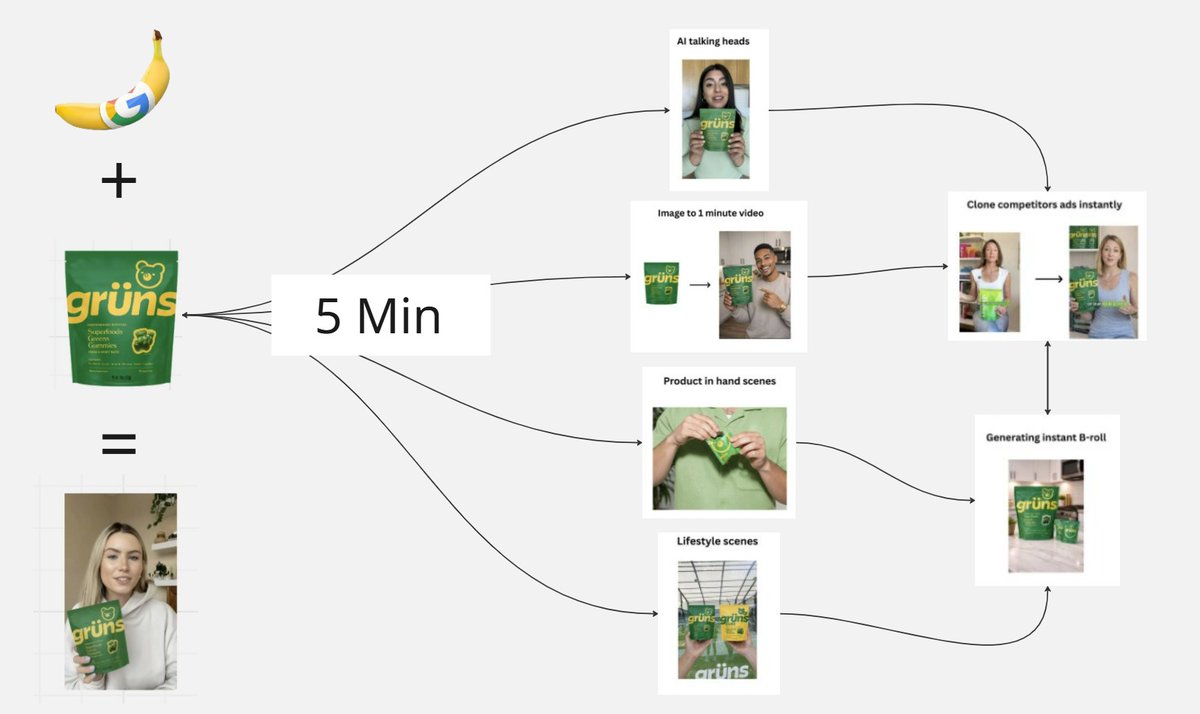
VEO 3.1 × Nano Banana × MakeUGC = $200K/month AI UGC ads that actually convert. Turn any product photo into winning UGC ads in minutes. Paste ad → pick avatar → done. Hooks → scripts → creator-style videos → iteration, fully automated. UGC ads produced daily. Most people can’t tell it’s AI. Want the agent + playbook? Comment “UGC” (must be following)
George Stock tweet media
English
392
61
587
42.4K
DrP retweetledi
FoxBSV
FoxBSV@captainordin·
BSV maintains a continuous instance of the Bitcoin transaction ledger originating from the Genesis block in 2009, including all transactions prior to the 2017 protocol divergence and subsequent splits, enabling long-term data integrity, auditability, and historical analysis.
English
1
14
54
4K