Sabitlenmiş Tweet
Carole Haswell
10.7K posts

Carole Haswell
@saltburnlass
Astro prof, feminist, Smoggy. Enthusiastic re: education, sport & science, esp. exoplanets. Thalassophile. Laugh as much as possible. My thoughts are my own.
nr Milton Keynes Katılım Mayıs 2011
2.3K Takip Edilen1.9K Takipçiler
Carole Haswell retweetledi

@peterrhague @communicable A couple of important links: theconversation.com/mounting-resea…
bloomberg.com/news/articles/…
English
Carole Haswell retweetledi

@peterrhague @communicable Nothing “snapped back right” because the pandemic didn’t end—the WHO only ended the “health emergency.” Covid continues to circulate globally at high rates and while the initial infection isn’t killing people’s, read up on what it’s doing to people’s brains. It explains so much.
English
Carole Haswell retweetledi

UK history has been recorded since before the Domesday Book.
Men could be awarded university degrees in 1230. Cambridge finally capitulated and awarded degrees to women in 1948.
Men first took seats in Parliament in 1265. Women had to wait till 1918.
Men could vote in 1832. Women had to wait till 1918.
Men were legally persons in their own right. Women were chattels (the property of fathers or husbands) until coverture was finally knocked on the head in 1991. That’s not a typo. 1991.
It is true that one of us is certainly silly and historically illiterate. I leave it to serious historians to decide which…
English
Carole Haswell retweetledi

There is no Woman of the Day today. Instead, I want to explain why I do what I do. No one really knows who first said, “History is written by the victors” but I’d bet you any odds it was a man.
Think of your schooldays and count the number of times you learned about the roles played by women in shaping history, other than regnant Queens and perhaps Marie Curie and Florence Nightingale. Yet women lived, worked, networked, debated, campaigned, organised, invented things and built them too - but you’d never know this if your lessons, like mine, were confined to history books.
For a practical example, just look around you. Fridge, washing machine, dishwasher, ironing board, home security system, call waiting system, car heater and windscreen wipers, even the very first computer algorithm: all invented by women.
Are you surprised? Confined to the house, denied access to higher education, barred from engineering, denied entry to all branches of science and the professions for centuries, those bright analytical minds turned their attention to their immediate surroundings and saw what was needed to free them from domestic drudgery.
In return, history ignored women’s achievements, glossed over them or consigned them to dusty footnotes. If all else failed, their work was credited to - or stolen by - men, the phenomenon known as the Matilda Effect, first identified by feminist Matilda Joslyn Gage in 1870.
In 1993, it was named for her by historian Margaret Rossiter who said, “It is important to note early that women’s historically subordinate ‘place’ in science was not a coincidence and was not due to any lack of merit on their part. It was due to the camouflage intentionally placed over their presence in science.”
Once you see it, you cannot unsee it - the Matilda Effect is everywhere - but now substitute ‘history’ for ‘science’. The proposition still stands. What I try to do is to pierce holes in that camouflage by writing about the almost-invisible women of history who overcame manmade barriers and changed the world.
As a Second Wave feminist, I thought we’d won all the big battles, that it was just a matter of mopping up the resisters and dragging them into the 20th century. I did my bit to redress the balance in an overwhelmingly male environment, but how had I managed to miss the barefaced theft of our words, our spaces and services, our sports? How had we suddenly been reduced to a walking collection of body parts?
It was a wake-up call.
Once I saw, I couldn’t unsee the terrible damage being done to girls and young women who did not conform to the offensive sexist stereotypes being imposed on them by men who mimic women and their inane female cheerleaders. It made me fearful for non-conforming girls: tomboys. They need to see strong women as role models, women who don’t care about performing femininity, women who defy convention and do things their way. If you can see it, you can be it.
So I went digging around in those dusty footnotes, found a little gold and started from there. I found thrilling tales of women who were inventive, resourceful and brave. Then I started sharing what I found more widely, tied to the calendar as Women of the Day.
How do I find them? Often by pure chance. I go looking for one woman, spot a couple more names along the way - women whose stories really resonate with me - and file them away for the right time. Women’s history had been right under my nose the whole time. I just hadn’t realised that you needed to dig a little. The rather unexpected bonus was that in giving them a voice, I found mine.
I am a conspicuously law-abiding woman, a former prison governor, and if you had told me when I retired that one day, I’d be standing outside a police station in protest at the hounding of gender critical women and singing “Go catch some rapists” to the tune of Guantanamera, I’d have advised you to seek immediate medical attention for the effects of the bump to your head.
But here I am, telling women’s stories, and behind the scenes, pursuing a second career as a women’s rights activist. I won’t ever fall asleep at the wheel again.
Tomorrow, I’m off to Cardiff with my Women of Wessex sisters, to protest about @bphillipsonmp’s inexplicable decision to delay laying the EHRC Code of Practice before Parliament — and make no mistake about it. It IS a decision; one that is causing real harm and damage to the rights of women and the protection of children.
Some of you come for the occasional stories of women in history hiding in plain sight, but I hope you stay because you care about fairness and safety for women. For now, I leave you with this thought from the 1949 memoirs of Somerset suffragette Nelly Crocker (1872-1962):
“Modern young women seem unaware of the price paid for their political and social emancipation, and modern historians have greatly ignored the struggle”.

English
Carole Haswell retweetledi

@JennyAThatcher Yes, I had some of my ideas stolen by a senior colleague too. Fortunately it was after I already had a permanent position, but still annoying!
English

@SaffronKim 1981: My physics teacher refused to write a letter supporting me to study physics at university. I got top grades and was accepted to maths at Oxford. Am now a Prof of Astrophysics.
English
Carole Haswell retweetledi

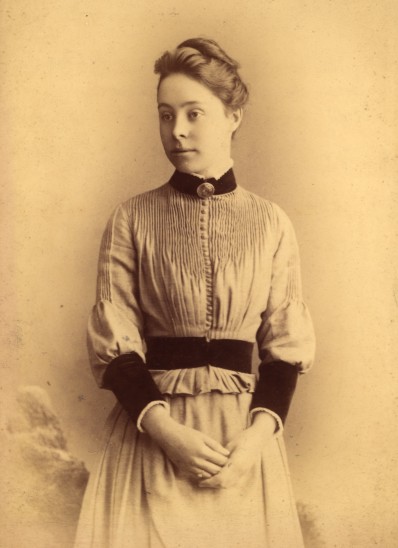
Woman of the Day Philippa Garrett Fawcett, born OTD in 1868 in Cambridge, daughter of the suffragist Millicent Garrett Fawcett and niece of Britain’s first female doctor Elizabeth Garrett Anderson, who achieved a rare distinction in her own right.
On 7 June 1890 at the age of 22, she took first place in the Cambridge Mathematical Tripos, the first time a woman had done so. It caused havoc.
The Tripos was famously difficult: 12 papers and 192 progressively more difficult questions over eight days, and for those in contention for the title of Wrangler, a further three days of exams consisting of 63 still more testing problems. Preparation took months.
To attain first prize as Senior Wrangler, Cambridge’s champion mathematician, was regarded as the greatest intellectual distinction of all. No fewer than nine Senior Wranglers including Sir Isaac Newton and Stephen Hawking became Lucasian Professor of Mathematics at Cambridge.
Philippa rose at 8am and studied for an intense six hours a day, often not retiring until 11pm, but she didn’t go as far as her competitors who worked through the night with wet towels wrapped around their heads. She knew she was being watched. The scandalised Pall Mall Gazette reported that she dared to wear “her thick brown hair down to her shoulders, and has even been known (so I have heard) to ride on top of a bus” but she was determined - according to a contemporary news report - to deny ammunition to those who tried “to make out that the women’s colleges are peopled by eccentrics.”
Women then were considered incapable of mastering maths. Fragile, dependent creatures prone to nerves and possessed of a mind several degrees inferior to a man’s, studying during puberty was tantamount to dicing with death because most Victorian scholars believed that “the brain and ovary could not develop at the same time.”
To take first place was unthinkable. Yet Philippa did. She knocked spots off the second place candidate with a score a full 13% higher than his. Did this accord her the much prized title of Senior Wrangler, First among Cambridge mathematics Firsts? What do you think?
As her cousin Marion reported:
“It was a most exciting scene in the Senate…The gallery was crowded with girls and a few men, and the floor of the building was thronged with undergraduates as tightly packed as they could be. The lists were read out from the gallery and we heard splendidly. All the men’s names were read first, the Senior Wrangler [G.T. Bennett of St John’s College] was much cheered. At last the man who had been reading shouted “Women.” A fearfully agitating moment for Philippa it must have been. He signalled with his hand for the men to keep quiet, but had to wait some time. At last he read Philippa’s name, and announced that she was “Above the Senior Wrangler.”
That’s right. Only a man could be named Senior Wrangler, so the bloke in the No. 2 spot got the title. Philippa was simply listed as “Above the Senior Wrangler” instead.
Despite this grudging nod from the university, Philippa’s achievement attracted media attention internationally, and the Daily Telegraph made this its lead story stating, “Once again has woman demonstrated her superiority in the face of an incredulous and somewhat unsympathetic world... And now the last trench has been carried by Amazonian assault, and the whole citadel of learning lies open and defenceless before the victorious students of Newnham and Girton. There is no longer any field of learning in which the lady student does not excel.”
You’d think that Cambridge would be proud to award a degree to someone of such exceptional ability, wouldn’t you? Nah. Women could attend lectures and take the same exams, but they were denied degrees on the basis of their sex. Instead, they were handed a Certificate of Proficiency, which makes it sound as though they’d mastered making sausage rolls in a Bake-off contest.
Philippa promptly became a “Steamboat Lady”.
Until I read about Phillippa, I’d never heard of “steamboat ladies” but it was the nickname given to women students from Oxbridge who travelled to Trinity College Dublin between 1904 and 1906 to be awarded an ad eundem degree - an academic degree awarded on the grounds of mutual recognition or equivalence. Trinity had long held the view that there was no reason to restrict women students from graduating on the same terms as men if they achieved the same grades, and its Board agreed to recognise eligible female Oxbridge students by awarding a Trinity degree.
The Board anticipated that only small numbers of women would take up the offer to graduate: Irishwomen who had studied at Oxbridge. In fact by 1907, Trinity granted degrees to some 720 "steamboat ladies”, all of whom would have been awarded degrees if they had been men. How much talent and potential was lost?
Philippa became a mathematics lecturer at Newnham College for ten years before going to South Africa to set up teacher training colleges. She died on in June 1948, two months after her 80th birthday, and one month after Cambridge finally conceded that yes, women could be awarded a degree.

English
Carole Haswell retweetledi

Christina Koch was a firefighter at the South Pole at -111°F before she ever applied to be an astronaut. That was maybe the fourth most interesting line on her resume. She grew up in North Carolina, got three degrees from NC State, and her first real job was building deep-space instruments at NASA.
Then she left for Antarctica. Spent three and a half years bouncing between the Arctic and Antarctic as a research scientist, including a full winter at the South Pole base. That means going months without sunlight or fresh food, with a crew of about 50 people and no way out until flights resume. While she was down there, she also joined the glacier search-and-rescue team.
After coming back, she went to Johns Hopkins and built instruments for two NASA missions (one of them is still orbiting Jupiter right now). She figured out how to start a tiny vacuum pump that NASA designed for a future Mars rover. Johns Hopkins nominated it for their Invention of the Year in 2009. Then she went back to the field. More time in Antarctica and a stretch up in Greenland. A government research station in northern Alaska, near the top of the world. Then she ran another one in American Samoa, near the equator.
In 2013, NASA selected her from 6,300 applicants. Eight people got in. Her first space mission was supposed to be a normal rotation on the International Space Station, but NASA extended it. She ended up staying 328 straight days and orbiting Earth 5,248 times, covering about 139 million miles (roughly 291 round trips to the Moon). Up there, she ran over 210 experiments, including tests of cancer drugs in zero gravity and 3D printers that can build structures close to human tissue. Six spacewalks, 42 hours floating outside the station. She learned Russian for the training. She flies supersonic jets.
Right now, Koch is on Artemis II, heading for a flyby behind the far side of the Moon. The crew launched on April 1 and is on track to travel about 252,000 miles from Earth, which would break the all-time human distance record of 248,655 miles set by Apollo 13 in 1970. That record has stood for 56 years, and it was set during a disaster that nearly killed the crew. Fred Haise, one of the Apollo 13 astronauts, is 92 now. He told Koch: "I heard you're going to break our record."
Nobody had left Earth's neighborhood since December 1972. Koch and her three crewmates are the first in 53 years, and they are coming home at about 25,000 mph. That is faster than any crewed spacecraft has ever come back through the atmosphere.
All day Astronomy@forallcurious
BREAKING🚨: Artemis II astronaut Christina Koch officially becomes the farthest any woman has ever traveled from Earth.
English
Carole Haswell retweetledi

NASA pilot Victor Glover CLAPS back after being asked what it means to be the first black man to visit the moon: “It’s the story of humanity, not black history, not women’s history, but that it becomes human history.”
“I also HOPE we are pushing the other direction that one day we don’t have to talk about these first. That one day, this is just—and listen to this—that this is the human history.”
English

@centre_right_ I'd break down what he needs to do into a schedule of which topics to do on which days, with some days set aside for doing past papers. Then it becomes goal oriented rather than clock watching. Quality of attention is more important than sitting for a set time.
English