WAVESURFER

2K posts

WAVESURFER banner
WAVESURFER

WAVESURFER

@sandermeric

à la recherche des possibles

Salle du temps Katılım Şubat 2024
276 Takip Edilen3.8K Takipçiler
Sabitlenmiş Tweet
WAVESURFER
WAVESURFER@sandermeric·
Cette vidéo est un checkpoint des 7 derniers mois. Elle capture ce qui compte : l'effort, l'amitié, la famille, la beauté, les rencontres, le voyage, des dîners partagés et un objectif. Peut-être que ça t'inspirera, ou peut-être que tu verras juste que c'est possible. 🔽🔽🔽🔽🔽🔽 youtu.be/cpg2eHw-ud4
YouTube video
YouTube
WAVESURFER tweet media
Français
18
27
106
34.7K
WAVESURFER
WAVESURFER@sandermeric·
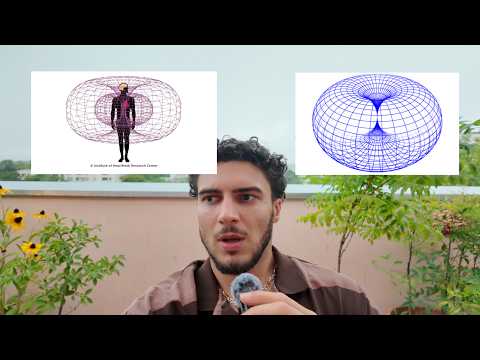
Augmenter ta gravité et ton pouvoir personnel (lien en premier commentaire)
WAVESURFER tweet media
Français
4
3
9
1.7K
WAVESURFER retweetledi
MAX
MAX@maxxmalist·
the editing part of AI UGC just got solved you can hook claude straight into after effects through higgsfield, and now i just talk to my ad project, it reads the comp, the layers, the keyframes, and it builds the thing while i keep directing it kinetic captions on the hook, a wiggle-locked zoom on the punchline, animated price tags, it writes the expression and puts it on the right property and you can do it in batches, just feed it a sheet of hooks and it swaps the text across the comp and hands you every variant with layout intact, same for markets, one ad becomes 6 languages without touching you keyboard i broke the ENTIRE ad post-production system into a workflow and giving it all to you now here's what you're getting: - exact setup to get claude running inside AE (5 min, copy paste) - caption + hook animation prompt (steal it, works on any UGC clip) - the batch variant method (1 ad, 12 hooks, one pass) - full pipeline, gen to final export rt + reply "UGC" and i'll send it so you can ship 10x more creatives this week (must follow so i can dm)
Higgsfield AI 🧩@higgsfield

Higgsfield MCP/Plugin for After Effects just got upgraded. Powered by Fable 5. 1. Build your own AE plugins 2. Drop in your reference and it decomposes into editable vector layers you can animate 3. AI assistant that answers or does it for you 4. Localize a project seamlessly

English
130
94
231
37.1K
WAVESURFER
WAVESURFER@sandermeric·
@binghott Can you share the extension « Ad columns » ?
English
0
0
1
162
Barry Hott ☄️
Barry Hott ☄️@binghott·
Everyone says CBO dumps your budget into just one or two ads. I keep hearing it, but something about how I do my media buying seems to... not do that. Huh, interesting... I'm normally suuuuuper private about anything like this, but I wanted to share this screenshot because I haven't seen anyone share anything like this before. Here's one CBO campaign last month, $800+k spent. These are just the 30 highest-spending ads. Top ad spent $80k, but look down, ad #30 still spent $5,800+. This campaign has over 200 ads that spent $1,000+ last month. The budget is spread across a deeeeeeeep bench of diverse ads supporting each other and relevant to different users in different stages of their journey. Now look at the 3 ads I highlighted. High CPAs. Ugly on this screen. Could I have turned them off based on what you're looking at? Sure. But this is only June. It doesn't show the stretch before, when those same ads were crushing. And it doesn't show what came after. Those 3 combined spent ~$30k in June. Guess how much they've spent in July so far. . . ---------------------------- But before I tell you that, let me ask you a quick question: Would you be able to prove to me what changed on the site you're running traffic to last week or last month? That's why I built URL Love It, to monitor, catch, and flag the page changes that impact your ad and business performance. Join the waitlist to be the first to join and get prelaunch pricing, launching soon: URLLoveIt.com Ok, back to the story... ---------------------------- Did you guess? $94. Not $94k. Ninety-four US doll-hairs. I didn't turn them off. Meta stopped spending on them. (TBF, I lowered the cost cap on one of their ad sets too) And because they're still on, if Meta finds a reason to spend on them again, they're sitting there ready. If that never happens, fine, costs nothing to sit there. Not every ad is built to be your last-touch closer, but that doesn't make it useless. It might be assisting the conversions your "good" ads are taking credit for. Can I prove that with hard data? NOPE! Can you prove I'm wrong? NOPE! We can't see how users interact with ads without leaving the platform. So when someone tells me their experience with CBO (or any other ad function), my honest first thought is: what are YOU doing to make it do that? It's usually: see a high apparent CPA, panic, turn it off, heroically report it as a win to their boss/client, get thanked for their vigilance, go tweet about how elite they are at media buying, and the cycle continues. They keep believing what they believe because they never question or challenge it. The only ads that rise to the top and stay live are those rare "unicorn" ads that can somehow spend and have a low apparent CPA. These are great, but not every ad can be a unicorn, and your account needs a few of them, but also needs a ton more workhorses. And every ad you turn off is one Meta can't optimize between anymore. This creates a vacuum that requires you to replace it with other new ads to hold your spend, or your CPA drifts up, or you spend less. The more ads you leave on, the more room the system has to spend. OH, and this is why so many of you see your "graveyard" or "zombie" campaigns doing well, it's because you probably shouldn't have turned them off in the first place lol Check the screenshot. What do you see, what would you do differently? What am I missing? How would you optimize this differently based on what's here? I'm always down to hear it.
Barry Hott ☄️ tweet media
Barry Hott ☄️@binghott

You can spend millions per month with literally 1 CBO. I know I'm gonna catch heat from the sweaty ABO fans and the ABO gurus everyone loves to glaze but... I'm mostly a CBO maxi now 😱 (Btw, stick around for the reasons CBO doesn't work too) Should you even listen to me? Welp. I've been doing this FB ad stuff for 18+ years (and still am in the weeds today so I don't lose touch). I've studied literally billions of dollars worth of ads. Annnnd I just love this stuff and love talking about it. Also, I used to be a huge ABO maxi. I get it! But things have changed and I adapted! Here's a real example from a brand I started working with in April: In March they were spending 6 figures across 9 separate campaigns. NINE! The full sweaty routine, trying and failing to media-buy their way to a million-dollar spending month. And those 9 campaigns were quietly competing against each other in the same auctions and fragmenting all the data. Last 30 days? Over $1.5M in spend through 1 CBO campaign, running on Incremental Attribution. And their cost per conversion actually dropped 5% while scaling. Fewer campaigns. More spend. Cheaper conversions. Annnnd, most importantly, every minute less wasted on sweaty media-buying baloney can be spent on the things that actually move the needle, and those benefits compound. The best thing a media buyer can do in 2026 and beyond is... Spend less time on media buying and Spend more time on anything else that matters to your (potential) customers and your business: creative, products, offers, copywriting, CRO, landing pages, etc. CBO helps you do that. Let me explain why. With CBO, you let the system do what it wants to do, and then you can study it, empathize with it, criticize it, and use your human context to modify it if/as necessary. Empathize with it because the system is trying to solve a problem you can't fully see. When you understand what it's actually optimizing toward, you stop fighting it and start steering it. Meta has more data about your ads than it reports, meaning it has more and better data than you do. Ever wonder why Meta spends more on stuff with a lower ROAS or higher CPA than others? That's either the breakdown effect or it's optimizing for something you can't see. (Or a combination of both) You can't see if or how any users have seen or interacted with any other ads before they click the link. But Meta can. In the age of advanced AI machine learning post-Andromeda Meta advertising, if you think the only thing that matters is the last ad a user clicked before they got to your site, or that only link clicks matter and no other on-Meta actions matter, then you're simply not living in reality. This is also why I run Incremental Attribution on that CBO. It tells Meta to optimize toward the conversions it actually drove, not every last-touch conversion it can take credit for. Better signal in, better optimization out. CBO plus human inputs via cost caps and/or budget mins and maxes is the way to go. Best of both worlds. This works best the more data you feed Meta, so you need a lower CPA and/or high spend. The more data the system has, the more I generally trust it. Consolidation = more data for Meta to optimize. The worse/less data that you give Meta or the more you fragment your account, the less you should trust it to optimize on your behalf effectively. Now, the honest part. CBO is not magic and it does have real weaknesses: 1. CBO optimizes to cost, not profit. Mix products with different margins in one campaign and it'll happily pour budget into cheap, low-value conversions. Feed it value signals or it'll work against you. (Or otherwise apply your own context via cost caps and budget controls) 2. Budget flows to whatever the system likes, so if you need guaranteed spend on a new product or geo, it'll fight you. (That's what the budget mins/maxes are for!) 3. Low-volume accounts don't give it enough to chew on. If you're not feeding it much, it can't optimize much. 4. It's scary and hard to move from a fragmented setup, especially if you've been using it for years. Consolidating resets learning. There's a real short-term cost while it re-figures things out. It's worth it, but don't panic on day 2. Soooo when is ABO still right? Lower-spend or lower conversion volume accounts, or any time you simply can't get good data into Meta. Or if you're optimizing for something without deeper data being sent at all like reach, brand awareness, or link clicks. ABO is also fine if you can mostly consolidate into as few campaigns and ad sets as possible, buuuut the reported data can still be misleading and cause a media buyer to optimize in the wrong direction. And look, I'm not saying this is the exact RIGHT/BEST way to run EVERY account or business. It's not. CBO is probably the easiest and smartest for most businesses, and it frees up a lot more time and resources to focus on the most important stuff. It helps that this business has basically one main product, so consolidating into a single campaign is clean and easy. No mixed margins, no ten SKUs fighting for budget. If your catalog is more complicated, your setup probably needs to be too. But if it can work for a business spending this kind of money, it might work for yours too. Just because you CAN over-optimize and manually control every little thing, doesn't mean you should. This CBO plan will never work for YOU if you: 1. Have zero trust in Meta (I'm not saying you should 100% trust Meta all the time. Please don't! Buuut you need to be able to trust it at least a little bit) 2. Don't care or understand that overlapping campaigns and ad sets impact each other 3. Think you have more/better data than Meta's system (you don't! Seriously, you don't! Click data only tells one part of a complicated journey) 4. Think you're smarter than Meta's system (you're not!) 5. Give Meta bad/wrong signals/data to optimize from 6. Refuse to believe that there are other bigger things to focus on more than media buying And here's the thing sooo many media buyers (and gurus!) don't want to hear or admit: they think their media buying is the reason it's all working. It usually isn't. It's the excellent creative, the strong offer, the dialed-in landing page, the actual product people want. The media buyer is often just along for the ride on top of a great machine, taking credit for the engine someone else built. The best media buyers I know are the first to admit this. Oh, and this post isn't a pitch. I'm not gating any of this behind a signup. I just want you to squeeze the best performance you possibly can out of your ads. But if you take one thing from all of this, take this: the biggest swings in your ad performance usually aren't coming from media buying at all. They're coming from your website and the world around it. A landing page change. A new product launch. A price update. A broken checkout. A competitor's promo. A holiday. A news cycle. That stuff moves your numbers way more than which campaign structure you picked. It's the entire reason I'm building URLLove.It Because most people are staring at their ad account hunting for an answer that actually changed on their website three days ago, and they never even noticed. TL;DR: Consolidate or die. Feed it good signal (Incremental Attribution helps). Steer with cost caps and budget mins/maxes instead of babysitting. Then go spend your time on creative and offers, and alllll the stuff that actually moves the business. If you run ABO and you're winning, or you think I've got any of this backwards, come at me. Reply, quote it, tear it apart. I'll take any and all of it. One fair ask though: if you've never actually run a full consolidation, all the way down to 1 or 2 campaigns, I'll still read your take, but know that I'm going to weight it differently than someone who's actually tried it and watched what happened. That's not me dodging the argument. It's the opposite. Go run it. Give Meta the data, give it a real shot, and then come tell me everything I got wrong. That's the feedback I want most, because that's the feedback that can actually change my mind. Opinions from the sideline are welcome. Opinions from the field are gold. And if any of you want to actually hash this out live, a space, a call, a recorded chat, whatever, I'm in. I'd love to sit across from someone who disagrees and see what I'm missing.

English
42
11
165
63.1K
WAVESURFER retweetledi
Mark Zuckerberg
Mark Zuckerberg@finkd·
(1) Today we're releasing Muse Spark 1.1 -- a strong agentic and coding model at a very low price. It's available through our new Meta Model API and in Meta AI.
English
5.3K
3.6K
45.6K
23.3M
WAVESURFER
WAVESURFER@sandermeric·
@bryan_johnson You had all the food tested and realized that it was either contaminated or lacking in nutrients, and that the only solution was to start your own garden
English
0
0
0
1.1K
Bryan Johnson
Bryan Johnson@bryan_johnson·
I’m growing a longevity garden. Looking for someone to build it with me. + soil chemistry + nutrient density + toxin testing + seed optimization + data monitoring + lab testing
Bryan Johnson tweet media
English
513
96
3.4K
314.1K
WAVESURFER
WAVESURFER@sandermeric·
The interesting part isn’t whether we’re in a simulation. It’s that the hypothesis is fundamentally unfalsifiable: no observation from within the system could ever conclusively prove or disprove the nature of the system itself. That’s where @TomCampbell_MBT’s My Big TOE offers an intriguing perspective. Instead of asking whether we’re inside a computer simulation, it asks whether consciousness itself is the fundamental substrate and physical reality is an information-based virtual reality emerging through observation. If that’s true, « simulation » isn’t really about computers: it’s about consciousness. Maybe the simulation hypothesis is simply the 21st-century vocabulary for one of the oldest philosophical questions: is consciousness creating reality, or is reality creating consciousness?
Elon Musk@elonmusk

Consistent with the simulation hypothesis. Like a video game, objects are randomly generated, with positional certainty only when observed.

English
0
0
1
425
WAVESURFER retweetledi
KAYZ
KAYZ@0xKayz·
Vous me l'avez réclamé le voilà : comment build ton PROPRE tool IA avec Claude Code. Et payer à la conso. Terminé Higgsfield. 👇 Higgsfield, c'est un abo mensuel : crédits pas consommés = perdus à la fin du mois, sur facturation, over price pour rien, pour du volume ça devient beaucoup trop cher et je pense que pas mal de personne ici prime sur le volume. En API directe (KIE), tu paies juste ce que tu génères. Point. Le prix pour générer la MÊME chose : 🍌 Nano Banana (image) · Higgsfield : ~0,14 $ · KIE en API : ~0,02 $ → ÷7 🍌 Nano Banana Pro (image) · Higgsfield : ~0,18 $ · KIE en API : ~0,09 $ → ÷2 🎨 GPT-image 2 (image) · Higgsfield : ~0,20 $ · KIE en API : ~0,05 $ → ÷4 🎬 Kling 3.0 (vidéo 5 s) · Higgsfield : ~0,35 $ · KIE en API : ~0,28 $ Zéro abo. Zéro crédit qui expire. Tu paies ce que tu génères. Mais le prix, c'est même pas LE truc game changer. Le vrai truc : un tool SUR MESURE. Tu prends la tâche chiante, répétitive, chronophage... et tu la mets derrière un bouton. Plus de prompt à réécrire 15 fois : Tu cliques. Ça sort. Fin. Sauf que là, 99% des gens se font un tool privé… et se plantent. Parce qu'un tool sans Brand DNA = un tool sans cerveau. Tu génères → rendu jamais correct. Et tu repars expliquer à l'IA : ma brand, mon produit, mes couleurs, ma DA, mon ton… À CHAQUE image, et pour du volume c'est ce qu'on veut. LA SOLUTION : Le Brand DNA c'est le fix. Un doc qui décrit ta brand à fond : produit exact, persona, couleurs réelles, ton, claims, règles de rendu. Tu le donnes au tool UNE fois. Et tout sort on-brand, sans jamais réexpliquer. Comment on build un private tool, concrètement : Le plus important, c'est PAS le code. C'est le cahier des charges. 1.⁠ ⁠Fais d'abord le process À LA MAIN. Celui que tu veux transformer en tool. Tant que tu le fais pas toi-même, tu comprends pas ce que tu crées. 2.⁠ ⁠Une fois que t'as le process clair, tu l'expliques à Claude Code. Étape par étape, comme à un stagiaire. 3.⁠ ⁠Tu branches l'API et Claude Code fait le reste et hop ton tool est ready. Dans la vidéo en dessous, je vous explique les 2 skills que je vous ai fait et comment les utiliser : un tool qui copy-paste une static gagnante (un concurrent, ou juste des créas qui perf) et qui la ressort adaptée À TA BRAND. Et c'est là que le Brand DNA fait toute la diff : tu balances un dossier de x nombres de statics gagnantes d'un coup. Le tool les copy-paste TOUTES, en batch, adaptées à ta brand. 1 clic → ton produit, tes couleurs, tes claims, ta langue. Tout s'adapte zéro reprompt. Un gain de temps de malade. Le tool, tout le monde peut le faire. Ta capacité à structurer ta brand en Brand DNA, non. C'est ça, le vrai moat. Tu veux les 2 skills Claude (créer ton Brand DNA + build ton tool copy/past et bien plus) ? RT + Follow, je te les envoie. 🎁
Français
73
194
296
14.3K
Sean Frank
Sean Frank@Seanfrank·
Don’t get psyopped. Have a kid. It’s great.
English
33
5
453
20.8K
Tiv
Tiv@tivollem·
@sandermeric Mdrr une sto insta et c’est plié
Français
1
0
2
1.7K
WAVESURFER
WAVESURFER@sandermeric·
J’ai appelé le comptable la Patek Philippe passe en frais de société
Français
4
0
38
19.4K
WAVESURFER
WAVESURFER@sandermeric·
ENFIN ! Ça va repartir sur des e-com talks en streaming en bien !!!
Français
2
4
24
2.1K