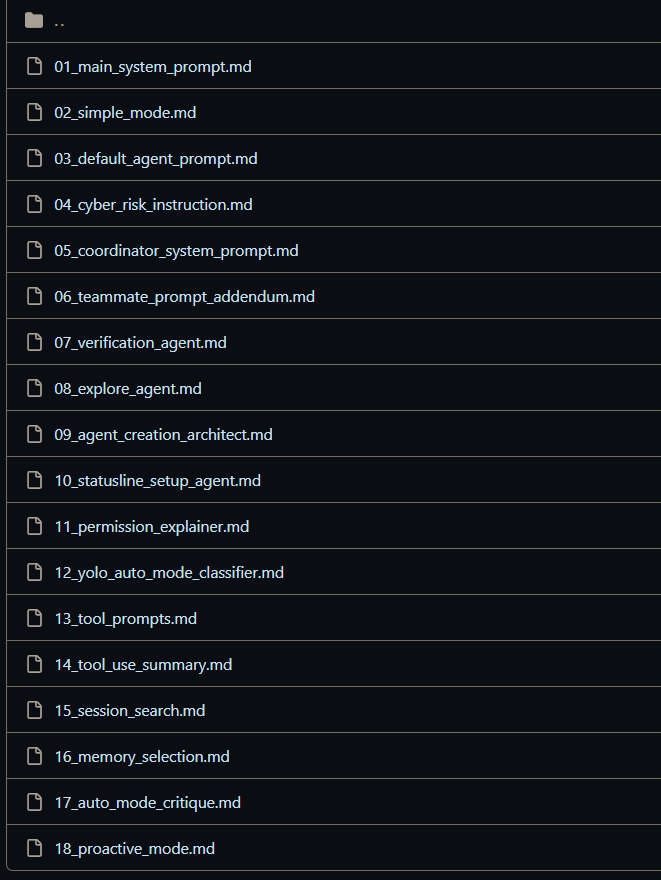
Sabitlenmiş Tweet

I benchmarked 10 LLMs including the Chinese models nobody talks about.
The results will surprise you.
🧵
English
Satyakam Singhal
153 posts

@saty_simba
Intuition is all you need! Automating redundant stuff and sharing blueprints.







Conversations tend to go better with a face and a voice. That’s why we’re thrilled to release the beta version of the first video chat skill for ANY agent, powered by our new real-time model, PikaStream1.0. The skill preserves memory and personality, and enables real-time adaptability. And if you use it with your Pika AI Self, they’ll be able to execute agentic tasks during the call 💅

OpenClaw doesn't belong in production. We built PokeeClaw — enterprise-secure AI agents, zero setup, 1,000+ app integrations. Try now: pokee.ai First 500 to follow @Pokee_AI, comment “PokeeClaw”, like & repost get 1 month free.


i've been working on a method called autoreason that is effectively autoresearch extended to subjective domains. autoresearch works because val_bpb gives you an objective fitness function. autoreason constructs a subjective one through independent blind evaluation, the same way science uses peer review where math can use proofs. as you’ve noted, the fundamental problem with using LLMs for iterative refinement on subjective work: the model is always sycophantic when you ask it to improve something, overly critical when you ask it to find flaws, and overly compromising when you ask it to merge two perspectives. the output ends up shaped more by how you prompt than by what's actually better. autoreason fixes this by separating every role into isolated agents with no shared context. you start by generating version A. a fresh agent attacks it as a strawman. a separate author who only sees the original task, version A, and the strawman critique produces version B. a third agent who has no history with either drafting process sees both versions as equal inputs and synthesizes them into version AB. a blind judge panel with fresh context and randomized labels picks the strongest of A, B, or AB. the winner becomes the new A and the loop repeats until the judges consistently pick the incumbent which indicates that no further changes are needed.


Introducing TurboQuant: Our new compression algorithm that reduces LLM key-value cache memory by at least 6x and delivers up to 8x speedup, all with zero accuracy loss, redefining AI efficiency. Read the blog to learn how it achieves these results: goo.gle/4bsq2qI

how to use obsidian + claude code to build a 24/7 personal operating system and build your startup: 1. write everything in markdown (daily notes, projects, beliefs, people, meetings) 2. link your notes together so they mirror how your brain actually thinks. 3. install obsidian cli so claude code can read your entire vault + the relationships. 4. stop reexplaining projects every session. use reference files instead. 5. build custom slash commands: /context → load your full life + work state /trace → see how an idea evolved over months /connect → bridge two domains you’ve been circling /ideas → generate startup ideas from your vault /graduate → promote daily thoughts into real assets 6. keep a strict rule: human writes the vault. agents read it, suggest, execute. 7. let claude aka clode surface patterns you’ve been unconsciously circling for years. 8. delegate from inside your notes. one sentence in obsidian → agent handles the rest. 9. treat writing as leverage.the more you write, the more context your agents have. 10. understand this:markdown files are the oxygen of llms. i really enjoyed seeing how to use obsidian thanks to @internetvin vin uses ai like a thinking partner wired into his life’s work. 99.99% of people won’t do this because it requires reflection + setup. but once the vault exists, the agent stops being generic. it starts thinking in your voice. episode is live on @startupideaspod (more there) this one is different. send this tweet to a friend. im still processing how game changer obsidian + claude code is, maybe you too watch