SCA Media
1.1K posts

@sca_press
Get the latest events happening around Portharcourt and the world right on your finger tips||Winning Media based on publicity. [email protected]


Millions use mobile money every day. Almost none of it happens onchain. And this holds huge potential for emerging markets. With @ADIChain_ recent partnership, @MPESAAfrica will be adding blockchain support through ADI Chain's modular infrastructure. This opens up stablecoin access, cross-border payments, and onchain financial services for users and small businesses in places where traditional banking has no reach. A clear step toward mainstream adoption. When services process transactions on the network, they rely on $ADI as the utility token that supports the underlying operations and settlement. It's designed to power the needs of entire economies that serve nations worldwide, and the apps built on top of them. The bigger signal is the global mindset shift. For years, platforms at this scale treated blockchain as something for experiments and pilots, not for real world use cases. Now they are choosing it as core infrastructure that can plug into the systems they already run. The next wave of digital finance is happening now, and @ADIChain_ is built to lead it.


I have been paying close attention to the upcoming @rails_xyz SDK because it says a lot about how serious the team is about builders. When a trading platform opens itself up to developers, it is making a long term commitment. You are no longer just shipping a product. You are inviting others to build on top of your decisions. What stands out to me is that the SDK is not positioned as an experiment. It is clearly meant to expose the same hybrid infrastructure that powers the core Rails trading experience. That matters. Developers are not getting a watered down sandbox. They are getting access to real execution logic, onchain settlement flows, and account systems that already work at scale. From a builder perspective, this lowers friction. You do not have to reinvent custody models or worry about performance tradeoffs. The heavy lifting is already done. You can focus on strategy tools, analytics, automation, or new user experiences. That is usually where real innovation happens. I also like that @rails_xyz seems to be thinking about documentation early. Good docs are a signal of respect for developers time. When an SDK is clear and predictable, it attracts people who want to ship production software, not just hack together proofs of concept. The developer ecosystem is where platforms either grow or stall. If Rails supports third party apps, bots, dashboards, and institutional tooling from day one, it creates natural network effects. Builders bring users. Users bring liquidity. Liquidity brings more builders. That loop is hard to fake and even harder to rush. When the Rails SDK goes live, I see it as the start of that loop. Not a flashy announcement, but a practical step toward making Rails more than just a trading venue. If they keep execution fast, custody transparent, and developer access clean, the ecosystem should grow in a way that feels organic and sustainable.


Most crypto tokens chase price. But real projects chase purpose first. 👀 That’s where @0xYellow_Navy Yellow Network stands different. Here, the focus isn’t on short-term speculation it’s on building real token utility that powers an ecosystem 💛 In many projects, tokens exist mainly for trading hype. But in Yellow, $YELLOW is designed to fuel liquidity, incentives, governance, and network growth. A token with a job, not just a ticker. ⚙️ Speculation may bring attention for a moment… but utility builds value that survives market cycles. That’s the long-term vision driving Yellow’s architecture 🧠 I’m excited to keep exploring and sharing this journey with the community. Because sustainable Web3 isn’t built on hype it’s built on purpose. 🚀 @estovaderelojes @DeFi_Pop , @YellowMedia_HQ , @0xburakcem , @0xYellow_Navy, @AlexisYellow , @KStefanovych , @DiegoMYellow #YellowNetwork #Web3 #TokenUtility #LongTermValue #CryptoBuilders


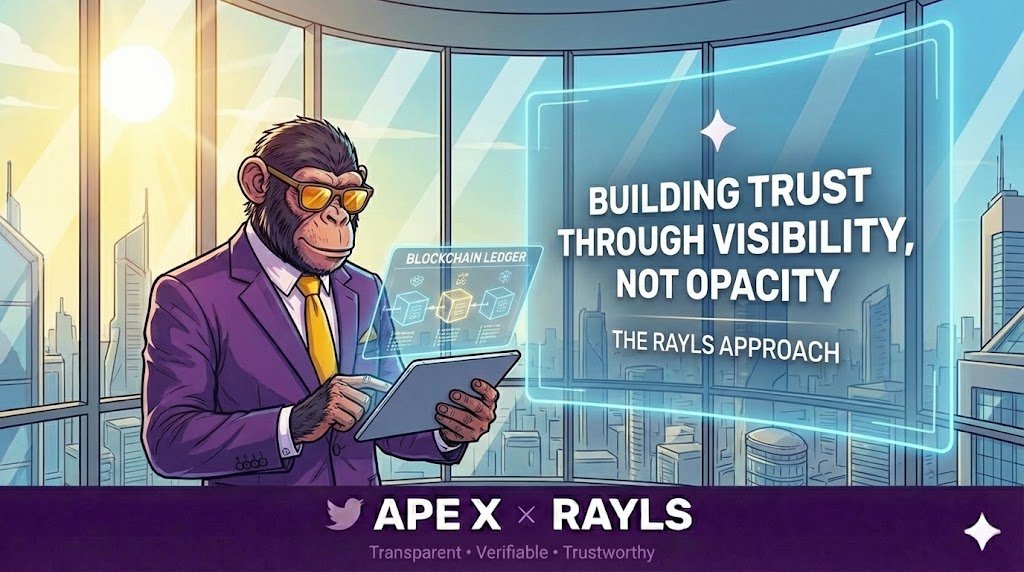
DeFi becomes institutional when rules move on-chain. Not when they’re ignored. @RaylsLabs This image highlights a critical shift in market design. Compliance no longer sits outside execution. Rayls embeds regulatory logic directly into transaction flows, making institutional DeFi possible without operational workarounds. Why this matters 👇 • Compliance enforced at execution time • Reduced reliance on post-trade controls • Lower operational risk • Infrastructure aligned with regulatory expectations Real adoption doesn’t bypass rules. It encodes them.


Institutional DeFi isn’t about moving faster. It’s about moving correctly. @RaylsLabsThis image highlights why speed alone doesn’t unlock adoption. Correctness, compliance, and certainty do.Rayls delivers infrastructure where institutional requirements are met without slowing innovation.Why this matters 👇 • Execution aligned with institutional mandates • Deterministic settlement • Reduced compliance friction • Confidence to deploy real capitalAdoption doesn’t follow hype. It follows correctness.


Power isn’t belief. It’s institutional confidence. @RaylsLabs This image captures the difference between interest and commitment. Confidence turns pilots into production. Rayls provides the certainty institutions need to move from testing to real deployment.


Power isn’t constant change. It’s continuity through change. @RaylsLabs This image represents systems that remain dependable as markets evolve. Rules shift. Volumes change. Participants rotate. Rayls maintains consistent execution and compliance even as conditions adapt.


Fragmentation isn’t a narrative problem It’s a math problem Docs of @MultichainZ_ put it clearly: ~1–3% gets lost to price discovery inefficiencies ~2–5% disappears every time liquidity crosses chains That’s not volatility That’s structural leakage Before RWAs even reach users, yield is already being shaved off by capital friction and composability limits. This is why many RWA designs stall not because assets are risky, but because liquidity gets trapped in silos. The insight here isn’t “better yield” It’s keeping yield intact while capital moves Unified lending + borrowing layers reduce these invisible losses by letting RWAs stay productive across chains instead of being fragmented positions that constantly reset efficiency. RWAs don’t need more demand. They need less leakage That’s the real unlock if RWAs are going to scale beyond experiments. You read more about here:- drive.google.com/file/d/1o-gdSY…


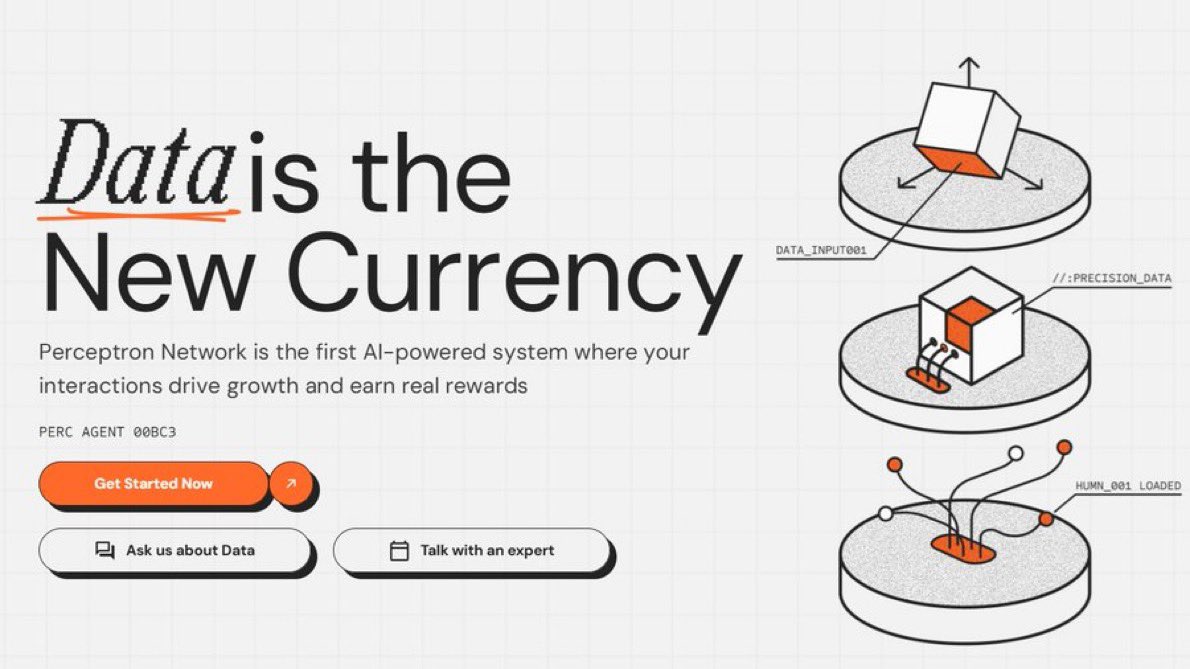
— PERCEPTRONTWK While most conversations around AI focus on outputs, the real transformation is happening before the model ever responds. At the data layer. That’s where @PerceptronNTWK is quietly changing the game by building human-graded, decentralized datasets that shape how intelligence learns, not just what it produces. This is the difference between AI that reacts and AI that develops judgment over time. The next era of intelligence won’t be won by speed alone. It will be won by who teaches it best. And that future is being built long before the noise wakes up.