SCADA_PLC

20 posts

SCADA_PLC banner
SCADA_PLC

SCADA_PLC

@scada_plc

Here we learn tips on industrial automation design including PLC and SCADA.

Katılım Kasım 2025
95 Takip Edilen18 Takipçiler
SCADA_PLC
SCADA_PLC@scada_plc·
⚡ Why automation engineers rely heavily on electrical designers 🔍People often underestimate how deeply PLC logic depends on electrical design.It’s more than motor wiring or sensor placement — signal stability, safety interlocks, and physical process dynamics all start in the electrical layer.When automation and electrical teams sync early, heating, cooling, mixing, and fermentation sequences run smoothly without rewiring or redesign.That’s where real industrial engineering happens.#Automation #PLC #SCADA #ElectricalDesign #Engineering
SCADA_PLC tweet media
English
0
0
3
129
SCADA_PLC
SCADA_PLC@scada_plc·
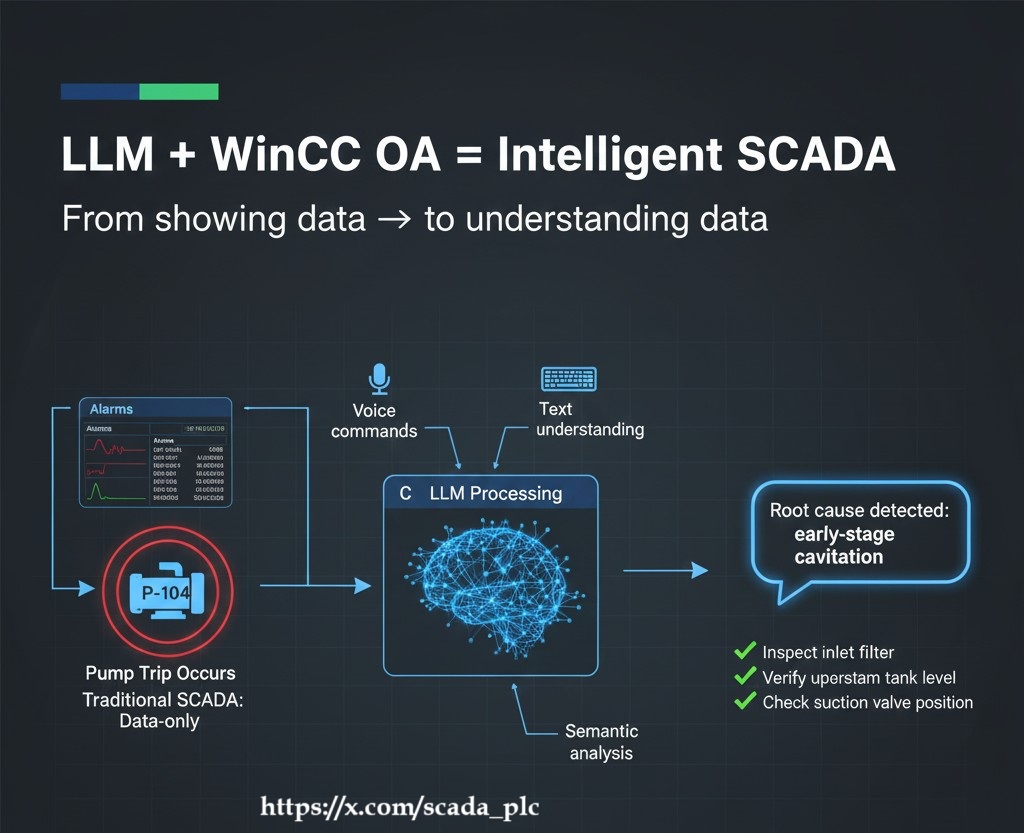
🔥SCADA is changing fast. When LLMs meet WinCC OA, the system doesn’t just show data — it actually understands it. A pump trips? Instead of digging through trends and alarms, the AI explains the root cause like a senior engineer sitting beside you. Voice commands. Smart diagnostics. Actionable recommendations. All inside the SCADA layer — no PLC changes needed. This is the future of automation. And it has already begun. ⚡🤖 #SCADA #WinCCOA #LLM #ProcessAutomation #OT #IIoT
SCADA_PLC tweet media
English
1
0
4
73
ElectronicsNotes by Ian Poole
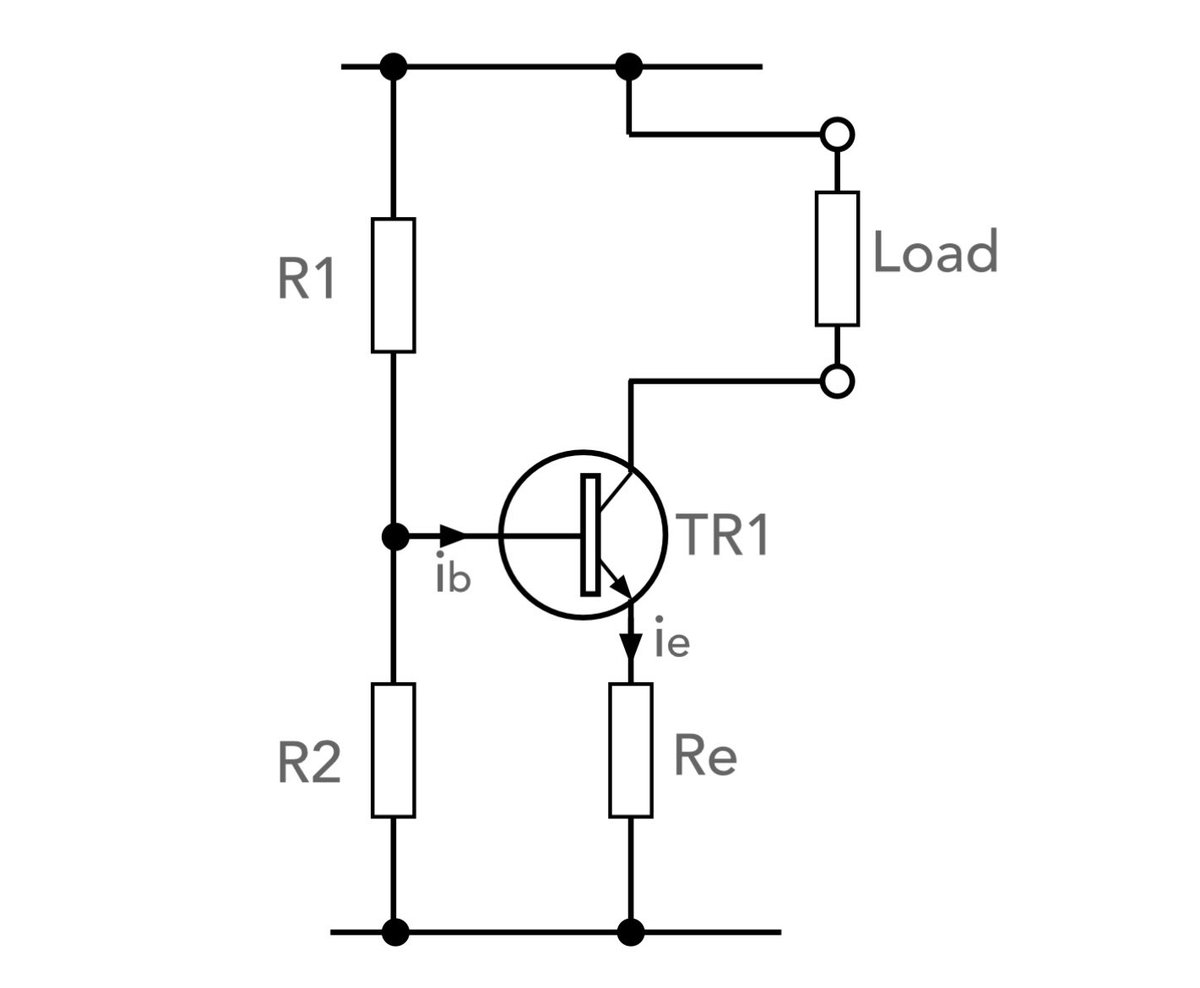
Understanding Transistor Constant Current Sources Constant current sources are used in many circuits where, as the name says, a constant current level is needed. For less demanding circuits a single transistor circuit can be ideal. What is a Constant Current Source? A constant current source is an electronic circuit that supplies a steady current regardless of the load or voltage applied across it. How It Works Transistors, particularly Bipolar Junction Transistors (BJTs), can be configured to act as constant current sources. The most common setup involves: - Basic Configuration: A transistor with its emitter connected to ground through a resistor, base connected to a voltage source through another resistor, and the collector serving as the output. Here, the base-emitter voltage sets up a current through the emitter resistor, which in turn controls the collector current. - Wilson Current Mirror: An advanced setup where one transistor's base current is mirrored to another, offering better current stability and higher output impedance. - Current Mirror with Diode: Here, a diode or another transistor's base-emitter junction is used to set a reference current, which is then mirrored to the output transistor. Why Use Transistor Constant Current Sources? - Stability: They provide a stable current over varying load conditions, essential in precision circuits like op-amps, ADCs, and DACs. - Temperature Compensation: Transistors can be biased to compensate for temperature changes, ensuring consistent current despite environmental variations. - High Output Impedance: This makes them ideal for driving loads where voltage drop needs to be minimized. Practical Considerations: - Beta Variation: Transistor gain (β) can vary with temperature and from one transistor to another, affecting the current. Hence, choosing matched transistors or employing feedback mechanisms can be crucial. - Early Effect: The collector current can vary with the collector-emitter voltage due to the Early effect, impacting current source accuracy. This can be mitigated with design techniques or selecting transistors with low Early voltage. Applications: - Operational Amplifiers: To set bias currents. - Sensor Circuits: For consistent operation across different sensor resistances. - LED Drivers: To ensure consistent LED brightness. - Battery Chargers: For controlled charging currents. Design Tips: - Choose the Right Transistor: Low β variation and low Early voltage are preferable for precision. - Resistor selection: The values should match the desired current and the transistor's characteristics. - Consider Thermal Stability: Implement temperature compensation if necessary. In conclusion, transistor-based constant current sources are a fundamental building block in modern electronics, providing the precision required for high-performance circuits. Read more: electronics-notes.com/articles/analo…
ElectronicsNotes by Ian Poole tweet media
English
2
29
239
8.5K
SCADA_PLC
SCADA_PLC@scada_plc·
Most SCADA engineers use C Action and Global Script… but almost no one talks about the real bottleneck: 👉 Misplacing logic. Putting UI logic in Global Scripts… Putting plant logic inside C Actions… This is how SCADA projects become slow, unstable, and impossible to maintain. Here’s the part nobody tells you: 🔹 Global Scripts run even when screens are closed. If you put UI logic here, you create ghost processes. 🔹 C Actions stop running the moment the screen closes. If you put plant logic here, you lose control without noticing. This is why many SCADA systems behave “randomly.” It’s not the PLC. It’s misplaced scripting logic. 💡 Fix the placement → Fix the system. What’s the worst scripting mistake you’ve seen in a SCADA project? #SCADA #Automation #WinCC #CProgramming #HMI #PLC
SCADA_PLC tweet media
English
2
0
4
50
SCADA_PLC
SCADA_PLC@scada_plc·
One key reminder: SCADA scripts don’t fail randomly — they fail exactly where logic is placed incorrectly. Most “mystery bugs” disappear the moment you separate UI logic from system logic properly. If anyone wants, I can share a real-world example from WinCC where a wrong C Action almost shut down a production line. 👇
English
0
0
0
24
Manmeet Singh Bhatti
Manmeet Singh Bhatti@manisaheb·
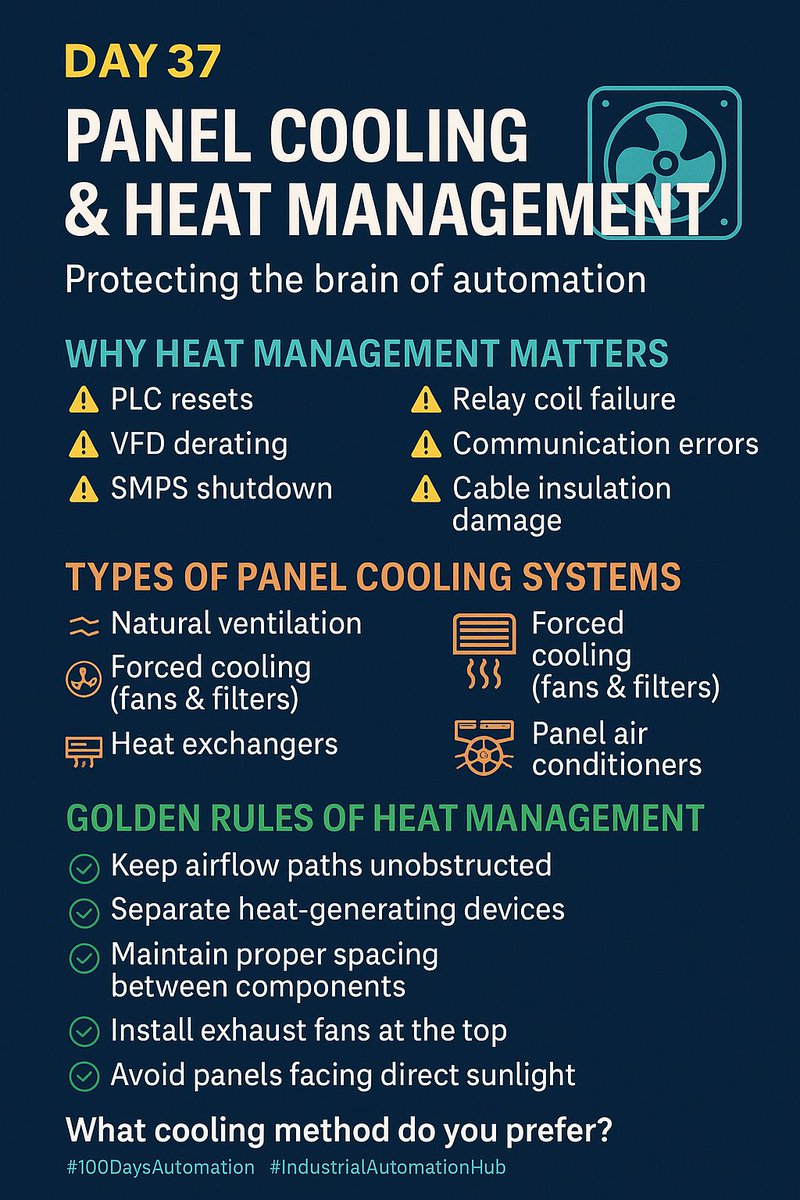
Day 37 Panel Cooling & Heat Management 🌬️⚡ Heat is the silent killer of automation. Too much heat → PLC resets, VFD derating, SMPS faults & random breakdowns. A cool panel = a reliable system. A hot panel = a breakdown waiting to happen. Which cooling method do YOU prefer
Manmeet Singh Bhatti tweet media
English
1
0
1
21
RealPars
RealPars@RealPars·
What is Ground? There are lots of different names for Ground. Quite often, Ground means different things to different people. For example, Ground to an electrician might mean something different than Ground to electronic engineers. #RealPars #industry #electronic
English
3
5
18
0
SCADA_PLC
SCADA_PLC@scada_plc·
@IlirAliu_ Impressive work! These lightweight, task-focused vision solutions are exactly what real manufacturing needs — small models, fast deployment, and immediate value. This is the kind of AI that actually makes factories smarter. 🔧🤖
English
0
0
0
7
Ilir Aliu
Ilir Aliu@IlirAliu_·
AI in robotics gets all the attention right now, but sometimes the most interesting work is very practical. Viet built a small vision system that counts potatoes on a conveyor belt. No giant dataset. No huge model. Just a clear problem and a smart setup. He used Ultralytics’ ObjectCounter, trained a tiny YOLO11 nano model, and because there was no potato dataset, he annotated a single frame with SAM 2 and trained from that. One frame. Still works across the whole video. It is a good reminder that useful AI in industry often looks like this. Focused. Lightweight. Solves a real task. If you work in manufacturing or robotics, these small systems are usually the fastest wins. They save time, reduce errors, and do not need massive infrastructure. Nice work, Viet. His projects: github.com/vietnh1009 —- Weekly robotics and AI insights. Subscribe free: scalingdeep.tech
English
196
1.3K
14K
1.7M
SCADA_PLC
SCADA_PLC@scada_plc·
One more tip I always use 👇 If SCADA values don’t match the PLC, I immediately check for: 🔸 Datatype mismatch (INT vs REAL) 🔸 Optimized vs non-optimized DB 🔸 Tag case-sensitivity 🔸 Subnet conflicts on PN/IE These 4 hidden issues waste more time than any “big problem.” Fixing them has saved me hours on real projects. ⚙️🔍
English
0
0
2
56
SCADA_PLC
SCADA_PLC@scada_plc·
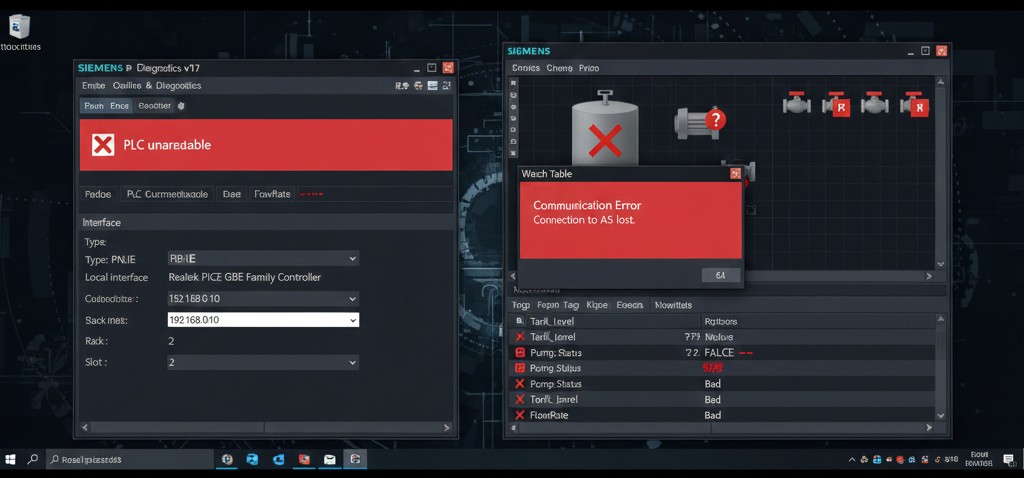
🔥 PLC–SCADA Troubleshooting (X-Optimized Version) Most PLC ↔ SCADA failures aren’t “mystery errors.” They follow patterns — and once you recognize the patterns, you fix them fast. ⚡ 90% of communication issues come from just 3 mistakes: 🔹 Wrong IP / subnet 🔹 Wrong tag or DB mapping 🔹 Wrong protocol setup (S7 / OPC UA / Modbus TCP) Fix these → fix the system. Simple. Repeatable. Predictable. My troubleshooting flow when everything breaks: 1️⃣ Ping the PLC → no reply = network issue 2️⃣ Go online in TIA Portal 3️⃣ Compare PLC values vs SCADA values 4️⃣ Verify addressing + rack/slot 5️⃣ Isolate layers: PLC → Network → SCADA This approach turns hours of guessing into minutes of clarity. Troubleshooting isn’t luck — it’s a workflow. 🧩⚙️ 💬 What’s the most painful PLC–SCADA issue you’ve ever faced? #PLC #SCADA #Automation #PLCProgramming #IndustrialAutomation #TIAportal #WinCC #Industry40
SCADA_PLC tweet media
English
1
0
5
80
SCADA_PLC
SCADA_PLC@scada_plc·
@Apress @ashrafsmadhon Absolutely true — SCADA shows the story, and the PLC makes it happen. Mastering both is what turns troubleshooting into real engineering. ⚙️🔌
English
0
0
0
0
Anubhab Sahoo
Anubhab Sahoo@AnubhabSahoo18·
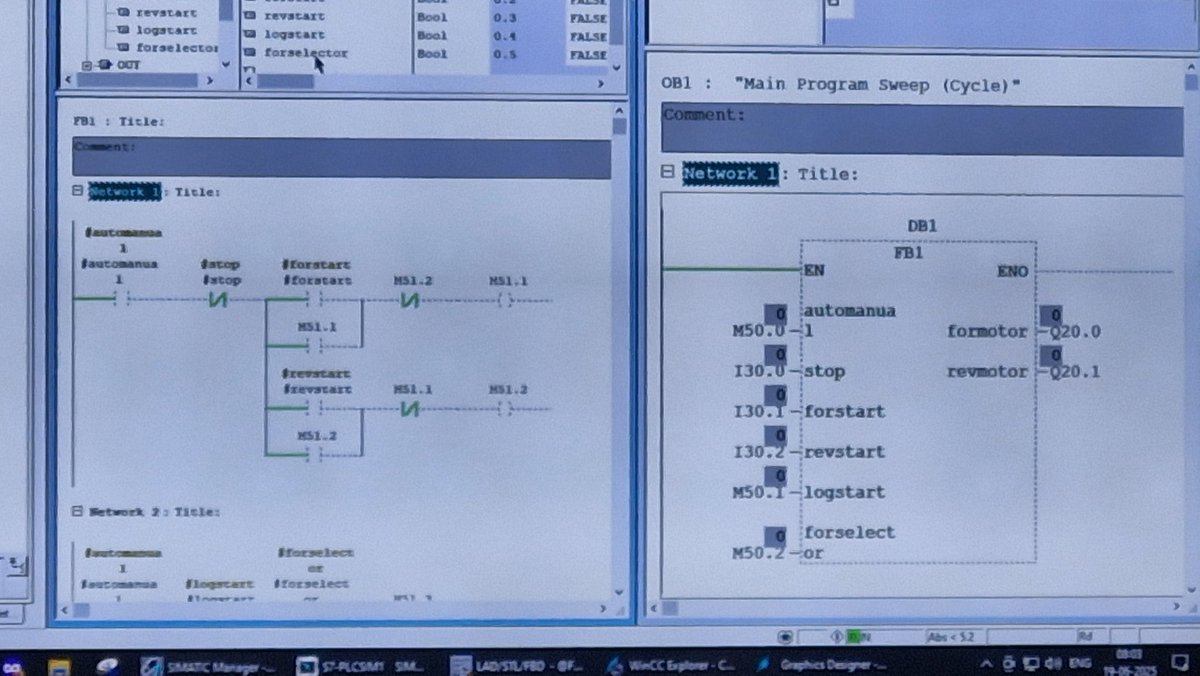
Improving my skills to next level with SCADA & PLC at CTTC BBSR... Also dealing with SCADA Software ; (SIMATIC WINCC , STEP 7 , TIA PORTAL) #cttcbbsr #scada #plc #internship
Anubhab Sahoo tweet mediaAnubhab Sahoo tweet mediaAnubhab Sahoo tweet media
English
2
0
2
71