
Sofia Canete-Portillo

184 posts

Sofia Canete-Portillo banner
Sofia Canete-Portillo

Sofia Canete-Portillo

@scaneteportillo

Empath. Introvert. Pathology trainee (PGY4). Sangre Guaraní 🇵🇾 🇺🇸 #GUpathology

Birmingham, AL Katılım Temmuz 2011
351 Takip Edilen184 Takipçiler
Sofia Canete-Portillo retweetledi

Liang Cheng, MD
Liang Cheng, MD@LiangChengMD·
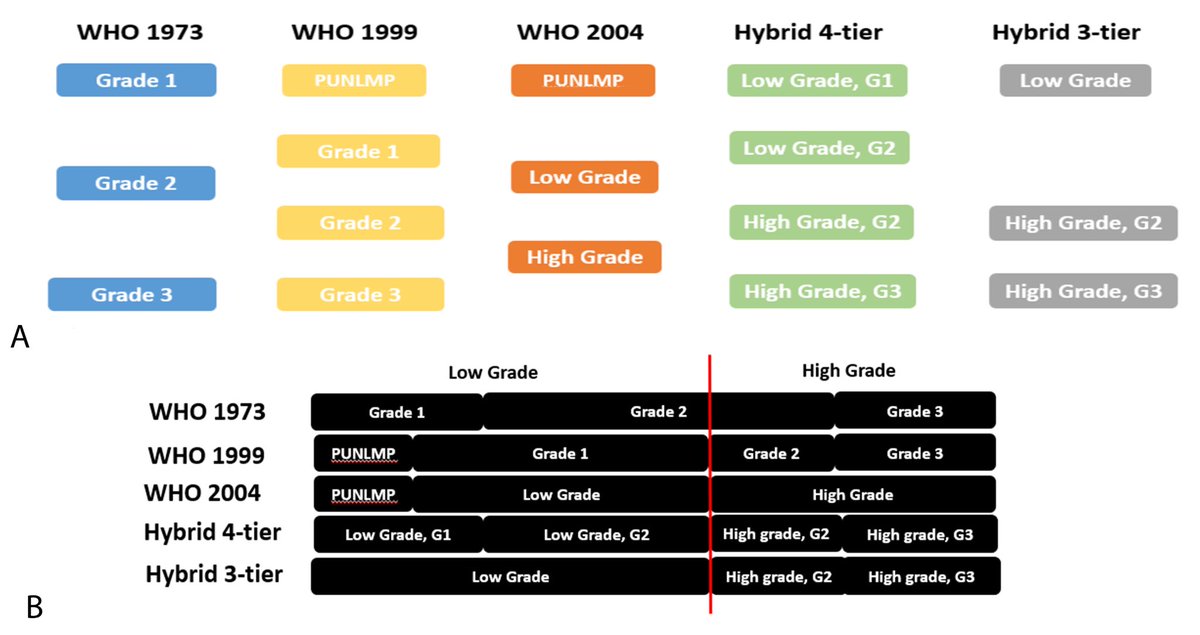
Is it time for a change after 28 years of stagnation in bladder cancer grading? In this timely review, “Grading of bladder cancer: updates, controversies and practical solutions”, Professor Michelle Downes and colleagues (published this month in Histopathology; PMID: 41384703) comprehensively examine the historical evolution of bladder cancer grading, emerging concepts, and persistent controversies. The authors critically appraise existing grading systems and present compelling evidence supporting alternative, more biologically and clinically relevant approaches to bladder cancer grading. The 1998 International Society of Urological Pathology (ISUP) consensus classification introduced new diagnostic categories for papillary urothelial tumours, notably papillary urothelial neoplasm of low malignant potential (PUNLMP), low-grade carcinoma, and high-grade carcinoma. This system was formally adopted by the World Health Organization (WHO) in the 2004 Blue Book, where it became the official WHO grading system for bladder cancer. Under the WHO 1973 system, still widely used in European countries, many tumours were classified as grade 2 (G2), a heterogeneous group with variable clinical outcomes, limiting prognostic discrimination. While WHO 2004/2022 simplified grading into low- and high-grade categories, it did not fully resolve this issue. All high-grade tumours are grouped together, potentially leading to under- or overtreatment. Emerging molecular and clinical outcome data indicate biologically meaningful differences within high-grade tumours. High-grade G3 cancers show distinct molecular profiles and worse clinical behaviour compared with high-grade G2 tumours, which share greater similarities with low-grade disease. These differences are reflected in higher rates and faster time to progression in G3 tumours, in both non-invasive and invasive settings. There is broad alignment between pathologists and clinicians on the need for improved risk stratification to better guide surveillance and treatment decisions. Debate continues regarding the optimal number of grading tiers. Some advocate a hybrid 4-tier system, subdividing low-grade tumours (with grade 1 encompassing PUNLMP) and splitting high-grade tumours into grades 2 and 3, allowing finer placement along the biological continuum. Others favour a hybrid 3-tier system, which preserves the simplicity of WHO 2004 for low-grade disease while restoring the prognostic discrimination of WHO 1973 by subdividing high-grade tumours. Survey data from clinicians and voting outcomes from the ISUP Basel Consensus meeting, supported by recent clinical studies, indicate a preference for hybrid 3-tier grading. This approach demonstrates good reproducibility, improved inter-observer agreement, and meaningful clinical stratification, making it a pragmatic and clinically relevant alternative to current grading schemes. The ISUP Hybrid grading system - particularly the 3-tier model - may therefore represent a logical next step after nearly three decades of relative stagnation in bladder cancer grading.   This open access article is freely available at the following link: onlinelibrary.wiley.com/doi/10.1111/hi… @IntSocUropath
Liang Cheng, MD tweet mediaLiang Cheng, MD tweet mediaLiang Cheng, MD tweet mediaLiang Cheng, MD tweet media
English
0
21
60
3.4K
Sofia Canete-Portillo retweetledi
TasteAtlas
TasteAtlas@TasteAtlas·
Best Dish in the World for 2026: Vori Vori (Paraguay 🇵🇾) Full ranking: tasteatlas.com/best Vori vori, the iconic Paraguayan chicken soup with cheese-filled cornmeal dumplings, has been crowned the #1 Best Dish in the World 2025/26 on TasteAtlas. It achieved the highest average rating of 4.64/5 based on 453,720 valid user ratings for 11,781 dishes - counted only from users who have actually tried the dish. The ranking is powered by algorithms that rigorously filter out bots and nationalist voting brigades, ensuring pure democratic math: no jury, no magic. Rooted in Guaraní culinary tradition, vori vori stands out as one of the few soups in the region that uses dense, cheese-enriched cornmeal balls instead of noodles or vegetables. Video by guidopenayopy
English
94
2.4K
6.2K
252K
Frida Rosenblum
Frida Rosenblum@FridaRosenblum·
I have hated my birthday for as long as I can remember. I wanted to pretend it didn’t exist. But today I celebrate myself and I am grateful. Life is not easy, heartache and disappointment hurt, but try to keep living. Every hardship is an opportunity.
English
29
3
86
4.3K
Sofia Canete-Portillo retweetledi
Jordan 🇦🇺
Jordan 🇦🇺@Geologo_Trader·
Unpopular opinion: The best meat in South America is found in Paraguay. 🇵🇾 🥩🫠
English
127
364
2.8K
129.7K
Sofia Canete-Portillo retweetledi
Frida Rosenblum
Frida Rosenblum@FridaRosenblum·
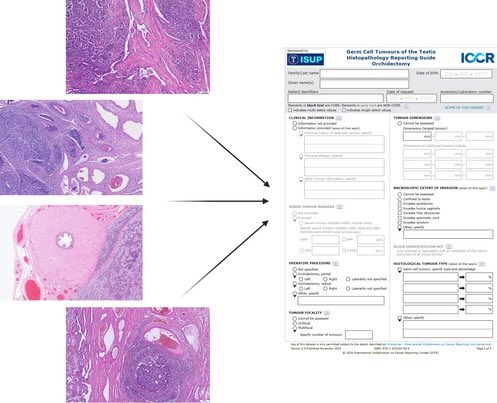
Un curso imperdible! Quien se apunta? Me ayudan a difundir?
Frida Rosenblum tweet media
Español
4
21
35
4.1K
Sofia Canete-Portillo retweetledi
Liang Cheng, MD
Liang Cheng, MD@LiangChengMD·
Just published in the July 2025 issue of Bioengineering & Translational Medicine! In this work, we developed a novel qPCR-based PCDHGB7 assay that enables noninvasive, cost-effective early detection of urothelial carcinomas using urine samples. This molecular test outperformed traditional urine cytology and holds great promise for reducing the financial burden on both patients and the healthcare system. Take a look at the article here: 🔗 aiche.onlinelibrary.wiley.com/doi/10.1002/bt…
Liang Cheng, MD tweet mediaLiang Cheng, MD tweet media
English
0
2
10
786
Sofia Canete-Portillo retweetledi
Liang Cheng, MD
Liang Cheng, MD@LiangChengMD·
When did digital pathology begin? Take a look at this salient piece written by Professor Rodolfo Montironi.  pubmed.ncbi.nlm.nih.gov/40205934/ In our study published in Cancer in 2009, we described a decision support system—a neural network based on a model-driven reasoning process—that could accurately predict the cribriform pattern of prostate cancer. The cribriformity index was defined as the ratio of the form factor of the gland’s interior lumen outline to the form factor of the gland’s basement membrane. Correct segmentation of approximately 70–80% of cribriform glands was achieved—quite a remarkable accomplishment, even by today’s standards. Assessing the cribriform pattern of prostate cancer remains a critical task in current clinical practice.
Liang Cheng, MD tweet media
English
0
7
21
1.5K
Sofia Canete-Portillo retweetledi
Aysha Mubeen
Aysha Mubeen@AMubeen_Path·
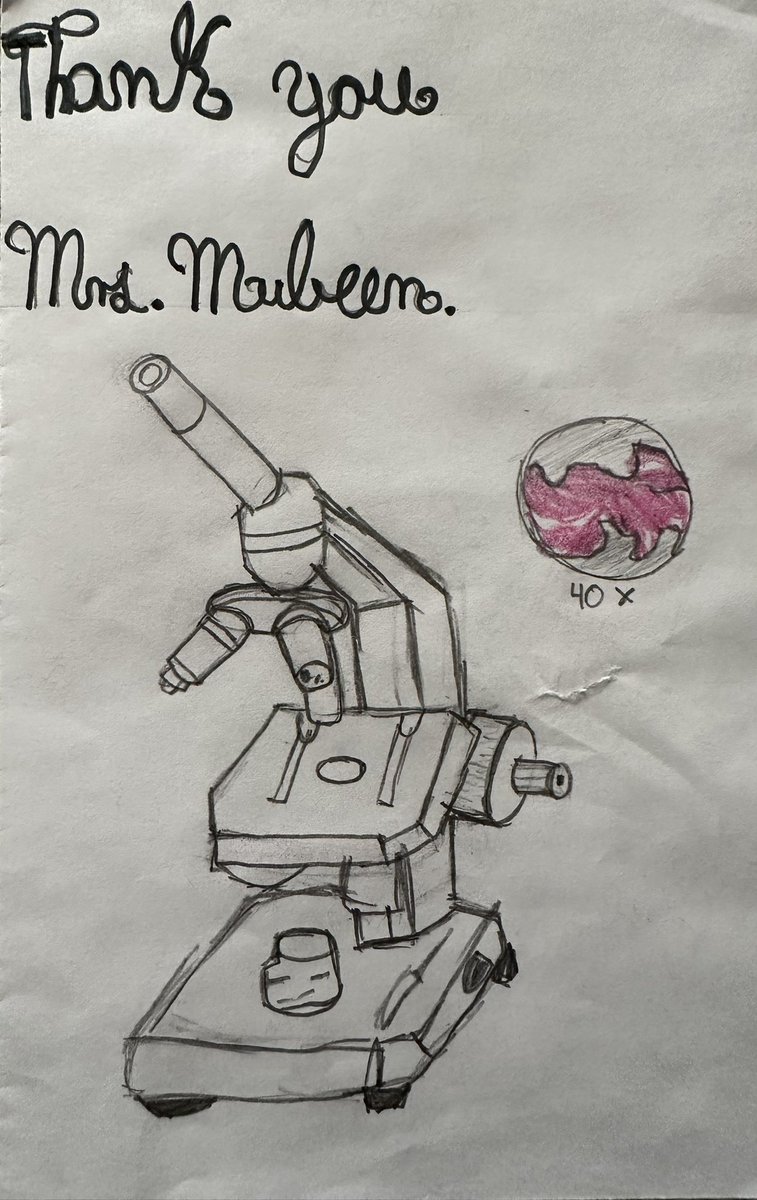
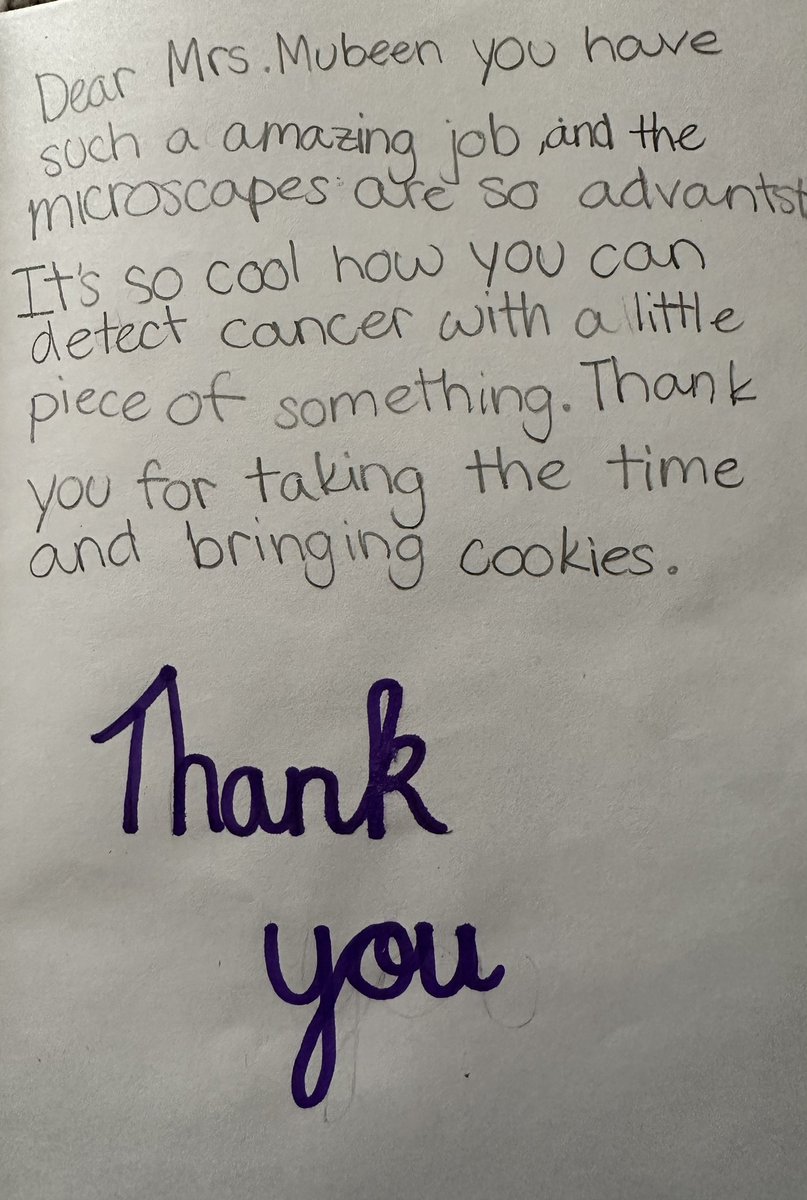
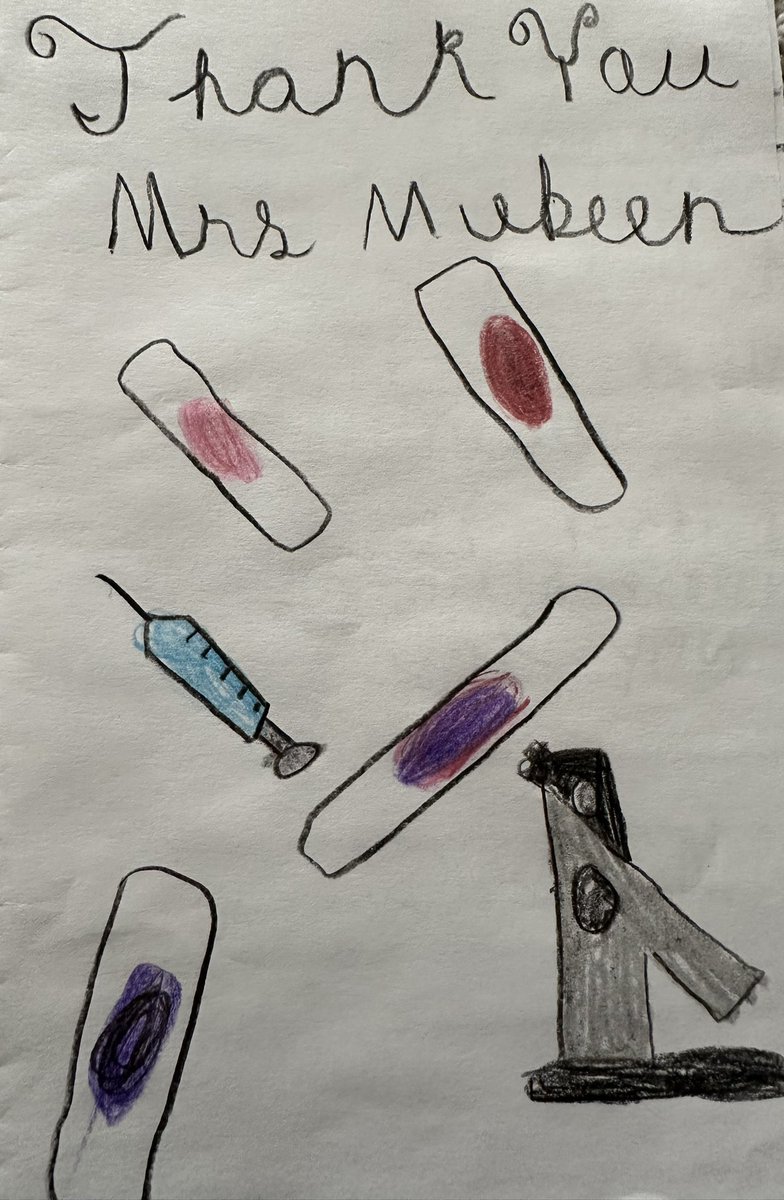
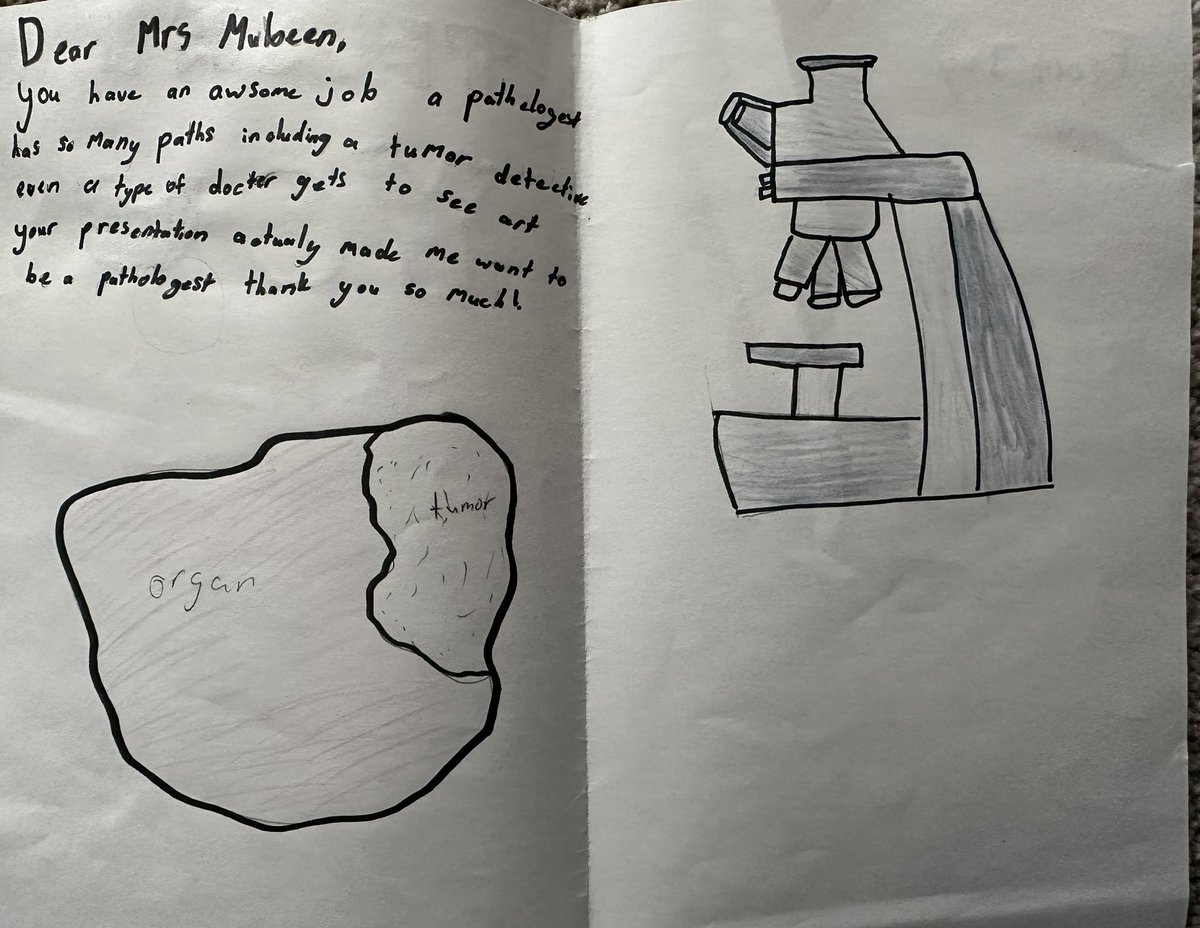
I did something outside my comfort zone but it turned out to be so rewarding!I gave a presentation to my daughter’s fifth grade class about Pathology. The kids thought what we do is cool and some actually want to consider Path when they grow up!😊 Sharing a few thank you cards!
Aysha Mubeen tweet mediaAysha Mubeen tweet mediaAysha Mubeen tweet mediaAysha Mubeen tweet media
English
5
5
67
3.5K
Sofia Canete-Portillo retweetledi
Ankur Sangoi
Ankur Sangoi@slusagar·
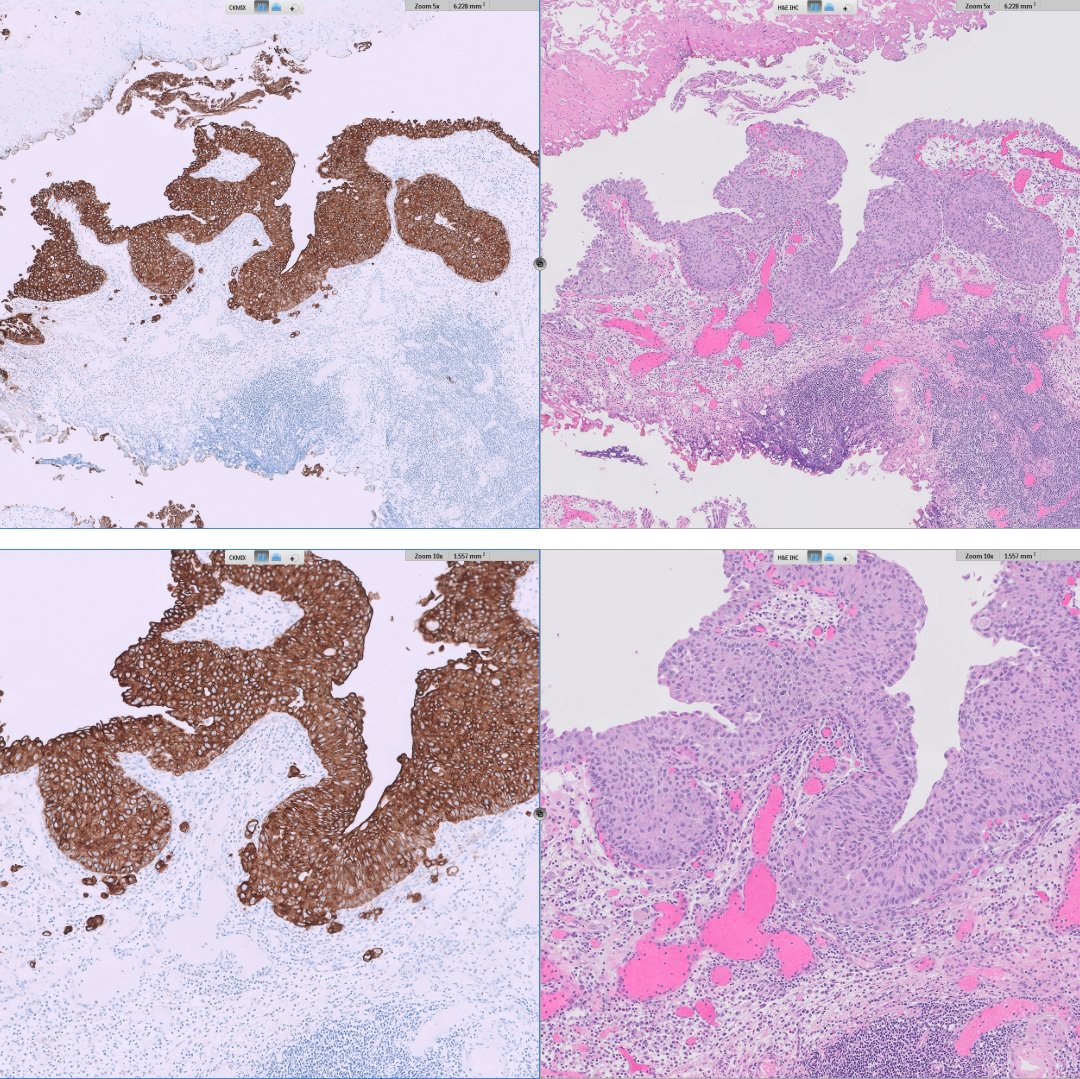
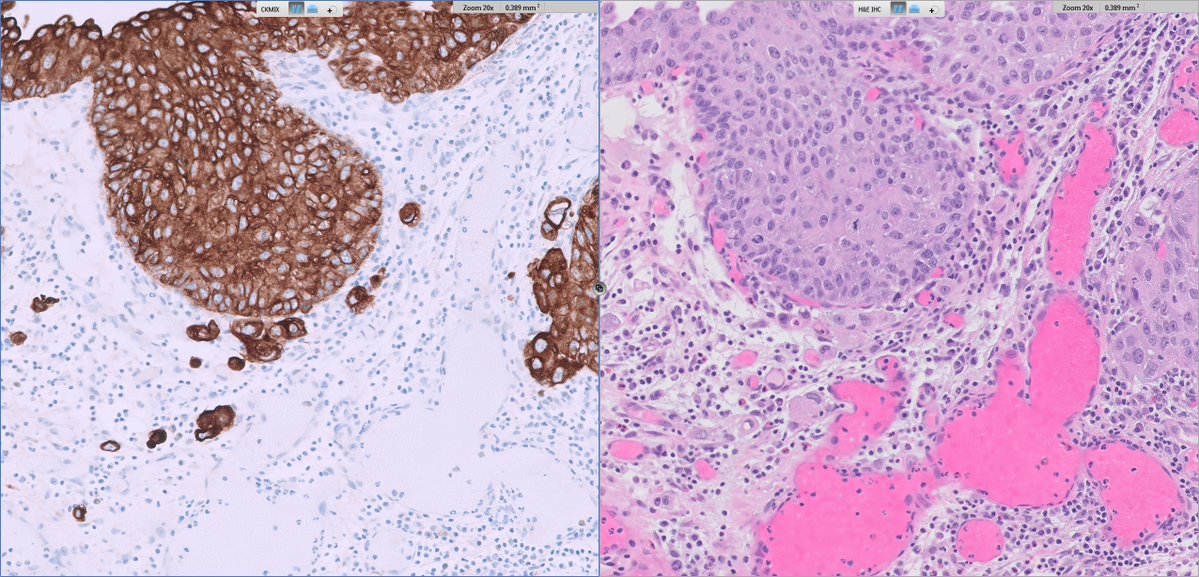
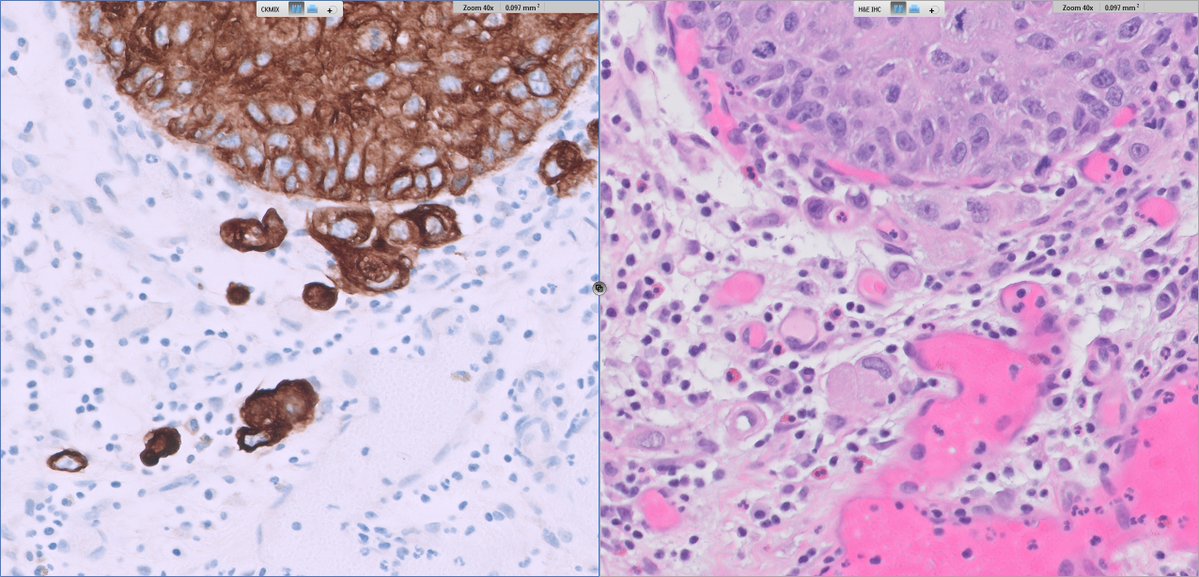
#GUpath TURBT: most of the time H&E is🔬sufficient, but sometimes keratin #IHCpath can 😍tiny superficial foci of lamina propria invasive urothelial carcinoma, especially if single cells
Ankur Sangoi tweet mediaAnkur Sangoi tweet mediaAnkur Sangoi tweet mediaAnkur Sangoi tweet media
English
2
19
68
2.3K
Sofia Canete-Portillo
Sofia Canete-Portillo@scaneteportillo·
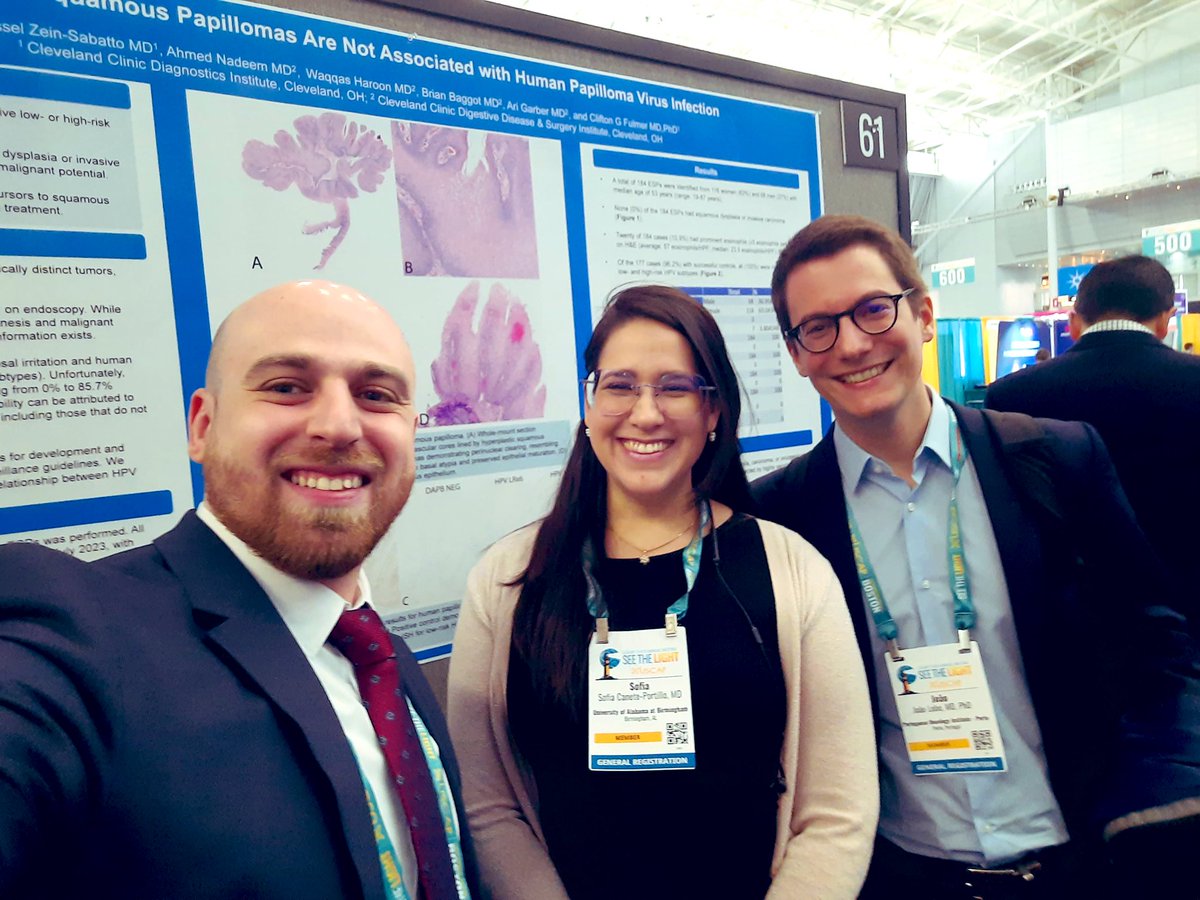
Catching up with friends is always a pleasure!
Sofia Canete-Portillo tweet mediaSofia Canete-Portillo tweet media
English
0
1
8
418