

ben song
2.2K posts

@BonnieGlaser The sooner the US treats China as an equal, the better it is for everyone. US exceptionalism mentality has to come to an end
English

“Based on the sum total of what President Trump has said to the media, it seems like he has absorbed a great deal of Xi Jinping’s thinking on Taiwan,” said Bonnie S. Glaser, the managing director of the Indo-Pacific program at the German Marshall Fund. “People are anxious.”
nytimes.com/2026/06/09/us/…
English

The Romans considered lawyers and actors to be low-tier, garbage people.
NBA@NBA
The stars are out for Game 4 at Madison Square Garden 🤩
English

Golda Meiwhore, from Kyiv. A terrorist and a thief from Ukraine who stole Palestinian lands.
Eli Afriat 🇮🇱@EliAfriatISR
Do you know who this woman is?
English
@jakeshieldsajj in a population of 90 million at the time and territoire of over 600k sq km
when i saw this number i was shocked
from ``hollywood`` and propaganda my impression had been COMPLETELY different
English

I'm a holocaust survivor
I survived 40 years of non-stop lies and crying from these people, which is actually far worse than the Holocaust
English
@policytensor @tparsi `our` 🤡
why you identify with the decaying westoids
English

The lobby’s attack on @tparsi is an import test of the survival of our civilization.
Policy Tensor@policytensor
Get the fuck out of here. Are you for real? This cannot be tolerated.
English
@Rainmaker1973 look how they cowardly waited until they were sure they wouldnt explode and then went full on in a group on the guy
westoids are just f-ing cowards and loudmouths nothing more
English

@policytensor Do you know how many German “jews” died during 1933-1945?
170k
Including suicides, non nationals, etc
Less than a third what the Jews did in Gaza in 2 years vs 12 in a population and territory 2 OOMs larger
English
The project to make Europe Judenfrei was clearly genocidal. And they had further genocidal plans. They planned to exterminate and enslave a hundred million Slavs to make way for German homesteaders, the goal being to replicate the American achievement in a single generation.
Sami Gold@souljagoyteller
The Nazis fundamentally wanted a Europe free of Jewry, this is nonarguable. And to propagate the idea that the Holocaust was merely a matter of logistical issues is to deny the severity of the Shoah, which killed most of my family’s members. However, the Nazis did not have a plan for genocide in the style of the final solution on the day Hitler became chancellor. Did they seek to sequester German Jewry, to force them out, to expropriate their wealth and to expose Germany’s Jews to random acts of violence? Absolutely. But genocide was another matter; it’s complicated and requires mass compliance. I don’t hold on to the extreme functionalist notion that the Holocaust was purely contingent on WWII, that’s revisionism, but when you read the minutes of Wannsee (which, it should be noted, wasn’t the conference where they agreed on doing the Holocaust, but just to confirm across the Third Reich’s bureaucracy how they’d go about it), that the Nazis felt exasperated with their “Jewish problem” and saw systematic, industrial-scale slaughter as the most cost-effective option. I’d say that the Nazis had given up on just expelling Jewry by 1939 but committed to fully annihilating them by 1941
English
@policytensor they are panicking because westoid systems are a ponzi scheme when it cant extract anymore from the rest of the world (anything beyond europe where they came from)
"embedded growth obligations" everywhere
English
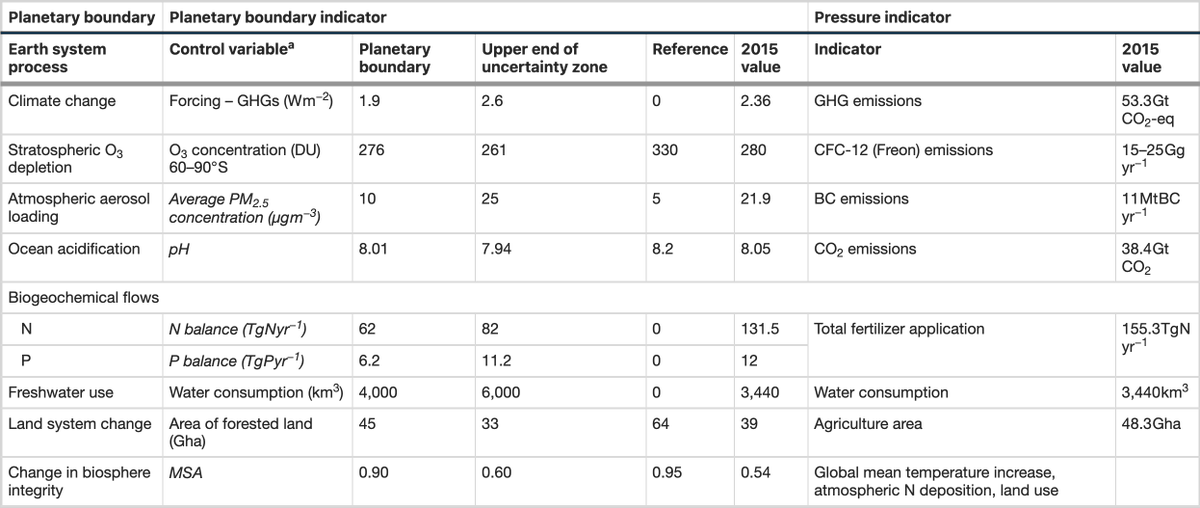
I am really not persuaded that population decline is all that bad or poses insurmountable challenges. All of the challenges that it poses can be solved by higher productivity. A smaller population may be the most systematic and effective way to stay within planetary boundaries.
Eric Levitz@EricLevitz
My piece argues that collapsing global fertility may be an inevitable consequence of laudable developments -- modern medicine, economic development, and women's autonomy. My normative view is that preserving these advances is more important than averting rapid depopulation. But a massive contraction in global population will be a crisis for all affected societies and governments. Entire regions will become ghost towns. With an inverted population structure, the small minority of prime-age workers will shoulder the burdens of supporting an increasingly large elderly population, likely yielding resentment and political backlash. And of course, if sustained indefinitely, below-replacement fertility rates would result in human extinction. So, I think rapid depopulation will be experienced as a social crisis. And a great many people will be harmed by it. But I agree that it is difficult to avoid this outcome without constraining autonomy in unacceptable ways. Perhaps, we'll develop artificial wombs and Jetsons-style robo nannies, the burdens of child-rearing will plummet, and more people will opt into procreation without coercion. But I wouldn't count it
English

@tphuang If you are dealing with a large code base, it's billions of tokens is why. I mainly use DeepSeek and it is more expensive than what you say here.
English

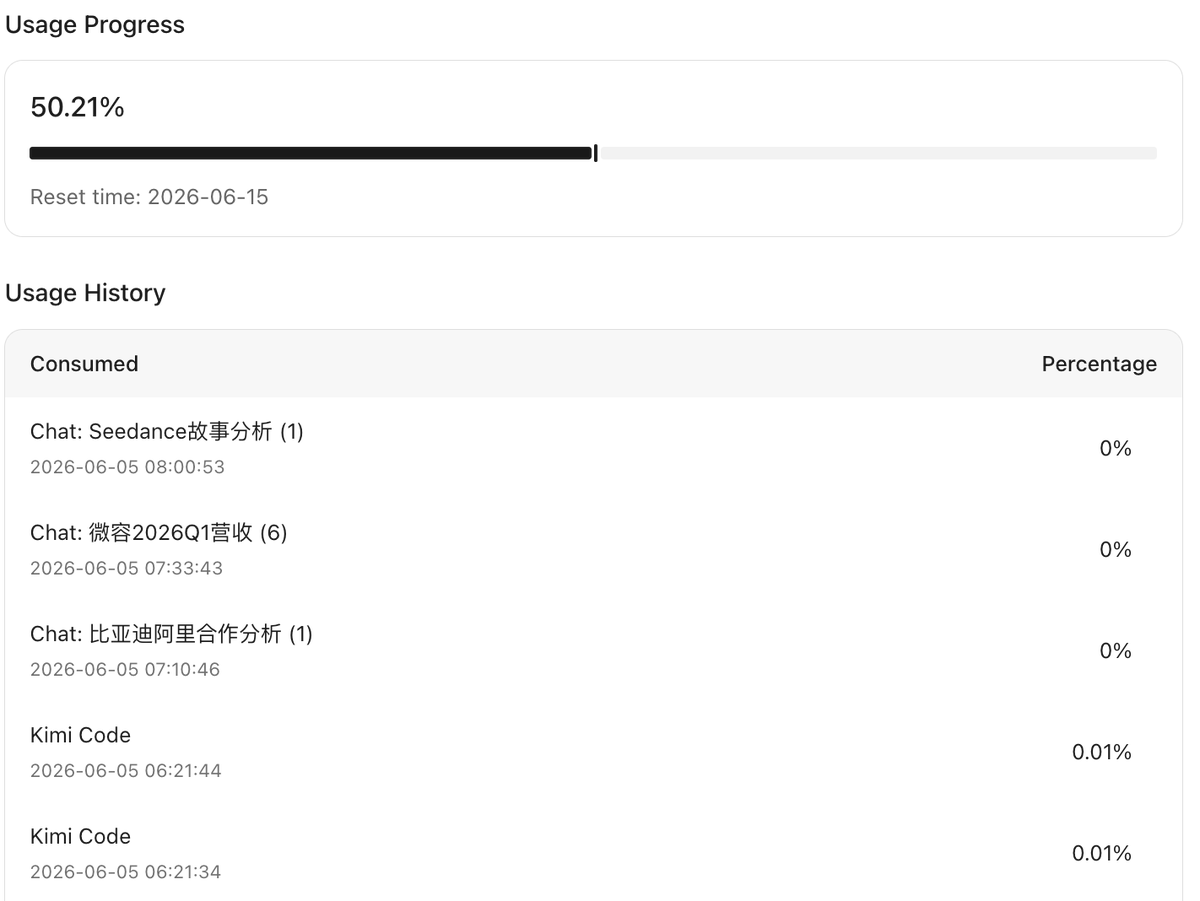
Uber apparently put a $1500/mo AI token spending cap on its engineers. Why do they need that much exactly?
I'm spending $15/month w/ Kimi & have only used 50% of my token 2/3 of the way thru current period. Includes both Kimi code & chat.
I use it like there is no limit & this is all I'm capable of using up. All my coding & coding planning + all the waste of time research that I do are using this plan. And I can't use up all the credits from this $15/month subscription.
If an employee of my requests that much AI token, I'd tell him/her to go flip burgers, bc that's what you deserve for relying on expensive AI for doing all your work.
English

First they offer the carrot.
Then comes the stick.
Suppressed News.@SuppressedNws1
Jared Kushner says countries that normalize with Israel through the Abraham Accords will be rewarded with INVESTMENT, MONEY, and political backing. He says new “economic packages” are being prepared to deepen normalization and pull more countries into the accords, while highlighting Morocco as a model and Syria as a possible next target. Kushner openly frames alignment with Israel as a gateway to WEALTH, STATUS, and foreign investment.
English
@policytensor @SnakeThatStings dont waste your breath talking to westoids
beyond redemption
their fate is already written
English
@SnakeThatStings What have they being saying about Ukraine since 1991? It’s not exactly a secret.
English
That's just because you don't understand his war aims and want to impose what you think his war aims should be.
ian bremmer@ianbremmer
iran war the biggest foreign policy mistake of trump’s presidency. but nothing close to putin’s decision to invade ukraine. that’s a failure of truly epic proportions. increasingly worries me, given that putin is not given to admitting mistakes.
English
ben song retweetledi
Riddle me this. If Treasury can seize your crypto, what exactly is the use case left?
English
ben song retweetledi

西方对中国最愤怒是中国把他们躺赚了几十年的暴利生意,一个个砸成了普通人都买得起的日用品。
这种愤怒已经刻进了很多西方人的骨子里,他们不是不理解,而是不愿意理解,不愿意接受自己再也不能躺着剥削全世界的事实。
二十年前,中国修地铁要用盾构机,全部从德国进口。一台盾构机德国卖3.5亿人民币,一分钱都不能少。买的时候还要签霸王条款,机器坏了只能找德国工程师来修。
德国工程师来中国一天的工资是3000欧元,换算成人民币当时是3万多。他们坐飞机必须坐头等舱,住必须是五星级酒店的总统套房。
维修的时候中国人不能在旁边看,必须全部离场,修完了直接开账单,换一个小小的密封圈就要10万人民币。
有时候机器出个小故障,要等德国工程师三个月才能来,整个工地几百人就只能闲着干等,每天损失几百万。
没有人觉得这有什么不对。全世界都默认,高科技就应该卖这么贵,德国人掌握了技术,他们就有资格赚这个钱。甚至放言给中国图纸也造不出盾构机。
但到2008年,中国第一台拥有自主知识产权的盾构机下线。当时德国人根本不在乎,他们觉得中国人造出来的肯定是垃圾,用不了几天就会坏。
结果中国盾构机不仅能用,而且价格直接开到了5000万一台。后来随着技术不断成熟,产量不断提高,现在一台国产盾构机只要2000多万人民币,价格只有原来德国的十七分之一。
德国盾构机的垄断神话一夜之间破灭了。原来全世界只有德国、日本、美国少数几个国家能造盾构机,他们联合起来维持高价,想卖多少钱就卖多少钱。
现在中国加入了,他们的价格体系彻底崩溃了。现在德国盾构机想卖出去,价格也只能降到和中国差不多的水平,再也不能躺着赚暴利了。
而这样的事在各个领域都不断的上演,套用足球解说的一句话,留给西方垄断的时间不多了。


中文
@MerovechD @RnaudBertrand mean reversion has just begun.
give it a minute, you will get your wars and destruction
English

@RnaudBertrand That's comparing apples and oranges in certain important respects. Europe is stagnating and being outgrown, but it's not facing internal catastrophes like the Taiping rebellion or external shocks like the opium crisis the Qing did over that period
English

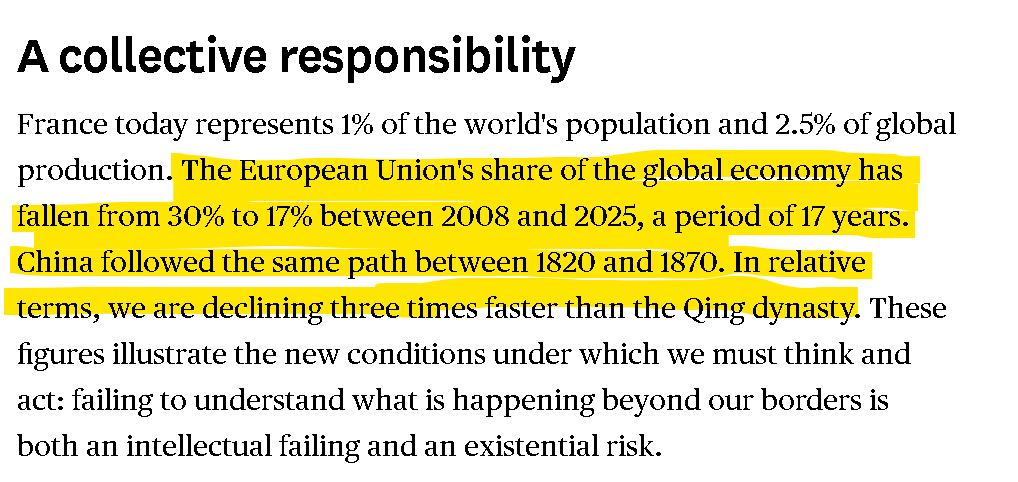
People don't grasp the sheer speed and scale of Europe's decline.
This 👇 is an extraordinary number shared by Luis Vassy, director of Sciences Po (one of France's most famous schools) in this article: legrandcontinent.eu/fr/2026/06/03/…
He calculated that the EU is declining 3 times faster than the Qing dynasty at the height of China's century of humiliation.
Back then, it took China 50 years to drop from 30% of world GDP to 17%, whereas it took the EU just 17 years (from 2008 to 2025).
Insane 😢 And, sadly, given the current direction and the EU's systematically suicidal policy choices (latest example: x.com/RnaudBertrand/…), it's just the beginning...
Arnaud Bertrand@RnaudBertrand
It always astonishes me how there is virtually ZERO public debate - or even public awareness - in Europe about the decisions that will most shape ordinary people's lives. These days, the EU is drafting a new anti-China legal framework where - quite literally - the more affordable and competitive Chinese products are, the more illegal they'd become. You'd think EU citizens would want to be informed about such things - as it couldn't be more consequential for their prosperity. Yet I bet virtually no EU citizen is even aware of it, beyond a vague sense that there is some sort of trade dispute going on. So what's going on exactly? It all centers around a new legal instrument the EU is drafting called the "overcapacity instrument" (euobserver.com/218003/china-t…). First of all, the very notion of "overcapacity" is pretty ridiculous to begin with, especially the way it's being defined by the EU, as it basically means being competitive enough to export. By this definition of "overcapacity," pretty much every European industry that's ever run a trade surplus - German cars, French wine, Italian fashion - has been guilty of "overcapacity." I'm not even exaggerating: if you read this study by the EU Parliament on "Industrial overcapacities, with a focus on China" (europarl.europa.eu/RegData/etudes…), they define "overcapacity" as building more capacity than your domestic market can absorb. So the moment you build capacity to export abroad, you're in "overcapacity." Utterly ridiculous. And what this "overcapacity instrument" is about is creating a permanent legal mechanism for the EU to block Chinese competition across whole sectors of the economy, if they happen to be in "overcapacity." In effect, this means that if China is competitive globally in a given sector in such a way that it exports a lot, that's proof of overcapacity, and legally it'd mean that the entire sector can be restricted from the EU market. Which means it really, factually, is a legal framework where the more affordable and competitive your products are, the more illegal they become. Which is a CRAZY economic concept! 🤦♂️ Please note that it's different from the anti-subsidy legal instrument, which the EU has already put in place in 2023 (the "Foreign Subsidies Regulation": competition-policy.ec.europa.eu/foreign-subsid…). This "overcapacity instrument" would be above and beyond this: it wouldn't even matter if a particular sector was subsidized by the Chinese government or not, the mere fact of its competitiveness in exports would be grounds for restrictions in the EU. It doesn't take a genius to understand how badly this could impact everyday people: this is European consumers being forced to pay more for worse products by law, so that uncompetitive European firms don't have to improve. Politicians frame it as avoiding a "China shock 2.0" but really this is choosing an even steeper self-inflicted decline than is already the case, where EU citizens would subsidize mediocre EU companies that would have even less pressure to catch up. It's a hidden tax: subsidies for uncompetitive firms paid by consumers instead of governments, which in turn makes them less incentivized to become competitive. The first "China shock" did de-industrialize Europe somewhat, but at least it made things cheaper for European consumers. If this becomes Europe's response to a second "China shock" not only it'd make everything more expensive but it'd do nothing for EU industry: you don't become competitive by banning the competition... Look at China itself: the way it industrialized was NOT by banning Western firms but on the contrary by welcoming them strategically and learning from them. You learn to compete by... competing, duh! What I find most shocking in all of this isn't even the policy itself - you can make arguments for and against protectionism, and reasonable people can disagree. What's shocking is that virtually no European media outlet is explaining any of this to the public. This is unarguably one of the single most consequential economic decisions the EU will make this decade, affecting the price of everything, and it's being drafted in near-total silence. No newspaper is running the headline "EU plans to make Chinese goods illegal if they're too affordable" - even though that's essentially what's happening. But that's what you call a "democracy" with "freedom of expression" these days apparently...
English
@hsu_steve how is your chinese? are you going native when you`re there or in english only?
English



ben song retweetledi

“You’re an antisemite.”
No, I’m actually anti-satanic.
You don’t get to bomb hospitals, commit a genocide and traffic children to blackmail politicians and then play the victim.
English
@policytensor any recommendation to get an overview of the mathematical or statistical modeling of war? assuming technical literacy (op res undergrad, physics phd) so no metaphorical or for dummies style. seriously intrigued by your previous allusion to microfoundations.
English
My work speaks for itself. Credentials are noisy signals for the poorly-informed. An expert knows another expert blind.
Timothy Fralick 🇺🇸 🇵🇭@FralickTim34304
@policytensor I am fascinated how military power is so on the minds of the white monkey crowd cheering China on, are they really traitors or just making the buck in China. And apparently they are all experts of the military. True genius here. So please, Anusar, tell us your military experience
English
@policytensor the interesting thing about their genocide project is that IF they actually succeed one can nuke that satanist rats nest cleanly and rid the world of this cancer
English
This is the guy Chuck Schumer marched with. timesofisrael.com/far-right-mini…
English