Dmitrii Kriukov

104 posts

Dmitrii Kriukov banner
Dmitrii Kriukov

Dmitrii Kriukov

@shappiron

Naturephilosopher | Computational Biology of Aging
Katılım Mayıs 2013
57 Takip Edilen89 Takipçiler
Dmitrii Kriukov
Dmitrii Kriukov@shappiron·
What would be the lifespan of a human who has overcome all aging mechanisms except somatic mutations? We build a model that estimates it as 140 years, here are details: biorxiv.org/content/10.110…
English
0
1
1
134
John Hemming
John Hemming@johnhemming4mp·
@DogYearsDAO @fedichev Interventions which improve acetylation mitigate the aging phenotype and do so in a synergistic manner.
English
1
0
1
28
Peter Fedichev
Peter Fedichev@fedichev·
We still don’t have a proper theory of aging. That’s remarkable, given how far biology has come. Despite centuries of speculation and decades of data, there is still no unified, quantitative framework that explains how and why living systems age—and how we might stop it. What we have instead is a long list of partial explanations. By some counts, there are over 300 different theories of aging. That’s not a sign of success. It’s a sign of fragmentation. But before building such a theory, we need to agree on aging phenomenology, decide what exactly needs to be explained. What are the core, undeniable features of aging that any model must capture? Here’s my proposal. First, mortality doesn’t just increase with age—it increases exponentially. Across a wide range of species, from flies to humans, the probability of death doubles every few years of adult life. This is known as the Gompertz law, and it defines a central quantitative signature of aging. Deviations from this pattern are rare and interesting. Some short-lived animals flatten out their mortality risk late in life. Naked mole-rats barely age at all in demographic terms, even though their molecules do. Humans, meanwhile, keep on aging Gompertz-style even past the average lifespan. What’s striking is how different this is from how machines fail. Most engineered systems don’t follow exponential mortality. They follow power laws. In mechanical systems—jet engines, turbines, bridges—the risk of failure usually increases according to a Weibull distribution: slow at first, then rapidly accelerating as wear accumulates. This is called “bath-tub shaped” failure. It's deterministic, often dominated by a single weak link. Biology doesn’t work like that. It’s noisy, redundant, and dynamic. Cells talk to each other, systems compensate, and failures emerge from the collapse of coordination—not the snapping of one part. That’s why mortality in organisms rises exponentially, not deterministically. And that’s a big clue. It tells us aging isn’t just wear and tear. It’s something else—something emergent, statistical, and deeply biological. Second, aging is fundamentally stochastic. Even genetically identical individuals in the same environment don’t die at the same time. They drift. And the spread of this drift—the variance of lifespan and age-related traits—actually increases with age. In humans, this variance seems to grow hyperbolically, as if all physiological systems are converging toward some kind of boundary near 120 years. The longer the species lives, the tighter this variance tends to be. We see the same thing in the genome. DNA methylation clocks—those predictive models based on epigenetic patterns—derive most of their power not from deterministic changes, but from accumulating noise. Epigenetic drift turns out to be the main signal. And recent work shows that 70 to 90 percent of what these clocks “learn” is just statistical dispersion. The rest is the fine structure, the deviations from pure noise, that carry biological meaning. Third, aging is scaled. Across mammals, bigger animals tend to live longer—and slower. Lifespan and developmental time follow predictable, quarter-power scaling with body size. Molecular damage, by contrast—mutations, methylation drift, oxidative stress—tends to scale inversely with lifespan. Bigger, longer-lived species accumulate this damage more slowly. There’s a deep geometry here, a kind of allometric constraint linking biology’s pace and its durability. A good theory of aging has to explain why. Fourth, despite all the complexity, aging turns out to be low-dimensional. If you analyze enough biomarkers—genomic, proteomic, clinical—you find that most of the variation with age clusters along just a few directions. A few principal components can describe most of the story. Even organism-level performance metrics—frailty, lung function, heart rate ceiling—decline in a surprisingly linear way: roughly one percent per year, across the board. At the same time, individual differences grow. Aging is drift along a narrow ridge, with widening variance. At last, let's remember that in practice nothing beats the effect of eating less. A good theory should give us a way beyond that. This is my proposal for what a theory of aging must explain. What’s yours? As usual, mind following, like and repost - In fact, there is apparently only one way to explain all the listed features within a single theoretical framework (see the link to our recent work in the first comment)
Peter Fedichev tweet media
English
60
31
196
38.6K
Dmitrii Kriukov
Dmitrii Kriukov@shappiron·
@fedichev 7) Yes, I'm an opponent of phenomenology. We are fed up with her. We need to start speaking about molecules, pathways and rank different mechanisms by their significance. Boldly predict interventions and test them.
English
0
0
0
49
Dmitrii Kriukov
Dmitrii Kriukov@shappiron·
@fedichev 5) "A few principal components can describe most of the story" - wrong. If you consider WGBS DNA methylation. I bet even 20 components will be not enough for describing even 80% of this data structure. Transcriptomics is more correlated, but it can be an amplification artifact
English
0
0
0
47
Dmitrii Kriukov
Dmitrii Kriukov@shappiron·
@fedichev 4) "Across mammals, bigger animals tend to live longer—and slower." - sure, and naked mole rat, spalax, bats, and birds successfully bypass this "law".
English
0
0
0
40
Dmitrii Kriukov
Dmitrii Kriukov@shappiron·
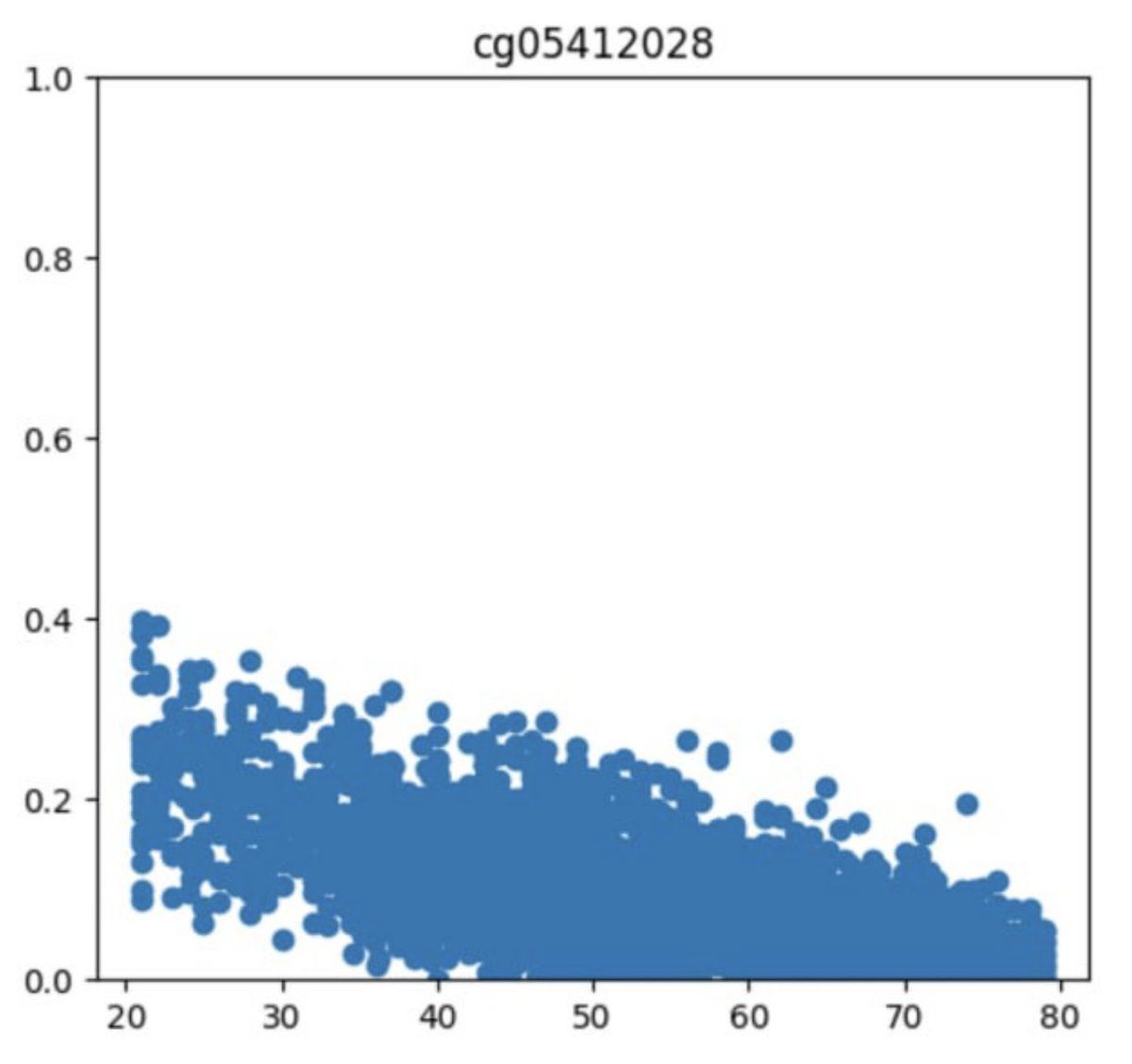
@fedichev "variance...actually increases with age" - surprise. This is not always so. Below is an example of CpG site with decreasing variance - there are a lot of such sites.
Dmitrii Kriukov tweet media
English
1
0
0
122
Dmitrii Kriukov
Dmitrii Kriukov@shappiron·
@fedichev 3) "aging is fundamentally stochastic" - to some extent, but not at all. The goal of any proper aging theory is to point to main cause of aging. It can be so, that quasi-program processes are main drivers as the hyperfunction theory says.
English
0
0
0
36
Dmitrii Kriukov
Dmitrii Kriukov@shappiron·
@fedichev 2) "mortality doesn’t just increase with age—it increases exponentially" - this is no more than your assumption. Human mortality data can be greatly described with Weibull distribution too. Moreover, the older ages (after 90) are better described by Weibull than Gompertz.
English
0
0
0
36
Dmitrii Kriukov
Dmitrii Kriukov@shappiron·
@fedichev 1) I disagree. We actually have quite many proper theories of aging: hyperfunction theory, information theory, epigenetic aging clock theory. The problem with them - they do not explicitly articulate what is the main cause of aging, nor suggest an anti-aging intervention.
English
0
0
0
35
Andrei Tarkhov, PhD
Andrei Tarkhov, PhD@Andrei_Tarkhov·
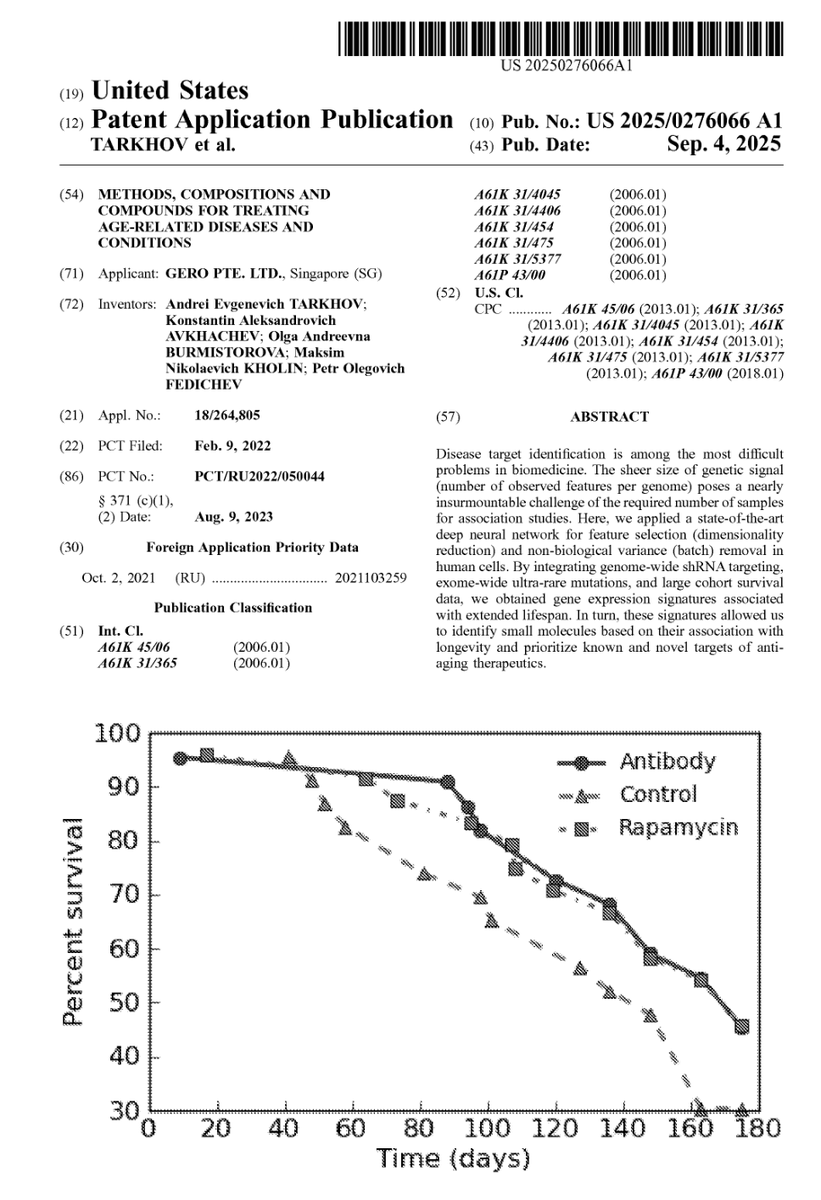
Casually extending the lifespan of old mice with @fedichev in a patent filed in 2022 — it's surprising how slow the USPTO is
Andrei Tarkhov, PhD tweet media
English
2
0
6
649
Dmitrii Kriukov
Dmitrii Kriukov@shappiron·
@davidasinclair Moreover, this result is in the assumption that no longevity interventions are applied.
English
0
0
0
47
David Sinclair
David Sinclair@davidasinclair·
Good news: Scientists say you might live to 150. Bad news: Scientists say you can't live beyond 150 🤡 tinyurl.com/b8hh2urh
David Sinclair tweet media
English
40
24
310
43.7K
Dmitrii Kriukov
Dmitrii Kriukov@shappiron·
@davidasinclair These "bad news" is just a result of extrapolation of linear function to never observed region of human biomarkers. This result absolutely does not proof anything.
English
0
0
0
49
Dmitrii Kriukov
Dmitrii Kriukov@shappiron·
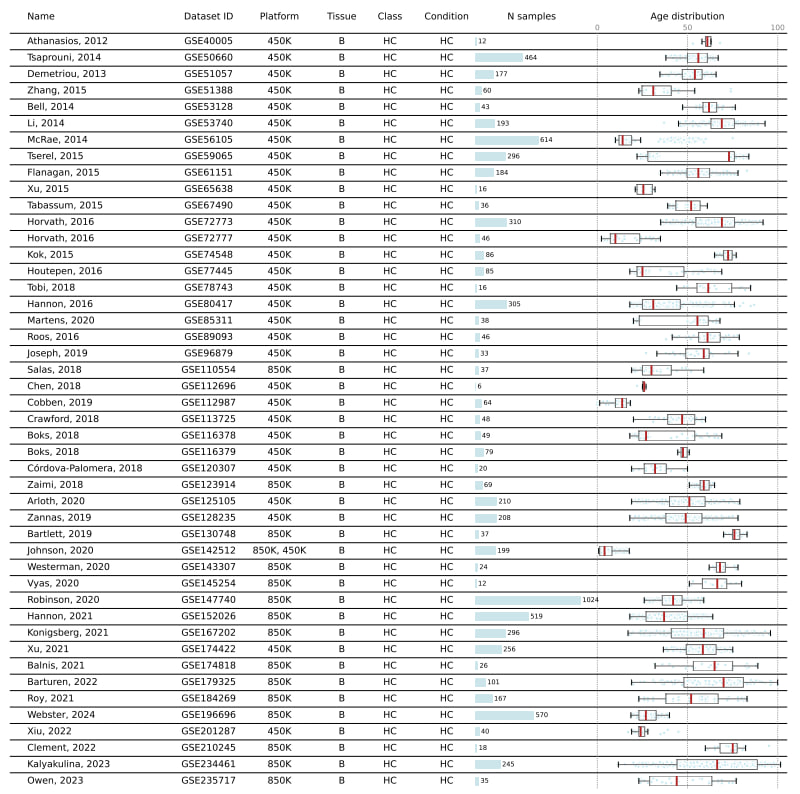
🪐ComputAgeBench - v2 — Epigenetic Aging Clocks Benchmark is released. Check our new version of the preprint [biorxiv.org/content/10.110…]. We added 7k+ blood samples from 46 additional datasets of healthy individuals suitable for training clinically relevant 1-st gen aging clocks.
Dmitrii Kriukov tweet media
English
0
1
3
198
Dmitrii Kriukov
Dmitrii Kriukov@shappiron·
In fact, I'm super excited with the idea to thoroughly answer this question. However, this would require to gather a large cohort of people measuring clinical and epigenetic biomarkers simultaneously, then opening this dataset to allow all researchers to test this hypothesis.
English
0
0
2
87
Dmitrii Kriukov
Dmitrii Kriukov@shappiron·
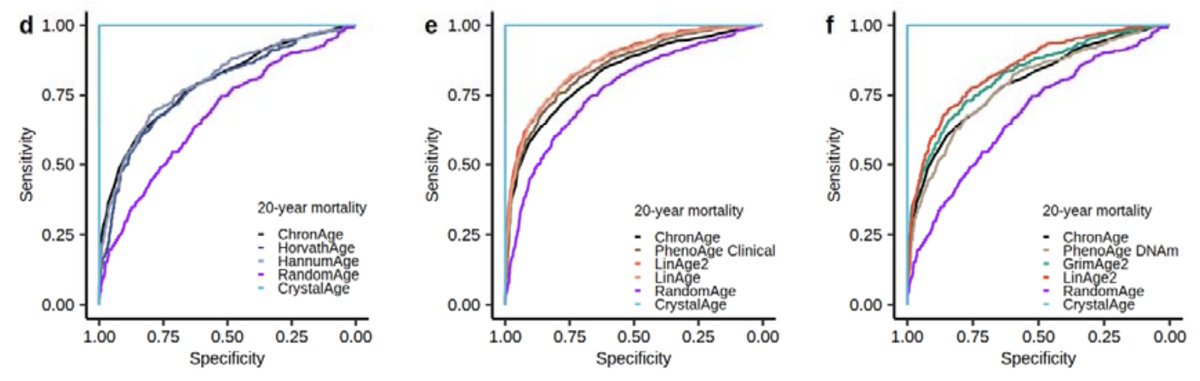
I saw this extremely important result in the preprint. PCA clocks fitted on clinical biomarkers OUTPERFORMED epigenetic clocks in terms of all-cause mortality ROC AUC. Great result, opening the important question, do we actually need epigenetic biomarkers?
Dmitrii Kriukov tweet media
Jan Gruber@jangruber467

People have been asking us how to interpret linAge, to drop difficult to obtain parameters and to compared to other clocks - we thought it would be a quick job to address these questions - it turned out to be a six month journey - preprint out now: doi.org/10.1101/2024.1…

English
2
0
4
237
Dmitrii Kriukov retweetledi
Jan Gruber
Jan Gruber@jangruber467·
People have been asking us how to interpret linAge, to drop difficult to obtain parameters and to compared to other clocks - we thought it would be a quick job to address these questions - it turned out to be a six month journey - preprint out now: doi.org/10.1101/2024.1…
English
2
2
13
1K
Dmitrii Kriukov
Dmitrii Kriukov@shappiron·
@fedichev @jangruber467 I couldn't find a discussion in the article regarding negligibly aging mammal species (as well as so called "immortal" species), what the theory predicts for them?
English
0
0
2
121
Peter Fedichev
Peter Fedichev@fedichev·
This leads to the following predictions: Hallmarks of aging, the primary targets of experimental drugs in contemporary longevity biotechnology, are not correlated in long-lived animals and collectively define chronic diseases. Drugs targeting these hallmarks have the potential to extend life expectancy by a few years each, with metabolic disorders showing the most significant impact. Let’s categorize these drugs as “level-1,” with an estimated additional 10-15 years of life expectancy from them. This represents your X-prize drug. Drugs that reduce the effective temperature of the body can achieve a maximum lifespan, effectively extending life expectancy from 70-80 years to 120-150 years. This effect surpasses any drug targeting a single hallmark of aging and demonstrates the power of physics-informed approaches in controlling the dynamics of complex systems. It highlights the need to define the target for near-term radical life extension. Let’s label these drugs as “level-2,” with sufficient data available to infer the biological mechanisms controlling effective temperature. The configurational entropy of a system increases with damage, making aging microscopically irreversible. A different type of drug controlling the rate of aging (still hypothetical “level-3” drugs) is suggested— we have some ideas for what to try here. The only exceptions to this phenomenon are mice and rats, possibly due to their selection as lab species for shorter lifespans. Likely, species such as zebrafish fall into this category too, with hallmarks of aging developing exponentially and configurational entropy not contributing significantly to lifespan. This could explain why level-2+ drugs have not been tested in these species. Our latest manuscript, along with previous work, provides a comprehensive framework for aging phenomenology in long-lived species and serves as a guide for developing and testing anti-aging therapies with stronger effects than those currently explored. Level-2 drugs represent the next generation of longevity therapeutics, and they are our focus at Gero. Stay tuned for more experimental results! As usual, please follow, like, and repost! (my previous post started from an x-handle and got to be a reply instead of a post, so I am sorry for posting twice) #PhysicsOfAging The link to the preprint is biorxiv.org/content/10.110… More details concerning entropic aging x.com/fedichev/statu… 3/3
Peter Fedichev tweet media
English
13
5
47
2.3K
Peter Fedichev
Peter Fedichev@fedichev·
Let me cut the BS and share highlights of our latest manuscript with @jangruber467 and Kirill Denison. (Spoiler alert: There's a real possibility of extending human lifespan by 40 years or more.) A few years ago, we proposed that most aging drift in humans results from random damage accumulation, leading to an irreversible increase in configurational entropy. The cumulative effect of these transitions causes linear stress on all physiological processes in the human body, as predicted by the law of large numbers. This stress induces two critical effects: first, it triggers hyperbolic (faster than linear) changes in pathway activity, detectable by traditional biological clocks such as Grimm-age. On even longer timescales, the linear stress exponentially increases the likelihood of failures in physiological systems, leading to irreversible configurational transitions and pathological states, which collectively drive chronic diseases. In mammals, the most vulnerable system is innate immunity (Hello, @LidskyPeter!). Innate immunity markers increase hyperbolically with age, peaking around 120-150 years. This critical point was previously identified using autocorrelation analysis of longitudinal blood and physical activity data (Nat Communs 2021). The deviations and fluctuations at this stage are theoretically infinite, rendering the critical point virtually unattainable and defining the maximum lifespan for our species. #PhysicsOfAging 1/3
Peter Fedichev tweet media
English
11
26
112
13.6K