
Shirish Andhare

484 posts

Shirish Andhare banner
Shirish Andhare

Shirish Andhare

@shirishandhare

Operating Partner @ Glade Brook Capital | Previously Head of India Product @ Uber, Twitter, and SVP Products at Ezetap (now Razorpay). Tinkering Barista ☕️

Bangalore, India Katılım Haziran 2007
882 Takip Edilen671 Takipçiler
Shirish Andhare retweetledi

Andrej Karpathy
Andrej Karpathy@karpathy·
Judging by my tl there is a growing gap in understanding of AI capability. The first issue I think is around recency and tier of use. I think a lot of people tried the free tier of ChatGPT somewhere last year and allowed it to inform their views on AI a little too much. This is a group of reactions laughing at various quirks of the models, hallucinations, etc. Yes I also saw the viral videos of OpenAI's Advanced Voice mode fumbling simple queries like "should I drive or walk to the carwash". The thing is that these free and old/deprecated models don't reflect the capability in the latest round of state of the art agentic models of this year, especially OpenAI Codex and Claude Code. But that brings me to the second issue. Even if people paid $200/month to use the state of the art models, a lot of the capabilities are relatively "peaky" in highly technical areas. Typical queries around search, writing, advice, etc. are *not* the domain that has made the most noticeable and dramatic strides in capability. Partly, this is due to the technical details of reinforcement learning and its use of verifiable rewards. But partly, it's also because these use cases are not sufficiently prioritized by the companies in their hillclimbing because they don't lead to as much $$$ value. The goldmines are elsewhere, and the focus comes along. So that brings me to the second group of people, who *both* 1) pay for and use the state of the art frontier agentic models (OpenAI Codex / Claude Code) and 2) do so professionally in technical domains like programming, math and research. This group of people is subject to the highest amount of "AI Psychosis" because the recent improvements in these domains as of this year have been nothing short of staggering. When you hand a computer terminal to one of these models, you can now watch them melt programming problems that you'd normally expect to take days/weeks of work. It's this second group of people that assigns a much greater gravity to the capabilities, their slope, and various cyber-related repercussions. TLDR the people in these two groups are speaking past each other. It really is simultaneously the case that OpenAI's free and I think slightly orphaned (?) "Advanced Voice Mode" will fumble the dumbest questions in your Instagram's reels and *at the same time*, OpenAI's highest-tier and paid Codex model will go off for 1 hour to coherently restructure an entire code base, or find and exploit vulnerabilities in computer systems. This part really works and has made dramatic strides because 2 properties: 1) these domains offer explicit reward functions that are verifiable meaning they are easily amenable to reinforcement learning training (e.g. unit tests passed yes or no, in contrast to writing, which is much harder to explicitly judge), but also 2) they are a lot more valuable in b2b settings, meaning that the biggest fraction of the team is focused on improving them. So here we are.
staysaasy@staysaasy

The degree to which you are awed by AI is perfectly correlated with how much you use AI to code.

English
1K
2.4K
19.6K
3.9M
Shirish Andhare retweetledi
Nat Eliason
Nat Eliason@nateliason·
Nearly every ambitious person I know who has dived into AI is working harder than ever, and longer hours than ever. Fascinating dynamic tbh. I have NEVER worked this hard, nor had this much fun with work.
English
503
598
7.6K
1.2M
Alfred Lin
Alfred Lin@Alfred_Lin·
I am deeply honored, humbled, and will have big shoes to fill. @roelofbotha changed my life. He believed in me, brought me to Sequoia, and taught me how to grow from a builder into an investor. He’s demanding and deeply caring — the rare kind of friend, mentor, partner who pushes you and stands with you through every storm.
Sequoia Capital@sequoia

A new generation of Sequoia stewards

English
202
82
2.2K
716.1K
Shirish Andhare retweetledi
Andrej Karpathy
Andrej Karpathy@karpathy·
Noticing myself adopting a certain rhythm in AI-assisted coding (i.e. code I actually and professionally care about, contrast to vibe code). 1. Stuff everything relevant into context (this can take a while in big projects. If the project is small enough just stuff everything e.g. `files-to-prompt . -e ts -e tsx -e css -e md --cxml --ignore node_modules -o prompt.xml`) 2. Describe the next single, concrete incremental change we're trying to implement. Don't ask for code, ask for a few high-level approaches, pros/cons. There's almost always a few ways to do thing and the LLM's judgement is not always great. Optionally make concrete. 3. Pick one approach, ask for first draft code. 4. Review / learning phase: (Manually...) pull up all the API docs in a side browser of functions I haven't called before or I am less familiar with, ask for explanations, clarifications, changes, wind back and try a different approach. 6. Test. 7. Git commit. Ask for suggestions on what we could implement next. Repeat. Something like this feels more along the lines of the inner loop of AI-assisted development. The emphasis is on keeping a very tight leash on this new over-eager junior intern savant with encyclopedic knowledge of software, but who also bullshits you all the time, has an over-abundance of courage and shows little to no taste for good code. And emphasis on being slow, defensive, careful, paranoid, and on always taking the inline learning opportunity, not delegating. Many of these stages are clunky and manual and aren't made explicit or super well supported yet in existing tools. We're still very early and so much can still be done on the UI/UX of AI assisted coding.
English
457
1K
12.3K
1.2M
Shirish Andhare retweetledi
Andrew Ng
Andrew Ng@AndrewYNg·
Writing software, especially prototypes, is becoming cheaper. This will lead to increased demand for people who can decide what to build. AI Product Management has a bright future! Software is often written by teams that comprise Product Managers (PMs), who decide what to build (such as what features to implement for what users) and Software Developers, who write the code to build the product. Economics shows that when two goods are complements — such as cars (with internal-combustion engines) and gasoline — falling prices in one leads to higher demand for the other. For example, as cars became cheaper, more people bought them, which led to increased demand for gas. Something similar will happen in software. Given a clear specification for what to build, AI is making the building itself much faster and cheaper. This will significantly increase demand for people who can come up with clear specs for valuable things to build. This is why I’m excited about the future of Product Management, the discipline of developing and managing software products. I’m especially excited about the future of AI Product Management, the discipline of developing and managing AI software products. Many companies have an Engineer:PM ratio of, say, 6:1. (The ratio varies widely by company and industry, and anywhere from 4:1 to 10:1 is typical.) As coding becomes more efficient, teams will need more product management work (as well as design work) as a fraction of the total workforce. Perhaps engineers will step in to do some of this work, but if it remains the purview of specialized Product Managers, then the demand for these roles will grow. This change in the composition of software development teams is not yet moving forward at full speed. One major force slowing this shift, particularly in AI Product Management, is that Software Engineers, being technical, are understanding and embracing AI much faster than Product Managers. Even today, most companies have difficulty finding people who know how to develop products and also understand AI, and I expect this shortage to grow. Further, AI Product Management requires a different set of skills than traditional software Product Management. It requires: - Technical proficiency in AI. PMs need to understand what products might be technically feasible to build. They also need to understand the lifecycle of AI projects, such as data collection, building, then monitoring, and maintenance of AI models. - Iterative development. Because AI development is much more iterative than traditional software and requires more course corrections along the way, PMs need be able to manage such a process. - Data proficiency. AI products often learn from data, and they can be designed to generate richer forms of data than traditional software. - Skill in managing ambiguity. Because AI’s performance is hard to predict in advance, PMs need to be comfortable with this and have tactics to manage it. - Ongoing learning. AI technology is advancing rapidly. PMs, like everyone else who aims to make best use of the technology, need to keep up with the latest technology advances, product ideas, and how they fit into users’ lives. Finally, AI Product Managers will need to know how to ensure that AI is implemented responsibly (for example, when we need to implement guardrails to prevent bad outcomes), and also be skilled at gathering feedback fast to keep projects moving. Increasingly, I also expect strong product managers to be able to build prototypes for themselves. The demand for good AI Product Managers will be huge. In addition to growing AI Product Management as a discipline, perhaps some engineers will also end up doing more product management work. The variety of valuable things we can build is nearly unlimited. What a great time to build! [Original text: deeplearning.ai/the-batch/issu… ]
English
181
1K
5.4K
882.3K
Shirish Andhare retweetledi
The Tennis Letter
The Tennis Letter@TheTennisLetter·
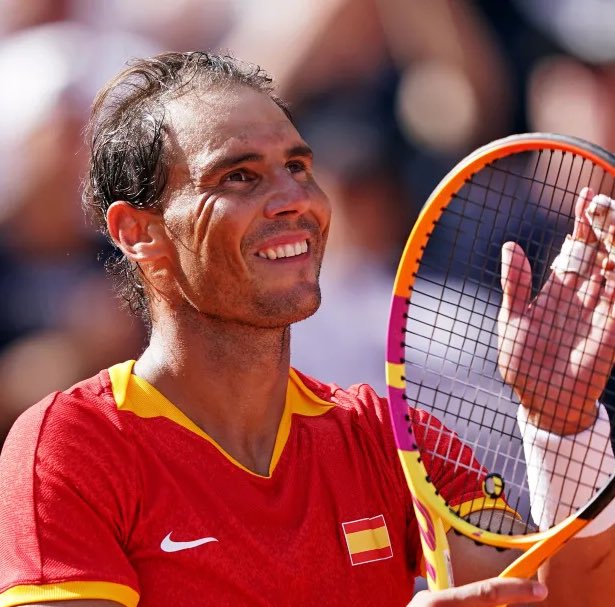
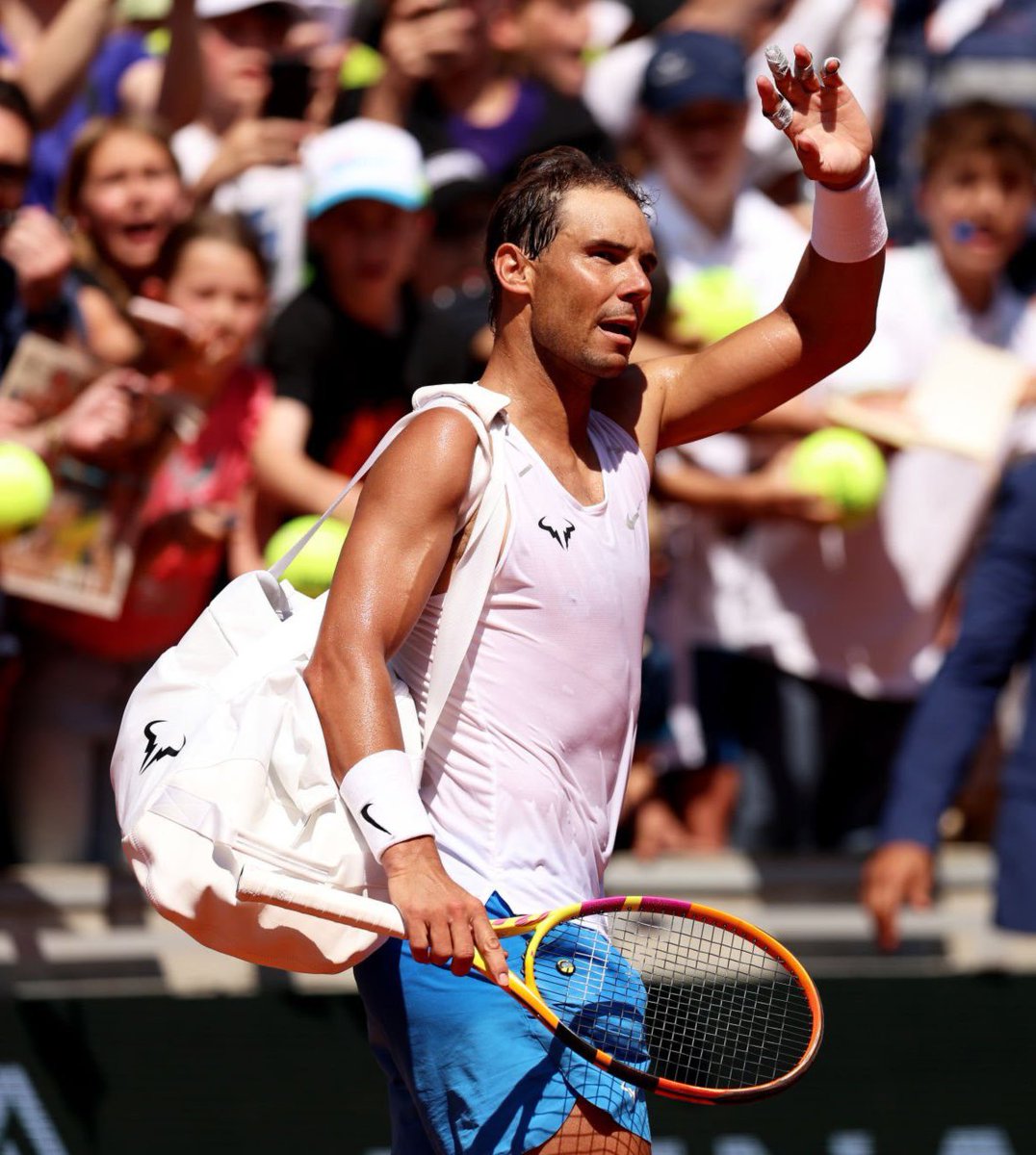
Rafa Nadal says ending his career with 25 Grand Slams instead of 22 wouldn’t make him any more satisfied or happy, ‘When it's over, you value what it's been all together, not whether it's been a little bit more’ “It is often said that if you had not been injured so much, you would have won more Grand Slams. Do you believe that?” Rafa: “Maybe, but… In the end it is obvious that I have missed out more than all my rivals, in terms of chances of winning Grand Slams, but the reality is that this has happened to me. I am never one to think 'if I had done it' or 'if I hadn't had' (those injuries) . It has been like this and, with it, I have had a career that I would never have imagined and I am more than happy. I have spoken about it with Federer recently, with Carlos (Alcaraz) and his family here one morning the other day. You want to be the best when you are in competition, because it is the nature of sport. I have wanted to be the best or at least I have wanted to try to be the best. But that has never led me to have an obsession with it. My desire has always been as a personal challenge, of wanting to be the best due to my own motivation and improvement. I believe in having a good and big ambition, but at the same time healthy. And I said it the other day speaking with Federer. Yes, it is true that when you are in the middle of the race and competing, you want to win. But you get to the end of your career and, honestly, I'm not even the slightest bit more satisfied than Federer for having 22 (Grand Slam titles) and he 20. And I don't think I'd be any more satisfied or happy if I were 25, one more than (Djokovic's) 24. I say this from the heart. Of course I'd like to be 25, without a doubt, because that's what sport is about, trying to be the best. However, when it's over, you value what it's been all together, not whether it's been a little bit more. I think you value that in the end you've managed to give your best, live, make one of your childhood hobbies a very important part of your life. And, on top of that, successfully. I feel very lucky, beyond the injuries. The fact of having had all these problems, and I mean it, has made me value at all times all the positive things that have happened to me. I think it's allowed me to enjoy it.” 🥹 Source: as.com/tenis/rafa-nad…
The Tennis Letter tweet media
English
77
364
3.7K
183.6K
Shirish Andhare
Shirish Andhare@shirishandhare·
The founder bit is an attitude. You don’t need to be a founder to turn up the founder bit. Indeed there can be actual founders who never really turn it on and are just playing the game of company. (6/6)
English
0
0
0
70
Shirish Andhare
Shirish Andhare@shirishandhare·
It is the red pill that forces you to wake up to the sometimes painful truths about the performance of your organisation, your team, and yourself, and start asking the right questions. (5/6)
English
1
0
0
74
Shirish Andhare retweetledi
Andy Murray
Andy Murray@andy_murray·
Never even liked tennis anyway.
English
12.9K
87.6K
964.1K
47.8M
Shirish Andhare retweetledi
The Tennis Letter
The Tennis Letter@TheTennisLetter·
Rafa Nadal says he’s more proud of the fact that he’s left a positive legacy as a human being than as a tennis player, ‘In some way, you can fake the crowd, you can create an image with the people who don’t know you on a daily basis, but you can’t fake an image with all the people working on the ATP Tour’ “Whether or not this is your last Roland Garros, all the fans and the players have talked about how thankful they are for what you have done for the sport. Is there anything you'd like to say to them as well?” Rafa: “No, I just can say thanks. I saw some things, I just can say thanks to all the love I received from all the players, from the organizers, from the tournaments, from all the community of tennis and sport, no? I feel very proud that probably I leave a positive legacy there. Not only about tennis. Probably about as a human being, no? So that's more important than any result at the end of the day, because the results are there, you know. That's it. The rest of the things, in some way it's something that makes me feel proud that I am going to the places and the people are happy to see me, no? I mean, you can, in some way, you can fake the crowd, you can fake the people who don't know you in a daily basis, you can create an image there, but you can't create an image with all the people that are working on a daily basis on the ATP Tour, on Roland Garros, on Rome, on Madrid, you know, on every day, people who really know who you are and who you are realistically, not like tennis player, no, like a human person. So I feel very proud and happy I am going to the places I feel the love of all the people who are involved, the tournaments behind the scenes. That's great. I don't feel that I am the player that, okay, I don't want to see him another time, no. I feel that the people who are working on the tournaments feel happy to watch me again. That's something that I enjoy.” 🥹 (via Roland Garros Press)
The Tennis Letter tweet media
English
48
88
833
63.9K
Shirish Andhare retweetledi
Tim Cook
Tim Cook@tim_cook·
Thinking of my friend Steve on his birthday — the lives he touched, the vision he shared, and the profound impact he had on our world. “We’re here to put a dent in the universe. Otherwise, why else even be here?”
Tim Cook tweet media
English
1.4K
4.9K
41.6K
2.4M
Shirish Andhare
Shirish Andhare@shirishandhare·
@sama A log cabin in a pine forest reflected on a still green lake with the reflection rippled by a landing duck.
English
0
0
0
35
Sam Altman
Sam Altman@sama·
we'd like to show you what sora can do, please reply with captions for videos you'd like to see and we'll start making some!
English
13.9K
2K
28.1K
7.2M
Shirish Andhare
Shirish Andhare@shirishandhare·
@karpathy While I’m somewhere in the middle, I love the intended spirit of this post. There’s no substitute for the “work”. Depth can be daunting. If the snack tutorials make a topic approachable and get me to wade deeper, they have met their objective. “Snackspertise” is the trap.
English
0
0
1
91
Andrej Karpathy
Andrej Karpathy@karpathy·
# on shortification of "learning" There are a lot of videos on YouTube/TikTok etc. that give the appearance of education, but if you look closely they are really just entertainment. This is very convenient for everyone involved : the people watching enjoy thinking they are learning (but actually they are just having fun). The people creating this content also enjoy it because fun has a much larger audience, fame and revenue. But as far as learning goes, this is a trap. This content is an epsilon away from watching the Bachelorette. It's like snacking on those "Garden Veggie Straws", which feel like you're eating healthy vegetables until you look at the ingredients. Learning is not supposed to be fun. It doesn't have to be actively not fun either, but the primary feeling should be that of effort. It should look a lot less like that "10 minute full body" workout from your local digital media creator and a lot more like a serious session at the gym. You want the mental equivalent of sweating. It's not that the quickie doesn't do anything, it's just that it is wildly suboptimal if you actually care to learn. I find it helpful to explicitly declare your intent up front as a sharp, binary variable in your mind. If you are consuming content: are you trying to be entertained or are you trying to learn? And if you are creating content: are you trying to entertain or are you trying to teach? You'll go down a different path in each case. Attempts to seek the stuff in between actually clamp to zero. So for those who actually want to learn. Unless you are trying to learn something narrow and specific, close those tabs with quick blog posts. Close those tabs of "Learn XYZ in 10 minutes". Consider the opportunity cost of snacking and seek the meal - the textbooks, docs, papers, manuals, longform. Allocate a 4 hour window. Don't just read, take notes, re-read, re-phrase, process, manipulate, learn. And for those actually trying to educate, please consider writing/recording longform, designed for someone to get "sweaty", especially in today's era of quantity over quality. Give someone a real workout. This is what I aspire to in my own educational work too. My audience will decrease. The ones that remain might not even like it. But at least we'll learn something.
English
667
3.3K
17K
2.2M