
Shikhar Ranjan

4.9K posts

Shikhar Ranjan banner
Shikhar Ranjan

Shikhar Ranjan

@shranjan

Marketing Professional , Passionate about Wildlife Conservation, Travel Blogger, Foodie, Musician, Feminist

Lucknow, India Katılım Eylül 2009
2.3K Takip Edilen473 Takipçiler
Shikhar Ranjan
Shikhar Ranjan@shranjan·
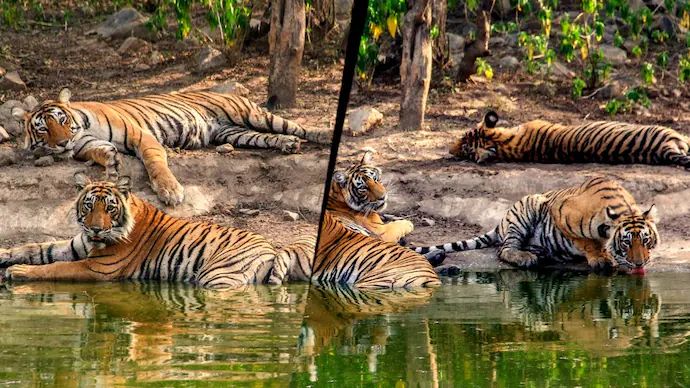
The success of Ranthambore Model has transformed Rajasthan's protected areas with now 5 tiger reserves established and local people are wanting more tiger reserves , because they have seen what Ranthambore has done for Sawai Madhopur's economy
Nature Times ( Wild India News )@WildIndiaNews

मेवाड़ को भी चाहिए टाइगर रिजर्व — ओम बिरला को सौंपा गया बड़ा ज्ञापन #indiawithnaturetimes #wildlife #ombirla #rajasthan @ombirlakota @moefcc @ntca_india @Sanjay4India1 @ForestRajasthan @DIPRRajasthan @PIBJaipur @SumitJuneja17

English
0
0
1
20
Shikhar Ranjan retweetledi
Suman Ghimire
Suman Ghimire@sumanghimire9·
Nepal is a TIGER ISLAND for the wild Royal Bengal Tiger and a hidden gem in the world of Safari Tourism. It is home to 355 wild Riyal Bengal tigers, of which 125 reside only in Bardia National Park, a must visit national park in your lifetime. # NepalTigerIseland #WildWest #BeautifulBardia #NepalLifetimeExperinces
Suman Ghimire tweet media
English
0
5
30
3K
Shikhar Ranjan retweetledi
Abhishek Dubey
Abhishek Dubey@veganabhishek·
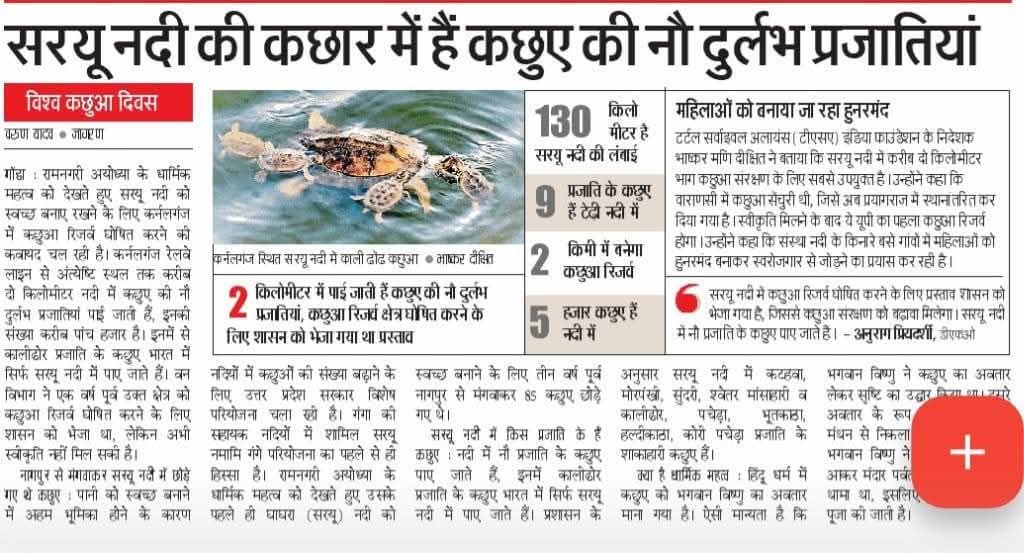
कछुओं के संरक्षण हेतु इनके अतुलनीय पर्यावास को कम्युनिटी रिजर्व बनाने के प्रयासों के लिए गोण्डा वन प्रभाग, जिला प्रशासन व @TSAINDIAPROG का धन्यवाद। @KVSinghMPGonda @KaranBhushanSi1 @PrateekBhushan @AjaySinghmla298 @DurgaShaktiIAS @dmgonda2 @CdoGonda
Abhishek Dubey tweet media
हिन्दी
0
1
5
135
Shikhar Ranjan retweetledi
Parveen Kaswan, IFS
Parveen Kaswan, IFS@ParveenKaswan·
Such wonderful news; dholes have returned to Kaziranga, with a pack recently documented in the landscape. The way conservation efforts are helping such species bounce back is truly commendable. I hope the landscapes of Northeast India and the Dooars of West Bengal emerge as leading examples of sustainable tourism and wildlife conservation.
Parveen Kaswan, IFS tweet mediaParveen Kaswan, IFS tweet mediaParveen Kaswan, IFS tweet media
English
5
52
487
8.9K
Shikhar Ranjan retweetledi
Himanta Biswa Sarma
Himanta Biswa Sarma@himantabiswa·
A silent and highly efficient predator, the Dhole once roamed freely across our forests before fading from the Kaziranga-Karbi Anglong landscape. But nature has its own way of returning. Through consistent efforts to protect and expand forest cover, strengthen habitat connectivity and free up encroached lands, we are creating conditions where wildlife can thrive again. From a lone camera trap image in 2022 to direct sightings and now confirmation of a pack in 2026, this is a powerful story of revival. The return of an apex predator like the Dhole is not just about one species. It signals a healthier ecosystem, stronger connectivity and the success of sustained conservation efforts. linkedin.com/posts/himanta-…
Himanta Biswa Sarma tweet mediaHimanta Biswa Sarma tweet mediaHimanta Biswa Sarma tweet media
English
27
326
2K
25.4K
Shikhar Ranjan retweetledi
IndiaToday
IndiaToday@IndiaToday·
𝐓𝐢𝐠𝐞𝐫𝐬 𝐮𝐧𝐝𝐞𝐫 𝐭𝐡𝐫𝐞𝐚𝐭 𝐟𝐫𝐨𝐦 𝐝𝐨𝐠𝐬? 𝐒𝐚𝐫𝐢𝐬𝐤𝐚 𝐫𝐞𝐬𝐞𝐫𝐯𝐞 𝐥𝐚𝐮𝐧𝐜𝐡𝐞𝐬 𝐜𝐚𝐧𝐢𝐧𝐞 𝐯𝐚𝐜𝐜𝐢𝐧𝐚𝐭𝐢𝐨𝐧 𝐝𝐫𝐢𝐯𝐞 Sariska forest authorities have stepped up dog surveillance and are preparing a vaccination drive against Canine Distemper Virus. The move is aimed at preventing a potentially fatal infection from reaching the reserve's growing tiger population. Read more: intdy.in/ujk7uo
IndiaToday tweet media
English
4
17
47
1.9K
Shikhar Ranjan retweetledi
IndiaToday
IndiaToday@IndiaToday·
Delhi’s extreme heatwave is now taking a deadly toll not just on people, but also on aquatic life. Hundreds of dead fish were seen floating in East Delhi’s Sanjay Lake as soaring temperatures, falling water levels and severe oxygen depletion turned the waterbody into a virtual graveyard. Locals say the lake has been drying up for months. #DelhiHeatwave #SanjayLake #ClimateCrisis #DeadFish #HeatwaveIndia #ITPhotoblog
IndiaToday tweet mediaIndiaToday tweet mediaIndiaToday tweet mediaIndiaToday tweet media
English
2
21
37
2.9K
Shikhar Ranjan retweetledi
Neha Sinha
Neha Sinha@nehaa_sinha·
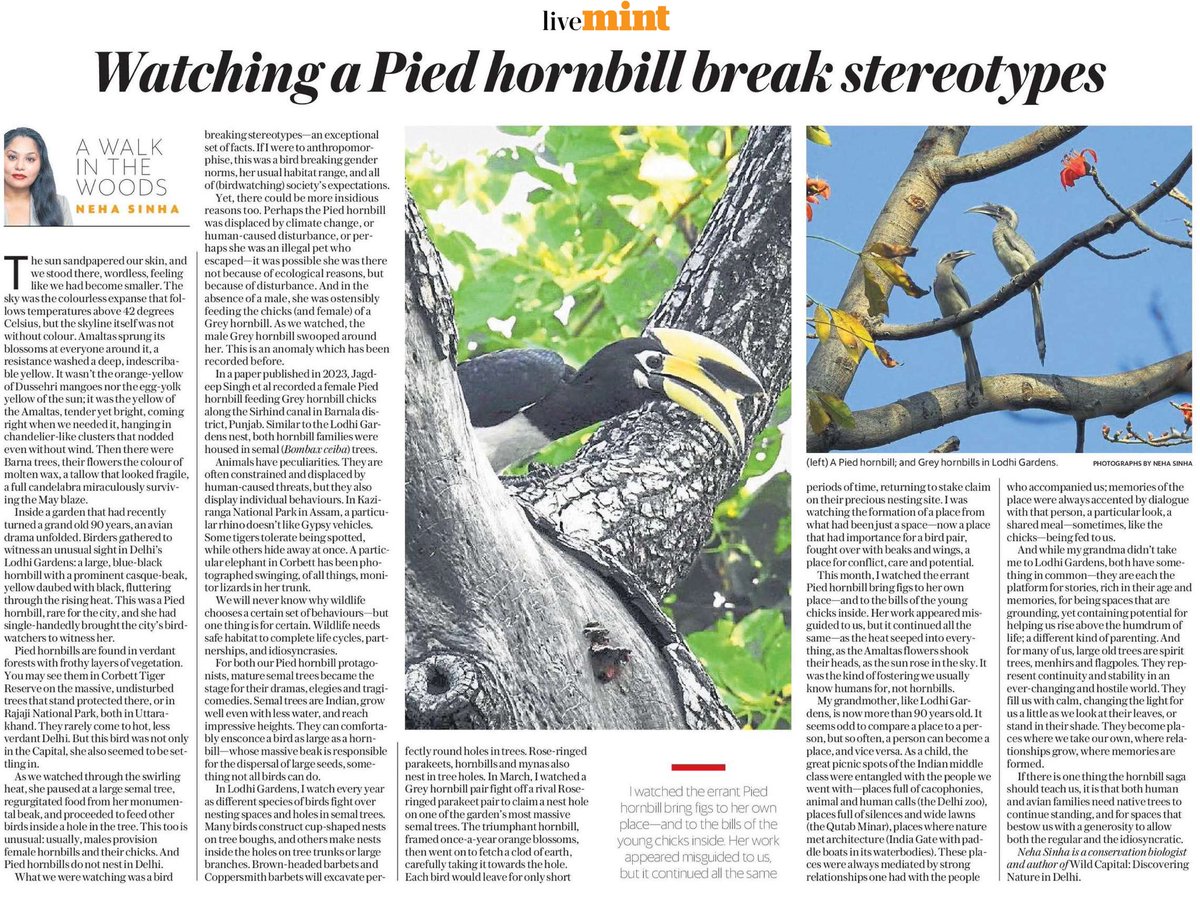
A Pied hornbill comes to Delhi. If there is one thing the hornbill saga teaches us, it is that both human and avian families need native trees to continue standing, and for spaces that are generous enough for both the regular and the idiosyncratic:
Neha Sinha tweet media
English
5
20
110
1.5K
Shikhar Ranjan retweetledi
Himanta Biswa Sarma
Himanta Biswa Sarma@himantabiswa·
Assam is a hotspot of turtles with 21 of India's 31 turtle species found in the State and temples play a major role in their conservation efforts. On #WorldTurtleDay, sharing the ground work being done by team @assamforest to protect our turtles and augment their numbers.
English
23
482
2.6K
27.4K
Shikhar Ranjan
Shikhar Ranjan@shranjan·
You can see this incredible rhino-tiger interaction in only 4 tiger reserves of India - Kaziranga, Assam - Manas, Assam - Orang, Assam - Dudhwa , Uttar Pradesh ( only a few hours away from Delhi) @DudhwaTR @uptourismgov #dudhwa #rhinos
Ramesh Pandey@rameshpandeyifs

Terai wet grasslands. The grasses are really tall and provide wonderful cover for the wildlife. This rhino is unaware of the tiger sitting in water nearby. A capture from Dudhwa. PC: Surender Kumar

English
1
3
9
258
Shikhar Ranjan retweetledi
Anshu Pragyan Das
Anshu Pragyan Das@AnshuPragyan·
Conservation is when even the unseen predator feels safe - a rare glimpse of the Leopard quietly writing its tale🍂Today, beneath a fallen tree just a few yards from the entry gate of Sanctuary, two adult Leopards were seen in silent play on either side of the trunk: one resting & the other watching 🌸 I chose not to disturb them further, for sometimes a fleeting moment of ethereality in the wild is itself a blessing🍁 📸 Anshu Das
Anshu Pragyan Das tweet mediaAnshu Pragyan Das tweet media
English
3
9
33
798
Gaurrav bhrdwj
Gaurrav bhrdwj@gaurravbhrdwj·
Today, let’s talk about an issue that hasn’t received the attention it truly deserves. In the last 5 years, in various incidents across the country, approximately 8-9 tigers and around 20 leopards have been killed or seriously injured while crossing railway tracks. Shockingly, even the injured animals were left in such a critical condition that they could not return to their wild habitat. Most of these accidents have occurred in the coal mining areas of Madhya Pradesh and the Vidarbha region of Maharashtra. Other incidents have taken place in Rajasthan, Uttarakhand, Uttar Pradesh, and a few in Karnataka resulting in the death of these carnivores or leaving them permanently disabled. Apart from big cats, elephants, sloth bears, hyena, jackal and several smaller animals have also become victims of such train accidents in Jharkhand, Assam, Odisha, and Uttarakhand. I fully agree that industrial development and progress are essential for any country to become self-reliant. However, these projects can and should be executed only after proper scientific studies and careful planning. Whenever a railway line passes through a wildlife corridor or forest area, we should construct underpasses every 200 meters. Additionally, the entire stretch of the track in the corridor should be fenced from both sides. This will prevent animals from crossing the tracks directly. A recent study on newly constructed National Highways has shown that animals have actively used elevated roads and underpasses, eventually making them a part of their natural movement. This has significantly reduced accidents. Although the Railways have introduced some innovative measures for elephant corridors, these efforts are still not enough. We cannot achieve our conservation goals until every single animal is safe. It is my sincere hope that in the coming days, this issue will be taken seriously. The Ministry of Railways should mandatorily consult wildlife experts before constructing tracks through forest areas and sincerely implement their recommendations on the ground. Only then can these magnificent creatures live safely in their natural habitats. 👉The male tiger in the video is T-40 (Bittu), who was tragically killed on 13 October 2025 after being hit by a train on the railway track passing through the Brahmapuri Forest Division Chandrapur district Maharastra. He was the son of the famous tiger Jai. Bittu was a dominant male who played a vital role in regulating the ecosystem of that region. #T40Bittu #SaveTigers #Chandrapur #TigerDeath #WildlifeConservation #StopTrainKillings
English
2
10
19
654
Shikhar Ranjan
Shikhar Ranjan@shranjan·
@gaurravbhrdwj Oh very sad , and you have raised a very relevant issue. I never knew what happened to Jai, did he die or just disappear, is it true he was the biggest tiger in central India ?
English
0
0
1
37
Nirmal Ghosh
Nirmal Ghosh@karmanomad·
@shranjan @GargiRawat @divyaspandana Agree. Again, it is a management issue IMO. (Interestingly btw, just yesterday at a Tiger Reserve, a Range Forest Officer was telling me that when tourists were told they couldn't take their mobiles into the park, many actually turned around & left)
English
1
0
1
29
Shikhar Ranjan
Shikhar Ranjan@shranjan·
@ntca_india @moefcc @byadavbjp a terrible tragedy is unfolding in Kanha TR, it is arguably India's finest tiger reserve. @DrMohanYadav51 @CMMadhyaPradesh @environment_mp @TrKanha sir please save Kanha's 100+ tigers , canine distemper can wipe out the entire population
Gaurrav bhrdwj@gaurravbhrdwj

In the last 2 months, 9 tigers in the forests of Kanha have fallen victim to death. These include Suneina tigress, Aamahi tigress and her four cubs, along with Digdola male, Mahavir male, and one Pattewala male tiger. Out of these, except for the Digdola male and the Pattewala male, all the other tigers have died after being infected with the Canine Distemper Virus. This number may appear very small at the national level, but at the park level, it is quite significant. Moreover, it serves as an indication of the potential danger that may arise in the future. The death of so many tigers within the boundaries of a single park cannot be considered a normal occurrence. The Kanha Wildlife Administration is making efforts to control the situation as per the resources available. However, if this virus continues to spread and infect more tigers in the jungle, it could turn into a highly dangerous situation. Therefore, it is essential that a one-time screening of all tigers be conducted through the concerned beat staff in the presence of the Regional Officer. If any tiger is found in a weak condition or showing symptoms, it should be immediately separated and given the required treatment. At present, the pace of vaccinating dogs should be increased, and the process of making local villagers aware should also be expedited. In our ecosystem, every carnivore is precious and forms a strong foundation of this system. Strict action must be taken on this matter without delay. #tigerdeath #caninedistempervirus #forestecology #bigcatsafety

English
0
0
1
58