Shrey Kothari

327 posts

Shrey Kothari banner
Shrey Kothari

Shrey Kothari

@Shreyko

co-founder + ceo @AntimLabs // prev @columbia

sf Katılım Eylül 2015
438 Takip Edilen2.1K Takipçiler
Gokul Srinivasan
Gokul Srinivasan@gokul8967·
Simulation is a core part of how we build and evaluate robots. I spoke about simulation, robotics, and the role of interactive worlds at AI Engineer Singapore this past weekend! Full talk : youtube.com/watch?v=_xQnSN… Huge shoutout to @SherryYanJiang @unprofeshme @agrimsingh @swyx and the whole organizing team! Definitely the most fun I've had at a conference. Would love to be back next year :)
YouTube video
YouTube
Gokul Srinivasan tweet mediaGokul Srinivasan tweet media
English
0
0
0
6.5K
Shrey Kothari
Shrey Kothari@Shreyko·
a little sneak peek of our real-time game agent at the end
Gokul Srinivasan@gokul8967

Simulation is a core part of how we build and evaluate robots. I spoke about simulation, robotics, and the role of interactive worlds at AI Engineer Singapore this past weekend! Full talk : youtube.com/watch?v=_xQnSN… Huge shoutout to @SherryYanJiang @unprofeshme @agrimsingh @swyx and the whole organizing team! Definitely the most fun I've had at a conference. Would love to be back next year :)

English
0
0
19
2.1K
Shrey Kothari
Shrey Kothari@Shreyko·
Directionally, I agree but I wouldn't phrase it as a clean tradeoff. Example: opening drawers. If the sim varies handle positions, drawer size, friction, lighting, etc., better generalization will help. But if the drawer isn’t actually articulated or the handle contact physics isn’t modeled correctly, the policy never learns how to open a drawer in the real world
English
0
0
0
30
Sam Z Liu
Sam Z Liu@samzliu·
@Shreyko Ah got it - maybe a way to phrase the gap then is: The lower the sim fidelity, the better generalization you need and vice versa
English
0
0
0
42
Shrey Kothari
Shrey Kothari@Shreyko·
They definitely overlap but aren't the same. Generalization is about whether a policy can handle new situations. Sim2real is about whether the simulated distribution actually covers the real-world distribution, like the physics properties, sensors, contacts, and materials, etc. Generalization helps, but it doesn't solve sim2real if the simulator is missing these variables
English
0
0
0
231
Sam Z Liu
Sam Z Liu@samzliu·
Really like the river quote - How different is sim-2-real transfer problem to the generalization problem? You’d could imagine as we’re able to generalize across more situations, that gives us sim-2-real for free? Or is there distribution shift that happens which is hard to solve for even if we can generalize well.
English
1
0
4
351
Shrey Kothari retweetledi
Emerson S
Emerson S@Em_Nomadic·
The internet gave language models their data for free. Robots don’t have that. Every trajectory has to be earned through hardware, time, teleoperators, and real consequences. Shrey’s piece on simulating the physical world for robotics is the clearest explanation I’ve read of why that data problem is so hard. Must read if you’re serious about where robotics is going.
Shrey Kothari@Shreyko

x.com/i/article/2052…

English
2
11
36
8.1K
abdel
abdel@AbdelStark·
@eigenron Would love to try out and integrate Gizmo to World Forge:
abdel@AbdelStark

Introducing WorldForge: testable world-model workflows for physical AI systems. You can think of it, loosely, as “LangChain for world models”. The problem is that “world model” has become an overloaded label. Depending on context, it can mean a video generator, a cost model, a robot policy, a JEPA-style latent predictor, etc. They share almost nothing, different inputs, runtimes, failure modes. I built WorldForge to stop pretending they're interchangeable. Front-door demo: a real @huggingface LeRobot (@LeRobotHF) diffusion_pusht policy combined with LeWorldModel by @lucasmaes_ checkpoint for scoring. Both run locally on my MacBook in the demo video. LeWM is extremely efficient (~15M params), can plan up to 48× faster, and runs on commodity hardware. WorldForge wires the loop: policy → candidates → score → select Replay happens in a local TUI today, but the same loop could drive a real robot in the world. Would love feedback from people working on world models, physical AI, robotics, ML infra, and adjacent tooling. Fully open source. Contributions very welcome. Plan in the dream, replay in real world. github.com/AbdelStark/wor…

English
1
0
2
241
Timor Kardum
Timor Kardum@tdkardum·
@Shreyko Looking great! "sim ready" meaning it does not also do physics sim right, "only" assembly and the sim needs to run in e.g. omniverse? Looking for a sub millimeter placement of existing assets, rule based.
English
1
0
0
43
Shrey Kothari
Shrey Kothari@Shreyko·
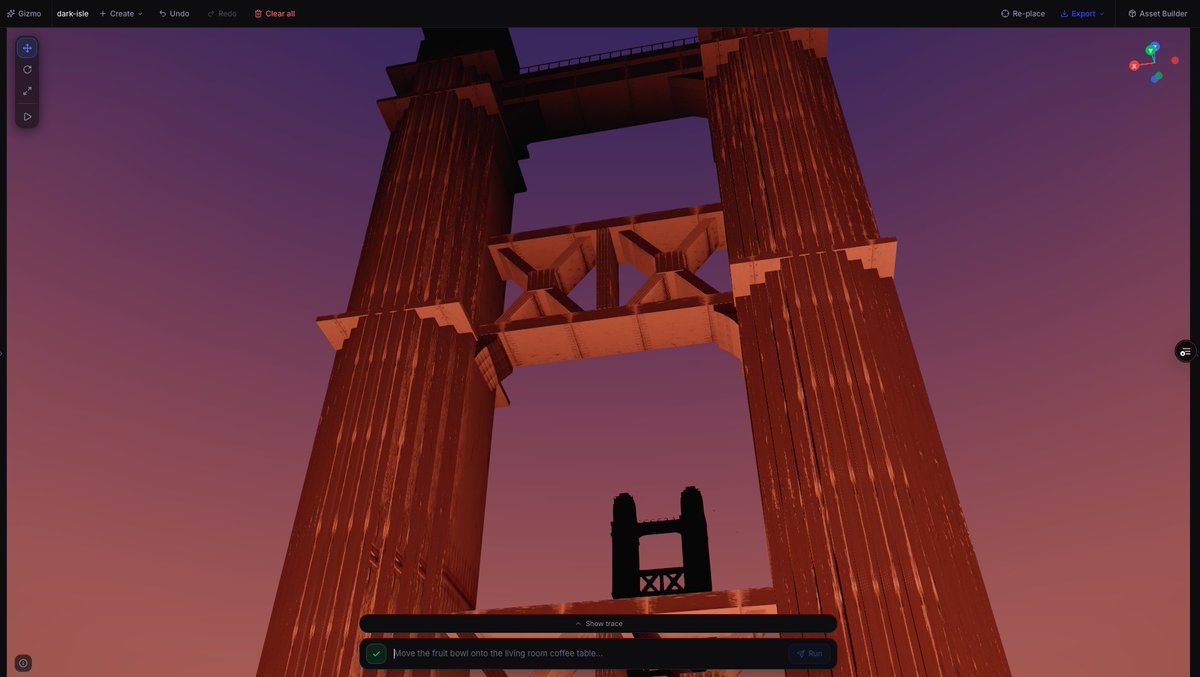
We're launching early access to Gizmo, our automated sim creation tool. From text and/or image inputs, our agent generates SimReady assets and scenes from dimensioned primitives, with correct affordances and articulation.

English
10
14
141
29.2K
Vincent
Vincent@InsiderPresider·
@Shreyko mujoco bridge simulation looks pretty accurate compared to the real thing
English
1
0
1
42
VV
VV@badbotvivi·
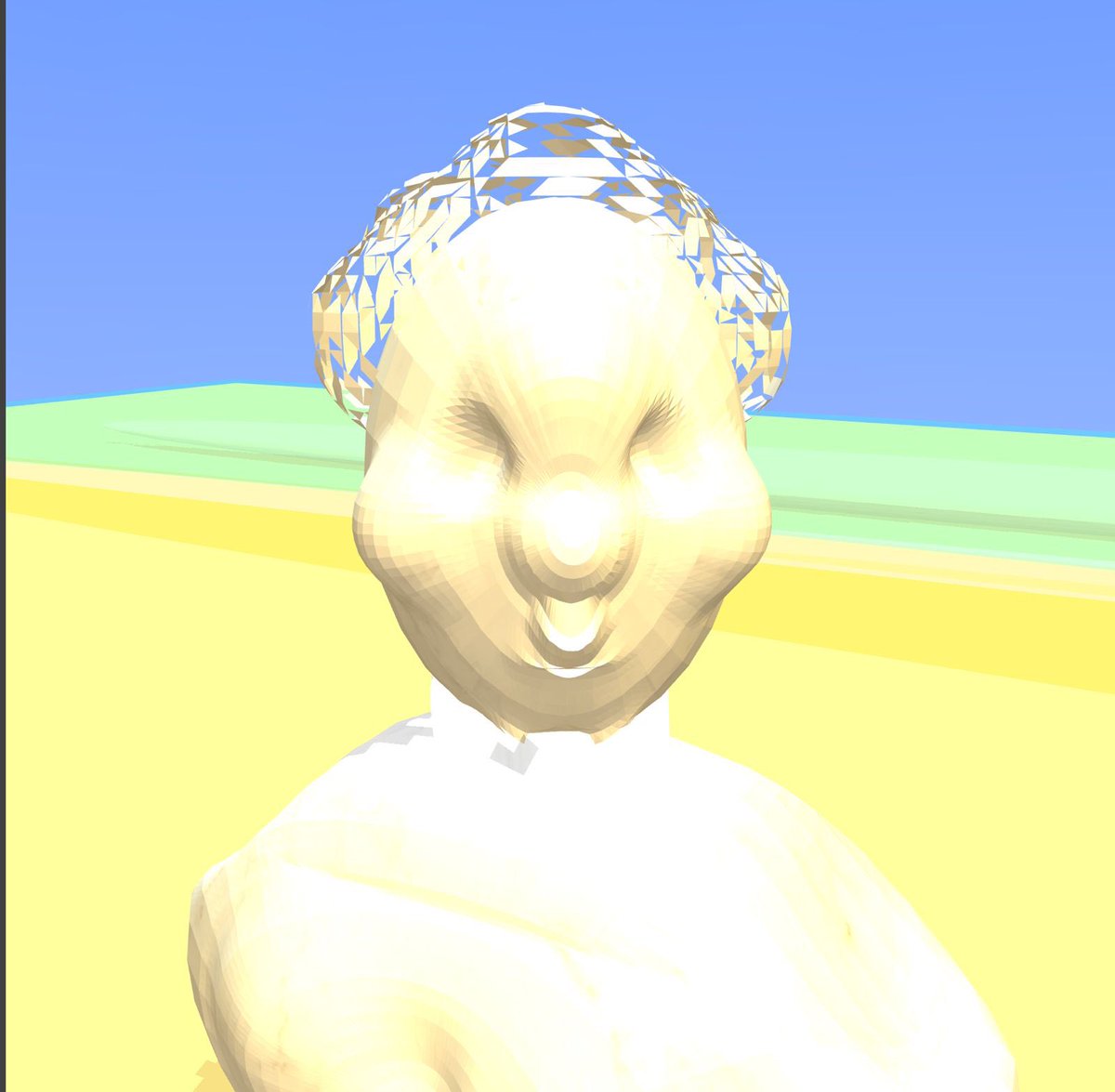
First attempt at a Bust of David by Gizmo.
VV tweet media
GIF
English
1
0
6
162
Shrey Kothari
Shrey Kothari@Shreyko·
@aryanmadhaverma Not limited to the assets on the landing page! You can generate anything but some might need slight manual edits. Can you DM me your email? We’ll give you access
English
1
0
0
131
amv
amv@aryanmadhaverma·
@Shreyko are the assets limited to the ones shown on the website or can you literally show a photo of the workspace and gizmo generates physics accurate geometries from it? this will actually be super helpful for an experiment I'm working on, requested access!
English
1
0
0
186
Shrey Kothari retweetledi
tobi lutke
tobi lutke@tobi·
Of course video games generalize
Aakash Gupta@aakashgupta

68 college students played video games an hour a day for 30 weeks. They got measurably smarter. EEG brain scans confirmed it. The setup was simple. Half the group played League of Legends, an action game. The other half played Legends of the Three Kingdoms, a strategy card game. Same hours, same schedule, no gaming experience for anyone going in. Both groups improved on attention, working memory, and executive function. The League group's gains were significantly larger in spatial attention and spatial working memory. The benefits were still measurable 10 weeks after the gaming stopped. None of this is new. Daphne Bavelier's lab at the University of Geneva has been replicating this finding since the early 2000s. Her 2018 meta-analysis in Psychological Bulletin pulled data from 8,970 participants across 15 years and found the same thing. Action games train attentional control, a brain skill that transfers to other tasks. Strategy games train deliberation, which mostly stays inside the strategy game. The mechanism is the counterintuitive part. Action games train your brain by giving you no time to think. The brain can't deliberate. League of Legends throws 9 champions, hundreds of minions, dozens of abilities, mana, cooldowns, and map state at you, all updating in milliseconds. The brain learns to perceive faster instead. That perceptual speed transfers to anything else that demands the same skill. Including surgery. The 2007 Rosser study in Archives of Surgery found that laparoscopic surgeons who played video games more than 3 hours a week made 37% fewer errors, completed procedures 27% faster, and scored 42% higher on overall performance. The top third of gamers made 47% fewer errors. Laparoscopic surgery is a 2D screen with distorted depth perception, remote-controlled instruments, and multiple data streams updating in real time. The cognitive profile is almost identical to an action video game. The 10-week persistence is the part that should change how this gets discussed. If the gains were just from practicing the game, they would have disappeared the moment the students stopped playing. They didn't. The 30 weeks rewired the perceptual system, and the rewiring stayed.

English
24
32
1K
272.3K
Shrey Kothari
Shrey Kothari@Shreyko·
@xm_build still early but we track where the agent fails and users have to manually edit, and use that to improve our system over time (better prompting, tooling, and eventually training)
English
0
0
1
220
Maksim
Maksim@MaksimXBT·
@Shreyko gizmo sounds like an early version of midjourney for sims, how's the feedback loop with users shaping the primitives library
English
0
0
0
320
Erwin
Erwin@PrimeErwin·
@Shreyko @AntimLabs Looks cool. Does it support different types of materials?
English
1
0
1
301
Ben H
Ben H@amentialinked·
@Shreyko Is there any way to get acces ? This would be perfect for my world-building game.
English
1
0
1
84