Shannon Hrudka

105 posts

Shannon Hrudka

Shannon Hrudka

@shrudka

Housing, incentives, and monetary systems. Exploring how rent, wealth, and sound money shape outcomes. Building The Wealthy Tenet.

Ontario Katılım Nisan 2012
171 Takip Edilen30 Takipçiler
Sabitlenmiş Tweet
Shannon Hrudka
Shannon Hrudka@shrudka·
For decades, housing helped ordinary people build wealth because it embedded saving into a recurring payment. Renters make recurring payments too. The Wealthy Tenet asks whether rent can be redesigned so paying for shelter also helps renters accumulate assets they own directly. wealthytenet.com
English
0
0
1
12
Shannon Hrudka
Shannon Hrudka@shrudka·
The Wealthy Tenet now has a public home. The framework explores a simple question: Can rent be redesigned so paying for shelter also helps renters accumulate assets they own directly? Not a finished answer. A framework under examination. wealthytenet.com
English
0
0
0
6
Shannon Hrudka
Shannon Hrudka@shrudka·
This is why the renter matters. If the transition begins with savings, renters need a savings mechanism too. Homeowners are pushed into asset accumulation through the mortgage structure. Renters pay for shelter, but usually build no residual asset. That gap becomes critical if monetary energy is moving into Bitcoin.
English
0
0
1
43
Leon Wankum
Leon Wankum@leonwankum·
The Transition Begins with Savings In most economies with relatively stable payment infrastructure, monetary energy does not flow through currency balances. It flows through asset markets. Households, corporations, and institutions hold wealth primarily in real estate, equities, and bonds. Partly because those assets have utility and produce cash flow, but mainly because they have absorbed monetary demand. In a world where fiat currency decays, holding money becomes a liability, and holding relatively scarce assets becomes compulsory defense. Bitcoin enters this landscape first as an escape valve for that stored monetary demand. It's monetization occurs through the extraction of the monetary premium from savings; its use as a payment infrastructure develops in parallel, as it depends on the substance of the store of value function. Trust in bitcoin today implies acceptance in the future.
Leon Wankum tweet media
English
6
14
110
6.7K
Shannon Hrudka
Shannon Hrudka@shrudka·
Here’s the short mechanics brief for anyone who wants the practical model behind the article. I’ve also included the full Wealthy Tenet Whitepaper v6.1 for readers who want the complete framework. docsend.com/view/s/tmg9dej…
English
0
0
2
30
Shannon Hrudka
Shannon Hrudka@shrudka·
@leonwankum Housing will always be constrained by economics. The challenge is aligning those constraints with human needs.
English
0
0
2
25
Leon Wankum
Leon Wankum@leonwankum·
Housing becomes a liability when it is forced to serve financial constraints before it serves human needs.
English
1
2
16
772
Shannon Hrudka
Shannon Hrudka@shrudka·
When Bitcoin is integrated into leases at the cash-flow layer, the incentive structure begins to shift. Renters gain protection against monetary debasement while gaining exposure to an absolutely scarce, globally neutral asset. Asset managers may benefit from stronger tenant balance sheets, improved retention, and more stable cash flows. Investors gain exposure to a rental ecosystem where tenant resilience becomes an asset rather than an afterthought. As housing and Bitcoin become increasingly interconnected, the distinction between renter and owner may matter less than the distinction between asset holder and non-asset holder.
English
0
0
0
36
Shannon Hrudka
Shannon Hrudka@shrudka·
Rental housing keeps getting better, but I'm not sure tenant outcomes are improving with it. Buildings today offer amenities, technology, and resident services that barely existed a generation ago. The industry has done an impressive job improving the experience of renting. But I've been wondering whether we've become so focused on improving the building that we've overlooked the financial trajectory of the people living inside it. Those aren't necessarily the same thing. What would rental housing innovation look like if it improved tenant outcomes, not just tenant experiences? That seems like an interesting question for the industry.
English
0
0
1
26
Shannon Hrudka
Shannon Hrudka@shrudka·
@KWrealtyLL Seven more years of unaffordability means seven more years where renters keep paying into shelter without building a balance sheet. That is the real structural problem. If ownership is delayed, accumulation should not be delayed with it.
English
0
0
1
27
Shannon Hrudka
Shannon Hrudka@shrudka·
This is the bridge worth exploring. If monetary demand gradually migrates away from housing and back into money itself, renters need a way to participate in that migration too. The savings function does not have to remain trapped inside physical property. The tenant may not own the building, but they can still accumulate digital property.
English
0
0
1
15
Leon Wankum
Leon Wankum@leonwankum·
Housing, Rent, and Monetary Distortion Rising rents are often interpreted as the result of landlord greed. In reality, they are the mechanical consequence of monetary distortion. As taxes, maintenance costs, insurance premiums, and other expenses rise, property owners are incentivized to pass these increases on to tenants simply to remain solvent. Rent becomes the channel through which monetary distortion is transmitted into the economy. When housing no longer carries a substantial monetary premium, this dynamic changes. Rents can reflect utility, operating costs, and risk rather than functioning as a hedge against currency depreciation. Saving can shift back into money itself. This does not eliminate the need for rent. Landlords continue to bear risk, and desirable locations remain valuable. But the persistent upward pressure driven by monetary inflation weakens, reducing the structural pressure for rents to rise relative to income. As rents normalize, housing prices can begin to realign with their underlying economic function. Decisions about whether to rent or own become lifestyle choices shaped by opportunity cost rather than defensive reactions to monetary erosion. The repricing of rent is the first step toward the broader repricing of housing. These shifts would unfold gradually. In a fiat-denominated world, rents and housing costs continue rising in nominal terms even as monetary demand gradually migrates elsewhere.
Leon Wankum tweet media
English
4
1
23
1.1K
Shannon Hrudka
Shannon Hrudka@shrudka·
The four ideologies describe how Bitcoin fits into the world. A deeper question is how the world changes once ownership itself becomes native to the internet. Many institutions were built around the assumption that property must be tied to physical assets. Bitcoin challenges that assumption. What happens when wealth accumulation and asset usage no longer need to be permanently linked?
English
0
0
2
892
Michael Saylor
Michael Saylor@saylor·
Bitcoin Capitalist: Bitcoin reaches its full potential by integrating with the global economy: currencies, credit, securities, companies, banks, institutions, governments, families, and individuals. Bitcoin is an open monetary network for everyone.
English
445
553
5.6K
318.6K
Shannon Hrudka
Shannon Hrudka@shrudka·
"It can be property for families." That line may be more important than it first appears. For most of modern history, access to property ownership and home ownership have been closely linked. Bitcoin separates those concepts. A family may not own the building they live in, but they can still accumulate property. That changes the housing conversation.
English
0
0
3
612
Shannon Hrudka
Shannon Hrudka@shrudka·
Agreed. Private property rights helped coordinate physical economies by giving people secure claims over scarce assets. Bitcoin extends that logic into the digital realm. Applied to housing, it means renters no longer need to be excluded from owning property simply because they do not own their home. They may not own the building they live in, but they can still accumulate digital property through their monthly rent payment. That may become one of Bitcoin’s most important social functions.
English
0
0
3
54
Leon Wankum
Leon Wankum@leonwankum·
The Bitcoin protocol is part of a broader shift toward digitizing and coordinating the world around us. Just as the recognition of private property rights enabled cities to form and complex economies to emerge, Bitcoin enables a new mode of economic organization in the digital realm. It provides a foundation for coordinating value exchange at global scale without centralized control.
English
1
8
36
1.5K
Shannon Hrudka
Shannon Hrudka@shrudka·
I agree. Home ownership worked partly because it forced saving. The mortgage payment turned housing into an automatic wealth-building mechanism. If many young Canadians can no longer access that mechanism, then the question becomes whether renting can be redesigned to create a similar automatic savings function. Not through a mandate and not through financial planners. But by embedding voluntary asset accumulation directly into the rent payment process. That is the basic idea behind a framework called The Wealthy Tenet.
English
0
0
2
17
Felix Vortsman CPA CA 🇮🇱🎗🏠
But that's the problem. The vast majority of young Canadians can't even afford the rent let alone have any free cash available after paying for that and their other basic human necessities. And ongoing gross lack of financial literacy skills in our country also means that those Canadians who actually do have a little bit left over for savings don't seek out Financial planners, professionals, Etc to set up those automatic savings initiatives. Ultimately most end up blowing whatever surplus cash they have on discretionary items instead. Owning real estate has been highly effective to automatically Force savings and wealth building over the long term. Problem is the vast majority of our youth can no longer afford to buy a home of their own. So that's not going to be much of an option moving forward to most young Canadians. And unfortunately not many viable alternative options exist other than seeking out the appropriate Financial planners to execute on exactly what you are proposing here which increasingly fewer and fewer young Canadians actually do
English
1
0
1
25
Ron Butler
Ron Butler@ronmortgageguy·
CMHC Becomes Canada's Biggest Source Of New Construction Rentals: It's MASSIVE It's been coming for years but it went on Steroids to the point CMHC had to throttle back recently How is this HUGE Purpose Built Rental stimulus going to play out? We're going to know damn soon
English
24
52
309
18.7K
Shannon Hrudka
Shannon Hrudka@shrudka·
I agree. A government mandate is not the answer. Financial literacy helps, but it does not solve the fact that many households have little left after rent, food, transportation, and basic needs. That is why the structure matters. If asset accumulation only happens with whatever is left at the end of the month, most households will keep falling behind. The better question is whether saving can be made automatic at the same point rent is paid, without forcing anyone to participate.
English
1
0
0
12
Felix Vortsman CPA CA 🇮🇱🎗🏠
I don't think that any level of government or political party has the appetite to mandate where people spend and invest their funds. So apart from taking measures to improve financial literacy amongst Canada's population by both the public and private sectors, we're stuck between a rock and a hard spot in this regard. However the root cause is the ongoing cost of living and lack of affordable housing crisis which will continue to prevent people for making the Investments they need to regardless. Hard to invest in anything when there's nearly nothing left at the end of the month after paying for basic human necessities. That will be an even harder nut to crack.
English
1
0
0
20
Shannon Hrudka
Shannon Hrudka@shrudka·
I agree with most of this, especially that UBI would not solve asset accumulation. Lowered expectations may be where the system is heading, but that should not be the end of the conversation. If home ownership is out of reach for many, then ownership of productive or scarce assets becomes even more important. The next question is how to make that asset-building path automatic for long-term renters.
English
1
0
1
8
Felix Vortsman CPA CA 🇮🇱🎗🏠
I wholeheartedly agree. But unfortunately where we find ourselves as a country today largely no longer makes that path feasible for most young Canadians and all Canadians who did not own substantial assets already. I personally think that ultimate the implementation of UBI at some point in the future will likely be inevitable as a result. To be clear this is not my own preferred solution. Nor will it enable substantial asset accumulation by the general population. Lowered expectations is something that most Canadians are going to have to come to terms with if no meaningful government policies and efforts exist to combat current ongoing trends. And when it comes to home ownership, I have been posting that in my views we as a nation are largely beyond the point of no return with respect to that Canadian dream for the vast majority of Canadians who are not already homeowners today.
English
1
0
0
13
Shannon Hrudka
Shannon Hrudka@shrudka·
I think this is exactly the issue. “Rent cheaper and invest the difference” works mathematically, but it fails behaviourally for a lot of households. It requires surplus cash, discipline, knowledge, and consistency over decades. Some can do it, but most cannot. If long-term renting becomes structural, renters need more than lower rent. They need an automatic path to asset accumulation inside the rental system itself.
English
1
0
1
7
Felix Vortsman CPA CA 🇮🇱🎗🏠
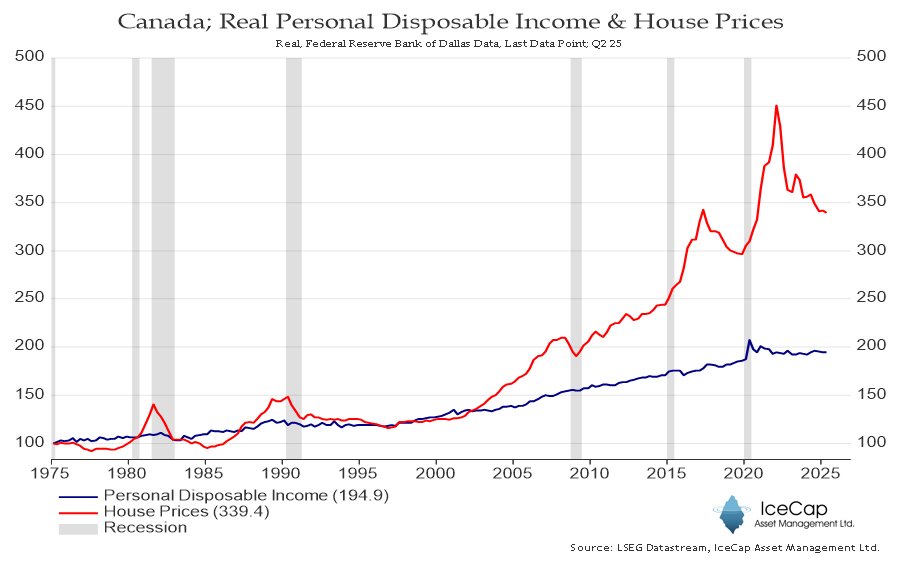
Similar trends exist in European countries as well. The vast majority of Europe's population can never hope to ever buy a home of their own and as a result general population has become and continues to be perpetual renters. Other than those lucky enough to have inherited properties they live in today or those who have been successful in generating substantial wealth for themselves. But those are outliers predominantly. There are significantly more incentives to build PBR's given current government policies in Canada versus actual homes that people can actually buy and more importantly can actually afford to carry and qualify for financing on. As for wealth building, the alternative possible solution is people paying less to rent versus carrying costs and then investing the difference in other asset classes such as the public markets. Whether the general population is disciplined enough to do exactly that or can afford to do so after paying for all their basic needs, including rent payments, food, etc is another matter altogether. One thing that is almost certain is that the gap between the Haves (those who own assets, especially income producing assets) and Have Nots will continue to widen for the foreseeable future under either scenario. Because ultimately, household incomes have not kept up with real inflation growth for decades and homes to purchase in Canada have largely been unaffordable since the year 2000 at least. It is highly unlikely that we will ever get back to cmhc own definition of home affordability being a maximum of ~3 to 4X household income ever again.
Felix Vortsman CPA CA 🇮🇱🎗🏠 tweet media
English
2
0
1
22
Shannon Hrudka
Shannon Hrudka@shrudka·
This is a strong report from @CANCEA_CA because it treats housing stability as economic infrastructure, not just shelter. One next layer worth studying is renter balance-sheet resilience. Stable housing can reduce downstream system costs. But stronger renter balance sheets may help prevent some of that instability before it appears.
English
0
0
1
28
Andy Yan | @ayan604.bsky.social
The Social Housing Dividend A remarkable study that was just released on the benefits of a properly funded and supported social housing sector Canada’s most comprehensive analysis of the economic and social impact of public housing investment here. Nearly 3:1 Cost-benefit ratio Every $1 invested delivers $2.80 in total quantified benefits (economic + social value) $50B Economic growth Generates $49.6B in new economic activity by 2050 15K Full-time jobs annually (2050) Creates 354,000 years of steady full-time work by 2050 524,000+ hospital days avoided between 2026 and 2050 52,000+ years of homelessness prevented between 2026 and 2050 $4.2B in system-wide savings Lower ER use, hospital stays, policing, and shelter demand between 2026 and 2050 #bcpoli #vanpoli #vanre gthacollaborative.ca/research
English
4
5
10
1.2K
Shannon Hrudka
Shannon Hrudka@shrudka·
@cochranenow This is an important local example of shifting housing needs. More rental supply and a better housing mix are part of the answer. But if more households are renting longer-term, housing strategy also needs to ask how renters build financial resilience while remaining renters.
English
1
0
1
13
Shannon Hrudka
Shannon Hrudka@shrudka·
This is the unresolved issue with a larger PBR future. More rental supply may help shelter affordability, but it does not automatically solve household wealth formation. If policy keeps moving Canada toward long-term renting, renters need a way to accumulate assets while remaining renters.
English
1
0
1
17
Felix Vortsman CPA CA 🇮🇱🎗🏠
Stimulating purpose built rental construction is just the government's way of attempting to save the construction industry. Without rental Construction unemployment in that sector would skyrocket. In the meantime, the government has done absolutely nothing to overhaul home construction processes to build new housing that people can actually afford to buy. This means short-term gains with respect to affordability for those looking to rent at the expense of massive long-term pains for anyone ever dreaming of buying a home of their own in our country. One thing is coming to fruition however given these developments, it is increasingly becoming clear but when it comes to housing, Canadians will continue to own nothing and expect to be happy.
English
1
0
2
258