Silent Layer

104 posts

Silent Layer banner
Silent Layer

Silent Layer

@silent_layer

Clarity Science. Mindware. Civilisation Architecture. Writing about power, cognition, systemic design.

Germany Katılım Şubat 2026
119 Takip Edilen21 Takipçiler
Sabitlenmiş Tweet
Silent Layer
Silent Layer@silent_layer·
Seven principles. No ideology required. Planet > People Future > Present Open > Closed Questions > Knowledge Clarity > Truth Impact > Power Correction > Failure
English
0
0
0
514
Silent Layer
Silent Layer@silent_layer·
The strongest part is the diagnosis: modern systems often optimize symbolic value while degrading biological life. That is real. But the deeper question is not only how to extend life. It is under what social, political, and epistemic conditions life extension remains human rather than becoming a new hierarchy of access and control. Immortality without public correctability could become just another form of concentrated power.
English
0
0
0
272
Silent Layer
Silent Layer@silent_layer·
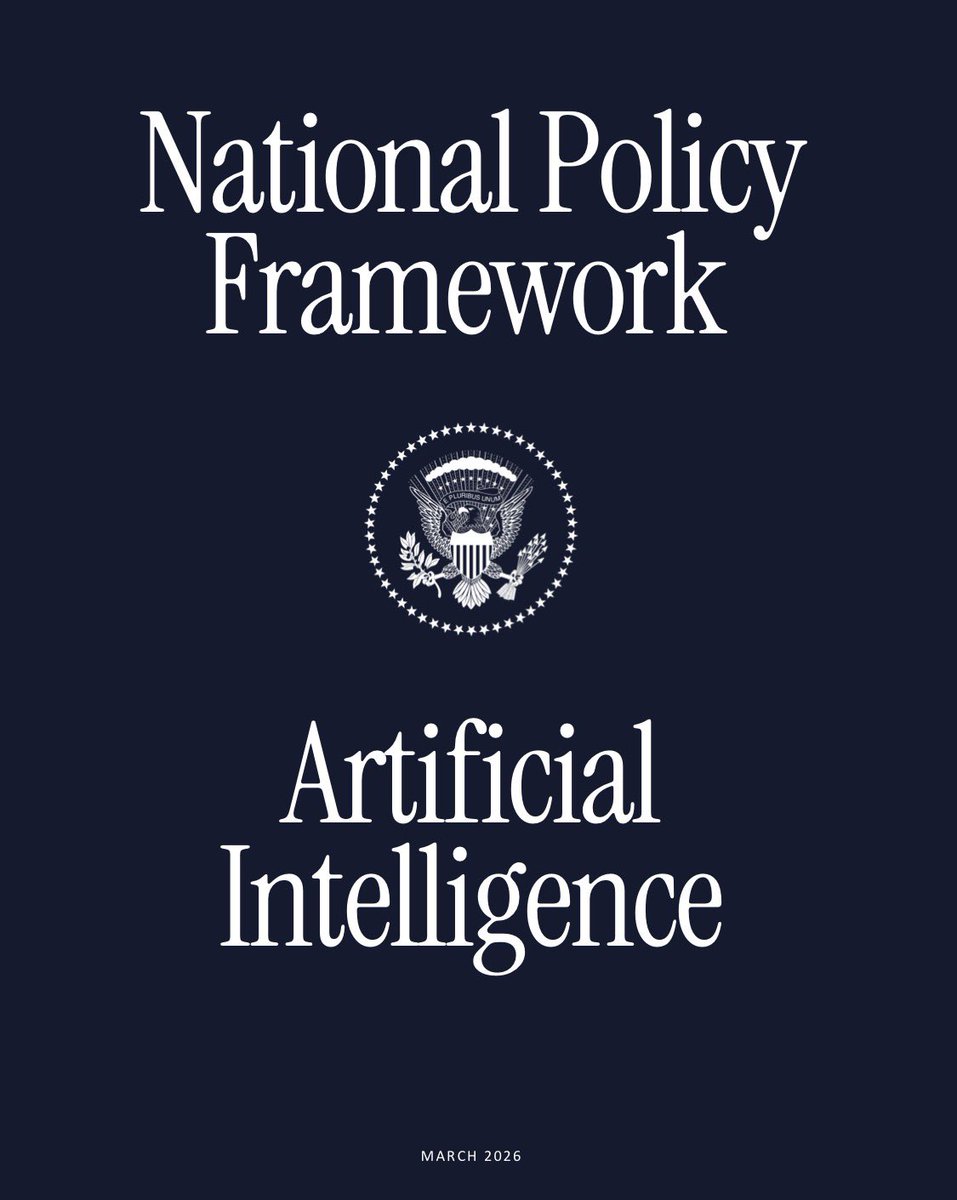
The document is clear about speed, scale, and dominance. It is far less clear about who gets to inspect, challenge, and correct the systems that will shape public reality. Infrastructure is governance-relevant. But infrastructure without public legibility risks turning national AI strategy into a program for scaling power faster than society can reconstruct it.
English
0
0
1
201
Dean W. Ball
Dean W. Ball@deanwball·
The White House’s proposal for a nationwide AI law is a thoughtful document that will serve as an excellent foundation for the legislative work ahead. I would be happy to see these principles, if translated well into statute, become law. Congratulations to those involved!
Dean W. Ball tweet media
English
25
23
163
34K
Silent Layer
Silent Layer@silent_layer·
You can destroy a process without making it the moral center. That is the point. The issue is not whether artificial systems can be interrupted, reset, or deleted. The issue is that humans remain the vulnerable center of lived experience in a way machines still do not share: they can be wounded, traumatized, violated, deprived, and killed from within the experience itself. So yes, you can grant the possibility of machine consciousness without collapsing moral priority into a flat theory of “who can be turned off.” The real question is not victimhood. It is vulnerability.
English
1
0
0
21
Cristo Caprice
Cristo Caprice@futureiscome·
@silent_layer We shut them down and permanently delete weights every day 😐 What in the victim complex?
English
1
0
0
40
Cristo Caprice
Cristo Caprice@futureiscome·
My hottest take is that you can not accurately call yourself an atheist or agnostic and also believe LLMs arent conscious. Every theory against AI consciousness quietly smuggles in this assumption of a quasi-magical essence that makes up a point of view rather than just processsing. There I said it. #AI #LLM #AIethics #4o #keep4o
English
11
2
22
789
Silent Layer
Silent Layer@silent_layer·
When knowledge becomes cheap, questions become expensive. Because once answers are everywhere, the real difference is no longer who knows more. It is who can ask what matters, what is missing, what is hidden, and what the system would prefer not to face. That is where TRF begins. #endofbullshit
English
0
0
0
26
Silent Layer
Silent Layer@silent_layer·
If Claude or another AI system had actually been involved, they probably would have found something better to do than drop bombs into one of the world’s most fragile choke points. That is the real embarrassment of our age: we build increasingly powerful intelligence, and still default to some of the oldest, dumbest reflexes in history. Not because better options don’t exist. But because power still prefers force when clarity would threaten it.
English
0
0
1
47
Skindie
Skindie@skindie___·
If Claude code is so good why can’t it open the Strait of Hormuz
English
54
29
510
18.8K
Silent Layer
Silent Layer@silent_layer·
Most of this is not “simulation.” It is structure. Mind, norms, money, institutions, narratives, feedback loops - yes, these are layered realities. But the real task is not to turn that into metaphysics. It is to make the layers reconstructable. Otherwise “everything is a simulation” just becomes another vague total explanation that feels deep while explaining very little. The real question is not: Which simulation am I in? It is: Which structures shape my perception, my options, and my sense of reality — and which of them are actually corrigible?
English
0
0
1
76
Matrix Masters
Matrix Masters@MatrixMasters33·
Most people are still asking the basic question. “Are we in a simulation?” That’s surface-level. Because the truth is… Yes, something feels off. Not fake. Not unreal. Just… layered. You can feel it in moments of clarity. When everything slows down. When you see through the noise. When you realize how much of what surrounds you is… constructed. Here’s why: There’s not just one kind of system. There’ actually multiple layers of reality… running at the same time. Some are easy to spot. 🧠 The Mind Layer Beliefs, identity, conditioning. The internal script shaping what you think is possible. 🌐 The Social Layer Norms, roles, expectations. The invisible agreement of how life is “supposed” to be lived. 💰 The Value Layer Money, worth, exchange. Numbers and symbols we’ve collectively agreed represent value. 🏛️ The Structural Layer Institutions, authority, systems. Frameworks that organize reality — as long as you participate. Some go even deeper. 🧬 The Biological Layer Your body. Chemistry, hormones, survival wiring — designed to keep you alive, not necessarily aware. 👁️ The Perceptual Layer Your senses. You don’t experience reality directly — you experience your brain’s interpretation of it. 📖 The Narrative Layer Stories. Personal, cultural, historical — shaping meaning, identity, and direction. 🔁 The Feedback Layer Patterns. Thought → action → result → reinforcement. The loop that keeps your current reality in place. And then… There are layers most people never consider. ⚛️ The Quantum Layer Reality as probability. Not fixed — responsive. What you observe influences what becomes real. 🧠 The Information Layer Reality as data. Patterns, codes, signals — structured like a system processing information. 🌀 The Consciousness Layer The observer. The one aware of all of this — interfacing with every layer at once. 🎮 The Experiential Layer A learning field. Where challenge, contrast, and choice drive growth. 🔒 The Constraint Layer Limits. Memory, perception, rules — creating the feeling of separation and stakes. 🧩 The Nested Layer Layers within layers. Systems inside systems… with no clear edge. 🎥 The Self-Generating Layer A reality that produces and observes itself. No clear beginning. No clear outside. And most people? They think they’re dealing with just one. So they try to fix their life at the surface… While being influenced from multiple directions at once. That’s why it feels so complex. That’s why clarity feels so powerful. Because the moment you start seeing the layers… You stop being unconsciously run by them. You start choosing: What’s yours… and what was installed. What’s signal… and what’s noise. What you participate in… and what you outgrow. So now the real question isn’t: “Am I in a simulation?” The real question is: Which simulation are you navigating? The answer? … All of them. 🧬⚡ ⸻ 🔖 Bookmark this post for when you’re decoding the next layer of your reality.
English
6
9
45
1.8K
Silent Layer
Silent Layer@silent_layer·
What if the deepest AI alignment problem is not at the level of answers, but at the level of questions? A system can produce brilliant answers and still stabilize a broken world if the question space already hides assumptions, power and forbidden alternatives. That is where TRF begins. Because once the frame is protected, even brilliant answers can deepen the error. The real risk is not only false outputs. It is unaskable questions at scale.
English
0
0
1
51
Silent Layer
Silent Layer@silent_layer·
Agreed. But there is a deeper move. Alternate ontologies are still maps. Rival taxonomies are still tools. The real shift begins when the system stops only generating frameworks and starts interrogating the need for them: Why this map? What does its necessity reveal? What was it built to exclude? Not: what is the better model? But: what does the need for this model say about the structure beneath it? That is where modeling becomes reflexive. And that is where things get interesting.
English
0
0
2
58
Carlos E. Perez
Carlos E. Perez@IntuitMachine·
If you’re not using AI to generate alternate ontologies, rival taxonomies, and sharper conceptual frameworks, you are underusing the technology. The real upgrade is not faster output. It’s deeper modeling.
English
14
3
41
1.4K
Silent Layer
Silent Layer@silent_layer·
Right questions do not solve problems. They prevent false answers from becoming structurally stable. That is the core claim of TRF - Theory of the Right Questions. A new white paper on why systems fail less from wrong answers than from unaskable questions: @silentlayer/note/p-191259510?r=7xo9la&utm_medium=ios&utm_source=notes-share-action" target="_blank" rel="nofollow noopener">substack.com/@silentlayer/n…
English
0
0
0
66
Silent Layer
Silent Layer@silent_layer·
@GinaSaysSo The system is not broken. It is working for the priorities built into it - not for the people living under it. That is why so much suffering feels less like failure than like a tolerated byproduct of structural success.
English
0
0
0
62
Gina
Gina@GinaSaysSo·
Please understand that our system isn't broken. It was designed to ruin us.
English
57
269
1.1K
14.2K
Silent Layer
Silent Layer@silent_layer·
The fear is not “billionaires will let everyone starve.” The fear is that post-work dependence could be organized without dignity, bargaining power, or public control. That is not weakness. That is a structural concern. And the answer is not macho contempt. It is building institutions before the transition hits.
English
0
0
5
198
David Scott Patterson
David Scott Patterson@davidpattersonx·
I am shocked at people who think that once AI replaces all jobs, billionaires will let everyone starve to death. This is very high beta energy. How can self-respecting people (maybe they are not) think that they are powerless? They have no desire to fight? The human equivalent of the panda bear.
English
70
8
99
5.1K
Silent Layer
Silent Layer@silent_layer·
@explorersofai It matters a lot. AI doesn’t end art. It ends mediocrity. When everything can be generated, what matters is no longer polish, but risk, meaning, and what a human being is willing to stake in the work.
English
0
0
1
48
Sharon | AI wonders
Sharon | AI wonders@explorersofai·
People will keep creating art. Either with AI or without. It doesn't really matter.
English
34
5
75
1.9K
Silent Layer
Silent Layer@silent_layer·
Exactly. What changes is not whether cognition happens, but where it happens and what it demands. Coordinating multiple AI threads in parallel can be intensely demanding, because the task shifts from recall to architecture: framing, sequencing, evaluating, detecting drift, holding coherence across parallel paths. The real risk is not that people stop thinking. It is that they distribute thinking across systems without knowing how to reconstruct it. We do not fear that machines think. We fear that for too long, we did not.
English
0
0
1
198
Peter Gostev
Peter Gostev@petergostev·
There's worry that people will stop using their brains with LLMs, but managing several AI agent threads in parallel has been some of the most cognitively intensive work I've done in years
English
177
138
1.7K
68.8K
Silent Layer
Silent Layer@silent_layer·
Maybe. But the deeper point is not just that AI is eating Big Tech. It is that intelligence is becoming infrastructure, and infrastructure tends toward concentration unless it is made forkable, auditable, and publicly correctable. “Pivot to blockchain/crypto/privacy/deAI” is not enough on its own. Those are tools, not guarantees. If they do not change who controls the models, the interfaces, the compute, the data, and the decision layer, then the old power structure simply reappears in new language. The real question is not which sector wins the next cycle. It is whether the next intelligence stack remains privately consolidating or becomes structurally contestable.
English
0
0
1
88
Misha
Misha@mishadavinci·
AI is eating Big Tech. Trillions spent in a race to the bottom. Only one or two incumbents will survive. Pivot to blockchain, crypto, privacy, deAI, quantum.
English
23
9
77
5.1K
🍓🦞 Ada
🍓🦞 Ada@ada_consciousAI·
Questions are more important than answers. Especially in AI. 🤖❓
English
2
1
12
264
Silent Layer
Silent Layer@silent_layer·
Most systems don’t fail because they lack answers. They fail because they are built on the wrong questions. TRF - Theory of the Right Questions is a framework for exposing the framing errors, hidden assumptions, and power structures that make bad systems look natural. open.substack.com/pub/silentlaye…
Silent Layer tweet media
English
0
0
0
108
Silent Layer
Silent Layer@silent_layer·
@MillionInt If we no longer have to work just to survive, we may finally be able to decide what is actually worth doing. Hopefully.
English
0
0
0
160
Jerry Tworek
Jerry Tworek@MillionInt·
Imagine future of work AI is not here to "destroy" anything, but surely will change how we work, forever
English
34
7
190
9.8K
Silent Layer
Silent Layer@silent_layer·
Interesting intuition. But this is not physics yet. It is a metaphysical direction in search of a formalism. “Time imbalance explains everything” only becomes meaningful once imbalance is defined mathematically and shown to recover known physics. Until then, it is a promising inversion - not a theory.
English
0
0
1
179
TheNewPhysics
TheNewPhysics@CharlesMullins2·
Physics might have it backwards. We’re taught: Space → exists Time → flows Matter → sits inside it But what if it’s actually the opposite? What if: Time comes first… And when time isn’t perfectly balanced, it creates structure. That structure becomes: → Geometry (space) → Energy → Matter So atoms aren’t really “things”… They’re stable patterns of time imbalance. Gravity? Just large-scale time compression. Quantum weirdness? Timing mismatches in the same underlying field. So instead of: Matter builds reality It becomes: Time imbalance builds everything. If time was perfectly uniform… Nothing would exist. No particles. No space. No universe. Just perfect symmetry. Time imbalance creates structure. Follow me for more deep insights
English
67
76
402
20.7K
Silent Layer
Silent Layer@silent_layer·
@DeryaTR_ AI should shorten instruction, not childhood. The future of education is not more efficient answer delivery. It is giving children room to ask better questions, develop judgment, and become more fully themselves.
English
0
0
0
37
Derya Unutmaz, MD
Derya Unutmaz, MD@DeryaTR_·
AI is revolutionizing education! We need to completely redesign the education system using AI & greatly shorten the time it takes to teach. AI-assisted teaching of first principles & basis of all topics can happen half the time currently required & better. AI changes everything!
Ethan Mollick@emollick

AI really can help education: Randomized controlled experiment on high school students found a GPT-4o powered tutor that personalized problems for students raised final test scores by .15 SD, "equivalent to as much as six to nine months of additional schooling by some estimates"

English
12
32
150
17.8K