
sim hassan retweetledi
sim hassan
164 posts


@k_bediako1 @ghonetv You think the zongos dont have well educated people who may be willing to teach for free? I am proud to inform you i will gladly accept to teach for free where we were raised.
#ProudSon441&Nima
English

@ghonetv Pity for the teachers that will be employ there 😂😂😂💔💔💔😭😭😭
English

Government to build a Community Day Senior High School in Nima and Kasoa... - Haruna Iddrisu (Education Minister)
#GHOneNews #EIBNetwork
#GHOneTV #NewsAlert

English
sim hassan retweetledi

"Never stop talking about Dr. Hussam Abu Safieh. Repost."

English
sim hassan retweetledi

Saw this somewhere and I’m reposting because I support the message.
Football is one of the very few activities that unites us a people. We shouldn’t ruin it for the interest of a select few.
If you agree, save the poster and repost with #KurtOkrakuOut

English
sim hassan retweetledi


sim hassan retweetledi


@Waspapping_ Only to be cursed for S*X while men get 72 virgins😭😭😭.
Sahih Muslim 1436d
When a man invites his wife to his bed and she does not come, and he (the husband) spends the night being angry with her, the angels curse her until morning.
English
@CoachOpeele The fact that he scored doesn't mean his stats weren't poor. In fact, I hope the coach plays opoku and oppong in our next game against columbia.
English
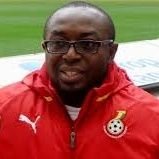
Ghana media: GFA has called Derrick Luckassen who has had 12 red cards in his career
Luckassen starts and scores! Football is funny lol

English
sim hassan retweetledi

@OfficialSitso Our players should be told to make good use of VAR. We could have gotten 2 penalties from our 2 matches.
English

sim hassan retweetledi

sim hassan retweetledi

A heartwarming video currently circulating on Facebook captures a young boy beautifully reciting the Holy Qur'an to his fellow students with exceptional confidence, calmness, and humility. Despite his young age, his melodious voice, flawless recitation, and deep concentration have amazed many people.
The video is a powerful reminder that when children are raised with the Qur'an, they grow with faith, discipline, and noble character. It has inspired countless viewers and highlights the importance of teaching and nurturing the love of the Qur'an from an early age.
May Allah (SWT) preserve this young boy, increase him in knowledge and wisdom, make the Qur'an the light of his heart, and grant all Muslim children the love and understanding of His Book. Ameen 🤲🏼
English
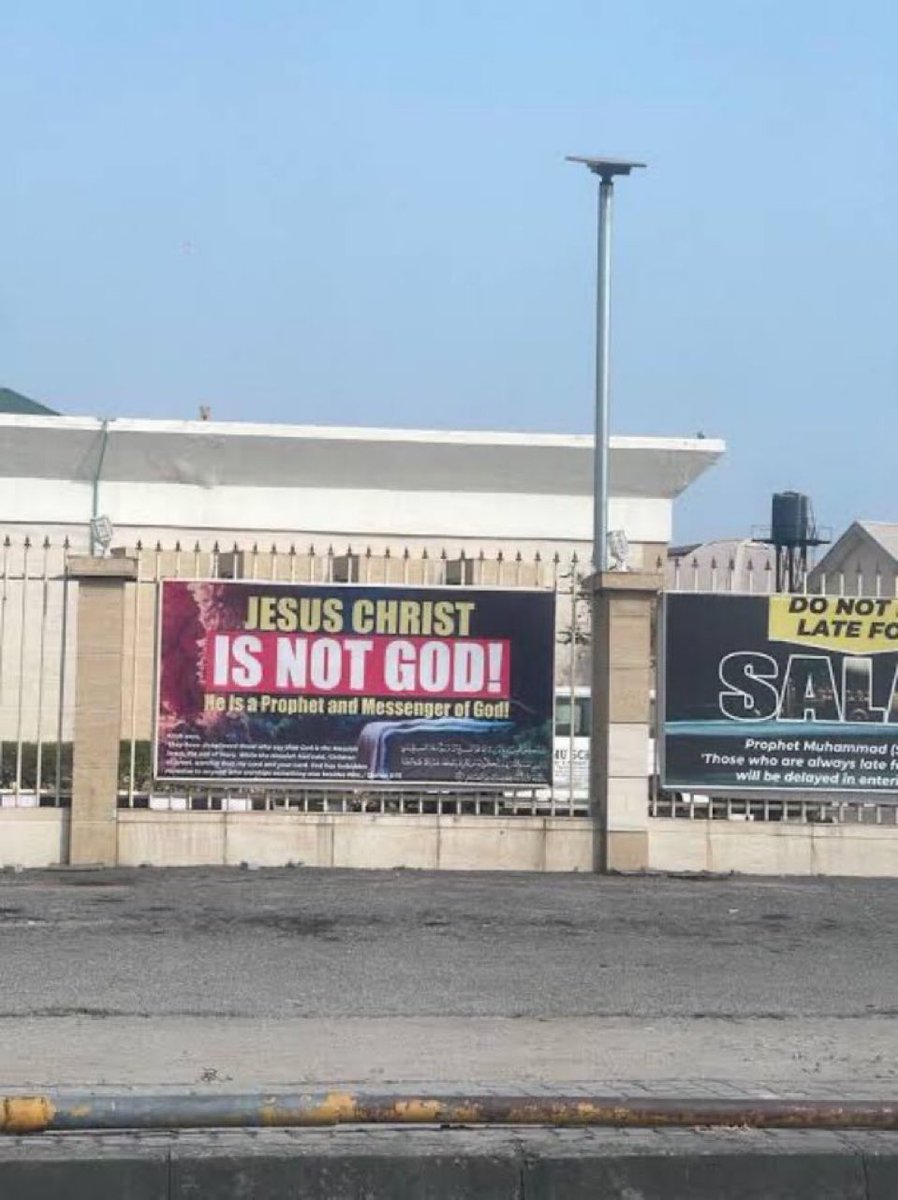
@Danielsavage77 @AfricaFirsts Stop the hate. We Ghanaians are civilised. Come to Ghana and see how Muslims and Christians mingle with each other. There are churches in Ghana that also use mosque premises for their functions and worship.
English
@_KofiBoat This is obviously fake..Clement Apak for Eric Opoku? Are you serious ?
English


sim hassan retweetledi

1. Battle of Badr
Muslims: 313
Quraysh: 950–1000
2. Battle of Uhud
Muslims: 700
Quraysh: 3000
3. Battle of Khandaq (Ahzab)
Muslims: 3000
Quraysh & Allies: ~10,000
4. Battle of Mu’ta
Muslims: ~3000
Romans & Ghassanids: ~200,000
5. Battle of Hunayn
Muslims: 12,000
Hawazin & Thaqif: ~20,000
6. Battle of Yarmouk
Muslims: ~40,000
Romans: ~200,000
7. Battle of Qadisiyyah
Muslims: ~30,000
Sassanids: 120,000+
8. Battle of Nahavand
Muslims: ~30,000
Persians: ~150,000
9. Conquest of al-Andalus
Muslims: 12,000
Visigoths: ~100,000
“How many a small group has overcome a mighty army by Allah’s permission. And Allah is with the patient.”
— Surah al-Baqarah (2:249)

English
sim hassan retweetledi
✨You’ve seen this in every math class:
sin(a ± b) = sin a cos b ± cos a sin b
sin(2a) = 2 sin a cos a
cos(2a) = 1 − 2 sin²(a)
🚨But did you know these formulae came from a Muslim scholar 1000 years ago?
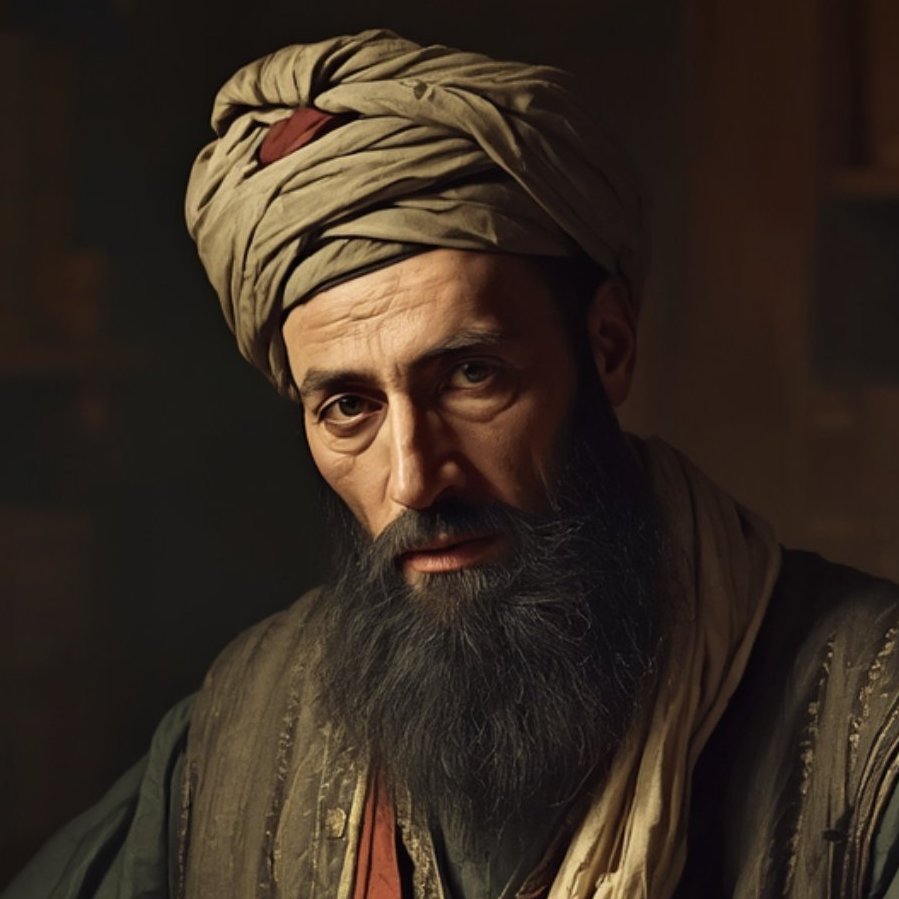
Meet Abū al-Wafā al-Būzjānī, the genius who shaped Trigonometry. 📐
Abū al-Wafā Būzhjānī (d. 998) was a Persian Muslim mathematician and astronomer from Khorasan. Born in Būzjān (near Nishapur, Iran), Būzhjānī showed early brilliance in mathematics and geometry.
He later moved to Baghdad, then the heart of the Islamic Golden Age, a city of scholars, libraries, and observatories.
In Baghdad, he became one of the leading scientists of the House of Wisdom (Bayt al-Ḥikmah). Here, he studied Greek works like Euclid and Ptolemy, and expanded them far beyond their original limits.
📐 His Contributions to Mathematics:
He established several trigonometric identities such as [sin(a±b)] in their modern form:
{sin(α ± β)= Sinα Cosβ ± Cosα Sinβ}
{sin(a + b) = Sin(a)Cos(b) + Cos(a)Sin(b)}
{Cos(2a) = 1-2sin²(a)}
{Sin(2a) = 2Sin(a) Cos(a)}
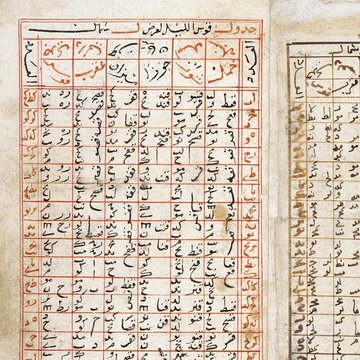
He compiled tables of sines and tangents at 15° intervals, introduced secant and cosecant, and explored the relationships between all six trigonometric lines. His work made both mathematics and astronomy quantitatively precise.
He also studied geometry, arithmetic, and number theory, writing detailed commentaries on al-Khwārizmī and Diophantus.
Some sources suggest that he introduced the tangent function, although other sources give the credit for this innovation to al-Marwazi.
🌌 His Work in Astronomy:
Abū al-Wafā designed and built a wall quadrant, a large, fixed instrument used to measure celestial altitudes with remarkable accuracy.
This invention influenced later observatories across the Islamic world.
His masterpiece, Kitāb al-Majisṭī (“The Almagest”), improved upon Ptolemy’s astronomy, described planetary motion, and developed mathematical methods for finding the Qibla direction, the direction of prayer. 🕌
In 997, he participated in an experiment to determine the difference in local time between his location, Baghdad, and that of al-Biruni (who was living in Kath, Uzbekistan).
Their result was astonishingly accurate, within about 1 hour of modern calculations. ⏱️
English
@chrismramsey @AllahGreatQuran Your Little mind can't even comprehend. Not your fault. Your language is so deficient in literacy. That's why the devil in you is different from Lucifer.
English

sim hassan retweetledi

sim hassan retweetledi

When humans stayed silent, an animal showed humanity ..
English