Sabitlenmiş Tweet
Ambuj 🇮🇳
1.1K posts


Ambuj 🇮🇳 retweetledi

New blackboard lecture w @ericjang11
He walks through how to build AlphaGo from scratch, but with modern AI tools.
Sometimes you understand the future better by stepping backward. AlphaGo is still the cleanest worked example of the primitives of intelligence: search, learning from experience, and self-play. You have to go back to 2017 to get insight into how the more general AIs of the future might learn.
Once he explained how AlphaGo works, it gave us the context to have a discussion about how RL works in LLMs and how it could work better – naive policy gradient RL has to figure out which of the 100k+ tokens in your trajectory actually got you the right answer, while AlphaGo’s MCTS suggests a strictly better action every single move, giving you a training target that sidesteps the credit assignment problem. The way humans learn is surely closer to the second.
Eric also kickstarted an Autoresearch loop on his project. And it was very interesting to discuss which parts of AI research LLMs can already automate pretty well (implementing and running experiments, optimizing hyperparameters) and which they still struggle with (choosing the right question to investigate next, escaping research dead ends). Informative to all the recent discussion about when we should expect an intelligence explosion, and what it would look like from the inside.
Timestamps:
0:00:00 – Basics of Go
0:08:06 – Monte Carlo Tree Search
0:31:53 – What the neural network does
1:00:22 – Self-play
1:25:27 – Alternative RL approaches
1:45:36 – Why doesn’t MCTS work for LLMs
2:00:58 – Off-policy training
2:11:51 – RL is even more information inefficient than you thought
2:22:05 – Automated AI researchers
English
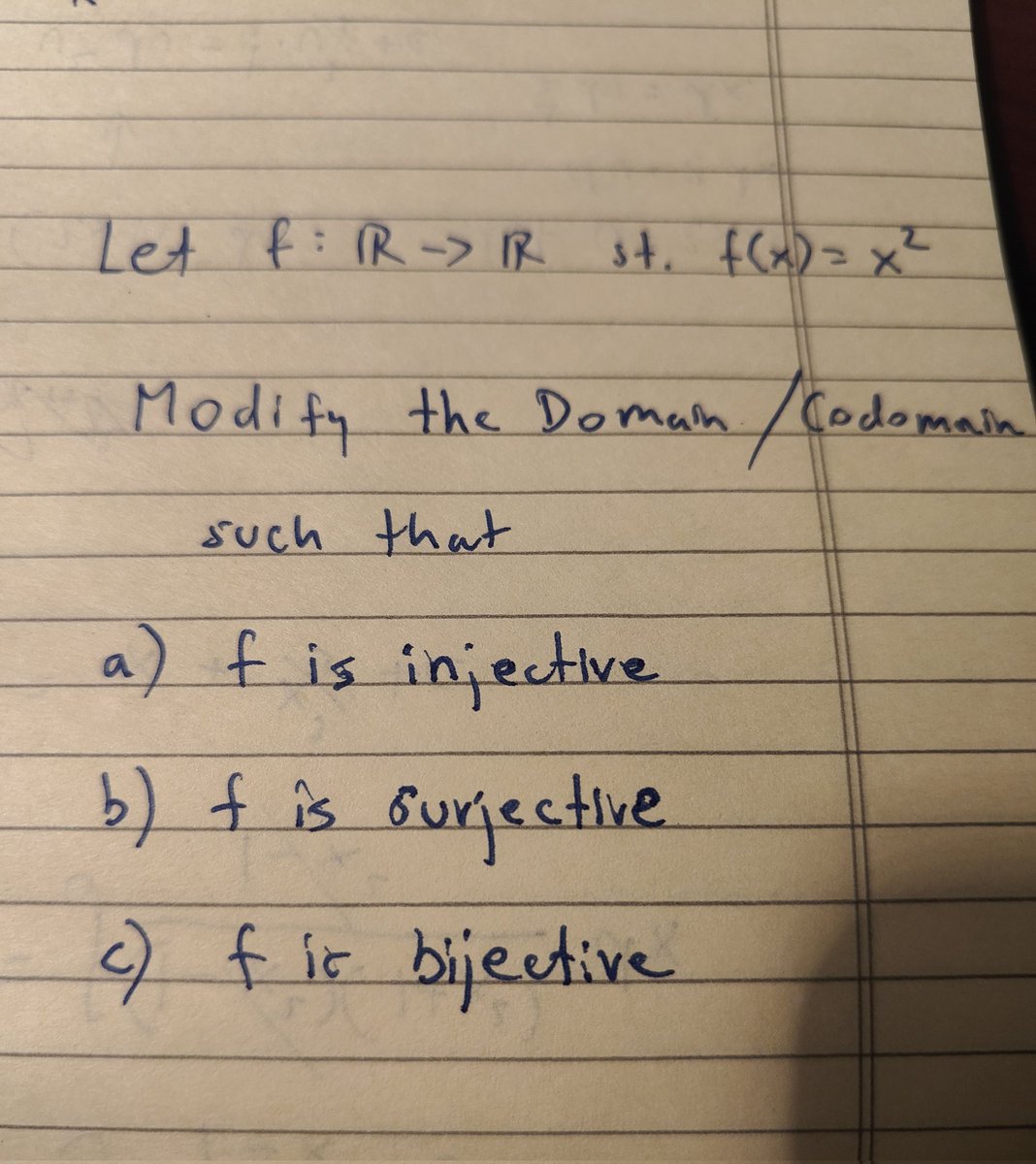
@martinmrmar 1. Injective : let's take f(2) we get 4 and for f(-2) also we get 4 so it's violating Injective property so, domian non negative satisfies.
2. Surjective: There will value in codomain like -2 but there will is no real value x with x^2=-2. So, make codomain +ve only.
English


@singhambuj20 DMing the sheet!
Will also send over a few personal rec's :)
English

Ambuj 🇮🇳 retweetledi

Advanced Agni missile with MIRV (Multiple Independently Targeted Re-Entry Vehicle) system was successfully tested from Dr. APJ Abdul Kalam Island, Odisha on 08th May 2026.
The missile was flight tested with Multiple payloads, targeted to different targets spatially distributed over a large geographical area in Indian Ocean Region.

English
Ambuj 🇮🇳 retweetledi

A year ago, during #OperationSindoor, our armed forces showcased their valour and gave a firm response to those who attacked our people. Every Indian is proud of our armed forces. As a mark of respect to our forces and their success during #OperationSindoor, let us all change our display pictures on social media, including X, Facebook, Instagram and WhatsApp to the picture shared below.

English
@AxlerLinear Oh so sir you are the one who wrote that masterpiece. Today I saw you too!
English
@dahi_kachorie @IndianTechGuide Really? Come out of your 2021-22 bubble. Normal web dev skills ain't cutting it anymore, expectations are insane, and even seniors are struggling. You're the one in delulu if you think grinding LeetCode and other things like earlier ,will magically land you a job. Touch grass!
English

@IndianTechGuide Because nearly 90% of them don't have skills to even qualify for those placement exams, only a significant no. of students have good communication skills even if they are technically good but still get sorted out.
English

🚨 Nearly 85% of engineering students in India do not receive placement offers after graduating.
(Unstop Talent Report)
English
Ambuj 🇮🇳 retweetledi
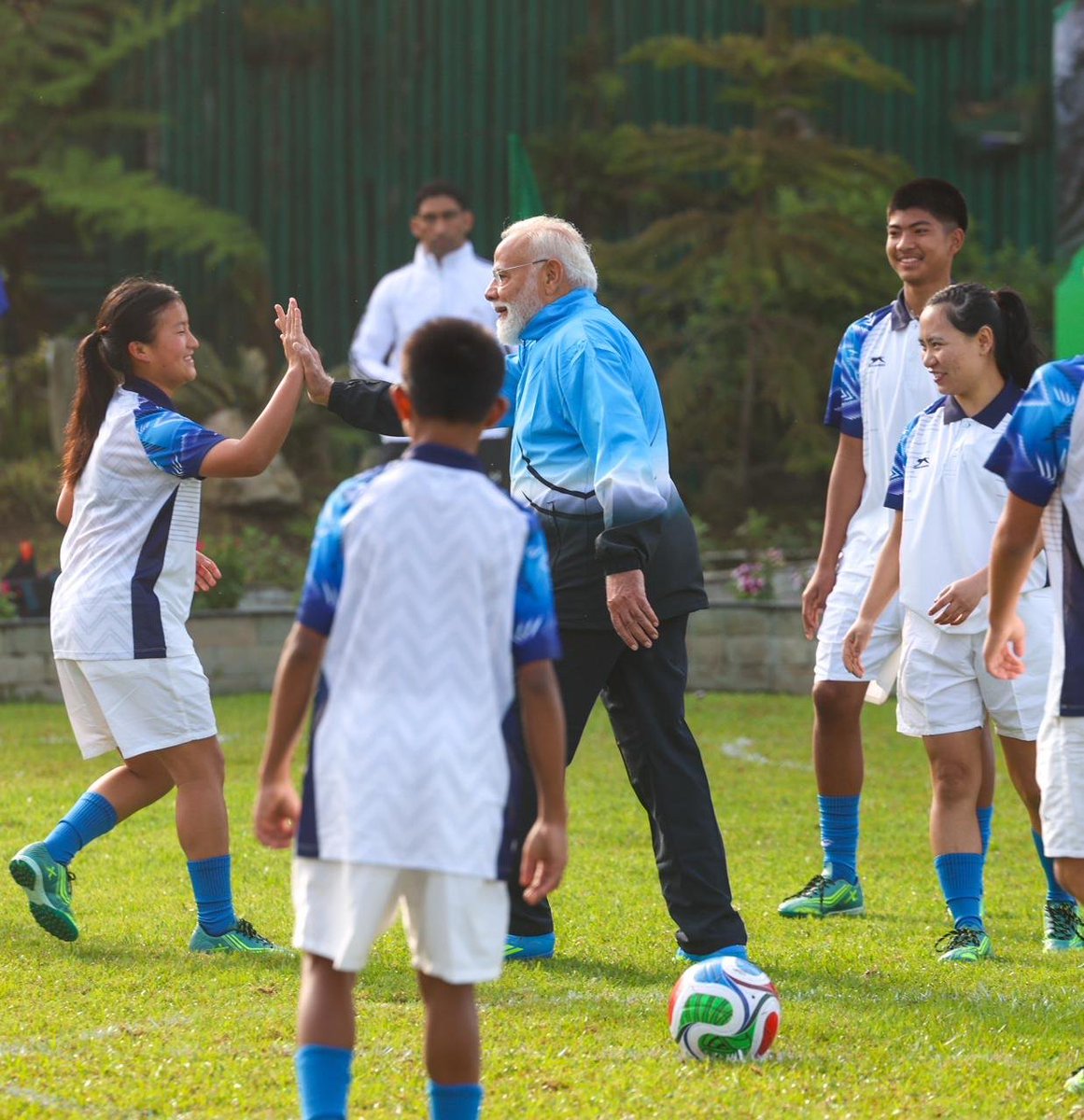
Nothing like playing some football with my young friends in Sikkim on a lovely Gangtok morning! ⚽️



English
Ambuj 🇮🇳 retweetledi

61 years ago this month, the Fast Fourier Transform was created, a powerful tool for image compression & data analysis.
Watch a classic MIT breakdown of FFT, perhaps the most-taught algorithm at the Institute: bit.ly/4cNMbPm
v/@MITOCW
English
Ambuj 🇮🇳 retweetledi

When boundaries of humanity are crossed, the response is decisive.
Justice is Served.
India Stands United.
#SindoorAnniversary
#JusticeEndures
#NationFirst

English
Ambuj 🇮🇳 retweetledi

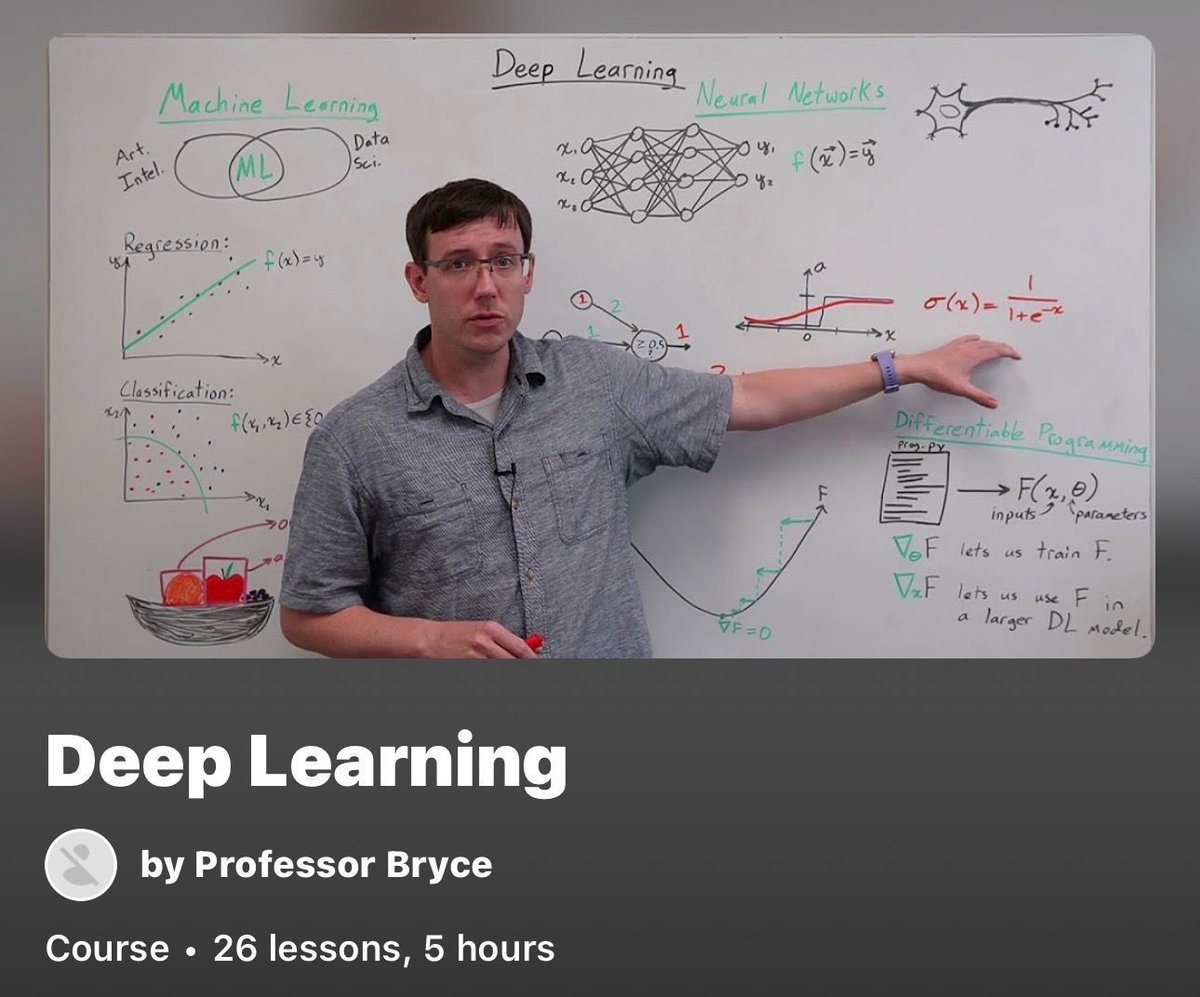
Deep learning curriculum for robotics.
[📍 Link to Playlist below ]
Modern robotics workflows often integrate deep learning models with traditional algorithms for mapping, localization, and control.
This playlist builds it from scratch:
Single neurons → Backprop → CNNs → Transformers → GANs → AlphaGo.
Step by step. Taught by Prof. Bryce, one of the clearest educators in the field.
26 lectures covering:
→ CNNs (robotic vision & object detection)
→ Transformers (planning & foundation models)→ LSTMs/RNNs (sequential decision-making)
→ GANs (synthetic training data)
→ AlphaGo (reinforcement learning for robot control)
If you’re building robots or trying to understand how they learn, this is the foundation.
📍 youtube.com/playlist?list=…
English
Ambuj 🇮🇳 retweetledi

mathnet.csail.mit.edu
This is a gold mine for all #math lovers. A huge collection of Olympiad-level math problems. @MIT
English
Ambuj 🇮🇳 retweetledi

Shankaracharya Jayanti
काशी मुक्तिपुरी सदा शिवकरी धर्मार्थकामोत्तरा।।
Kashi is the city of liberation, ever auspicious.

@runjhunmehrotra @Manik_M_Jolly It’s not that he hates some political party even if he dislikes parties in general, that’s totally fine.
What actually makes me doubt his opinion completely is that he genuinely hates Indian food and even basic stuff like ghee. Can’t take him seriously after that.
English

Ambuj 🇮🇳 retweetledi
The Jensen + @dwarkesh_sp podcast was fantastic.
Jensen is someone who understood how ecosystems work and someone who understands real-world trade, policy and controls work. And in some deeper sense how AI will actually diffuse into the world.
In this podcast, Dwarkesh came off as someone who picked up talking points from an AGI party in the SF Mission District.
And the contrast was so evident.
As someone who understood ecosystems relatively deepy, maybe I understood Jensen's take more than others did (idk).
Mythos, that Dwarkesh kept bringing up, is not a single absolute turning point in the AI development landscape. Take a state-of-the-art Chinese open-source model, and give it three orders of magnitude more test-time compute + post-training algorithmic advances that haven't been published yet. That's the baseline. It was evident that in whatever bubble Dwarkesh is in, that is seen as a naive or illogical baseline.
When AI has such a complex development cycle, it's evident that America needs many levers of policy intervention across multiple layers in a dominant ecosystem that ideally the Western world controls.
The entire premise that a particular model with AI development will have a critical phase change is neither correct nor does evidence point to it. OpenAI made this point with GPT-4, Anthropic made this point with Mythos, but neither stood / will stand the test of time.
I think Jensen's repeated emphasis within the podcast to try to make this point mostly didn't get Dwarkesh's attention. And Dwarkesh (in this podcast) represents an entire cult of AI researchers and decision-makers that are going to influence policy.
The thing with policy interventions is that if you do too much too early, you shoot yourself in the foot. There's a good reason American foreign policy and general sanctions of all kinds are measured and continuous.
Despite Jensen's attempt at educating the "Anthro" audience how ecosystems work, I'm also not super hopeful a lot of people who've taken the extreme position will change their thought after listening to this podcast. I do think there's a certain religiousness that has permeated some of that community that would make it hard to understand ecosystems at a deeper level.
Dwarkesh Patel@dwarkesh_sp
The Jensen Huang episode. 0:00:00 – Is Nvidia’s biggest moat its grip on scarce supply chains? 0:16:25 – Will TPUs break Nvidia’s hold on AI compute? 0:41:06 – Why doesn’t Nvidia become a hyperscaler? 0:57:36 – Should we be selling AI chips to China? 1:35:06 – Why doesn’t Nvidia make multiple different chip architectures? Look up Dwarkesh Podcast on YouTube, Apple Podcasts, Spotify, etc. Enjoy!
English
Ambuj 🇮🇳 retweetledi


Ambuj 🇮🇳 retweetledi

Indian-origin OpenAI CTO Srinivas Narayanan quits after 3 years, plans to return to India to spend time with ageing parents.


English
Ambuj 🇮🇳 retweetledi