COLLINS: “What about Trump’s promise to lower gas prices?”
JORDAN: “That’s life.”
@kaitlancollins: “If someone’s paying more for⛽️, saying ‘that’s life’ might not make them feel better.”
@Jim_Jordan: “Those are your words, not mine.”
COLLINS: “No you said that. Just now.”😬
COLLINS: But if someone was paying $2.98 a gallon before the war, and now they're paying $4.53, saying 'that's life' might not make them feel better
JIM JORDAN: Those are your words, not mine
COLLINS: You said that just now. I quoted you.
@daddyhope This is really a pandemic now. What will it take for African leaders to simply bow out after 2 terms in office? In Africa, being president should be made 100% voluntary work.
The president of Angola, João Lourenço, wants to run for a third term as president of the ruling MPLA. The Constitution of Angola does not allow him to run for a third term as state president, but the constitution of the ruling party allows him to do so.
bloomberg.com/news/articles/…
@zilevandamme This Malatsi guy must be stopped and he seems to be desperate in handing over our digital sovereignty to Elon, but I trust our committee in parliament
@harryjsisson@MollyJongFast Trump has not gotten over and is still mad from that White House Correspondents' dinner when Obama roasted him. He wants his revenge!
Trump had one of his worst mental health episodes yet last night, posting over 55 times in 3 hours. Here is the list:
10:15 PM - Accuses Obama of attempting a coup in 2016
10:15 PM - Says Obama worked with CIA to overthrow Trump
10:15 PM - Reposts tweet saying Obama is a “traitor” and that he should be arrested
10:22 PM - Attacks dominion voting systems for 2020 election saying they switched votes
10:22 PM - Says Fulton County, GA had their 2020 fraud exposed (there was none)
10:23 PM - Accuses Obama of personally making $120 million from Obamacare (wtf?)
10:23 PM - Cites quack lawyer Sidney Powell on the 2020 election
10:24 PM - Posts fake JFK Jr account that says Obama wiretapped Trump Tower
10:27 PM - Demands Senator Mark Kelly resign
10:29 PM - Claims neither Biden nor Harris were in charge of the Biden admin
10:29 PM - Attacks Fulton County, GA again
10:29 PM - Posts Fox News clip of Rep Ro Khanna
10:30 PM - Demands Jack Smith be arrested
10:30 PM - Accuses Obama, Clinton, and Comey of treason
10:39 PM - Reposts a tweet from a MAGA account saying they have secret intel proving Clinton and Obama committed crimes
10:39 PM - Reposts a MAGA tweet saying Hillary Clinton should be sent to Haiti
10:40 PM - Says the DOJ is “working hard” to arrest his enemies for treason
10:40 PM - Reposts a tweet attacking his own DOJ and Todd Blanche for no arrests of political enemies
10:40 PM - Posts a TikTok video of people stealing from a convenience store
10:41 PM - Posts a TikTok of someone taking a Door Dash order
10:41 PM - accuses Obama, John Brennan, and Clinton of sedition and treason again
10:42 PM - Posts a video of a man on CCTV footage knocking over food a waiter was carrying
10:47 PM - Calls Obama the “most DEMONIC FORCE” in American politics
10:47 PM - Posts a tweet from Mike Flynn saying 2020 election wasn’t fair
10:49 PM - Attacks Dominion again claiming they stole the 2020 election (it wasn’t)
10:51 PM - Reposts a fake Charlie Kirk account that claimed Obama blocked Hillary Clinton from being prosecuted
10:53 PM - Claims Obama was part of Hillary Clinton’s emails in some way
11:28 PM - Claims a senior Democrat just testified under oath that Senator Adam Schiff leaked classified information
1:13 AM - Attacks the New York Times for reporting on the reflecting pool
This man is clearly not well.
Theo Tungwarara son of Paul Tungwarara a top investment advisor to Emmerson Mnangagwa is trending after videos showed his lavish lifestyle, including arriving at a farm by helicopter, sparking outrage as many Zimbabweans struggle with rising living costs and basic transport fares
Would an African president shut up a noisy audience in France the way Macron did in Nairobi? Some Africans are outraged about the French president's paternalistic tone.
But some praise him for showing leadership. Was it rude, or was it the right thing to do?
After securing a $287 million deal, Thunder star Jalen Williams retired both of his parents who had served in the US Air Force nearly for four decades.❤️
The best gift for any parent is seeing their child win.
@daddyhope This is tragic! My old man used to work there before and after independence.He always spoke glowingly about the company. It's really sad to see it like this!
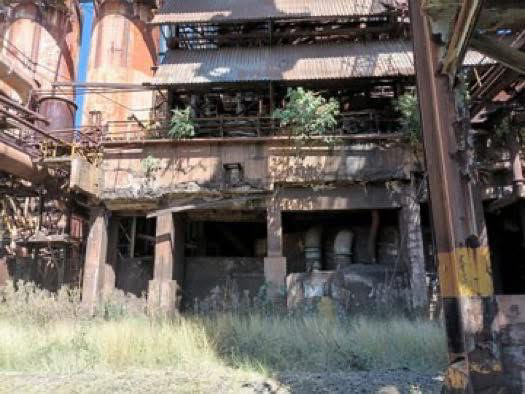
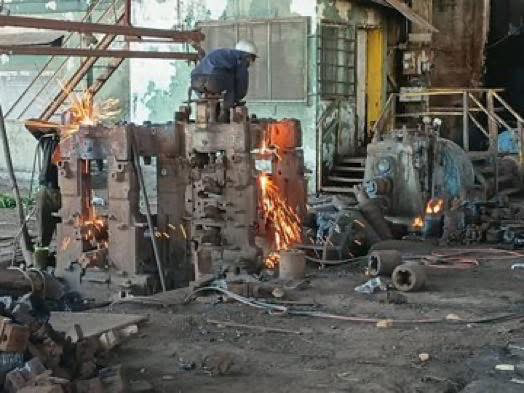
This is the Zimbabwe Iron and Steel Company, commonly known as ZISCO Steel, as it stands today.
It was once one of the most important industrial projects in Africa and arguably the pride of Zimbabwe’s industrial economy. It was the backbone of Zimbabwe’s industrialisation and the economic heartbeat of Redcliff and much of Kwekwe.
ZISCO Steel was Africa’s second largest integrated steelworks after South Africa’s ISCOR during its peak years. Today, it is dead, thanks to ZANUPF’s corruption, mismanagement, looting, and destruction of Zimbabwe’s industrial economy.
At its peak, ZISCO was the economic engine of Redcliff, a small town outside Kwekwe in the Midlands province. The town was built around the steelworks in the same way mining towns are built around mines. The company directly employed around 8,000 workers, while Redcliff’s population during its strongest industrial years was roughly 30,000 to 40,000 people.
That means ZISCO directly employed somewhere between a third and nearly half of the economically active adult population of Redcliff. And if one includes contractors, transporters, suppliers, downstream industries, municipal workers, shops, schools, and family dependants, the majority of households in Redcliff depended on ZISCO in one way or another.
Today, this once mighty industrial giant is a graveyard of collapsed infrastructure, rusting machinery, silence, rodents, and snakes. A place that once roared with blast furnaces, engineering activity, trains, and thousands of workers is now a monument to national decline. A ZANUPF legacy of repeated failures.
Built in 1942 by the Rhodesians, ZISCO survived sanctions, war, and political transition, only to be destroyed under ZANUPF rule through corruption, political patronage, incompetence, and systematic looting.
It would have been one thing if they had stolen from the company while keeping it alive. Instead, they destroyed it completely.
To understand how significant ZISCO was, you have to understand the Zimbabwean economy of the 1980s and 1990s. Zimbabwe was one of Africa’s most industrialised economies after South Africa.
ZISCO supplied steel to construction, railways, mining, engineering, manufacturing, and agriculture. Entire industries depended on it. If you were building factories, bridges, railway lines, machinery, or commercial infrastructure, ZISCO products were everywhere in such projects.
The collapse of ZISCO was not just the collapse of a company. It was the collapse of an industrial ecosystem, the destruction of thousands of livelihoods, and one of the clearest symbols of Zimbabwe’s deindustrialisation under ZANUPF.
This is why many Zimbabweans are opposed to extending the rule of the same political establishment that authored this Shakespearean tragedy.
ZISCO is not alone, it is one of more than 1,000 big companies Zimbabwe has lost through corruption, economic collapse, deindustrialisation, grand incompetence, policy instability, and the destruction of what was once one of Africa’s strongest industrial economies under ZANUPF rule.
Sadly, today Zimbabwe does not have a coherent opposition movement or leadership to speak of. Those who are perceived to be opposition figures are largely quiet about national tragedies such as ZISCO Steel. Even if you go through their timelines and public statements, many rarely speak about these issues or confront the destruction of the country’s industrial base. That is part of the tragedy.
And it is this political vacuum, weak opposition politics, and silence that has emboldened President Emmerson Mnangagwa and ZANUPF to even contemplate extending his rule beyond what is required by law.
Meanwhile, ordinary Zimbabweans continue to narrate painful stories of national collapse like ZISCO, company after company closes, industries disappear, towns decay, young people leave the country, and yet nothing meaningful comes out of it politically.
That is the real tragedy of modern Zimbabwe. Narratives like mine have now largely become sources of entertainment, read, shared, debated, and consumed emotionally, but without any meaningful political consequences or action.
People react with outrage for a few hours, maybe a few days, and then move on to the next tragedy while the country continues collapsing in plain sight.
@skinkl@smagla@Shadaya_Knight Reparations within tribes.
Anyway, no conman has ever returned his loot. U must outfox him to get it back.
Don't expect payments. No one owes u anything.
Shadaya is correct. Africans were weak ,and still are. It's not any1's duty to share their tech with us.
Unpopular opinion: Black people are not owed anything for slavery or colonialism. Them being enslaved or colonised wasn't because they were good people BUT simply weak
What white people did, enslave and colonize black people, the black tribes did that as well amongst themselves. It's not about morality but power. The weak get conquered simple as that
If black people had developed the weapons that matched or better than what the whites had, they'd have never been enslaved or colonized. Maybe we would have been the conquerors
Stop this victim mentality, your ancestors were conquered because they were weak. You're still oppressed not because you're good guys, but you're weak
The only solution is POWER not this pity party. It's the way of the world - the strong do whatever they can and the weak suffer what they must.
In 2011, Elon Musk dismissed BYD as a non-threat and ridiculed their vehicles.
Fifteen years on, tables have turned and BYD views Tesla as an irrelevant competitor.
BYD delivered 4,6 million vehicles in 2025, while Tesla deliveries fell to 1,6 million units due to growing competition from China.
BYD is far more technologically advanced and innovates at much rapid pace to stay ahead of competition in China. Consequently, BYD undermined Tesla market dominance.
Tesla, however, has market capitalisation of $800 billion while BYD lingers behind at $80 billion.
The massive disparity is a consequence of investor bias that attaches value and premium to US technology, while in reality it lacks behind China.
Tesla is benefiting from the cult investor psychology and the absurd notion of US exceptionalism, while BYD endures geopolitical headwinds, tariffs, and skepticism toward Chinese firms.
BYD is having the last laugh and has forced Elon Musk to eat a humble pie.
@SizweLo You probably have not seen or experienced the level of corruption they do in Zim. It's where the devil himself goes to learn how to loot. And he goes every year to do a refresher course because it's so advanced. They will chow every last penny of that lithium money boss! 😭
Zimbabwe recently became the first African nation to export locally-processed lithium.
However, many Zimbabweans would either have not heard about this or dismiss it as a nothingburger because they have been conditioned by Western liberal thought to believe their one and main problem is "corruption" and that all focus should be shifted to “cleaning the country”.
For context of how big of a deal this is, what Zimbabwe is doing is widely accepted by historians and economists alike as the primary way to develop a country by moving up the value-added ladder and export finished goods, not raw just materials.
By moving from exporting raw ore to processed lithium, Zimbabwe is attempting to break the “resource curse” which has kept many a developing nation from capturing more of the value chain.
The people obsessed with fighting corruption are effectively saying that industrialisation doesn’t matter unless the politics is perfect. But the thing is, historically, no nation, from the US in the 19th century to China in the 20th, waited “to fix corruption” before building an industrial base. They built the base, which then created the economic stability which reduced instances of corruption.
If you wait for the “corruption” to end before you start processing your own minerals, you might find that even if by some miracle you were able to eliminate all malfeasance, there might be no minerals left to process and you’re just left with the standard neoliberal talking points.
Some will say they can walk and chew by focusing on corruption *and* industrialisation. But this misses something extremely crucial about how a country’s capacity to act is a finite resource, and that when a developing nation is told it must reach “Scandinavian levels” of transparency before it can pursue ambitious industrial policy, it often results in institutional paralysis.
This is because “fighting corruption” means using up resources on adding layers of bureaucracy, audits, and oversight committees which slows down decision-making, exhausts human capital by funneling the best minds towards compliance, auditing and accounting, instead of science and engineering.
Because they’re inundated with neloliberal thought patterns, many developing nations fall into the trap of believing the myth that “clean” government leads to development. In reality, history usually shows the opposite, that it’s industrialisation that creates the conditions for a cleaner government. This may sound counterintuitive, but there are examples all over the place.
For instance, the 19th-century US was so corrupt that the wealthiest among them were commonly known as Robber Barons who bought politicians by the dozen. Yet the country built the world’s most powerful industrial base during that exact period.
Similarly, all the way in the Far East, South Korea and Taiwan had serious cronyism during their rapid growth phases. But they prioritised industrialisation, and the middle class that emerged from that growth eventually demanded better governance.
And, of course, China, which is holding Zimbabwe’s hand through the lithium refining, lifted 800 million people out of poverty while navigating massive corruption scandals, but they focused on building the factories first.
This may offend many people’s sensibilities, but from a cold, economic perspective, a “corrupt” state that successfully builds a lithium refinery is still far more productive than a “clean” state that remains a raw-material backyard for the West.
As Professor Grieve Chelwa showed in his 2024 paper on the weaponisation of corruption, “anti-corruption” is often used as a tool to hollow out the state. If the state is labelled as inherently “corrupt”, the only “moral” solution offered is to outsource everything to the private sector or foreign NGOs. This effectively prevents the state from ever developing the muscles it needs to lead a national development strategy.
In the case of Zimbabwe’s lithium plant, an “industrialiaation-first” approach treats development as a survival imperative. It acknowledges that while corruption is a disease that needs a cure, you don’t stop a starving man from eating just because his hands aren’t perfectly clean.
So, for Africans, the beginning of wisdom is understanding that the push for “transparency” is used by foreign actors specifically to prevent African states from forming the kind of State-led development that allowed them to rise so quickly.
No country in the Global North became wealthy by being honest first. They became wealthy by protecting their industries and moving up the value chain which raised the capacity to be honest.
By processing lithium locally, Zimbabwe is attempting to jump from the raw material rung to the industrial rung. It is a messy, complicated process, and yes, money will likely be lost to corruption. But as Prof Chelwa shows in his paper, the greatest corruption is the neocolonial structure that tells Africa it isn’t “ready” to own its own value chain.
@smagla@Shadaya_Knight Granted you have more facts, etc. But what exactly are we talking about, did the Europeans decide they were gonna outdo the Oyo, etc in their levels of cruelty? Please enlighten me further 🙏
@skinkl@Shadaya_Knight I don't want to argue about historical facts with a person who doesn't have facts. When you have read how the Ashanti, Dahomey and Oyo etc treated slaves you will see why the white men chose to continue such an inhumane treatment
There is a lot of talking past each other on the issue of illegal immigration, and I think we are all intentionally missing each other.
I will not support or accept and I will call it xenophobia when people march up to any Black person who looks different from them, demand documents, and beat them up if they do not have them. That becomes confrontation and an incitement to violence.
Saying that is not supporting illegal immigration; these are issues that must be dealt with by a government. And when government fails, you march and protest against the government and vote when elections come, not against and at people directly.
@smagla@Shadaya_Knight So who were the better slave masters-the Africans or the Europeans? I doubt the Africans would have been as cruel. That's why reparations must be paid!
@Shadaya_Knight Slavery was already there in Africa , internally and the white men brought better offers to the chiefs who raided weaker tribes and sold them.