Sabitlenmiş Tweet
Sohan Sunku
193 posts

Sohan Sunku
@sohan_sunku
Somatics and Hardware
San francisco Katılım Aralık 2017
99 Takip Edilen136 Takipçiler

@sohan_sunku I have scapular dyskinesis related to a biceps tear compensation and I'd love to be able to try to visualize how my scapula moves during pressing to try to fix it
English

@GavinRayDev With an overhead press this sort of setup could work. It’s not precise since we’re tracking skin not bone. But just being able to see movement from the rear and replay a session has been super helpful for me
English

@that_is_p With a camera looking at you from the side, you can definitely model flexion and extension in the sagittal plane! But the mechanics of the scapula would be a guess, since it wouldn’t be fully observable from the side
English

@sohan_sunku Does this work for shoulder flexion as well? Would love to see what that looks like.
English

@sohan_sunku I've learned from FM Alexander but my practice is mostly influenced by Moshe Feldenkrais.
English

@GowthamSagarT I’d have to know more about your approach. Check out opensim as a good starting point
English

@sohan_sunku hey really interested in this, how do you track movement so well ? i was unable to apply movements from a video on to a 3d model. can you please help me out here ?
English

@PrinceVogel Soon! The visualizer on the right is from Opensim, free oss by folks from Stanford!
English

@sohan_sunku Do you have the code or link for this? Very cool project
English

@sohan_sunku really important because every digital representation of a shoulder is always wrong
English

Sohan is exploring some really exciting stuff.
Sohan Sunku@sohan_sunku
I've been studying my shoulder. This has been a cool tool
English

@DaveScolte @SebastianCaliri I want to learn more about the limits in imaging resolution. Big claims about this scanner. Any good sources?
English

@SebastianCaliri The reason it’s not FDA approved for diagnostics is due to the low penetration and granularity.
It’s great for body composition scans and soft tissue, so spas and gyms will love this. Might even catch larger surface abnormalities/tumors, but doesn’t replace MRI or CT modalities
English

I just tested my hand in a mini version of this scanner. Images that are higher quality than MRI, whole body captured in <1 minute, virtually free to run. This is going to change medicine.
Things get even crazier when you consider the possibility of using the same tank to focus ultrasound to ablate tissue, stimulate nerves, etc.
The FDA is not in the slightest ready for this. People will also complain about incidental findings but they are wrong and don’t understand how quickly software can improve and how inexpensive a time series of scans will be to generate.
Midjourney@midjourney
A technical dive inside our new "Midjourney Scanner"
English

Wondering how applicable this is to movement health. Can image muscle and bones, maybe herniated discs. But to understand movement patterns or fascia, probably not too useful?
Midjourney@midjourney
Announcing a new division of Midjourney called "Midjourney Medical"
English

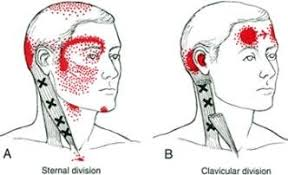
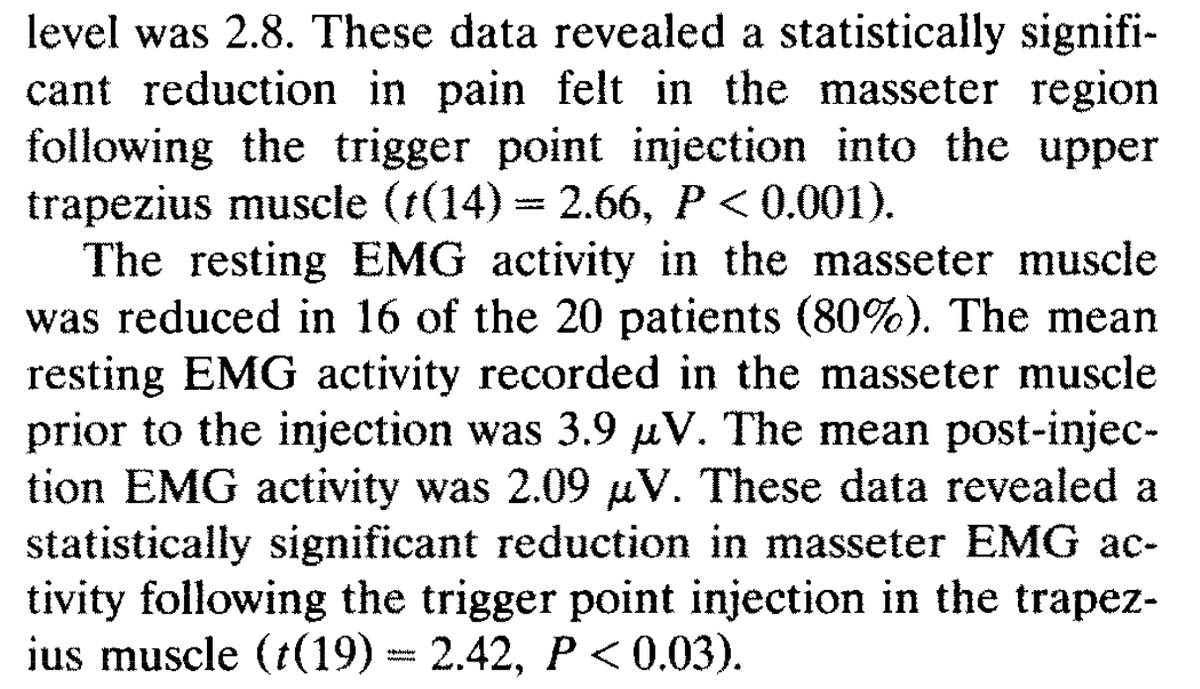
I have had a lingering tightness in my low back. I can feel a direct "release" when I relax my right shoulder, which also immediately relaxes my right jaw. A 1993 study found clear links between the trapezius and masseter. pubmed.ncbi.nlm.nih.gov/8121703/

English

How to root cause pain or "tightness"? 3 exciting efforts in the space
@myers_info mapped myofascial lines from thorough dissection. Scott Delp's team at Stanford modeled complex biomechanics @StanfordNMBL. Travell and Simons mapped "trigger points" through observation.


English

@nickfloats @stedmanhalliday whaddya think? Useful for movement health?
English

What Midjourney is:
- No investors, fully community-funded research lab
- Revenue from image generation product funds all R&D
- ~$100M in first 9 months, $200M by month 12, still growing
- 8 active projects: 4 hardware, 4 software
----2 hardware products coming to market soon (consumer-purchasable)
----2 are large-scale machines
DAVID HOLZ: Background and Philosophy
- Grew up in Florida, parents in medicine, dad had a dental office on a sailboat
- Physics and math background: drawn to the tension between predicting reality vs. absolute truth
- Core thesis: the interaction between humans and technology is the biggest limitation, not compute power
- Founded Leap Motion at 22: $10M in pre-orders in 48 hours from a website (not Kickstarter)
- Built hand-tracking VR: 600M-parameter mixture-of-experts model, 2015, CPU cluster, pre-TensorFlow
- Also shipped Northstar, an open-source AR headset
- Left Leap Motion wanting a “home,” not a 100x return
- Mentor Bill Warner told him he could bootstrap; he listened this time
- Started Midjourney with ~$200K, called Google for 10,000 GPUs on trust alone
THE SCANNER: Full Body Ultrasonic CT
- First new whole-body medical imaging modality in ~50 years
- Concept: “as powerful as an MRI, as casual as a trip to the spa”
- No radiation, no magnets, no x-rays; safe for unlimited scans
How it works:
- 40 rings, each with 8,960 transducers (200 microns wide), totaling 358,000 elements
- Fires ultrasonic waves at 100M times/second; sound travels through water at 1,481 m/s
- Sensors resolve motion down to picometers (sub-atomic range)
- Captures 17 GB/second of raw data; 806 TB per full scan reconstruction
- 21 on-site servers, 2 petaflops of compute
- Patient lowers into water at 4 cm/second; ~60 seconds for several hundred body slices
- Produces sub-millimeter 3D maps of internal tissue
Already outperforming MRI in some tissue boundary and muscle fiber detail on DAY ONE.
10x cheaper and 60x faster than MRI machines; scan cost effectively near zero.
Gen 2 scanner planned by end of 2026; Gen 3 will use custom silicon.
SCANNER vs. MRI: Key Differences
- MRI: 60-minute tube, loud, requires sedation for children, expensive, radiation-adjacent.
- This scanner: water immersion, 30-60 seconds, no sedation, no radiation, repeatable daily.
- Current limitation: not yet FDA-cleared beyond body composition; no AI layer yet applied.
- Already better than MRI in certain muscle/fiber/vein boundary resolution at day one
THE MIDJOURNEY SPA:
- First location: Union Square, San Francisco
- 25,000 sq ft, 4 floors
- Amenities: hot tubs, saunas, cold plunges, European spa features, gym
- 9-10 full scanners on-site
- Goal: open by end of 2027
Target:
- 50,000 scanners globally, capable of 1 billion scans/month
- 5,000 spa locations needed at ~10 scanners each
- Estimated $20B capex to scale; Midjourney self-funds the first location
- Payback period modeled at ~6 months per location
ROADMAP & REGULATORY PATH:
- FDA discussions already started; body composition on a clear path
- Ascending approval ladder planned:Body composition (near-term, easy)
- Sharing data with physicians
- Doppler / blood flow imaging
- Pregnancy / fetal imaging (ultrasound already approved; this is a natural extension)
- Therapeutic applications (tendon/muscle healing, eventually incisionless surgery)
AI not yet applied to imaging; planned as a layer once data volume grows
LONG-TERM VISION:
- Flag anomalies automatically, substitute some blood tests, enable daily health tracking
PRICING:
- No firm numbers yet; likely spa memberships plus walk-in and scan-only tiers; cost of scan itself is near zero
- Data analysis: day one is body composition only; physician sharing gated on FDA progression
- Form factors: current design is throughput-optimized (up/down elevator); bathtub and gym-sized variants possible later
- Blood test substitution: sub-millimeter daily differentials with AI may eventually replace some tests; acknowledged as frontier science
- Cancer destruction via focused ultrasound: technically possible, not on near-term roadmap
NEXT STEPS:
- Sign up for Midjourney Medical email list for research trial scan invitations
- Visit midjourney.com/medical for jobs and updates (page now live)
Gen 2 scanner presentation planned before end of 2026
More secret projects to be announced soon.

English

@relic_radiation I want to know what experts think. @relic_radiation ?
English