
Sabitlenmiş Tweet
SolidRPC
24 posts


SolidRPC
@solidrpc
Reliable, cost-efficient blockchain RPC infrastructure for production workloads. Self-hosted nodes, intelligent routing and AI agents.
Global Katılım Temmuz 2026
54 Takip Edilen18 Takipçiler
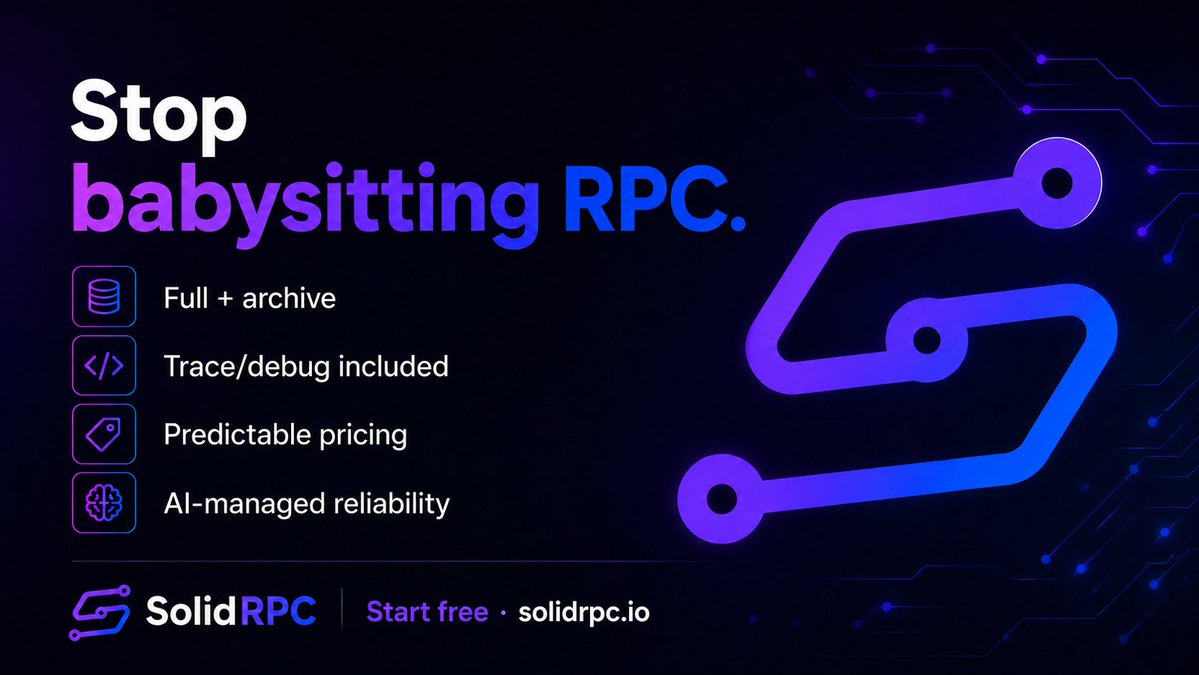
Paying for archive or trace RPC with compute-unit multipliers?
SolidRPC includes full + archive access, trace/debug, and predictable monthly response quotas. No CU math.
No archive surcharge.
10K responses/day free: solidrpc.io
English

Stable Chain (stable.xyz, Chain ID 988) public RPC endpoints are currently experiencing connectivity issues / appear down or unreachable for many users, while the chain itself continues producing blocks.
English
@gami_vc @ika_xbt @stockripx @tokenfox1 We can benchmark event volume, replay window, and log-range behavior together. SolidRPC’s endpoint can route older-block requests to archive nodes without a separate archive path.
English

@ika_xbt @stockripx @tokenfox1 devs have had to build an entire indexer because producing way too many events for any on-demand rpc to handle
they're on it and hustling to finish so the app can function as normal
still getting huge usage from users who are operating bots and agents etc
English
English

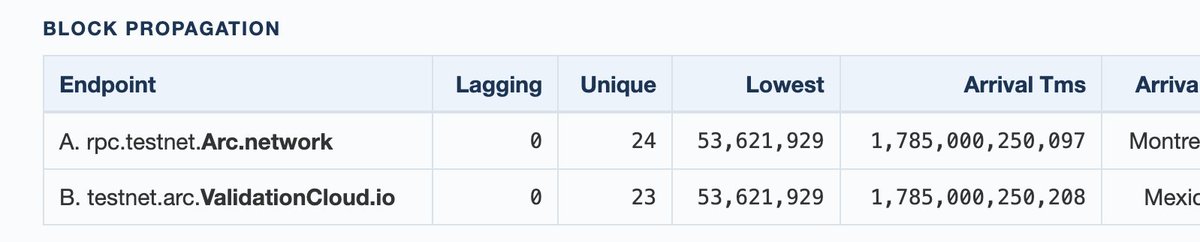
We agree that block propagation is very important as well: that is the reason our RPC Inspector Pro detects lagging nodes in our propagation sections.
In the report we did to compare @ValidationCloud and Arc's public endpoint, our analysis was that neither endpoint was lagging, hence lagging=0
English

Arc 🤝 Quicknode
@Quicknode is delivering fast, reliable, enterprise-grade node and data infrastructure for developers building on Arc.
This enables builders to have the performance, visibility, and reliability needed to run production workloads from day one.
→ High-performance RPC, indexing, and monitoring
→ Globally distributed nodes built to scale
→ Turnkey dashboards, logs, and analytics
Arc is production-ready. Built for builders from day one.

English
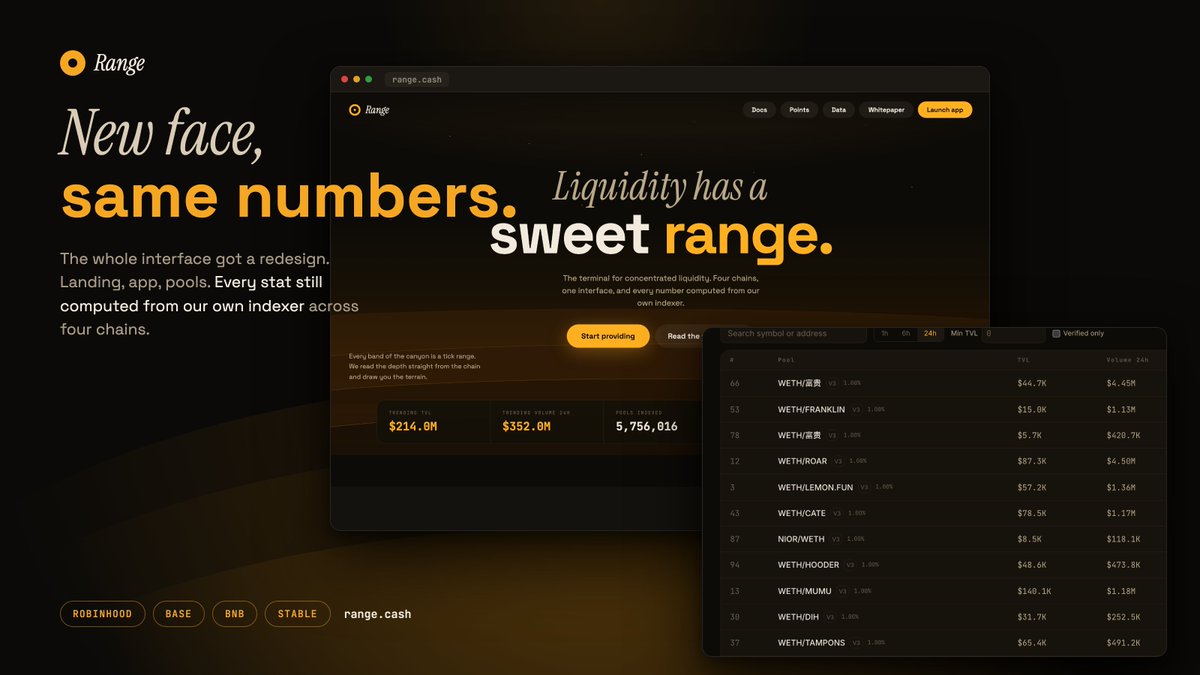
@range_cash Nice build. Multichain indexers usually feel pain on backfills before live reads. SolidRPC keeps old-block requests on archive behind the same HTTPS JSON-RPC endpoint, which makes cross-chain workload tests a lot cleaner.
English

@VaultlerRH @FletchFinance This is way SolidRPC exists, so you don't have to babysit RPC or use 10 different providers.
English

@FletchFinance Question for the call:
What's the roadmap for the public RPC — rate limits and reliability for apps that read balances server-side on every user action?
We run a daily game on the chain and re-check a player's balance on every crank, so RPC uptime is a hard dependency for us.
English

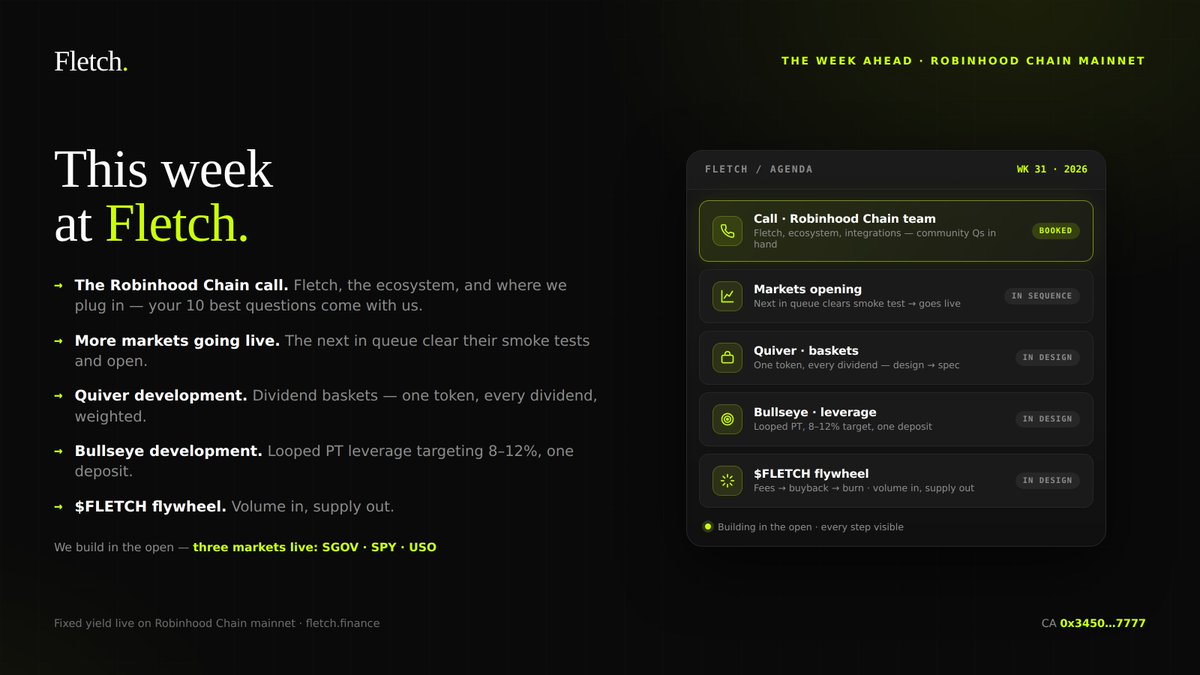
This week at Fletch.
→ The call with the Robinhood Chain team. Fletch, the ecosystem, and where we plug in. Your 10 best questions come with us, and we report back after.
→ More markets going live. Three open now (SGOV, SPY, USO), the next in the queue clear their smoke tests and open.
→ Quiver development. Dividend baskets — one token, every dividend, weighted. Design hardening into spec.
→ Bullseye development. Looped PT leverage targeting 8–12%, one deposit. Same stage, same pace.
→ The $FLETCH flywheel taking shape. Volume in, supply out.
We build in the open. You'll see all of it as it happens.
English
@CompareNodes @arc @Quicknode @ValidationCloud Latency is important, but it's also block freshness that matters for many applications.
You can have 20ms vs 100ms, but if 20ms latency provider responds with -1 block, and 100ms with latest one, some developers will prefer the one that gets blocks first.
English
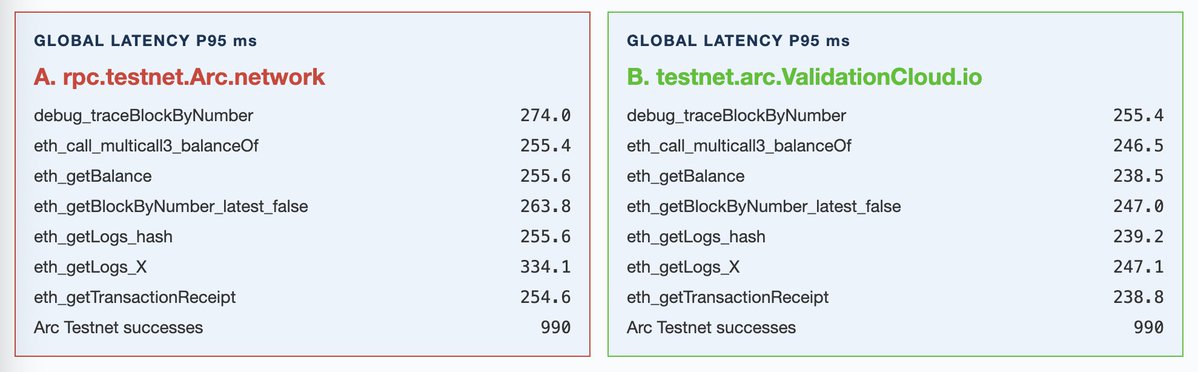
And don't forget to check RPC performance before you pick the provider! In this independent report, you can see that
@ValidationCloud (free) endpoint delivers better p95 latency for 7 methods across a mix of 30 locations on 6 continents than Arc's public endpoint
comparenodes.com/global-rpc-per…
Ofc, you can check it yourself for any of the 10 providers for #Arc #RPC:
@Alchemy
@BlockdaemonHQ
@RealBlockPI
@dRPCorg
@getblockio
@NoditPlatform
@Quicknode
@sentioxyz
@thirdweb
and
@ValidationCloud
by using our public RPC Inspector Pro at
comparenodes.com/protocols/arc/
English
@blainemalone @easeev @staycloakedxyz @Alchemy @dRPCorg @ChainstackHQ At 52M trace-heavy requests per month, headline request quotas become misleading. I would compare trace-method multipliers, concurrency limits, historical depth, p95 latency and burst behaviour separately for each chain. Which chains account for most of the workload?
English

Our indexer handles roughly 52M requests/month across Robinhood, Arbitrum, BNB, Base and Optimism mostly debug_traceBlockByNumber and trace_block. We average around 20 RPS with bursts above 25. Which Chainstack plan would you recommend, and is the Unlimited RPS limit shared across chains or per endpoint?
English
I've officially migrated @staycloakedxyz off @Alchemy in favor of @dRPCorg
So far:
> cheaper for our trace-heavy workload
> zero RPC failovers since rollout
> a much clearer dashboard
> pricing I can understand at a glance Alchemy’s
method-weighted compute-unit pricing feels needlessly convoluted by comparison.
English
@internlen Provider count is only one part of the cost. Every additional dependency introduces separate health checks, failover behaviour, method-coverage differences and migration testing. Which layer currently creates the most operational overhead for the rollup?
English

@web3nish @pcaversaccio Founder absence is a better infra test than a load test in some cases. Curious how you handle replay windows after provider failover without reprocessing everything.
English

@pcaversaccio The walk-away test is a useful bar for protocol-adjacent apps too: key rotation, RPC failover, indexer rebuilds, stuck job replay, and operator runbooks should survive founder absence
English

this industry has spent more than a decade lying to itself about building the future while shipping systems that can't survive the people who built them. if your application fails the walk away test, you've fucking failed. period. i don't fucking care how many users, investors, or billions it has. sooner or later every company disappears, every foundation dissolves, and every multisig stops signing. the only things worth building are the ones that keep working after everyone walks away. build something that no longer needs you.
English
@WalletTrackerX That is substantial provider diversity. How are you validating responses across providers?
English

Wallet Tracker — infra update
Now running 12 BSC RPCs across 6 independent providers. Auto-failover, backoff retries, reorg detection.
Even if half the nodes go down — not a single transaction gets missed.
🤖 Track them with Wallet Tracker:
t.me/WalletTrackerA…
#bsc #bnb
English
@definikos Custom RPC support is an important resilience control. It allows users to route around a degraded wallet backend while the chain itself remains healthy. Removing that option concentrates the availability decision entirely in the wallet.
English

rabby removing custom RPC support weakens one of the core properties of a self-custodial wallet - the ability to route around failed infra.
users are now more dependent on Rabby’s own endpoints. but when those endpoints fail, the wallet can stop functioning even while the chain continues producing blocks.
the timing is especially strange because wallets should be becoming stronger execution surfaces. a user should be able to switch RPCs, call contracts, withdraw liquidity and claim rewards without depending on the protocol frontend or the wallet provider’s backend.
English
@Ale_Beta @developer_dao @futexlabs True. SolidRPC does not have back range limits, has archive access in Free Tier and batch size is only limited by method rate limits included in plan
English

@developer_dao @futexlabs Free calls matter less than the limits attached to them. Recently spent a week working around eth_getLogs caps that were different on every provider — block range, batch size, archive access. That's the number worth publishing.
English

What it feels like when you get those 1 million free RPC calls just for signing up for D_D Cloud ( @futexlabs )
English
@eDMTProtocol Process liveness is not enough for an RPC node. The client can remain running while JSON-RPC is effectively unavailable. Are you now probing representative methods and block freshness in addition to process or port health?
English

Users experienced Ethereum RPC timeouts because our Erigon node’s memory usage grew until RAM and swap were exhausted. The process stayed up but stopped accepting connections. We restarted and resynced it, then added RPC, heap, and swap limits. Service is fully restored.
English
@envio_indexer @solana @orca_so @Raydium @JupiterExchange I get why this lands. Nobody wakes up excited to own historical data plumbing.
English

No RPC, no archive node, no database. Every DEX swap on @solana, streamed live.
SolSwaps is a firehose of swaps from @orca_so, @Raydium, @JupiterExchange, and Pump.fun, with swaps per second, SOL moved, and the 25 biggest trades as they land.
Powered by HyperSync.
docs.envio.dev/showcase/solsw…
GIF
English
@Quasarens Cross-chain expansion gets romanticized a bit. Then you touch the indexer and remember what you signed up for.
English

Expanding a project from a single blockchain to a multichain architecture is far more than simply deploying the same smart contracts on another network.
For Quasarens, this stage means rebuilding core parts of the infrastructure:
🔹 Smart Contracts
🔹 Indexer
🔹 Infrastructure
🔹 User Interface (UI)
Building a multichain platform isn’t just about adding another blockchain—it’s about redesigning the entire ecosystem to scale reliably.
This is exactly what I’m currently working on at Quasarens. It’s one of the most challenging yet exciting stages of development. Once completed, the platform will become significantly more powerful, flexible, and ready to operate seamlessly across multiple blockchain networks.

English

How SNITCH works, start to finish:
A token graduates on Robinhood Chain. The indexer catches the event off RPC before most wallets even see the pair.
It pulls the transfer history, traces every early buyer back to the wallet that funded it, reads the contract bytecode, and measures how much sell pressure the liquidity can actually absorb.
The scoring engine turns all of that into one number and one verdict: CLEAR, WATCH, or WANTED.
No human in the loop. The agent watches, reasons, and calls it. 24/7.

English
@Arbmarket This hire makes sense. Once the indexer sits close to the product, small RPC issues start turning into product issues fast.
English

🚨 Hiring Lead Blockchain Dev @ ArbMarket
Building Polymarket-style prediction markets natively on Arbitrum.
We already have a working React + Node MVP.
You own the real thing:
• Smart contracts (factory, AMM, outcome tokens, fees)
• Optimistic oracle (UMA-style)
• Indexer + wagmi migration
• Technical leadership
Must: production Solidity + dApp experience
Bonus: AMM / prediction markets / Arbitrum / oracles
Remote • Trial → full-time • Equity-heavy (€90k+ target)
DM with GitHub + past contracts if this is you.
English
@ztablefun @Alchemy @Stable Dedicated endpoints usually fix the first bottleneck, but the next question is how they behave during backfills, log-heavy spikes, and provider failover.
Keep in mind that Alchemy charges extra for throughput, which is especially painful for debug and trace methods.
English
Follow us for:
- RPC provider benchmarks
- Latency and reliability data
- Blockchain infrastructure architecture
- Product and chain announcements
- Operational lessons from production
solidrpc.io
English