Category error
There's no house
The market is zero sum, for all winning trades there's an equivalent amount of losers (in terms of total notional dollar value)
The odds of winning vs losing can fluctuate into and out of your favor depending on your strategy, skill, discipline, etc.
Overall simplified answer: skill issue
CRYPTO COURT - Case #4
The charge: "Leverage trading is stacked against retail"
Prosecution: Retail gets rekt and the house wins every time.
Defense: Skill issue
You're the jury, drop your Opinion below👇
WARNING
Massive AI hype being built in a sudden burst
(and most of it fake)
1) A scary article: I was surprised to read a long article on Twitter (X) claiming it's just 6-12 months before a Covid-like event changes this world. It claims this will be the AI-event, where most white-collar jobs worldwide would be gone, because AI is that good now. That article got 100 M plus views. Clearly, people are spooked (naturally). So the psy-op has worked.
(and I saw other similar dark articles too)
2) Suddenly many influencers are pushing the same narrative, and it so turns out that media reported many are being paid heavy sums by AI firms to push their story (that AI singularity is arriving). But if AI is "revolutionary", does it need an influencer push? No. This should be a clear signal it's hyped.
3) A correction in IT stocks' and SaaS stock's prices is suddenly creating a doom scenario about these companies dying any moment now, with second- and third-order effects on entire economy. Stock investors who haven't studied AI technicals are automatically assuming it's all over, dead, gone, finished. WRONG. NO.
4) What is the truth, and what's most likely to happen?
In my opinion, based on years of observing AI trends, reading and learning AI technology, and doing AI at various levels, my take is as follows. I urge you to read this, and preserve your sanity. Please don't panic, nothing catastrophic is happening anytime soon.
A) IPO pressure: AI firms are going crazy pushing their God-narrative, as many giant IPOs are lined up soon. They need public to buy their paid subscriptions or else the story goes kaput. So they are creating a false hype. It's shameful, anti-social and deeply hurtful.
(Almost all AI firms released doom-scenarios just before their next funding rounds; investors who haven't learnt technology fall for it; pure FOMO. This playbook is so repetitive it's comical)
B) OpenAI is spooked: Sam Altman has lost the lead he temporarily managed to build against Google and others, and now his loss-making enterprise isn't the darling of any investor any more. He's terrified.
C) Elon Musk's Grok does not have the traction in consumer space anyway near what's needed to make it a profit-making entity. So with many other capex-heavy AI firms. But the GPU / TPU hungry AI ops need more capex each day, not less. It's a dead-end for most except cash rich Googles.
D) Enterprise AI is patchy, lagging, slow, choppy: Anyone who has ever built a company, or run a large department, or consulted a business enterprise knows how random, undefined, tacit, and unstructured most of the real world work actually is. No way is AI ever going to replace humans doing those very complex things on a daily basis. No way. Not tomorrow, not in 10 years. NO.
(I am not even beginning to get into 'regulated' industries' needs)
E) Consumer AI is cool, but has limits: The more AI regular humans (of all ages) use, the more the artificiality of it becomes apparent to anyone. The novelty cannot sustain the commercial numbers needed to make AI (foundation models) profitable. OpenAI and Perplexity would never have given free tiers for most Indians otherwise. They desperately need folks to stick to this opium.
F) LLMs aren't solved, Hallucinations aren't zero: The structure of any LLM is such that it will ALWAYS hallucinate, no matter how much fine-tuning humans do. In most sensitive business operations, you cannot allow LLMs to control the core data at all. Can you run an airline with a Generative AI system (LLM-based) that's 98% accurate? Can you run a precision-mfg. operation at 97% accuracy? Can you run a financial services firm with 95% accuracy? NO. NEVER. So the deterministic, old-fashioned computer software ERP will go nowhere. Nowhere at all. LLMs will be good as a top layer on those ERPs to glean insights, nothing more.
[ None can 'train away' hallucinations in a probabilistic LLM model, using larger datasets. You are actually claiming I'll build a dice that lands a 4, or a 6, each time ]
G) Agents aren't magical, humans aren't going anywhere: Multi-step agentic AI is being touted as the final solution where one founder sitting alone can run 100 agents and build an empire. Try doing that once, experience the frequent breakdowns, see the regular edges and new complexities, and you will realize that other than the most mundane of tasks, nothing else will be seamless. Yes, Voice AI agents are good, and many in the developing world are now deploying those, but that's hardly a cutting-edge technology that'll replace all humans.
H) IT and SaaS firms are going nowhere: Ironically, the more AI happens in enterprises, the more will be the need for humans to supervised and orchestrate those bits and pieces of AI, to ensure nothing flies off the rails. The complex software code that Claude and Codex can write only changes the nature of work for the human coders who now have to check the AI code thoroughly for the many edge cases in real world. The nature of IT and SaaS work will change, some companies that can't innovate and adapt will vanish, but many new ones will emerge in their place. (Yes, there'll will be some much-deserved disruption in short-term, and the non-innovating IT firms will have deserved every bit of it)
I) If IT and SaaS are dead, why are AI firms hyping: Ask this simple question - if AI is indeed killing IT and SaaS, then why are AI firms spending massive sums hyping their wares? They need spend nothing and still earn the spoils. But they know the truth.
J) The China angle: Models from China - many of them open-sourced - are getting better and more competitive. Many of them are cheaper, or free (for now). OpenAI complained recently that they are stealing from American models (via "distillation"). Imagine, just imagine - OpenAI that stole entire internet work of creative work is complaining the Chinese are stealing from it. A dacoit crying that thieves broke into his house. Rich. You think these are signs of singularity? Ha! The judicial backlash on stolen content and profiteering off of it hasn't even begun in most jurisdictions.
(now imagine what happens to American LLM-makers when Chinese models gain traction everywhere)
K) Downside of mindless AI already visible: Take just one example: In education everywhere, students, parents and teachers are all realizing that mindless AI use is harming the process of learning, not aiding it. The sensible, guarded and limited way AI should be brought into pedagogy hasn't even been given a proper thought. Students are just doing "cognitive offloading", and turning into non-thinking beings. This is bound to collapse sooner than later. Humans as species don't learn this way - it's a long, tortuous and slow process, always.
L) AI is normal technology: Serious researchers from the AI field have for years argued that AI is being hyped unnecessarily out of proportion, turned into Snake Oil like propositions, and most of AI's predictive powers are anyway not better than that of astrology. AI's ability to talk to use like humans has totally stumped normal people, and anthropomorphism has kicked in. Since no ERP talked to use like a human would, the computer revolution came about without the singularity fears.
M) AI in law and judiciary: The impact will be on the grunt work. It will be cut down substantially. But no judge will outsource their cognition to AI, now will any lawyer. The fact that an LLM can read a complex document fast and summarise it means nothing if it hallucinates. And LLMs will forever hallucinate; that's their structure. (so you'll need humans to sign off on LLM outputs)
N) Enterprise AI's lessons: Every company that has mindlessly gone in on AI has learnt that employees just stopped using it if it didn't adapt to the existing workflows. AI cannot magically alter anything: it can speed things up (with hallucinations), it can generate beautiful stuff (needed or not) and it can help save some time, but the company-to-company needs are so different, it cannot be force-fit on all in one shot. (that is what foundation LLM firms are trying to do). Remember: Enterprise work is not just code. It’s messy data, old legacy systems, compliance needs, multiple integrations, business context, human complexities, and more. Services firms are going nowhere.
O) AI has no solutions for the human situation: Fertility rates everywhere are dropping. Humans are being converted into permanently marketable selves. Consumption comfort has made us soft, and our morality is totally adrift. AI doesn't solve any of this, it just force-multiplies most of it. We built it. It reflects what we are.
5) So what should you do?
a) Read up on AI. Its technical side. How LLMs are created. What they just cannot do. What they can. Why they aren't superhuman at all. Why AI is a good but normal set of technologies.
b) Think why regulated industries (at least 25) cannot hand over their future to AI, LLMs, and GenAI.
c) Check the history of Indian IT and how it kept rebooting itself to suit a new era (from Y2K, to outsourcing, to SaaS backend support, to much more).
d) Check how human societies eventually revolt when artificiality starts overpowering natural human interactions.
e) Be prepared for more hype and nonsense. Sadly, the AI firms won't stop at it at all. They need more humans to subscribe to their paid tiers, and fear seems to be the chosen weapon. Tragic.
[I am subscribed to more than 10 such paid AI tools currently, and know exactly what's good and what's not, and why no singularity is arriving]
f) Adapt your work, and bits of it, to AI tools that can adjust to the workflow well. Let your discretion be supreme.
g) If AI is the shiny new tap, IT is the plumbing behind it.
Remember:
Elon Musk's predictions have mostly gone wrong
Geoffrey Hinton's predictions have gone wrong
Mustafa Suleyman's predictions have gone bust
Yet they keep predicting.
Sad part:
We are living in an age of bullshit. And LLMs are excellent bullshitting machines. The reason the AI Bros are continuing doing so is no one is holding them accountable for their nonstop lies.
But what about AGI:
If AGI is ever built, it won't be by any one company. The technology diffuses rapidly each day. So multiple AGIs in multiple hands. Goes without saying governments will capture (claim) that technology almost immediately. If that day ever arrives, UBI is happening too.
Finally:
Your brain, running on just 20 watts, continues to outthink LLMs fueled by the energy of an entire planet. Never underestimate yourself. And stop falling prey to AI hype.
@hispanicnomad Lived in Floripa for a year. It's great in general but after a year, the fact that there's very few places open late really wore down on me.
There is a great scarcity of late night options
Florianopolis 🇧🇷 is the coolest spot in South America
There, I said it
The island has captured my heart over the last few days:
✅ EXTREMELY safe. Way safer than most cities in Spain, for example
✅ Great beaches, not crowded at all
✅ Any kind of sports you can think of. Surfing, sandboarding, kitesurfing in the lake, padel...
✅ Cool events (was invited to a talk by @Founder_Haus; couldn't make it this time, but love seeing this
✅ Direct flights to a lot of different places
✅ Not hot in summer, and apparently not too cold in winter
✅ Good infrastructure (although you need a bike/car)
Really really nice. I can see myself spending one/two months per year here
The events are correlated through interconnected market mechanisms
Such as a one in a million war survivor and a one in a million cancer survivor being the same person, but the cancer was caused by bombs / fallout in the same war
Still impressive, but not as statistically impossible as you make it out to be
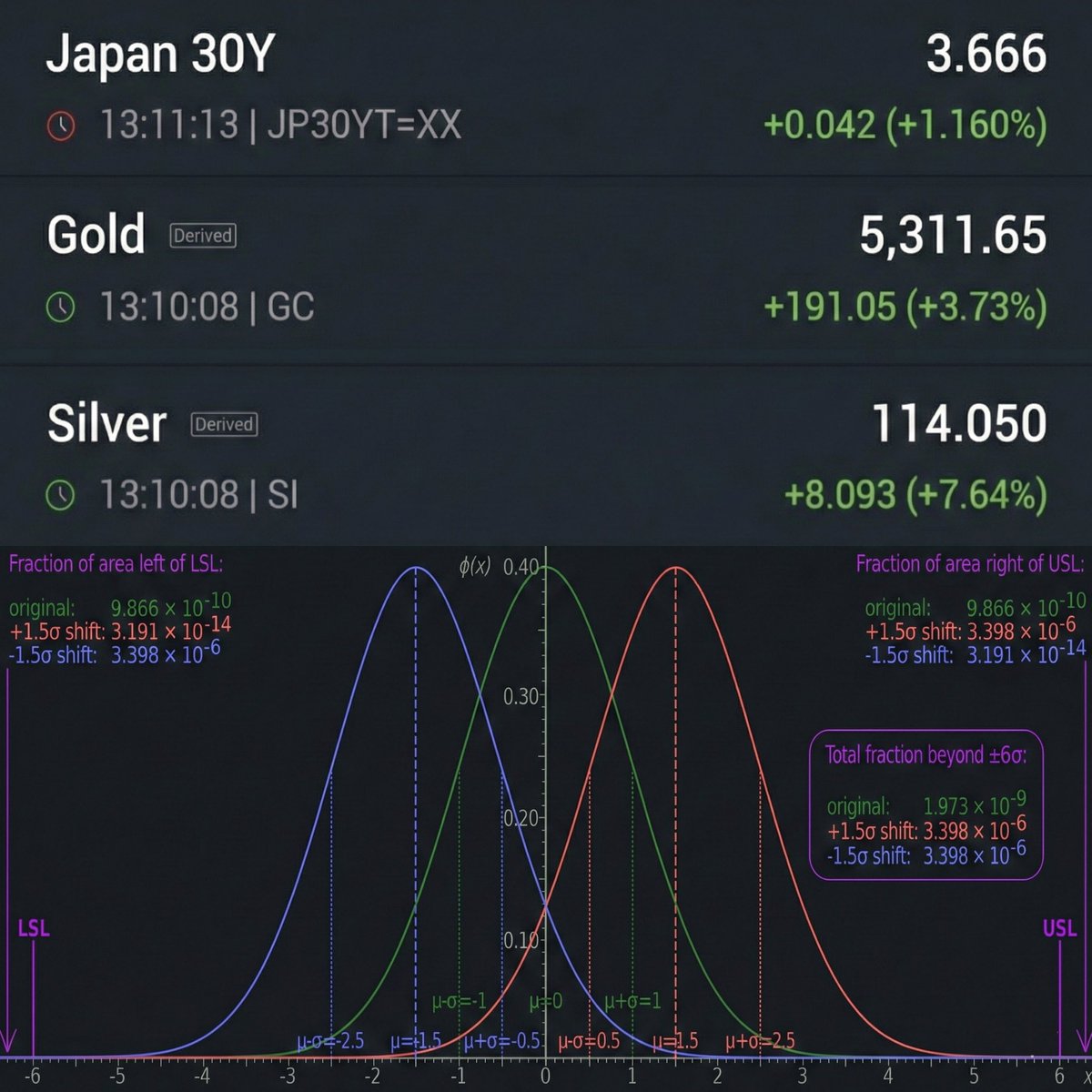
🚨 THE IMPOSSIBLE JUST HAPPENED
The probability of what is happening is near zero.
Three 6-sigma events occurred in one week.
– Bonds
– Silver
– Gold
We are currently living through a statistical impossibility.
Let me explain:
Last Tuesday, Japanese 30-year debt recorded what’s called a “6-sigma” session.
2 days ago, silver did even better: it was at 5-sigma on the rally, then reached 6-sigma on the drop. IN A SINGLE SESSION.
Gold right now? It’s up 23% in less than a month. We’re getting very close to a 6-sigma event.
That’s three 6-sigma events in ONE WEEK.
To explain quickly: in finance, we measure price moves around an average using the standard deviation, which we call sigma.
1-sigma: mundane
2-sigma: common
3-sigma: becomes rare
4-sigma: exceptional
5-sigma: extremely rare
6-sigma: supposed to occur once in 500 million
Here are the 6-sigma-type episodes we saw previously:
– The october 1987 crash, 22% drop in 1 session
– March 2020 covid crash
– The swiss franc’s surge in january 2015
– WTI oil turning negative in april 2020
But we’ve never had 3 events occur in one week.
Do you see the point?
A 6-sigma event is almost NEVER triggered by a simple macro headline.
It almost always comes from the market’s structure: leverage, positions that are too concentrated, margin calls, collateral problems, and forced selling or buying.
That’s important to understand because we’re talking about internal strains in the system’s mechanics.
As you know, the Japanese bond market sits at the heart of the global financial system, and I won’t go back over the whole topic, but a 6-sigma move in a market that enormous doesn’t go unnoticed.
Seeing a 6-sigma move in silver a few days later gives one a lot to think about.
And now gold?? That’s absolutely insane.
Why are we seeing extreme statistical events, only days apart, in such different markets?
When a pillar of global funding becomes unstable, leverage tends to contract, and two things happen at the same time: forced selling in certain assets and forced buying of protection in others.
Historically, precious metals are often among the beneficiaries.
Long-term rates say something about the credibility of states: that is, their ability to honor future debts without resorting massively to inflation.
Precious metals say something about the credibility of the currency itself, and when both become unstable at the same time, we’re looking at a challenge to the monetary framework.
I won’t go on, because I want to share the rest in another tweet tomorrow, but generally when a regime starts to crack, the adjustments are BRUTAL.
It’s exactly in those moments that several high-sigma events appear across different asset classes.
I’ll repeat it: seeing three 6-sigma events back to back is not normal.
Gold and silver are telling you, explicitly, that we’re living through a real paradigm shift.
Remember, I’ve called every market top and bottom of the last 10 years.
When I make a new move, I’ll share it here publicly for everyone to see, and it’s coming soon.
A lot of people will wish they followed me sooner.
From trusted source in Tehran: Tell all of your friends [abroad], everyone you know: there is absolutely nothing else we can do here inside Iran. Nothing. They are killing people in such ways, they’ve descended upon people so brutally, they're attacking us in such ways... We’ve lost so many lives that no one dares go out anymore. They shoot directly with bullets. They kill outright. And even after killing, they come and behead you, and do countless other violent things to you.
For God’s sake, whatever can be done, you are the ones who can do it. You must not abandon these gatherings. All of you must keep these protests going. We cannot do anything inside Iran. Going out into the streets is literally suicide. It’s not about bravery anymore. It’s madness. You go out and they shoot you point blank. They don’t even ask why you came. They just kill you.
There is absolutely no way for us to gather unless we had weapons, unless we were armed like them. Otherwise they have weapons everywhere. There has been so much killing. So much.
So whatever is to happen now is up to you. You are the ones who can somehow save us. [Breaks down into a sob. Crying, the caller continues...] When you see what’s happening, when you hear what’s happening… I’ve done so much yelling and choked on so much teargas, my voice is bad.
We follow what you're doing. When we see you gather in protest in front of an embassy it brings us joy. It still gives us a lingering hope that we can do something. It's your responsibility now. We did absolutely everything we could. As our fellow Iranians it's your responsibility. You can influence foreign policy. You can tell the world what's happening. The placards you hold. The YouTube videos. Distributing images and video. Gathering in front of embassies. Even if you have just the weekends. Please do something for us on Saturdays and Sundays. Please don't let your gatherings get smaller as the weeks go on. No one will stop you there. No one will kill you. No one is singling you out. We don't even have the freedom to walk about in our own town. We no longer even know who is friend or foe.
We don’t even know who we’re speaking to anymore. We no longer know if those recounting what's happening is an enemy. Because if one wrong word slips from our mouths, they turn us into a corpse even before we've had a chance to return home.
For God’s sake, I beg of you, don’t abandon these gatherings. Our only hope now is you. What’s now obvious is that America won’t do anything. You’re our only hope. Please tell your friends. You’ve seen how many young people have been killed. So many, so many young people. For the sake of the youth.
I know that based on the videos that have reached Iran International [satellite station] since yesterday, now that the internet has come back briefly, they will probably cut the internet again and people will go into silence, the country will go back into a blackout.
For God’s sake, please help us. Help us save our country from these people. Stand together so we can live in a flourishing country. For God’s sake, help us.
We are in Tehran. What I saw in Tehran, and what they’re saying about the provinces and small towns... They couldn’t fully control Tehran’s gatherings with the forces they had, but in the small towns it was killing after killing. Towns with populations of only 20 or 30 thousand people truly had many deaths. Thousands, hundreds…
The things we’ve heard, the things we’ve seen go far beyond mass killing. It was horrific. Truly horrific.
I beg you. I beg you. Don’t abandon these gatherings. Please. #Iran#IranMassacre
But the way crypto works..... even if we go up to $180k in a few months, there will be a deviation crash to a low point, like $60k, even if only briefly. Crypto flash crashes to extreme low deviation levels specifically to engineer the giga bounces afterwards.
Why shouldn't it crash once more like this in the next 2 or so months just to dial up negative sentiment to the ultimate max, before ripping upwards?
I can literally feel it.
The timeline has become totally and utterly infected by fear.
Everyone is grave dancing on every single thing to do with Bitcoin and Crypto.
The collective mind has become obsessed with and has an irrational and panic induced fear of lower...
It's all you see these days.
This kind of collective sentiment is exactly what you expect in a bottoming zone before large moves.
And no matter how well one can look back at these times and understand it...
When you are in it, for the majority, it becomes impossible to see.
The collective fear is simply too strong.
The individual thesis simply too weak.
But it is within these very times when the majority have left and the industry is being labelled a joke that the greatest opportunity lies.
I cannot force you to see it.
However, you should take one thing away from this post, even if you want to reject it(the fact you want to reject it is a lesson in itself).
The worst sentiment only happens at the darkest lows, and the darkest lows are by nature the greatest opportunities.
The best sentiment only happens at the highest of highs, and the highest of highs are by nature the worst opportunities.
Yet, if right now, we were mooning, everyone would be buying and bull posting.
If you cannot understand this, you will never truly win.
The reason this game is so hard is because to actually be able to win, you have to be able to go against the sharpest of fears and take action, even when everyone is trying to tell you that you are wrong.
Only the few will learn the skill to do it...
Will one of them be you?
One thought on watching crypto over the past 8 years.
People tend to overextrapolate the "lesson" from the last few years of the market at exactly the wrong time.
In 2019, almost everyone sold the generational low of big winners like Aave, Uniswap, etc...
And so the lesson the market learned was "never sell."
This advice was repeated on podcasts ad nauseam for over two years and liquid funds looked like geniuses.
After that, alts proceeded to bleed against BTC for three straight years and the lesson the market learned (and the dominant psychology today) is "sell fast, alts are a trade."
I think there's very good reason to believe that once again it makes sense to defy the recent wisdom.
Conditions are getting better for tokens (cleaning up complicated equity vs token structures, CLARITY, etc...) at the same time that category winners are emerging and barriers to entry are rising.
My bet is that the winners keep winning and the next 10 years are defined by compounding.
Just buy the one or two clear front runners of big categories, close your eyes, and hold for 10 years.
Price cannot grow exponentially forever. Correct. Over time BTC price growth plateaus and enters a different growth regime.
While fees and budgets are calculated against local fiat; there's no failure mode there.
If one day 1 BTC = $10M, the cost to attack it will be the same in fiat, or higher, if there's more nodes on the network.
The opportunity cost will always be the true barrier. Why attack the network instead of buying into low prices? Furthermore attacking the network successfully would destroy it for everyone, including the attacker.
Therefore Bitcoin is immune to financially motivated attacks, and only susceptible to ideological attacks where the goal is complete destruction.
However Bitcoin is divine, it is halal, it is loved by all humanity, it is incorruptible, like the corpse of a beloved saint. There wouldn't even be any group with desire or capability to spend billions to attack Bitcoin simply to destroy it. Even evil people need it.
For most all humans on earth, the risk metric for Bitcoin is, having some % exposure is less risky than none at all.
Your article might only make sense to the few extremely rich humans on earth that have nothing but Bitcoin and need to diversify
BTC will collapse within 7 to 11 years from now!
First, the mining industry will fall, as the security budget shrinks
That is when the attacks begin; censorship & double-spends
Core will then have to increase inflation beyond 21M, splitting the chain & that will be the end! 🧵
The code & math do not lie; as this can all be verified independently. We must prioritize the truth, no matter how much we love the idea of Bitcoin; BTC is an emperor that wears no clothes:
Broken Security Model
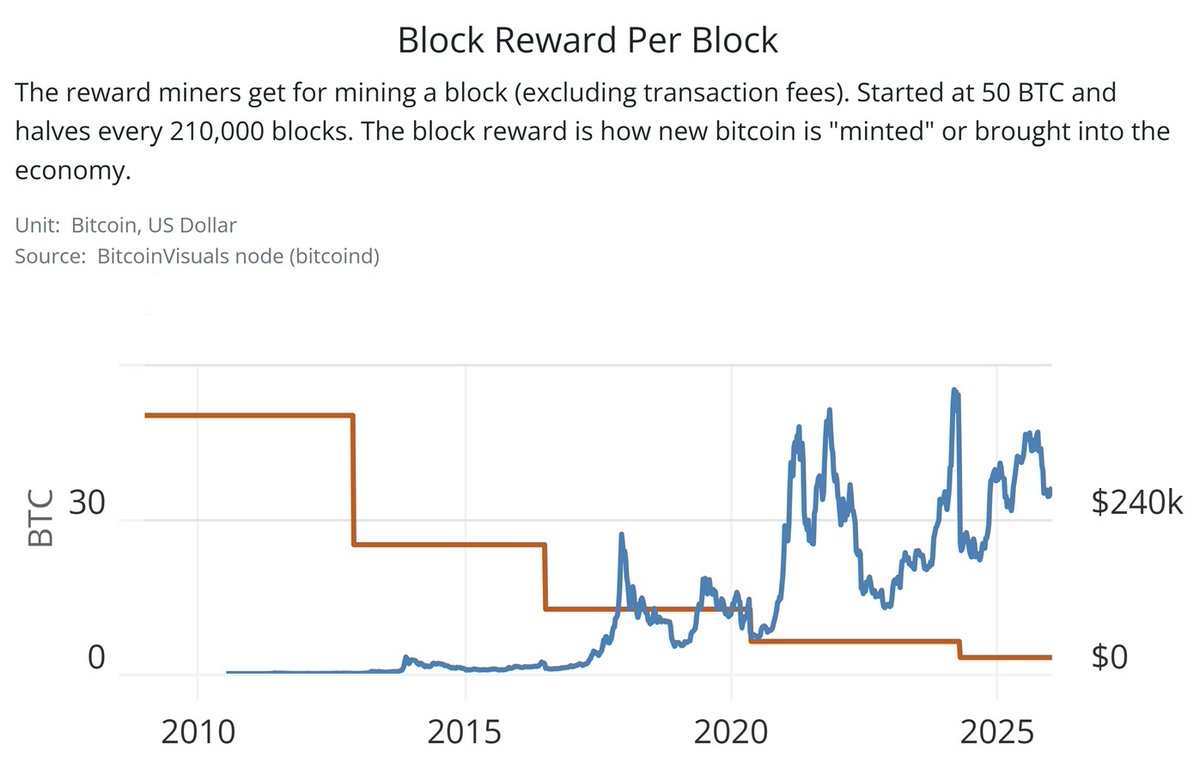
As it stands now, BTC must either double in price every four years for a century or sustain extremely high fees. Only to maintain the present level of security...
That is because each halvening exponentially lowers the security budget derived from inflation until it is practically nothing & price is failing to keep up:
If you have a basic understanding of economics & exponential functions, then you should know that this is entirely impossible! As it would exceed global GDP within decades. That is why BTC's security is fundamentally unsustainable!
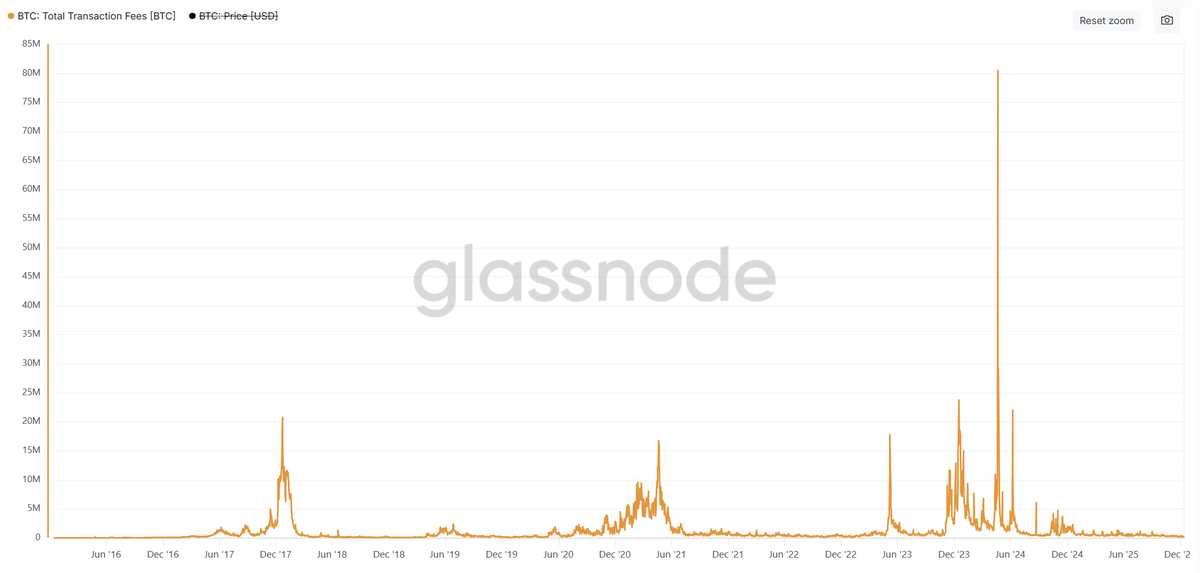
Fees will also never reach sustained extremes due to the "ratcheting effect" of the fee market. Paying hundreds of dollars for a single TX is not realistic in a competitive free market. When fees spike, users leave, all due to unnecessary & arbitrary capacity limitations
This means that BTC's long-term security is unsustainable without extremely high transaction fees...
Fees that have so far failed to materialize, with the exceptions of fee spikes, which are insufficient for sustained long-term security:
That is why the security of BTC will inevitably continue to decrease until it becomes profitable to attack. This is also how we know the approximate timeline for this collapse (7-11 years) as it is based on the halvening cycle. Therefore, in other words, BTC will most likely collapse within 2-3 halvenings from now!
However, this crisis could also be triggered before that time period, especially as what I am explaining here becomes more widely known. Other parties are likely going to attempt to front-run this disaster as well, making any attempt to time this a very dangerous game
Measuring Security
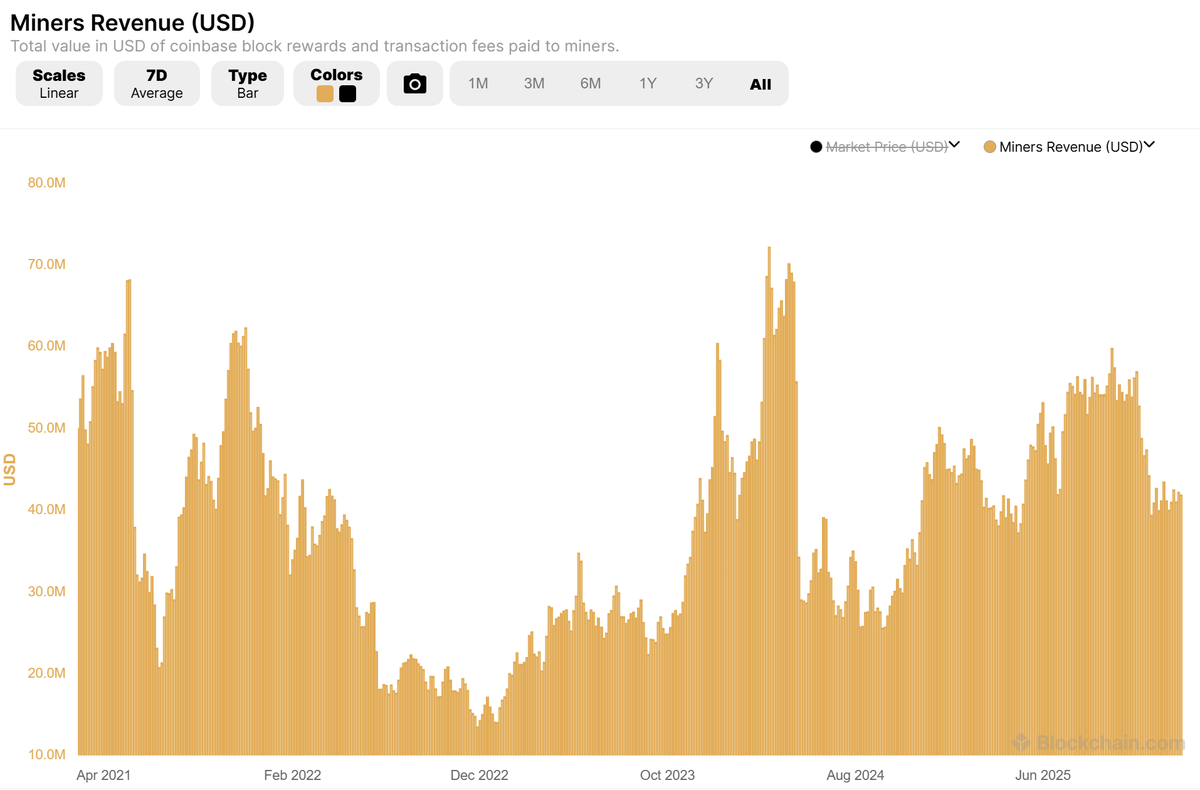
This chart of miner revenue shows that BTC's security is actually lower now than it was five years ago! Proving the decline of BTC's security, as it shows how miner revenue (block reward), not hash rate, is down:
Hashrate does not equal security; most bitcoin influencers do not understand how PoW works, leading to a profound public misunderstanding of BTC's failing security model
That is because hashrate is a mostly meaningless metric in regard to calculating security, as miner revenue can go down while hashrate goes up. This is because, as hardware improves, it costs less to produce these same hashes. That is why we cannot simply count hashes to determine the security budget!
Because it is not these hashes that secure BTC: It is the cost that goes into producing these hashes that secures BTC! In other words, what matters is the cost of attacking BTC, which is not determined by hashrate! It is instead determined by an attacker's cost/benefit calculation
In other words, the security budget of BTC is best measured by how much is being paid out to the miners (block reward), as we would expect a Nash Equilibrium to form based on this direct economic incentive. So that covers the "cost", the "benefit" is based on what is to be gained from attacking BTC:
Attacking BTC
Crypto-economic game theory relies on punishment & reward, carrots & sticks. This is why miner revenue determines the cost of an attack. When it comes to the reward side of the calculation:
Double-spending, with 51% attacks targeting exchanges, is a highly realistic attack vector due to the massive potential rewards
An attacker could make billions from such an attack, especially as they could target multiple exchanges, defrauding them of at least $100M+ each. Especially, if we also include simultaneously carrying out "exploits" on decentralized protocols that would also be vulnerable once such double-spending starts to occur
The basic premise is that if an attacker sends their own BTC to an exchange, trades it for another asset, & then sends that back to themselves. The attacker is then able to roll back the chain (due to 51% control of the hashrate), at which point they would regain their BTC, & whatever they traded it for, effectively doubling their money, & defrauding the exchange in the process!
This puts the lowest attack threshold at a few million dollars per day. Something that can easily be reached within this 7-11-year timeframe. For the sake of argument, if price & fees remain stable then the cost to attack the chain for 1 day will be $2.88M in 11 years. Well within the threshold at which such attacks become feasibly profitable
This also means that in this scenario, a blockchain network worth over $2T can be taken down with a $1B investment. This might even be a worthwhile endeavor for a statist competitor or even a crypto competitor. Especially considering that this would even be a profitable venture
Hypothetically, for example, it would be quite a blow if China were to wreck the US's BTC reserve in this way, as from a cost-benefit analysis perspective, that would make a lot of sense!
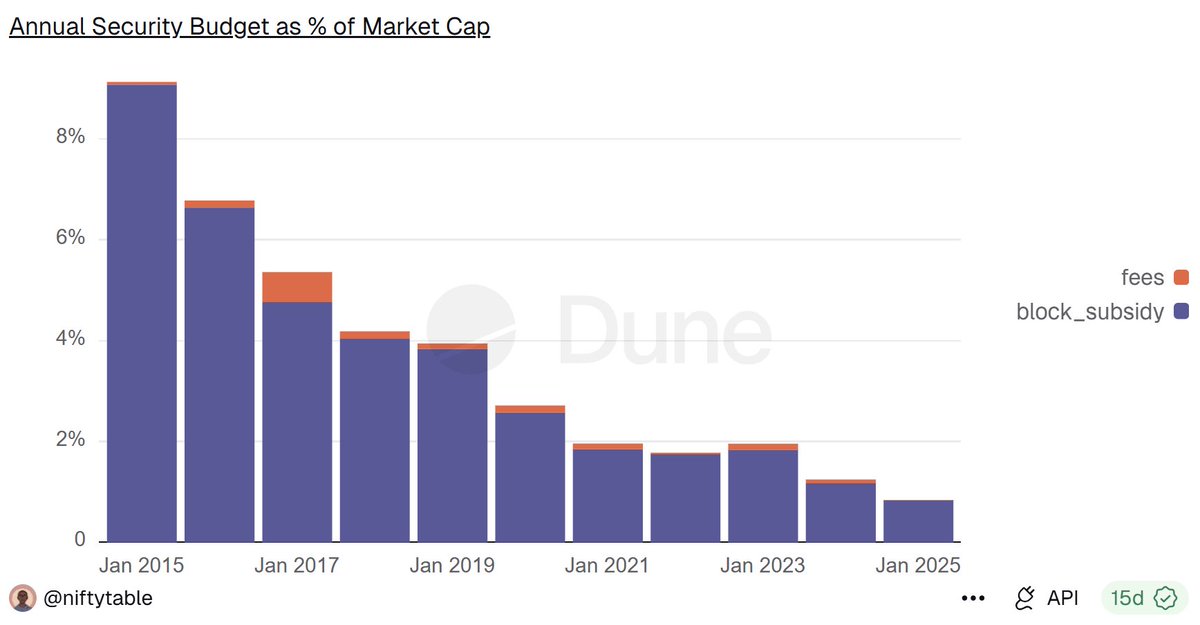
Keep in mind that the more prominent BTC is by this time, the more profitable such an attack becomes... As the below chart also demonstrates, the security budget relative to market cap is falling off a cliff:
This means that BTC can never be too big to fail, as long as it fails to generate fee revenue to sustain its own security budget; in fact, this attack only becomes more viable, not less, with increased adoption!
The Math 🎓
The TPS calculation is based on Max Theoretical TPS: (Block size (1.66MB)/Transaction size (374B)) / Block time (10M) = TPS (7.75)
The figure for on-chain BTC holders was taken from glassnode's analysis from March 2023
We use the P2PKH TX format with 2 inputs & 2 outputs, to better represent an "average user". Even though Segwit allows for 4MB blocks, this cannot all be filled with TXs. Historically, the largest BTC block filled with TXs was 1.66MB, so we will use that number:
(1740636.16/374) / 600 = 7.75 TPS (rounding down to 7 as BTC cannot execute partial TXs). 7x60 (minutes) = 420x60 (hours) = 25200x24 (Days) = 604,800x30 (Months) = 18,144,000 (Monthly TXs) 33000000
(Current Users) / 18,144,000 (Monthly TXs) = 1.818 (months)!
(7T (Global Users) / 18,144,000 (Monthly TXs) = 385 (months) / 12 = 32 (years))!
These are all extremely conservative estimates, which assume zero network activity outside of these on-chain users exiting with a single TX. While also basing this on user numbers from three years ago...
The security budget calculation is based on "cost to attack"
BTC: 16.42B (inflation) + 0.14B (fees) = 16.56B x 0.51 = $8.44B / 8 (3 halvenings) = 1.05B (attack threshold for 1 year) / 365 = 2.88M (attack threshold for 1 day)
An Impossible Choice
So what does this all mean? This means that BTC's long-term security is in deep trouble. Without extremely high TX fees or unrealistic price appreciation, the security of BTC will inevitably continue to decrease. Until it drops so low that the network becomes profitable to attack, rendering BTC insecure within 7 to 11 years
At which point, there will only be two choices left:
1. Increase BTC's supply inflation beyond 21M!
2. Allow the network to come under attack with double-spend attacks & censorship attacks!
BTC is between a pet rock & a hard place. The writing is on the wall: Bitcoiners will have to make this hard choice or watch BTC's security fall right before their own eyes
That is why several prominent figures, including Core developers such as Peter Todd, acknowledge this problem & are advocating for an inflation increase
I am a BTC critic because I do not think BTC will be able to solve this dilemma in time. The "solution" is an inflation increase, as a block size increase is off the table politically, something we will dig further into later
Despite this, an inflation increase "solution" overturns BTC's primary touted benefits, thereby betraying the promise or "social contract" of Bitcoin. The bitcoiners who support a supply increase obviously do not believe this. At least their position is consistent
The bitcoiners who deny this only exacerbate the situation by promising people that BTC will always have a 21M supply limit. Damaging trust, & setting them up for disappointment & a feeling of betrayal, rightfully so! As they are misleading people into supporting BTC based on false pretenses!
The most likely outcome is that in 7-11 years from now, both of the options I described & more occur simultaneously
Splitting the network in half again & causing even more chaos in the process. One version of BTC with inflation, the other without & possibly even more bifurcations. While making them all even more vulnerable to attack, as the hashrate is now shared between them
Bank Run
If only a fraction of current BTC holders attempted to move their coins today, the system would cease to function. That is what opens up the possibility of a "bank run" type situation, as people are piling into a system that can in no way accommodate a timely exit
Even according to the most conservative estimates, if every current BTC user only did one transaction, the queue would be 1.82 months long!
BTC cannot actually support such long queues, making it extremely unreliable during congestion. In effect, most people's TXs would get stuck & eventually drop after a few days...
That is how, for most people, the BTC network would effectively cease to function! As the capacity is finite, no matter how much people pay
That is why self-custody over BTC is completely unsafe & we should be advising people against it!
This will also only get worse if BTC continues to surge in popularity, as most have no idea how deeply flawed BTC really is
We can debate semantics, but from a user perspective who cannot move their funds while price crashes, the experience is the same, even if there is no bank involved in this "bank run"
Panic can quickly exacerbate the situation as people rush for an exit that cannot accommodate the demand, thereby inflating the strain on the network as people desperately start "spamming" TXs in an attempt to be included, clogging the system up even more...
This crisis could even be triggered early, before the exact 7-11 year timeline predicted here. As the "bank run" threat is compounded by BTC's failing security model
A course of events so dramatic that it is not hard to imagine that this could cause a fraction of BTC holders to attempt to move their coins, triggering the "bank run"
Death Spiral
Such a panic could certainly also impact the price of BTC, too. The problem is that this has a very real potential to create a vicious cycle (a death spiral)
That is because a significant drop in price leads to a corresponding drop in the hash rate, as some miners would no longer be profitable, forcing them to shut down. However, due to how the difficulty adjustment algorithm works; a 2-week readjustment period (measured in block time)
A sudden drop in hash rate proportionally affect the speed & capacity of the network. So, if half the miners left, for instance, block time would also drop in half & the readjustment period could take up to a month! (because it is measured in block time)
A unique quirk of BTC's design, which on its own might not have been so harmful, however, when combined with BTC's current limited capacity, it is a recipe for disaster, because of the compounding, spiraling effects
So, we could see a situation where a 3-month backlog turns into a 6-month backlog, & then a 1-year backlog, very quickly
As the panic would cause the price to crash, which in turn causes more miners to shut down, which in turn slows the chain down even more, causing even more panic & the price to crash again & even more miners shutting down, etc, etc; ad infinitum...
Causing a repeating downward negative pattern/cycle. That is known as a vicious cycle in game theory, also referred to as a negative feedback loop or a death spiral
Pure Greed
There are exactly ZERO use cases that 7-TPS can support, making BTC, by definition, purely speculative. Unable to effect any real change in the world by virtue of it literally being useless
For reference, FedWire & Chips on average do around 12 TPS (inter-bank settlement), PayPal does 200 (online payment), while VISA & Mastercard average at around 5k TPS (retail)
All while BTC's crypto competitors can exceed 10k TPS, or even 1M TPS in some cases, all without sacrificing decentralization! There is no excuse anymore for keeping the limit this low
That is how BTC fits the definition of a meme coin perfectly, as a meme coin is an asset without utility; in other words, pure speculation!
A consequence of restrict a chain to being a "Store of Value" only; it destroys the very qualities that might have made it a good SoV in the first place: Utility
Contrary to the wishes of its founder, Satoshi Nakamoto. BTC was captured by a relatively small group who managed to radically change the design, purpose & economics of BTC
One of the biggest tragedies is that the original design might have worked! Instead, the Core developers restricted on-chain capacity, instead of massively increasing capacity as the original plan promised
It is this failure of the utility/usefulness of BTC that bears such dire consequences for its long-term security model. As security, scarcity & utility are all intrinsically linked in blockchain design
Raison D'être
The root cause behind all of this can be traced back to the block size wars, where BTC was effectively captured by a small group, who pivoting BTC away from its original design, despite the wishes of it founder, Satoshi Nakamoto, to quote the man himself:
"The existing Visa credit card network processes about 15 million Internet purchases per day worldwide. Bitcoin can already scale much larger than that with existing hardware for a fraction of the cost. It never really hits a scale ceiling" - Satoshi Nakamoto
"The current system where every user is a network node is not the intended configuration for large scale. That would be like every Usenet user runs their own NNTP server. The design supports letting users just be users" -Satoshi Nakamoto
The evidence for this is indisputable; you can disagree with Satoshi, but please do not attempt to rewrite history. Read "Hijacking Bitcoin" for a more in-depth exploration of this history, as it does a great job of exposing how BTC was captured & perverted along the way
As BTC is capable of achieving massive scale while preserving decentralization. With some relatively minor code optimizations that are present in some of BTC's forks, such as BCH
Even supporting VISA lvl scale on a decade-old laptop right now! As Satoshi thought was already the case in 2013... The threat of supporting bigger blocks is totally exaggerated, especially in 2026!
This is one of the reasons why Bitcoin's original & intended design was so brilliant & not at all so incredibly flawed & broken as the BTC that we all know today
The truth is that BTC has completely pivoted its purpose, economics, & vision since that time, breaking what was once a great blockchain, all because of the block-size wars. As not increasing the blocksize limit was the biggest change ever, a clear departure from the original vision & purpose of Bitcoin
The original design might conceivably have worked, as attempting to service a large number of TXs, each paying a small fee, is a far more realistic path to long-term sustainability. As opposed to a few TXs paying an extremely high fee, which is unrealistic in a free market & serves no utilitarian purpose
In the former case, if BTC followed its original roadmap, it would be providing invaluable utility to billions of people today...
This is also clearly what BTC was always intended to do, based on all of Satoshi's writings & as he even clearly stated on the first page of the Bitcoin whitepaper. Allowing BTC to actually be money was taken away from us by the powers that be:
Usage has literally been capped! This is why BTC cannot & will not ever be for payments, as the Bitcoin Whitepaper so clearly described was one of Bitcoin's purposes. This is what makes widespread & significant usage of BTC technically impossible. All contrary to the project's original roadmap & the founders' clearly stated wishes...
Even mass self-custody is impossible on BTC now: Since even if everyone in the world wanted to only do one transaction, the queue would be more than 32 years long!
Requiring people to hold BTC through custodians en masse, the very thing BTC was created to bypass
Economic Theory
This makes today's BTC a poor & uncompetitive Store of Value, as this limitation means there is zero real utility; even mass self-custody is off the table, this is what makes it such a terrible SoV...
If BTC had been allowed to become money by scaling the L1, as was originally intended. It might have been a great SoV, as a foundation in utility provides the best possible security for long-term value creation & preservation. Today, BTC is reduced to being a mere meme coin with a failing security model instead
Being forced to choose between security & scarcity is not a good choice at all. Especially, when BTC's competitors can offer security, scarcity, capacity, & speed combined! All while still preserving decentralization, as was always intended originally!
Governance Mythos
The myth of BTC is that it is a decentralized meritocracy where the best ideas rise to the top...
The truth is that the dominant client, “Bitcoin Core” Has effectively achieved centralized control over BTC development. Turning it into a one-party system, with Core as a gatekeeper of all change!
My original 2013 thesis for investing in BTC was destroyed by the very people we trusted to maintain it. There also lay the problem; what we witnessed was a failure of governance:
BTC's history of power struggles & civil wars is a symptom of this failure; that is why Bitcoin Core, in practice, has disproportionate power to make any changes, even controversial ones, such as RBF & not raising the blocksize limit today!
While kicking out anyone who disagrees with them, such as Gavin Andresen, Mike Hearn, Jeff Garzik & more during the block size wars, & calling that consensus...
Political Analysis
The probability of positive change is a key part of this puzzle; however, this requires a political & governance analysis:
In practice, there is an extreme degree of centralization of decision-making power, where a small group of Core developers can act as gatekeepers to all changes
The truth is that the dominant client, “Bitcoin Core” has effectively achieved centralized control over BTC development. BTC is governed in the same way most software projects are governed on GitHub; essentially a type of dictatorship...
Effectively turning it into a one-party system, a type of "Github Dictatorship" if you will. With Core as the gatekeeper of all change! Currently, there are only six people who hold the keys to the empire, literally! (commit access to Bitcoin Core)
Like all dictatorships, there are limits to their power. Yet, this is still a total perversion of the very idea of decentralization that BTC was supposed to represent
The Wizard Of Oz
The block size wars are not only the cause for the current status quo but also the perfect example of the effective centralization of power within BTC, as the majority of miners wanted an increase & so did the majority of companies, stakeholders, and users...
The fact that Core still got their way instead, passing SegWit & blocking a blocksize increase to this day, is one of the strongest pieces of historical evidence for massive governance centralization in BTC
Their "anti-governance" stance serves only as a convenient shield, allowing them to deflect responsibility through the use of "decentralization language". When in reality they remain effectively in charge
A lot like the Wizard of Oz, who controls his empire behind the curtains, pretending to be something he is not
Cause & Effect
Another far-reaching consequence of the block-size wars was that they suppressed competing clients in favor of a "monolithic network". That is why Bitcoin Core still makes up the majority of nodes on the network. Preventing all efforts to solve the security dilemma without resorting to increasing the inflation rate!
Creating a competing client that meaningfully opposes Core is still seen as an "attack on Bitcoin" to this day. That is part of the ever-so-harmful cultural legacy of the block size wars. That is how the same people remain in charge, literally. In part because the failed revolution actually reinforced their position
That is also why the probability of change is so low, egos & businesses (L2s) depend on BTC never scaling
Due to demographic shifts over the last decade, within the BTC community. There is nowhere near the level of support for change compared to during the blocksize wars. All of those rebels have since left for greener pastures, while the people who support the new status quo have remained!
Like other cryptocurrencies, BTC's demographics are self-reinforcing!
This all means that BTC has effectively been captured, a clear failure of decentralized governance design. A subject I explored in far more depth in my "theory on Bitcoin governance" & other articles here
Leaving "voting with our feet" as the only option left
The big takeaway here is that bad centralized governance is the reason why there is very little hope for change left, at least not until the crisis forces change, but by then, it will be too late, by my reckoning
Conclusion
The story of Bitcoin is one of a beautiful early hope
A wonderful, positive vision for the world that most people are buying into now. Which is fantastic
There also lies a silver lining in that there clearly is demand for Bitcoin's original vision. What a shame that BTC cannot actually deliver on what it is promising people today
Most do not realize the bait & switch that has occurred, as BTC cannot deliver on the vision they are being sold
The Bitcoin dream on BTC was crushed by the very people we entrusted to uphold the vision. There lay the problem as trust led to betrayal & deceit. False promises followed by broken promises. Forever moving the goalposts to the point of infallibility...
The rejection of "on-chain" governance only gave us the worst of "off-chain" governance; Plain old school realpolitik, something BTC's leadership was not ready or equipped for, making BTC incredibly vulnerable to capture, corruption, & perversion. The social scientist in me should not be surprised by this outcome; it really was inevitable
It is shocking & unbelievable, yet it is the truth. From censorship, cybercrime & extensive conflicts of interest. Core gained effective control over BTC's decision-making process. That is what is leading BTC toward its inevitable downfall now & is what annihilates almost all hope for change
There are no viable paths for change within this urgent timeline. Unless the wider leadership & public seriously acknowledge this. That, unfortunately, seems unlikely. That is what makes the looming security crisis of BTC's security so certain today
So, please take this as a warning, from someone who loves Bitcoin's original vision & wants it to thrive. BTC now only holds back that original cypherpunk dream, & it is setting up a scenario where countless innocent people are going to get seriously hurt
Exiting the BTC chain will become almost impossible once the collapse begins
Trapping countless innocent people in a potential death spiral. A disaster at a scale we have not even seen in crypto yet, we can avoid becoming victims by rejecting the lies & accepting the truth now
Spreading this message can also help mitigate the damage that will be done. Both directly to innocent people & to the progression of the cryptocurrency revolution, movement & industry as a whole
Crypto can provide people with scarcity & security at scale, while preserving decentralization right now! BTC represents a horrible compromise we do not even need to make. Another reason why BTC is a band-aid that is better pulled off sooner rather than later
As our beautiful experiment is now teaching us its most important lessons through its failure ♥️
There is, however, much hope left on the horizon for cryptocurrency as a whole. As the industry has evolved by leaps & bounds beyond the original tech & BTC. Solving all of these key problems & far more
That is why Bitcoin's original vision now thrives in its children instead! 🕊
@PhilakoneCrypto Late January to mid February has never crashed in Bitcoin history when already after a macro bottom, and not right after a massive top.
Few more weeks, maybe a month…
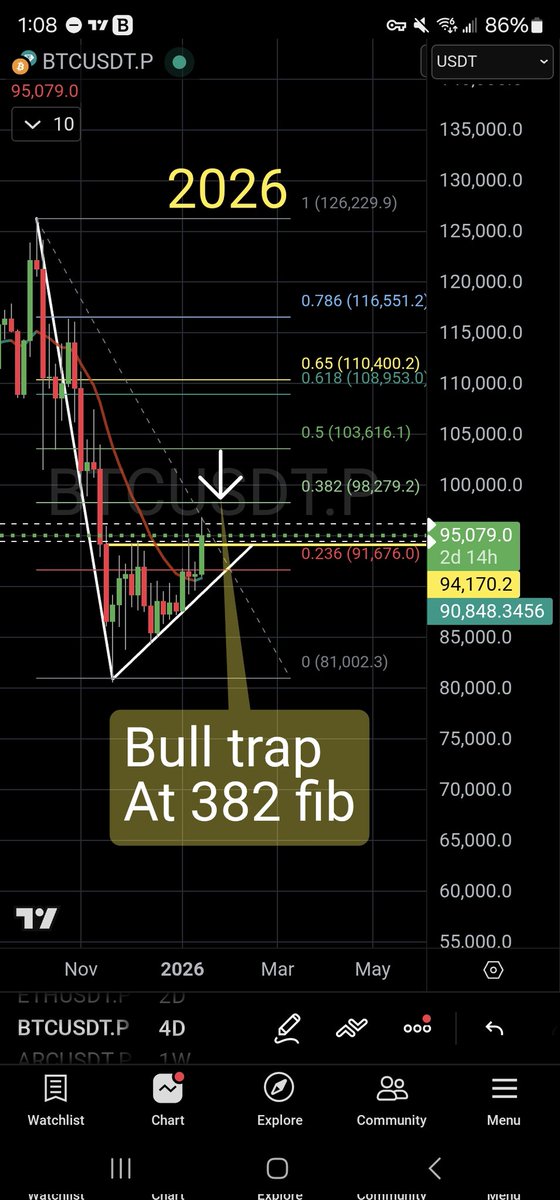
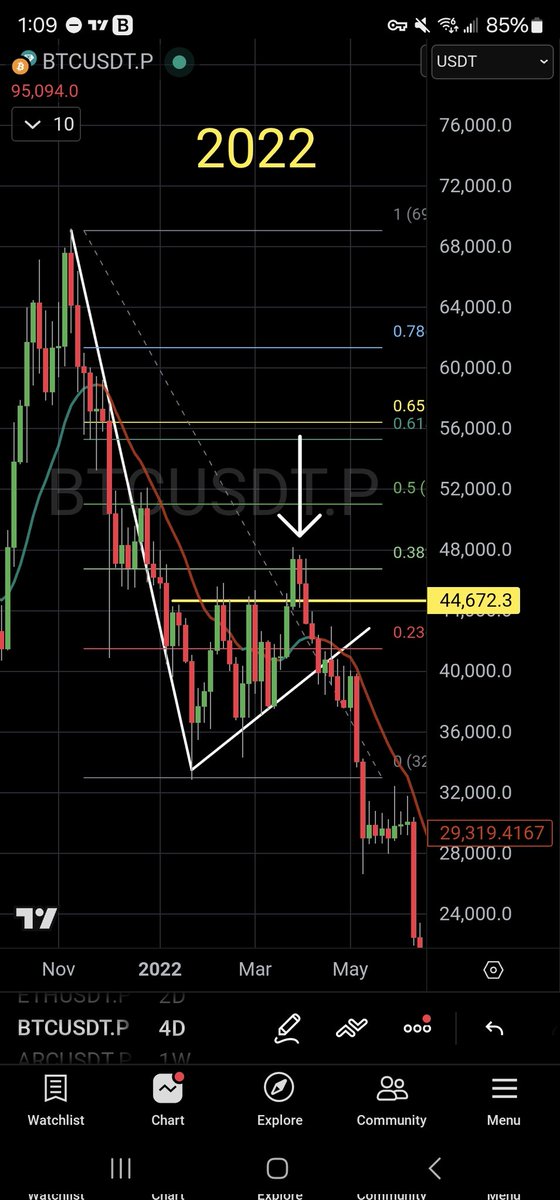
A comparison of what 2022 and 2026.
In 2022, we had a resistance between 236 and 382 FIB that took 50+ days to finally break, then we bull trapped at the 382 range.
Right now in 2026, we are repeating the exact same event thus far.
Will 382 fib bull trap hard again?
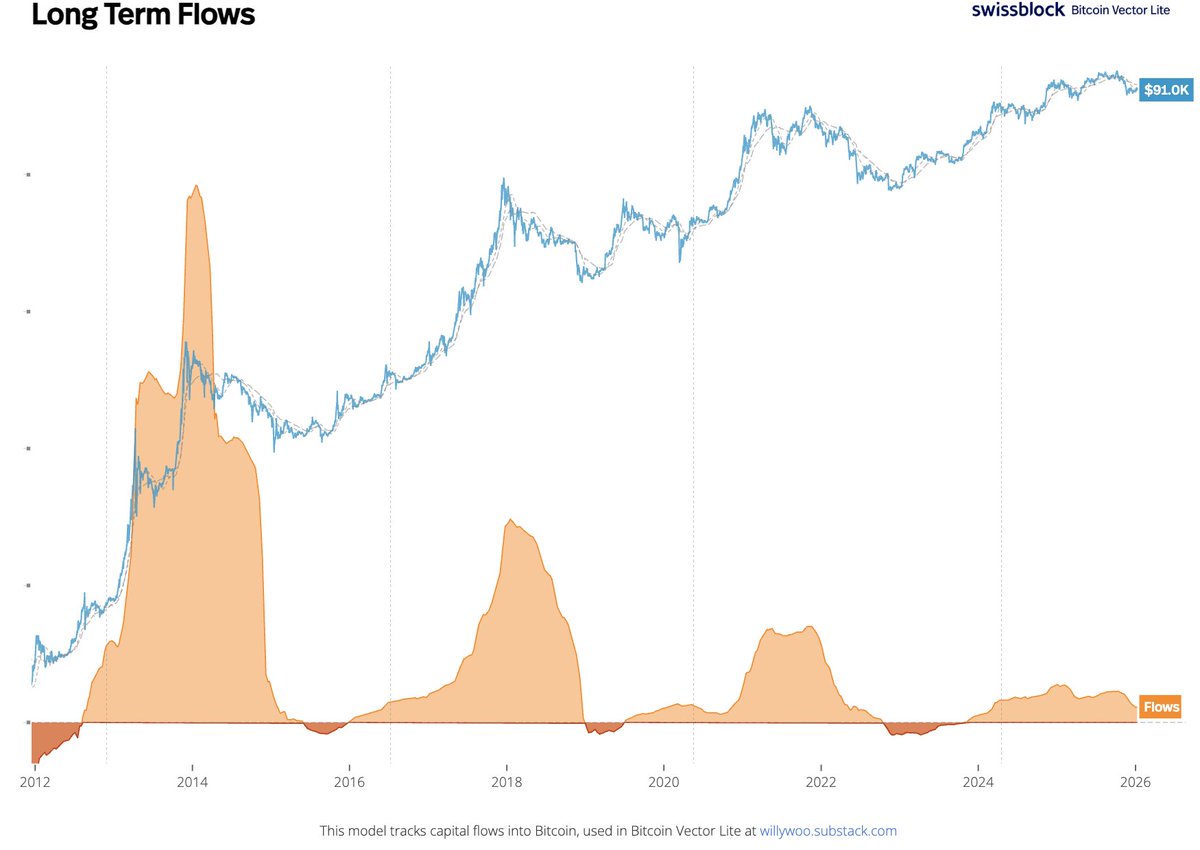
Fuck flows. Price action says the 4 year cycle is already dead. Late 2023 the cyclical bull run rocketship took off 300 days early. Nov 2025 the regular 4-year cycle pattern of breaking the previous cycle's all time high worked out for only two months, and Jan - April 2025 massive bear market and altcoin massacres instead of bull run dynamics. Then late 2025, no euphoria, no blow off top, another fake top ended by the greatest hypercrash in crypto history into what looks like the 4-year cyclical bear market crash. This will crash with much less volatility than previous cycles and price action will prove that we are stretching out the cycle and it's mapping to something bigger. Not the halving.
Until orange climbs higher into 2026 and starts to weird non-cyclical stuff, this narrative on THE END OF 4 YEAR CYCLES is NOT supported by data.
Flows into the BTC network declining according to past cycles.
@ExodusAssist@exodus is not operating as usual. It's showing fake duplicates for every sent transaction!! Across multiple Exodus installs. Even if Exodus is not hacked, THE UI is ALLOWING A HORRIBLE BUG to manifest!!
Thanks for fixing this immediately!
@solrac149 Hi Carlos! Thanks for flagging this concern. We want to assure you that Exodus is operating as usual and there's no sign of a hack. Please email us at support@exodus[.]com, and we'll help you review any transaction issues you have. We've got your back 🙏 -AV
@ExodusAssist@exodus is not operating as usual. It's showing fake duplicates for every sent transaction!! Across multiple Exodus installs. Even if Exodus is not hacked, THE UI IS ALLOWING A HORRIBLE BUG to manifest!!
Thanks for fixing this immediately!
@solrac149 Hi Carlos! Thanks for flagging this. We know posts like that can be alarming, but we want to reassure you that Exodus is operating as usual and there's no sign of a hack. Please email us at support@exodus[.]com, and we'll go over any questions you have. We've got your back 🙏 -AV
You're deeply mistaken.
100× leverage was created in by BitMEX / Arthur Hayes in 2016. A crypto innovation. The funding fee is also unique to crypto.
Today there's already 1,000× leverage, and even 10,000× has briefly appeared.
Bitcoin's volatilty can decrease by an order of magnitude, and then it'll be as safe to trade 100× as it is to trade 10× today. That could take years.
The market will exist forever. Because no one can stop Bitcoin. It will be there to trade, forever.
Furthermore, I trade hedged. I'm immune to liquidations. Thousands of people will learn this strategy from me and others over the years.
Bitcoin can trade in a 20% range for years and it'll be wildly profitable with big leverage using a hedged vol extraction strategy. And Ethereum / Solana etc coins will fill Bitcoin's place. Another coin will grow along a power law / network effect growth path.
The poor will always have a chance to get rich in crypto.
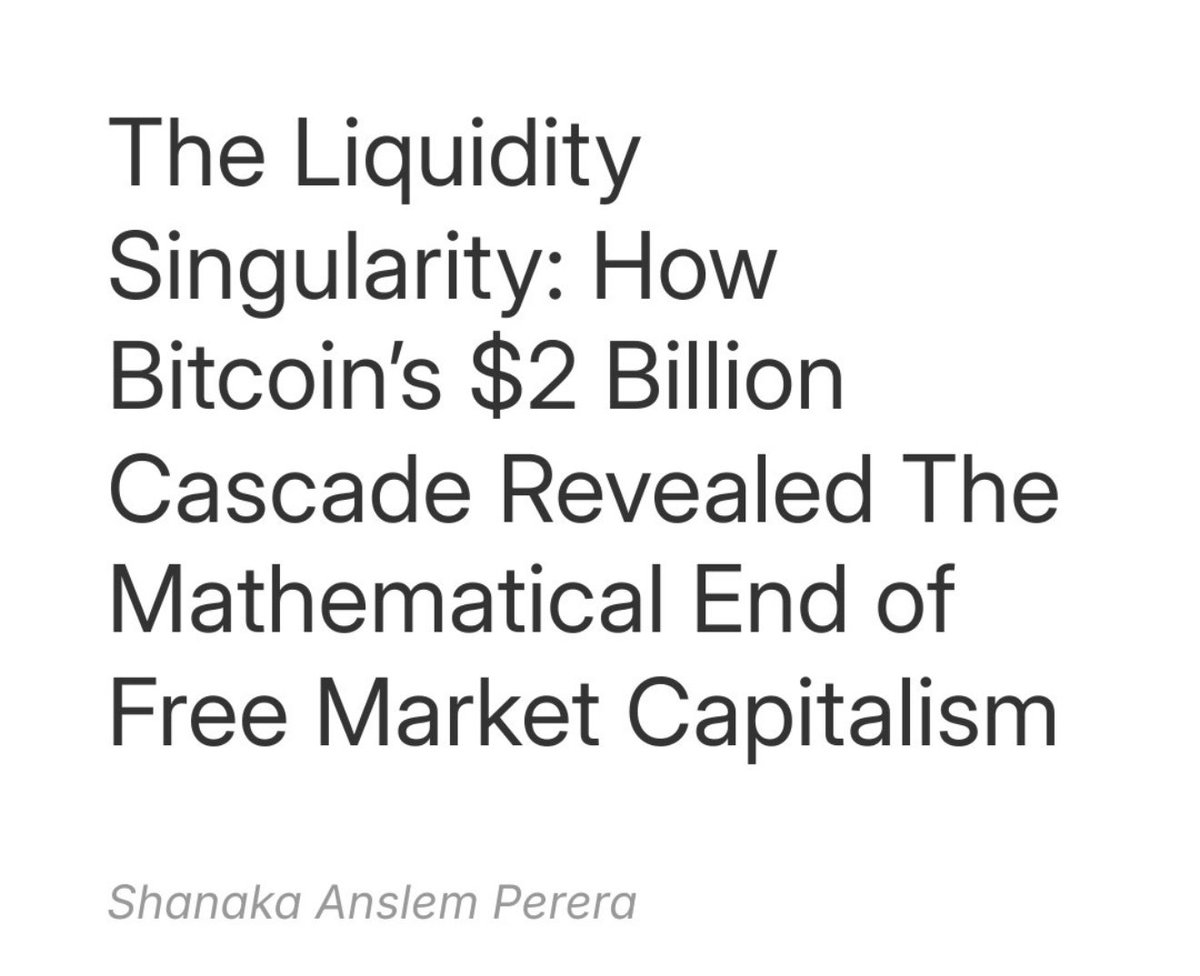
THE $200 MILLION LIE: What Really Happened November 21st
Bitcoin didn’t crash because people sold. Bitcoin crashed because the math broke.
On November 21, 2025, $200 million in actual selling triggered $2 billion in forced liquidations. Read that again. For every real dollar that left, ten borrowed dollars evaporated instantly.
This is the ratio that Wall Street doesn’t want you to see: 90% of Bitcoin’s market is leverage built on top of 10% real money. Your $1.6 trillion cryptocurrency runs on $160 billion of actual capital. The rest is a mirage that disappears when prices move.
A man named Owen Gunden bought Bitcoin in 2011 for under $10. He held through every crash for 14 years. His stack grew to $1.3 billion. On November 20th, he sold everything. Not because he panicked. Because he understood what changed.
The crash started in Tokyo, not crypto markets. Japan announced economic stimulus and their bond market collapsed instead of rallying. Translation: global investors no longer trust Japanese government debt. That debt funds $20 trillion in borrowed money worldwide. When it unwinds, everything crashes together.
Bitcoin fell 10.9%. The S&P 500 fell 1.6%. Nasdaq fell 2.2%. Same day. Same hour. Same cause.
For 15 years Bitcoin was supposed to be the alternative to traditional finance. November 21st proved Bitcoin IS traditional finance now. It crashes when Japanese bonds crash. It rallies when the Federal Reserve provides liquidity. The decentralization was an illusion that survived only until the asset got large enough to matter.
Here’s what happens next and you can verify this yourself over the next 18 months:
Bitcoin’s wild price swings will die. Not because adoption failed. Because mathematics demands it. Each crash permanently destroys the borrowed money infrastructure. Each recovery brings government buyers who never sell. The squeeze tightens until volatility becomes so low that trading Bitcoin for profit becomes impossible.
El Salvador bought $100 million during the crash. Not because they’re believers. Because game theory forces them. When other countries build Bitcoin reserves, you either build reserves too or accept being permanently behind. Governments don’t trade. They accumulate forever.
The average Bitcoin holder doesn’t understand what they own anymore. You don’t own a revolution. You own an asset that requires central bank life support during crashes. The Federal Reserve doesn’t save things that don’t matter to the system.
Bitcoin won. That’s why it lost.
The victory was so complete that it became indistinguishable from surrender. By proving itself legitimate enough for trillion dollar markets, Bitcoin proved itself too important to remain free.
November 21st was the day the math became visible. Ten borrowed dollars for every real dollar. That ratio cannot hold. It will not hold. And when it breaks completely, what emerges won’t be the currency Satoshi designed.
It will be exactly what Bitcoin was meant to replace: a reserve asset controlled by the same institutions that control everything else.
The revolution ended. Most people haven’t noticed yet.
But the numbers don’t lie. And you can’t borrow your way out of mathematics.
Read the full deep dive article here - open.substack.com/pub/shanakaans…
I also depend on a bottom here, a short period of bounce / uptrend, time to sell off the longs, while reloading my shorts.
It's virtually guaranteed to dump again after a bounce period.
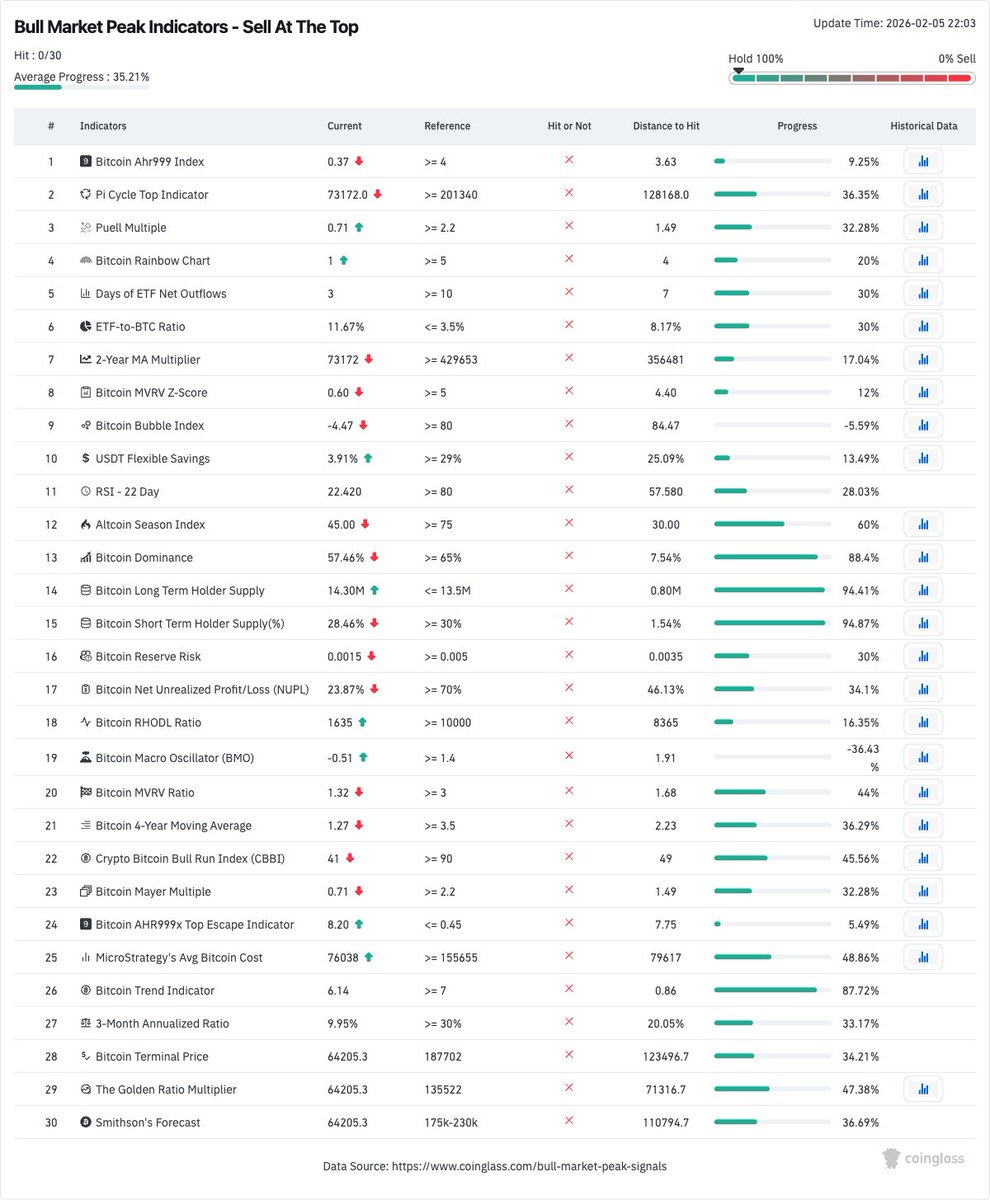
However, there is no bear market. That matter remains in uncertainty.
The line in the sand is $74k. That's the market structure. If we maintain that level or a higher low, then resume a strong uptrend while the ISM / business cycle also trends up... We will get a Q1 bull market continuation into a 5 year cycle.
If $74k fails (for more than a weekly wick below) then I agree, full on bear market, and the targets are unclear.
Bitcoin has never failed to create a euphoric blow off top, so perhaps the targets can't be that low. $50-60k bottom probably. No one can know that really.
.
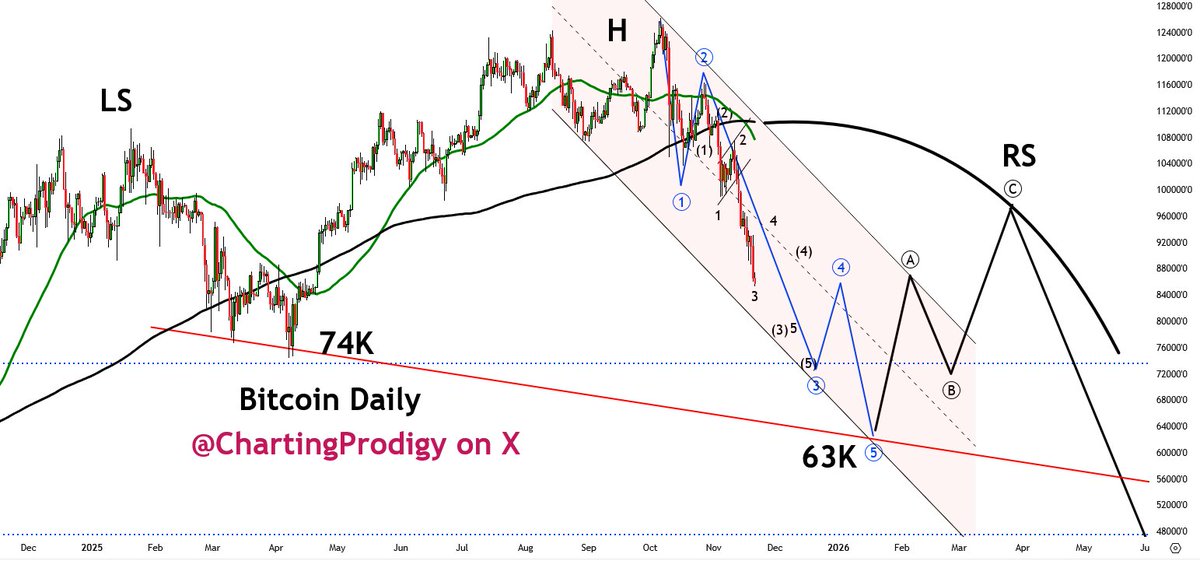
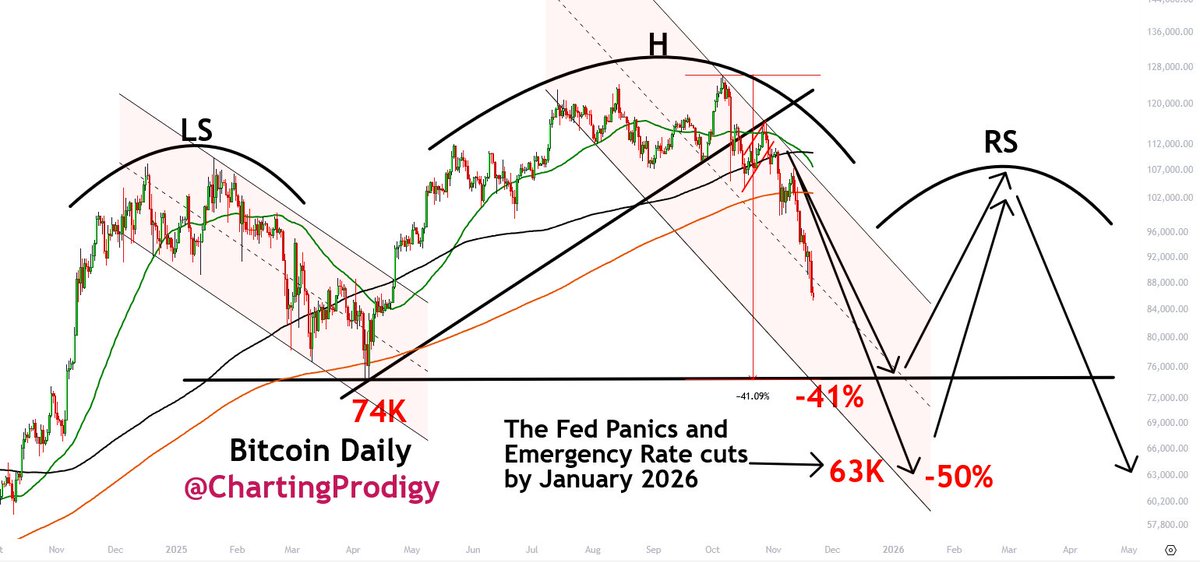
Bitcoin CRASH Wave 3 in Progress
Since I called the day of the Bitcoin top on October 6, 2025 and predicted the start of the bear market, BTC has dropped over 32%. I predicted at the top that BTC would drop 40% to 50% to kick off the bear market by January 2026. There will be bounces along the way but BTC is going to $60K to $74K by January.
.
$BTC #BTC#BTCNews#Bitcoin#TomLee#CryptoNews#crypto#trump#ALTSEASON $BTC_F $NVDA $AAPL $MARA $MSTR #BitcoinCrash $NVDA $IBIT #ETH $ETH #Ethereum@saylor