Saleem Ropani

222 posts

Saleem Ropani banner
Saleem Ropani

Saleem Ropani

@sropani

Building high-performing teams and innovative solutions to drive change.

Katılım Şubat 2012
396 Takip Edilen162 Takipçiler
Saleem Ropani retweetledi

Kurt Supe, CPA & Retirement Planner
A 71 year old man dies in March. Will. Trust. Beneficiaries on every account. He did everything right. BUT he kept his entire life on his IPHONE. Banking apps. Brokerage accounts. Crypto wallets. PayPal. Venmo. Credit cards. Passwords. Financial records going back many years. And every photo he ever took. His grandkids. His anniversaries. Years of family memories that exist nowhere else. His wife found a passcode scribbled on a piece of paper in his desk drawer. It didn't work. She tried everything. Nothing worked. What followed was months of frustration and thousands in legal fees recovering accounts and memories that were never hidden from her. A perfect estate plan on paper. Zero estate plan for his phone. Nobody ever told him his smartphone needed one too. Here's the free two minute fix that could have saved her all of that. 🧵
English
107
367
2.1K
471.3K
Saleem Ropani
Saleem Ropani@sropani·
Pakistan should create a DIFC/ADGM-style commercial regime with a trusted legal framework, dedicated courts, and nationwide enforceability without re-litigation. This allows capital to flow in Pakistan while jurisdiction sits in a credible system that global investors trust.
English
2
1
7
603
Saleem Ropani retweetledi
Sarahh
Sarahh@Sarahhuniverse·
"I'm Gonna Pack Me Off To Pakistan." Song by famous American singer Dinah Shore from 1954... Hilarious lyrics !!! © Vintage Melodies
English
33
711
1.9K
94.2K
Saleem Ropani retweetledi
Jason Fried
Jason Fried@jasonfried·
A bespoke software revolution? I don't buy it. It'll exist. It already exists. Small consultants and big consulting firms have made custom software for years. It almost always sucks. It’s bloated, confusing, and because the client pays, it’s built wrong in all the ways. Who’s excited about bespoke software? Software makers! Of course they're excited about building bespoke software — that's what they do. X is full of them. Your feed is full of people who love making software talking about making software. Of course they’re excited about the revolution. Echo, echo, echo... Most people don’t like computers. Nobody in tech wants to say that out loud. People tolerate computers. They use them because they have to. Given the choice, most would rather not think about them at all. So when someone suggests that AI means everyone will build their own custom tools, ask who "everyone" is. The three-person accounting firm drowning in client paperwork? They want the paperwork gone, not a new system to maintain. The regional logistics company with 40 trucks? They want the routes optimized, not Joe spouting off about this new system he’s been messing around with. The law firm billing 70-hour weeks? They want leverage on their time, not a software project to design. They don’t hate technology. But building and maintaining their own critical systems isn’t their wheelhouse, regardless of how much faster and easier it’s become. It's another job on top of the job. Will these people use AI? Absolutely, for all sorts of things. Will some outliers go deep and build real custom systems? Sure, but they're almost always people who already had some pull toward software. The curiosity was already there. They were dabblers before. Giving everyone access to software building tools doesn't mean everyone becomes a builder. A powerful excavator doesn't turn a homeowner into a contractor. Most people just want the hole dug by someone else. They don’t want the responsibility either.
English
236
359
2.8K
345.4K
Saleem Ropani retweetledi
Aakash Gupta
Aakash Gupta@aakashgupta·
Let me explain exactly why every new subdivision in America looks like the top photo, because the math is wild. A mature tree increases a home's value by 7 to 19 percent. On a $400,000 house, that's $28,000 to $76,000. A single shade tree produces the cooling equivalent of ten room-size air conditioners running 20 hours a day. One tree on the west side of a house cuts energy bills by 12 percent within 15 years. The bottom photo is worth more, costs less to live in, and sells faster. This has been documented by the University of Washington, Clemson, Michigan State, and the USDA. The data is not in dispute. Removing those trees saves the builder roughly $5,000 per lot. Concrete trucks need twice the dripline radius of every standing tree. Utility trenches need flat ground. A bulldozer flattens 200 lots in an afternoon. Preserving trees adds weeks and thousands per home. So the developer pockets $5,000 in savings and the buyer eats $50,000 in lost value for the next two decades. The person making the decision and the person paying for it have never been in the same room. The Woodlands, Texas is the proof of what happens when they are. George Mitchell bought 28,000 acres of Houston timberland in 1974 and preserved 28% as permanent green space. He forced McDonald's to build behind the tree canopy. That McDonald's became one of the highest-volume locations in Texas. The first office building, designed to reflect the surrounding forest so you couldn't see it from the street, leased completely. The Woodlands median home price today: $615,000. Katy, a comparable Houston suburb that clear-cut: $375,000. Named #1 community to live in America two years running. Fifty years of data. The trees are worth more than removing them saves. Developers clear-cut anyway because they sell the house once and leave. You live in it for 30 years.
bitfloorsghost@bitfloorsghost

we ruined such a good thing

English
1.3K
11.1K
74.5K
8.5M
Saleem Ropani
Saleem Ropani@sropani·
Amir Husain@amirhusain_tx

CONTRIBUTE TO YOUR NATION IN 15 EASY STEPS - ZERO GOV HELP NEEDED 1. Adopt solar. Cover canals w panels (free energy, fresh water saving) 2. Move to EVs - cars, scooters, motorbikes (free transport) 3. Plant trees EVERYWHERE you can (free clean air, free food) 4. Make ground water recharge, or infiltration tunnels (free clean water) 5. Move to drip irrigation (save 50% of fresh water) 6. Use high pressure bricks (solar energy->compacter->brick - zero pollution) 7. Adopt mesh radio networks (free wireless texting - infrastructure-less access) 8. Join LibreMesh (free community owned wifi networks libremesh.org 9. Keep honeybees (free pollination - ecosystem health) 10. Save 10% of your income and automatically invest it (e.g. PSX) 11. Keep public spaces clean. Don't litter. If you can, organize community trash collection. Teach everyone around you to respect public spaces. 12. Help animals and nature. (Bird houses, road bypass tunnels, save the habitat, be kind to animals, never release invasive species, donate to WWF.) 13. Donate to your local public school - books, toys, tools, money, computers, tablets, resources of any kind. Engage with them. Offer to speak to the kids once a year if you can help them. 14. Support an orphanage, a public hospital - even in a minimal way. It all adds up. 15. Start a "Little Free Library" littlefreelibrary.org These are small things. Many of them are entirely free. We can do them today. The effect of many people doing these small things will be ENORMOUS. Just these things alone would transform your country... any country.

QAM
0
0
0
11
Saleem Ropani
Saleem Ropani@sropani·
Amir Husain@amirhusain_tx

CONTRIBUTE TO YOUR NATION IN 15 EASY STEPS - ZERO GOV HELP NEEDED 1. Adopt solar. Cover canals w panels (free energy, fresh water saving) 2. Move to EVs - cars, scooters, motorbikes (free transport) 3. Plant trees EVERYWHERE you can (free clean air, free food) 4. Make ground water recharge, or infiltration tunnels (free clean water) 5. Move to drip irrigation (save 50% of fresh water) 6. Use high pressure bricks (solar energy->compacter->brick - zero pollution) 7. Adopt mesh radio networks (free wireless texting - infrastructure-less access) 8. Join LibreMesh (free community owned wifi networks libremesh.org 9. Keep honeybees (free pollination - ecosystem health) 10. Save 10% of your income and automatically invest it (e.g. PSX) 11. Keep public spaces clean. Don't litter. If you can, organize community trash collection. Teach everyone around you to respect public spaces. 12. Help animals and nature. (Bird houses, road bypass tunnels, save the habitat, be kind to animals, never release invasive species, donate to WWF.) 13. Donate to your local public school - books, toys, tools, money, computers, tablets, resources of any kind. Engage with them. Offer to speak to the kids once a year if you can help them. 14. Support an orphanage, a public hospital - even in a minimal way. It all adds up. 15. Start a "Little Free Library" littlefreelibrary.org These are small things. Many of them are entirely free. We can do them today. The effect of many people doing these small things will be ENORMOUS. Just these things alone would transform your country... any country.

QAM
0
0
0
7
Saleem Ropani retweetledi
Olaudah Equiano®
Olaudah Equiano®@RealOlaudah·
Norway Found Oil. Then Did the One Thing Most Countries Never Do In 1969, Norway discovered one of the largest offshore oil deposits in the world. The Ekofisk field changed everything. Suddenly, this small Scandinavian nation was sitting on extraordinary wealth. They could have done what most oil-rich countries do: * Spend it all immediately. * Build monuments. * Create economic bubbles. * Enrich a few while the many suffer. And when the oil runs out, collapse into debt and instability. Nigeria tried that. Venezuela tried that. Libya tried that. Norway looked at these cautionary tales and made a different choice. In 1990, the Norwegian Parliament created the Government Pension Fund Global. The rules were simple but revolutionary. All oil profits would flow into the fund. The fund would invest globally in thousands of companies. Norway could only withdraw a small percentage each year—originally 4% - now 3%. The rest would stay invested. Forever. People thought they were insane. Why hoard money for people who don't even exist yet? Why not lower taxes, build bigger programs, and enjoy the wealth right now? The Norwegian government had an answer... Because future Norwegians will exist. And they deserve this wealth as much as we do. In 1996, they deposited the first payment: $150 million. Then they did something even more remarkable...
English
92
715
4.3K
1.2M
Saleem Ropani retweetledi
Mr PitBull
Mr PitBull@MrPitbull07·
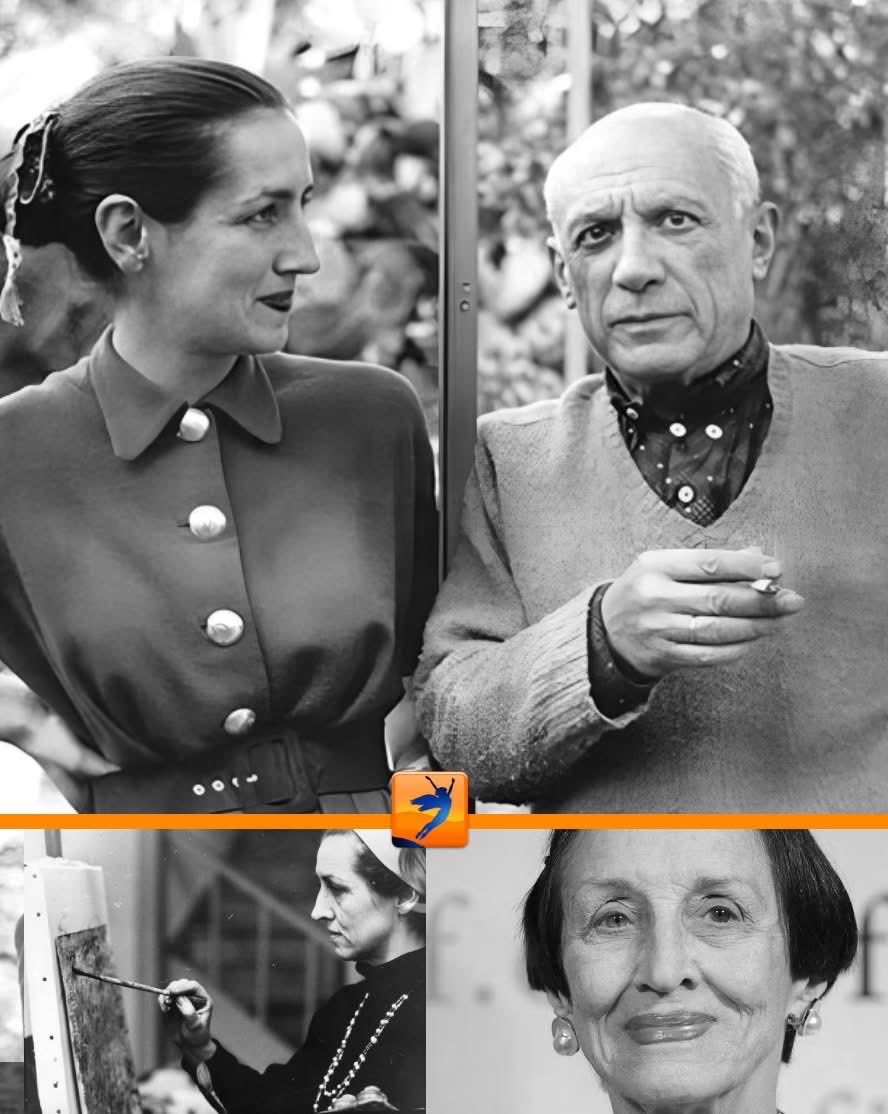
On an afternoon in 1953, she packed two suitcases, put her children in the car, and drove away from his life. Picasso shouted after her, mocking her with the claim that no one leaves a man like him, believing she would eventually crawl back once she realized the world didn’t care about a woman without his shadow to protect her. He was wrong. Françoise Gilot didn’t just leave a relationship; she reclaimed a life that had been sidelined by a giant’s ego, and in doing so, she became the only woman in history to survive Picasso with her spirit and her art fully intact. While the rest of the world looked at Pablo Picasso as an untouchable god of art, she looked at him and saw a man who wanted to own her soul. Their story began in occupied Paris in 1943. She was a twenty-one-year-old artist with a bright future, and he was sixty-one, a legend who thrived on chaos. For ten years, Gilot lived in the eye of the storm. She was his muse, his partner, and the mother of his children, Claude and Paloma. But being a muse often meant being a victim of his legendary cruelty and his need for total emotional dominance. Picasso famously treated women like “goddesses or doormats,” and he expected Gilot to eventually become the latter. He dismissed her painting, tested her patience, and tried to shrink her world down to only him. Yet, Gilot possessed a core of steel. She continued to paint every single day, refusing to let her own creative voice be silenced by the thunder of his fame. She watched as the women who came before her crumbled into madness or despair, and she realized that if she stayed, her own light would eventually go out too. When she finally walked out, she wasn’t just leaving a man; she was breaking a curse. Picasso spent years trying to destroy her reputation and her career out of spite. He even tried to block the publication of her memoir, “Life with Picasso,” in the 1960s, but she fought him in court and won. Her life after Picasso wasn’t a footnote; it was a masterpiece of its own. She moved to America, married the legendary scientist Jonas Salk, and saw her own paintings hung in the world’s most prestigious museums, including the Met and MoMA. She lived to be 101 years old, proving that the best revenge is a life lived beautifully and independently. When she passed away in 2023, she wasn’t remembered merely as a former lover of a famous man, but as a titan who refused to let anyone else hold the brush to her life’s story. The story of Françoise Gilot is a loud, ringing anthem for every woman who has ever felt her own light dimming to make room for someone else’s ego. She understood a fundamental truth that many spend a lifetime trying to learn: your potential is not a sacrifice to be offered up for someone else’s greatness. For many women, the "shadow" isn't always a famous painter; sometimes it is a workplace that overlooks their talent, a relationship that demands they play small, or a cultural expectation that they should prioritize everyone’s dreams except their own. Gilot’s life proves that you can be a mother, a creator, and a partner without losing the core of who you are. She refused to let her role as a mother to Claude and Paloma be an excuse to stop painting, and she refused to let Picasso’s international fame be a reason to stop seeking her own. She didn't wait for permission to be great; she simply got to work. When she eventually married Jonas Salk, the man who saved millions from polio, she did so as an equal, a woman who had already validated her own existence. When she walked out of that villa, she wasn't just walking away from Picasso; she was walking toward herself. >We Are Human Angels< Authors Awakening the Human Spirit We are the authors of 'We Are Human Angels,' the book that has spread a new vision of the human experience and has been spontaneously translated into 14 languages by readers. We hope our writing sparks something in you!
Mr PitBull tweet media
English
25
143
673
48.2K
Saleem Ropani retweetledi
malinvestment.jpeg
malinvestment.jpeg@malinvested·
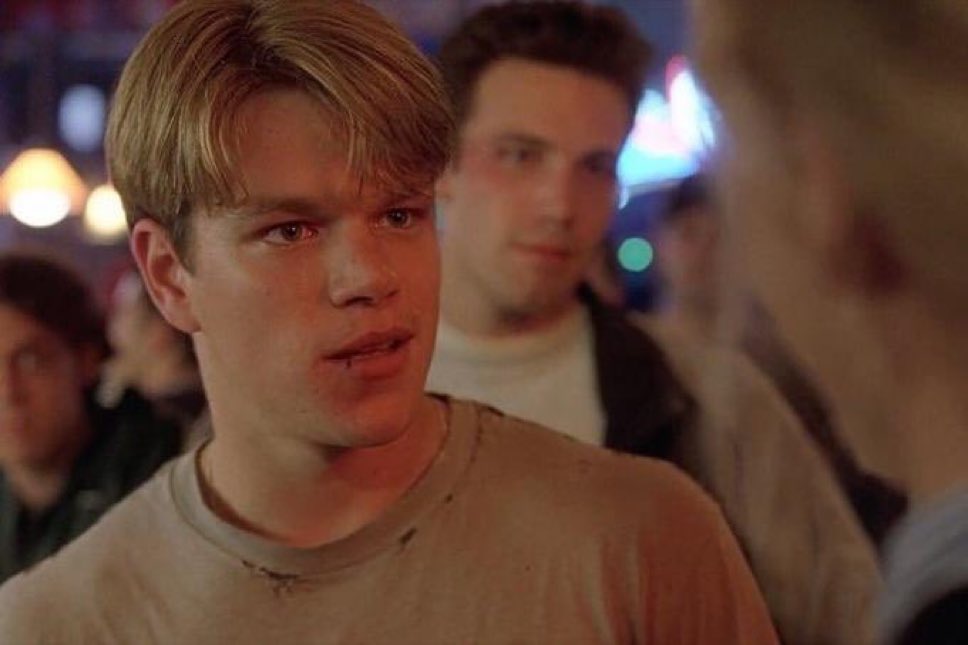
Of course that's your contention. You're a first-time SaaS bear. You just got finished listening to some podcast, Dario on Dwarkesh, probably. Now you think it’s the end of white collar work and seat-based pricing is screwed. You're gonna be convinced of that til tomorrow when you get to “Something Big is Happening”. Then you’ll install ClawdBot on a Mac Mini, vibe code a dashboard on top of a postgres database and say we’re all just a couple ralph loops away from building a Salesforce competitor. That’s gonna last until next week when you discover context graphs, and then you're gonna be talking about how the systems of record will be disintermediated by an agentic layer and reposting OAI marketing graphics. “Well, as a matter of fact, I won't, because ultimately the application layer is just ….” The application layer is just business logic on top a CRUD database. You got that from Satya’s appearance on the BG2 pod, December 2024, right? Yeah, I saw that too. Were you gonna plagiarize the whole thing for us? Do you have any thoughts of your own on this matter? Or...is that your thing? You get into the replies of anyone posting a SaaS ticker. You watch some podcast and then pawn it off as your own idea just to impress some VCs and embarrass some anon who’s long SaaS? See the sad thing about a guy like you is in a couple years you're gonna start doing some thinking on your own and you're gonna come up with the fact that there are two certainties in life. One: don't do that. And two: you dropped thirty grand on Mac Minis and LLM API calls to come to the same conclusion you could’ve got for free by following a handful of VC accounts.
malinvestment.jpeg tweet media
English
361
1.1K
11.8K
1.8M
Saleem Ropani
Saleem Ropani@sropani·
@Huk06 The immediate risk is 'Harvest Now, Decrypt Later,' where sensitive data is intercepted today to be cracked once those machines exist. That’s why the shift to lattice-based math is happening now to lock the vault before the master key is even built.
English
0
0
0
16
Habibullah Khan
Habibullah Khan@Huk06·
I hear this often about quantum cracking encryption but this is practically not true. Breaking widely used encryption would require millions of stable, error-corrected qubits. That engineering gap is so vast we will get there in 2+ decades. This is not an immediate threat. And even when the threat arrives, normal computers will be powerfully enough to defend against it. And then lastly ofcourse if you use quantum to defeat cryptography you can also use quantum to encrypt. Security has always been an arms race. It will continue to be.
Zulfiqar Ahmed 🤔@ZulfiqarAhmed69

Along with bringing quick discoveries of medicine, capturing nitrogen from the air, space simulations, quantum computing also bring threats to the IT security as current encryption models will not be able to withstand the quantum power to crack them.

English
4
1
4
1.8K
Saleem Ropani retweetledi
Benonwine
Benonwine@benonwine·
When your new Partner doesn’t have ANY Social Media! 😮 😱
English
559
5K
21.6K
722.1K
Saleem Ropani retweetledi
Anders K.
Anders K.@Falliblemusings·
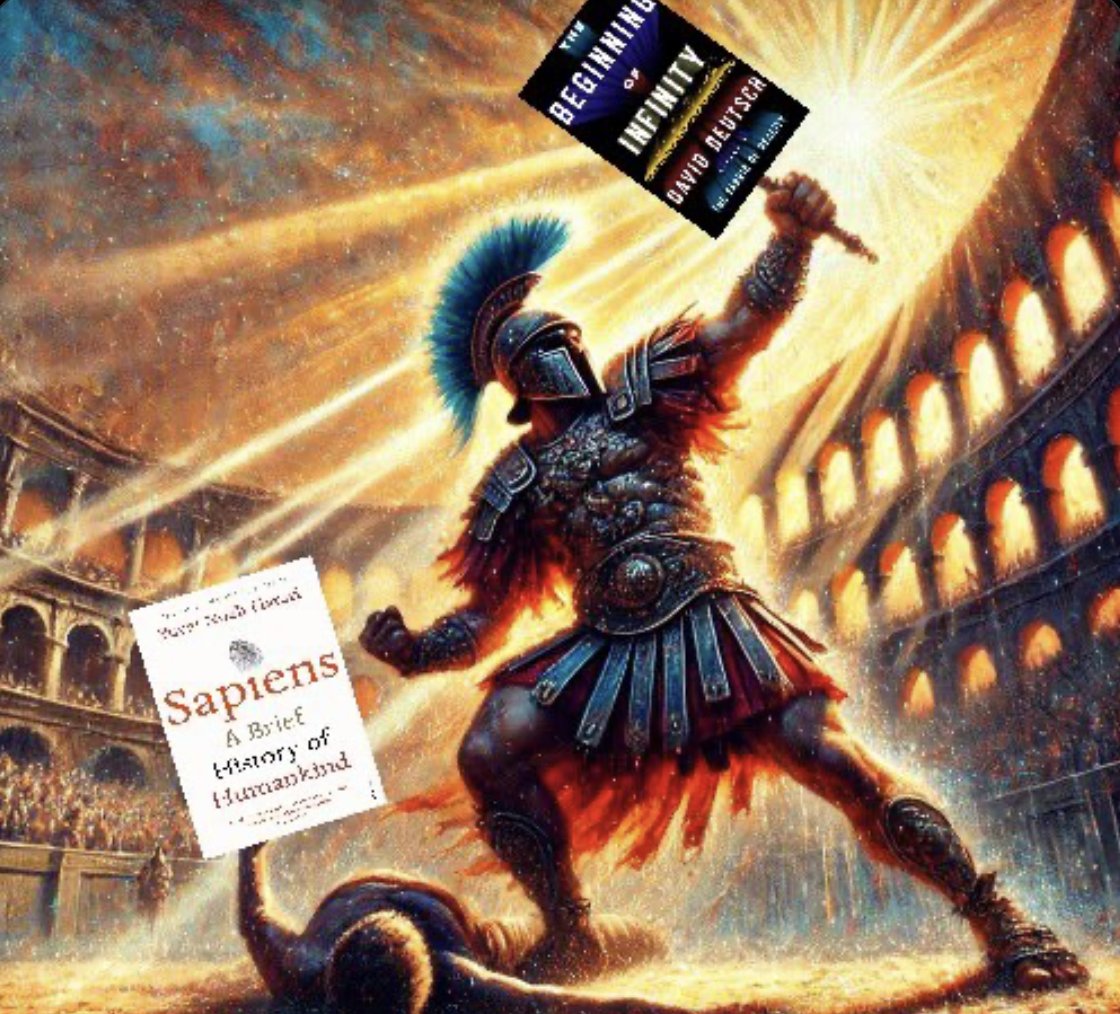
I used to think Sapiens was a great book. Sweeping, provocative, the kind of book that makes you feel like you finally understand the big picture of human history. It's on every CEO's bookshelf, assigned in universities, praised as a masterwork of synthesis. Yuval Noah Harari is treated as one of the serious thinkers of our time. But something nagged at me. Some passages felt off. Claims that human rights are just figments of our collective imagination, not real things, just stories we tell ourselves. That nations, laws, money, justice, doesn't exist outside our heads. That meaning itself is a delusion we've invented to cope. That we're far more powerful than ever before but not happier. That hunter-gatherers had it better because they had no dishes to wash, no carpets to vacuum, no nappies to change, no bills to pay. That sounded depressing to me, but was perhaps just the realistic scientific worldview? What it meant to see the world clearly, without comforting illusions. Then I read The Beginning of Infinity by @DavidDeutschOxf. Deutsch has a concept he calls 'bad philosophy.' Not philosophy that's merely false, but philosophy that actively prevents the growth of knowledge. Ideas that close doors rather than open them. That makes problems seem unsolvable by design. After soaking in Deutsch's framework (it's dense, a bit like digesting a delicious whale), it becomes clear: Harari's books are riddled with bad philosophy. They're smuggling nihilism in under the guise of scientific objectivity. Some examples: On meaning: "Human life has absolutely no meaning. Humans are the outcome of blind evolutionary processes that operate without goal or purpose... any meaning that people inscribe to their lives is just a delusion." On human rights: "There are no gods in the universe, no nations, no money, no human rights, no laws, and no justice outside the common imagination of human beings." On free will: "Humans are now hackable animals. The idea that humans have this soul or spirit and they have free will, that's over." On progress: "We thought we were saving time; instead we revved up the treadmill of life to ten times its former speed." The Agricultural Revolution? "History's biggest fraud." We didn't domesticate wheat, "it domesticated us." On our cosmic significance: "If planet Earth were to blow up tomorrow morning, the universe would probably keep going about its business as usual. Human subjectivity would not be missed." On the future: "Those who fail in the struggle against irrelevance would constitute a new 'useless class.'" Homo sapiens will likely "disappear in a century or two." This is bad philosophy. It tells us our problems are cosmically insignificant, our solutions are illusions, and that progress is neither desirable nor within our control. It's also perfect nonsense. No one would ever go back to being hunter-gatherers. Would you rather worry about your kid spending too much time on Roblox, or face the 50% chance she won't reach puberty? And our so-called "fictions"? They ended slavery. They gave women equal rights. They solved hunger. They eradicated smallpox. They turned sand into computer chips. They got us to the moon, and hopefully soon, to Mars and beyond. These "fictions" are already reshaping the universe, and over time they may become the most potent force in it. Now compare Deutsch: "Humans, people and knowledge are not only objectively significant: they are by far the most significant phenomena in nature." "Feeling insignificant because the universe is large has exactly the same logic as feeling inadequate for not being a cow." "Problems are soluble, and each particular evil is a problem that can be solved." "We are only just scratching the surface, and shall never be doing anything else. If unlimited progress really is going to happen, not only are we now at almost the very beginning of it, we always shall be." Where Harari sees a species of deluded apes stumbling toward obsolescence, Deutsch sees universal explainers, the only entities we know of capable of creating explanatory knowledge, solving problems, and potentially seeding the universe with intelligence. The difference isn't academic. Ideas shape action. If you believe life is meaningless, progress is a trap, and humans are hackable animals with no free will, how does that affect what you build? What you fight for? What you teach your children? Harari's books sell because they flatter a fashionable pessimism. They let readers feel sophisticated for seeing through the "delusions" everyone else lives by. That smug cynicism is corrosive. And it's everywhere: in schools, in media, in bestselling books. More than half of young adults now say they feel little to no purpose or meaning in life. This is what happens when you teach an entire generation bad philosophy. Less progress, less health, less wealth. Less flourishing. And ultimately, a higher chance that civilization and consciousness go extinct. Fortunately, there's another equally well-written, but much truer, account of homo sapiens, appropriately titled 'The Beginning of Infinity'. And this one smuggles no despair in by the backdoor. But let's give Harari credit where it's due. He is right about one thing: if planet Earth blew up tomorrow, we wouldn't be missed. Because there'd be no one left to miss us, just a careless universe, blindly obeying physical laws. We are the only ones who can miss, but we're not going to. We're going to aim, hit, and keep going. Full credit for the amazing meme to @Ben__Jeff
Anders K. tweet media
English
867
1.5K
9.2K
896.8K
Saleem Ropani retweetledi
dharmesh
dharmesh@dharmesh·
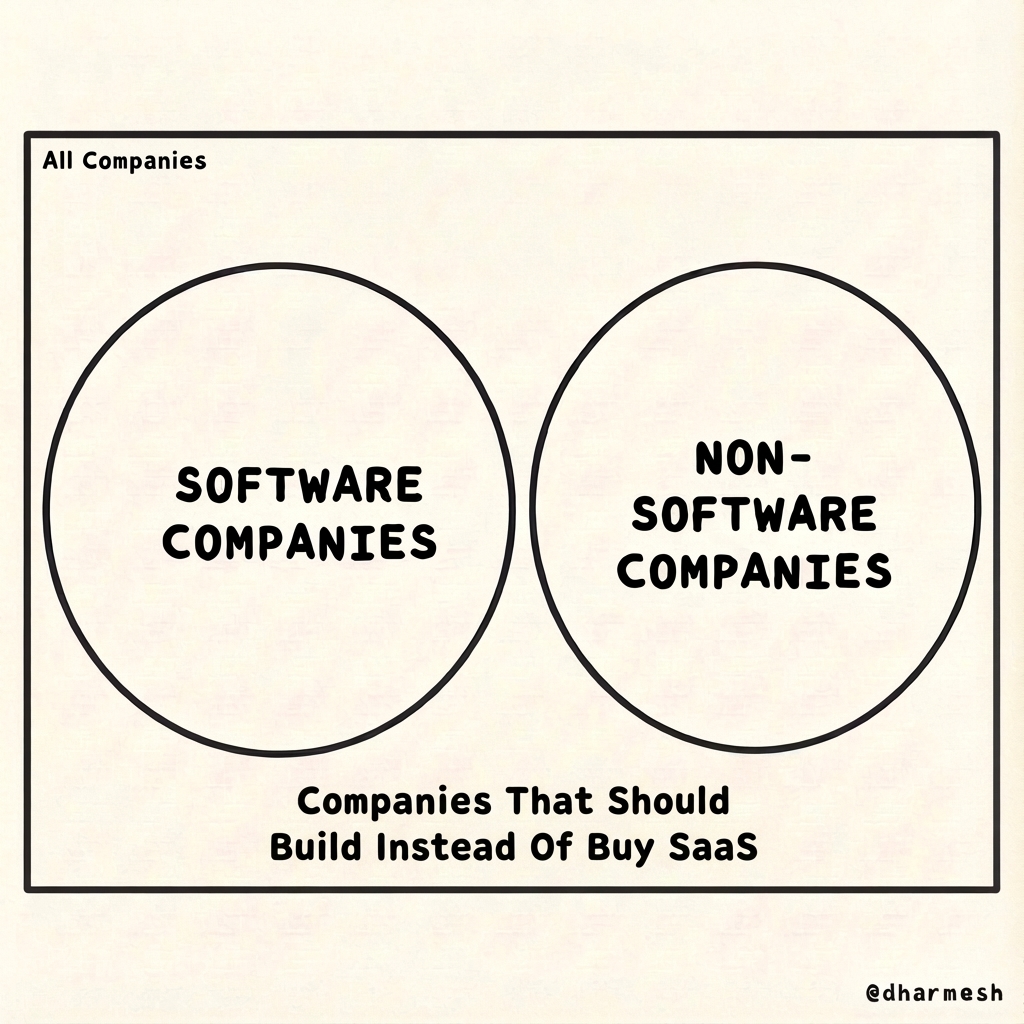
"Why should companies pay for SaaS (HR/CRM/ERP/etc.) when they could just vibe code them?" I get variations of this question or comment with some regularity (granted, it's sometimes just me talking to myself). Here are some biased (but hopefully, well-considered) thoughts: 1) I am a big proponent and user of vibe coding (what I call "agentic coding"). I do it every day, 7 days a week, including Sundays. It's amazing. 2) My company, HubSpot is a software company. We have hundreds of professional engineers -- just about all of them use AI for product development too. They are brilliant and know how to build production-grade products. 3) Even with this powerful army of talent, the number of internal, core SaaS applications that we have replaced with a vibe-coded variant is exactly ZERO. The number of applications we plan to replace is also exactly ZERO. 4) It's not the absence of talent that keeps us from rolling our own SaaS apps, it's the presence of focus. It would be silly to try and replace our HR, team collaboration, expense tracking and 100+ other SaaS apps we use when we can just buy them. Just doesn't make sense. 5) That's us -- as a software company at some scale. If you're a non-software company it makes even less sense for you. Doesn't matter how good the AI coding tools get. Let's say you *could* vibe code a replacement for that SaaS app you're using, who's going to maintain it? Who's going to keep up with industry trends? What are you going to do when the 20-something genius that vibe coded it over a weekend leaves the company? Who do you call when there's a major bug? 6) If you're a Fortune 500 company at some scale, perhaps you could pull this off for some discrete use cases and the tradeoffs are worth it. You have an IT/Engineering department that is larger than the population of some countries. You can take on the pain in return for the positives. For the millions of others, my advice is: Spend every calorie possible on creating value for your customers.
dharmesh tweet media
English
225
199
1.4K
218.3K
Saleem Ropani retweetledi
Sahil Bloom
Sahil Bloom@SahilBloom·
I'm increasingly convinced that showing up is the key to life. Show up when no one’s watching. Show up when it’s hard. Show up when you don't feel like it. Show up when the rewards are uncertain. Just show up. You can never bet against the person who just keeps showing up.
English
203
513
4K
142.1K
Saleem Ropani retweetledi
Ayman Al-Abdullah 🧱
Ayman Al-Abdullah 🧱@aymanalabdul·
I used to work at Nordstrom We would never let the phone ring more than 3 times without a human picking it up I wasn’t allowed to point to the bathroom, I had to walk a customer there That’s the level of culture and values you want in your team
English
9
5
69
4.3K
Saleem Ropani retweetledi
Aakash Gupta
Aakash Gupta@aakashgupta·
The math on this image is insane. New Horizons transmitted at 2,000 bits per second from 3 billion miles away. Slower than a 1990s dial-up modem. It took 16 months to download all the flyby data. The spacecraft had to hit a target box 100km wide, arriving within 150 seconds of schedule, after 9 years of flight. Miss it and the preloaded observation commands point at empty space. Ten days before arrival, the spacecraft crashed and went into safe mode. Engineers had 72 hours to restore everything. The probe is now 5 billion miles out, still whispering data back to Earth. We got 50 gigabits of Pluto photos using technology slower than your phone’s bluetooth.
Curiosity@CuriosityonX

It took 9 years and 3 billion miles to get this shot. Pluto’s icy Mountains.

English
659
13K
91.1K
5.4M
Saleem Ropani retweetledi
Andrej Karpathy
Andrej Karpathy@karpathy·
Agency > Intelligence I had this intuitively wrong for decades, I think due to a pervasive cultural veneration of intelligence, various entertainment/media, obsession with IQ etc. Agency is significantly more powerful and significantly more scarce. Are you hiring for agency? Are we educating for agency? Are you acting as if you had 10X agency? Grok explanation is ~close: “Agency, as a personality trait, refers to an individual's capacity to take initiative, make decisions, and exert control over their actions and environment. It’s about being proactive rather than reactive—someone with high agency doesn’t just let life happen to them; they shape it. Think of it as a blend of self-efficacy, determination, and a sense of ownership over one’s path. People with strong agency tend to set goals and pursue them with confidence, even in the face of obstacles. They’re the type to say, “I’ll figure it out,” and then actually do it. On the flip side, someone low in agency might feel more like a passenger in their own life, waiting for external forces—like luck, other people, or circumstances—to dictate what happens next. It’s not quite the same as assertiveness or ambition, though it can overlap. Agency is quieter, more internal—it’s the belief that you *can* act, paired with the will to follow through. Psychologists often tie it to concepts like locus of control: high-agency folks lean toward an internal locus, feeling they steer their fate, while low-agency folks might lean external, seeing life as something that happens *to* them.”
Garry Tan@garrytan

Intelligence is on tap now so agency is even more important

English
2K
9.4K
50K
11.2M