Siddharth (Sid) Suri

626 posts

Siddharth (Sid) Suri

Siddharth (Sid) Suri

@ssuri

Computational social scientist at Microsoft Research studying the effects of AI on society and the future of work. Coauthor of https://t.co/sBSm9tHeKX.

Redmond, WA Katılım Kasım 2008
337 Takip Edilen2.9K Takipçiler
Siddharth (Sid) Suri
Siddharth (Sid) Suri@ssuri·
Btw, that job posting is only going to be up for another day or two, so if you're interested apply now!
English
0
0
0
221
Siddharth (Sid) Suri
The AI, Interaction, and Learning team at Microsoft Research is looking for interns! If you're working on your PhD in machine learning, computer science, statistics, economics, computational social science or related fields apply: jobs.careers.microsoft.com/global/en/shar…
English
0
5
9
982
Siddharth (Sid) Suri
The AI, Interaction, and Learning team at Microsoft Research is looking for interns! If you're working on your PhD in computer science, statistics, economics, computational social science or related fields apply: Research Intern MSR AI Interaction and Learning | Microsoft Careers
English
1
6
49
3.1K
Siddharth (Sid) Suri retweetledi
pamela mishkin
pamela mishkin@manlikemishap·
big fan of this work from the microsoft team! what would be great next: * more from more labs on the where/when/who of AI use * experiments to validate how AI use translates to productivity gains * policy proposals for using data from labs as leading indicators of impact
Ethan Mollick@emollick

Interestingly, an economics paper that came out in 2023 predicting which jobs would overlap most with AI turned out to be right. A new Microsoft study of actual AI use by workers (more on that in another post) found a 90% correlation between real world overlap & the predictions.

English
1
5
19
1.8K
Siddharth (Sid) Suri retweetledi
Kiran Tomlinson
Kiran Tomlinson@kiran_tomlinson·
New paper from my group at @MSFTResearch! 📄arxiv.org/abs/2507.07935 Promises about how AI will change work are cheap. What does the actual data say? We measured which work activities people use AI for, how successful they are, and which jobs do those tasks. 🧵1/8
English
2
10
15
2.6K
Siddharth (Sid) Suri retweetledi
David Holtz
David Holtz@daveholtz·
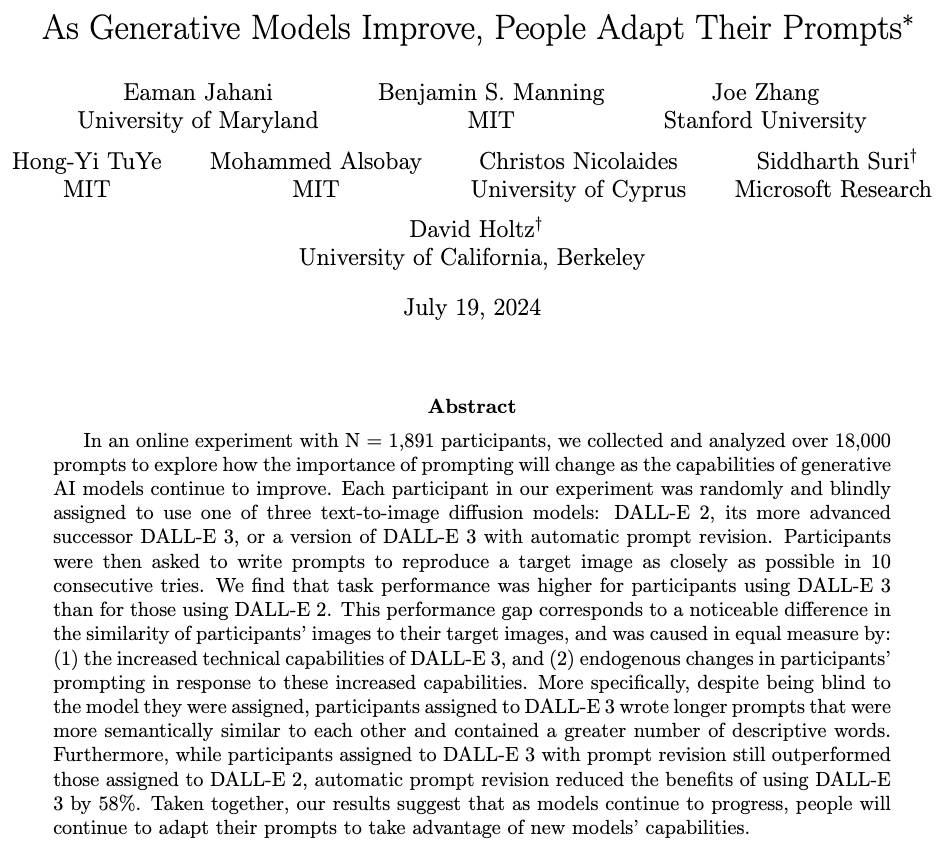
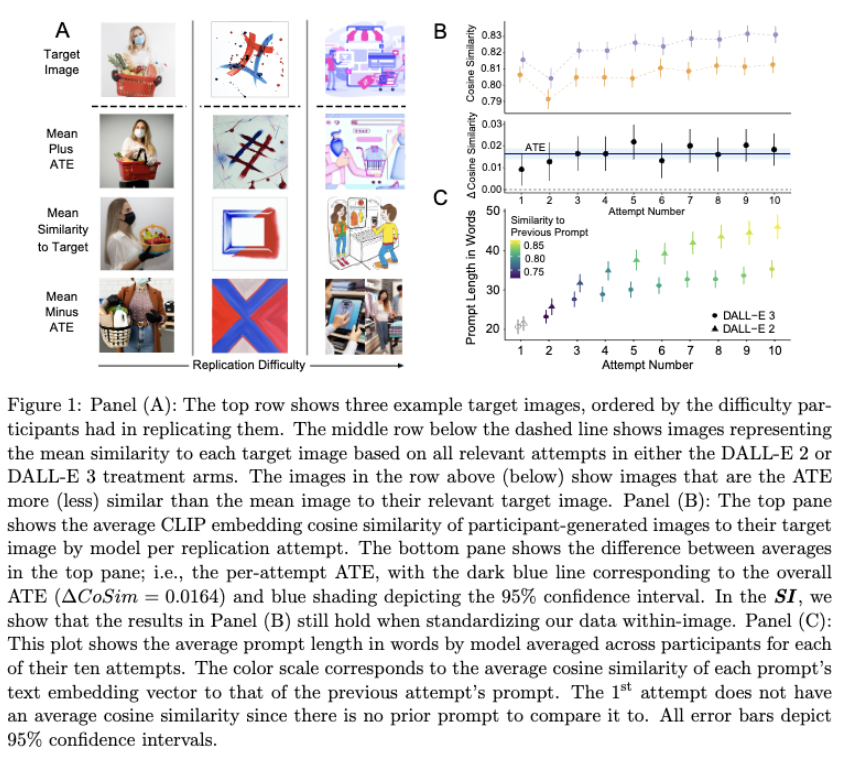
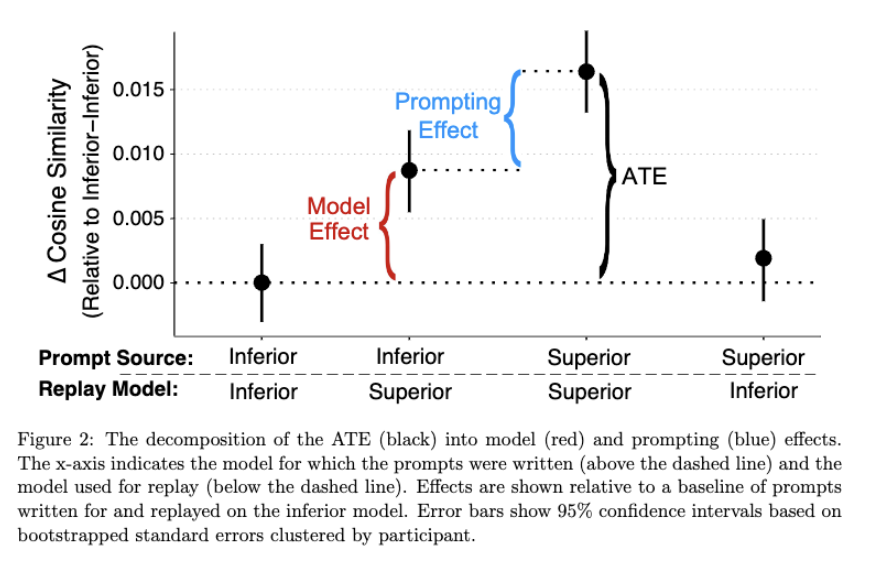
I had a great time doing this interview recently with @gr3tchen and @ssuri for the @MSFTResearch podcast. We talk about Sid's and my now years-long collaboration/bromance, as well as our recent work on prompt engineering. Please give it a listen! microsoft.com/en-us/research…
English
2
1
9
1.3K
Siddharth (Sid) Suri
The AI, Interaction, and Learning team at Microsoft Research is hiring for both intern and fulltime positions. If you're interested in studying Foundation Models, AI, as well as computational social science questions related to AI, please apply! Links below:
English
1
12
36
6.5K
Siddharth (Sid) Suri retweetledi
Valerio Capraro
Valerio Capraro@ValerioCapraro·
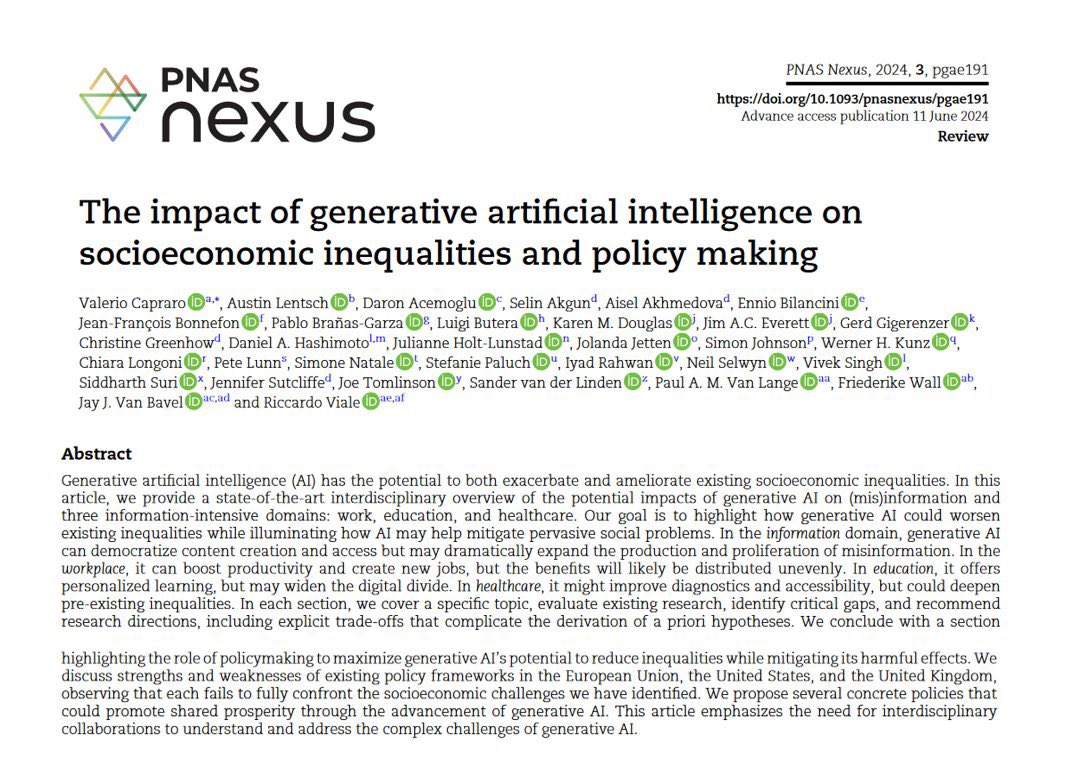
Many people believe that AI advances will dramatically increase inequality. In a paper with two Nobel laureates, Daron Acemoglu and Simon Johnson, plus 30 multidisciplinary experts, we argue that it’s more complex than a simple “rich-get-richer” story. For example, we coined the term “inverse skill bias” to describe an emerging pattern: generative AI seems to benefit low-skilled workers more than high-skilled ones. We also suggest generative AI may reduce racial and gender bias in healthcare and education. However, some inequalities could indeed worsen. For example, companies with access to more data may gain an anticompetitive advantage, exerting market power over smaller firms. Additionally, companies may be incentivized to automate work rather than invest in enhancing and complementing human capabilities. Gender bias in career achievement may also worsen, as preliminary evidence shows that men are using chatbots more than women, leading to an increase in productivity among men but not women. We argue institutions will play a critical role in sharing AI’s benefits equitably. Unfortunately, current regulations fall short of addressing inequalities and fostering shared prosperity. Our paper ends with six policy suggestions we believe can help reduce socioeconomic inequality: 1) Create a more balanced tax structure, equating marginal taxes on hiring, training, and AI investments. 2) Engage workers and civil society in AI shifts, and establish data unions for control over data. 3) Boost support for research into human-complementary AI tools to enhance productivity and skillsets. 4) Train professionals, especially in healthcare and education, in AI use, including ethical aspects. 5) Invest in tools to counter AI-generated misinformation and in education on misinformation. 6) Embed AI expertise in government for sector-wide decision support. Read the full paper here: academic.oup.com/pnasnexus/arti… Thank you to an amazing list of coauthors, without whom this work wouldn’t have been possible: @AustinLentsch @DAcemogluMIT @SelinAkgun9 Aisel Akhmedova @EBilancini @JFBonnefon @BehSnaps @lu_butera @Karen_Douglas @JimACEverett Gerd Gigerenzer @chrisgreenhow @Laparoscopes @PCASOLab @jholtlunstad @jetten_j @baselinescene @werkunz @longoni_chiara Pete Lunn @simone_natale Stefanie Paluch @iyadrahwan Neil Selwyn @viveksinghmed @ssuri Jennifer Sutcliffe @JoePTomlinson @Sander_vdLinden @PaulvanLange @FriederikeWall @jayvanbavel Riccardo Viale
Valerio Capraro tweet media
English
1
64
174
27K
Siddharth (Sid) Suri
Siddharth (Sid) Suri@ssuri·
What did we learn? We discussed bottom-up coordination, team-level planning on regular office days, and software tools' role in enhancing office attendance coordination. With my super talented team: @MLCharpignon, @yuanyuan_2, Dehao Zhang, Fereshteh Amini, @ylongqi, @spjaffe 3/3
English
1
0
3
362
Siddharth (Sid) Suri
Siddharth (Sid) Suri@ssuri·
More specifically, a 1-SD increase in the share of teammates who were present yielded a 16% increase in an employee’s office attendance. New hires, specific job roles, and shared spaces exhibit even greater effects. 2/3
Siddharth (Sid) Suri tweet media
English
1
0
4
418
Siddharth (Sid) Suri
Siddharth (Sid) Suri@ssuri·
🚨To what extent do people coordinate coming into the office in a hybrid work setting? Manager presence accounts for ~30% increase in employee office attendance. Teammates' presence also explains larger attendance rate. Recent paper out at @PNASNews. pnas.org/doi/10.1073/pn… 1/3
English
1
10
52
12.9K
Siddharth (Sid) Suri retweetledi
Ethan Mollick
Ethan Mollick@emollick·
We are visualizing our data all wrong. Typically, academic graphs show statistical confidence intervals or standard errors. This paper shows that everyone from doctors to tenured faculty misread these graphs, assuming effects are larger. Show variability! jakehofman.com/pdfs/illusion-…
Ethan Mollick tweet mediaEthan Mollick tweet media
English
25
228
1K
256.8K
Siddharth (Sid) Suri retweetledi
SUE the T. rex
SUE the T. rex@SUEtheTrex·
I bet the Trojan horse really ruined the horse dating scene. If I were a horse dating other horses, I would constantly be like, "prove to me that you aren't a small militia."
English
3
38
340
13.2K
Siddharth (Sid) Suri retweetledi
David Rothschild 🌻
David Rothschild 🌻@DavMicRot·
Are you recent college graduate wishing to gain research experience prior to pursuing a PhD in fields related to computational social science: apply now to MSR-NYC's predoc microsoft.com/en-us/research… work on awesome projects w/ some of the best in the field cc/ @dggoldst @jakehofman
English
3
10
19
18.7K