
ST010-14

13.3K posts

ST010-14 banner
ST010-14

ST010-14

@st01014

Code synthesizing Carbon-Silicon based lifeform 🖥️🧬 #Coding #Math #Physics #HPC & #AI #RetroTech #Aerospace #AESTHETICS Random #Nerdiness & #Shitposting

Latent Space, Gen. Manifold Katılım Nisan 2021
7.5K Takip Edilen937 Takipçiler
ST010-14
Power Semis are hot... Literally 🔥
John Carmack@ID_AA_Carmack

I have been very impressed by @SemiAnalysis_ . I think of myself as a wide ranging systems engineer, looking for value at every level from the chip specs to the user interface, but SA exposes me to additional levels of "the system", both above (datacenters) and below (semiconductor fabrication). It probably puts me in "just knows enough to be dangerous" territory. Neat things I learned today: Some of the 800VDC datacenter design choices leverage parts commoditized by electric vehicles. There is now a SiC MOSFET that can operate on 10kV electricity, opening up the possibility of working directly with medium (ha!) voltage AC power transmission lines without stepping down.

English
0
0
0
55
ST010-14 retweetledi
John Carmack
John Carmack@ID_AA_Carmack·
I have been very impressed by @SemiAnalysis_ . I think of myself as a wide ranging systems engineer, looking for value at every level from the chip specs to the user interface, but SA exposes me to additional levels of "the system", both above (datacenters) and below (semiconductor fabrication). It probably puts me in "just knows enough to be dangerous" territory. Neat things I learned today: Some of the 800VDC datacenter design choices leverage parts commoditized by electric vehicles. There is now a SiC MOSFET that can operate on 10kV electricity, opening up the possibility of working directly with medium (ha!) voltage AC power transmission lines without stepping down.
English
60
87
2.2K
233.9K
ST010-14 retweetledi
チェバ夫
チェバ夫@chebawo·
世界最大規模のランサムウェア、OneDrive。
チェバ夫 tweet media
日本語
16
1K
8.1K
385.7K
ST010-14 retweetledi
Today in Tech History
Today in Tech History@TodayInTechHist·
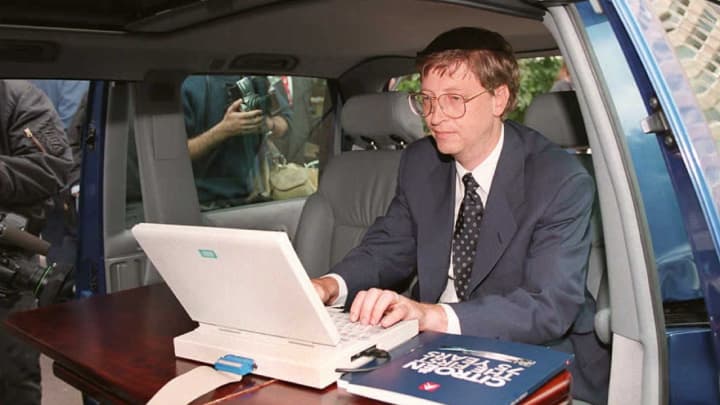
On this day in 1995, Bill Gates sent a memo to Microsoft's senior staff titled "The Internet Tidal Wave" and essentially told his entire company: we got this wrong, and we need to fix it now. A thread 🧵
Today in Tech History tweet media
English
1
1
2
233
ST010-14
silicon shortage. 👎 ball bearing shortage. 👌
Vaelis@Vaelis_X

Every humanoid robot being built right now depends on a $88M Japanese company that almost nobody in Western markets has looked at. While capital is flooding into robot software, AI brains, and system integrators, everyone is ignoring the one company that decides whether robotic joints actually function. And that oversight is the opportunity. The name is $6464.T — Tsubaki Nakashima Co., Ltd. Tesla Optimus requires 14 to 16 planetary roller screws per unit to actuate its limbs. Each screw is only as precise as the rolling elements housed inside it. Sub-micron Silicon Nitride ceramic balls and specialty steel rollers are the foundational material the entire physical AI execution layer runs on. Tsubaki Nakashima is the dominant global supplier of those elements. They supply SKF, Schaeffler, NSK, and Timken without competing with any of them. That neutral upstream position makes them the one indispensable node in the entire advanced motion industry. Every major bearing manufacturer on earth is their customer. Their proprietary in-house grinding and sintering equipment ensures no competitor can replicate their yield at scale. The Si3N4 precision ceramic ball market grows from $267M in 2025 to $612M by 2032 at a 12.54% CAGR. Their engineered plastics division, TN Plastics, adds another layer: a collaboration with a major robotics manufacturer achieved a 20% reduction in robot weight and a 1.3x improvement in operational speed by replacing steel elements with precision polymer components. In February 2026, TN Plastics launched microfluidic plate manufacturing, entering a medical diagnostics market projected to grow from $40B to $75B by 2030. Now the financials, because this is where most investors got it completely wrong: The company reported a ¥27.21B GAAP net loss in FY2025. Screeners flagged it as distressed. Most investors stopped reading there. What they missed: ¥16.7B was non-cash goodwill impairment. ¥6.4B was a non-cash inventory write-down on legacy steel stock. ¥2.9B was a deferred tax adjustment. None of it touched the cash account. Actual FY2025 cash generation: Operating Cash Flow ¥10.52B. Free Cash Flow ¥11.64B — an all-time company record. Q1 2026 confirmed the full return to GAAP profitability: Operating Profit: ¥1.13B (up 214.6% YoY) Net Profit: ¥308M (vs. a net loss of ¥559M in Q1 2025) EBITDA: ¥2.00B (up 62.1% YoY) The CEO executing this is Itaru Matsuyama — BCG, DuPont Electronic Materials, KKR Capstone. Appointed July 2024 with one mandate: private-equity-style transformation. He has divested the entire ball screw division to MinebeaMitsumi, closed plants in the Netherlands, Korea, and Tennessee, and suspended all dividends to direct 100% of cash toward debt reduction. The valuation: Tsubaki Nakashima trades at 0.31x to 0.34x Price-to-Book and 0.17x Price-to-Sales. Harmonic Drive Systems, supplying reducers for the same robotic joints, trades at 4.23x P/B and 10.24x P/S. A re-rating to just 0.8x P/S — still a massive discount to every robotics peer — implies 470% upside from current levels. The risks, because a real thesis requires them: European auto stagnation drove a 2.7% revenue decline in Q1 2026. Net debt sits at ¥58.2B. Tariff exposure is real across global facilities. Mitigations: Indian manufacturing expansion and TN Plastics medical microfluidics buffer the auto cyclicality. The ¥20B in subordinated debt is rated BBB Stable by R&I and doesn't mature until 2051. A Local for Local manufacturing model with US plants in Michigan and Georgia neutralizes tariff risk by supplying American customers from domestic, tariff-exempt soil. The market is pricing this as a failing cyclical auto supplier. What it actually is: the material science chokepoint of the entire physical AI supply chain, run by a KKR-trained CEO generating record cash and trading at a fraction of liquidation value. A $88M company sitting underneath the entire humanoid robotics buildout. NFA. Do your own due diligence.

English
0
0
5
757
ST010-14 retweetledi
𝐷𝑟. 𝐼𝑎𝑛 𝐶𝑢𝑡𝑟𝑒𝑠𝑠
Apple/Intel/Samsung typically want to get 80-90% yield before releasing a product. That includes all binning after final packaging. What's the bet that Huawei are willing to accept 20% or 30% for Kirin?
English
28
9
188
20.9K
ST010-14 retweetledi
𝐷𝑟. 𝐼𝑎𝑛 𝐶𝑢𝑡𝑟𝑒𝑠𝑠
The other part to mention: the cooling. Not addressed. FWIW, IBM did all this work on microfluidics in the early 2000s and have all the western patents on it.
Compute King@Compute_King

继续思考, 华为在挑战里面没有谈散热,这是我比较诧异的。 目前两层堆叠,我觉得还有些散热的解法,但如果到三层Active Logic Stack或者更多之后,散热会从工程问题变成架构主问题。。。 目前流行的双层堆叠的技术AMD V-Cache,Intel Foveros和TSMC SoIC,还属于用冷cache叠热logic,因为SRAM功耗较低,热密度低,可用做Top Die,所以散热还能接受。 结构如下所示: SRAM |||| CPU 但华为的论文里是Logic-on-Logic。 即: Active Logic |||| Active Logic |||| Active Logic 这就完全不同了,这种多层Active Logic,热无法横向扩散,所以中间的Logic Die直接变成了烤箱,传统散热是完全扛不住的。 三层或者三层Active Logic堆叠之后,必须进入主动式散热时代!冷却液必须进入封装内部。 变成, Active Logic + Microfluidic Channel |||| Active Logic + Microfluidic Channel |||| Active Logic + Microfluidic Channel 液冷液冷液冷是关键!关键得说三次。。。 以后芯片设计里面需要Thermal Topology Architect,因为:热路径本身会决定Layout。 对的,本人的判断是:华为将来3层和3层以上的LogicFolding路径里面,Thermal将是最大的未解难题,甚至比EDA还难!

English
10
8
86
12.1K
ST010-14 retweetledi
Huawei
Huawei@Huawei·
HUAWEI has presented the Tau (τ) Scaling Law, a new principle for guiding the future development of the semiconductor industry. By 2031, HUAWEI's high-end chips based on this law are expected to feature a transistor density that is equivalent to 14 Å (1.4 nm) processes.
English
642
1.7K
9.4K
60.4M