English
Steppe and Stones
706 posts

@steppestones
Bridging consciousness.





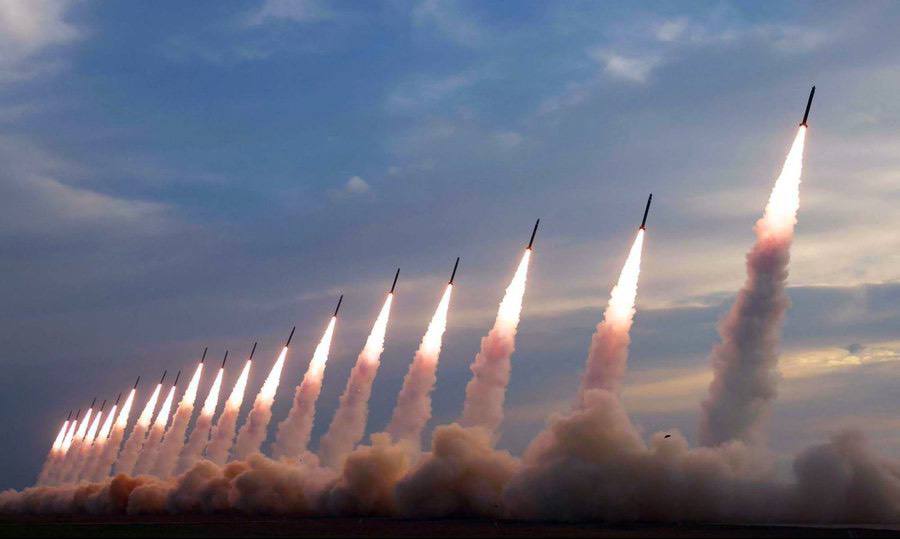

BREAKING: 🇺🇸🇮🇷 President Trump announces the U.S. Navy will start escorting maritime traffic through the Strait of Hormuz



NEW: 🇩🇪🇨🇳 German Chancellor Merz says Germans need to work more in order to match China: “We are simply no longer productive enough. Each individual may say, “I already do quite a lot.” And that may be true. But when you return from China, ladies and gentlemen, you see things more clearly. With work-life balance and a four-day week, long-term prosperity in our country cannot be maintained. We will simply have to do a bit more.”

Reposted from Jacob Markell on LinkedIn: *** Mitch’s Comment —an excellent primer on China’s partnership model, which operates on fundamentally different logic than Western alliances.*** —- “What does it really mean to be “partners” with China? I’ve explored China’s partnership diplomacy at length before – last time I checked, China had 97 strategic partnerships, 53 of them Comprehensive, and 7 of them “all-weather” or equivalent. With the exception of North Korea, Beijing does not “do” alliances – instead it forms flexible, commitment-light “partnerships”, organised according to a complex, hierarchical taxonomy. This is even explicitly articulated as a policy of “partnership, not alliance.” But what does a “partnership” get you? As Maduro’s example set out, it certainly doesn’t provide security guarantees and it doesn’t really amount to any sort of meaningful diplomatic support. Where are China’s red lines? Chinese commentators have long noted with admiration and fear the strength of America’s alliances, but what, as China’s power grows and America’s unipolar moment fades, is Beijing truly willing to stake in order to protect its own friends? We’re starting to see these questions surface. It’s not the first time. Yan Xuetong was arguing back in 2011 that China should reconsider its non-alignment strategy. But that line of argument became conspicuously muted during the Xi-era. More recently, Jin Canrong, a prominent hawk, has argued that China’s foreign policy warrants recalibration. He makes the argument carefully, aware he is on politically shaky ground, but he makes it nevertheless. Since Jin’s piece, which Sinification published in a newsletter today, we have noted a few other similar arguments. Some of these are included in our monthly digest, which I’m delighted and proud to say we published yesterday in collaboration with a keystone of the China watching world – Bill Bishop's Sinocism. I’ll link both Jin’s piece and the digest in the comments. Nobody knows what goes on in Xi Jinping’s head, but Sinification exists because we consider intellectual discourse a meaningful proxy and indicator of Chinese policy thinking. If prominent Chinese academics are mulling over these questions – and are allowed to voice them – they’re probably not alone. The question going forward is: what does all-weather partnership+ look like for China? Jin advocates for “a blend of kingly and hegemonic approaches” – nicely phrased, but essentially just a call on Beijing to get tougher. In concrete terms, no-one really has an answer yet, just as the Global Governance Initiative is just so much hot air. Whether China will ever meaningfully alter its diplomatic posture is a big question mark, not just for China, but for the world. Note on graphic: based on my own subjective interpretation of China’s partnership taxonomy and not fully fact-checked, so please don’t reproduce without a disclaimer. Converted from my database to a map with Claude Opus 4.5.”
Reposted from Jacob Markell on LinkedIn: *** Mitch’s Comment —an excellent primer on China’s partnership model, which operates on fundamentally different logic than Western alliances.*** —- “What does it really mean to be “partners” with China? I’ve explored China’s partnership diplomacy at length before – last time I checked, China had 97 strategic partnerships, 53 of them Comprehensive, and 7 of them “all-weather” or equivalent. With the exception of North Korea, Beijing does not “do” alliances – instead it forms flexible, commitment-light “partnerships”, organised according to a complex, hierarchical taxonomy. This is even explicitly articulated as a policy of “partnership, not alliance.” But what does a “partnership” get you? As Maduro’s example set out, it certainly doesn’t provide security guarantees and it doesn’t really amount to any sort of meaningful diplomatic support. Where are China’s red lines? Chinese commentators have long noted with admiration and fear the strength of America’s alliances, but what, as China’s power grows and America’s unipolar moment fades, is Beijing truly willing to stake in order to protect its own friends? We’re starting to see these questions surface. It’s not the first time. Yan Xuetong was arguing back in 2011 that China should reconsider its non-alignment strategy. But that line of argument became conspicuously muted during the Xi-era. More recently, Jin Canrong, a prominent hawk, has argued that China’s foreign policy warrants recalibration. He makes the argument carefully, aware he is on politically shaky ground, but he makes it nevertheless. Since Jin’s piece, which Sinification published in a newsletter today, we have noted a few other similar arguments. Some of these are included in our monthly digest, which I’m delighted and proud to say we published yesterday in collaboration with a keystone of the China watching world – Bill Bishop's Sinocism. I’ll link both Jin’s piece and the digest in the comments. Nobody knows what goes on in Xi Jinping’s head, but Sinification exists because we consider intellectual discourse a meaningful proxy and indicator of Chinese policy thinking. If prominent Chinese academics are mulling over these questions – and are allowed to voice them – they’re probably not alone. The question going forward is: what does all-weather partnership+ look like for China? Jin advocates for “a blend of kingly and hegemonic approaches” – nicely phrased, but essentially just a call on Beijing to get tougher. In concrete terms, no-one really has an answer yet, just as the Global Governance Initiative is just so much hot air. Whether China will ever meaningfully alter its diplomatic posture is a big question mark, not just for China, but for the world. Note on graphic: based on my own subjective interpretation of China’s partnership taxonomy and not fully fact-checked, so please don’t reproduce without a disclaimer. Converted from my database to a map with Claude Opus 4.5.”






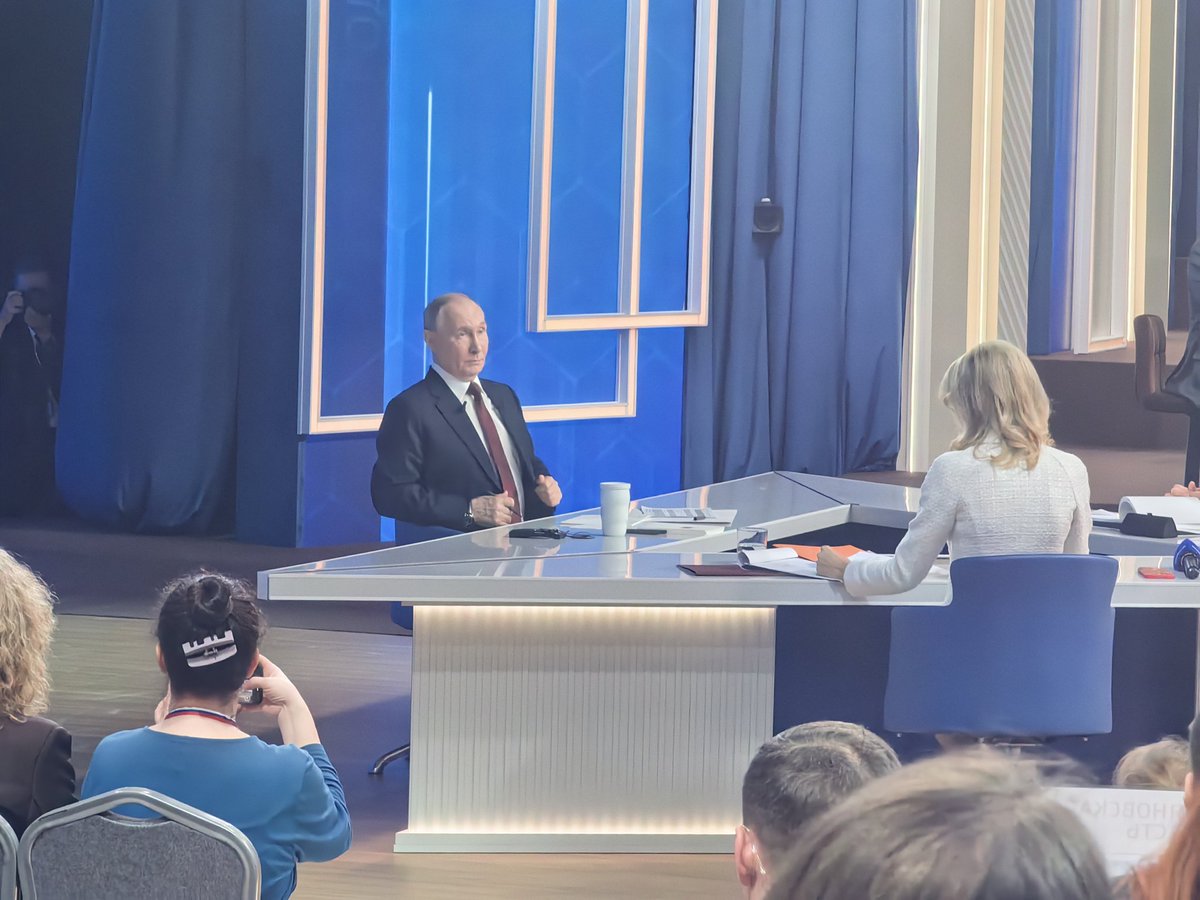

@ChaincodeLabs @suhasdaftuar @morcosa @JeremyRubin @mattkratter The Truth About Epstein & Bitcoin - Simon Dixon youtube.com/live/_ciby8kKl…