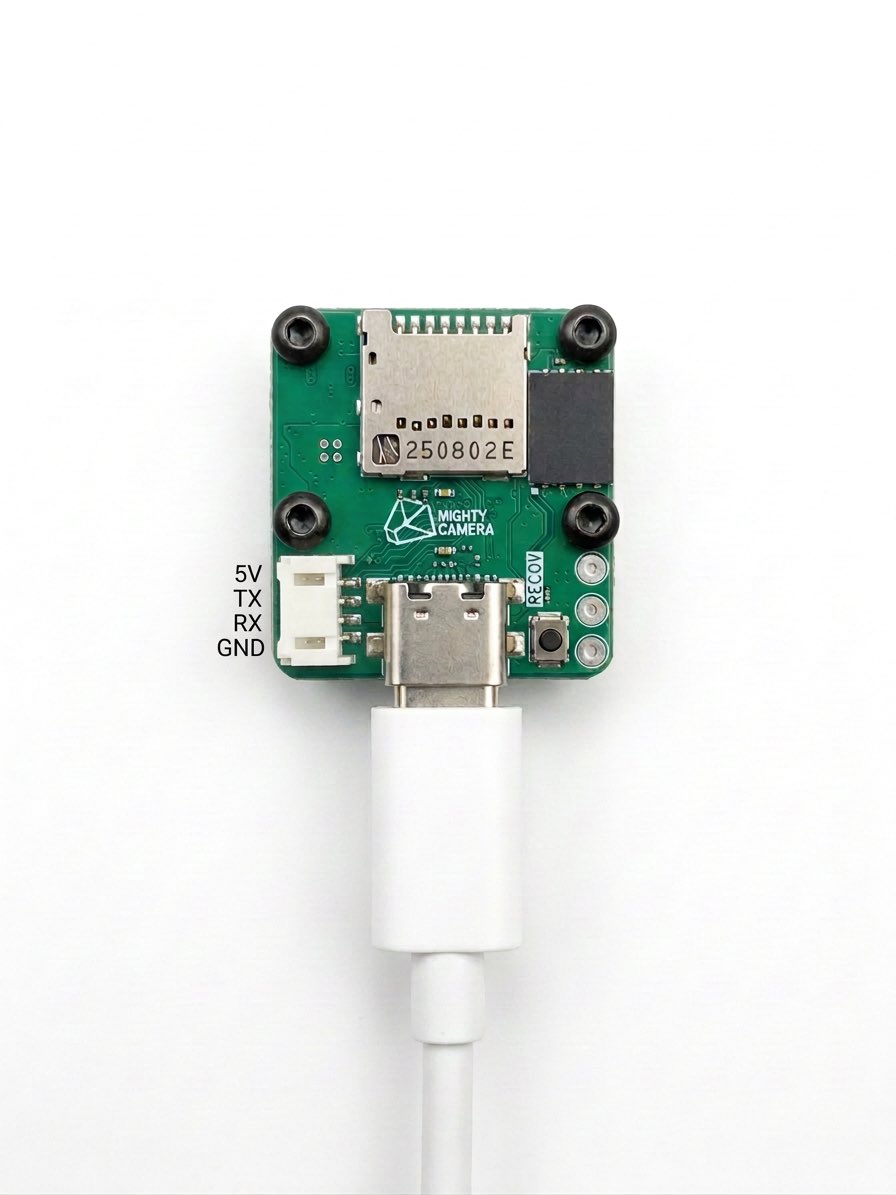
I am doubling down on my mission to create the smallest VIO module, here is the latest revision I am working on.
- Global shutter camera + IMU
- 0.8W
- Outputs pose @ 15hz via USB or UART
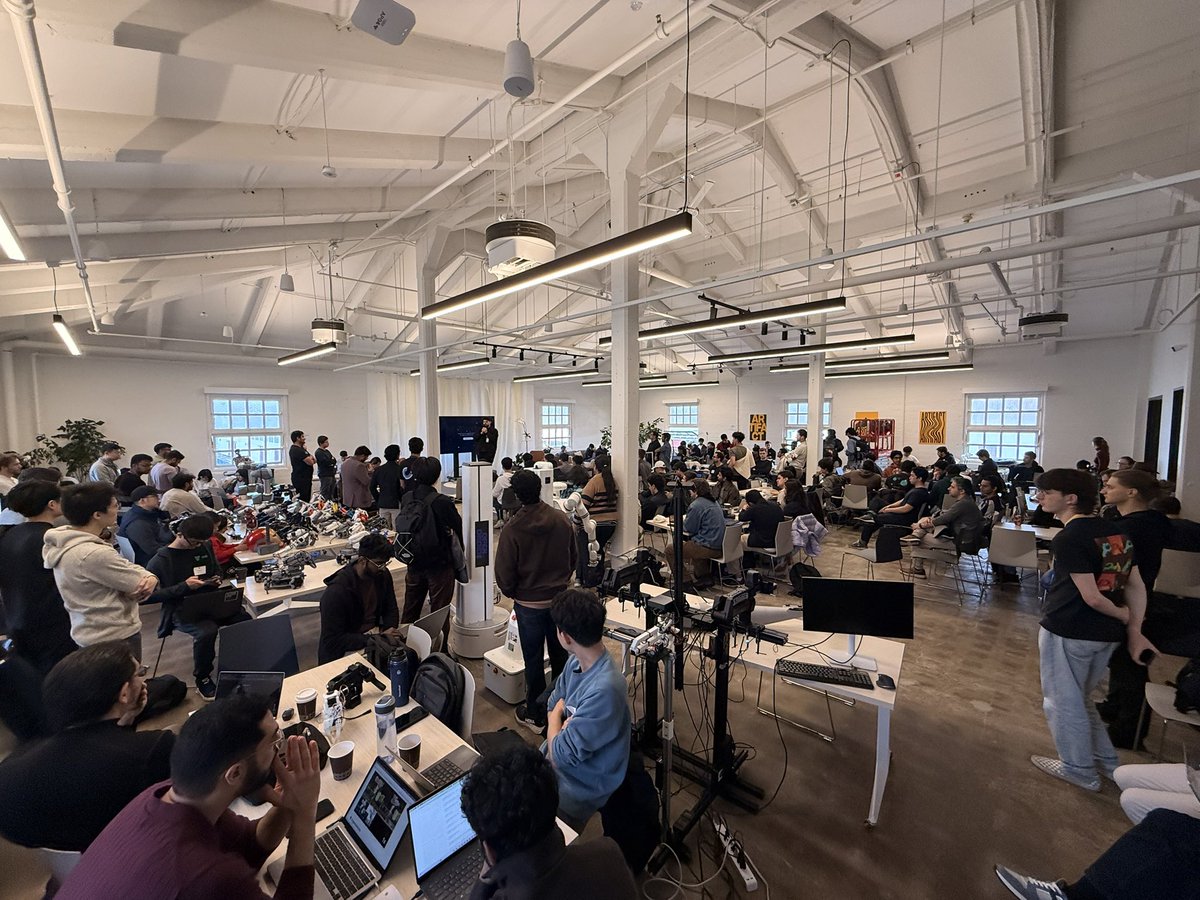
30+ teams locked in for 36 hours at the Physical AI hackathon we hosted last weekend in SF 🌉🤖
We equipped them with lerobot arms to solve three tasks: shape insertion, charger plugging, and liquid pouring.
Here are the 7 winners and what they built (with github and video): 🧵👇
🥇1st place: ETA0.1
They built an Autonomous Robot Barista using an ACT policy. ☕️
95% accuracy and zero spills after ~100k steps. They introduced real-time perturbations (moving the cup mid-pour), and with just 10k fine-tuning steps, the robot learned to adapt on the fly.
Code: github.com/anjalidhabaria…
Team: @sangam_chapagai, @MahimanaB, @DhabariaAnjali, Gary Lim, Benedict Chan
🥈2nd place: Pivot
To address the combinatorial challenges of long-horizon robotic manipulation, Team PIVot implements a hierarchical architecture that pairs a low-frequency VLM "thinker" for high-level planning with a high-frequency, language-conditioned policy for skill execution.
Code: github.com/praveenVnktsh/…
Team: @praveenvnktsh, @vib2810_, @shriishwaryaasv
🥉3rd place: Automate
Trained an ACT policy from scratch on a real robot and reached ~90% success on a multi-puzzle insertion task with minimal data, showing emergent recovery and alignment behaviors. A great reminder that high-quality demos beat pretraining when working with real-world robotics.
Github: github.com/poorvirhebbar/…
Team @Poorvi_rh, @anishmadan23, @SamuelPfrommer
🎖️World Intelligence Award: ServingU
A classic "divide and conquer" engineering approach. 🥤
They split pouring into 3 subtasks, training and benchmarking ACT vs. Diffusion for each (ACT won). Finally, they built a custom script to orchestrate the models sequentially, achieving pixel-perfect coffee pouring.
Code: github.com/Neil7281/Physi…
Team: @neel7281@JesusBetan86866, @mark_mau_, Liu Cathy, Garima Bhandari
🎖️Protocol Labs Award: Ladybug
An autonomous physical audiobook reader. 🐞📖
The arm turns the page, scans it (OCR), streams text-to-speech, and waits for the audio to finish before turning the page again. The loop: Manipulate → Read → Speak → Repeat.
Github: github.com/alisoncossette…
Team: Alison Cossette, Andreea Turcu, Sudhir Dadi
🎖️Activeloop Award: Robocafe
A voice-controlled butler. 🗣️🦾
This team trained a robot to respond to voice prompts to serve croissants, pour water (half or full glass!), and even clean up the table afterwards. Complex task chaining handled by different ACT models.
Github: github.com/dragonkhoi/rob…
Team: Nestor Tkachenko, Khoi Le
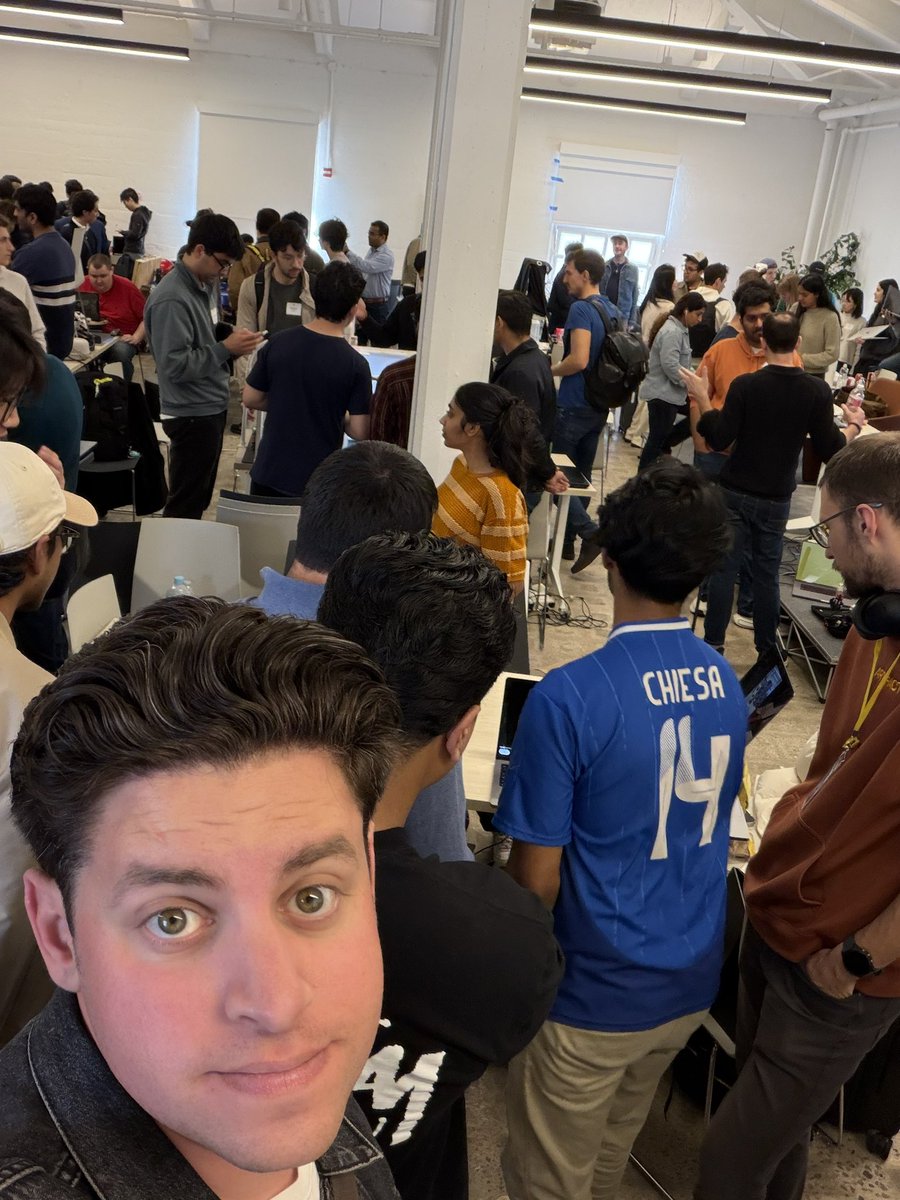
This has to be the craziest SF hackathon I’ve been to.
Over 100 robots 🤖
and over 300 people in one room.
Working on VLAs, world models and Clawdbots / OpenClaw for robots.
Random insights from the physical AI hackathon this weekend:
- Nearly all projects were pick and place or cup pouring tasks, mostly using SO-101
- Some teams used SmolVLA, most used ACT, with many reporting they just couldn’t get performance out of SmolVLA
- Only one team attempted to do anything with a humanoid really, and it didn’t really work out
- Very young crowd, cool to see even a 5th grader able to train models!
I think a big reason for the lack of variability in projects comes down to 24 hrs not being long enough for a robotics hackathon. You just need more time to do anything really interesting, especially if your iteration loop involves training a model.