𝙶𝚛𝚒𝚏𝚏𝚒𝚗

1.2K posts

𝙶𝚛𝚒𝚏𝚏𝚒𝚗 banner
𝙶𝚛𝚒𝚏𝚏𝚒𝚗

𝙶𝚛𝚒𝚏𝚏𝚒𝚗

@supa_griff

Pickleball, TSLA, and everything else
Katılım Ağustos 2009
103 Takip Edilen94 Takipçiler
Dirty Tesla
Dirty Tesla@DirtyTesLa·
If you have ZERO Tesla referrals, reply to this post with your referral link If you need a referral link for $1,000 off a Cybertruck, pick one of the links below!
English
2.3K
67
1.2K
129.3K
𝙶𝚛𝚒𝚏𝚏𝚒𝚗 retweetledi
Jorge Castillo
Jorge Castillo@JorgeCastilloPr·
How to finally become the 10x engineer: Add WarCraft 3 sounds to Claude hooks to get alerts when it finishes a task or needs permission.
English
236
374
5.1K
805.7K
Farzad 🇺🇸 🇮🇷
Farzad 🇺🇸 🇮🇷@farzyness·
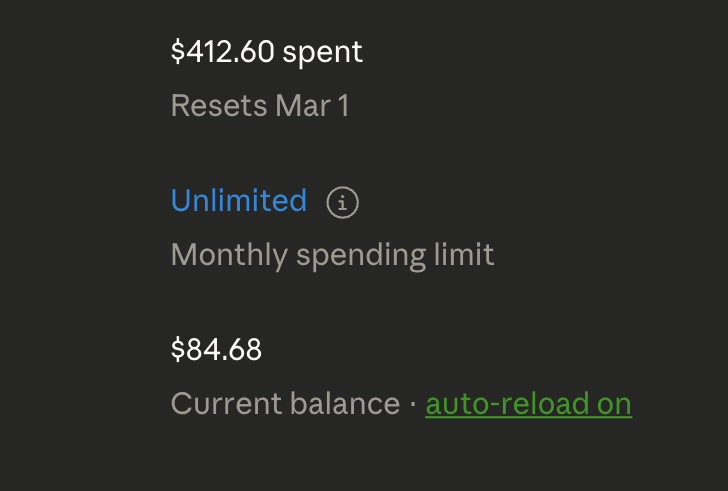
Houston - we have a problem. This is on Claude Max 20x. I'm scared.
Farzad 🇺🇸 🇮🇷 tweet media
English
43
2
201
41.7K
Quinn Slack
Quinn Slack@sqs·
To our friends affected by the US/Canada winter weather: If you're staying inside and coding the next few days, here's some extra free Amp usage (w/Opus 4.5 + GPT-5.2 + Gemini 3). ampcode.com/code/AMP-X559-… (first-come-first-served)
English
27
9
144
9.8K
Ilya Holt
Ilya Holt@IlyaHolt·
@farzyness you know, just because you can write a 2600-word essay in a tweet, doesn't mean you should
English
2
0
6
102
Farzad 🇺🇸 🇮🇷
Farzad 🇺🇸 🇮🇷@farzyness·
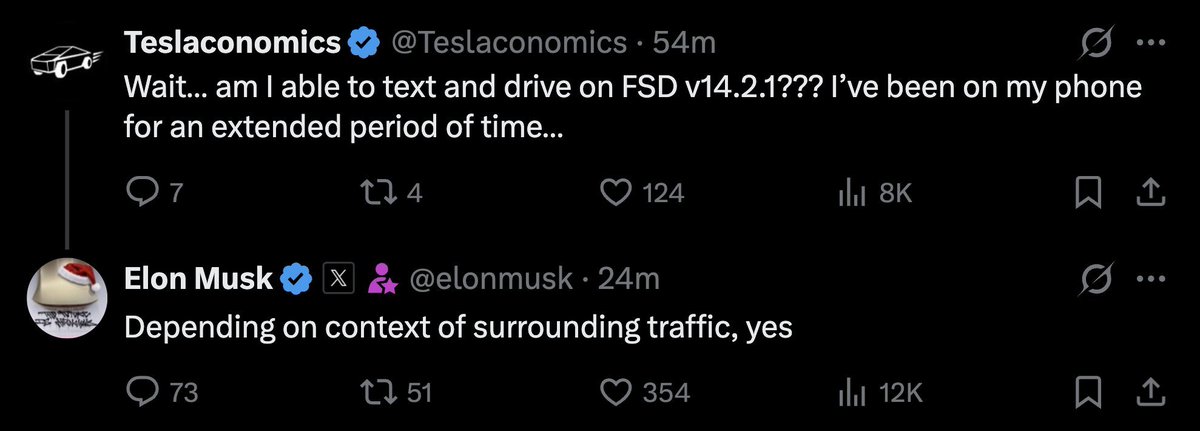
One of the biggest shifts ever in automotive history has just happened. It’s not a brand new drivetrain, or an insane new interior. Nope - what happened is that now we have a company that is very openly saying that you can now text and drive. Seriously. The post below by Elon Musk literally says that in certain situations, with the new version of Tesla’s self-driving software, you can text and drive. That sounds insane. That sounds dangerous. That sounds like everything your driver's ed teacher screamed at you not to do. I get it. I absolutely get it. But what Elon is actually saying is far more profound than it sounds on the surface. What he's really saying is that Tesla's self-driving technology has reached a level of capability where the car can handle enough of the driving task that taking your eyes off the road for brief moments to interact with your phone is statistically safer than the alternative, which is human driving. Not only that, but it’s FAR SAFER than people that actively text and drive - which is happening all the time. People are literally disabling their self-driving system in Teslas to send a text message, which means they're going from a car that's actively monitoring everything around them with superhuman perception to just them, a human, looking at their phone. That is objectively more dangerous. So what Tesla is doing is acknowledging reality and saying look, we need to get the safety statistics dialed in over the next month or two, but the technology is there. The car is good enough that we can start relaxing some of these really strict eye monitoring requirements. However, the most important thing about this - by far - is that this is a massive signal about where the technology is heading. Version 14 of FSD has been absolutely mind-blowing. We're seeing content creators around the world putting this thing through its paces in Manhattan, in Boston, in cities with European-style layouts from the 1700s - and the car is nailing it. Three-hour drives with zero interventions. Tesla’s in Mad Max mode where the car is assertively changing lanes, getting out of the way of cabs, positioning itself perfectly. We're also seeing FSD navigate snowy conditions almost flawlessly. Snow has historically been one of the hardest challenges for vision-based self-driving systems. Lane markings disappear. Depth perception gets compromised. Other vehicles kick up spray that obscures visibility. Yet Tesla's latest versions are handling these conditions extremely well. The system is learning, adapting, and getting better at an exponential rate. Then you have Europe. Tesla is doing full drives in Europe right now, capturing a ton of regulator attention. They're demonstrating the technology works in environments that are fundamentally different from American roads. Narrow streets, roundabouts everywhere, different traffic patterns, different signage. The system is proving it can generalize. Now while all of this is happening, while Tesla is racing ahead with technology that is legitimately working at a superhuman level in many scenarios, regulators are stuck in what Elon has described as Kafka-level bureaucratic nightmares. In Europe right now, you cannot even get supervised FSD approved. Not unsupervised where the car drives itself and you take a nap. Just supervised, where a human is still required to pay attention and take over if needed. That's not allowed in Europe. Elon has talked about having these conversations with European regulators where he brings billions of kilometers of data showing that FSD increases safety, and the response is essentially, well, we need to have committee meetings. We need to review this. We need to go through processes. Meanwhile, people are dying in car accidents every single day because human drivers make mistakes that these systems wouldn't make. And the crazy thing is that this gap is only going to continue widening. On one side, you have technology that is advancing exponentially. Every version of FSD is dramatically better than the one before it. The rate of improvement is accelerating. This is objectively true. Even the most ardent Tesla haters will admit this. On the other side, you have regulatory frameworks that were designed for a world where cars were dumb machines controlled entirely by humans. And the sad thing is that regulations like these move extremely slowly. They require years of committee reviews, impact studies, public comment periods. The process was designed for slow, incremental change, and what we're experiencing now is a revolutionary transformation. This creates a really uncomfortable dynamic. Tesla has millions of cars on the road right now that are already capable of full self-driving with a software update. They're building roughly two million new cars every year with this hardware baked in, increasing to 5 million per year by 2028. The Cybercab is coming in 2026, a vehicle specifically designed for unsupervised autonomy with no steering wheel or pedals. But even though Tesla has openly stated that they expect regulatory approval to roughly match their production ramp for the Cybercab, what they’re really saying is that they know regulation is going to be tight. They know they're going to be constrained by how fast governments can move, not by their technical capabilities or manufacturing capacity. Right now, Tesla has a massive lead in real-world AI. Nobody else is close. Waymo has a solution that works, but it requires high-definition maps, it requires specific geographic areas to be meticulously mapped to centimeter-level precision, and it requires a sensor suite that costs tens of thousands of dollars per vehicle. That approach works for a small fleet of robotaxis operating in limited areas, but it doesn't scale to millions of vehicles operating anywhere on earth. Tesla's vision-based approach, training neural networks on billions of miles of real-world driving data, is the only path that scales to the level we're talking about. The Chinese companies are working on similar problems, but they're behind. European manufacturers have essentially given up on this level of autonomy development specifically because of the brutal regulatory environment. The American legacy automakers are not even in the conversation. Tesla's lead is measured in years, potentially a decade or more depending on how you measure it. Every month that goes by where regulators block or slow down deployment is a month where that lead either extends or at minimum is preserved. But think about the flip side of this. What happens when China or Europe finally gets their regulatory act together and approves autonomous vehicles at scale? Do you think they're going to allow a foreign company, specifically an American company, to deploy millions of self-driving vehicles in their streets collecting data on every intersection, every pedestrian pattern, every traffic flow? That data becomes strategically valuable. That data has national security implications. An autonomous vehicle is essentially a mobile sensor platform with cameras pointing in every direction, continuously mapping and understanding the physical world. China has already shown extreme caution about this with Tesla. They've given partial approval for FSD, and there are signals that full approval might come around February or March of 2026. But that's supervised FSD, and even that approval is conditional. The Chinese government knows that if they let Tesla operate unsupervised vehicles at scale, they're essentially giving an American company unprecedented access to data about Chinese cities, Chinese infrastructure, Chinese citizens' movement patterns. In an era of increasing US-China tension, particularly around technology competition, that's a non-trivial concern, and my guess is that China will look to make Tesla’s life more difficult as they start to catch up to their technology. This has been China’s playbook for a really long time - open the doors for American companies to come in, “learn” from their tech, and once they have an equal footing, they start making life difficult for American companies. This of course could change, but I wouldn’t bet on it. Europe faces similar questions, though they're approaching it from a different angle. Europe tends to regulate technology based on precaution, on worst-case scenarios, on protecting citizens from potential harms even if those harms are speculative. That's why getting even supervised FSD approved there has been such a nightmare. The European regulatory mindset is fundamentally at odds with the pace of innovation in autonomous vehicles. What's fascinating is that this regulatory gap might actually accelerate in the near term. As Tesla's technology gets better, as the capabilities become more obvious, the political pressure to slow things down or ensure local companies can compete will probably increase. We've already seen this with TikTok in the US, with Huawei in multiple countries, with various technology platforms being blocked or restricted based on national origin. Autonomous vehicles touch physical infrastructure, public safety, and urban planning in ways that social media apps don't. The stakes are higher, which means the political sensitivity is higher. Tesla is going to face a three-layer bureaucracy nightmare in the United States alone. First, you have federal regulations around vehicle safety standards. Second, you have state-level departments of motor vehicles and transportation departments that control what vehicles can operate on their roads. Third, you have cities that control things like taxi licensing, commercial vehicle permits, and they have their own political considerations around protecting existing industries like Uber drivers. Uber has roughly a million active drivers in the United States. Those are a million people whose livelihoods would be threatened by robotaxis operating at a fraction of the cost. Do you think those million people are going to sit quietly while Tesla tries to deploy technology that could displace their jobs? Absolutely not. They're going to lobby. They're going to protest. They're going to pressure politicians to slow things down, to require additional studies, to impose restrictions. I could be wrong, but based on history, this is the likeliest outcome. None of this means Tesla won't succeed. Exactly the opposite - they will be massively successful. The technology is too good, the economic advantages are too large, and the safety benefits are too obvious. Eventually, the dam is going to break. Eventually, politicians will not be able to justify blocking technology that could save tens of thousands of lives per year from traffic accidents. Eventually, the cost savings of transportation that's 5-10 times cheaper than human-driven alternatives will win out. But the timeline matters a lot. Every year of delay is a year of people dying in preventable accidents. Every year of delay is a year where transportation costs stay unnecessarily high. Every year of delay is a year where productivity is lost to the dead time of human driving. For Tesla specifically, every year of delay is a year where they're manufacturing vehicles with autonomous capability that can't be fully utilized. They're essentially building hardware that's waiting for permission to unlock its full potential. That's frustrating from a company perspective, but it also creates a really interesting strategic position. When regulatory approval finally comes, there's going to be a massive installed base of vehicles that can instantly become autonomous with a software update. That's the shock wave Elon keeps talking about. Millions of cars suddenly becoming robotaxis overnight. Tesla’s ChatGPT moment. What's wild is that we're at this moment where the technology is essentially solved for supervised autonomy, and we're rapidly approaching the point where unsupervised autonomy is viable from a pure capability standpoint. The bottleneck is not engineering anymore. The bottleneck is not manufacturing. The bottleneck is not even consumer acceptance at this point. The bottleneck is regulatory approval. That's it. We're waiting for committees to meet, for politicians to make decisions, for bureaucrats to process paperwork. The snow performance is actually a perfect example of how far ahead the technology is getting. Snow is legitimately hard. It's one of the edge cases that even humans struggle with. Yet Tesla's neural networks, trained on millions of miles of real-world data including plenty of winter driving, are figuring it out. The car is learning to infer where lanes are even when they're covered. It's learning to adjust following distances when traction is reduced. It's learning to read the behavior of other vehicles to understand road conditions. These are all things that humans do, but the car is doing them with superhuman perception and faster reaction times. The European demonstrations are similarly important. Tesla is systematically proving that this technology generalizes. It works in Austin. It works in San Francisco. It works in Manhattan. It works in Boston. It works in snowy Canadian cities. It works on European roads. The neural network approach, where the car learns from experience rather than relying on hand-coded rules, means it can adapt to new environments. That's the key advantage over approaches like Waymo's that require explicit mapping of every location. What all of this means is that we're entering a period where the gap between what's technologically possible and what's legally allowed is going to grow before it eventually closes. Tesla is going to keep getting better at this. Version 15, version 16, whatever comes next, they're all going to be improvements on what we're seeing now. The rate of improvement might even accelerate as they get more data from more vehicles in more conditions. Meanwhile, regulators are going to slowly wake up to what's happening, slowly start drafting frameworks, slowly move through approval processes. The winners in this dynamic are going to be the jurisdictions that figure out how to move faster. States or countries that can create regulatory frameworks that protect safety without stifling innovation are going to attract the deployment of this technology first. They're going to see the economic benefits first. They're going to see the safety benefits first. And they're going to establish themselves as leaders in this transformation. The losers are going to be the places that drag their feet for political reasons, that prioritize protecting incumbent industries over embracing the future, that let perfect be the enemy of good in their regulatory approach. Those places are going to watch autonomous vehicles transform transportation everywhere else while they're still stuck in committee meetings. For those of us watching this unfold, the next few years are going to be absolutely wild. We're going to see Tesla continuing to push the boundaries of what's possible. We're going to see regulators scrambling to keep up. We're going to see political battles over deployment. We're going to see competing visions for how this technology should be governed. And we're going to see the gap between capability and permission either widen to a breaking point or start to close as reality sets in. What's clear is that Elon saying they're comfortable letting people text and drive with FSD 14.2.1 is not just a throwaway comment. It's a signal that the technology is reaching a maturity level that fundamentally changes the conversation. When your self-driving system is so reliable that taking your eyes off the road is actually safer than turning it off, you're no longer talking about a driver assistance feature. You're talking about a vehicle that's ready to take over the driving task. The question is no longer whether the technology works. The question is when regulators will acknowledge that it works and start getting out of the way. Everyone needs to be paying attention to this. Whether you're a Tesla investor, whether you work in transportation, whether you're thinking about urban planning or public policy, or whether you just care about where society is headed, this dynamic between technological capability and regulatory constraint is going to shape the next decade. The gap is growing. At some point, something's got to give. Let me know what you think in the comment section below. Do you think regulators are going to catch up in time, or is Tesla going to be manufacturing vehicles that can't operate at full capability for years? If you enjoyed this video, make sure to like and subscribe. Thanks for watching. I'll see you in the next one. Take it easy everybody.
Farzad 🇺🇸 🇮🇷 tweet media
English
49
28
335
23.4K
DHH
DHH@dhh·
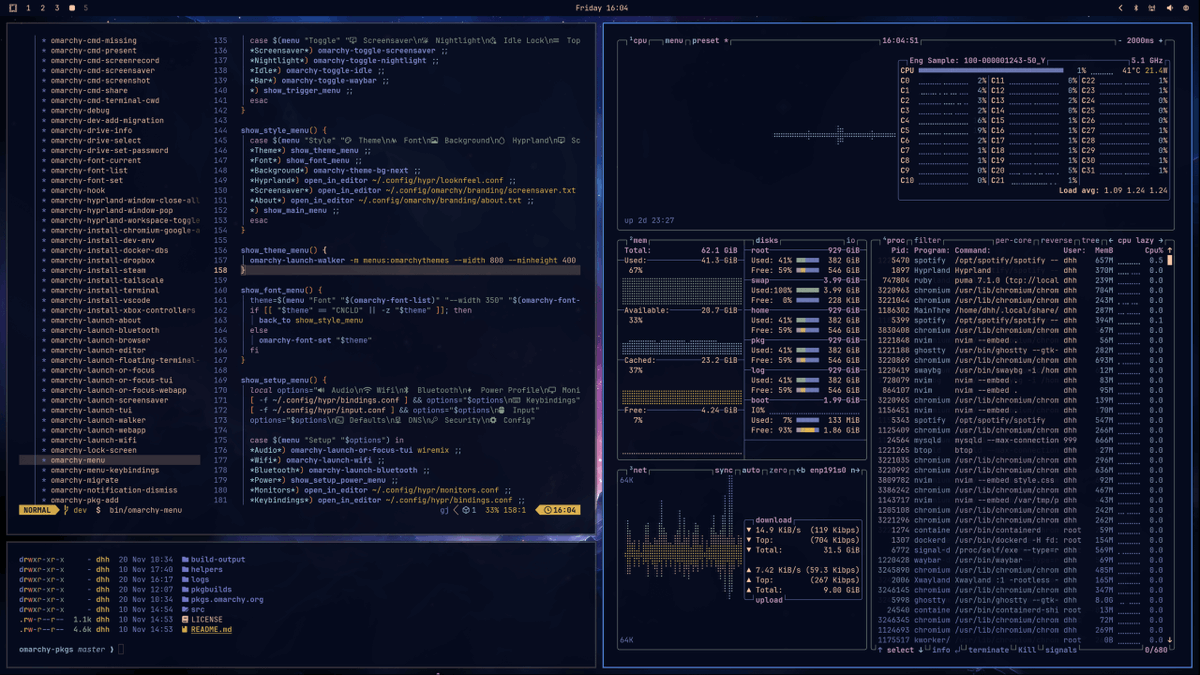
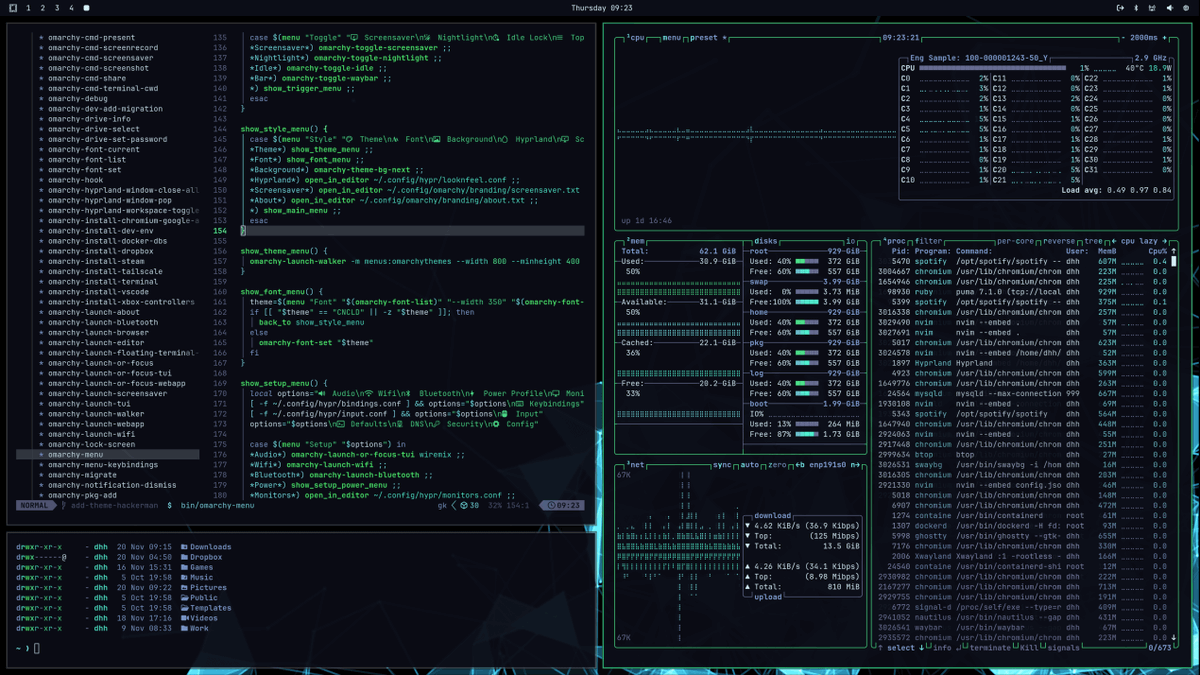
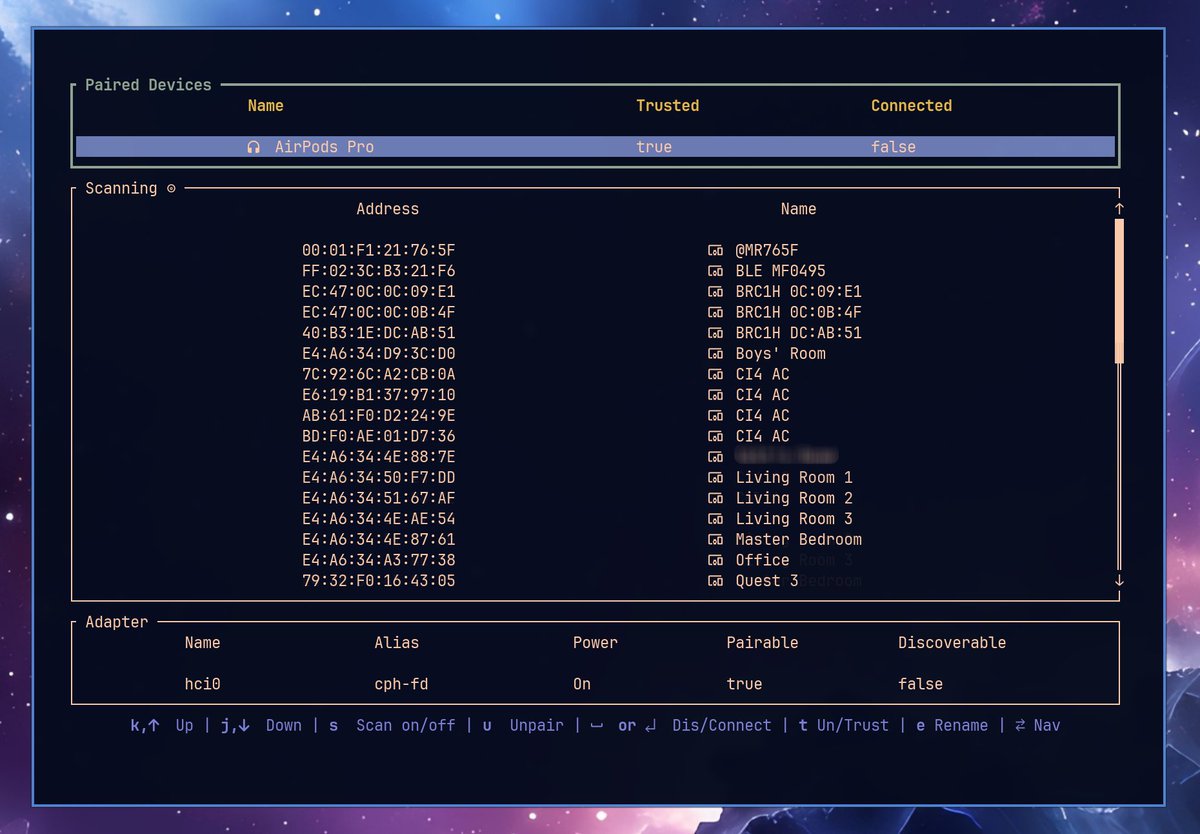
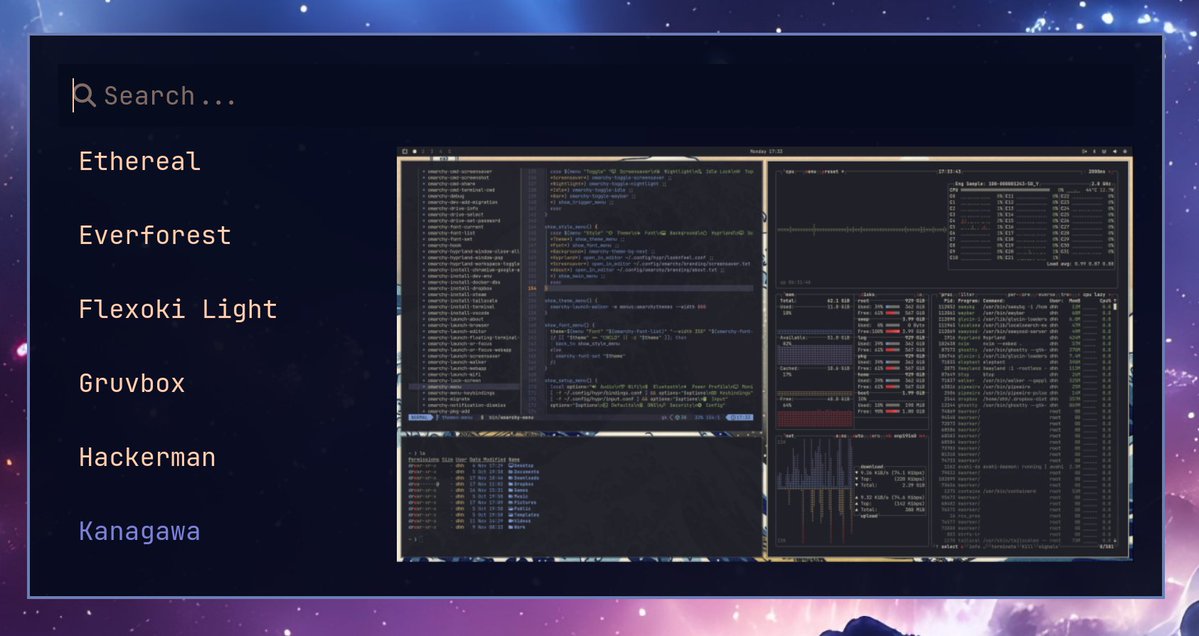
Omarchy 3.2 is out! @mitchellh's Ghostty is the new default terminal, @tobi's Try is included, new stable mirror/pkg repo, TUI for bluetooth, two new themes, visual theme picker, and SO MUCH MORE! github.com/basecamp/omarc…
DHH tweet mediaDHH tweet mediaDHH tweet mediaDHH tweet media
English
96
159
2.5K
153.7K
𝙶𝚛𝚒𝚏𝚏𝚒𝚗 retweetledi
Jamon
Jamon@jamonholmgren·
@davemccollough I think once they got their own environments set up they’re afraid to touch it, even on the gradle team themselves
English
0
1
2
2.6K
Ariana Thacker
Ariana Thacker@m0ldilocks·
Three years ago I got sick from something most people overlook: mold exposure. Today, that journey comes full circle: we’re announcing MoldCo’s $8M Seed (total $11M), led by @cantos + @collabfund, to build the new standard of care for mold and chronic inflammation. The mission is clear: to serve patients who’ve waited far too long for answers. To celebrate, we’re giving away 50 free lab tests. Comment “labs” to claim one and we’ll DM you!
English
587
93
1.7K
271.1K
DHH
DHH@dhh·
@funky_muse @brave Firefox works fine with Omarchy, but it doesn't have the power to render those beautiful frameless webapps nor is it as fast nor is it as featureful nor is it what most web devs want.
English
6
0
71
5K
DHH
DHH@dhh·
While Omarchy 3.0 ships with Chromium out of the box, we also have full live themeing support for @brave! Just install via Install > AUR (brave-bin), and you'll get themed updates (with a slight delay right now, instant in next Brave). Love that ad-free browsing experience!
DHH tweet media
English
85
50
1.6K
96.9K
Matt Van Swol
Matt Van Swol@mattvanswol·
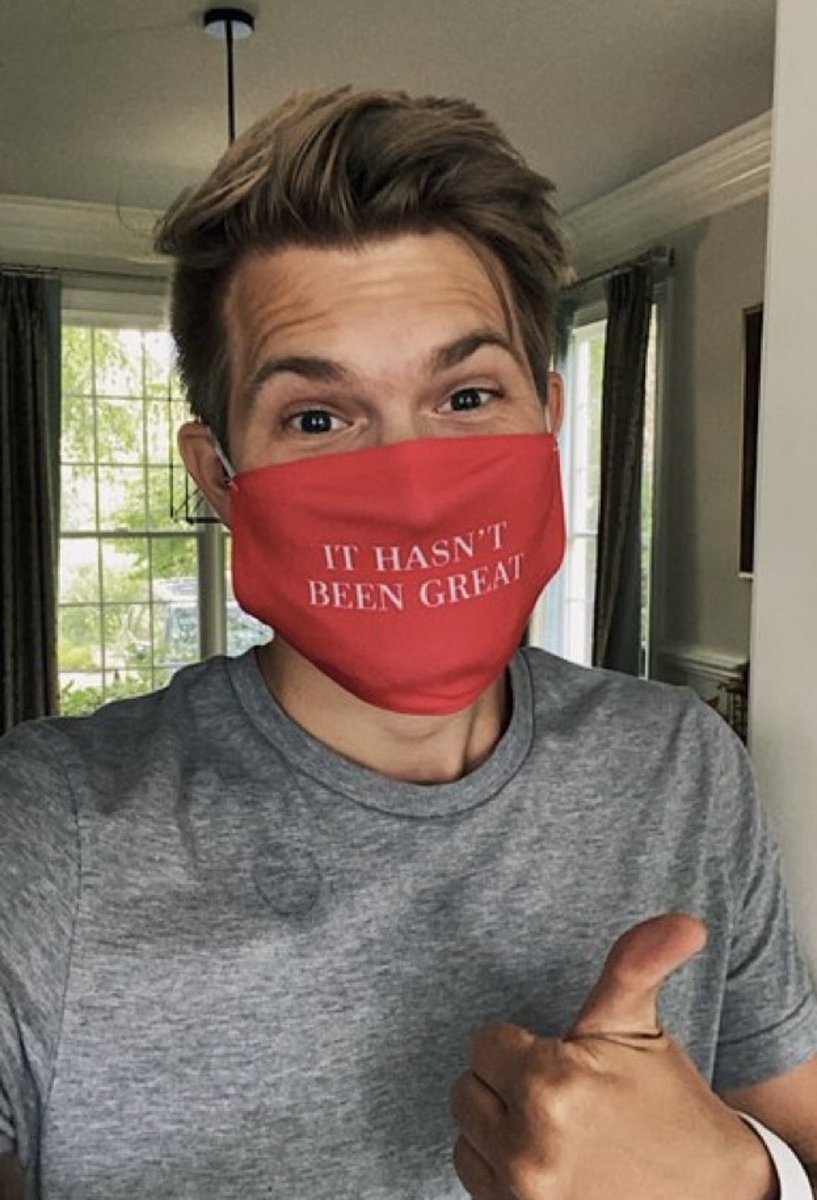
This is me as a liberal in 2020. This is me as a conservative in 2025. What do you notice?
Matt Van Swol tweet mediaMatt Van Swol tweet media
English
19.5K
4.8K
103.2K
16.1M
kache
kache@yacineMTB·
@lexfridman ok that's it, i'm done. just one more thing please fix the premium bug. i paid and i don't have a blue check and i dont have any of the features. also, fix android and stop getting sniped on side projects that haven't shipped for over a year
English
197
52
4K
266.5K
kache
kache@yacineMTB·
I got fired today. I'm not sure why, I personally don't think there is a reason, or that it's important. When I joined twitter, I joined because of the engineers I met in SF. They seemed happy. They were having fun. Engineers at play. Engineers that were enabled. It was good!
English
1.6K
752
20.3K
5.8M
Eclipse
Eclipse@AnthonyEclipse·
If you commented within last 10-15 min have a bit more patience and it’ll send out However we might’ve hit our daily limit tho with auto DM’s Anyone else not get a reply? Let me know
ALIYU 👨🏽‍💻@calypah

@AnthonyEclipse I have not received it yet 😕

English
11
0
10
3.6K
Eclipse
Eclipse@AnthonyEclipse·
I just dropped my custom pre-built Shopify theme and it’s 100% FREE. • Fully branded layout • Optimized for conversions • ChatGPT prompt included • No design skills needed Comment “THEME” and I’ll DM it to you. (Must be following)
Eclipse tweet media
English
917
62
806
98.3K
Jeremy Judkins
Jeremy Judkins@jeremyjudkins_·
What does it take to get a @RobinhoodApp gold credit card? I have their new managed portfolio, I have a normal investment account, plus an IRA. I probably use Robinhood more than any other app. I am a loyal customer and have been subscribed to Robinhood gold for years. @vladtenev
Jeremy Judkins tweet media
English
58
3
166
28.6K
Deals Finder
Deals Finder@DealsFinderIO·
What deal do you need? Be specific.
English
101
2
23
22.3K
Rez Karim
Rez Karim@rezkhere·
Holy shit... I think I created a monster. 1. Upload your product 2. Select from past successful ads in your niche/from competitors. 3. Get as good or better ads for your brand Comment 'ads' and I will DM you the access. Also share your product below. Imma make you some ads :)
English
824
94
1.1K
190K