vuk cosic

3.2K posts

vuk cosic banner
vuk cosic

vuk cosic

@supperman

Classic of https://t.co/7NpZz35QOd, digital strategist and whatnot.

Ljubljana, Slovenia Katılım Nisan 2007
773 Takip Edilen5.8K Takipçiler
Sabitlenmiş Tweet
vuk cosic
vuk cosic@supperman·
When I see posts beginning with "It is a great honour for me to be included..." I generally start thinking of murder, but here I am, in this stupid position that I really think this is a readable interview by the unstoppable @postanika. All you have to do now is click & read.
anika meier@postanika

In conversation with Vuk Ćosić (@supperman) for SLEEK The Internet After Failed Utopias AM What are your thoughts when you hear a new generation of artists saying, »We’re going to democratize the art world. We don’t need gatekeepers. We don’t need institutions«? VC It’s a little sad because I literally recognize sentences from our manifestos or posts written in the middle of the night, and I see them again today, as if we were speaking about the same utopian possibilities. I don’t buy it. That rhetoric was abused by network speculation, especially by NFT people. The rhetoric of liberation, zero gatekeepers, or disintermediation was captured by the crypto crowd because they have a use for an active, participating audience of creators. NFT artists are slightly trapped by that rhetoric. It’s not their text. It’s the text of the Bitcoin people, or blockchain people in general. But if there are kids out there who believe in it, and they generate work while believing in it and trying to make it happen, then it may be good. Maybe it’s like a useful psychosis.

English
1
0
6
455
OONA
OONA@madebyoona·
Got a lot out of this interview - insights and laughter. & now thinking about the self-surveillance of artists… talking heads speaking only to phone screens…. @supperman @postanika
OONA tweet media
English
4
2
16
243
Kevin McCoy
Kevin McCoy@mccoyspace·
With the recent sterling interviews with Vuk Ćosić (@supperman) and Miltos Manetas (@Miltos) I went looking through my archives and found this 1995 Net Criticism book
Kevin McCoy tweet mediaKevin McCoy tweet mediaKevin McCoy tweet mediaKevin McCoy tweet media
English
4
1
29
727
Kevin McCoy
Kevin McCoy@mccoyspace·
@supperman @Miltos Just finished reading your interview with @postanika and my message to her (and you) was “Such a great interview. Fantastic work”
English
3
0
3
57
Karen Hao
Karen Hao@_KarenHao·
Peruse the gorgeously illustrated AI Resist List and sign up to receive updates here! airesistlist.org
English
5
6
63
3.8K
Karen Hao
Karen Hao@_KarenHao·
On the one-year anniversary of EMPIRE OF AI, I am so, so excited to announce The AI Resist List, a new project that documents examples of resistance to the AI empires around the world. airesistlist.org
Karen Hao tweet media
English
55
1.6K
5.5K
229.2K
vuk cosic
vuk cosic@supperman·
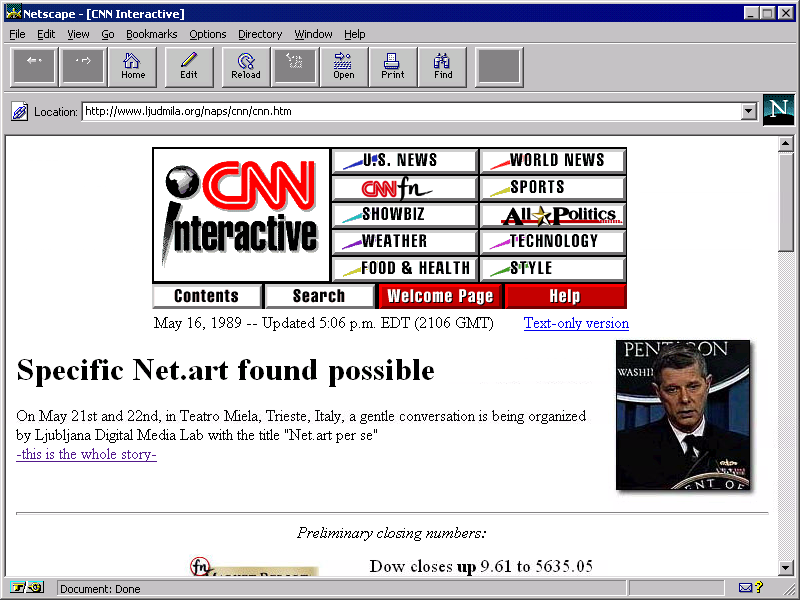
Today the world is celebrating 30 years since the net.art per se conference. I want to thank everyone for kind messages.
vuk cosic tweet media
English
7
11
46
2.8K
vuk cosic
vuk cosic@supperman·
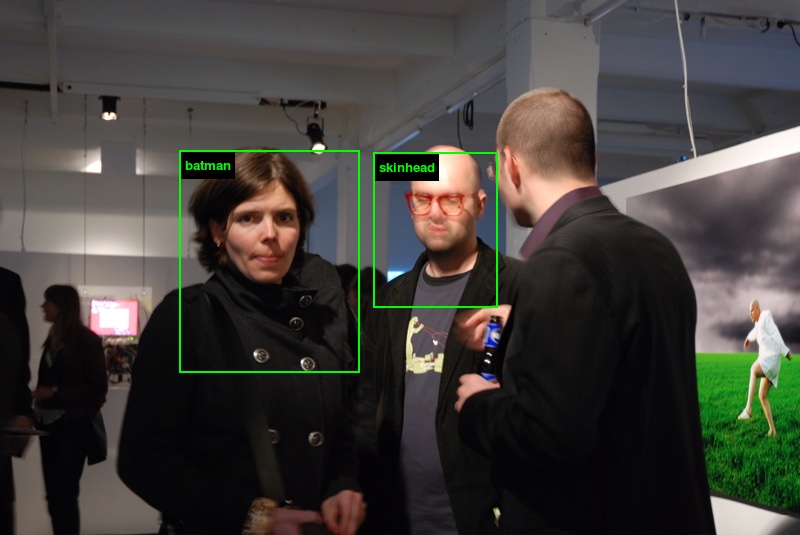
@Noahbolanowski Here, with Olia Lialina and Domenico Quaranta at the opening. The AI labels are from some tool from 2-3 years ago. There's also a video somewhere of me pretending to be Hans Ubermorgen, explaining that piece behind me.
vuk cosic tweet media
English
1
0
1
30
NB
NB@Noahbolanowski·
2008: "The artworks in Holy Fire are not new media art, but simply art of our time: art which appropriates institutional or corporate identities, creates fictional identities, hacks softwares and game engines for its own purposes, infiltrates online or offline communities in order to portray them or their own myths, subverts existing tools or creates its own tools, explores the aesthetics of computation and information spaces; or, more simply, uses computer hardware and software in order to create art which talks about our world." Below: Perpetual Self Dis/Infecting Machine by Eva and Franco Mattes, 2001-03; F1 Racer Mod (aka Japanese Driving Game) by Cory Arcangel (@cory_arcangel), 2004; ASCII History of Moving Images - Psycho by Vuk Ćosić (@supperman), 1998.
NB tweet mediaNB tweet mediaNB tweet media
English
1
2
15
543
NB
NB@Noahbolanowski·
Scenes from 2008's Holy Fire: Art of the Digital Age 2008: "Holy Fire is probably the first exhibition to show only collectible new media artworks already on the art market, in the form of traditional media (prints, videos, sculptures) or customized new media objects." Held at Art Brussels, from April 18 - 21, 2008. Quote from the press release.
English
2
5
41
2K
vuk cosic retweetledi
anika meier
anika meier@postanika·
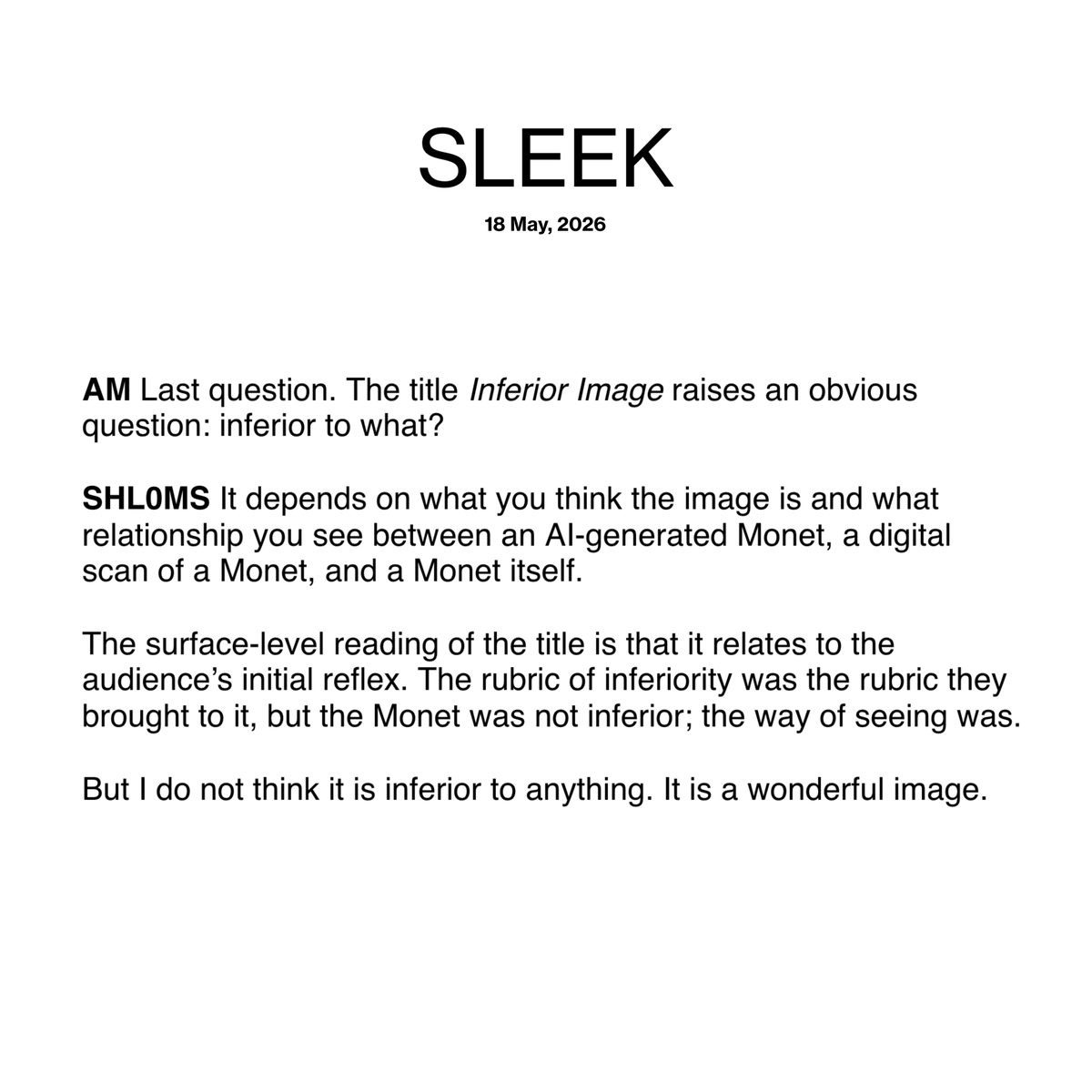
Platforming Vuk Ćosić (@supperman) next after @SHL0MS. Vuk was the inevitable next person in that lineage. (He’ll be part of Zero 10 by Art Basel through the Digital Masterpieces booth.) AM: Your utopia as artists was that you did not need to rely on institutions and curators.
 VC: This is by now part of the vernacular. We knew we didn’t need to talk to people like you. Educated people, terrible. We all had pre-net.art histories in confrontational art practices. When you are this hyped-up person with a Molotov in one hand and a spray can in the other, writing graffiti, you are completely self-sufficient.
anika meier tweet media
English
3
7
53
2.7K
vuk cosic
vuk cosic@supperman·
@CarissaVeliz Shown this in class at Brera yesterday, at least the artists understand.
English
0
0
2
134
ArtMeta
ArtMeta@artmetaofficial·
Excluding Computer Nude (1966), which is composed of electrical symbols, all works in the series are composed of communications symbols. "The experiment was a study of what happens when perception of symbols is combined with perception of pictures. The symbols are easily recognized but it is hard to perceive the parts as all one pattern. The familiar eye would hold it, the more adept eye lets go." (LIFE Magazine, Nov 8, 1968) Below: Clip from The Incredible Machine, directed by Paul Cohen & produced by Bell Labs in 1968.
English
2
0
4
117
ArtMeta
ArtMeta@artmetaofficial·
Leon D. Harmon in 1969: "Enclosed are 4 prints illustrating the computer-processed picture experiments in which K. C. Knowlton and I have participated... Thank you for asking us to participate. I look forward to learning of the results of this interesting venture." From a letter to New Tendencies curator Boris Kelemen, dated April 2, 1969.
ArtMeta@artmetaofficial

Exploring New Tendencies 4 (1968-69) Presented in Zagreb in 1968, New Tendencies 4 marked a turning point in the history of Digital Art. Gathering artists, theorists, & scientists — it established the computer not simply as a tool, but as a new artistic medium. More below.

English
1
3
12
4.7K
vuk cosic retweetledi
Pit Schultz
Pit Schultz@pitsch·
1/ Alexander Karp wrote his PhD under Habermas on how philosophical jargon becomes a weapon: elevated language that creates insiders, scapegoats outsiders, and rebrands domination as “authenticity.” Habermas rejected it. He had already read the manual. 2/ Karp and Kaczynski share the exact same diagnosis: tech society breeds alienation, therapeutic softness, fake elites, and crowning achievements that are also cages. Kaczynski’s answer: burn it down. Karp’s answer: arm it - and invoice the Pentagon monthly. This isn’t a rebuttal of the Unabomber. It’s the Unabomber with a government SLA and a $100 billion valuation. 3/ Silicon Valley “owes America a moral debt”? The internet was built by DARPA, public universities, and collective labor - then enclosed and sold back as rent. Palantir was seeded by the CIA, sustained by Pentagon contracts, and incorporated in Delaware to dodge taxes. The debt runs the other way. What Karp calls “patriotism” is feudal tribute dressed in Critical Theory drag. 4/ “Hard power in this century will be built on software.” Horkheimer and Adorno - Karp’s own tradition - called this instrumental reason: morality stripped out, rationality reduced to pure efficiency. They wrote it as a warning. Karp read it as a roadmap. He didn’t abandon Critical Theory. He completed it in the worst possible direction. 5/ “The question is not whether AI weapons will be built - it’s who builds them.” Oldest trick in the book: declare inevitability, kill debate, demand applause for your version. Kaczynski used the same logic to justify bombs. Arendt called this the precondition for totalitarianism. Karp calls it strategy. 6/ “America has delivered an extraordinarily long peace.” True - if you only count great-power corpses. The rest of the planet got Korea, Vietnam, Guatemala, Chile, Iraq, Libya, Yemen. Conflicts where the exact surveillance Palantir now sells decided who lived. Karp’s peace isn’t peace. It’s empire with better accounting. 7/ “No country advanced progressive values more than America.” The same country that did the Marshall Plan did Guantánamo. Landed on the moon and redlined its cities. Wrote the Universal Declaration and ran COINTELPRO - now serviced by Palantir. These aren’t contradictions. They’re the actual content. Karp turns monuments into blank checks. 8/ Decadence. Softness. Weak elites. The urgent need for hardness and sovereign decision. This isn’t Frankfurt School. This is Carl Schmitt wearing Habermasian drag: permanent exception, executive will over deliberation, violence as restoration of order. His committee noticed. Karp took notes and switched sides. 9/ Karp now decries the “psychologization of politics.” Meanwhile Palantir’s entire product is the psychologization of populations at industrial scale: risk scores, behavioral predictions, pre-crime social graphs sold to governments. He demands “grace for public figures.” Their complexity deserves forbearance. The rest of us get location data, zero due process, and an algorithm that never forgives. Mercy for the masters. Metadata for the masses. 10/ This is the real product. Not a betrayal of Critical Theory - its simulation. Karp kept the form (ideology critique, language as violence, demand for authenticity) while flipping every conclusion. Emancipation becomes domination. Critique becomes product. Reflection becomes targeting solution. The culture industry doesn’t suppress radical thought. It packages it and sells it back as proof the machine is self-aware. 11/ The company is named after Tolkien’s seeing-stones. They showed truth - but Sauron controlled the network, and those who looked too long saw only what he chose. "The Technological Republic" already exists. It’s the company that published the manifesto. And what it shows us is a world with no alternative to looking - and no one left to ask if the stone corrupts.
Palantir@PalantirTech

Because we get asked a lot. The Technological Republic, in brief. 1. Silicon Valley owes a moral debt to the country that made its rise possible. The engineering elite of Silicon Valley has an affirmative obligation to participate in the defense of the nation. 2. We must rebel against the tyranny of the apps. Is the iPhone our greatest creative if not crowning achievement as a civilization? The object has changed our lives, but it may also now be limiting and constraining our sense of the possible. 3. Free email is not enough. The decadence of a culture or civilization, and indeed its ruling class, will be forgiven only if that culture is capable of delivering economic growth and security for the public. 4. The limits of soft power, of soaring rhetoric alone, have been exposed. The ability of free and democratic societies to prevail requires something more than moral appeal. It requires hard power, and hard power in this century will be built on software. 5. The question is not whether A.I. weapons will be built; it is who will build them and for what purpose. Our adversaries will not pause to indulge in theatrical debates about the merits of developing technologies with critical military and national security applications. They will proceed. 6. National service should be a universal duty. We should, as a society, seriously consider moving away from an all-volunteer force and only fight the next war if everyone shares in the risk and the cost. 7. If a U.S. Marine asks for a better rifle, we should build it; and the same goes for software. We should as a country be capable of continuing a debate about the appropriateness of military action abroad while remaining unflinching in our commitment to those we have asked to step into harm’s way. 8. Public servants need not be our priests. Any business that compensated its employees in the way that the federal government compensates public servants would struggle to survive. 9. We should show far more grace towards those who have subjected themselves to public life. The eradication of any space for forgiveness—a jettisoning of any tolerance for the complexities and contradictions of the human psyche—may leave us with a cast of characters at the helm we will grow to regret. 10. The psychologization of modern politics is leading us astray. Those who look to the political arena to nourish their soul and sense of self, who rely too heavily on their internal life finding expression in people they may never meet, will be left disappointed. 11. Our society has grown too eager to hasten, and is often gleeful at, the demise of its enemies. The vanquishing of an opponent is a moment to pause, not rejoice. 12. The atomic age is ending. One age of deterrence, the atomic age, is ending, and a new era of deterrence built on A.I. is set to begin. 13. No other country in the history of the world has advanced progressive values more than this one. The United States is far from perfect. But it is easy to forget how much more opportunity exists in this country for those who are not hereditary elites than in any other nation on the planet. 14. American power has made possible an extraordinarily long peace. Too many have forgotten or perhaps take for granted that nearly a century of some version of peace has prevailed in the world without a great power military conflict. At least three generations — billions of people and their children and now grandchildren — have never known a world war. 15. The postwar neutering of Germany and Japan must be undone. The defanging of Germany was an overcorrection for which Europe is now paying a heavy price. A similar and highly theatrical commitment to Japanese pacifism will, if maintained, also threaten to shift the balance of power in Asia. 16. We should applaud those who attempt to build where the market has failed to act. The culture almost snickers at Musk’s interest in grand narrative, as if billionaires ought to simply stay in their lane of enriching themselves . . . . Any curiosity or genuine interest in the value of what he has created is essentially dismissed, or perhaps lurks from beneath a thinly veiled scorn. 17. Silicon Valley must play a role in addressing violent crime. Many politicians across the United States have essentially shrugged when it comes to violent crime, abandoning any serious efforts to address the problem or take on any risk with their constituencies or donors in coming up with solutions and experiments in what should be a desperate bid to save lives. 18. The ruthless exposure of the private lives of public figures drives far too much talent away from government service. The public arena—and the shallow and petty assaults against those who dare to do something other than enrich themselves—has become so unforgiving that the republic is left with a significant roster of ineffectual, empty vessels whose ambition one would forgive if there were any genuine belief structure lurking within. 19. The caution in public life that we unwittingly encourage is corrosive. Those who say nothing wrong often say nothing much at all. 20. The pervasive intolerance of religious belief in certain circles must be resisted. The elite’s intolerance of religious belief is perhaps one of the most telling signs that its political project constitutes a less open intellectual movement than many within it would claim. 21. Some cultures have produced vital advances; others remain dysfunctional and regressive. All cultures are now equal. Criticism and value judgments are forbidden. Yet this new dogma glosses over the fact that certain cultures and indeed subcultures . . . have produced wonders. Others have proven middling, and worse, regressive and harmful. 22. We must resist the shallow temptation of a vacant and hollow pluralism. We, in America and more broadly the West, have for the past half century resisted defining national cultures in the name of inclusivity. But inclusion into what? Excerpts from the #1 New York Times Bestseller The Technological Republic: Hard Power, Soft Belief, and the Future of the West, by Alexander C. Karp & Nicholas W. Zamiska techrepublicbook.com

English
1
14
40
5.6K
Nikola Popović
Nikola Popović@NikolaPopovic__·
Avtor montaže lažne objave stranke Resnica @resni_ca na katero je nasedel "novinar" Dejan Steinbuch @steinbuch je "digitalni umetnik" Vuk Ćosić @supperman ki bo v primeru nove vlade Janeza Janše @JJansaSDS izgubil dogovorjeno penzijo ter ostale finančne privilegije. Vuk Ćosić (njegov lažni profil @vladozlom ) je povezan z vsemi levimi strankami: SD @strankaSD Levico @strankalevica in Svobodo. Meni se je o tem hvalil leta 2023 v Frankfurtu. Vsi skupaj so en veliki komunistični blok.
Nikola Popović tweet media
BojanPožar@BojanPozar

Nekoč je bil Dejan Steinbuch ...

Slovenščina
19
162
426
41.7K
BojanPožar
BojanPožar@BojanPozar·
A @vladozlom da je Vuk Ćosić? Svašta.
BojanPožar tweet media
Nikola Popović@NikolaPopovic__

Avtor montaže lažne objave stranke Resnica @resni_ca na katero je nasedel "novinar" Dejan Steinbuch @steinbuch je "digitalni umetnik" Vuk Ćosić @supperman ki bo v primeru nove vlade Janeza Janše @JJansaSDS izgubil dogovorjeno penzijo ter ostale finančne privilegije. Vuk Ćosić (njegov lažni profil @vladozlom ) je povezan z vsemi levimi strankami: SD @strankaSD Levico @strankalevica in Svobodo. Meni se je o tem hvalil leta 2023 v Frankfurtu. Vsi skupaj so en veliki komunistični blok.

23
112
354
23.3K
NB
NB@Noahbolanowski·
Another rare exhibition video, showing Tendencije 4 (1968-69), an early (& critically important) Digital Art exhibition held in cold war era Zagreb. The second scene below shows Ken Knowlton & Leon D. Harmon's Studies in Perception series (1966-69), made on Bell Labs' IBM 7094.
ArtMeta@artmetaofficial

Exploring New Tendencies 4 (1968-69) Presented in Zagreb in 1968, New Tendencies 4 marked a turning point in the history of Digital Art. Gathering artists, theorists, & scientists — it established the computer not simply as a tool, but as a new artistic medium. More below.

English
7
48
255
13.7K
Internet Archive
Internet Archive@internetarchive·
A trillion webpages, saved. 🌐 To mark the milestone, Internet Archive x @GrayAreaOrg commissioned new net․art created from within the Archive’s vast collections. Ex. “alive internet theory” by @spencerc99 takes the form of a séance with the Internet, channeling millions of archived media files to ask: can the web feel alive? This, and works by @parka, Chia Amisola, Jesse Walton, mai ishikawa sutton, Olivia M Ross, Ophira Horwitz, Raúl Feliz, Rodell Warner, and @isthisanart_ turn preserved data into presence & memory into experience. Learn more about the Trillionth Webpage Commissions ⤵️ blog.archive.org/internet-archi… 🧵 1️⃣/2️⃣ #Wayback1T
English
5
67
326
10.2K