Sushant Kumar

3.1K posts

Sushant Kumar banner
Sushant Kumar

Sushant Kumar

@sushants

Founder and CEO of Kalpā Impact. Interested in impact investing, philanthropy, sustainable development, tech for good. Views personal.

Mumbai, India Katılım Şubat 2009
992 Takip Edilen892 Takipçiler
Sushant Kumar retweetledi
Rahul Raj
Rahul Raj@x_rahulraj·
Dear @noidapolice @myogiadityanath our factory in sector 63 Noida is attacked by protesters. Glasses are broken and they are vandalising the premises. This is happening across all factories. Employees are very scared. Please send police.
English
128
1.2K
3.8K
240K
Sushant Kumar
Sushant Kumar@sushants·
Thank you @abhish18 for exceptional contributions in @GoI_MeitY You set the trajectory for the Indian AI ecosystem - invigorated the startups, academia and the entire ecosystem. Wish you the best in your new role.
abhishek singh@abhish18

I completed my tenure as Addl Secy @MeityGov, CEO @OfficialINDIAai, and DG NIC @NICMeity on 31st March 2026 and joined as Director General, National Testing Agency @NTA_Exams on 1st April 2026. Grateful for the journey. Excited for what's ahead.

English
0
0
1
78
Sushant Kumar retweetledi
Ash Jogalekar
Ash Jogalekar@curiouswavefn·
My take on the whole "AI cures cancer in dog in Australia". It's a very interesting story, but perhaps not for the reasons that are being noted. In 2007, Freeman Dyson published an essay in The New York Review of Books called “Our Biotech Future.” It contains one of the most memorable predictions about the future of biology I’ve ever read. “I predict that the domestication of biotechnology will dominate our lives during the next fifty years at least as much as the domestication of computers has dominated our lives during the previous fifty years.” Dyson believed biology would eventually follow the trajectory of computing. At first, powerful tools live inside large institutions - universities, government labs, major companies. Over time those tools get cheaper, easier to use, and more widely distributed. Eventually individuals start doing things that once required entire organizations. “Biotechnology will become small and domesticated rather than big and centralized.” He even imagined genome design becoming something almost artistic: “Designing genomes will be a personal thing, a new art form as creative as painting or sculpture.” Dyson's words rang in my mind as I read the "AI cures dog cancer" story. Much of the coverage framed this as an example of AI discovering new science. But that’s not really the interesting part of the story. The scientific pipeline involved here is actually well known. It closely mirrors the workflow used in personalized neoantigen vaccine research that has been under active development for years. The steps are fairly standard: sequence the tumor, identify somatic mutations, predict which mutated peptides might be recognized by the immune system, encode those sequences in an mRNA construct, and deliver them to stimulate an immune response. The biological targets themselves were almost certainly not new discoveries (I have been unable to find out what they are, but mutations in targets like KIT which are common might be involved). Partly therein lies the rub, since the hardest part of drug discovery, whether in humans or dogs, is target validation, the lack of which leads to lack of efficacy - the #1 reason for drug failure. In neoantigen vaccines, the proteins involved are usually ordinary cellular proteins that happen to contain tumor-specific mutations. AlphaFold which was used to map the mutations on to specific protein structures is now a standard part of drug discovery pipelines. The challenge is identifying which mutated peptides might plausibly trigger immunity. What is interesting though is how the pipeline was assembled. Normally, this type of workflow spans multiple domains - genomics, bioinformatics, immunology, and translational medicine - and in institutional settings those pieces are distributed across specialized teams, document sources and legal and technical barriers. Navigating the literature, selecting computational tools, interpreting sequencing results, and designing a candidate mRNA construct is typically a collaborative process. In this case, AI appears to have helped compress that process, pulling together data and tools from different sources. Instead of requiring multiple experts, a motivated individual was able to assemble the workflow with AI acting as a kind of guide through the technical landscape. I’ve seen something similar in my own work while building lead-optimization pipelines in drug discovery. The underlying science hasn’t changed, but the friction involved in assembling the workflow can drop dramatically. Tasks that once required stitching together multiple tools, papers, and areas of expertise can now often be executed much faster with AI helping navigate the terrain; and by faster I mean roughly 100x. That kind of workflow compression is powerful, to say the least. When the cost of navigating technical knowledge drops, more people can realistically assemble sophisticated research pipelines. This story is a great example of what naively seems like a boring quantitative acceleration of the research process. In that sense, therefore, the real novelty here is not the biology but the combination of three things: a non-specialist orchestrating a complex biomedical pipeline, AI acting as a navigational layer across multiple technical domains, and the resulting decentralization of capabilities that were once confined to institutional research environments. But I think the story also points to something deeper, which is a challenge to modern regulatory environments. Modern biomedical innovation does not operate solely according to what is scientifically possible. It is structured by regulatory frameworks - clinical trials, safety oversight, institutional review boards, and regulatory agencies. Those systems exist for important reasons, but they also assume that the development of therapies occurs primarily within large, regulated organizations. When individuals begin assembling pieces of these pipelines outside those institutions, the relationship between technological capability and regulatory oversight starts to shift. The dog in this story sits outside the human regulatory framework. That fact alone made the experiment possible. In other words, the story is not just about technological capability; it is also about how certain forms of experimentation can occur when they bypass the regulatory pathways that normally govern biomedical innovation. One is reminded of another Australian, Barry Marshall, who received a Nobel for demonstrating through self-experimentation that ulcers are caused by bacteria. This raises an interesting question: what happens when the tools for assembling sophisticated biological workflows become widely accessible while the regulatory structures governing them remain institution-centric? That tension may ultimately be the most important implication of this moment. Regulatory frameworks will need to adapt to this kind of citizen science. Seen in this light, the story about the AI-assisted vaccine is less about a breakthrough in cancer therapy and more about a glimpse of the early stages of something Dyson anticipated nearly two decades ago: the domestication of biotechnology. If AI continues to reduce the cognitive overhead required to navigate biological knowledge and assemble complex pipelines, the boundary between professional research and motivated individuals may begin to blur. That shift will require careful thinking about safety, governance, and responsibility. But it also carries an exciting possibility. Dyson imagined a world in which biological design might eventually become something like a creative craft practiced not only by institutions but also by curious individuals experimenting at smaller scales. For a long time that vision felt distant. Now, it feels like we may be seeing the first hints of it.
English
14
113
526
88.6K
Sushant Kumar retweetledi
SansadTV
SansadTV@sansad_tv·
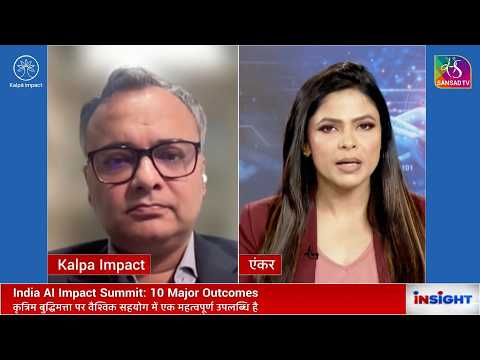
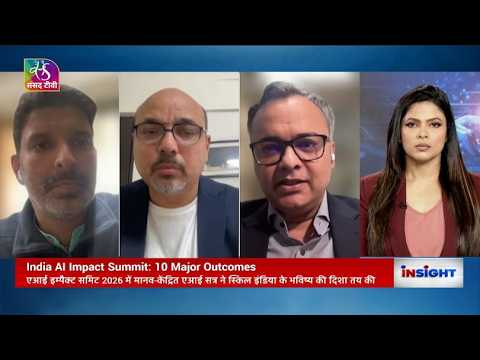
#AIImpactSummit2026 आर्टिफिशियल इंटेलिजेंस पर पूरी दुनिया की सोच को बदलने वाला आयोजन माना जा रहा है. New Delhi Declaration को 89 देशों व अंतरराष्ट्रीय संगठनों का समर्थन मिलना ऐतिहासिक माना जा रहा है. भारत की अगुवाई में Global South #AI की दिशा तय करने में निर्णायक बन कर उभरा है. 'Insight' में इन्हीं मुद्दों पर चर्चा. #NewDelhiDeclaration #ArtificialIntelligence @GoI_MeitY @OfficialINDIAai @iitdelhi @sushants @utpal_bob @preetisinghnews youtu.be/kHesb-KDfkM
YouTube video
YouTube
हिन्दी
0
5
13
623
Sushant Kumar retweetledi
IndiaAI
IndiaAI@OfficialINDIAai·
Sushant Kumar (@sushants), Founder & CEO, Kalpa Impact, delivered an address on 'Foundations of AI resources and its Application in Real-World Use Cases' on day 1 of the 'Regional AI Impact Summit 2025' in Bhubaneswar, Odisha. Under the 'Key Outcomes and the Road Ahead: Democratizing AI Resources' session, he emphasized on the need to first understand what AI resources are required for a use case to really amplify our efforts to arrive at a solution for it. #IndiaAIImpactSummit2026 #AIforGood #ResponsibleAI #PeoplePlanetProgress #EthicalInnovation #GlobalCollaboration #AIIndia @PMOIndia @AshwiniVaishnaw @MohanMOdisha @dpradhanbjp @jitinprasada @CMO_Odisha @SecretaryMEITY @GoI_MeitY @DigitalIndia @mygovindia @PIB_India @abhish18 @kavitabha @debjani_ghosh @SecyAgriGoI @NITIAayog @manas_r_panda @sushants @_saurabhgarg @vishaldevk @Indiagovin @PJMFdn @prasantm @parasharmanish @UBuffalo @UUtah @cbaral @IITISM_DHANBAD @pratykumar
IndiaAI tweet media
English
0
1
2
375
Sushant Kumar retweetledi
Shekar Iyer
Shekar Iyer@SHEKARSUSHEEL·
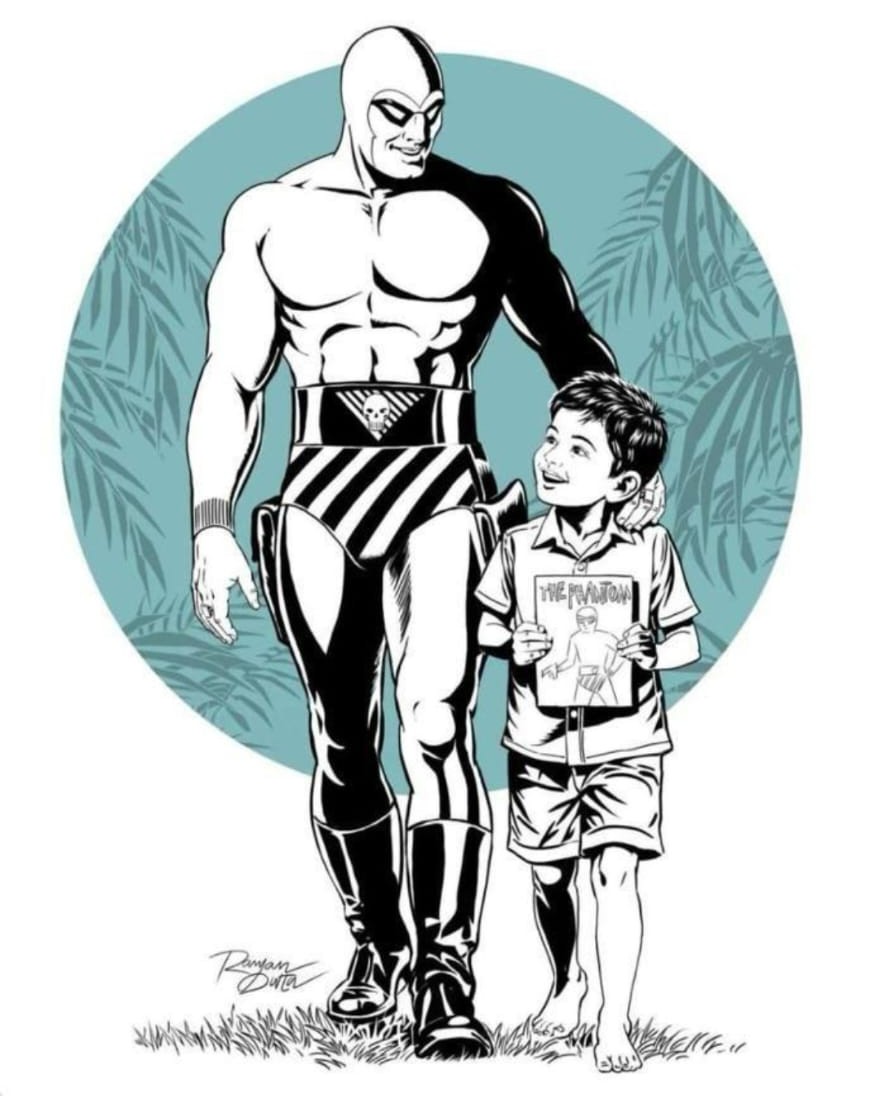
The Phantom turns ninety today. Time passes and generations change, but the Ghost Who Walks remains eternal. Celebrating his ninety years feels like celebrating a part of my own journey, the dreams, the inspiration, and the quiet strength he planted within me long ago.
Shekar Iyer tweet media
English
286
590
2.6K
145.3K
Sushant Kumar retweetledi
Jai Vipra
Jai Vipra@JaaiVipra·
If you're interested in AI and the hardware-software relationship: our working report on changing AI by changing compute was released at the India AI Impact Summit. We're actively looking for feedback: kalpaimpact.com/working-report…
Jai Vipra tweet media
English
2
3
54
4.1K
Sushant Kumar
Sushant Kumar@sushants·
An official event at the India AI Impact Summit 2026, hosted by Current AI and @_BHASHINI, in collaboration with @KalpaImpact 𝘌𝘷𝘦𝘯𝘵 𝘥𝘦𝘵𝘢𝘪𝘭𝘴: 🗓️ 20 February 2026 🕞 15:30 – 16:25 (IST) 📍 Meeting Room 7, Bharat Mandapam, New Delhi Come join us today.
English
0
0
1
113
Sushant Kumar retweetledi
Ministry of Information and Broadcasting
India's AI Impact Startups, released at the India AI Impact Summit 2026, profiles 110 startups and non-profits deploying artificial intelligence for population-scale social and economic impact. Published by IndiaAI and Kalpa Impact, the repository spans sectors including healthcare, agriculture, education, climate, financial inclusion, urban mobility, and public service delivery. Read More: pib.gov.in/PressReleasePa… #IndiaAIImpactSummit2026
Ministry of Information and Broadcasting tweet media
English
1
7
21
1.1K