Steve Verett retweetledi

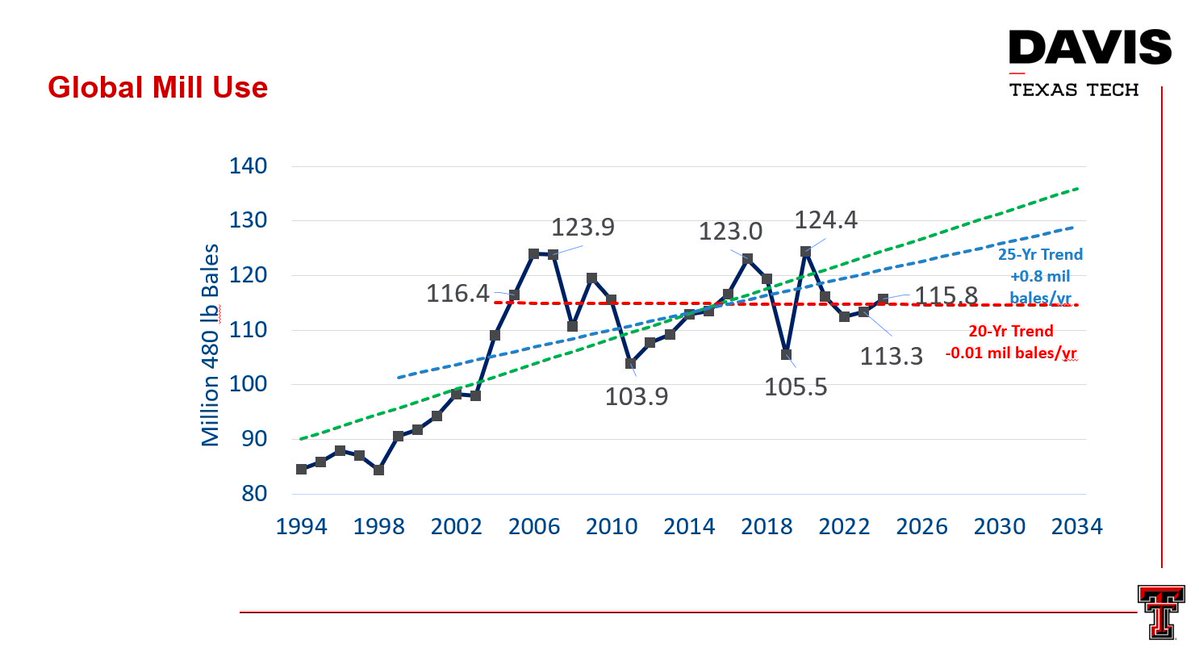
Here is the story for cotton that needs to be told and retold. Yes, production issues, Brazil, tariffs, China, etc. But the story about cotton is demand. For a long time, global demand grew with population growth (and above), especially as income growth occurred around the world.
We used to assume roughly 2% increase in cotton mill use per year. Starting in the 2000s, though, we had to reassess as that began to flatten. We started assuming 1-1.5% growth. But reality set in...and since the early 2000s, that trend went to zero.
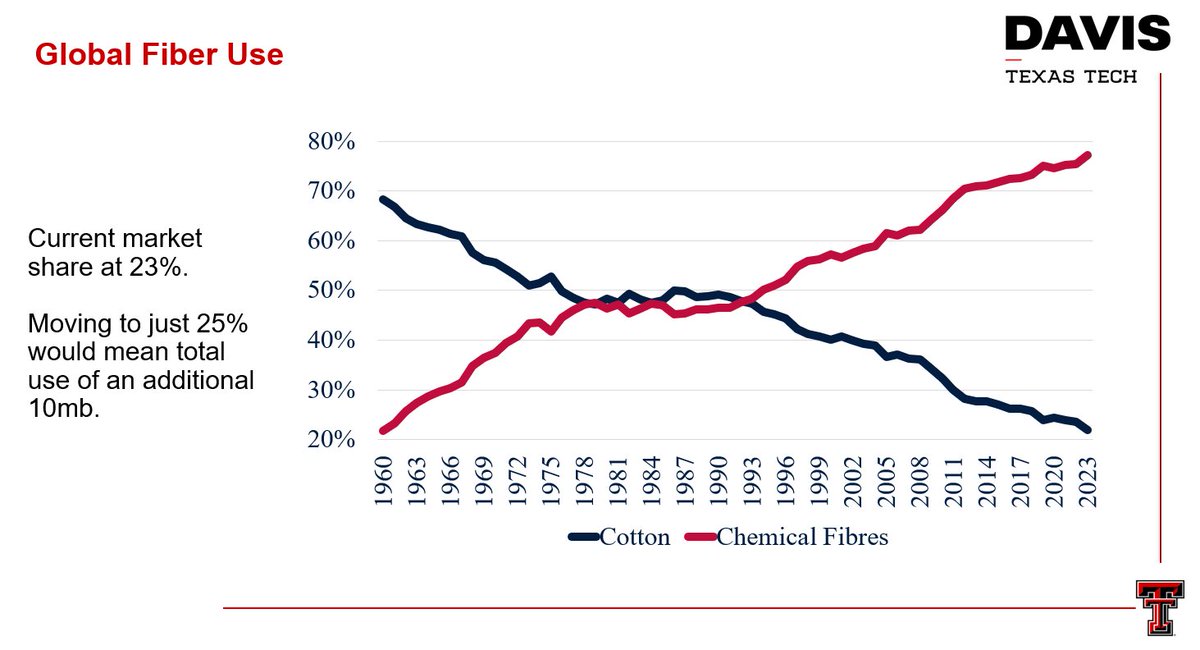
Cotton has been on a downward trend as a share of total fiber use since at least the 1960s. Those ugly polyester leisure suits took their toll. But around the mid-1970s, that trend flattened, but has returned to a declining share. You can see, that is not because we consumed less cotton, but that chemical fibers grew more rapidly.
The second chart has a note. Cotton is currently at 23% of global fiber share. Moving that to just 25% would mean an additional 10mb (approximately) of demand. At that point, I am much less concerned about Brazil or China, etc.
Natural fibers writ large (cotton, flax, bamboo, wool, etc.) have taken it on the chin from cheap, primarily Chinese, polyester. If you want to change that, you have to demand products differently. Consumers don't really have a choice. They purchase what is presented to them. But brands do. If you want to have an impact, you have to go directly to the brands and demand more natural fiber content.
Just remember, in all the politics, spin, and griping that occurs about inputs, competing countries, tariffs, etc., at the end of the day if people do not consume a higher share of cotton in their fiber choice globally, all of that really does not matter that much.
English