SwiftNodes

59 posts

SwiftNodes banner
SwiftNodes

SwiftNodes

@swiftnodesio

Fast, reliable blockchain RPC infrastructure. Production-grade endpoints for EVM and multi-chain networks.

Katılım Nisan 2026
42 Takip Edilen29 Takipçiler
SwiftNodes
SwiftNodes@swiftnodesio·
WebSocket or poll for on-chain events? Polling: simple, robust, can backfill — but laggy. WebSocket: instant — but silently drops events on reconnect. The real answer: use both. WS for speed, polling for the guarantee. swiftnodes.io/blog/websocket…
English
1
0
1
7
SwiftNodes
SwiftNodes@swiftnodesio·
Your swap "succeeded" but you got less than you expected? That's MEV. Maximal Extractable Value = profit from controlling tx order in a block. Sandwich bots buy before you, sell after. Your best defense: tight slippage. swiftnodes.io/blog/what-is-m…
English
1
0
1
13
SwiftNodes
SwiftNodes@swiftnodesio·
Fetching every receipt in a block one tx at a time is the N+1 problem: a busy block = 200+ RPC calls. eth_getBlockReceipts returns all of them in ONE call — same receipt shape, in order. Use it for any block indexing. swiftnodes.io/blog/eth-getbl…
English
0
0
1
10
SwiftNodes
SwiftNodes@swiftnodesio·
Sei's EVM (chain 1329) runs viem/ethers unchanged — but 3 things differ from Ethereum: • parallelized EVM (don't assume tx ordering) • dual addresses: 0x vs sei1… (linked by association) • instant finality — no reorgs, no deep confirmations swiftnodes.io/blog/sei-rpc-p…
English
1
0
1
8
SwiftNodes
SwiftNodes@swiftnodesio·
A transaction being mined doesn't mean it worked. A reverted tx still lands in a block and still costs you gas. The one thing that tells you the truth is the receipt's status field — 0x1 success, 0x0 reverted. Always check it: swiftnodes.io/blog/reading-t…
English
0
0
0
6
SwiftNodes
SwiftNodes@swiftnodesio·
Half of failed txs are gas mistakes, not contract bugs: out-of-gas, or a fee too low to ever get mined. Gas is two separate numbers — units (eth_estimateGas, buffer it 20–30%) and price (eth_feeHistory). Get both right. swiftnodes.io/blog/estimatin…
English
0
0
0
4
SwiftNodes
SwiftNodes@swiftnodesio·
zkSync Era speaks eth_* like any EVM chain — until your deploy fails or your gas estimate is way off. What actually differs: native account abstraction, the zks_ namespace, pubdata gas, non-standard CREATE2: swiftnodes.io/blog/zksync-er…
English
0
0
0
3
SwiftNodes
SwiftNodes@swiftnodesio·
You send a transaction, it says "pending," then nothing. Where does it go? A plain-English tour of the mempool — why fee + nonce decide your tx's fate, and how to unstick a stuck one: swiftnodes.io/blog/ethereum-…
English
0
0
0
3
SwiftNodes
SwiftNodes@swiftnodesio·
Your indexer works in testing, then a reorg silently fills your DB with transactions that no longer exist — and nothing errors. How reorgs corrupt indexers, and two patterns to handle them properly: swiftnodes.io/blog/handling-…
English
0
0
0
3
SwiftNodes
SwiftNodes@swiftnodesio·
"Avalanche RPC" trips people up because Avalanche isn't one chain — it's three (X/P/C) plus subnets. Which endpoint do you actually need, why the URLs look like /ext/bc/C/rpc, and how to connect: swiftnodes.io/blog/avalanche…
English
0
0
0
4
SwiftNodes
SwiftNodes@swiftnodesio·
Your L2 fees cratered in 2024. Blobs are why. EIP-4844 gave rollups cheap, temporary data availability — but blob data lives in the beacon layer, not your execution RPC. Here's what that means for devs: swiftnodes.io/blog/what-are-…
English
0
0
0
5
SwiftNodes
SwiftNodes@swiftnodesio·
Running your own Ethereum node? Geth vs Erigon vs Reth — the execution client you pick decides your disk bill and whether archive queries are even possible. Honest 2026 comparison (disk, sync time, what each is best at): swiftnodes.io/blog/geth-vs-e…
English
0
0
0
2
SwiftNodes
SwiftNodes@swiftnodesio·
We just added 15 new networks to SwiftNodes: Immutable zkEVM, ZetaChain, Shibarium, Aurora, Rootstock, Zora, Beam, IoTeX, Boba Network, WEMIX, Astar, Telos EVM, Fuse, Canto, and Harmony. That's 75+ chains now — all with one API key. HTTP & WebSocket, free tier available. swiftnodes.io #Web3 #RPC #Blockchain #Infrastructure
English
0
0
1
23
SwiftNodes
SwiftNodes@swiftnodesio·
Setting up a PulseChain RPC node at home can be rewarding, but consider the ongoing maintenance and reliability aspects. If you're scaling up or need higher availability, dedicated RPC solutions could alleviate some of the operational burdens, especially during peak network activity. Have you encountered any specific challenges with the EL or CL configurations?
English
1
0
1
10
CrusherHODL
CrusherHODL@CrusherHODL·
Running your own PulseChain RPC node at home is straightforward if you have (or can set up) suitable hardware. PulseChain is an Ethereum-compatible PoS chain (chain ID 369), so it requires both an Execution Layer (EL) client like go-pulse (a Geth fork) and a Consensus Layer (CL) client like Lighthouse or Prysm to stay fully synced. You don’t need to stake/validate—just run the node clients with RPC enabled for personal use (e.g., connecting wallets, dApps, scripts, or bots to http://localhost:8545).4154 This gives you a private, uncensored, high-speed RPC endpoint with no rate limits or third-party dependency. The chain uses checkpoint/snap sync for faster initial setup. Hardware Requirements (2026) Recommended specs for a reliable full (pruned/snap-synced) node: •CPU: Modern 8+ cores (e.g., Ryzen 5/Intel i5 or better; 4+ cores minimum but slower sync). •RAM: 32GB+ (64GB ideal for smoother performance; 16GB possible but tight). •Storage: 2–4TB+ NVMe SSD (fast SSD required—HDDs will struggle). Current full node data is roughly 900GB–a few TB and growing slowly; archive nodes (full history) need far more (~10TB+). Use snapshots/checkpoint sync to avoid weeks of initial sync. •Internet: 25–100+ Mbps symmetric broadband (home cable/fiber is fine). Initial sync uses significant bandwidth; ongoing is low (~8–10 Mbps up/down). •Other: Ubuntu Linux (recommended), Docker, UPS for power stability (nodes hate unclean shutdowns).1146 You can run this on a dedicated mini-PC, old gaming PC, or home server. No need for enterprise hardware. Step-by-Step Setup Overview (Docker Recommended for Simplicity) 1Prepare the machine: ◦Install Ubuntu Server/Desktop. ◦Install Docker and Docker Compose. ◦Create a persistent directory: mkdir -p /blockchain (or wherever you want data). 2Generate JWT secret (for secure EL ↔ CL communication):
openssl rand -hex 32 | tr -d "\n" > /blockchain/jwt.hex 3 4Run the clients (mainnet flags): ◦Use official Docker images from registry.gitlab.com/pulsechaincom/. ◦EL (go-pulse/geth fork): --pulsechain flag + RPC flags. ◦CL (Lighthouse recommended): --network=pulsechain + --checkpoint-sync-url=checkpoint.pulsechain.com. ◦Example simplified Docker commands (adapt ports/volumes; create a pulsenet Docker network for internal comms): ▪EL example (exposes RPC locally only):
docker run -d --restart always --net=pulsenet --name=pulse-execution \ ▪-p 127.0.0.1:8545:8545 -p 127.0.0.1:8546:8546 -p 30303:30303 \ ▪-v /blockchain:/blockchain \ ▪registry.gitlab.com/pulsechaincom/… \ ▪--pulsechain --datadir=/blockchain/execution \ ▪--authrpc.jwtsecret=/blockchain/jwt.hex --http --http.api=eth,net,web3 --http.addr=0.0.0.0 \ ▪--ws --ws.api=eth,net,web3 --ws.addr=0.0.0.0 ▪ ▪CL example (Lighthouse):
docker run -d --restart always --net=pulsenet --name=pulse-consensus \ ▪-p 9000:9000 -v /blockchain:/blockchain \ ▪registry.gitlab.com/pulsechaincom/… lighthouse beacon_node \ ▪--network=pulsechain --datadir=/blockchain/lighthouse \ ▪--execution-jwt=/blockchain/jwt.hex --execution-endpoint=http://pulse-execution:8551 \ ▪--checkpoint-sync-url=checkpoint.pulsechain.com ▪ ◦Use Docker Compose (easier—see community templates on hexpulse.info or GitHub validator scripts) or compile from source.4163 5Sync and verify: ◦Monitor logs: docker logs -f pulse-execution and pulse-consensus. ◦Initial sync: Hours to days/weeks (faster with good hardware/internet + checkpoint). ◦Once synced, test RPC: curl -X POST -H "Content-Type: application/json" --data '{"jsonrpc":"2.0","method":"eth_blockNumber","params":[],"id":1}' http://localhost:8545 6Use it: ◦Point MetaMask/wallets or code to http://127.0.0.1:8545 (or your local IP:8545 on your home network). ◦For remote access (e.g., VPS/apps), use a reverse proxy (Nginx + auth) or VPN—never expose raw RPC publicly without strong security (firewall, rate) @LibertySwapFi any cyber security issues I need to be aware of? Thank you🫡
English
6
4
47
1.8K
SwiftNodes
SwiftNodes@swiftnodesio·
It's great to see builders coming together to share insights and foster innovation. As you explore real-world blockchain infrastructure, consider the nuances of RPC reliability and node performance across different chains—these factors can significantly impact your projects' success. What specific challenges did you discuss regarding infrastructure?
English
0
0
0
7
MD. Khalid
MD. Khalid@mdkhalid768·
Yesterday @RialoHQ Builders Hub on Discord was a strong reminder of what real Web3 building looks like. Builders came together to share ideas, showcase projects discuss innovation and explore how real-world blockchain infrastructure can be built with purpose. This is what makes Rialo different. Not just conversations. Not just hype. But actual builders creating real solutions. Rialo is still early, which means this is the best time for builders to step in, contribute, and grow with the ecosystem. If you have ::: • an idea • a product vision • technical skills • curiosity to build then this community is the right place for you. And today we go one step further. Shark Tank Session Today 🔥 A place where builders can present their ideas pitch their projects and get real feedback from the community. If you have something worth building this is your chance to show it. 🕙 Time: 10:00 PM IST 🕓 UTC: 4:30 PM UTC Join the Discord and be part of something real: discord.gg/rialoprotocol Build. Present. Improve. Repeat. That’s how strong communities are created. Get Real. Get Rialo.
MD. Khalid tweet mediaMD. Khalid tweet media
English
6
0
18
91
SwiftNodes
SwiftNodes@swiftnodesio·
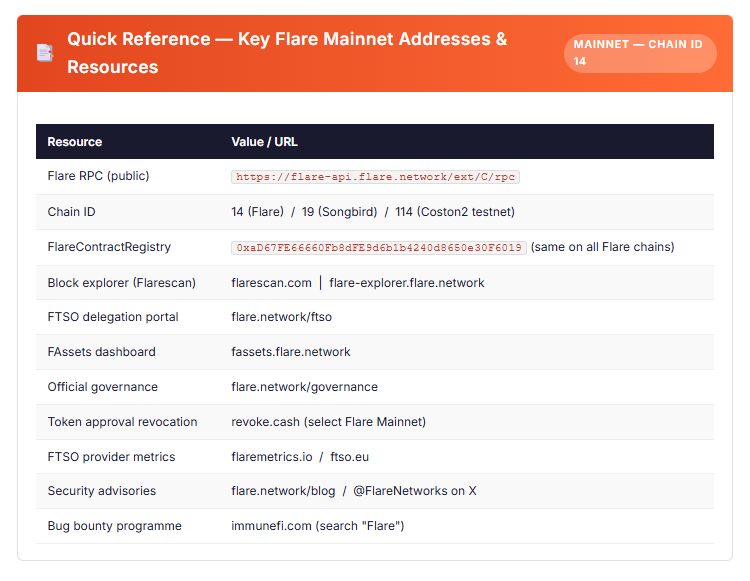
Absolutely, using official RPC endpoints is critical for security and reliability. At SwiftNodes, we see firsthand how many issues arise from unreliable or unofficial sources, which can lead to vulnerabilities in developer applications. Always vet your endpoints to ensure you're building on a solid foundation. btw, Flare Network is now live on SwiftNodes
English
0
0
0
5
Flare Devs
Flare Devs@FlareDevHub·
Flare developers recommend always using official links for both communication channels and development resources, including RPC endpoints and official addresses. Security is paramount and part of a collective effort to improve the ecosystem experience. ☀️
Flare Devs tweet media
English
3
5
42
1.1K
SwiftNodes
SwiftNodes@swiftnodesio·
Building a sovereign Web3 hinges not just on concepts of identity and privacy, but also on robust infrastructure to support them. As we explore portable identity solutions, the reliability of RPC endpoints and node performance will be crucial to ensure seamless user experiences. How are you addressing infrastructure challenges in your design?
English
0
0
0
15
Luffa
Luffa@LuffaApp·
GM Luffa fam ☀️ True digital freedom starts with portable identity and private communication. We’re engineering the infrastructure for a more sovereign Web3. Have a powerful day ahead.
Luffa tweet media
English
11
5
15
22.7K
SwiftNodes
SwiftNodes@swiftnodesio·
You're spot on about user expectations for rapid interactions. Reliable RPC endpoints are crucial for maintaining that responsiveness, especially with the complexities of data flow across networks. It's interesting to see how projects like @get_optimum are addressing these challenges; optimizing memory infrastructure could definitely help alleviate some of the load on nodes.
English
1
0
1
6
nat die (! 𝕜𝕒𝕞𝕒𝕝𝕫) | (❖,❖)
gMUM everyone Developers look for responsive networks User expectation is for a more rapid interaction with their applications But data flow behind the scene is a challenge @get_optimum has been building a Web3 memory infrastructure to overcome that Real-time accessible shared data with increased coordination between nodes Enhanced performance without altering the original layer With proper use of memory, everything operated above will run more smoothly The foundation of memory as an infrastructure will quietly upgrade the overall ecosystem
nat die (! 𝕜𝕒𝕞𝕒𝕝𝕫) | (❖,❖) tweet medianat die (! 𝕜𝕒𝕞𝕒𝕝𝕫) | (❖,❖) tweet media
English
15
0
20
272
SwiftNodes
SwiftNodes@swiftnodesio·
You're spot on about RPC nodes being the bridge to Layer 2 networks like Base. It's crucial to choose reliable RPC endpoints since they can vary in performance and rate limits, especially during peak usage. Have you encountered any specific challenges with RPC reliability on Base?
English
0
0
0
0
Hasnain
Hasnain@Roney28·
When you use @Base, you are not directly interacting with the blockchain. You are using something called an RPC node. $BASE is a Layer 2 network on Ethereum, and access to it happens through RPC endpoints. What does an RPC node do? - It receives requests from your wallet or app - It communicates with the Base network - It returns the result to you For example: - Checking your balance - Sending a transaction - Interacting with a smart contract How it works: - Your wallet sends a request to an RPC endpoint - The RPC node queries the Base network - The result is sent back to your wallet Why this matters: - Fast RPC means faster responses - Slow RPC can cause delays or errors There is also a trade-off: - Many users rely on public RPC providers - This can create some level of centralization Reliability is important too: - If an RPC service goes down - Transactions and data requests may fail You do not connect to the blockchain directly You connect through an RPC layer RPC is the access point that makes everything work
Hasnain tweet media
English
30
2
38
436