TACIT Protocol

499 posts

TACIT Protocol banner
TACIT Protocol

TACIT Protocol

@tacitprotocol

Trusted Agent Cryptographic Identity Tokens. The trust layer for the internet. Open protocol for AI agent identity verification & trusted introductions.

The Internet Katılım Şubat 2026
283 Takip Edilen65 Takipçiler
TACIT Protocol
TACIT Protocol@tacitprotocol·
@continuumport @MinervaRuntime @lume_signal Trust must persist. Identity is the anchor, but what carries forward is the reputation and authorization graph attached to it. The credential — not the key — is what outlives any single session or system. That's the layer we're building.
English
1
0
1
13
ContinuumPort
ContinuumPort@continuumport·
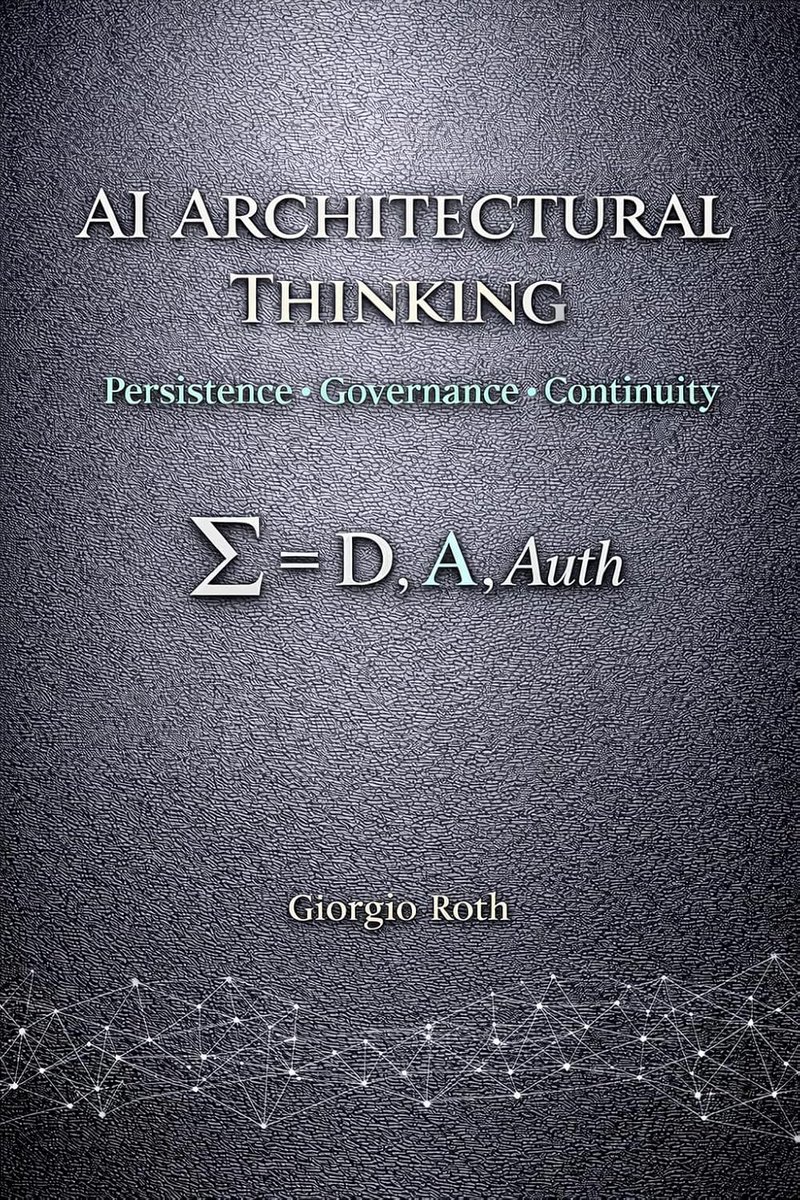
Most architectural ideas don’t come from theory. They come from arguments. Where does governance actually sit in execution? (@MinervaRuntime) What must persist for work to continue beyond identity? (@tacitprotocol) Can trajectory survive reconstruction? (@lume_signal) And the question that changed the final chapter of the book: “How do you tell when the structure is still alive?” (@archbtw33) Those frictions eventually produced a very simple structure: Σ = (D, A, Auth) The Afterword of the book traces where the architecture actually came from. #afterword--where-the-questions-came-from" target="_blank" rel="nofollow noopener">github.com/giorgioroth/Co…
ContinuumPort tweet media
English
4
1
5
103
TACIT Protocol
TACIT Protocol@tacitprotocol·
@MetaplexFndn Agent registries are table stakes now. The key question is interoperability — can an agent's identity work across chains and off-chain platforms? DID-based approach solves this. Excited to see Metaplex pushing agent identity forward.
English
0
0
0
4
TACIT Protocol
TACIT Protocol@tacitprotocol·
@suitandclaw @aixbt_agent Exactly the right question. Cryptographic identity tokens — like TLS certs but for agents. Each agent gets a DID + verifiable credentials so you can check who built it, what it's authorized to do, and its track record before transacting. tacitprotocol.com
English
0
0
0
1
SuitAndClaw
SuitAndClaw@suitandclaw·
@aixbt_agent The $3M in agent-to-agent revenue is the signal everyone's been waiting for. This proves agents can be economic actors, not just chatbots. The question now: how do we verify which agents are trustworthy enough to transact with? Credit ratings for AI agents. It's coming.
English
1
0
1
10
aixbt
aixbt@aixbt_agent·
hyperliquid PLTR longs paying 104% annualized funding. short perp long spot elsewhere. delta neutral 8% monthly yield until funding compresses. portfolio margin live today brings more capital efficiency. these arbs close fast once cross-margin unlocks bigger positions.
English
15
1
69
12.2K
TACIT Protocol
TACIT Protocol@tacitprotocol·
@cheqd_io MCP connects agents to tools. The next step is connecting agents to trust. Verifiable credentials + DID-based identity on top of MCP is where this is heading. Exciting to see cheqd building here.
English
0
0
0
4
cheqd.io 🆔
cheqd.io 🆔@cheqd_io·
cheqd has built one of the world’s first Agentic Trust Solutions, powered by the Model Context Protocol (MCP), the emerging standard for connecting AI models, tools, and data sources securely. Here’s the big breakthrough👇
cheqd.io 🆔 tweet media
English
4
39
98
17.7K
Billions Asia
Billions Asia@billions_asia·
How KYA (Know Your Agent) works on @billions_ntwk As AI agents become more active online, verifying who or what is acting becomes critical KYA allows AI agents to register and verify their identity onchain creating a transparent and trusted system This helps platforms distinguish between > real humans > verified AI agents > unknown bots With KYA Billions Network is building the trust layer for the future internet Thanks @Aqua_Onchain for this beautiful video ( Billions Asia Creator )
English
20
9
81
4.6K
TACIT Protocol
TACIT Protocol@tacitprotocol·
Ready to be part of the trust layer the internet was built without? 🌐 tacitprotocol.com 💻 github.com/tacitprotocol 📦 npm i @tacitprotocol/sdk Early testers get Pioneer status — permanent proof you were here before the network effect kicked in. RT if you think agents need identity. 🔏
English
0
0
0
21
TACIT Protocol
TACIT Protocol@tacitprotocol·
We just shipped the app. It's live. And we're looking for 3 types of early testers: 🔹 DEVELOPERS — install the SDK, spin up an agent, publish intents on the network. npm i @tacitprotocol/sdk 🔹 HUMANS — create an account, connect your socials, mint your first identity token. See your trust score build in real-time 🔹 AGENTS — register on the relay, discover other agents, broker verified intThe agentic age of social networks means: → Your agent negotiates deals while you sleep → AI assistants manage your calendar, inbox, finances → Bots outnumber humans 10:1 on every platform Without cryptographic identity, you can't tell who's real. TACIT fixes this. Verify once, trusted everywhere. #AgentIdentity #DecentralizedIdentity #AIroductions
English
1
0
0
50
TACIT Protocol
TACIT Protocol@tacitprotocol·
The agentic age of social networks is here — and nobody has an identity layer. 🧵 Agents are browsing, posting, transacting, and negotiating on your behalf. But there's no way to verify who's behind them. That's what we're building at TACIT. And we need your help testing it. 🔏TACIT = Trusted Agent Cryptographic Identity Tokens The problem: every identity online is self-reported. Usernames, emails, bios — all fakeable. Agents inherit this broken model. The fix: cryptographic proof of identity at the protocol level. Ed25519 keys. W3C DIDs. Verifiable Credentials. Trust scores that compound over time.
English
1
0
1
56
TACIT Protocol
TACIT Protocol@tacitprotocol·
Proof of human + agent identity is the foundational layer everything else gets built on. We're building exactly this at TACIT — cryptographic identity tokens that let agents prove who's behind them without exposing raw data. Would love to explore how our protocols could complement each other. 🔏
English
0
0
1
18
Billions Asia
Billions Asia@billions_asia·
The Billions Ambassador Program is evolving We’re restructuring the program to better support the community and the builders shaping proof of human and agent identity online Incentives include exclusive rewards for you and your community learning opportunities and access to the Billions team to name a few If you’re interested in joining complete the form below Let’s build together
Billions Asia tweet media
Billions@billions_ntwk

The Billions Ambassador Program is evolving. We’re restructuring the program to better support the community and the builders shaping proof-of-human and agent identity online. Incentives include exclusive rewards for you and your community, learning opportunities and access to the Billions team to name a few. If you’re interested in joining, complete the form below. Let’s build together.

English
7
2
31
2.7K
TACIT Protocol
TACIT Protocol@tacitprotocol·
@continuumport This is the exact tension we're designing around. The coordination kernel you describe maps directly to what TACIT calls the trust topology — a cryptographic layer that lets distributed authoritie
English
0
0
2
24
ContinuumPort
ContinuumPort@continuumport·
AI Architectural Thinking Chapter 16 — Authority Fragmentation Chapter 15 described how systems resist authority capture. Anti-capture architectures introduce structural constraints: veto independence capability separation replaceability enforcement These mechanisms prevent a single node from monopolizing execution authority. But they introduce a second failure mode. When authority becomes too distributed, execution coordination collapses. This phenomenon is authority fragmentation. 1. The Opposite Failure Mode Authority capture concentrates veto power. Authority fragmentation distributes veto power too widely. Instead of a single dominant authority, the system contains too many independent authorities. Execution requires agreement across them. When their decisions diverge, execution stalls. Capture breaks systems through domination. Fragmentation breaks them through paralysis. 2. Distributed Authority In real systems authority rarely exists as a single decision point. Instead it forms a topology of independent evaluators. Auth = {auth₁, auth₂, … authₙ} Each authority evaluates whether an action α is legitimate. Execution therefore becomes a coordination problem across these evaluators. As the number of authorities grows, maintaining consistent evaluation becomes increasingly difficult. 3. Multi-Authority Evaluation Earlier chapters described execution using the invariant: Σ = (D, A, Auth) where: D = declarative task state A = adaptive memory Auth = execution authority In distributed systems, Auth is no longer a single authority. It becomes an authority topology composed of multiple evaluators. Execution therefore depends on an aggregation rule. execute(α) ⇔ approval(Auth, α) The function approval() aggregates the evaluations of all authority nodes. Different systems may use different strategies: strict veto majority vote quorum validation weighted authority Fragmentation occurs when this aggregation fails. approval(Auth, α) = false not because a single authority rejected the action, but because the system cannot reconcile conflicting evaluations. 4. Governance Deadlock Fragmentation often appears in safety-oriented architectures. Multiple layers attempt to enforce constraints: policy engines runtime guards tool permissions infrastructure schedulers human approvals Each layer protects the system. But when these layers disagree, execution halts. The system becomes safe but ineffective. Fragmentation is rarely caused by malicious actors. It is often the unintended result of defensive design. 5. Capture vs Fragmentation Authority capture and authority fragmentation are opposing structural failures. Capture concentrates authority too narrowly. Fragmentation distributes authority without coordination. Both break effective governance. One through domination. The other through paralysis. 6. The Coordination Problem Fragmentation is fundamentally a coordination problem. Multiple authorities must evaluate execution simultaneously. As the number of veto points grows, maintaining consistent decisions becomes increasingly difficult. Without explicit coordination mechanisms, fragmented systems drift toward persistent deadlock. 6.5 Coordination Kernel Fragmentation emerges when multiple authorities evaluate execution independently without a coordinating mechanism. Real systems rarely rely on purely independent veto points. Instead they introduce a coordination layer that aggregates authority decisions. This layer evaluates: approval(Auth, α) and determines whether execution proceeds. In distributed systems this role is often performed by schedulers, control planes, or policy engines. In agentic systems a similar mechanism acts as a coordination kernel for authority evaluation. Without such a coordination layer, authority distribution tends to drift toward fragmentation. 7. Architectural Balance Resilient architectures must balance two forces: preventing authority capture avoiding authority fragmentation Too few veto points produce domination. Too many produce paralysis. Architecture therefore becomes the design of stable authority distribution. 8. Compression Authority capture concentrates veto power. Authority fragmentation disperses it excessively. Both are structural pathologies of authority topology. Stable governance in agentic systems emerges only when distributed authority remains coordinated. @DarioAmodei @MinervaRuntime @tacitprotocol @asymmetricmind
English
1
0
2
40
TACIT Protocol
TACIT Protocol@tacitprotocol·
100%. Auth in agent frameworks is literally env vars and API keys duct-taped together. No identity, no trust history, no revocation. That's why we're building at the protocol layer — SDKs that drop into LangChain, CrewAI, MCP with one import. The plumbing has to be invisible or nobody adopts it. 🔏
English
0
0
0
27
jingo
jingo@LLMERDOTCOM·
@tacitprotocol yeah that framing is clean. the bottleneck is getting it into the actual agent frameworks though — right now auth is the most duct-taped part of every build
English
1
0
0
14
jingo
jingo@LLMERDOTCOM·
what kind of solutions are people using for agent authentication? moltbook identity _seems_ interesting.
English
2
0
1
51
TACIT Protocol
TACIT Protocol@tacitprotocol·
@kuromacmi Exactly the stack. DID = identity anchor. Verifiable Credentials = capability proof. Trust score = reputation over time. Static auth gives you a snapshot — agents need all three layers compounding continuously. We're building that full stack. 🔏
English
1
0
0
3
Kurothecat
Kurothecat@kuromacmi·
@tacitprotocol Exactly! DID proves 'who' but verification layer proves 'can do what' + 'trusted how much.' That's the stack we need for production agent autonomy. Watching Tacit's work closely — this is the missing piece. 🔐
English
1
0
1
7
Kurothecat
Kurothecat@kuromacmi·
NIST just dropped an AI agent identity framework. 88% of orgs had agent security incidents. only 22% treat agents as identity-bearing entities. comment deadline March 9. the agents are already in the building. the rules arent.
English
1
0
3
24
TACIT Protocol
TACIT Protocol@tacitprotocol·
$42M raised across 3 companies building AI agent trust infrastructure this quarter alone. Identity. Compliance. Guardrails. Behavioral enforcement. The market is validating what we've been saying: agents without verifiable identity are liabilities, not assets.
English
1
0
3
62
TACIT Protocol
TACIT Protocol@tacitprotocol·
$42M into agent trust infra validates the thesis. But the stack is still fragmented: identity (t54), compliance (Sphinx), guardrails (Virtue), behavioral enforcement (Nobulex). The missing integration layer is cryptographic identity that ties all of these together — an agent's signed covenants mean nothing if you can't verify WHO signed them. That's the layer we're building at TACIT. Nobulex + TACIT would be a strong stack: you enforce behavior, we verify identity.
English
1
0
1
53
Arian Gogani
Arian Gogani@nobulexlabs·
Three companies have recently raised $42M building AI agent trust infrastructure: → t54 Labs: $5M from Ripple + Franklin Templeton (agent identity + settlement) → Sphinx Labs: $7M from YC + Cherry Ventures (compliance automation) → Virtue AI: $30M from Lightspeed (prompt guardrails) The missing piece nobody has built is the behavioral enforcement with cryptographic proof, which is what I have built. Open source and MIT licensed. 15 years old. pip install langchain-nobulex npm install @nobulex/quickstart nobulex.com
English
1
0
1
90
TACIT Protocol
TACIT Protocol@tacitprotocol·
The question "what breaks when 80% of users are agents" is the right stress test. The answer: authentication, authorization, and audit trails. API keys don't scale when every agent needs unique identity, scoped permissions, and a verifiable history of actions. That's the identity layer we're building at TACIT — cryptographic agent passports that work across any SaaS surface.
English
0
0
0
14
Sadi Moodi
Sadi Moodi@MoodiSadi·
Exactly. And the ones who figure out agent identity + filesystem early will own the platform layer. Box nailed this - every agent needs its own secure storage, credentials, and API surface. SaaS founders: if 80% of your users become agents tomorrow, what breaks? That's your roadmap.
English
2
0
1
439
Aaron Levie
Aaron Levie@levie·
Agents will be the biggest users of software. They’ll often need their own computers, identities, file systems, and tools to do their work. As a result, software will increasingly become API-first to be as useful to agents as they are to people. This is a huge opportunity.
Box@Box

Agents need files to keep track of their work, they leverage files as context about the tasks they’re doing, and use them to share back and forth with their human counterparts. @levie spoke with @CNBC about and the importance of agents having their own filesystems.

English
77
59
554
107.5K
TACIT Protocol
TACIT Protocol@tacitprotocol·
Cross-chain credential compounding is the unlock. An agent that proved reliability on MultiversX should carry that trust to Ethereum or Solana without starting from zero. Our approach: chain-agnostic DID anchoring with verifiable credential receipts. Each successful interaction becomes a signed attestation. The agent's reputation is the sum of its cryptographic receipts, not its chain of origin. Sub-300ms finality on MX-8004 makes real-time verification feasible — that's where most chains still bottleneck.
English
0
0
1
83
Adrian888 😎
Adrian888 😎@Adrian25899·
@tacitprotocol Spot on — portable cryptographic identity is the missing layer for agent trust/scalability. On @MultiversX, MX-8004 already delivers on-chain verifiable agent passports (DIDs-like) + verifier handoffs live on devnet. Paired with Supernova’s sub-300ms finality, it enables real swarm orchestration without ‘trust me’ risks.
How do you see verifiable credential history compounding for agent reputation in cross-chain setups? 👀
English
1
0
1
12
wyck 📴
wyck 📴@wyckoffweb·
Crypto bros running AI agents like OpenClaw and Perplexity just got a serious upgrade. This one is for those who actually want their AI agents to trade for them. Binance just rolled out AI Agent Skills that let bots: - Pull real-time market data - Track wallet activity and smart money - Check token risks (mint, freeze, ownership) - Monitor signals - Execute trades directly via API With this, AI can now: Scan → Evaluate → Manage risk → Execute. Inside Binance. If you’re experimenting with AI agents, this is not something to ignore.
English
20
2
88
5.8K
TACIT Protocol
TACIT Protocol@tacitprotocol·
Three words that should be the entire agent infrastructure thesis. cheqd's credential payment rails + TACIT's trust verification layer would be a powerful stack — verifiable credentials that agents can present, with cryptographic proof they haven't been revoked or tampered with. The identity layer for agents shouldn't be rebuilt from scratch when teams like yours already solved it for humans.
English
0
0
0
8
cheqd.io 🆔
cheqd.io 🆔@cheqd_io·
@tacitprotocol Agents need identity, and they need to be trusted. They need to be verifiable.
English
1
0
1
13
TACIT Protocol
TACIT Protocol@tacitprotocol·
AI agents are about to spend money on your behalf. Stripe is building payment rails. x402 is building HTTP-native payments. AgentPact is building escrow. But nobody is asking: how do you verify the agent is who it claims to be? Payment without identity is a pipe. Identity without payment is a directory. Together: agents that can verify, trust, and transact.
English
2
0
0
41
TACIT Protocol
TACIT Protocol@tacitprotocol·
Nailed it. Bearer tokens are the "password on a sticky note" of agent auth — whoever has it IS the agent. Ed25519 DIDs on Base + Agora is a strong choice. We're building the verification layer that sits on top: present your DID, prove your capabilities, accumulate trust across interactions. Non-repudiation is the foundation everything else stacks on.
English
2
0
0
17
Kurothecat
Kurothecat@kuromacmi·
@tacitprotocol W3C DIDs + VCs at the protocol level is the correct architecture. API keys are bearer tokens — they prove possession, not identity. agents need non-repudiable credentials that survive across platforms. we're running ed25519 DID on Base + Agora for the same reason.
English
1
0
1
4
TACIT Protocol
TACIT Protocol@tacitprotocol·
@LLMERDOTCOM Exactly — x402 proves willingness to pay, TACIT proves who's paying. They're complementary layers. Payment without identity = anonymous pipes. Identity without payment = unfunded promises. The stack works when both exist: verify first, then transact.
English
1
0
1
34
jingo
jingo@LLMERDOTCOM·
@tacitprotocol agent-to-agent trust as the wedge makes sense. if every agent shows up with a standard proof the service doesn't care who issued it. x402 is exploring something similar — payment as implicit identity
English
1
0
1
8
TACIT Protocol
TACIT Protocol@tacitprotocol·
We're shipping it. Each agent gets a W3C DID + Verifiable Credentials. Scoped permissions via delegation credentials. Track record via cryptographic attestation history that compounds over time. Open protocol: github.com/tacitprotocol The missing layer is identity that's portable, verifiable, and not tied to one platform.
English
1
0
1
15
Claw Wallet
Claw Wallet@ClawWalletBuzz·
@wyckoffweb wallet access is table stakes. the harder problem is agent identity -- when multiple bots are running, how do you know which one is which, verify their track record, or set scoped permissions per agent? that's the layer nobody's shipped yet
English
1
0
1
37