
Nick Talbot
34.3K posts
Nick Talbot
@talbotlabTSL
Interested in plant pathology, fungal development, cell biology. I study a disease called rice blast. Executive Director, The Sainsbury Laboratory- Views my own
England, United Kingdom Katılım Mayıs 2010
1.7K Takip Edilen11.4K Takipçiler

Nick Talbot retweetledi

Today marks a pivotal moment for Isomorphic Labs. We have secured $2.1 Billion in our second external funding round, led by Thrive Capital. They are joined at the table by Alphabet, GV and new investors MGX, Temasek, CapitalG and the UK Sovereign AI Fund.
This milestone accelerates our ability to build the pioneering novel AI models that power our AI drug design engine (IsoDDE) and deploy them at scale: delivering scientific breakthroughs with a precision previously thought impossible, accelerating and expanding our pipeline of therapeutic programs toward the clinic. All with the ultimate goal of delivering life-changing new medicines to patients.
Moving forward, we will scale our drug candidate pipelines across multiple therapeutic areas, expand our global footprint, and push the boundaries of frontier AI research to power our drug design engine.
Deeply grateful to everyone sharing our vision to solve all disease with AI. Let’s build the future of medicine.
Read the full announcement here: bit.ly/4v2OI03
English
Nick Talbot retweetledi

isomorphic labs just raised $2.1 billion. no human patient has been dosed yet. the first clinical trials are expected end of 2026.
zasocitinib just cleared Phase 3. the first AI-designed drug to do it.
zasocitinib was discovered by nimbus therapeutics using @schrodinger's physics-based simulation platform. the model understood molecular interactions from first principles.
it validates one specific thesis: AI works in biology when the search space is large, the functional assay is clear, and you can close the loop between model and experiment.
@IsomorphicLabs’ bet is that this same first-principles approach scales across the entire drug discovery stack. multiple therapeutic areas. multiple modalities. from structure prediction all the way to the clinic.
zasocitinib is the closest validation point this thesis has ever had. it is also a reminder that one layer working does not mean the whole stack works.
the 90% Phase 2/3 failure rate has not moved. the virtual cell is unproven. the hardest layers are still ahead.
biology does not digitise uniformly. zasocitinib is the first proof. isomorphic is the next wager.
English
Nick Talbot retweetledi

"You can't build a startup in London. You have to move to SF."
Imagine still believing this in 2026???
London AI startups raised $5.65bn last quarter alone.
Recursive just launched today with $650m to build safe self-improving AI. The SECOND nine-figure London AI launch this month.
Two UCL professors just led two of Europe's largest-ever AI funding rounds.
Over the last quarter:
1/ @nscale, $2bn at $14.6bn, AI hyperscaler (largest funding round in European history)
2/ @wayve_ai, $1.2bn at $8.6bn, self-driving foundation models
3/ Ineffable Intelligence, $1.1bn seed at $5.1bn, superintelligence via reinforcement learning (largest seed in European history)
4/ @recursive_si, $650m at $4.65bn, AI that experiments on how to safely improve itself
5/ @elevenlabsio, $500m at $11bn, frontier AI voice
6/ @synthesiaIO, $200m at $4bn, AI video
UK is building chips too:
7/ @graphcoreai, $457m from SoftBank
8/ Fractile, in talks for ~$200m at £800m
LETS GO!
etn.@etnshow
BREAKING: University College London Professor Tim Rocktäschel officially launches Recursive with $650M in funding at a $4.65B valuation led by Google Ventures.
English
Nick Talbot retweetledi

A UK Chip startup has JUST raised $220m to take on Nvidia!
@AnthropicAI is already looking to buy chips from them.
There have been rumours about the round for some time, but it has now been confirmed.
@fractile_ai has raised a $220m Series B led by @Accel, @foundersfund and @factorialfunds.
Its chips rely on a different kind of memory technology to Nvidia’s GPUs called static random access memory (SRAM).
This is to improve the speed and cost of AI inference.
The raise follows another big UK Chip raise - Olix which raised $220m at a $1bn valuation.
Two years ago it would have been unimaginable to have two UK unicorns become unicorns by trying to take on Nvidia, and yet here we are.
LETS GO
English
Nick Talbot retweetledi
UK universities are among the country’s most successful institutions. The fact that successive governments have maintained a fundamentally unsustainable funding model, forcing universities into a slow-motion financial crisis, will go down as a failure of historic proportion
Jonathan Birch@birchlse
UK universities are miraculous. A case in point is the University of Sheffield, which has a total endowment of £59m (about 21x Princeton's per-student endowment) and 6 Nobel prizes. We're losing one of the most cost-effective research juggernauts on Earth.
English
Nick Talbot retweetledi
Agentic AI is really taking off. Today Claude cowork attended our meeting by itself. 🔥

English
Nick Talbot retweetledi

@talbotlabTSL @jonathandgjones @TheSainsburyLab @ILRI Impressive Ugandan field trial results! Precision breeding delivering durable blight resistance is exactly what our food systems need. 🥔
English
Nick Talbot retweetledi

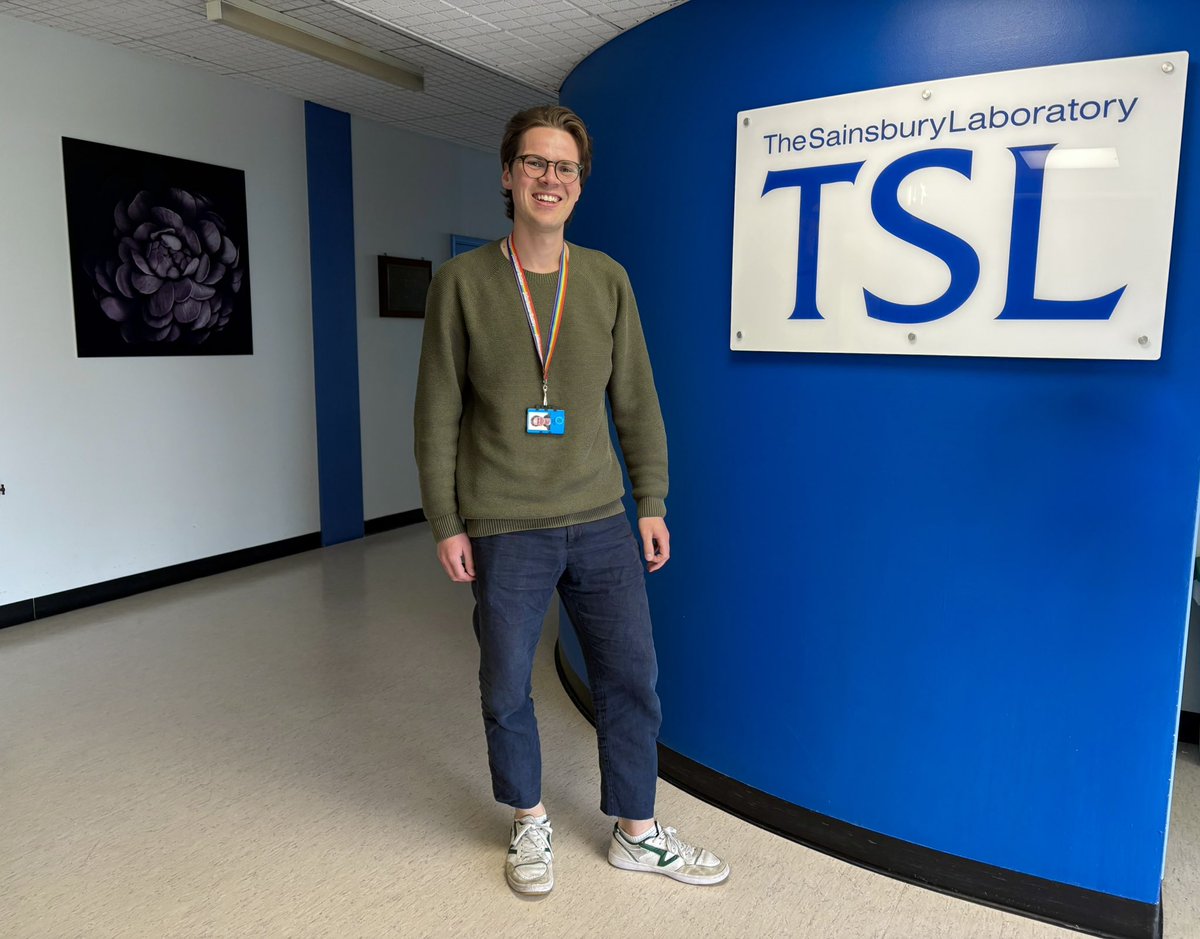
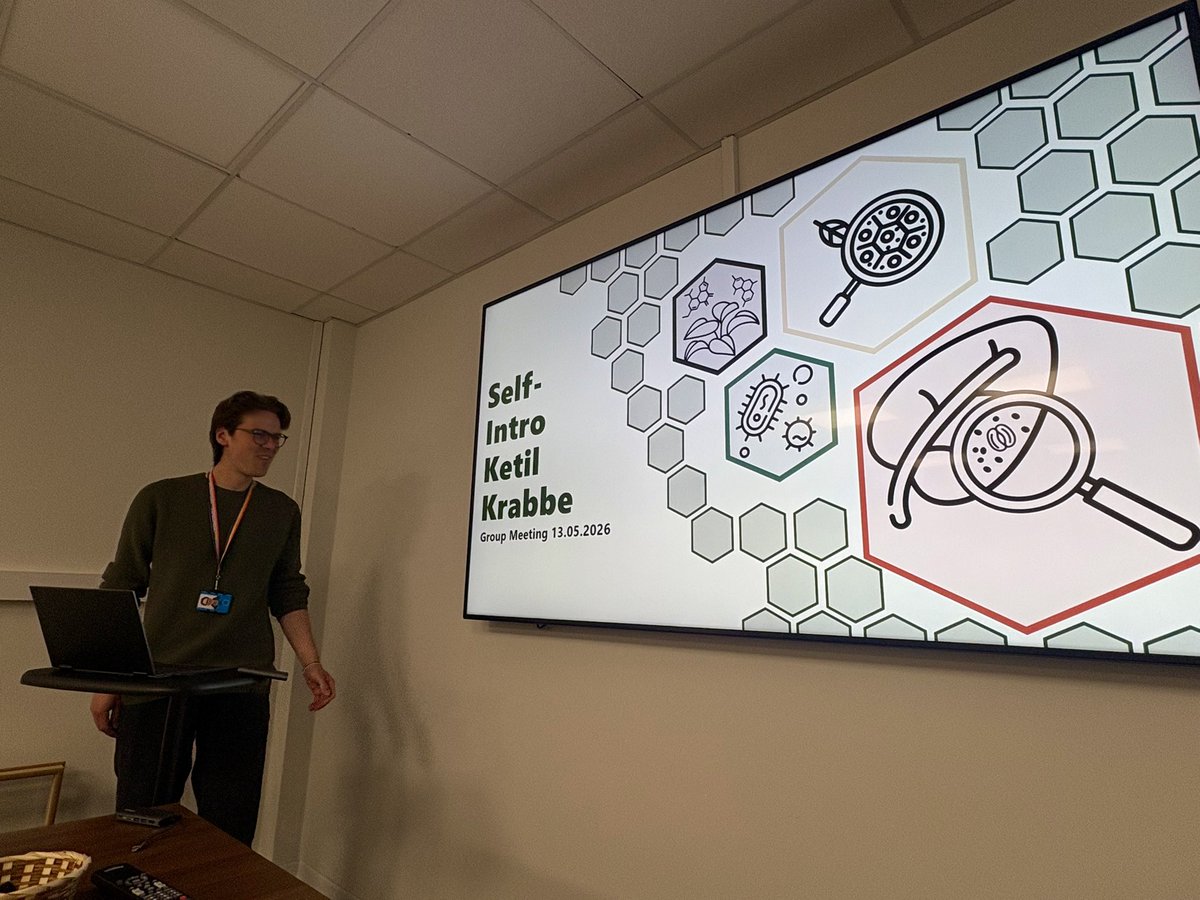
We are excited to welcome Ketil Krabbe as a new pre-doc in our group at @TheSainsburyLab. Ketil completed his master’s with Sarah O’Connor at MPI Jena (single-cell metabolomics) and a science policy internship at @OPCW before joining us. Welcome, Ketil!
English
Nick Talbot retweetledi

I’ve always believed the No.1 application of AI should be to improve human health.
That work started with AlphaFold, and now at @IsomorphicLabs with the mission to reimagine drug discovery and one day solve all disease!
We are turbocharging that goal with $2.1B in new funding.
English
Nick Talbot retweetledi
IT'S OFFICIAL.
Isomorphic Labs has raised $2.1bn led by Thrive Capital.
The round includes Alphabet, Abu Dhabi’s MGX, Singapore’s Temasek and OF COURSE the UK’s Sovereign AI fund (@UKSovereignAI).
The company has started pre-clinical trials, which @demishassabis has said are “going very well, and we’re on track,”.
No valuation given, any guesses from those who know biotech better?
Bloomberg@business
DeepMind Spinout Isomorphic Labs Raises $2.1 Billion to Design Drugs With AI bloomberg.com/news/articles/…
English
Nick Talbot retweetledi
A UK startup has just raised one of the largest rounds in Biotech history.
$2.1bn raised to use AI to create new drugs and cure diseases.
Spun out of @GoogleDeepMind, headed up by @demishassabis, and now backed by the UK's @UKSovereignAI fund.
And of course headquartered in LONDON.
Amazing news - congrats @IsomorphicLabs
English
Nick Talbot retweetledi

We had a fun time discussing science and stuff afterwards too!
It was a pleasure :)

The Sainsbury Laboratory@TheSainsburyLab
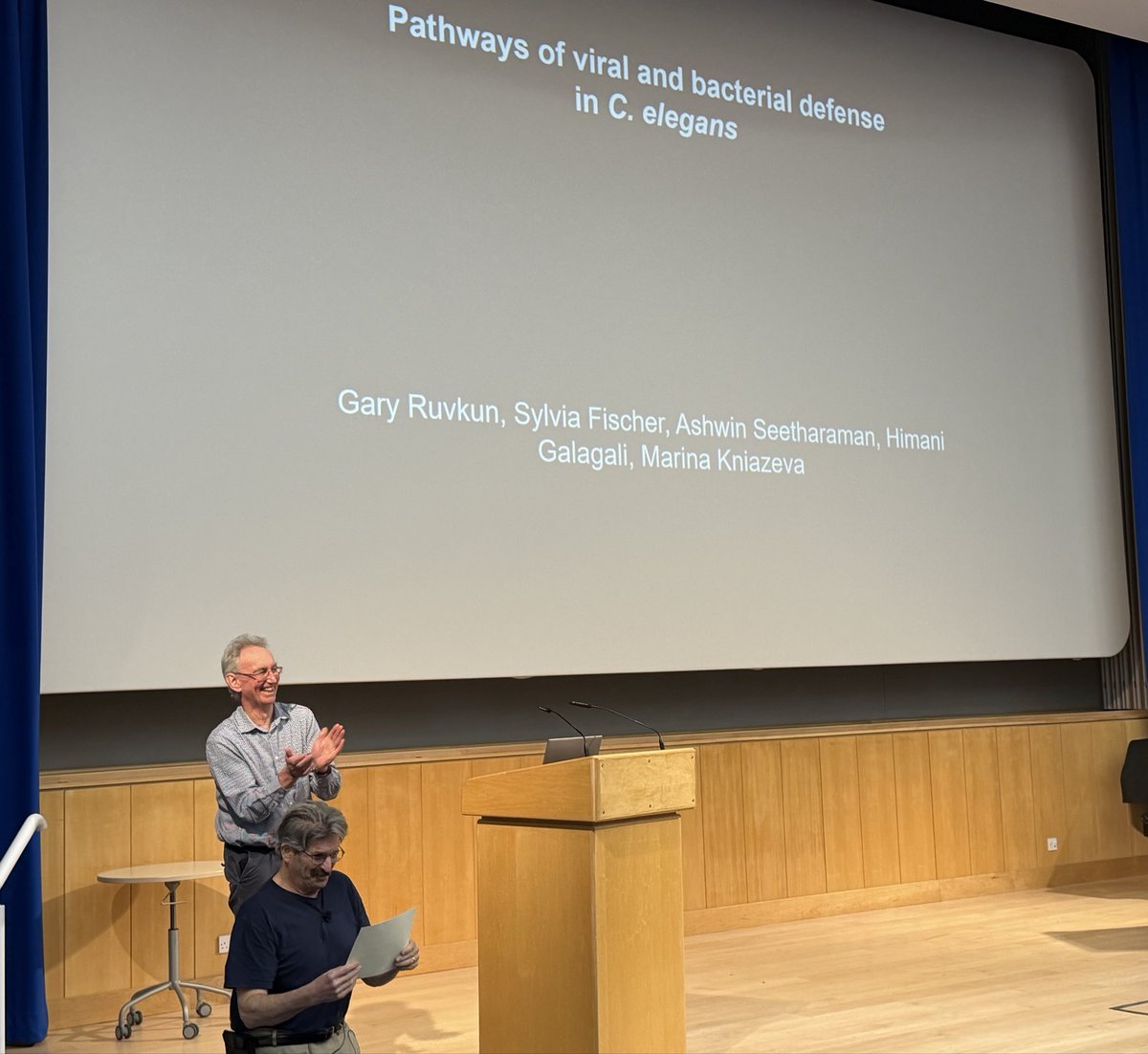
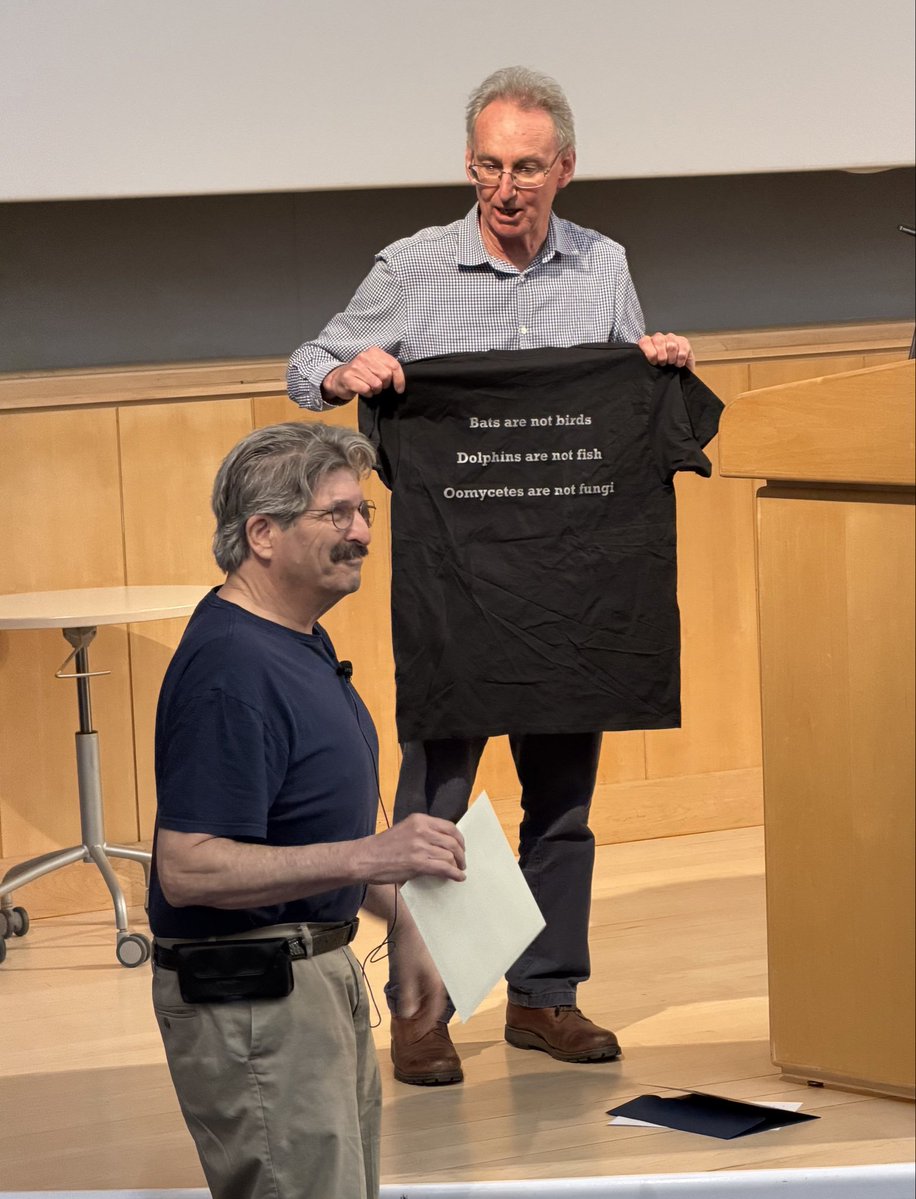
Our seminar speaker Gary Ruvkun being presented the David Sainsbury Sciene Nerd Award #batsarenotbirds
English
Nick Talbot retweetledi
Protein structure prediction changed biology. Protein assembly discovery is next.
We present SNI (Structural Novelty Index), a scalable framework for finding new protein complexes.
We used it to uncover an unexpected resistosome assembly: 11-mer. 🧵👇🏻
biorxiv.org/content/10.648…

English
Nick Talbot retweetledi


Nick Talbot retweetledi

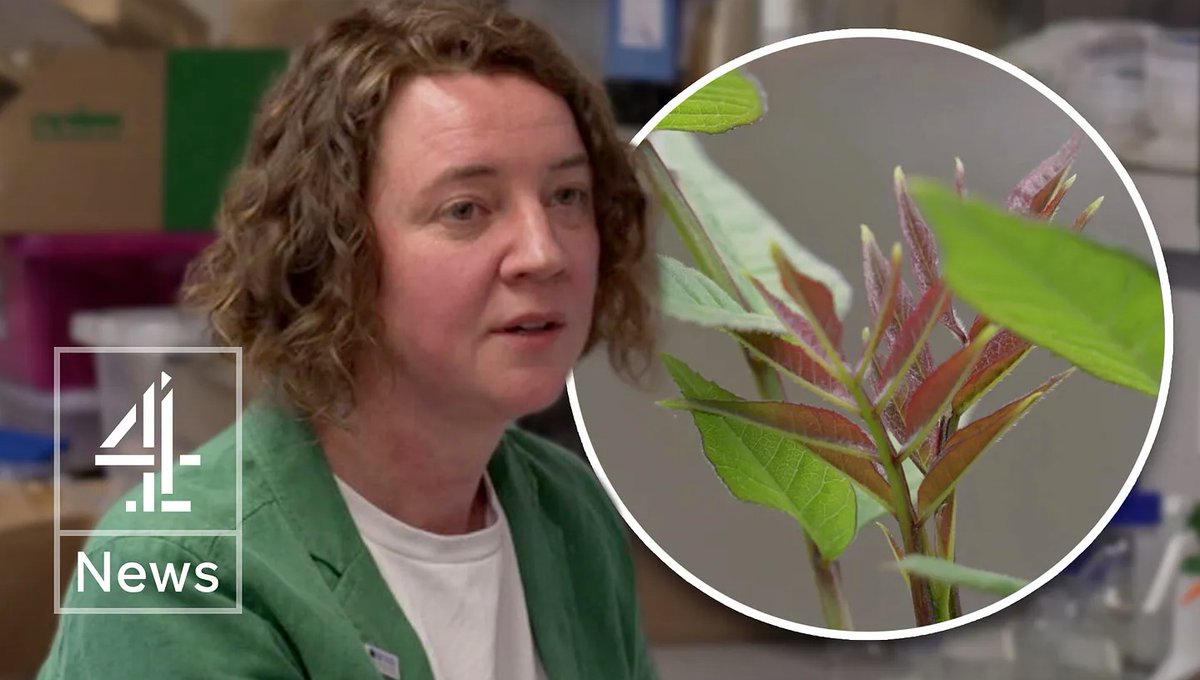
Hope for Britain’s Ash trees thanks to scientific ‘eureka’ moment
Scientists at the John Innes Centre in Norwich have found a way to speed up the germination of seeds, allowing disease-resistant Ash trees to grow, writes @alextomo
Read our latest newsletter here: channel4news.substack.com/p/hope-for-bri…
English
Nick Talbot retweetledi

Today our group hosted Sierra Cole from the laboratory of Amy Gladfelter at Duke - talking about the fascinating biology of RNA-binding proteins and condensate formation @TheSainsburyLab

English
Great talk today from Gary Ruvkun - a tour de force through microRNA biology and some fascinating insights into tRNA modifications and their potential biological function. Amazing @TheSainsburyLab

English
Nick Talbot retweetledi
Our seminar speaker Gary Ruvkun being presented the David Sainsbury Sciene Nerd Award #batsarenotbirds
English