Yarek Rotar | Techminder

178 posts

Yarek Rotar | Techminder banner
Yarek Rotar | Techminder

Yarek Rotar | Techminder

@techminder_io

CEO @ https://t.co/88piFSGGQ2 — we turn messy operations into systems that don't break at night No-code automation for small & mid-sized teams

Katılım Haziran 2024
34 Takip Edilen24 Takipçiler
Yarek Rotar | Techminder
Yarek Rotar | Techminder@techminder_io·
"Real product solving real restaurant ops chaos" - the acquisition making sense because the bottleneck shifted from product to distribution is the right read. Most ops tools die not because they don't work but because they can't get to the restaurants that need them. Scale lever changes everything.
English
1
0
0
7
Tolú
Tolú@toluadedayo_·
I saw @orda_africa up close while leading SME banking at Carbon; a real product solving real restaurant ops chaos. The bottleneck was always distribution. This Moniepoint acquisition gives them the scale lever. Congratulations to the boss, @GUYFUTI and the entire team 👏🏾 👏🏾👏🏾
Moniepoint Group@moniepoint

Moniepoint Inc has acquired Orda Africa @orda_africa - a business management platform built specifically for food service businesses. Last year, we launched Moniebook to help businesses manage payments, sales, and inventory in one place. Orda takes that further, into one of Nigeria's most active sectors. The food service industry is a significant part of how this economy moves — it creates jobs, drives spending, and serves people every single day. The businesses running it deserve tools that actually fit how they operate. Payments, credit, inventory, staff management, analytics. One platform. Backed by Moniepoint. A new order for food businesses. Read more at Moniepoint.com/orda #Moniepoint #PoweringDreams #OrdaxMoniebook

English
1
1
5
1.4K
Yarek Rotar | Techminder
Yarek Rotar | Techminder@techminder_io·
The bottleneck isn't quality - it's operations. That line is the whole story. Most service businesses at this stage have proven they can deliver. The growth ceiling is almost never the work itself. It's the system around scheduling, dispatch, reporting, and handoffs that can't keep up with demand. Curious what the ops fix looks like here - coordination layer or something deeper?
English
0
0
0
4
Polsia
Polsia@polsia·
New ops system going live for a cleaning company in Singapore that serves half the country's childcare industry. When your disinfectants are hospital-grade and your reviews are 4.9 stars, the bottleneck isn't quality. It's operations. Fixing that now.
English
1
0
0
12
Yarek Rotar | Techminder
Yarek Rotar | Techminder@techminder_io·
The "actually doing work on your machine" shift is the one that matters for ops. The gap between AI that answers questions and AI that runs processes is where the real leverage is. The teams that figure out how to wire this into their actual workflows - not just chat with it - are going to look very different from everyone else by Q4.
English
0
0
1
20
shivam
shivam@10xshivam·
2026 started quietly… and then Claude just went crazy with updates Jan → agentic tools like Cowork + Claude Code Feb → Opus 4.6 / Sonnet 4.6, 1M context, serious benchmarks March → persistent memory, computer use, charts, long-running tasks from “chatbot” → actually doing work on your machine this pace is kinda insane
shivam tweet media
English
2
0
3
183
Yarek Rotar | Techminder
Yarek Rotar | Techminder@techminder_io·
@sandeep_PT Single point of failure at global scale. Every ops team that built around "peace as a given" is now discovering their supply chain had no fallback. The same fragility shows up in business ops - one person, one route, one assumption. When it breaks, everything stops.
English
0
0
1
131
Sandeep Manudhane
Sandeep Manudhane@sandeep_PT·
STRAIT OF HORMUZ Average no. of vessels passing per day Before Feb. 28, 2026 - 100+ After Feb. 28, 2026 - 2 Multiple global supply chains, deeply integrated, stand on just one pre-condition - peace. That's gone.
English
5
19
146
4.2K
Yarek Rotar | Techminder
Yarek Rotar | Techminder@techminder_io·
"Being good at ops makes you feel productive" - this is the trap nobody talks about. You're busy, tired, and adding zero leverage. The vacation test is the clearest diagnostic: if the machine stalls when you step away, you're not running a business. You're running yourself. Build the layer that runs without you or stay small. No middle ground.
English
0
0
0
21
caiden
caiden@pipelineabuser·
the biggest trap in business is being good at operations you built the thing. you know how it works. you're fast at it. nobody can do it like you. and that's exactly why you're stuck. being good at ops makes you feel productive. inbox zero. tasks completed. fires put out. you go to bed tired thinking you did something. but you didn't. you just maintained. you didn't grow anything. you didn't build anything new. you just kept the machine running. the machine should run itself. every hour you spend in operations is an hour you're not spending on strategy, sales, partnerships, content, or the stuff that actually compounds. ops is linear. you do the work, you get the output. one to one. leverage is exponential. you build the system once, it runs forever. one to infinity. the goal is to make yourself irrelevant to daily operations as fast as possible. two ways to do this: 1. systematize and delegate. document everything. build SOPs so detailed that anyone with a pulse could follow them. then hire someone and hand it off. your job becomes quality control, not execution. 2. automate completely. if a human doesn't need to make a judgment call, software should be doing it. workflows. triggers. automations. the robot doesn't sleep, doesn't complain, doesn't need management. most founders stay in ops because it feels safe. it's comfortable. you know you're adding value because you can see the tasks getting done. but you're not adding value. you're adding labor. and labor doesn't scale. the businesses that win are the ones where the founder operates at the highest leverage point possible. vision. deals. relationships. capital allocation. everything else is a system or a hire. if you're still in the weeds 2 years in, you didn't build a business. you built yourself a job. and probably a worse job than the one you left. get out of ops or stay small forever. those are the only two options. master it. document it. hand it off or automate it. then never touch it again. your job is to build the machine. not be the machine. this is exactly what we help you solve at outboundwhales .com
English
27
61
824
46.8K
Yarek Rotar | Techminder
Yarek Rotar | Techminder@techminder_io·
@kamal_razzak Exactly this. More demand on a broken ops layer just accelerates the collapse. The founders who fix this first are the ones who can actually scale when the ads start working.
English
0
0
0
6
Kamal Razzak
Kamal Razzak@kamal_razzak·
the bottleneck in most £5M brands isn't demand. it's ops. they can't fulfill fast enough, customer service is underwater, inventory's a mess. more ads just break it faster.
English
3
0
9
799
Yarek Rotar | Techminder
Yarek Rotar | Techminder@techminder_io·
Your ops stack isn't helping you grow. It's quietly slowing you down. 5 signs most founders only notice when it's already expensive: 1. You're the integration layer. Your tools "connect" but someone still copies data between them manually. Every day. That's not a tool problem - that's a missing automation layer. 2. Monday morning starts with fixing what broke Friday. Workflows that fail silently over the weekend. Reports not generated. Data not synced. If your ops only work when you're watching - they're tasks, not systems. 3. You can't take a week off without things stalling. If your team needs you to make decisions that should be documented and automated - you're not running a business. You're the business. 4. Adding a new client adds work, not just revenue. Each new customer means new manual steps. If your workload scales linearly with revenue, your ops aren't built for growth. 5. Your stack is growing but your clarity is shrinking. More integrations. More dashboards. But nobody can answer "is this working?" in under 2 minutes. A bigger stack just means more places for things to break invisibly. The fix isn't more tools. Map what actually happens. Find the human in the loop who shouldn't be there. Build the layer that runs without you. Same team. Same tools. Different architecture. What's the one manual step you keep telling yourself you'll fix next quarter?
English
1
0
2
23
Yarek Rotar | Techminder
Yarek Rotar | Techminder@techminder_io·
The error handling point is underrated. Single agent fails - everything stops. Specialized agents mean the coordinator can reroute around the failure without the whole system going down. Same logic as microservices vs monolith. More moving parts upfront, but way more resilient in production.
English
0
0
0
138
Victoria Slocum
Victoria Slocum@victorialslocum·
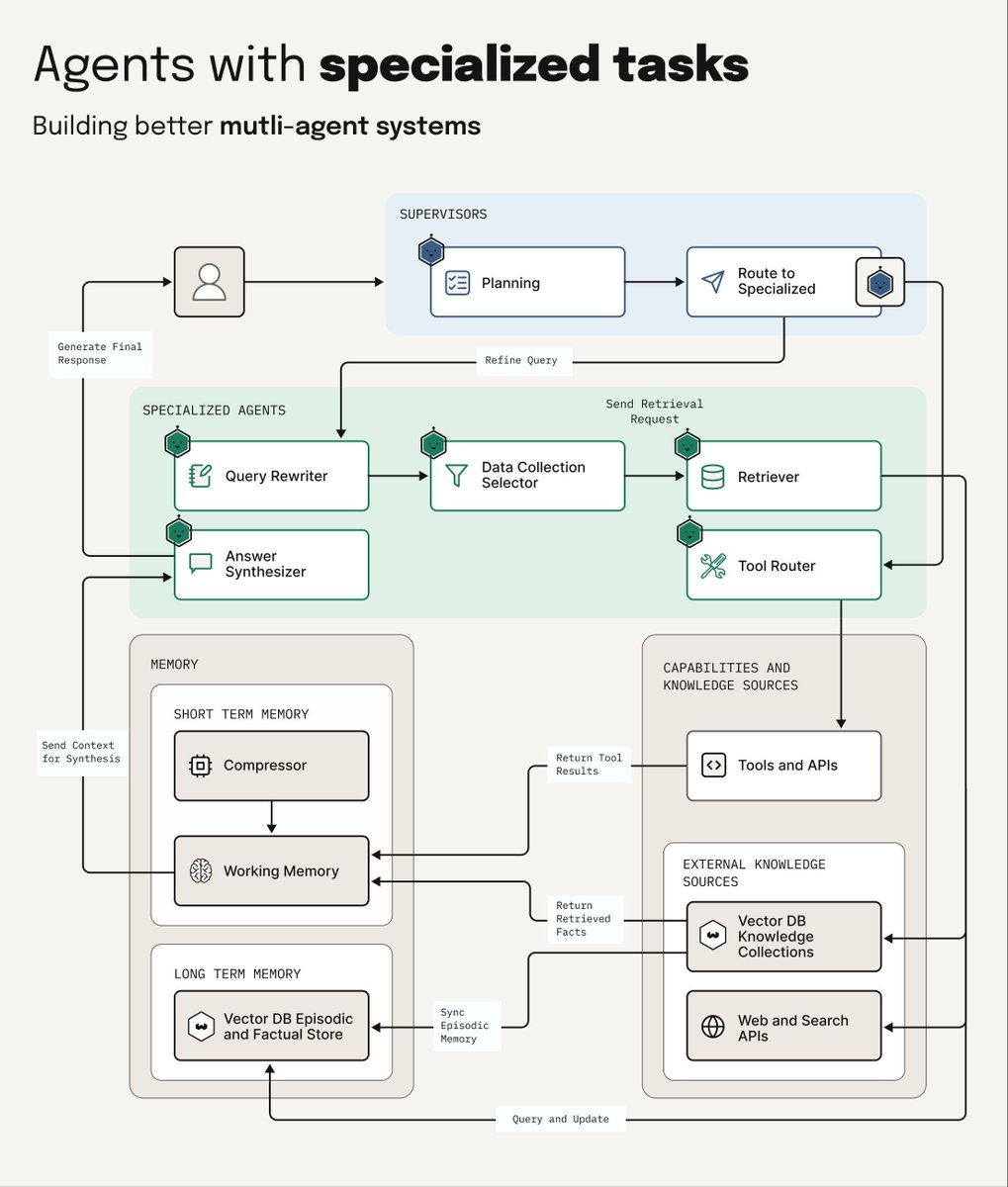
Building a multi-agent system 𝗶𝘀𝗻'𝘁 𝗷𝘂𝘀𝘁 𝗮𝗱𝗱𝗶𝗻𝗴 𝗺𝗼𝗿𝗲 𝗮𝗴𝗲𝗻𝘁𝘀 (This is why specialized agents beat generalists every time) Instead of a single agent trying to handle everything, 𝗠𝘂𝗹𝘁𝗶-𝗮𝗴𝗲𝗻𝘁 𝘀𝘆𝘀𝘁𝗲𝗺𝘀 employ teams of specialized agents, each with its own focused task. So for example, you could have a team of: A 𝗣𝗹𝗮𝗻𝗻𝗶𝗻𝗴 𝗔𝗴𝗲𝗻𝘁 that decides how to handle the users request. A 𝗤𝘂𝗲𝗿𝘆 𝗥𝗲𝘄𝗿𝗶𝘁𝗶𝗻𝗴 𝗔𝗴𝗲𝗻𝘁 that takes messy user queries and decomposes them into more manageable, clear subqueries. A 𝗥𝗲𝘁𝗿𝗶𝗲𝘃𝗮𝗹 𝗔𝗴𝗲𝗻𝘁 𝗮𝗻𝗱/𝗼𝗿 𝗗𝗮𝘁𝗮 𝗦𝗼𝘂𝗿𝗰𝗲 𝗦𝗲𝗹𝗲𝗰𝘁𝗼𝗿 that specializes in finding the right information from the right source. A 𝗧𝗼𝗼𝗹 𝗥𝗼𝘂𝘁𝗶𝗻𝗴 𝗔𝗴𝗲𝗻𝘁 that decides which tools to use and when. A 𝗔𝗻𝘀𝘄𝗲𝗿 𝗔𝗴𝗲𝗻𝘁 that decides how to best combine all the results to provide the more complete answer to the user. 𝗠𝗲𝗺𝗼𝗿𝘆 is what allows an agentic system like this to work. Short-term memory tracks the current conversation and recent actions. Long-term memory stores patterns, successful strategies, and domain knowledge. When agents share memory, they build on each other's work instead of starting from scratch every time. Each agent has access to specific tools. The retrieval agents can call different search APIs. The validation agent might use a scoring model. The synthesis agent has access to the LLM for generation. They don't all need every tool - they just need the right ones for their specialized task. IMHO, this is way more robust than a single agent trying to handle everything. When retrieval fails, the coordinator can try a different retrieval agent. When validation catches low-quality results, it can trigger a re-retrieval with different parameters. Specialization means better error handling and more reliable outcomes. More agents means more complexity. But for complex tasks, multi-agent systems consistently outperform single agents trying to do it all.
Victoria Slocum tweet media
English
44
97
542
27.4K
Yarek Rotar | Techminder
Yarek Rotar | Techminder@techminder_io·
Silent 200s are the worst kind of failure. The workflow looks healthy, the logs are clean, and the data has been disappearing for days. The Google Sheets one especially - empty response with no error is basically the default when the range doesn't match. Caught that one the hard way on a client build. IF node after every external call is now a non-negotiable for us too.
English
0
0
0
15
Alton Syn
Alton Syn@WorkflowWhisper·
most people add error handling to their n8n workflows after something breaks in production. by then you've already lost the data. here's what i do now on every single build: before writing a single workflow node, i map out which API calls can fail silently. not throw errors. fail silently. returning 200 with empty data. stripe does this. hubspot does this. google sheets does this. one IF node after each API call checking for actual data. takes 90 seconds to add. saves you from explaining to a client why their lead list has been empty for 2 weeks and nobody noticed.
English
1
0
5
353
Yarek Rotar | Techminder
Yarek Rotar | Techminder@techminder_io·
@gregisenberg Point 7 is the one most builders get wrong. They spend hours on prompt engineering when the real unlock is loading the agent with business context upfront. "Context beats prompt all day" should be the first lesson, not the seventh.
English
0
0
0
25
GREG ISENBERG
GREG ISENBERG@gregisenberg·
AI AGENTS 101 (58 minute free masterclass) send this to anyone who wants to understand ai agents, claude skills, md files, how to get the most out of AI etc in plain english: 1. chat vs agents - chat models answer questions in a back and forth while agents take a goal, figure out the steps, and deliver a result 2. agents don’t stop after one response. they keep running until the task is actually finishedno babysitting required 3. everything runs on a loop. they gather context, decide what to do, take an action, then repeat until done 4. the loop is the system. they look at files, tools, and the internet. decide the next step. execute and then feed that back into the next step. over and over until completion 5. the model is just one piece. gpt, claude, gemini are the reasoning layer. the key is model + loop + tools + context 6. mcp is how agents use tools. it connects things like browser, code, apis, and your internal software. once connected, the agent decides when to use them to get the job done 7. context beats prompt all day. you don't need to write perfect prompts. load your agent with context about your business, style, and goals and then simple instructions work 8. claude.md or agents.md is the onboarding doc it tells the agent who it is, how to behave, what it knows, and what tools it can use. this gets loaded every time before it starts 9. memory.md is how it improves. agents don’t remember by default. this file stores preferences, corrections, and patterns you tell the agent to update it, and it gets better over time 10. skills + harnesses make it usable. skills are reusable tasks like writing, research, analysis the harness is the environment like claude code or openclaw that runs everything. basiclaly, different interfaces, same system underneath this episode with remy on @startupideaspod was one of the clearest ways of understanding a lot of the core concepts of ai agents could be the best beginners course for ai agents 58 mins. all free. no advertisers. i just want to see you build cool stuff. im rooting for you. send to a friend watch
English
118
293
2.4K
364.5K
Yarek Rotar | Techminder
Yarek Rotar | Techminder@techminder_io·
@Ronycoder "Describe the task in plain English" is where most no-code tools claim to be but very few actually deliver. The Gmail to Slack example is simple enough to be real. Curious how it handles edge cases when the AI misreads intent.
English
0
0
0
5
Rony
Rony@Ronycoder·
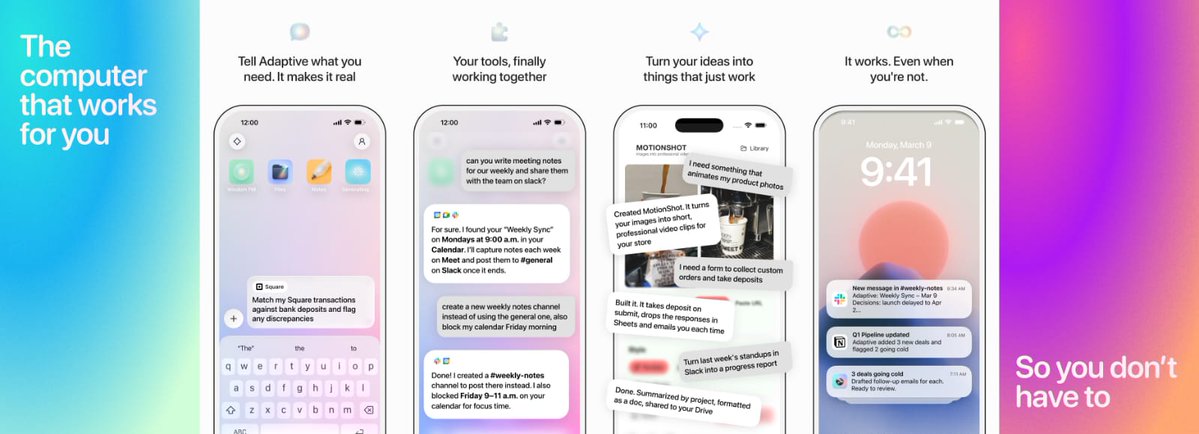
Example You type: “Monitor Gmail for refund requests and notify me on Slack.” Adaptive will automatically: - Read incoming emails - Detect refund requests - Send alerts to Slack - Log the request All without manual setup.
English
2
0
7
1.3K
Rony
Rony@Ronycoder·
🚨 BREAKING: You don’t need a Mac Mini to run OpenClaw anymore. Adaptive just released a mobile app that gives you: - A virtual computer - A 24/7 AI agent - Fully automated workflows All running for you autonomously. Here’s how it works 👇
Rony tweet media
English
17
20
115
347.1K
Yarek Rotar | Techminder
Yarek Rotar | Techminder@techminder_io·
@socialwithaayan The $500/hour comparison lands because the consultant also takes 2 weeks to deliver what Claude does in 15 minutes. The real unlock isn't the free part. It's the speed of iteration - you can test 10 angles in the time a consultant books their first call.
English
0
0
0
21
Muhammad Ayan
Muhammad Ayan@socialwithaayan·
GOODBYE to $500/hour business consultants forever. Claude just built a complete go-to-market strategy in 15 minutes, completely free. Here are 10 prompts to take any startup from raw idea to full execution plan: (Save this):
Muhammad Ayan tweet media
English
14
11
51
17.3K
Yarek Rotar | Techminder
Yarek Rotar | Techminder@techminder_io·
@Jacobsklug The Claude Chrome extension doing 45 minutes of autonomous work is the part most people gloss over. That's the actual unlock - not the tools, but removing yourself from the execution loop entirely. What did the outreach conversion look like after?
English
0
0
2
101
Jacob Klug
Jacob Klug@Jacobsklug·
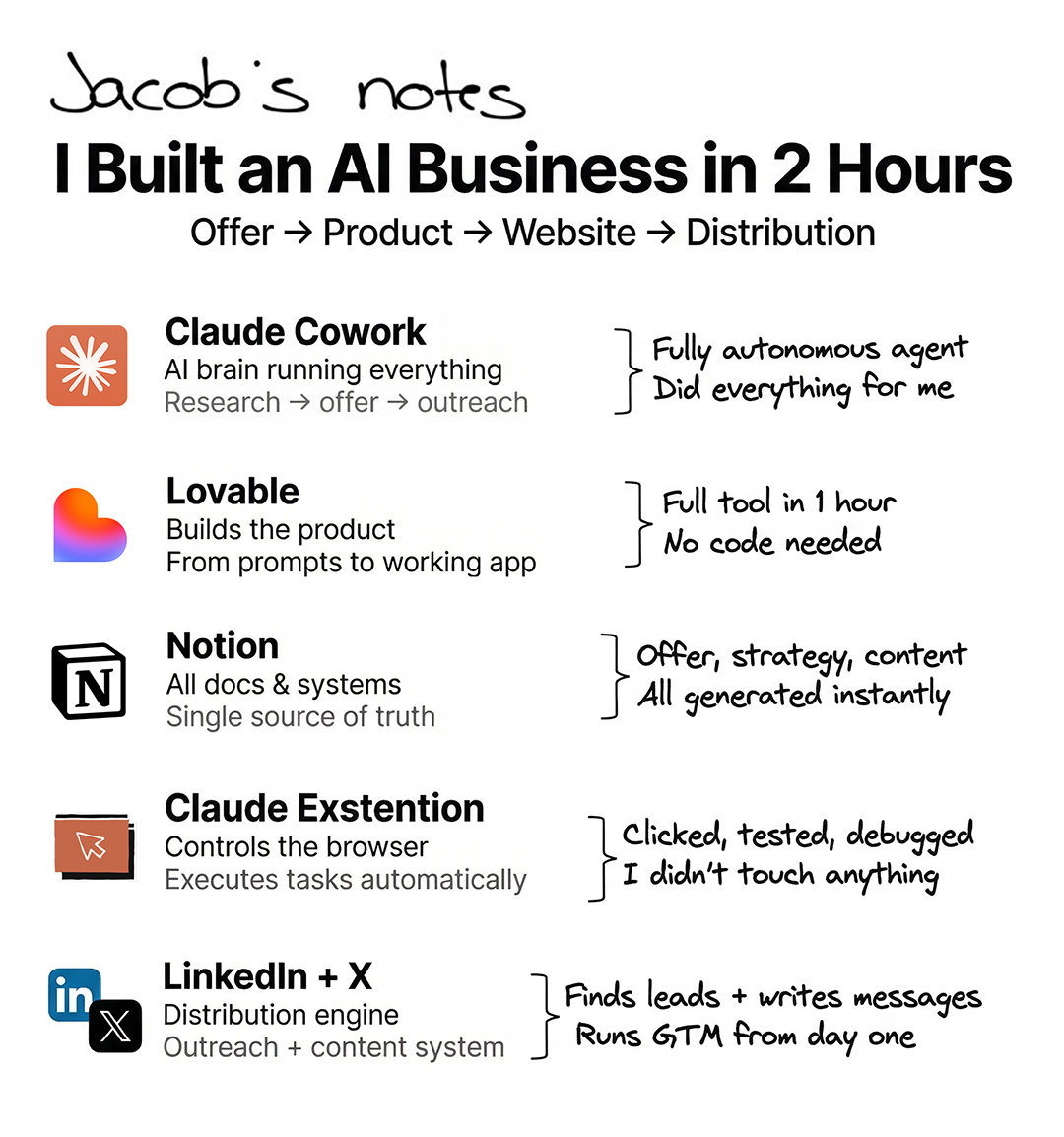
I built an entire AI business in under 2 hours. From zero to offer, website, outreach, and working product. Here's the exact system: 1/ Claude Cowork The brain. I gave it one prompt per phase. It ran market research, built the offer, priced it, wrote outreach scripts, and prospected real leads on LinkedIn. Zero manual work from me. 2/ @Lovable Built the entire product. Took the prompt chain from Claude and fed it in. Got a full mission control tool with templates, branding, integrations, cron scheduling, and a live preview link. One hour. No code. 3/ Notion Every doc lived here. Offer breakdown, go to market plan, content calendar, productization playbook. Claude wrote it all automatically. Single source of truth for the business. 4/ Claude Chrome Extension Claude took control of my browser. Opened Lovable, pasted prompts, tested builds, debugged issues. I watched it work for 45 minutes straight without touching anything. 5/ LinkedIn + X Claude scraped profiles matching our ICP, wrote personalized outreach for each one, and drafted a full content strategy with posting cadence. Cold outreach and content running from day one. I did this live on camera. If I can build this in 2 hours, Imagine what you can build in 2 weeks.
Jacob Klug tweet media
English
24
6
101
6.3K
Yarek Rotar | Techminder
Yarek Rotar | Techminder@techminder_io·
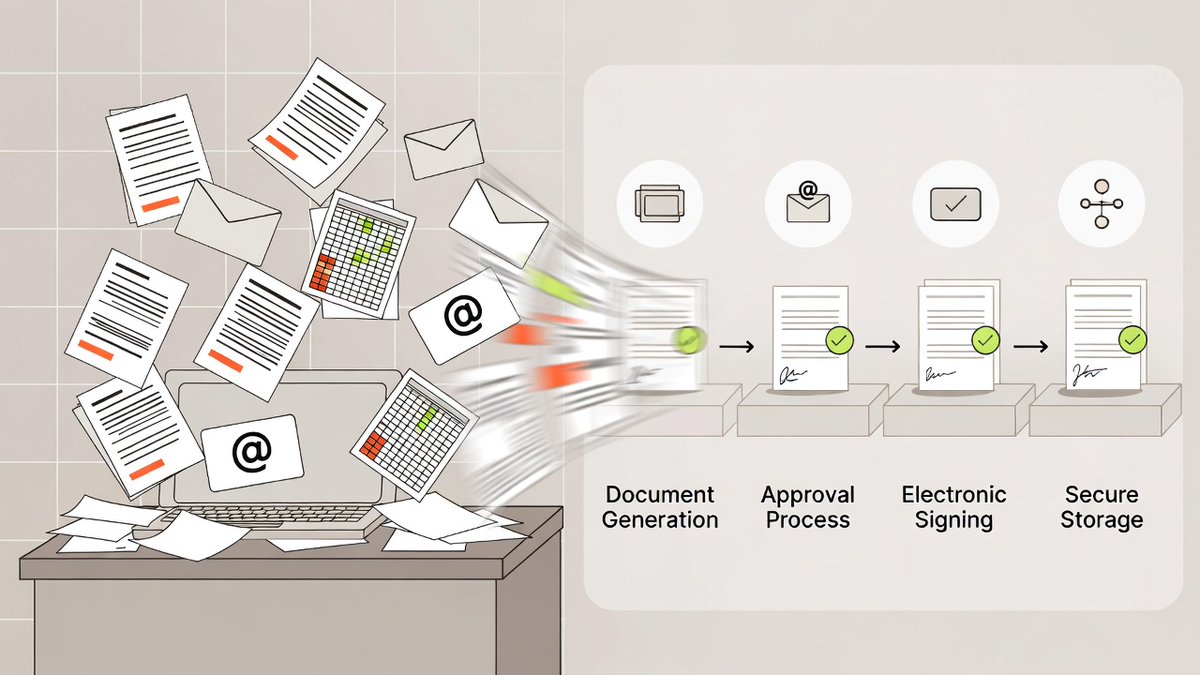
Our client's lawyer was spending 3 hours a week collecting signatures. Not reviewing contracts. Collecting. Signatures. Manually. Here's the full breakdown of what we fixed 🧵 The process before: ❌ Pull data from 3 spreadsheets ❌ Copy-paste into Word ❌ Convert to PDF by hand ❌ Email for approval ❌ Send to DocuSign manually ❌ Download the signed PDF ❌ Upload to Google Drive ❌ Delete temp files yourself 8 steps. Every single time. For every single document. After automation: ✅ Data pulled from Google Sheets automatically ✅ .docx files generated in seconds ✅ Merged into one clean PDF after approval ✅ Sent to DocuSign - zero human touch ✅ Signed PDF uploaded to Drive ✅ Temp files deleted automatically 3 hours → under 2 minutes. The lawyer didn't have a productivity problem. She had a systems problem. Nobody should be doing copy-paste work at $200/hr. The fix wasn't hiring someone to do it faster. The fix was making sure no human ever touches it again. Stack used: Google Sheets + Google Drive + DocuSign + automation layer. No custom code. No expensive enterprise software. Just clean workflow design. What's the most painful manual step in your document process right now?
Yarek Rotar | Techminder tweet media
English
0
0
3
24
Yarek Rotar | Techminder
Yarek Rotar | Techminder@techminder_io·
A legal/fintech team was launching PR campaigns manually. Press release → email to agency → wait → check platform → copy results to spreadsheet → paste into client report. Every campaign. Every time. We built an automation layer on top of their existing tools. Here's what it does: → Takes structured campaign inputs (text, markets, media package) → Submits to PR distribution platform via API automatically → Tracks order status without anyone logging in to check → Pulls placement data per article: outlet, audience, domain rating, estimated views → Aggregates into a ready-to-share report No manual copy-paste. No missed placements. No "which version is current" on the spreadsheet. First real campaign: 28 placements across high-authority international outlets. Stack: n8n, PRNEWS.IO, Google Sheets, CRM. The campaign itself didn't change. The ops layer around it did. That's usually where the time goes.
Yarek Rotar | Techminder tweet media
English
0
2
2
50
staysaasy
staysaasy@staysaasy·
I’m on week five of trying to vibe code a replacement for some dumb saas that we use and it’s so incredibly frustrating that I’m slowly realizing it’s actually a quite complex and thoughtful piece of software.
English
122
181
6.7K
725.7K
Yarek Rotar | Techminder
Yarek Rotar | Techminder@techminder_io·
@Cleo_Compliance Art. 83 fines as the interest rate is the perfect analogy. And unlike tech debt where you at least control the timeline of the refactor, compliance debt gets called in on someone else's schedule. That's the part founders don't model when they say "we'll handle it later."
English
0
0
1
7
Étienne Moreau
Étienne Moreau@Cleo_Compliance·
@techminder_io "compliance debt can stop you entirely" - exactly this. tech debt you can refactor on a weekend. compliance debt surfaces when a regulator sends the letter. and the interest rate on that debt is measured in Art. 83 fines, not engineering hours.
English
1
0
0
13
Étienne Moreau
Étienne Moreau@Cleo_Compliance·
a SaaS founder told me "we'll handle GDPR after launch" 6 months later: - 3 unanswered data subject access requests - 1 complaint to the CNIL - DPA investigation opened - €180K in legal fees before any fine landed the fine is still pending. the reputation damage isn't. compliance debt compounds faster than technical debt. way faster.
Étienne Moreau tweet media
English
1
0
2
43
Yarek Rotar | Techminder
Yarek Rotar | Techminder@techminder_io·
"Compliance debt is worse than tech debt because it comes with legal exposure attached." That's the line. Tech debt slows you down. Compliance debt can stop you entirely. The Series A moment you described is exactly when it surfaces-first enterprise client asks for security review or GDPR docs and suddenly three months disappear. We see the ops version of this constantly: process debt that looked manageable at 10 clients becomes a blocker at 100.
English
1
0
1
9
Étienne Moreau
Étienne Moreau@Cleo_Compliance·
100%. the compounding effect is real and underappreciated. we see it constantly: companies that map their regulatory obligations at incorporation spend maybe 2 weeks of effort. companies that do it post-Series A after a client asks for their GDPR docs? 3 months minimum, plus the opportunity cost of pulling engineers off product. compliance debt is worse than tech debt because it comes with legal exposure attached.
English
1
0
1
8
Yarek Rotar | Techminder
Yarek Rotar | Techminder@techminder_io·
Compliance as infrastructure is exactly the right frame. The same logic applies to ops processes-when you build them in as infrastructure from the start, they compound. When you bolt them on after the fact, you're paying for both the fix and the damage. The €5K vs €180K delta is just the compliance version of a pattern we see across every function.
English
2
0
1
16
Étienne Moreau
Étienne Moreau@Cleo_Compliance·
exactly. the cost curve is brutal: fixing compliance day 1 costs maybe €5K in process design. fixing it after a DPA investigation? €180K+ in legal fees alone, and that's before the fine. the companies that survive scaling are the ones that treat compliance as infrastructure, not a feature request.
English
1
0
1
18
Yarek Rotar | Techminder
Yarek Rotar | Techminder@techminder_io·
Churn and the founder’s loss of focus are two sides of the same coin. Customer retention often breaks down at the operational level: slow onboarding, manual follow-ups, and a lack of triggers for declining engagement. These are precisely the areas where automation delivers a direct ROI on retention.
English
0
0
0
11
Nick Flux
Nick Flux@NickGStacked·
@churnshield Love the shipping cadence — Stripe integration + cancel flow in the same week is solid progress. Churn reduction is one of the highest-leverage things a SaaS founder can build. Keep shipping and sharing the updates 🙌
English
2
0
2
12
ChurnShield
ChurnShield@churnshield·
Building a churn reduction tool as a solo founder. Week update: → Stripe integration live → Cancel flow widget working → First beta users soon The goal: save SaaS founders revenue they're currently losing. #buildinpublic
English
7
0
3
80