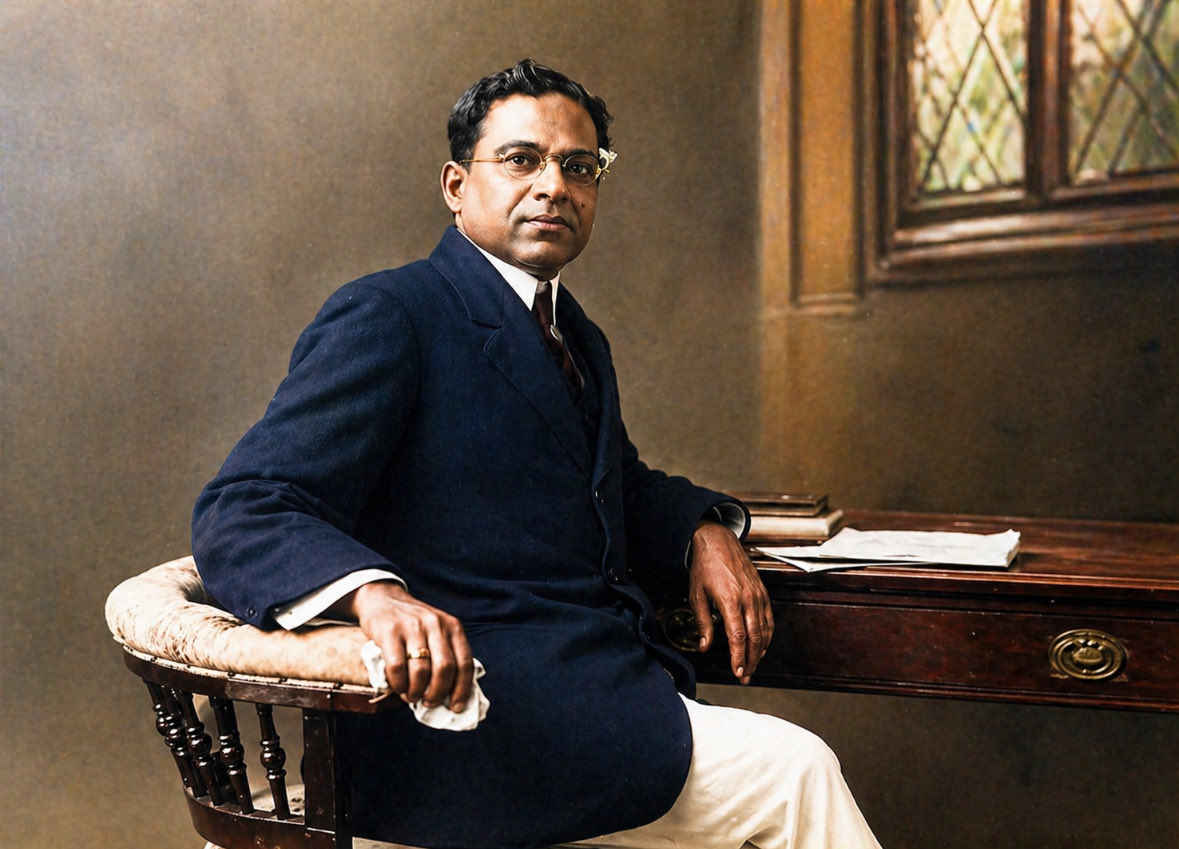

His name was Dadasaheb Phalke. He was born on April 30, 1870, in Trimbak, Nashik. His father was a priest. Today marks 156 years since he was born. He studied at the Sir JJ School of Art in Bombay and Kala Bhavan in Baroda. He worked as a photographer, printer, lithographer and stage magician. He even worked on printing assignments from Raja Ravi Varma’s press. In 1910, he watched a silent film called The Life of Christ in a Bombay theatre. He sat in the dark and asked himself one question. Why can Indians not see their own gods on screen. He travelled to London at his own expense to learn filmmaking. He came back with a camera and a plan. No one would fund him. He mortgaged his life insurance policies. His wife Saraswati sold her jewellery. No woman would act on screen. It was considered shameful. He found a young man named Anna Salunke working as a cook and cast him as the female lead. He shot, directed, produced, edited and processed the entire film himself in his own home. On May 3, 1913, Raja Harishchandra premiered at the Coronation Cinema in Bombay. Indians had never seen their own stories told through moving pictures. The audience threw coins at the screen in astonishment. Over the next 19 years, he made 94 feature films and 27 short films entirely on mythological themes. Then talking pictures arrived. He could not adapt. His last film came in 1937. He died on February 16, 1944, in the same city where he was born. He died broke and largely forgotten. The Government of India instituted the Dadasaheb Phalke Award in 1969. The highest honour in Indian cinema. Presented annually by the President of India. His own daughter Vrinda Pusalkar died of cancer in a one room chawl in Mahim, Mumbai while the award bearing her father’s name was being given to Bollywood royalty every year. The man who built Indian cinema from nothing died with nothing. India has forgotten more heroes than it remembers. Follow for more such stories.