

Tensor Cruncher
310 posts

Tensor Cruncher
@tensorcruncher
Open source | Mechanistic Interpretability and Model Internals Other interests: Math, Systems, Music
Mumbai Katılım Aralık 2025
437 Takip Edilen23 Takipçiler

@tensorcruncher I hope they implement it, because Gemini still keeps remembering that I workout with resistance band. I asked it once, almost a year ago.
English
Is there a feature where you can set your fav chatbot to omit context that is beyond a certain point in the past? I don't want to start a new session and miss out on the context from the near past. Or is this already done?
English
Tensor Cruncher retweetledi

A Brown professor gave his students a take-home midterm exam. After suspecting many cheated using AI, he made the final in-person. The orange dots are the midterm scores and the gray dots are the final scores. Looks like all but 3 cheated on the midterm.

English
If I didn't need to work and didn't have responsibilities I would just travel the world and study math
English
@ariG23498 @stevhliu More proof that MLE is more E than ML
English

I have always admired @stevhliu's work. I consider his technical writeups to be among the best there is.
In the latest series he covers how `transformers` loads a model. This might seem to be very simple, but there are a lot of moving parts involved which makes loading insanely fast.
> meta device
> safetensors lazy loading
> cuda cache allocator warmup
> device and dtype prediction
> weight fusing
If you want to know how a SoTA library's core component works, I definitely recommend reading the blogs.


English
The person who does graphics for hugging face needs a raise
Aritra 🤗@ariG23498
Read about the changes: huggingface.co/blog/native-sp…
English
Tensor Cruncher retweetledi


This makes so much sense now. Going through @liquidai's LFM2 modelling file in the @huggingface transformers repo atm. It uses a mix of some attention and mostly double gated conv1D in its decoder layers.
See the architecture diagram from the LFM2 technical report. Currently not dealing with MoE, there's another architecture folder for that.


English
Tensor Cruncher retweetledi

local gym owner warns people lifting weights at home are on a “very dangerous path”
First Squawk@FirstSquawk
ANTHROPIC CEO WARNS OPEN-SOURCE AI IS ON A "VERY DANGEROUS PATH"
English
Tensor Cruncher retweetledi

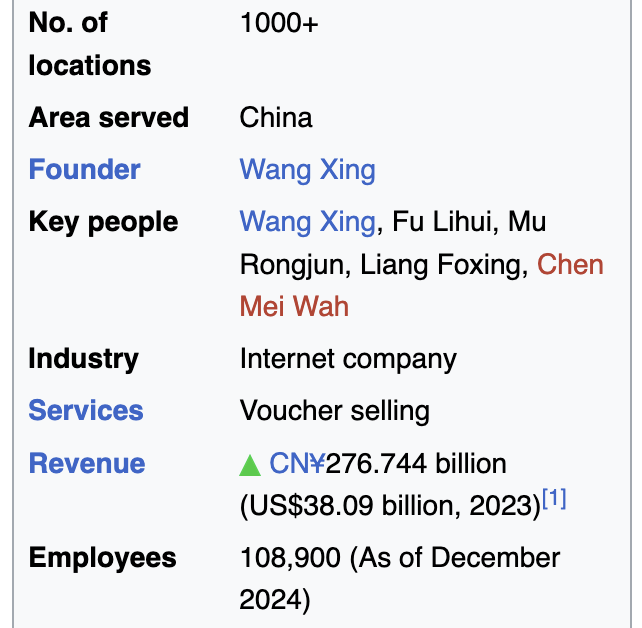
"how do these seemingly random Chinese companies have the resources/talent to make their own models?"
…

orcus108@orcus108
a TRILLION parameter model by a FOOD DELIVERY startup btw. maybe a dumb question, but how do these seemingly random Chinese companies have the resources/talent to make their own models?
English
Just the kind of thing that makes me feel warm and fuzzy on a Mumbai monsoon morning
clem 🤗@ClementDelangue
The HF science team just made async RL weight sync ~100x cheaper on bandwidth, and you don't need a shared cluster anymore. The problem: every RL step, the trainer typically has to sync fresh weights to the inference engine. for a 7B in bf16 that's ~14GB. for a frontier 1T fp8 checkpoint, that's ~1TB; in bf16 it would be ~2TB. per sync. The insight: between two RL steps, ~99% of bf16 weights are bit-identical. at RL learning rates, the optimizer is whispering and bf16 literally cannot hear most of it. the stored bf16 bits don't change. What they shipped in TRL: only the changed elements get encoded as a sparse safetensors file, dropped into a Hugging Face Bucket, and fetched by vLLM. on Qwen3-0.6B, per-step payload goes from 1.2 GB to 20 to 35 MB. This is exactly what we built Buckets for: S3-like object storage on the Hub, Xet-backed (so even full snapshots only transfer the changed chunks). The cherry on top: we ran a FULL disaggregated training where: - the trainer lived on one box - vLLM ran inside a Hugging Face Space - the Wordle environment ran in another Space - weights flowed through one Hub bucket no shared cluster. no RDMA. no VPN. no NCCL across clouds. just HTTPS and a bucket. one GPU + a Hugging Face account is now enough to do real disaggregated RL. multi-replica inference fleets across regions become a small devops exercise, not a research project. Full write-up: huggingface.co/blog/delta-wei… Open source RL keeps eating the moat!
English
Tensor Cruncher retweetledi

Tl;dr -- Aleph's result is mega-cool. A vial of microbubbles + a chip the size of a coin mapping a living human brain. It’s built on a decade-long revolution in ultrasound science and technology. And we’re just getting started 🔊🔊🔊
English
Beautiful. For some reason this evokes the image of the sophon from the 3 body problem being constructed.
YB@yb_effect
and OpenAI's pre-training team acknowledge how the mother of all pre-training runs will eventually have to be decentralized protocols.
English
Tensor Cruncher retweetledi
[HF ML Club India]
We are proud to announce the second IRL event from the HF ML Club India in Bengaluru. This time we have parterned with the @RedHat_AI India team (particularly their PyTorch Engg team). It is happening on the 25th of July.
Talks:
> @adithya_s_k speaks on OpenEnv
> @adarshxs talks about SGLang
> I cover torch profiling
> Mansi (RedHat) takes on torch distributed
> Arkadip (RedHat) provides in-depth knowledge about gpu2gpu comms in distributed setups
This is also golden opportunity for folks who were not accepted for the first event, to come and enjoy the talks and network with peers.

English
