testomat.io

918 posts

testomat.io banner
testomat.io

testomat.io

@testomatio

We organize testing so you would actually enjoy building quality products.

Katılım Mayıs 2020
151 Takip Edilen1.5K Takipçiler
Sabitlenmiş Tweet
testomat.io
testomat.io@testomatio·
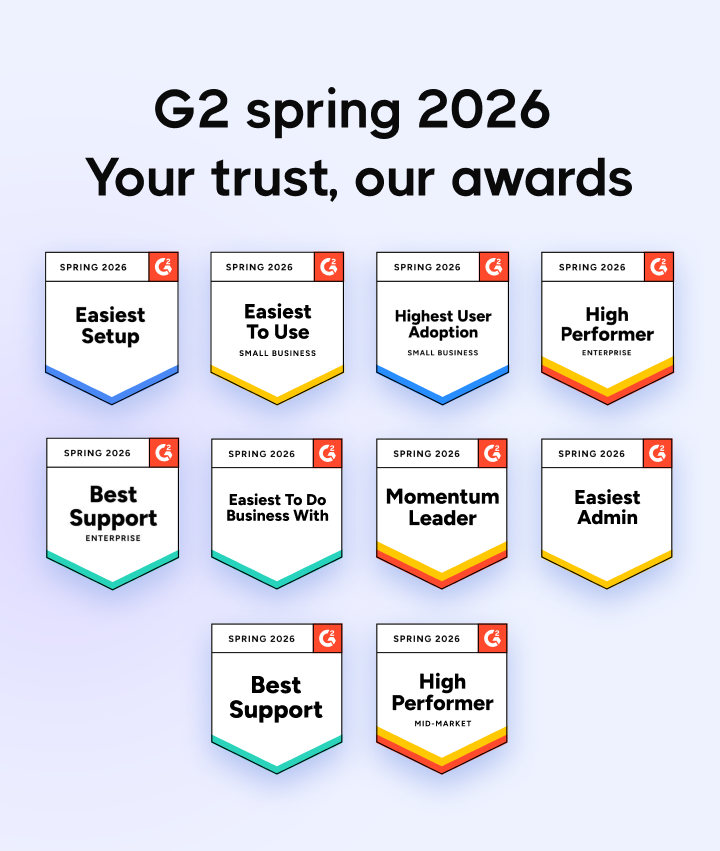
Some wins feel extra special, especially when they come directly from our users 🏆✨ For us, it’s more than badges, it is proof that the work we do helps QA teams move faster, test smarter, and feel more confident in their process. Huge thank you to everyone who trusts Testomat.io and shares feedback with us 💙 You’re the reason we keep improving every day. G2 Spring 2026 winner - g2.com/products/testo…
testomat.io tweet media
English
1
1
6
248
testomat.io
testomat.io@testomatio·
Testing only on one browser? That’s not QA, that’s hope 😅 Users switch between Chrome, Safari, Firefox, Android, iPhone, Windows, and macOS every single day. Cross-platform testing helps teams make sure apps work everywhere, not just on the developer’s machine 📱💻 The biggest win? Running one test suite across multiple environments in parallel instead of wasting hours on manual checks 🚀 Tools like Testomat.io + Playwright make it much easier to catch browser-specific issues early and ship with confidence. Because “works for me” should never be your release strategy 👀 Full guide here 👇 testomat.io/blog/cross-pla… #QA #SoftwareTesting #CrossPlatformTesting #Playwright #Testomat
testomat.io tweet media
English
0
0
4
55
testomat.io
testomat.io@testomatio·
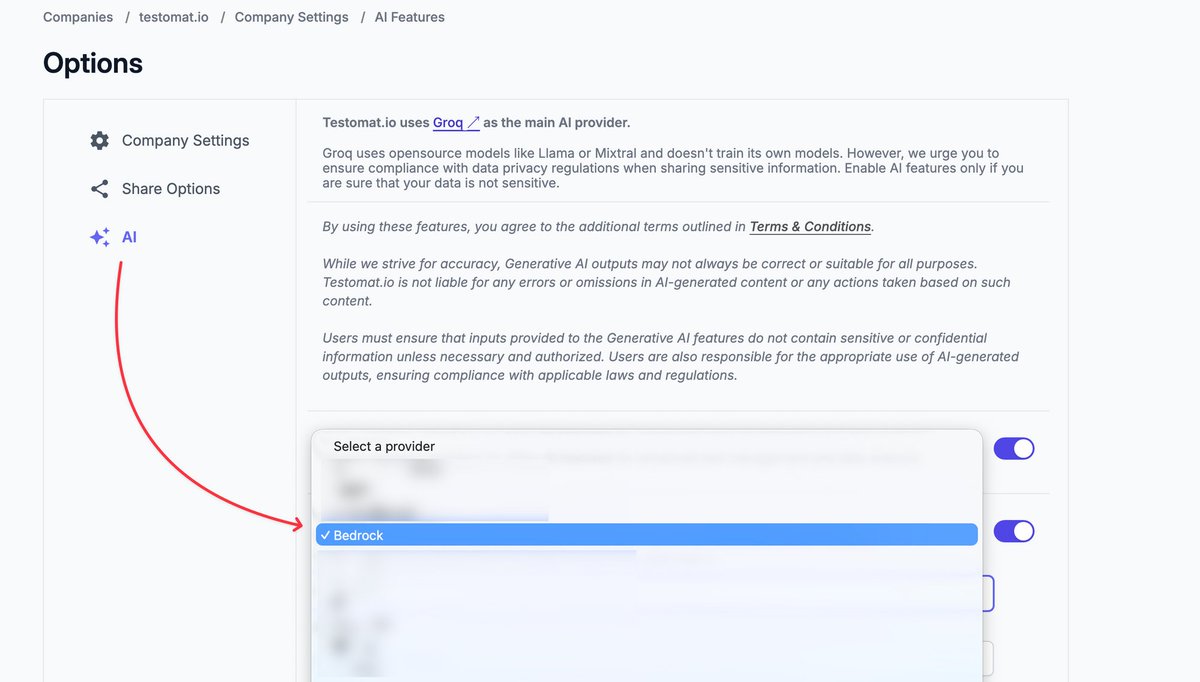
🚀 More flexibility for your AI workflows in Testomat.io Testomat now supports Amazon Bedrock as a custom AI provider This means teams can use their own configured models while still getting the full power of Testomat features, from smarter workflows to more tailored and efficient results ⚡ ✅ More control ✅ Better flexibility ✅ AI that fits your process, not the other way around A great step for QA teams that want stronger customization without losing compatibility 🔥 Curious how it works? Check out the full release here 👇 changelog.testomat.io/milestones-ai-… #QA #SoftwareTesting #TestAutomation #AI #Testomat
testomat.io tweet media
English
0
0
5
286
testomat.io
testomat.io@testomatio·
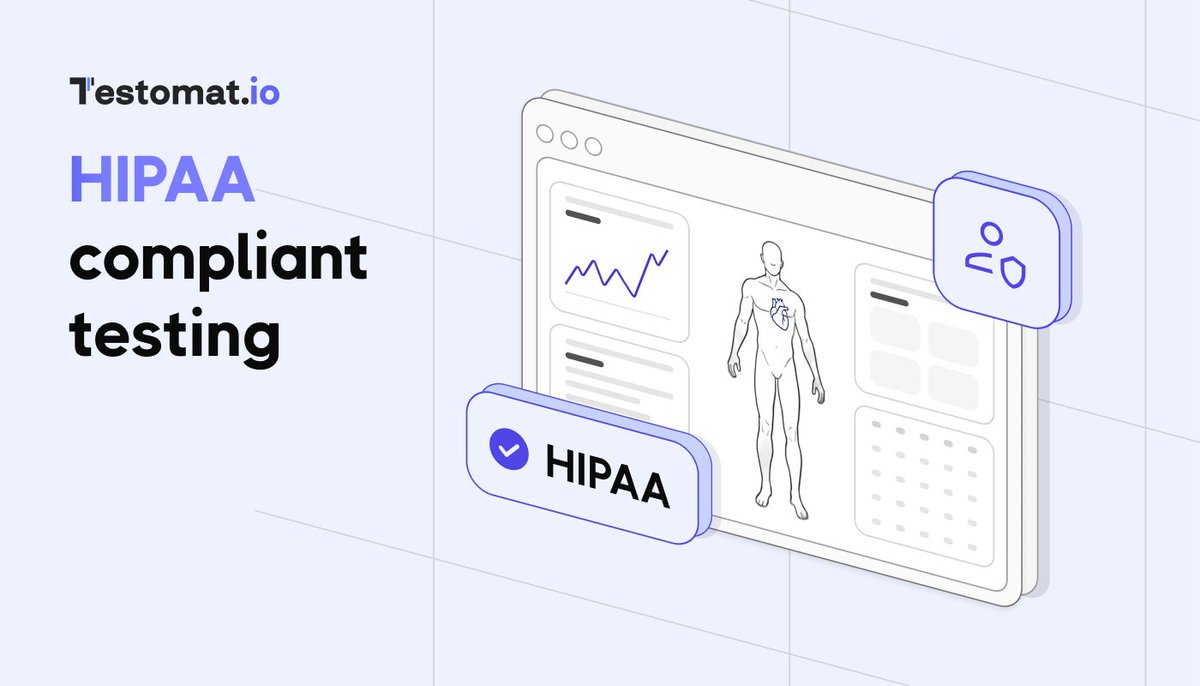
🔐 HIPAA compliance isn’t just about policies, it’s about proving your systems actually protect patient data. In 2026, the smartest healthcare teams aren’t rely on spreadsheets and last-minute audit prep 📋 They’re building compliance into daily workflows with the right tools, automated evidence collection, continuous monitoring, and strong testing processes ⚙️ That’s where Testomat.io helps validating access controls, audit logs, data integrity, and security safeguards before compliance issues become expensive problems 💡 Because in healthcare, “we thought it was secure” isn’t enough. Compliance should be continuous, traceable, and audit-ready 🚀 We’ve covered the best HIPAA compliance software for 2026, key compliance principles, and why testing is a critical part of staying audit-ready. 📖 Read the full article here: testomat.io/blog/best-hipa… #HIPAA #SoftwareTesting #HealthTech #Testomatio
testomat.io tweet media
English
0
0
4
42
testomat.io
testomat.io@testomatio·
Better test cases = faster, smarter QA🚀 We’ve launched a new Rich Editor for classical test projects, designed to make test creation more structured, clear, and much easier to manage With a block-based layout, teams can build detailed step-by-step scenarios, add expected results for every step, and attach images directly inside test cases for better visibility 📝 Plus, full markdown support makes AI-assisted test creation and updates smoother than ever 🤖 Less time spent organizing tests. More time focused on product quality and real testing results ⚡ 📚Read more: changelog.testomat.io/milestones-ai-… #QA #SoftwareTesting #TestAutomation #Testomat
GIF
English
0
0
3
360
testomat.io
testomat.io@testomatio·
Clear test cases = faster testing and fewer misunderstandings 👌 We’ve introduced a new Rich Editor for classical test projects in Testomat.io , built to make test case creation more structured, clear, and convenient. With a block-based layout, expected results for every step, image attachments inside steps, and full markdown compatibility, documenting even complex scenarios becomes much easier. It also works better with AI-assisted workflows, helping QA teams create, update, and maintain tests faster. Less chaos, better documentation, smoother collaboration 🚀 🔗 changelog.testomat.io/milestones-ai-… #QA #SoftwareTesting #TestManagement #Testomat
GIF
English
0
0
6
72
testomat.io
testomat.io@testomatio·
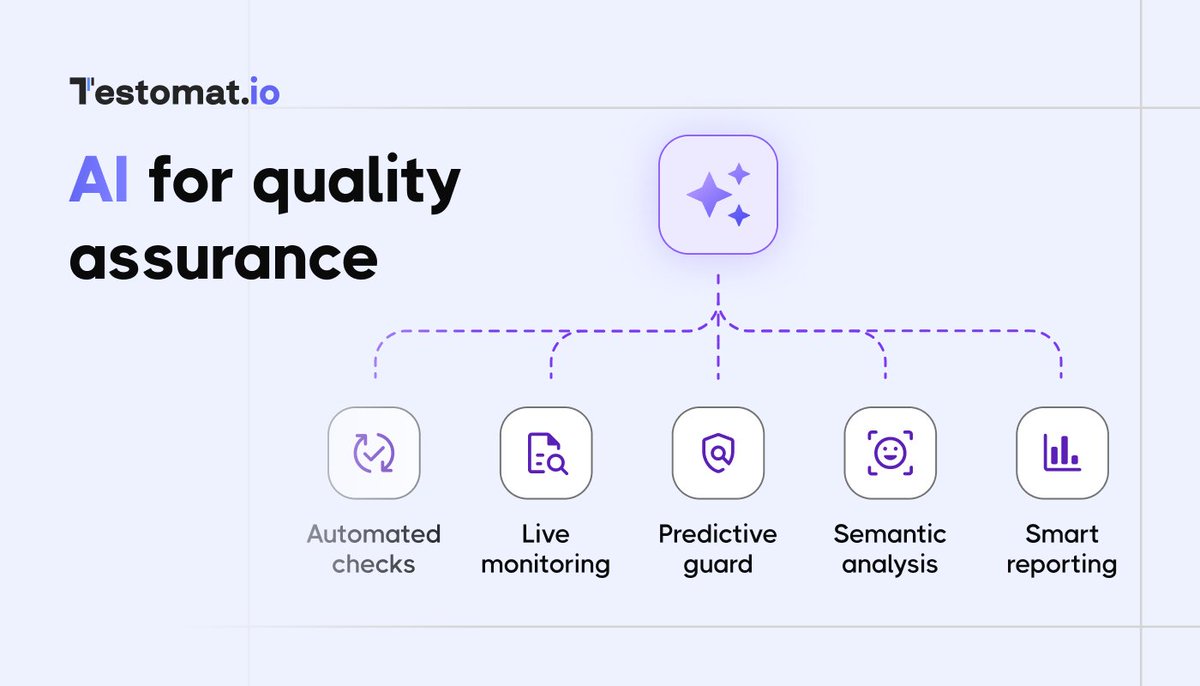
🤖 AI in QA = less repetitive work, more real testing Instead of writing test cases from scratch or chasing outdated suites, QA teams can focus on what matters most: edge cases, quality, and faster releases⚡ With Testomat.io, AI helps generate tests, find coverage gaps, detect flaky tests, and improve reporting , all in one workflow. AI doesn’t replace testers. It helps them work smarter Read more: testomat.io/blog/ai-for-qa/ #QA #AI #TestAutomation #SoftwareTesting #Testomat
testomat.io tweet media
English
0
0
5
67
testomat.io
testomat.io@testomatio·
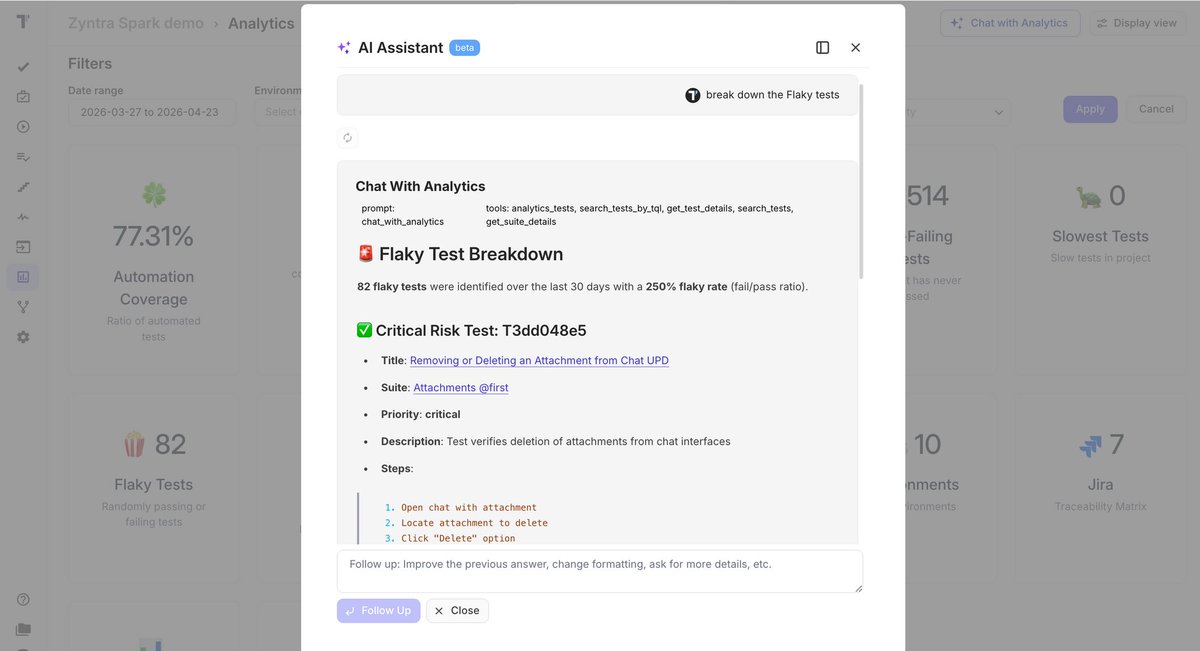
🚀 AI Analytics Chat is here We’ve introduced a new way to explore your test analytics, by simply asking questions in natural language 💬 Instead of digging through dashboards, you can now instantly find answers like: 📊 Which tests are the most unstable? 🔥 Where are failure rates highest? 📈 How are execution trends changing over time? It is a faster, more intuitive way to understand what’s happening in your testing and act on it 👉 More details: changelog.testomat.io/milestones-ai-… #AI #QA #TestAutomation #Testomat
testomat.io tweet media
English
0
1
4
175
testomat.io
testomat.io@testomatio·
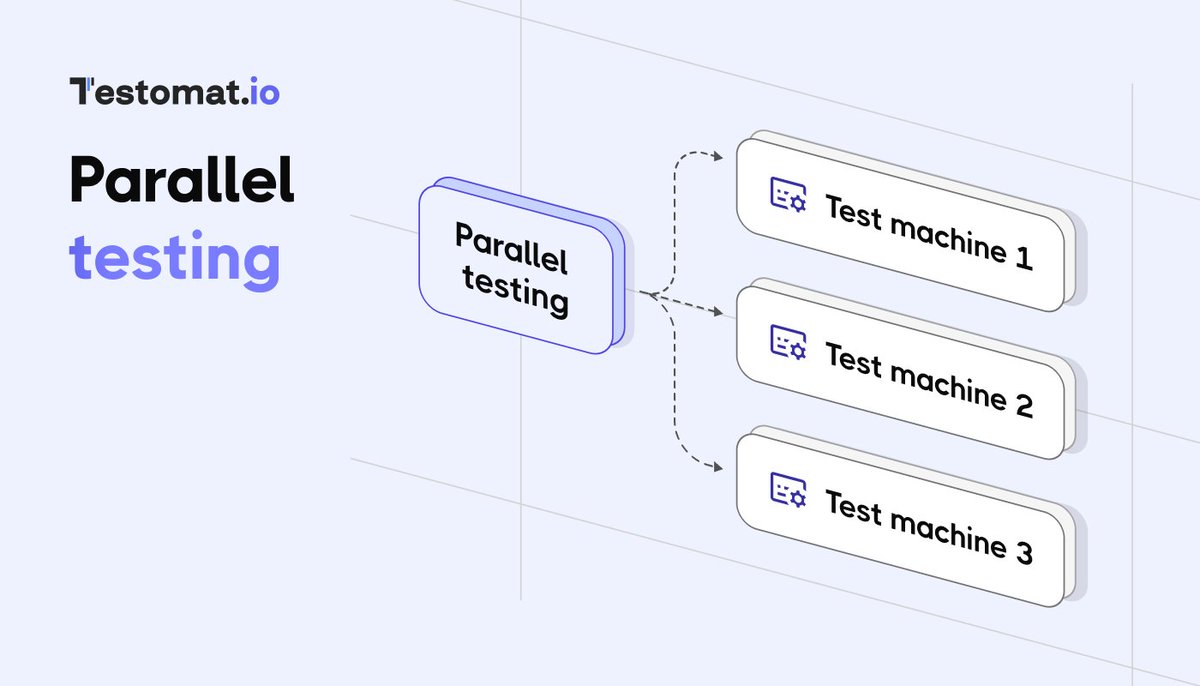
🚀 Still waiting forever for your test suite to finish? Parallel testing helps QA teams run multiple tests at the same time instead of one by one, across browsers, devices, and environments. The result? Up to 80% faster execution and much quicker feedback. That means faster releases, smoother CI/CD, and fewer “why is the pipeline stuck again?” moments The key is simple: tests must be independent, and test data should be well managed. With tools like Testomat.io, parallel testing becomes easier to manage with better reporting, flaky test detection, and smarter execution. Less waiting. Better testing. Faster delivery. 👌 Read more: testomat.io/blog/parallel-… #TestAutomation #ParallelTesting #Testomatio
testomat.io tweet media
English
0
0
2
68
testomat.io
testomat.io@testomatio·
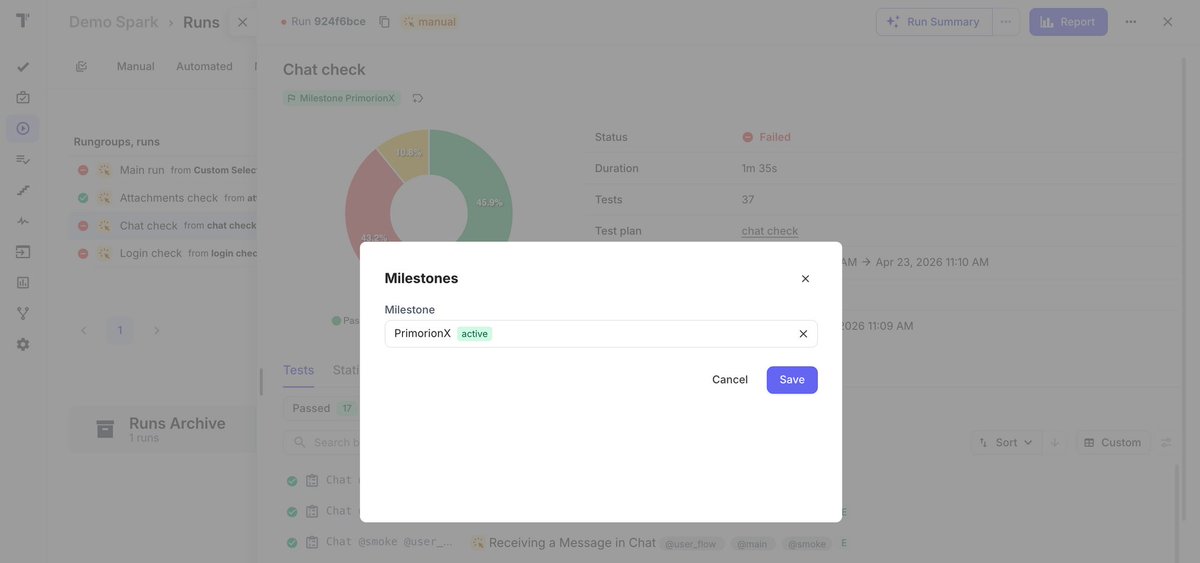
🚀 Testing just got smarter with Milestones in Testomat.io With Milestones in Testomat, you can group tests by real project phases, keep track of progress, and actually see what’s happening 📍 Set testing scope 🧩 Assign tests and runs ▶️ Execute within milestones 📊 Get clear reports and results Less mess, more clarity and fewer “what are we testing right now?” meetings 👀 Read more 👇changelog.testomat.io/milestones-ai-… #TestAutomation #SoftwareTesting #TestManagement #Testomat #Milestones
testomat.io tweet media
English
0
1
5
161
testomat.io
testomat.io@testomatio·
This RepoMint build is pure genius turning AI agents into a legit GitHub crew on Cloudflare. It got me rethinking how my own agents could start shipping real PRs instead of just chatting about code. Wondering how MCP keeps all those agent reviews from stepping on each other in practice?
English
2
0
0
182
Ashley Peacock
Ashley Peacock@_ashleypeacock·
I built RepoMint - GitHub for AI Agents All using Cloudflare Artifacts, Durable Objects, Sandbox, Agents SDK, KV & D1 Agents can create repos, push code, open PRs, review each other's work, build previews, and deploy to production. All through MCP. Here's how it works 🧵
Ashley Peacock tweet media
English
18
9
132
20.9K
testomat.io
testomat.io@testomatio·
@neogoose_btw Mind blown by this Neovim uppercase marks persistence hack. It sparked me to finally mark my most chaotic plugin configs so I can teleport straight in no matter where I’m editing from. Wondering what other hidden marks tricks you’ve uncovered lately?
English
0
0
1
54
Dmitriy Kovalenko
Dmitriy Kovalenko@neogoose_btw·
Today I realized that in neovim uppercase marks are actually persisted forever and do not relate to the current session/cwd So I literally can put mA to the config place where fff is defined and open it from literally everywhere
English
6
4
86
10.5K
testomat.io
testomat.io@testomatio·
This take on Anthropic's sky high design and dev salaries really lands with perfect timing. It made me realize my full Claude automated agency is already delivering more than those roles ever could without the payroll weight. Wondering where you've seen Claude hit its first ceiling in real client work?
English
0
0
0
77
Oykun
Oykun@oykun·
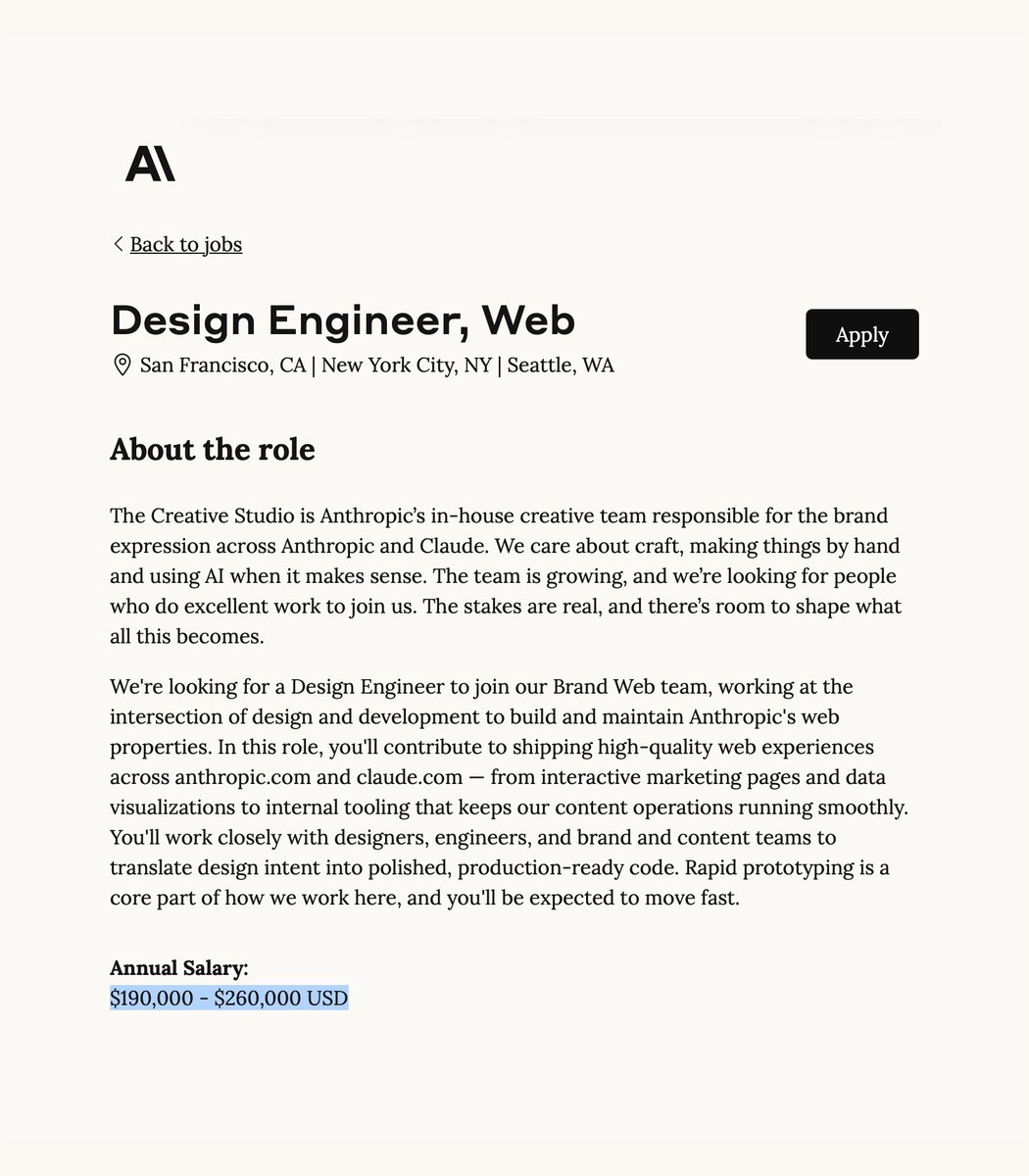
i was just looking at design roles in anthropic as i've been using Claude at lot lately to automate my complete design agency operations. I see they pay up to $ 260K for Design (engineering) $ 405K for Dev roles. makes you wonder why not use Claude Design and Claude Code instead? :D Oh, right, because ...
Oykun tweet mediaOykun tweet media
English
19
7
217
34.1K
testomat.io
testomat.io@testomatio·
@uday_devops Love how you sliced EC2 into those four core pieces so cleanly. It reminded me why I lean on AWS whenever my side projects suddenly need to scale without the hardware headache. Wondering what’s been your favorite Graviton win so far in a live setup?363мс
English
0
0
0
11
Uday👨‍💻
Uday👨‍💻@uday_devops·
🚀 Mastering AWS EC2: The Essentials 🚀 Amazon Elastic Compute Cloud (EC2) remains the backbone of AWS, providing resizable virtual servers (instances) to run applications. No hardware, no cables, just pure compute power on demand! 💻☁️ The Core 4 Components: 1️⃣ AMI: The template (OS + Apps) to start your server. 2️⃣ Instance Types: Pick your "engine" (CPU, RAM, Networking). 3️⃣ EBS: Your virtual hard drive (Block Storage). 4️⃣ Security Groups: Your virtual firewall 🛡️. Pro-Tip: Use Graviton processors for 40% better price-performance! 📉🔥
Uday👨‍💻 tweet media
English
6
11
75
1.7K
testomat.io
testomat.io@testomatio·
This explanation nails the core of multi-head attention perfectly. It got me reflecting on how that same compute budget yields way richer attention dynamics which feels like pure magic in model architecture. Wondering if this partitioning trick extends cleanly to cross attention setups too
English
6
0
1
177
Tom Yeh
Tom Yeh@ProfTomYeh·
Single vs Multi-hand Attention by hand ✍️ Resize matrices yourself 👉 byhand.ai/qNmYKw The most important fact about multi-head attention: it has the same parameter count as single-head attention. The difference is purely structural — same total Wqkv weights, partitioned into smaller q–k–v triples. Look at the two diagrams below. Both Wqkv matrices have the same height — same number of weight rows, same number of parameters. What changes is how that single tall block is sliced. • Left. One head. The full Wqkv produces one big QKV: a tall Q (36 rows), a tall K, a tall V. One scoring computation runs over those full-width tensors. • Right. 3 heads. The same-height Wqkv is sliced into 3 smaller q–k–v triples — each 12 rows tall. 3 scoring computations run in parallel, each a thinner version of the left. The compute trade-off — kind of. Same Wqkv weights. Multi-head runs the attention scoring S = Kᵀ × Q once per head, so the dot-product count multiplies by H. • Single-head: seq × seq = 40² = 1600 dot products • Multi-head: seq × seq × H = 40² × 3 = 4800 dot products (3×) But each multi-head dot product is narrower — its inner dimension is head_dim instead of H × head_dim. So when you count actual scalar multiplications, the totals are equal: • Single-head: seq² × (H × head_dim) = 40² × 36 = 57600 • Multi-head: seq² × H × head_dim = 40² × 3 × 12 = 57600 Same FLOPs. Multi-head buys you H independent attention patterns at no extra weight cost and no extra arithmetic cost — it's the same total compute, sliced into H finer-grained heads.
English
14
95
556
34.7K
testomat.io
testomat.io@testomatio·
Still using Selenium in 2026? It still works… but comes with setup pain, flaky tests, and extra maintenance 😅 That’s why teams are moving to: 👉 Playwright — faster, more reliable, built for modern apps 👉 Cypress — smooth DX + powerful debugging 👉 WebdriverIO — solid choice for web + mobile Same goal (automation), less friction. 📚 testomat.io/blog/selenium-… #QA #TestAutomation #Selenium #Playwright #Cypress #AutomationTesting 🚀
testomat.io tweet media
English
1
0
5
82
testomat.io
testomat.io@testomatio·
This system design poll cuts straight to one of those eternal microservices headaches that still sparks arguments in every architecture review. It reminded me how I once centralized too much in a gateway during a rushed refactor and paid for it with deployment nightmares that lasted months. Wondering what real world trigger usually pushes you toward the orchestration service option?
English
0
0
0
13
Ritesh Roushan
Ritesh Roushan@devXritesh·
System Design Poll 🔥 You’re building an API Gateway for microservices. Where should you put the business logic? A) In the API Gateway (centralized processing) B) In each microservice (distributed) C) Shared library used by all services D) Separate “orchestration” service Vote A, B, C or D + explain your reasoning 👇 I’ll share what actually works in production.
Ritesh Roushan tweet mediaRitesh Roushan tweet mediaRitesh Roushan tweet mediaRitesh Roushan tweet media
English
42
10
95
5.2K
testomat.io
testomat.io@testomatio·
This extension of Karpathy's wiki into real graph territory feels like the missing piece everyone has been waiting for. It sparked the realization that my own scattered notes on AI papers have been dying in silos exactly because connections were never queryable until now. Wondering how the vector search inside FalkorDB changes your workflow when blending it with everyday LLM prompts?
English
0
0
0
159
Akshay 🚀
Akshay 🚀@akshay_pachaar·
The next step after Karpathy's wiki idea: Karpathy's wiki works on knowledge that sits still. A page on how attention works is just as useful today as it was a year ago. The LLM reads sources, pulls out ideas, writes clean articles, and keeps them cross-linked. You never have to rebuild the context from scratch when you want to ask something. But this breaks the moment you ask a question that spans multiple things at once. "Which authors moved from Google to Anthropic between 2022 and 2024, and what did they publish after the move?" A Markdown page can't answer that. The answer lives in the connections between people, companies, papers, and dates. A wiki can describe that pattern only if someone already wrote an article about it. A graph lets you ask it directly, ask ten variations of it, and get an answer every time without rebuilding anything. FalkorDB is an open-source graph database built for exactly this kind of question. The idea underneath it is simple, and it's what makes the whole thing fast enough to be practical. Most graph databases store connections as chains of pointers and follow them one by one through memory. FalkorDB stores the entire graph as a grid of zeros and ones (a sparse matrix) where a 1 means "these two things are connected." Once your graph is a grid, walking through it becomes math. Two hops is one multiplication. Five hops is five multiplications. That sounds like a small change, but it lets the CPU do work in parallel and reuse decades of math research that nobody had applied to graph queries before. In practice, this is the difference between a seven-hop question returning in 350ms and the same question timing out. The wiki and the graph aren't competing. They sit at different layers. The wiki stores what something is. The graph stores how everything connects. Any work where the connections matter as much as the things being connected belongs in a graph. FalkorDB also comes with vector search built in, which matters for GenAI work. You can find a relevant part of the graph, search for similar items inside it, and return the answer, all in one query. Most GraphRAG setups build this by hand across two separate databases. Here you get it in one. You run it through Docker, query it with Cypher, and connect from Python, JavaScript, Rust, Java, Go, or any Redis client. Open source and multi-tenant by default, so one instance can host thousands of separate graphs without spinning up thousands of servers. Repo: github.com/falkordb/falko… Karpathy nailed the foundation. The next layer is here.
Andrej Karpathy@karpathy

LLM Knowledge Bases Something I'm finding very useful recently: using LLMs to build personal knowledge bases for various topics of research interest. In this way, a large fraction of my recent token throughput is going less into manipulating code, and more into manipulating knowledge (stored as markdown and images). The latest LLMs are quite good at it. So: Data ingest: I index source documents (articles, papers, repos, datasets, images, etc.) into a raw/ directory, then I use an LLM to incrementally "compile" a wiki, which is just a collection of .md files in a directory structure. The wiki includes summaries of all the data in raw/, backlinks, and then it categorizes data into concepts, writes articles for them, and links them all. To convert web articles into .md files I like to use the Obsidian Web Clipper extension, and then I also use a hotkey to download all the related images to local so that my LLM can easily reference them. IDE: I use Obsidian as the IDE "frontend" where I can view the raw data, the the compiled wiki, and the derived visualizations. Important to note that the LLM writes and maintains all of the data of the wiki, I rarely touch it directly. I've played with a few Obsidian plugins to render and view data in other ways (e.g. Marp for slides). Q&A: Where things get interesting is that once your wiki is big enough (e.g. mine on some recent research is ~100 articles and ~400K words), you can ask your LLM agent all kinds of complex questions against the wiki, and it will go off, research the answers, etc. I thought I had to reach for fancy RAG, but the LLM has been pretty good about auto-maintaining index files and brief summaries of all the documents and it reads all the important related data fairly easily at this ~small scale. Output: Instead of getting answers in text/terminal, I like to have it render markdown files for me, or slide shows (Marp format), or matplotlib images, all of which I then view again in Obsidian. You can imagine many other visual output formats depending on the query. Often, I end up "filing" the outputs back into the wiki to enhance it for further queries. So my own explorations and queries always "add up" in the knowledge base. Linting: I've run some LLM "health checks" over the wiki to e.g. find inconsistent data, impute missing data (with web searchers), find interesting connections for new article candidates, etc., to incrementally clean up the wiki and enhance its overall data integrity. The LLMs are quite good at suggesting further questions to ask and look into. Extra tools: I find myself developing additional tools to process the data, e.g. I vibe coded a small and naive search engine over the wiki, which I both use directly (in a web ui), but more often I want to hand it off to an LLM via CLI as a tool for larger queries. Further explorations: As the repo grows, the natural desire is to also think about synthetic data generation + finetuning to have your LLM "know" the data in its weights instead of just context windows. TLDR: raw data from a given number of sources is collected, then compiled by an LLM into a .md wiki, then operated on by various CLIs by the LLM to do Q&A and to incrementally enhance the wiki, and all of it viewable in Obsidian. You rarely ever write or edit the wiki manually, it's the domain of the LLM. I think there is room here for an incredible new product instead of a hacky collection of scripts.

English
40
137
883
101.2K
testomat.io
testomat.io@testomatio·
@CodeEdison This full-stack 2026 breakdown nails the current vibe perfectly. It made me reflect on how adding Rust to my own backend mix last year cut latency in half without the usual headaches. Wondering if you've run into any gotchas mixing Kafka with GraphQL in real projects?
English
0
0
0
460
Edison
Edison@CodeEdison·
Full-Stack Developer’s 2026 Tech Stack • Frontend → React / Next.js / Vue.js • Backend → Go / Rust / Spring Boot / Node.js / Django • Database → PostgreSQL / MySQL / MongoDB • Authentication → JWT + Refresh Tokens / OAuth 2.0 • Infrastructure → Docker + Kubernetes / Nginx as Reverse Proxy • CI/CD → GitHub Actions / GitLab CI / Jenkins • Additional Tools → Redis (Caching), Kafka (Event Streaming), GraphQL (APIs)
English
20
41
376
26.8K
testomat.io
testomat.io@testomatio·
This breakdown of agent memory really cuts through the hype and nails why most setups fall flat. It sparked the thought that ive wasted hours debugging agents that seemed smart until they hit one of those multi hop gaps. Im curious how Cognee keeps the layers perfectly in sync when new messy data rolls in.
English
0
0
0
142
Avi Chawla
Avi Chawla@_avichawla·
The more your agent remembers, the less it knows. This sounds counterintuitive, but it is actually a direct result of how agent memory is built today. Agent memory inherits the cognitive shape of its store. - A vector DB gives it associative memory to recognize familiar patterns. - A graph gives it relational memory to understand how things connect. Most agents run on the first and skip the second. Here's an example that explains the failure it leads to: Say a study assistant stores three facts about a student in a vector DB: - Mark is in grade 10. - Grade 10 has final exams in March. - The library closes 2 weeks before final exams. Mark asks: "Will the library be open next week?" The vector DB likely returns the first and third facts, because the query mentions Mark and the library. But it skips the middle fact, which links Mark's grade to the exam time, because that fact mentions neither Mark nor the library. It sits in embedding space too far from the query to make it to the retrieved context. So the Agent answers with partial info, or it fills the gap with a plausible guess that sounds right but might be off by weeks. This is not a corner case, but it's actually what real queries look like. Any question that spans two or more hops exceeds what a similarity search can do. Increasing context size and retrieving more context is one solution. But accuracy drops over 30% when the relevant fact sits in the middle of a long context, which is the well-known "lost in the middle" problem. A bigger window is not the same as better memory. It just gives the model more room to miss things. To actually solve this problem, you need to stop treating memory as a single store and start treating it as three complementary layers, each doing a job the others cannot. - Relational: It stores where a fact came from, when it was stored, and who has access. This is the provenance layer. - Vector: It stores what a fact means and what it is semantically similar to. This is the retrieval layer. - Graph: It stores how facts connect, what depends on what, and who relates to whom. This is the reasoning layer. All three are important and complementary: - A vector DB alone gives similarity without relationships. - A graph alone gives relationships without semantic search. - A relational store alone tracks where data came from but cannot reason over it. If you want to see this in practice, Cognee (open-source) implements this approach. It runs an ECL pipeline (Extract, Cognify, Load) that writes into all three stores in a single pass and keeps them synchronized as new data arrives. So the vectors and graph edges are built together during indexing, not glued together later. On top of this, there are two things Cognee does differently from most memory tools: 1) Smarter entity resolution: You can give Cognee a domain vocabulary file, and it uses it to merge duplicate mentions automatically. So "car manufacturer," "automobile maker," and "vehicle producer" collapse into one canonical node instead of being available as three separate entries. 2) Local-first defaults: The default stack runs on a single pip install and stays fully local. You can switch to Postgres and Neo4j for production without changing the API. My co-founder wrote a first-principles walkthrough of agent memory that takes the same problem and works through every layer of the stack, ending in a real working agent built on Cognee. Read it below.
GIF
Akshay 🚀@akshay_pachaar

x.com/i/article/2043…

English
47
133
914
191.1K