An essential part of @oxidecomputer's culture is how we approach partners and vendors. We have made public RFD 68, which explains our view of partnership in terms of shared values: rfd.shared.oxide.computer/rfd/0068
I often hear the following: "no fault post-mortems are good", "lead by example" and "boss must resign". It seems to me that only two can be true - even if they stuffed up (do they design security personally?), a precedent of resignation seems an awful way to have good culture?
I find it surprising that, in my brief search, there are no government guidelines on best practices for events for under-18s, or on how to manage duty of care. Have I just missed something, or are we just hoping for the best?
@insoudev@olafurw Yeah! My docs are definitely a work in progress, and I think one big challenge with Nom is the lack of good starter material. There are some good resources in the replies I'll have to add in!
@olafurw ooh! @tfpk_ is currently working on writing some better beginner documentation for Nom, in the form of a guide! Check out out: github.com/tfpk/nom/tree/…
@thewrongjames@SpanishPear I think the issue is realistically that in many respects, Uni is trying to take the place of Vocational Education. CS1 and SEng courses would make more sense at a TAFE/ apprenticeship style education. They don't need academics teaching them like proofs/AI research do.
@SpanishPear Would the situation perhaps be improved if research institutions were completely separate from tertiary education institutions, or would either or both sides then loose something important?
A PhD ≠ training in teaching. For advanced courses the tradeoffs might be different, but for CS1/2, having a PhD seems uncorrelated with a good course.
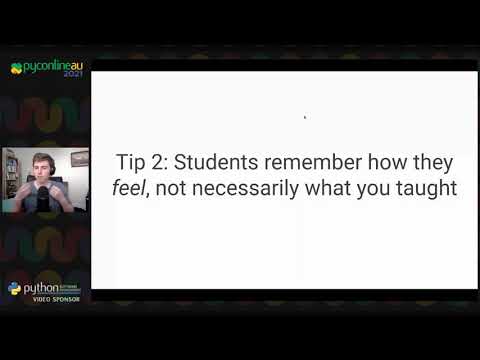
@hogesonlineyoutu.be/5c0BvOlR5gs is one of my favourite talks on this topic, and I think the opening insight is really good -- there are a bunch of questions we don't ask when we start thinking about teaching coding. I don't think this article answers any of the right ones.
@__xurtis > Collective punishment for individual acts ... and, in general, any
form of torture or cruelty, are forbidden. (Article 87, 3rd Geneva Convention).
Not that I'm saying it applies here, just seems a little inadvisable to break it.
Girlfriend noted last night, while doing a cryptic crossword together (that’s how we roll) “pause, paws, pores and pours” are all homophones.
Are there any other sets of 4 homophones?
being able to deliver and view the sequence in a contiguous block would be key, but then being able to delimit it neatly ... I wonder what that could look like.
thought: deliver a lecture as a contiguous-but-delimited sequence of small (~10-15 minute) segments, which students can then pick up in sequence (and possibly with clearer dependencies) asynchronously