Sabitlenmiş Tweet

“What fools we are to live in a generation for which war is a computer game”
Richard Leonard@LabourRichard
Tony Benn, 10 years gone. What we would give to have him back.
English
tfrab
21.7K posts

Tony Benn, 10 years gone. What we would give to have him back.

Oggi liberato casa di nonna prima di venderla definitivamente e trovato questa. Vamos


🚨 BREAKING: President Trump just confirmed Iran is on its KNEES, crying for a deal, but they can't say anything PUBLICLY out of fear they'll be killed "We'd like to make you the next Supreme Leader! NO THANK YOU, I don't want it!" 😭 "They are negotiating, by the way, and they want to make a deal so BADLY, but they're afraid to say it because they figure they'll be killed by their own people. They're also afraid they'll be killed by us!" "There's never been a head of a country that wanted that job less than being the head of Iran."





Gazzetta: “L’#Inter vuole Manu Konè della #Roma. Per il francese i nerazzurri potrebbero sfondare quota 40 milioni e tendere verso i 50 per completare l’operazione che la scorsa estate è stata sfiorata. L’Inter vuole puntare anche sulle necessità della squadra di Gasperini, costretta a far cassa entro il 30 giugno, indipendentemente dalla qualificazione Champions. Non è detto che il piano d’assalto interista vada in porto, anche perché sono troppe le variabili in campo: la possibilità che i giallorossi continuino a fare muro o facciano una salvifica plusvalenza con altri giocatori, eventuali offerte superiori (attenzione al Psg), senza sottovalutare l’effetto Mondiale che, già all’inizio, potrebbe far schizzare il prezzo oltre il consentito. Almeno in teoria e almeno adesso, però, i nerazzurri vogliono finalmente mettere un carico, il più pesante possibile”.

Piuttosto rinnovo El Shaarawy e Pellegrini per 3 anni
Kylian Mbappe’s knee injury was misdiagnosed after Real Madrid medical staff performed an MRI scan on the wrong leg back in December. When no problem was found after a scan of his uninjured right knee, the 27-year-old featured in three games for Madrid before the mistake was realised and rectified. Full story from @GuillermoRai_ and @MarioCortegana Free to read here ⬇️ 🔗 nyti.ms/4bM95qf
Dal retroscena di Minzolini sul Giornale👇

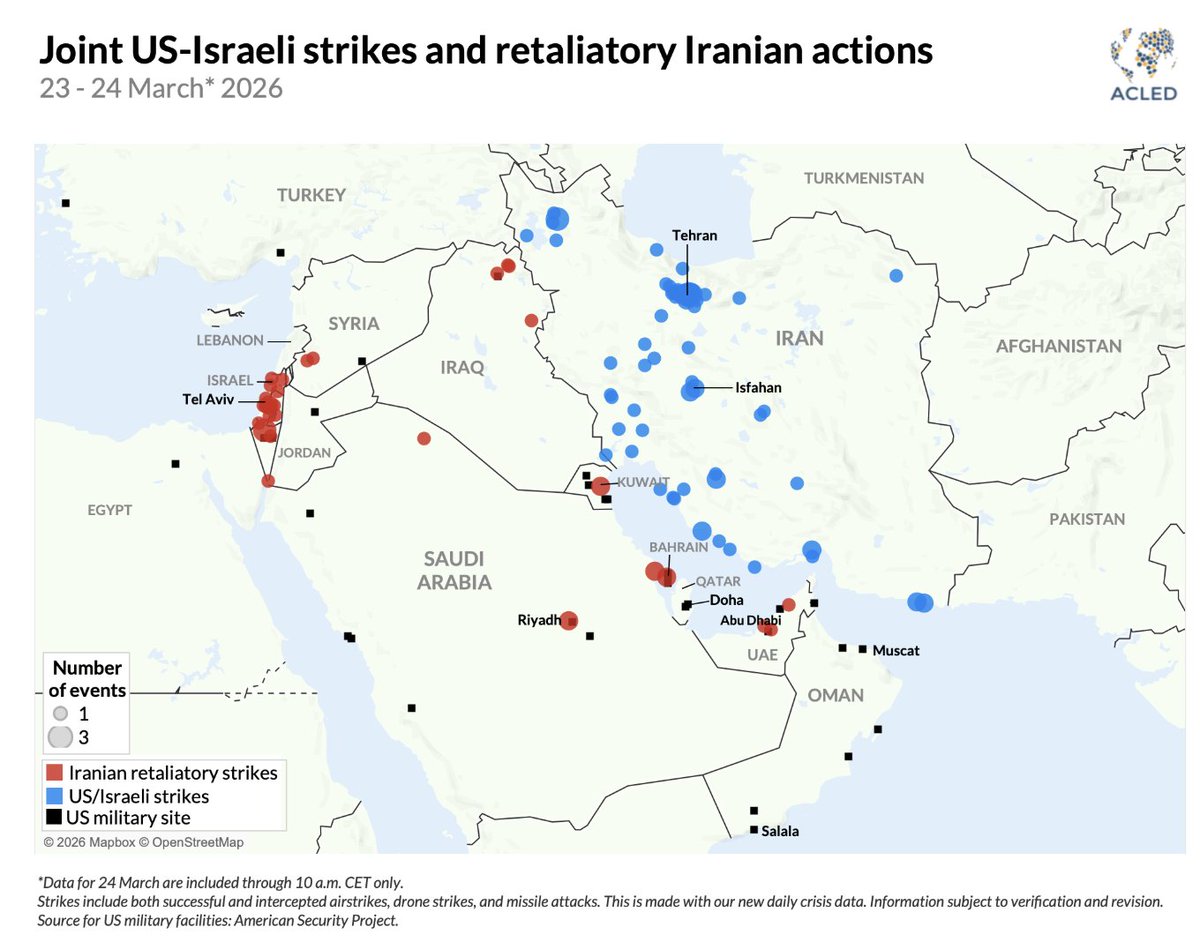
Wars reveal information about countries' relative military capabilities and interests. That's one of the most important insights from the bargaining model of war. Iran believed before the war that fighting the U.S. would strengthen its bargaining position -- and Iran was correct. This war has revealed that Iran wouldn't topple after Khamenei's death, that Iran is highly resolved, and it can inflict damage across the Gulf at low cost, indefinitely. It revealed that Iran can gain massive leverage -- and perhaps even collect "tolls" -- from controlling shipping through the Strait of Hormuz. By contrast, the war has *hurt* U.S. & Israeli bargaining power compared to where it was before the Geneva talks in February. That means we'll get worse terms now than if we'd accepted Iran's proposal then. Why is the U.S./Israel position worse? Decapitation strikes failed to induce Iran to surrender (always an unlikely prospect), nullifying the U.S./Israeli theory of victory by day 3. No new plausible theory of victory has emerged, and it's doubtful one will. That hurts the U.S. position. Trump has proven highly sensitive to oil market swings, and even *removed sanctions* on Iranian oil. As @edwardfishman noted, Iran gained more sanctions relief from closing Hormuz than through any diplomatic means, including the JCPOA. The disruption to oil markets, and Trump's concern about them, also hurts the U.S. position. Now that the war has bogged down into an attrition battle, where Iran can impose costs with cheap means like drones and missiles and Israeli interceptors seem to be running low, the U.S. and Israel are on the losing end of the damage and casualties curve. Costs and casualties will get worse, not better, over time, and that further hurts U.S./Israeli bargaining leverage. Trump is now considering, frankly, foolhardy military gambits, potentially to seize Kharg, islands in Hormuz, or perhaps the highly enriched uranium trapped somewhere under rubble in Iran. These would be significant escalations putting U.S. troops on the ground. None are likely to end the war, and all would likely cause U.S. casualties. In the business lingo, Trump's BATNA (best alternative to a negotiated agreement) is way worse -- not least because of the shadow of Afghanistan. The U.S. forces being surged to the Middle East (2 MEUs plus some airborne units) are comparable to what George W. Bush used to invade Afghanistan in the autumn 2001. What started out as a limited mission to topple the Taliban and capture Osama bin Laden, who instead escaped through the Tora Bora mountains, evolved into a ground campaign that eventually ballooned to over 100k U.S. troops in 2011. The clear imperative here is for Trump to deescalate, credibility costs be damned. This war is existential for Iran but not for the United States, Iran will keep fighting with cheap means like drones, and it will eventually outlast the U.S. just like the Taliban did in Afghanistan. That, or Iran could fracture into chaos, creating refugee flows and breeding terrorism for decades to come. (Terrorism isn't an existential threat to the U.S., but we shouldn't be creating the conditions for it.) Trump doesn't like backing down, but that is what needs to happen here, and stat, before ill-fated escalation leads to more needless deaths. @defpriorities




la coppa dalle orecchie normali spreaker.com/episode/episod…

In fact, you can find legacy features, including dialog boxes from Windows 3.1, in Windows 11 😁